Brian Eno
Role
Genre
Role
Genre
Brian Eno's Gear


This blog post on the recording of Eno & Karl Hyde's Someday World album describes Eno's gear. "The rest of Brian’s setup sat on top of two Samson Resolve 80a monitors. Straddling both speakers was a Numark M101 two-channel DJ scratch mixer, and to its right sat a Numark Axis 9 CD player with loop, stutter and speed controls. The stutter effect in particular was something Brian used quite a lot during the session."
Find it on:





Developed by Eno and Peter Schmidt in 1975, as related in the official product description.
Find it on:

In this article in the December 1995 issue of Future Music magazine, the TG77 is named in the "Kit List" as being one of Eno's synths.
Find it on:


In this article in the December 1995 issue of Future Music magazine, the A3 is named in the "Kit List" as being one of Eno's effects.
Find it on:

In this Sound On Sound article, there is a photo of Eno's studio showing an Ampeg AMUB-1 Fretless bass.
Find it on:

In the video "Brian Eno & Steven Johnson: Making Music" on YouTube, Brian Eno is shown using the Sonic Charge Permut8 plugin.
Find it on:


In an image from this blog detailing the recording of Karl Hyde and Brian Eno's collaboration on the album Someday World, we see Eno's GDI21 laying across his guitar.
Find it on:

In this blog about the making of Eno & Hyde's 2014 album Someday World, Brian's setup is described as including the Resolv 80a monitors.
Find it on:

In this blog about the making of Eno & Hyde's 2014 album Someday World, Brian's setup is described as involving an Axis 9 CD player, used specifically for its stutter effect.
Find it on:

At minute 1:00 you can see the LPD8 on Brian's desk, next to the computer keyboard. There's some tape near the pads, probably to remind what they control.
Find it on:





The studio is based around two Apple Mac G4 computers running Logic, plus a selection of outboard including (right) the Digitech Studio Vocalist used extensively on Another Day On Earth, a Lexicon Jam Man loop sampler and an Eventide H3000 Harmonizer.
Find it on:

You can see him using Zynaptiq's Morph at 1:38
Find it on:

In this video about Eno's work with Ben Frost, there are a couple of shots of Brian's monitor where we can see that he's using the Transient Shaper plugin. A brief but clear look occurs 3:08 mark.
Find it on:

In this undated image of Eno working in his studio, we can see an HPD-15 positioned in the foreground.
Find it on:

This transcription of a* Future Music* article](http://music.hyperreal.org/artists/brian_eno/interviews/futmus95.html) includes a list of gear Eno was using at the time of writing, which includes an SV-3700 DAT machine.
Find it on:

-m.webp?v=1782227096)
Per this interview in a 1981 issue of Keyboard:
Since I'm normally working in studios I'm liable to use two or three echoes at once. For instance, the Roland, and then a Lexicon Prime Time, and then maybe a long digital reverb as well, a Lexicon 224 or something like that, or the plate reverb or whatever they have in the studio.
Find it on:

Per this interview in a 1981 issue of Keyboard:
That's a very nice synthesizer as well. I've worked with one of those. I've never owned one, but I do like them. Actually, the second piece on the second side of Music for Airports was done with an ARP 2600.
Find it on:

In this article on the making of Eno's album Another Day On Earth, Eno says, "When I was playing parts live into the computer I would do processing through external boxes. I'd also sometimes feed stuff out of my computer through the Kaoss Pads. There's a lot of plugin processing going on. I'd usually print the processed track inside of the computer, and then push it back in time, because when there's a lot of processing you get latency problems. I like working like that, because I can do different things with the already-processed track."
Additionally, the article's sidebar lists both the Kaoss Pad Mk I and II among his equipment.
Find it on:

In this BBC-produced mini-documentary, Eno is sitting in his studio and pulls out a Stratacoustic to briefly perform the Beatles' "Tomorrow Never Knows" in an open tuning.
Find it on:


This image shows Eno at his PC-180A.
Find it on:

The studio is based around two Apple Mac G4 computers running Logic, plus a selection of outboard including (right) the Digitech Studio Vocalist used extensively on Another Day On Earth, a Lexicon Jam Man loop sampler and an Eventide H3000 Harmonizer.
Find it on:

Eno's Apple Macintosh G5 sits behind the stage generating the images that make up his morphing 77 Million Paintings exhibit.
Find it on:

"Two pieces, 'Bottomliner' and 'Under', were started before my computer days, about six years ago, on a DA88," he explains. "For a while I was in this very awkward inbetween land, working partly on DA88 and partly on computer, and this was an awfully clumsy period. I really despise digital tape recording, it's so fragile. So then over the years I went through various versions of Logic, from 4 to 7.1. There's still quite a lot of hate going on for me in working with computers, but I think programs have improved a great deal. The objections I used to make have been taken on board more by programmers. Programs are less menuintensive than they used to be, and Logic is a very evolved program. I also think that plugin instruments today are very much better than the early ones."
Find it on:

A Mac Pro tower can be seen in Brian Eno's studio during the recording of Someday World (to his left, first photo).
Find it on:

-m.webp?v=1783177108)
In this blog about the recording of the Eno/Karl Hyde album Someday World, Eno's then-recent studio upgrades are described as follows:
"To make all this possible, Peter installed two Focusrite Octopre preamps, and a Liquid Saffire 56 multichannel Firewire interface. The Liquid Saffire acted as the computer interface for the audio, but also passed the raw signals on to a Mackie CR-1604..."
Find it on:

In this image of Eno recording in the 1970s, his A-3340 is visible just behind his left elbow.
Find it on:

Brian Eno can be seen playing Suzuki Omnichord OM-300 in this video.
Find it on:
-m.webp?v=1782400331)
The fourth photo shows a Korg Triton Studio 61 in Brian Eno's studio.
Find it on:
This is a community-built gear list for Brian Eno.
- Find relevant music gear like Microphones, Pianos, Keyboards and Synthesizers, Software Plugins and VSTs, Instruments, Studio Equipment, Headphones, and other instruments and add it to Brian Eno.
- The best places to look for gear usage are typically on the artist's social media, YouTube, live performance images, and interviews.
- To receive email updates when Brian Eno is seen with new gear, follow the artist.
Discography
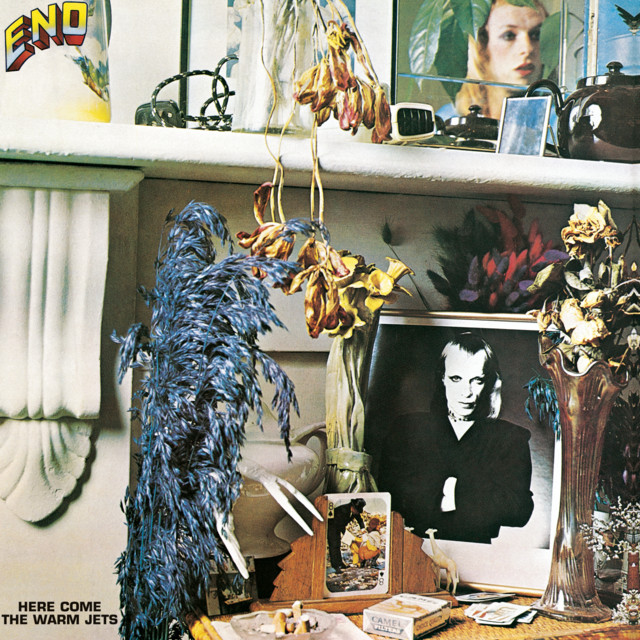
Here Come The Warm Jets
1973
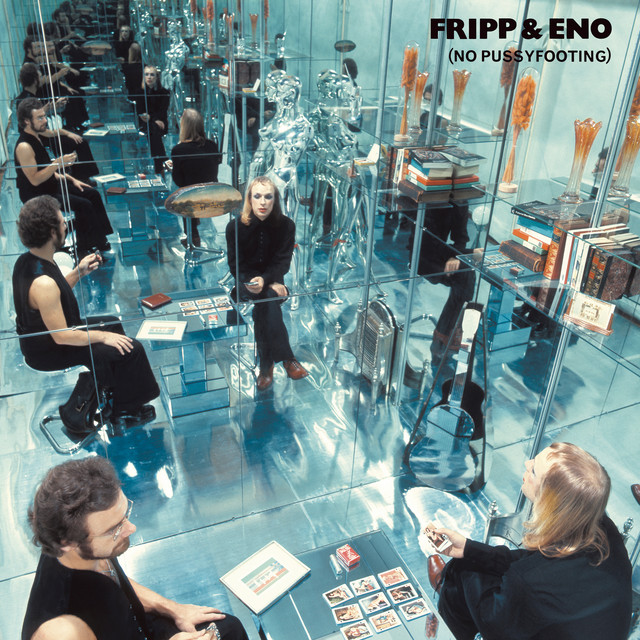
No Pussyfooting
1973
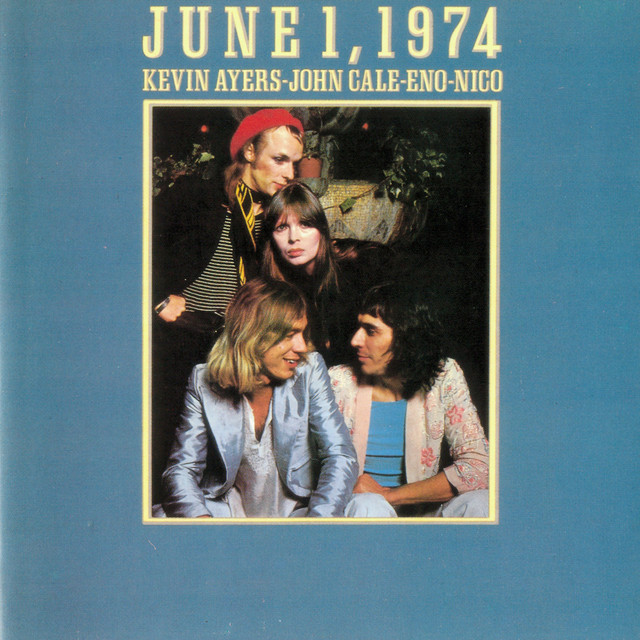
June 1, 1974 (Live At The Rainbow Theatre / 1974)
1974
![Taking Tiger Mountain (By Strategy) [2004 Remaster] album cover](https://images.equipboard.com/uploads/album/image/274230/taking-tiger-mountain-by-strategy-2004-remaster.jpg)
Taking Tiger Mountain (By Strategy) [2004 Remaster]
1974
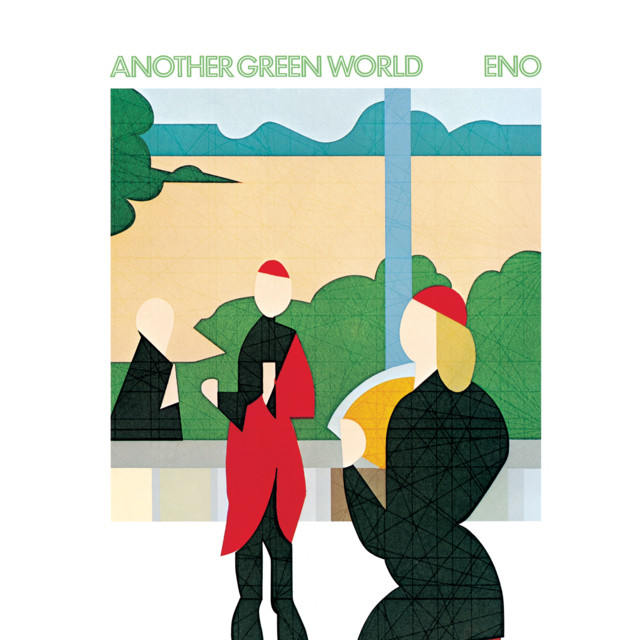
Another Green World (2004 Remaster)
1975
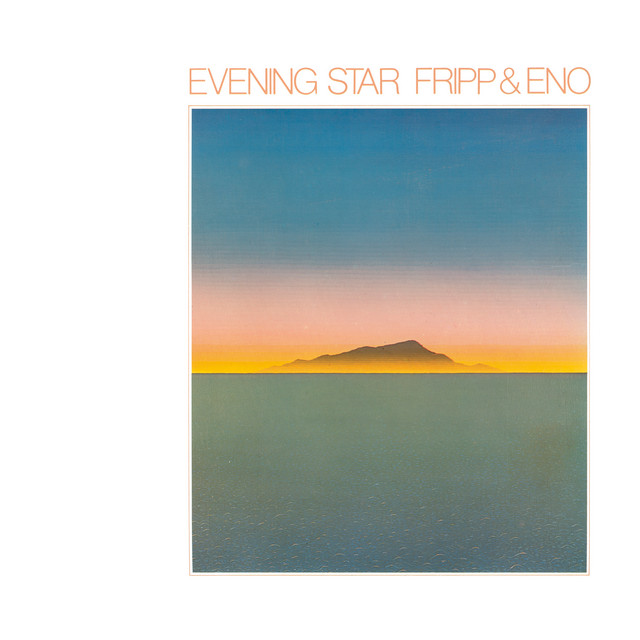
Evening Star
1975
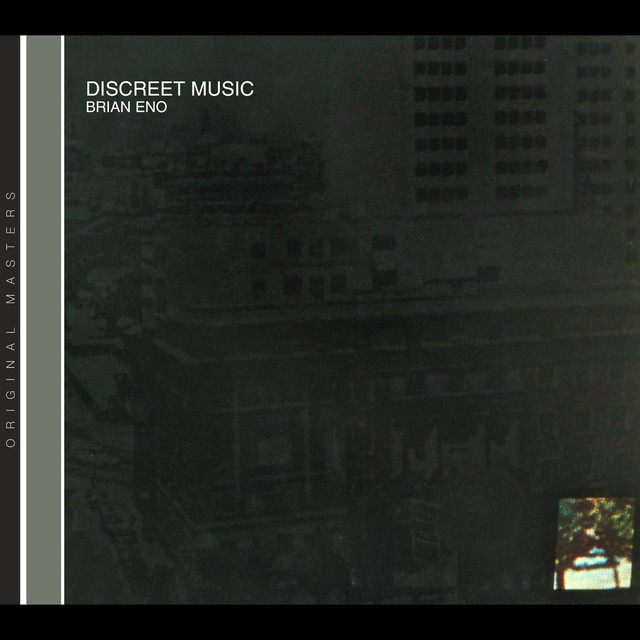
Discreet Music
1975
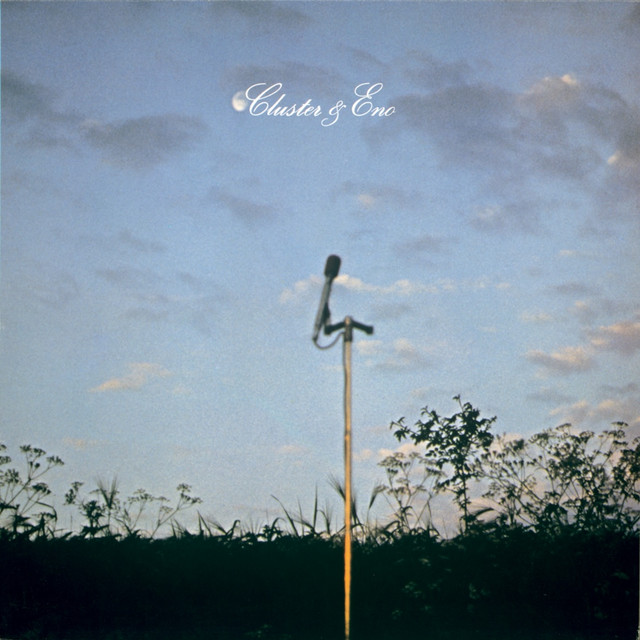
Cluster & Eno
1977
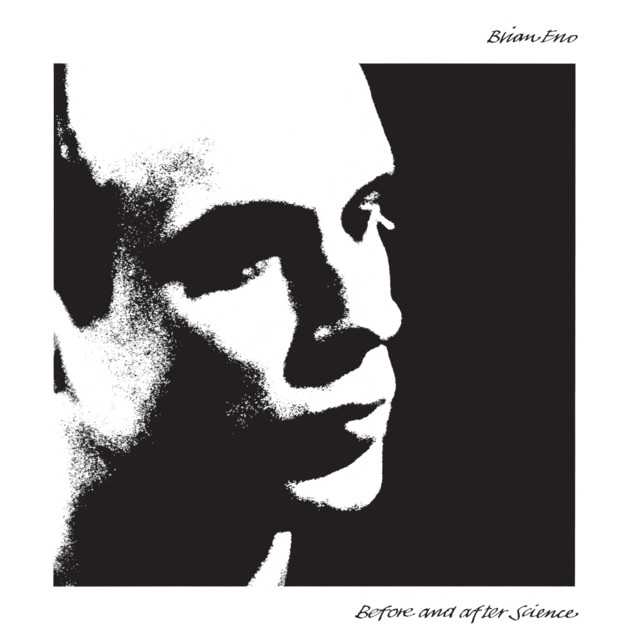
Before And After Science
1977
Ambient 1: Music For Airports (Remastered 2004)
1978
Ambient 2: The Plateaux Of Mirror (Remastered 2004)
1980
Ambient 3: Day Of Radiance
1980
Album Credits
-
Producer
-
Beatie Wolfe · 2025
Producer -
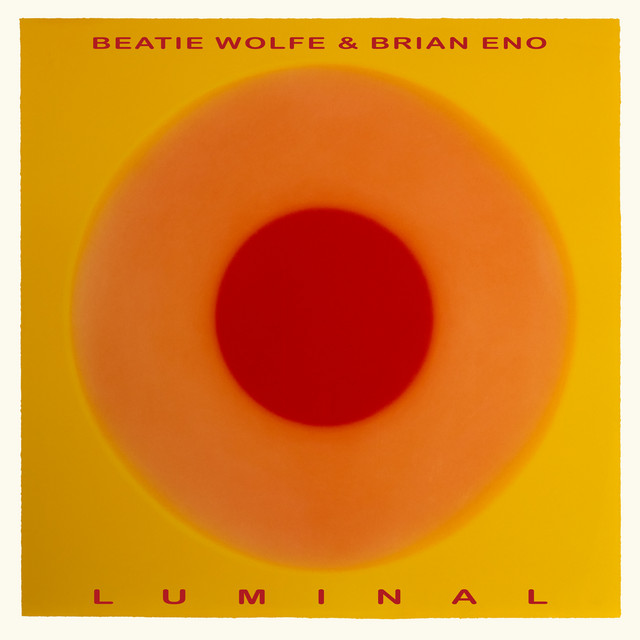
Brian Eno & Beatie Wolfe · 2025
Producer -

Eno (Original Motion Picture Soundtrack)
Brian Eno · 2024
Mixing Engineer Producer Recording Engineer -
Coldplay · 2024
Programmer -

Live and Let Live (Dark-Side Mix)
Peter Gabriel · 2023
Programmer -

Live and Let Live (Bright-Side Mix)
Peter Gabriel · 2023
Programmer -

50 Years of De-Evolution 1973–2023
Devo · 2023
Producer -
Four Kinds of Horses (Dark-Side Mix)
Peter Gabriel · 2023
Programmer -
Four Kinds of Horses (Bright-Side Mix)
Peter Gabriel · 2023
Programmer -
Peter Gabriel · 2023
Producer Programmer -
Brian Eno & Fred again.. · 2023
Producer