


Pricing and availability
We compare 600+ stores and found this item at 1 store. Prices updated .
Store
Reviews
Price




Average Price: $213
Budget/Beginner
$500
$1501+
Price Tier
Budget
Standard
High-end
* Product prices and availability are updated by Equipboard every 24hrs and are subject to change. Equipboard may receive compensation for purchases made at participating retailers linked on this site. This compensation does not affect what products or prices are displayed, or the order of prices listed. For more information, please refer to our affiliate disclosure.
Description
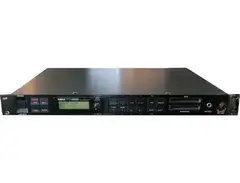
Step into the world of digital synthesis with the Yamaha TG77 FM Synthesizer, a revered piece of music technology that offers a deep dive into the rich, textured sounds of frequency modulation. This professional-grade synthesizer is a rack-mounted version of the popular SY77, providing the same cutting-edge sound engine in a more compact format. With its Advanced FM synthesis combined with AWM2 (Advanced Wave Memory 2), the TG77 is capable of producing complex and evolving soundscapes, making it a favorite among sound designers and electronic music producers.
This synthesizer is equipped with 6-operator FM synthesis, allowing for intricate sound creation and manipulation, offering musicians the ability to craft both classic FM tones and entirely new sonic possibilities. The TG77's powerful internal architecture enables you to layer FM sounds with sampled waveforms, providing a hybrid approach that expands your creative palette. Whether you're looking to recreate the iconic sounds of the late '80s and early '90s, or push forward into uncharted musical territories, the TG77 has you covered.
In addition to its impressive synthesis capabilities, the TG77 features a comprehensive MIDI implementation, making it easy to integrate with modern DAWs and other MIDI-equipped instruments. Its robust construction and intuitive interface ensure that it remains a reliable and user-friendly tool in any studio setting.
Key Features:
- 6-Operator FM Synthesis engine combined with AWM2 for hybrid sound creation
- Rack-mountable design for space-efficient studio setups
- Extensive MIDI capabilities for seamless integration with other gear
- Ability to layer FM and sampled sounds for unique textures
- Comprehensive editing capabilities for detailed sound design
- Versatile sound library with a wide range of presets and patches
Product specs
| Brand | Yamaha |
| Model | TG77 Tone Generator |
| Finish | Black |
| Year | 1990 |
| Made In | Japan |
| Categories | Digital Synthesizers, Rackmount Synths |
| Analog / Digital | Digital |
| MIDI I/O | MIDI Input, MIDI Output, MIDI Through |
| Polyphony | 32 Voices |
FAQs
-
What synthesis method does the Yamaha TG77 use?
-
The Yamaha TG77 uses Advanced FM synthesis combined with AWM (Advanced Wave Memory) sampling, allowing for complex and rich sound creation.
-
How many voices of polyphony does the Yamaha TG77 offer?
-
The Yamaha TG77 provides 32 voices of polyphony, enabling intricate and layered soundscapes.
-
Is the Yamaha TG77 capable of integrating with modern MIDI setups?
-
Yes, the Yamaha TG77 features MIDI Input, Output, and Through ports, making it compatible with most modern MIDI configurations.
-
Can the Yamaha TG77 be used as a rackmount unit?
-
Yes, the Yamaha TG77 is designed as a rackmount synthesizer, making it suitable for studio setups with limited space.
-
What are the main sound design capabilities of the Yamaha TG77?
-
The Yamaha TG77 excels in creating complex textures through its combination of FM synthesis and AWM sampling, offering deep modulation options for sound design.
Videos

Power DX7
Yamaha DX7 & SY77 - 80's Synth demo and FM synthesis comparison with Van Halen, Madonna, Pink Floyd
Yamaha DX7 & SY77 - 80's Synth demo and FM synthesis comparison with Van Halen, Madonna, Pink Floyd
Power DX7
YAMAHA TG77 - (TEST SOUNDS) #YAMAHASY77 #TG77 #SY77

Tiago Mallen
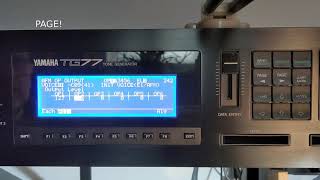
Demystifying the TG77 / SY77 - FM Patch From Scratch

unalienate
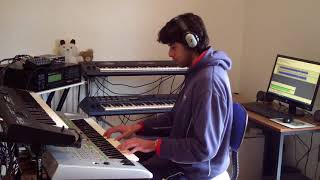
A New Synth In My Set Up - Yamaha TG77

Krevis81
Reviews
PROS
-
Superior clarity of converters enhances sound quality
-
Capable of converting old DX7mkI patches, ensuring compatibility
-
Offers crisp, industrial sounds and bell-like timbres unique to FM synthesis
-
Provides a mix of classic FM synthesis sounds and more complex tones with AWM
-
Deep sound design possibilities with 6 operators
CONS
-
Menus can be complex, making it easy to get lost during programming
Owner Insights
We analyzed real musician discussions from forums and Reddit to find what players love, question, and tweak about Yamaha TG77 FM Synthesizer.
Features and functionality
-
The TG77 combines 6-operator FM synthesis with sample-based attack sounds, offering unique sound design possibilities not found in typical FM synths.
Source -
The TG77 offers 15 different waveforms for FM sources and includes a sampling feature that can be used both as a straightforward sampler and an FM source.
Source -
The TG77's front-panel editing involves significant menu diving, more cumbersome than the SY77 due to its rack mount design.
Source
Software and compatibility
-
Owners recommend using Patch Base or MidiDesigner editors for easier parameter control and efficient sound editing on the TG77.
Source -
Some users explore using a Behringer BCR2000 as a controller for the TG77, though confirmation of successful implementation is lacking.
Source -
Patch Base is recommended for the TG77, and users note the developer's responsiveness to support queries.
Source -
The TG77 can be controlled with a SysEx-programmable controller, and its SysEx messages lack a checksum, simplifying setup.
Source
User experience
-
Editing on the TG77 involves a dual-handed approach: one hand for parameter selection and the other for adjusting values, making it quicker for those familiar with the architecture.
Source -
Owners emphasize that the TG77 has a unique sound quality, unmatched by software plugins like FM8, due to its distinctive digital-to-analog converters from the 80s.
Source -
Owners often find programming from the front panel tedious, suggesting that long-term use may become frustrating without an editor.
Source
Comparisons
-
Some users regret selling their SY77 due to its robust sound design capabilities, suggesting the TG77 shares these strengths.
Source -
FM8, despite its flexibility, lacks the TG77's sampling FM feature and diverse waveforms, setting the TG77 apart from software counterparts like FM8, VOPM, and Operator.
Source
Use cases and applications
-
The TG77 is praised for its ability to produce mind-blowing sounds with dedication, particularly appealing to those interested in deep FM programming.
Source -
The TG77 is particularly praised for its ability to FM samples, a feature that many users find compelling for expanding creative sound design possibilities.
Source -
Users highlight the TG77's lighter weight compared to the SY77, making it more manageable for those with limited space.
Source
4.5 out of 5
Based on 3 Reviews and 16 Ratings

410
Notes
Bought new in 1992 after I had traded Yamaha DX7mkI few years before to buy a Fostex A-80 and 450, respectively reel to reel 8 track 1/4 tape recorder and 8:4:2 mixer. With Opcode Galaxy plus Editors I succeeded converting old DX7mkI patches into TG77 ones and the better clarity of converters added a crisp to the sound I've just imagined with the former synthesizer.

41031
the whole SY series is so criminally underrated. they're all DX7 mkIIs with wavestation features grafted on as well as filtering. I often consider losing my beloved IIFD in favor of an SY77 or 99
A DX7 on Acid
Along the same route as the Kurzweil, early 90's saw the rise of FM synthesis. If your looking for industrial sounds and bell like timbres then you might like this box. With 6 operators it is a 'easy to get lost in menus' kinda synth but I houses sounds that you know and love from classic acts and bands. takes some getting into. But with everything, the journey towards succes is half the fun.

Artist usage
Add artist
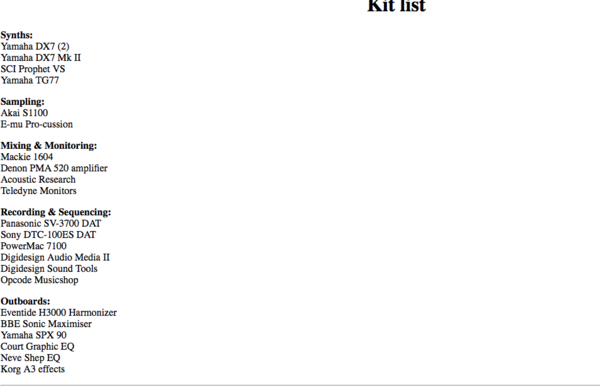
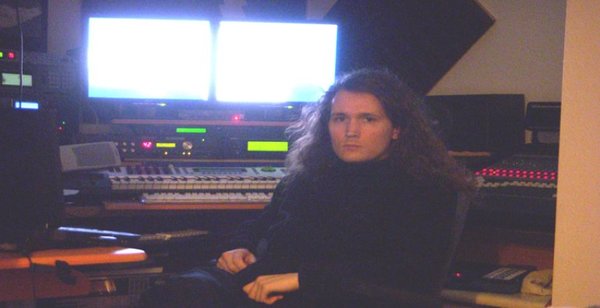
In this article in the December 1995 issue of Future Music magazine, the TG77 is named in the "Kit List" as being one of Eno's synths.


Per "Rock This Town" publication, special issue 1991:
In 1991, the setup was as follows: [Rock This Town special issue 1991]
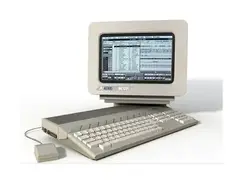
Sound studio: Analog Synths: Roland System 100/100M/101 (+Roland Midi interface MPU-101);YAMAHA CS-40M (in the Take One video); Oberheim Matrix 1000; Digital Synths: Yamaha DX-7 (2); Ensonic VFX; Roland DDR30; Yamaha tg77; Korg Wavestation; Sequencer: Atari 1040 (Sequ. Cubase 2.0); Samplers: AkaiS9000 (2); AkaiS1000 (8Mg + Hard Drive Mfile 44); AkaiS1000PB (4Mg); Emulator II; akai 1100, e-mu Procussion, roland s-10 for live use @ the mixing desk; Effects: Lexicon 480L; Yamaha SPX90 II (2); Roland SRV-2000; Roland SDE-3000; Alesis Midiverb II; Alesis Quadraverb; ART DRX; spx 1000 (x2); Eventide h3000 se; Mixing: Table TAC Scorpion 32/16; Recorder TASCAM MS16 tracks; Recorder DAT Luxman; Speakers Yamaha NS 10M pro ATC SCM50; QUAD ampli (for NS-10M); Diverse: compressor/limiter, noise gate, parametric eq. Live: Backline: Akai S9000; Roland DDR30; Simons & Roland Pads; Emulator II; TASCAM238 8
Graphic Studio: Commodore Amiga 2500 (6Mg + Hard Drive 40Mg); Commodore Amiga 500; Digitizer SNAPSHOT; Camera Sony CCD V-200E; Laserprint NEC Silentwriter LC890; Monitor NEC Multisync 2A.


As if this isn't enough, Jones' collection of sound sources is breathtaking. Inhale deeply for an (incomplete) overview: Fairlight Series III; Yamaha TX816 rack; Akai S1000; Roland Super JX, MKS50, D50, Jupiter 8, Juno 60, D550, and MKS20 digital piano; Korg Wavestation; Prophet T8; MiniMoog; Vocoder VP330; Yamaha KX88 and TG77; and somewhere in a corner his old 808 drum machine. Still there?


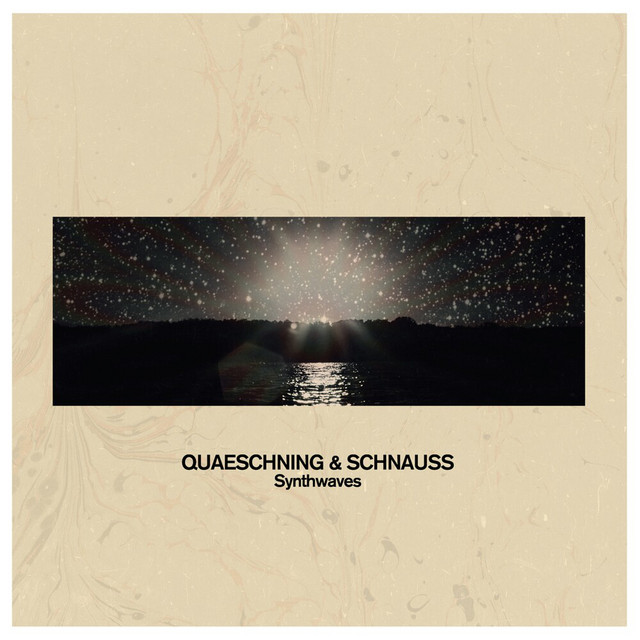
Equipment & Software used on 'SYNTHWAVES':THORSTEN QUAESCHNING: Software: Steinberg Cubase 8 &8.5Hardware: Manikin Schrittmacher Step-Sequencer x 2Manikin MemotronRoland Jupiter 8 synthesizerRoland JD800 synthesizerDave Smith Prophet 8 synthesizerARP Solina MK2 string synthesizerKorg Wavestation Ex synthesizerWaldorf Microwave synthesizerMoog Voyager monophonic synthesizerModular synthesizerRoland V Synth synthesizerKorg Z1 synthesiserKorg Prophecy synthesiserKorg M1 synthesizerClavia Nordwave synthesizerYamaha TG77 synthesizer moduleRoland System 1 synthesizerRoland JU06 synthesizer moduleKorg MS20 monophonic synthesizerRoland JP08 synthesizer moduleRoland TR-8 Rhythm Performer drum machineOberheim DMX drum machineRoland Promars synthesizerFender Starcaster guitarFender Telecaster guitarFender Stratocaster guitarScrewdriver on wood and contact microphones,Several boxes with contact microphonesA field recording of bees in Thorsten's garden, edited on Cubase and then treated with Melodyne & Halion - and finally used for the lead melody line on 'A Calm But Steady Flow'.(Software synthesizers): Spectrasonics Omnisphere synthesizer, Spectrasonics Keyscape


In an article by Soundonsound, Tom Lord-Alge is noted for including the Yamaha TG77 FM Synthesizer in his gear list.


"I still have the keyboards that I have been using for many years: Korg Wavestation, Yamaha DX7 and TG77, Sequential Prophet 5, Ensoniq ASR10 sampler."


Jerome Froese lists the Yamaha TG77 FM Synthesizer as part of his studio setup on his official website, showcasing its role in his music production.

In the description of the soundcloud track 4 of □ album he uses the tg77

Quote from the artist: "Recorded in the night from October 8th to 9th 2018. All sounds played and sequenced live with Waldorf Microwave I, Oberheim Matrix 1000, Yamaha TG77, Kawai K5000R. Moog Sub37, Eurorack Modular, Access Virus TI, Yamaha DX7."


Mentioned in the article in a quote:
“Quite a lot of old stuff. The Yamaha FS1R and the TG77 rackmount modules, an old Akai S6000 sampler, which I was using recently until the scuzzy hard drive failed. …"
Used at least on the 2017 album D.E.G.


Source: Interview with Michael Münzing and Luca Anzilotti about SNAP! mu:zines.co.uk - 1994: https://www.muzines.co.uk/articles/snap-to-tomorrow/8245
Album Usage
The Yamaha TG77 FM Synthesizer has been featured on the following albums:
Genre Usage
Based on how artists on Equipboard use this gear, it is most commonly found in the following genres.
Used With
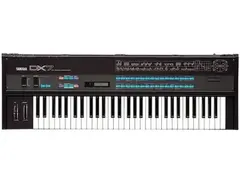
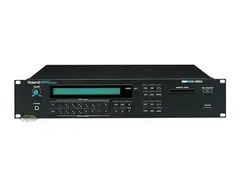
Based on how musicians on Equipboard use Yamaha TG77 FM Synthesizer, it is most commonly used with the following gear.




-s.webp?v=1784905108)
-s.webp?v=1784905125)
Community setups
Show yours


More Yamaha Synthesizers

$279.00 - $449.99
in Synthesizers Rank


$79.99 - $495.44
in Synthesizers Rank


$290.00
in Synthesizers Rank


$529.99 - $649.99
in Synthesizers Rank


.jpeg?v=1784891088)


$152.79 - $1,999.99


-m.webp?v=1784905247)


Accessories & Related Items





Similar


Gear Guides






.webp)

Most Popular Synthesizers
Most Popular Brands
-
Added to Equipboard on by
 dnotive
GearIQ 77
-


