Chris Squire's Gear


"Squire, who felt that certain effects were better matched with neck or bridge pickups, rewired his Rickenbacker with stereo outputs in the early ’70s. Onstage, he used a boatload of vintage effects, including Maestro Fuzz-Tone, TC Electronic Stereo Chorus Flanger, TC Nova Reverb, Boss OC-3 Super Octave, Mu-Tron III, and custom-made tremolo pedals. He played Moog Taurus bass pedals, eventually triggering samples from an E-Mu ESI2000 sampler."
Find it on:


In this rig rundown at 16:22, Chris's bass tech points out the delay and reverb pedals, both TC nova series, with the Delay in the middle between his Mutron iii and Nova reverb. His tech says "gradually over the years we've upgraded to those two, which he likes"
Find it on:

Squire can be seen playing a Tobias Toby Deluxe V Bass at 6:43 in this live performance of "Turn of the Century" by Yes.
Find it on:


According to the official Yes website, bassist Chris Squire owned a Gibson Melody Maker electric guitar.
Full article here.
Find it on:

In this photo, on Squire's Facebook page, there is a Hohner Blues Harp MS.
Find it on:



Squire can be seen in this photo, on Facebook, with a Rickenbacker 4001/8.
Find it on:

"Squire, who felt that certain effects were better matched with neck or bridge pickups, rewired his Rickenbacker with stereo outputs in the early ’70s. Onstage, he used a boatload of vintage effects, including Maestro Fuzz-Tone, TC Electronic Stereo Chorus Flanger, TC Nova Reverb, Boss OC-3 Super Octave, Mu-Tron III, and custom-made tremolo pedals. He played Moog Taurus bass pedals, eventually triggering samples from an E-Mu ESI2000 sampler."
Find it on:


He uses this particular version of Presonus Audiobox.
Find it on:

In a 1971 performance on Beat-Club, Chris Squire can be seen using a Fender Bassman Amp Head while playing "Yours Is No Disgrace."
Find it on:


-m.webp?v=1770017471)
In the fourth photo of this Instagram post, Squire can be seen playing an Ernie Ball Earthwood Acoustic Bass.
Find it on:

Squire states in this question poll that he uses a Martin D-45.
Find it on:


Further down on this page, in the touring programs, it is mentioned that Squire owned a Fender Stratocasater.
Find it on:

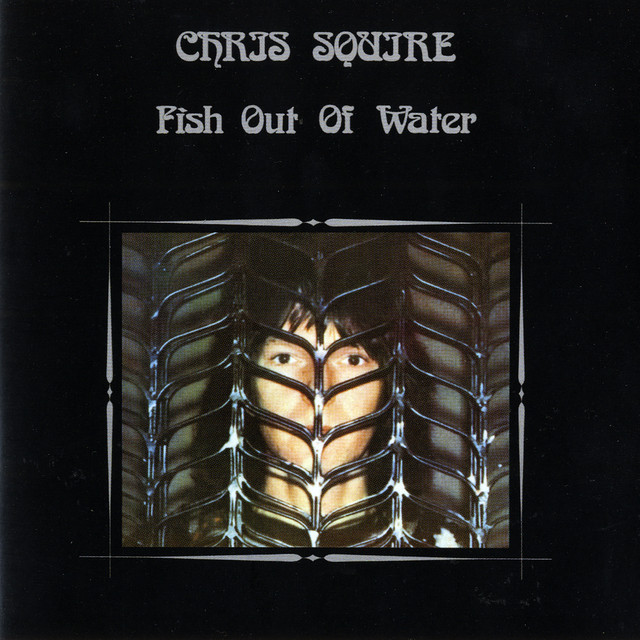
At 27:19 of this commentary of his album "Fish Out of Water", Squire can be seen with a Guild F-50.
Find it on:

Squire can be seen in a photo on the official Yes site playing a natural finish Gibson J-45.
Find it on:

In the video for No Opportunity Necessary, No Experience Needed, at 0:40 onward, Squire can be seen with a maple-necked Fender Telecaster Bass in a White finish.
Find it on:

In this 1980's Interview/Bass lesson, Squire is asked to demonstate and remark on his picking style, as well as his choise of picks, and at 2:15, holds up a white-grey Herco Flex 75 Heavy for the camera to focus on.
[Interviewer]: "You have one of the most distinctive sounds in rock 'n roll (as far as I'm concerned), I attribute a lot of that to your picking technique, could you explain a little bit about the way you pick? maybe the gauge of pick that you use, and how you approach the pick?"
[Chris Squire]: "Well uh, I've always for some time now used a Herco heavy pick, which are these gray ones (I'm not sure if you can see it, but uh, it's gray). And they make a guitar pickup, that's kind of a bronze colour too."
"And um, and probably most people know that our voice is Rotosound strings, which is the standard 'Swing Bass' um, gauges... To know exactly what they are, we'll have to look at the packet, but uh, it's the standard 'Swing' gauged set."
"And um... There is one thing I guess not many people ever realized about uh, a lot of the way I play, is that I don't just play with a pick, I actually over the years have developed um, a technique where the uh, the pick itself is just, just in front of the thumb. So in fact a lot of times I'm actually playing, I hit the string with the pick, and then after that my thumb hits it like a millisecond or two later, which is like a kind of an ADT."
"It's kind of hard to demonstrate because it's, real quick to get your timing, but um, if I just took the G string and played it with the pick, it would just be like:"
[Picks Midrange Bass Tone]
"If it were just my thumb, it'd be a softer sound like:"
[Plucks Slightly Muted Bass Tone]
"But the way I do it, is tend to put them together and have a:"
[Picks Bright Harmonic Bass Tone]
"...So you're getting a harmonic in there as well, so it's like:"
[Plays Fast Harmonic Bassline]
"So it's kind of a technique that I don't think anyonelse has really used. If anyone else has, please write to Star Licks and let them know, because I don't know how I developed it."
[Interviewer]: "Do you feel you get more of a feeling for the string that way?
[Chris Squire]: "Uh, yeah, yeah there's definatly more... [Plucks] There's more contact with the human body, I think just hitting a bit of plastic itself the same thing. So there's definately... you can get more 'soul' into your playing that way."
Find it on:

Instagram post showing a picture of Chris playing a Moog Taurus 1 with his feet.
Find it on:

In these vintage photos from Rotosound's official website, we can see Squire stringing up what appers to possibly be another Rickenbacker RM1999 4001 import model, distinguishable by it's dot-inlays and binding on the top of the body (only one or the other of which was ever present on either model).
More interestingly, this Bass has also been modified with a Gibson EB Series Mudbucker pickup in the neck, an odd piece of equipment given both Squire's usual characteristic of having a "bright & clanky" Bass tone, and the fact that he was not seen playing this Bass frequently.
Find it on:
-m.webp?v=1767902240)
Chris Squire can be seen playing a Höfner 490 12-string acoustic guitar in a photograph shared by progrockinstruments on Instagram.
Find it on:

In the Premier Guitar video titled "Rig Rundown - Yes' Chris Squire & Steve Howe," Chris Squire is seen using the E-Mu ESI-2000 sampler at the 16:46 mark.
Find it on:

Chris Squire is confirmed to use the Gibson Super 400 CES Florentine, as evidenced by his performance with the band Conspiracy in the video titled "Chris Squire Red Light Ahead," available on Gadzooks.
Find it on:

In the provided photo, Chris Squire is shown using a Marshall Model 1975 Supa Fuzz pedal during Yes' performance at the Crystal Palace Bowl in London, England, on September 2, 1972. The pedal's enclosure, identifiable by its more rounded edges, confirms it as a Supa Fuzz made between 1968 and 1972, as evidenced by the image provided. Photo taken by Michael Putland.
Find it on:
This is a community-built gear list for Chris Squire.
- Find relevant music gear like Microphones, Bass Guitars, Amplifiers, Effects Pedals, Software Plugins and VSTs, Keyboards and Synthesizers, Instruments, and other instruments and add it to Chris Squire.
- The best places to look for gear usage are typically on the artist's social media, YouTube, live performance images, and interviews.
- To receive email updates when Chris Squire is seen with new gear, follow the artist.
Discography