Eric Clapton
Role
Credits
Role
Credits
Eric Clapton's Gear


Eric Clapton uses these footswitches to work with his complicated pedalboard system which he uses now and then.
Find it on:


Eric Clapton kept this guitar at his country home for private use for a number of years, and has played this guitar frequently in the last five or six years.
Find it on:


Acquired by Clapton in the 1980s and extensively modified by Cesar Diaz in 1986, this amplifier was reputed to be his favourite amp, the sound of which helped him to shape the rich guitar tone of some of his most significant performances in the prolific 1990s. The highlights include appearances at the 1992 Bob Dylan 30th Anniversary Celebration, Nothing But The Blues/From The Cradle Tours of 1994/1995 and The Hyde Park concert in 1996.
Find it on:


This was the guitar that Eric Clapton used with Delaney & Bonnie. He gave it to Albert Lee as a gift.
Find it on:

Clapton used a Dumble Overdrive Special on his 2013 US tour.
Find it on:

According to the lot notes from Bonhams auction house website, Eric Clapton used the Ibanez HD1000 Harmonics/Delay, a DBX 160 compressor, a model SDE-3000 Roland delay, a Dyno-My-Piano Tri Stereo Chorus, a Boss CE-1 chorus, and a Boss HM-2 Heavy Metal pedal for his Bob Bradshaw rack system in the mid to late 1980s.
Find it on:

Clapton used a Vox AC30 and a Telecaster when he played with the Yardbirds
Find it on:
-m.webp?v=1783177071)
This guitar was used at the Music For Montserrat concert at the Royal Albert Hall, 15th September, 1997 for a solo acoustic rendition of Brokenhearted, a song that was later included on the Pilgrim album. It was also featured in a photo session in 1998 which produced the cover photograph for The Times magazine and the cover for the c.d. single Pilgrim.
Find it on:

This is one of the few Strats. in Eric Clapton's collection with a neck variation i.e. rosewood, rather than maple. It's a composite guitar.
Find it on:

In his interview with Dan Forte for Guitar Player magazine in 1985, Clapton commented that he was using a pedal board with a bank of presets built for him by an engineer that worked with Steve Lukather, namely, Bob Bradshaw. Lukather met Clapton as a part of the Los Angeles 'A Team' of studio musicians during the recording session there for the tracks to be included in the album Behind the Sun.
Clapton's guitar technician explained to Dan Forte that it was a programmable foot switching system which would allow the user to pick out presets and punch them into the memory. He further commented that the units in the rack at the time consisted of an Ibanez Harmonics/Delay, a DBX 160 compressor, a model SDE-3000 Roland delay, a Dyno-My-Piano Tri Stereo Chorus, that had three choruses in one, a Boss CE-1 chorus, and a Boss Heavy Metal pedal that Clapton heard Lukather using and liked. He added that Clapton used 'a bit of chorus, the CE-1, and a dash of compression'.
This Bradshaw system was in use until 1989 and was coupled variously with The Marshall amps (1985-c.87) in Lot 87, The Dual Showman amps (1988) in Lot 88, the Soldano amps (1988-89) in Lot 91 and the Dean Markley amps (1985-87) in this lot.
During the period from 1984 to 1988, Clapton's amplifiers were usually placed off-stage in a position accessible to his guitar technician and only the Marshall speaker cabinets were visible on stage to the audience. However, on rare occasions when Clapton was guesting at other acts' concerts, the amplifiers were placed on stage and hence visible to the audience. However, the presence of the Bradshaw system was manifest on the ever-present foot-controller on stage. Either of the two foot-controllers in this lot could be spotted on stage at Clapton's foot during his Behind The Sun world tour and The Live Aid appearance (the foot controller and the rack case were both visible on stage) at the JFK Stadium in 1985, various Prince's Trust Rock Galas with George Harrison, Paul McCartney, Ringo Starr and Tina Turner during this period, his Royal Albert Hall residencies which originated in this period, Nelson Mandela Concert at Wembley Stadium with Dire Straits and Clapton's 25th Anniversary tour of Japan with Elton John and Mark Knopfler in 1988.
Find it on:

In his interview with Dan Forte in Guitar Player magazine in1985, Clapton explained that he has recently gone back to Marshall amps from the Music Man amps that he had been using.
Mike Hill, formerly a director of Marshall Amplification recently recalled that, in 1984, he was contacted by Clapton's guitar technician and visited him at Shepperton or Bray Studios where he was rehearsing for Roger Waters' tour and personally delivered Marshall 1959 Super Lead and 1987 Lead 50 amplifiers and 1960 speaker cabinets.
Clapton's guitar technician commented to Dan Forte that having tried the 50W amplifiers brought by Mike Hill, Clapton loved it and bought two of the 50W (1987) and 100W (1959) models, which are the amplifiers in this lot.
Clapton went on to use these amplifiers for the 1984 Roger Waters Pros and Cons of Hitch-hiking Tour as well as Clapton's subsequent tours from 1985 to 1987 including his appearance at The Live Aid concert at JFK Stadium on 13 July 1985.
Find it on:

Eric Clapton is seen using the Dunlop 535Q Cry Baby Multi-Wah pedal in a photo of his pedalboard featured on Whereseric.
Find it on:


Collins chooses Audio-Technica AT4055 handheld large-diaphragm vocal condensers for Eric Clapton and his backing vocals
Find it on:

From a 1968 interview with The Rolling Stone Magazine:
[R.S.]: What does “Disraeli Gears” mean?
[E.C.]: It’s a pun; it doesn’t mean anything. In England there is a big thing on racing cycling and on the back wheel, fixed to the hub you have a gear with ten gears, called a “derailer.” That’s the pun. We were just in a car one night kicking up puns, like Duke Elephant and Elephant Gerald, and “Disraeli Gears” just came up and I said that would be a good name for the record.
[R.S.]: Who’s your producer?
[E.C.]: [Former Mountain bassist] Felix Pappalardi. He’s been working mostly on the folk scene, people like Joan Baez and that. He was just around Atlantic City and said he wanted to do it and we wanted him.
[R.S.]: What kind of guitar and amplifiers do you use?
[E.C.]: A Les Paul, a modern one. A solid one. Same pickups, more or less the same neck, just a different body than the 1958 ones. It’s obviously not as good a sound as the old ones, ’cause they’ve got vintage, like old wine. I haven’t got any old ones still intact, they’ve all gotten broken, warped. When a guitar is that old you’ve got to be careful. There’s a maker, I think it’s Hagstrom or someone like that, that’s copying the old Les Pauls, but I wouldn’t buy one.
[R.S.]: Amps, and how do you set them?
[E.C.]: Two 100-watt Marshalls. I set them full on everything, full treble, full base and full presence, same with the controls on the guitar. If you’ve got the amp and guitar full, there is so much volume that you can get it 100 miles away and it’s going to feed back – the sustaining effect – and anywhere in the vicinity it’s going to feed back.
[R.S.]: Strings?
[E.C.]: Fender rock and roll.
Find it on:

Lee Dickson recalled that this guitar was one of Clapton's two favourite acoustics before the development of his custom signature Martin in 1995. The Longworth has been regularly used by Eric Clapton on recordings, and the phrase 'Get me the Longworth' has been a regular request to Lee in the studio over the years.
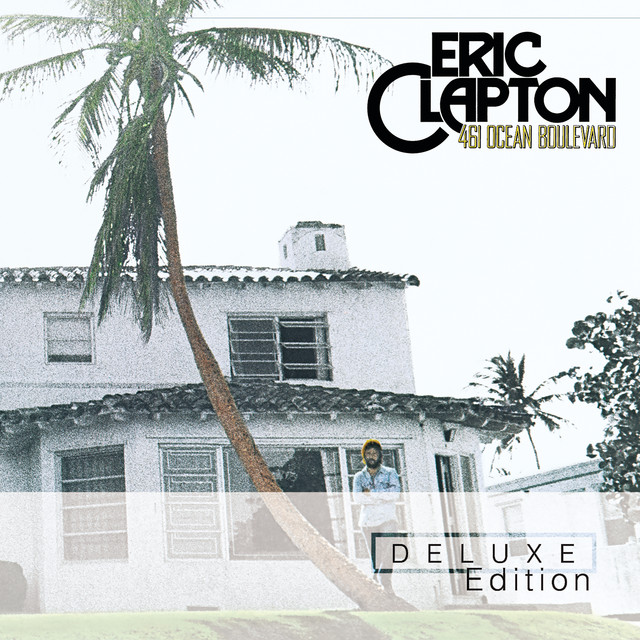
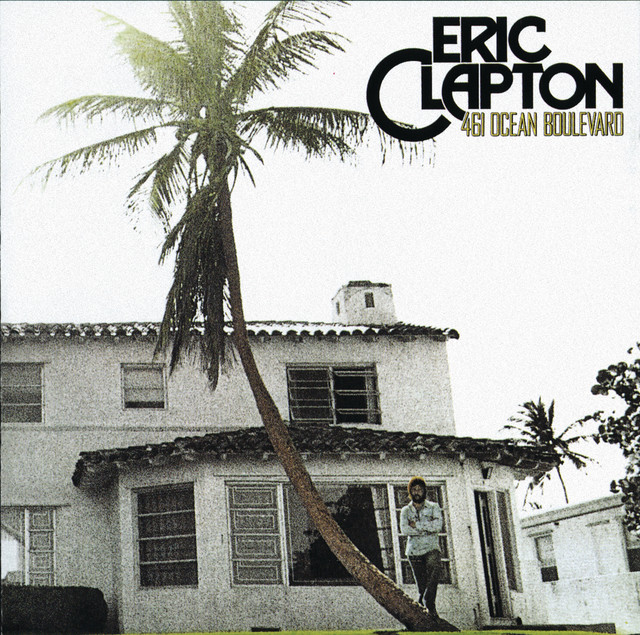
Eric Clapton acquired this customised 1966 Martin 000-28 in Nashville in November 1970 whilst he was on his US Tour with the Dominos. He'd stopped there for filming the Johnny Cash show with Carl Perkins as his fellow guest. He used the guitar for recording sessions at Criteria Studios in Miami in the spring of 1974, which produced the album 461 Ocean Boulevard. Clapton was photographed playing the guitar in front of the house he'd rented at that address whilst he was recording that album, and the photo was used as the back cover of the record.
When Clapton went on tour to promote the album later that year, he used this guitar on stage to open the concerts in Scandinavia and the US with Charlie Chaplin's Smile, Let It Grow from 461 Ocean Boulevard and Easy Now from his first solo album. The guitar travelled with Clapton on his first tour of Japan in November 1974, and was used for the opening segment of concerts which consisted of Better Make It Through Today from the album There's One In Every Crowd in addition to Smile and Let It Grow.
This guitar seemed to have remained Clapton's main acoustic guitar throughout 1975/1976 until the 'Rodeo Man' 000-28 took its place on the 1976 tour. It made a brief appearance on stage again during the ARMS tour in the autumn of 1983 for the encore number Good Night Irene with Ronnie Lane. Nine years later, it was played by Andy Fairweather Low during the session for the MTV Unplugged at Bray Studios in 1992. It subsequently made a stage comeback when Clapton used it during the acoustic section of the Blues season at the Royal Albert Hall in 1993 alongside the vintage 000-42 [Lot 19] he used for the Unplugged session. From that point on, 'The Longworth' was regularly used for acoustic numbers on stage throughout the From The Cradle Tour until November 1995.
Find it on:

Serial No. 1587-91, printed maker's label to interior CW Kaman II / 1587-91 / 1687-8, in blue finish, black Lyrachord deep bowl body with gold sparkles, scrolled acanthus leaf motif headstock, mahogany neck, twenty-four fret walnut fingerboard with maple triangular motif inlays, fibronic-graphite top, thirteen-piece exotic wood inlays around twenty-two multiple epaulet soundholes, carved acanthus leaf walnut bridge, Perspex® pickguard, two wooden rotary controls on the side and two jack outputs; and brown Ovation hardshell contour case with brown plush lining and brown vinyl cover with zip fastening, containing photocopied sheet music for Streamline Woman, by McKinley Morganfield (Muddy Waters) and a lead, with handwritten label inscribed with various details including ADAMAS OVATION....GRAPE SOUNDHOLE
Find it on:

Eric Clapton owns a 1970s Lab Series L5 amplifier, a model also favored by B.B. King for its signature sound. This particular amp was acquired by Clapton in the USA, as noted in a listing by Bonhams.
Find it on:

For the February 1999 volume of the German music magazine "Gitarre & Bass" (Guitar and Bass), journalist Stephan Neumeier had the chance to analyze Clapton's equipment for the Pilgrim tour. According to Clapton's guitar tech Lee Dickson, Clapton has been using this microphone to record the guitar sound from his twin amplifiers on stage.
Find it on:

The 1962, 2 x 12” combo was called the ‘Bluesbreaker’ because it was famously used by Eric Clapton with the influential British blues rockers, John Mayall’s Bluesbreakers, in 1966. It was this heady, ‘high in the mix’ sound that made the legend of the 1962.
Find it on:

This Dobro was used by Eric Clapton at the Concert of the Century at the White House, 23rd October 1999 for the opening number, his rendition of Robert Johnson's Rambling On My Mind; and for the same Johnson song during the last leg of the Pilgrim Tour in Japan, November/December 1999. It has also been used on various recording sessions in the last three to five years, although no specific recordings have been identified.
Find it on:

Eric Clapton has expressed appreciation for the design and concept of the Gretsch Chet Atkins Tennessean but mentioned that it doesn't align with his preferred sound. Despite this, a 1958 Gretsch Chet Atkins Tennessean was featured in a Christie's auction, indicating its connection to him.
Find it on:

Eric Clapton said that he bought this guitar "...for nostalgic reasons..." wanting "... to recreate the same experience as the psychedelic guitar ..." he'd used with Cream [see illustration]. He thinks that this model is ..."an incredible design.." but found that he couldn't switch back into using it having got so accustomed to Fenders. Lee Dickson recalls that Clapton disliked the tremolo [vibrato] on this particular model.
Find it on:

Eric Clapton experimented with the 1980s Fender Stratocaster Elite model, as documented by Christie's.
Find it on:

Freddy Tavares and John Page of Fender presented this guitar to Eric Clapton in 1982 after a show in the States.
Find it on:





In an interview with Dan Forte for Guitar Player magazine in 1985, Clapton commented: "Strings & Things from Memphis tried to get me interested in a fairly revolutionary-looking guitar, the St. Blues. I tried it, and I liked it, and I played it on stage liked, it a lot. But, while I was doing that, I was thinking, "Well, Blackie's back there. If I get into this new guitar too deeply, it's tricky, because then I won't be able to go back to Blackie. And what will happen to that?" This all happens in my head while I'm actually playing [laughs]. I can be miles away thinking about this stuff, and suddenly I shut down and say, "This is enough. No more. Nice new guitar. Sorry. You're very nice, but ..."
Clapton visited Strings & Things in Memphis and purchased this and its companion in Lot 55 on 19 February 1983, on which occasion a discussion took place about building an Eric Clapton model. Clapton took with him the guitar in Lot 55 but left this guitar with the company to be modified and shipped to him at a later date. When the guitar was shipped, the personalized neckplate was added. After some correspondence with Clapton discussing the specs of the Eric Clapton model, in which Clapton's idea of three pickups was replaced with two pickups. Two prototypes of the Eric Clapton model were completed and shipped to him in England in April 1983. According to Charles Lawing's statement: "[Eric] called and said he loved the guitars and how great they were... We got geared up to promote the Eric Clapton guitar at the next trade show when we received a letter from Eric's manager Roger Forrester letting us know that Eric was going to sign with The Fender Guitar Company... We were told that Clapton wanted us to keep one of his Eric Clapton prototype model guitars and sent back to us serial #00002...."
The returned prototype pictured in the advertisement is currently exhibited at the Smithsonian Rock and Soul Museum in Memphis.
Find it on:

This is Fender's first artist signature amp which is based on a 50s Fender Tweed Twin which Clapton loves.
Find it on:

Clapton used a Danelectro 59 DC during Blind Faith. It was handpainted in a very psychedelic way.
Find it on:

For the February 1999 volume of the German music magazine "Gitarre & Bass" (Guitar and Bass), journalist Stephan Neumeier had the chance to analyze Clapton's equipment for the Pilgrim tour. According to Clapton's guitar tech Lee Dickson, Clapton used the then brandnew Samson-"Synth"-model wireless units.
Find it on:

"Eric had what he considered to be the Holy Grail of amps [the 1957 Twin Amp in Lot 92]. But since he only had one he was afraid of damaging it on tour... Our mission was to clone that amp, which was a quite difficult task. We first analysed Eric's vintage amp to the specs then we searched for old parts. After all that, it still didn't sound right. At that point, John Page suggested old pinewood. We found some that came from an old church's floor and that made the difference. We nailed it and we built a total of three. We built them and then subjected them to the acid test... Eric's ear. He loved them and declared them to be the exact replicas and gave one to BB King as a gift."
Find it on:

According to the lot notes from Bonhams auction house website, Eric Clapton used the Ibanez HD1000 Harmonics/Delay, a DBX 160 compressor, a model SDE-3000 Roland delay, a Dyno-My-Piano Tri Stereo Chorus, a Boss CE-1 chorus, and a Boss HM-2 Heavy Metal pedal for his Bob Bradshaw rack system in the mid to late 1980s.
Find it on:
This is a community-built gear list for Eric Clapton.
- Find relevant music gear like Guitars, Amplifiers, Effects Pedals, and other instruments and add it to Eric Clapton.
- The best places to look for gear usage are typically on the artist's social media, YouTube, live performance images, and interviews.
- To receive email updates when Eric Clapton is seen with new gear, follow the artist.
Discography
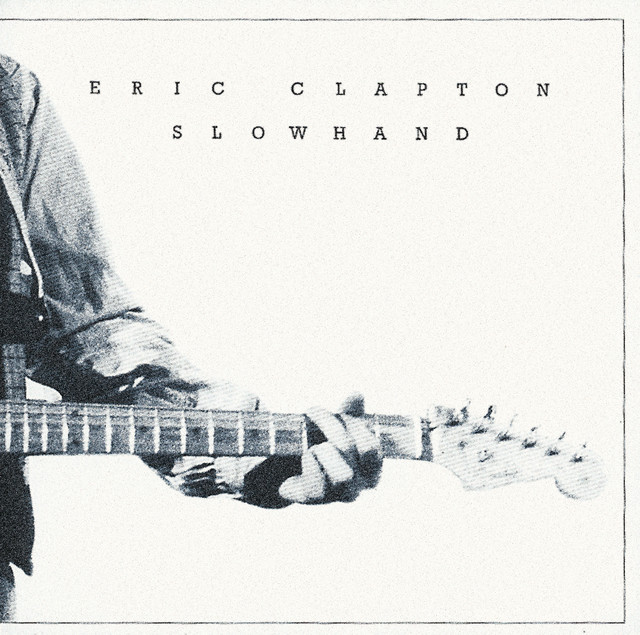
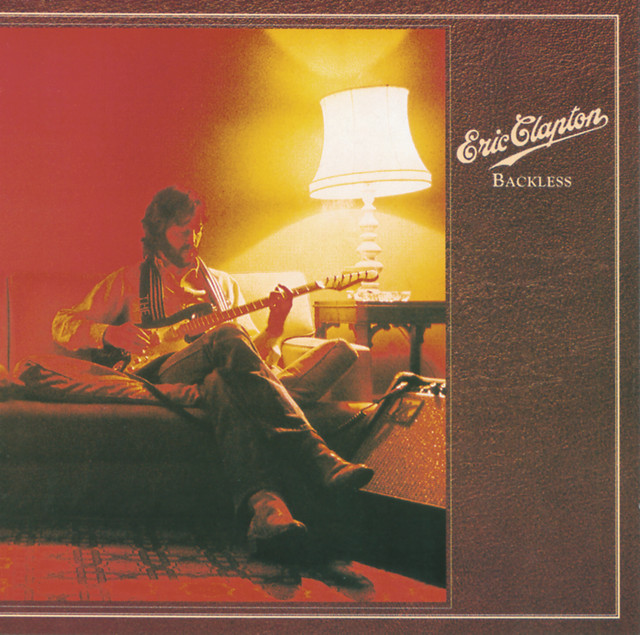
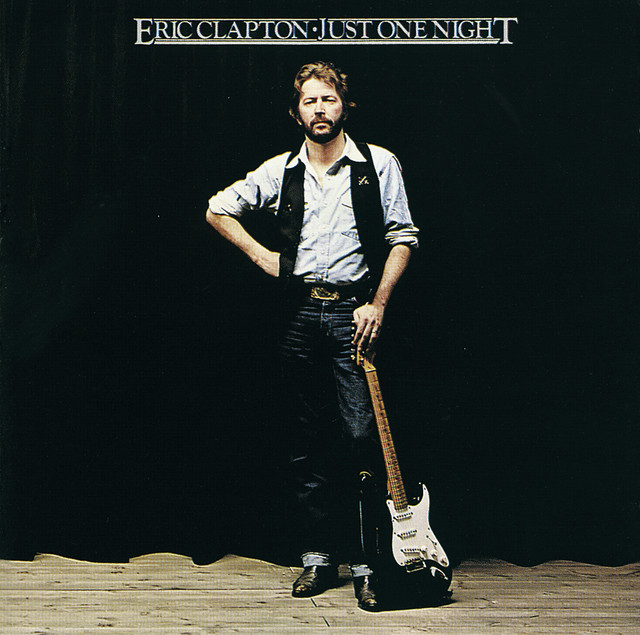
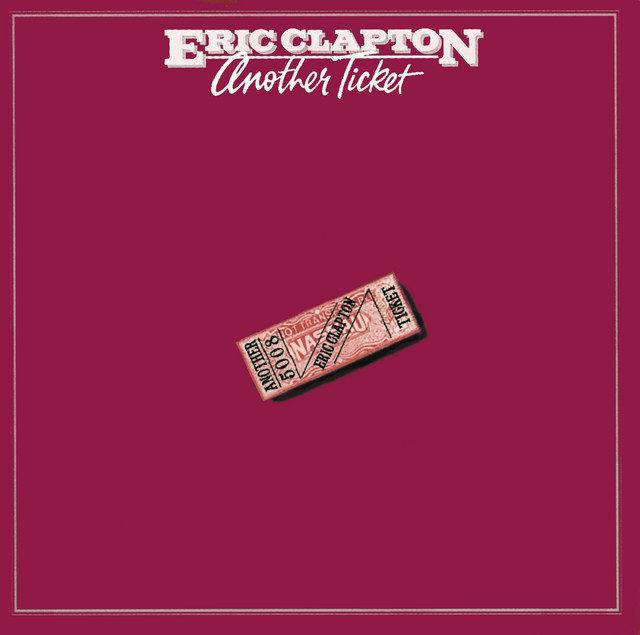
Album Credits
-
Eric Clapton · 2024
Producer -
Jeff Beck & Eric Clapton · 2023
Producer -
Eric Clapton · 2023
Producer -
Eric Clapton · 2022
Producer -
Eric Clapton · 2021
Producer -
Eric Clapton · 2018
Producer -
P.P. Arnold · 2017
Producer -
Eric Clapton · 2013
Producer -
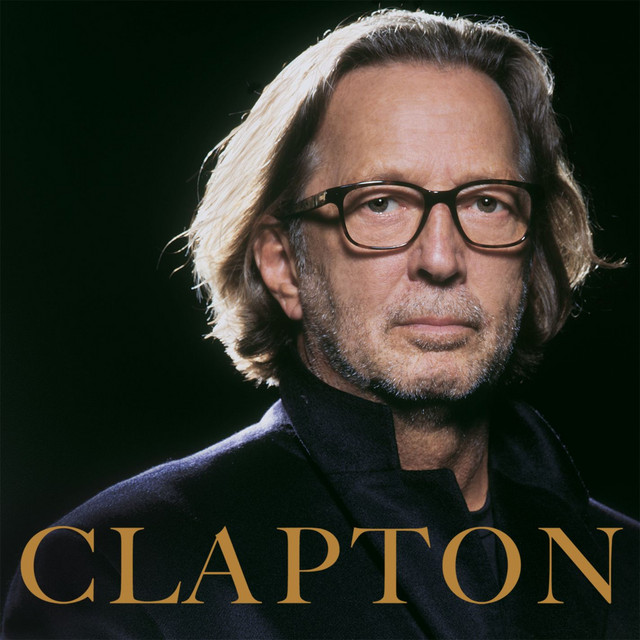
Eric Clapton · 2010
Producer -
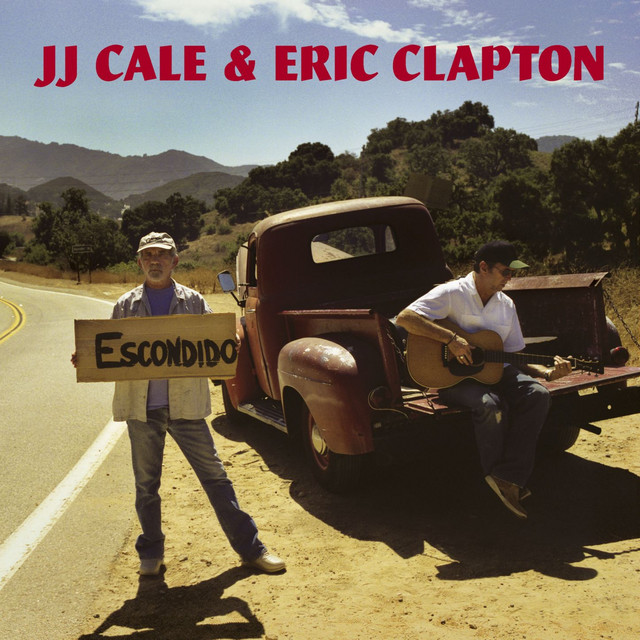
Eric Clapton & J.J. Cale · 2006
Producer -
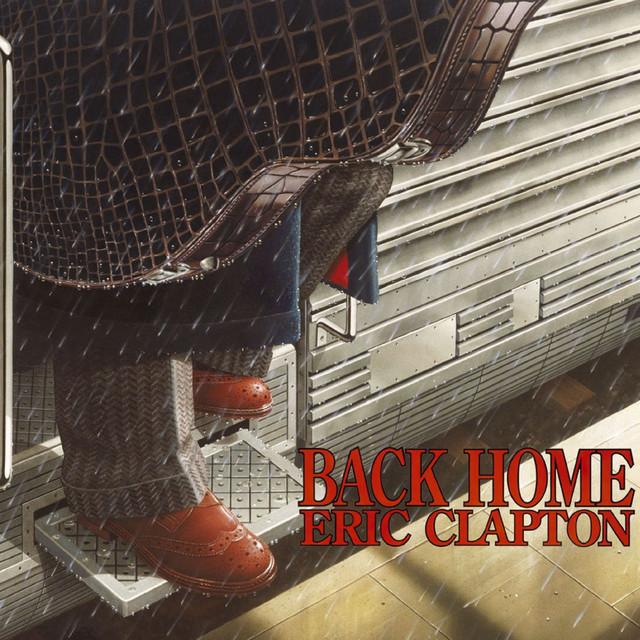
Eric Clapton · 2005
Producer -
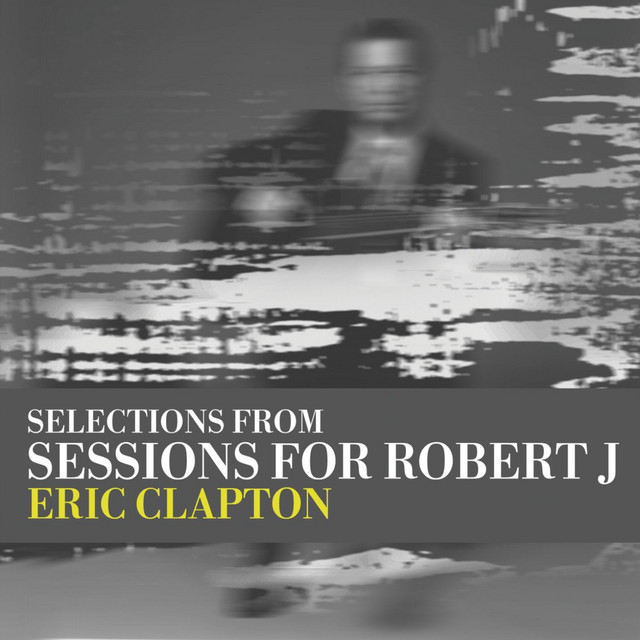
Eric Clapton · 2004
Producer