Jack White
rock & blues multi‐instrumentalist, The White Stripes, Third Man Records
Genre
Credits
Genre
Credits
Jack White's Amplifiers

-m.webp?v=1783176999)
When asked about his The Dead Weather rig, Jack white says "the amp is a Fender Twin Reverb—no Silvertone, like in the White Stripes." In the Northern Lights DVD, Jack White uses the amp combo and says "that’s so I get the crunch and the reverb at the same time. The Silvertone’s reverb is horrible, so I just use it for the thick, Jensen-speaker crunch that only a Silvertone can produce. No other amp can sound like that. I use the Fender for the reverb. It’s the best. A Silvertone and a Fender make a great combination."
Find it on:


Jack White used a mid ’60s Silvertone 1485 tube head and a 6x10 Silvertone speaker cab combo during the first three White Stripes albums.
Find it on:


Alongside the 60s, 70s and Re-Iusse Twins, he uses a 50s Twin too.
Find it on:

As you can see Jack is using a pair of 1485 silvertone amps and a fender twin reverb.What you might not see hiding in the background is what appears to be a fender bassman to the right of the silvertone pair. Time stamp : 34:06 / 34:07. It is only shown for about 1 second so you may need to replay a few times. near the dapper roadie.
Find it on:

In the Music-Video for Over and Over and Over - Jack White at around 0:16 you can see a Fender Hot Rod Deluxe 4.
Find it on:

At 0:11 in this music video, one of the RCA Clubmaster amps that Jack White is using can be seen.
Find it on:
-m.webp?v=1782918127)
This image which was taken backstage at a white stripes show. As you can see it is jack whites pedal board from any time after 2005 (big muff with tone wicker). You can also see the Fender Vibroverb underneath the pedalboard.
Yeah. I really, really love 15" speakers. That’s the speaker for guitar playing for me. I have loved it for years. In the White Stripes, I had an 18" speaker. I learned later on that a lot of guitar players I love or who I think have good tone also use 15" speakers, like Duane Eddy and Stevie Ray Vaughan, and I think Link Wray might’ve also. I’m not sure. But there’s something I read about; it’s a thing. There’s a club of us guys, I guess, that love the 15". The 15" Fender Vibroverb is, I think, the best amp Fender ever made. It’s just perfect.
Find it on:

This rare guitar amplifier was used on The White Stripes tour for Jack White's wurlitzer 200A.
Find it on:

Jack designed the three-speaker cabinet during the very early days of the White Stripes and built it with Johnny Walker.
Find it on:

The B3 GUYS were commissioned by Jack White for a custom Hammond Leslie 3300 Rotary Speaker during the 2007 White Stripes World Tour.
Find it on:


In this video from Fender, Jack White discusses his signature model amp. He says:
I had an amazing time with Fender designing this. We worked on this for four or five years and this was sort of like me shooting for the moon of what the ultimate Fender amplifier could be or just what the ultimate amplifier could be. They allowed me to design a lot of elements and work together with Fender to try and make something really beautiful and unique that Fender has never done before. Stan Cotey put together the first prototype amp of this and we went from there.
I’ll take you to the amp section first. Somewhere in there you got a Fender Vibroverb 1964 is in the heart of this amplifier. That’s my favorite Fender amp and I’ve used it for years but I was thinking you know what are these things that could make it sort of into this dream Fender amp. And one thing was having a drive boost knob. I like drive and preamping but I really like distrotion in amplifiers too much. A lot of modern amps have sort of these distortion knobs. Well this gives you an amazing boost without getting too distorted.
I of course always missed the middle knob in certain Fender amps that I love. They only had treble and bass. It was a bummer for me because I love to cut the mids a little bit in my signal and I think a lot of people obviously love to have the three chouices.
So we have a 15-inch speaker here and a 10-inch speaker here. Two different sized speakers. Not exactly something you’ve ever seen in a Fender amp before, and definitely not in those sizes. The sound of that is outstanding because double micing this you get the deep bassier crunch on the 15, you get the brighter glassier tones in the 10 inch and when you stereo mic these and pan them your stereo image is just outstanding, even before you talk about reverb and tremolo on this amp, which I’ll get to.
The reverb section. You’re going to see me very happy as I talk about this. This is just the dream reverb scenario for a Fender amp in my opinion, or for any amplifier. There was a Fender amp in the early 90s called the Vibro King and I thought that was really cool because what they did was they took a Fender reverb unit like the standard surf box reverb unit, and they put it in a combination amp with a dwell knob, a mix knob, and a tone knob. The difference between our version of that compared to the Vibro King is that in the Vibro King came before the preamp section, this reverb section comes after the preamp section and it’s just beautiful how much energy it has. The decay goes on forever and it’s just so beautiful and long and deep.
And what we’ve done here is instead of having a tone knob we have a treble and bass knob, so you can control just the treble and bass of the reverb signal. Now you’ve never seen that on a Fender amp before, no doubt about that. So if you like a really bassy reverb, you can turn the bass up and the treble down. If you like a really surfy twangy reverb, you turn the treble up on the reverb section. How cool is that? And that really comes in handy live and in the studio.
The switch here on the end is also going to blow your mind. It’s split and full. Full has the reverb coming through both these speakers and split has it coming only through the 10-inch speaker. So, if you have two microphones on a twin reverb say, you’re probably not getting much of a different sound unless there’s a flaw in one of the speakers. If you have two microphones on this Pano Verb, you’re gonna get two different speaker sounds, two different speaker sizes so they both have different characteristics and the ability only to put reverb in the 10-inch side. And the decay on this reverb is just outstanding. It goes on for days and it’s just so beautiful and rolling. I just love it.
Alright we’re going to go to the tremolo section now. This is the first harmonic tremolo that Fender has done in an amplifier since the early ’60s. I had this harmonic tremolo in my ’61 Vibrasonic and I really love the sound of it. Almost like it’s opening up like high and low pass filters rather than just amplitude modulation of volume going up and down. So we wanted to get that sound in here, you know. And you have two modes here; you have a mono and stereo mode. So there’s two amp sections in here that drive this stereo mode. In the mono mode, you’re kind of more like the regular Fender tremolo amplitude modulation, two speakers going up and down in volume but it’s still harmonic tremolo. In stereo mode you have a little bit of delay seperation between these two so you’ve got this stereo image that has this swampy wah-wah-wah going back and forth with left and right. The intensity all the way up and the speed down in this stereo mode you can hear the the movement.
I'd like to take you through some of the small aesthetic details of this amp. One that I'm very proud of is how many times has any Fender player spent a minute looking for the power switch and standby switches? Well, you know exactly where they are in this amp. You have this lightning bolt indicator to show you right where the power switch is. You're welcome. We have this great yellow, white, and black artwork here. Fender's never done this color on an amplifier before. This is a cool little co-brand here with Third Man Hardware. The knobs are pretty interesting. These were like Fender prototype metal knobs in the early 60s. I guess they just used them for a little while and they didn't catch on, but I had it on an old Vibrasonic and I thought it would be nice to bring that back. What's even interesting too here, each section the first knob clicks on and off, so if let's say you you have your reverb turned to zero on a on a Twin Reverb and you assume it's off, you know. This is not the case with this. The first knob in each section clicks off and has a zero spot so you definitely know. In the studio you don't even want to worry about it. You've clicked it off. It's set in stone. So the intensity on the tremolo is turned off, the mix of the Reverb is turned off the drive is turned off.
The input here is only one. The input just has a number three instead of a one or a two. This just a little Third Man Hardware flare to it. The foot switch also unique and you've never seen it before, a yellow foot switch on a Fender amp but that's just a kind of cool aesthetic part, but what I really am proud of is for years I've always wanted to put my switch for the amp up by my pedalboard but the wire always came out of the middle. Well we got this one to come out the side so now you can wrap that cord around and have it right next to your pedal board without it being funky and feeling backwards. That's a tiny Innovation I think is really really cool and I hope Fender keeps that for other amplifiers.
This amp comes with a yellow and black canvas cover instead of naugahyde. I'm an upholsterer by trade you know and I love the feel of certain fabrics and I wanted to have something a little bit different. A yellow jewel light here to make this a little bit special coming the factory standard. Air conditioning and pizza oven also factory standard. Yellow Fender amp logo, which is very cool and to go with the whole collection here the guitar cases also have this exact same yellow logo on them, which I think is a cool little marriage of these products that we collabed together.
Find it on:
-m.webp?v=1769151640)
In this article from Vintage Guitar, it says:
In recent years, the Selmer brand has started to get some of the attention it deserves, partly because of skyrocketing Vox and Marshall prices and collectibility, partly in the wake of Jack White’s use of a Selmer Zodiac 30 to record the White Stripes’ Elephant album, and partly because people have finally realized just how cool these amps are.
Find it on:
-m.webp?v=1782658580)
He uses this amp live and in the studio very often
Find it on:

In this Instagram link: [https://www.instagram.com/p/Ck8MMuaLAiG/?utm_source=ig_web_button_share_sheet], Jack White is seen using the Fender Princeton Reverb amp as his practice/rehearsal amp.
Find it on:

In this June 6, 2019 Premier Guitar article, The Raconteurs The Power of Two, Jack White says: "This album, I actually had that gold Fort Knox Les Paul, and I had a new Fender Champ amp. I thought I’d try it. I’d never actually done that with the Les Paul through this tiny little amp. For that guitar solo, it was like, “Oh my god, it sounds so good!” I just thought, of course, this is why everybody does this. It’s hilarious that I’ve avoided this my whole life."
'The sidebar list of Jack White's gear describes it as a: "1980s Fender Champ."
Find it on:

Jack is now one of the users of this Josh Homme's signature model according to his post on Facebook.
Find it on:
This is a community-built gear list for Jack White.
- Find relevant music gear like Microphones, Guitars, Amplifiers, Effects Pedals, Drum Sets, Cymbals, Snare Drums, Drumsticks, Pianos, Keyboards and Synthesizers, and other instruments and add it to Jack White.
- The best places to look for gear usage are typically on the artist's social media, YouTube, live performance images, and interviews.
- To receive email updates when Jack White is seen with new gear, follow the artist.
Discography

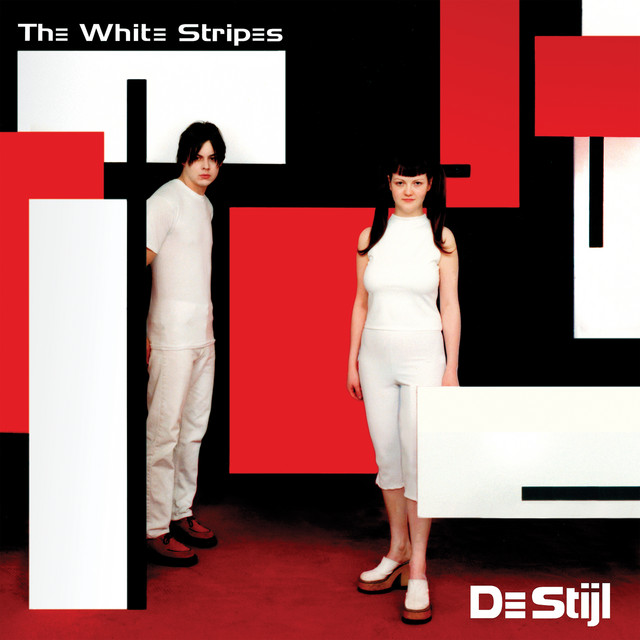
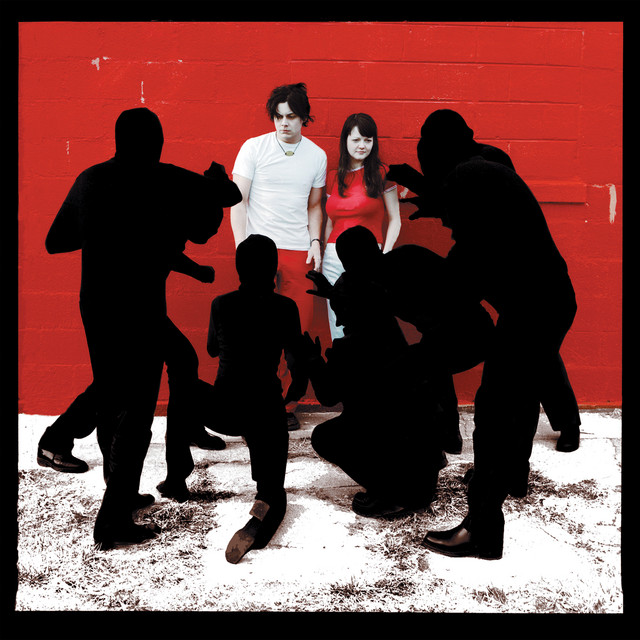
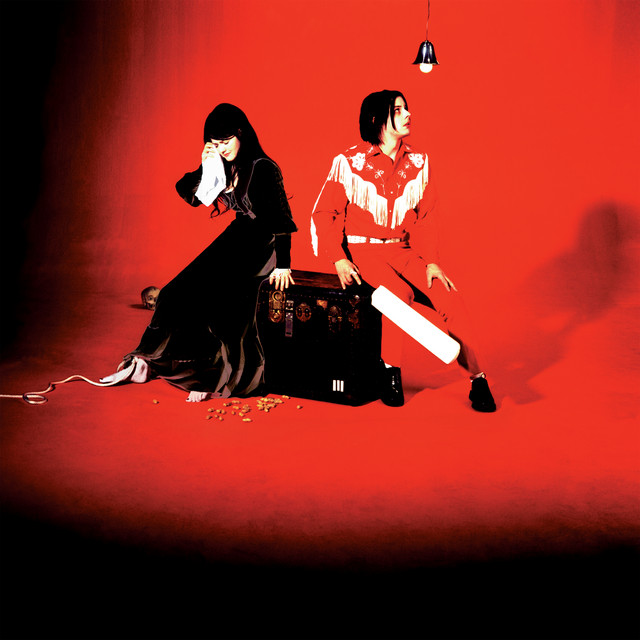
Album Credits
-
Jack White & Jack White · 2024
Mixing Engineer Producer -

Jack White & Jack White · 2022
Engineer Mixing Engineer Producer -
Jack White & Jack White · 2022
Engineer Mixing Engineer Producer -

Jack White & Jack White · 2018
Engineer Mixing Engineer Producer -
Soledad Brothers · 2017
Recording Engineer -
Killer Diller Blues (Music from The American Epic Sessions)
Alabama Shakes · 2017
Producer -
Jack White & Jack White · 2017
Producer -
Producer
-

Justice League (Original Motion Picture Soundtrack)
Danny Elfman · 2017
Mixing Engineer Producer -

Beyoncé · 2016
Producer -
You Are The Sunshine Of My Life
Jack White & Jack White · 2016
Producer -
Jack White & Jack White · 2014
Mixing Engineer Producer