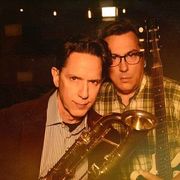
John Linnell
Role
Genre
Group
Credits
Role
Genre
Group
Credits
John Linnell's Gear


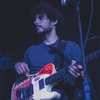
In this photo, which comes from TMBG's 2013 concert, Linnell can be seen playing the Roland Fantom X6.
Find it on:


-m.webp?v=1781279647)
John plays a Fender Mustang bass for the entirety of this video. At 0:10 in the video, the logo is clearly shown.
Find it on:


"The Main Squeeze Model 911 is the most solid accordion I've ever played. It should meet the demands of any serious musician, whether they play professionally or just for the love of it."-John Linnell
Find it on:

In the Official They Might Be Giants (TMBG) Wiki you can see John Linnell playing the Accordion.
Find it on:

John Linnell played a red Farfisa Compact in the early days of They Might Be Giants, as well as in his previous band, the Mundanes. It was used on many very early demos and some studio recordings, most notably "Twisting". There are no known usages of this organ by John Linnell beyond 1990, although it's possible it might've seen use on Apollo 18.
Find it on:

John Linnell used a micromoog early in his career, in They Might Be Giants and in his band before that, the Mundanes (as seen in the video). It was used to provide synth leads and synthesize drum tracks on early demos. It was beginning to break down in 1990 and is possibly now out of service.
Find it on:

In the 33 1/3 publication They Might Be Giants' Flood, John Linnell reports that he and Flansburgh each acquired a Casio FZ-1 for the writing and recording sessions for that album.
Find it on:

"We recently moved over to a lot of software — samplers and synths — from unreliable hardware. We have [Mac] G5s."
Find it on:

"Around the time we were making our second album, Lincoln, I bought a used Mac Plus. It probably had about one meg of memory. I had that little TV set-shaped thing on my desk for a number of years. We used that and some really simple keyboards for sequencing."
Find it on:

"I told you I just upgraded to Digital Performer version 7. Well, the previous version I had was 5. I worked with 5 for — I don’t know — years, actually, because it was fine. It did everything I needed. And then finally I got curious, and I had already gone through two different versions."
Find it on:

"Lincoln to me doesn’t seem like that big of leap from the first album. When we had to write another album, we obviously didn’t have, like, five years to write Lincoln. So it seems we were really quick in writing songs back then. We had more of a plan. We bought the Alesis HR-16 —"
Find it on:

"I found out installing third-party chips in the [E-mu] Proteus 2000 does something completely weird to them that more or less makes them unreliable onstage after a couple of years. As soon as they started to warm up, the pitch would get crazy."
Find it on:

John Flansburgh explains on Tumblr that a Fairlight CMI unit was used during the production of their first album.
Find it on:



Mr. Linnell can be seen playing this Tenor Saxophone live here.
Find it on:

Mr. Linnell can be seen playing the Bari Sax.
Find it on:

In this article Linnel has a tower of rackmount gear Including the u-220
Find it on:

The vintage keys synth module is included in the stack of rackmount equipment
Find it on:

The heart of Linnell’s system is an Apple Macintosh IIci (1) running MOTU’s Performer sequencer and Mosaic notator (for horn arrangements), connected to an Opcode Studio Plus Two MIDI interface (2) and Timecode Machine sync box (3). A Cutting Edge hard disk (4) alongside Linnell’s Music Mart accordion (5) doubles as a pedestal for a Bundy bass clarinet (6) — which is not to ignore his prized Buescher bass sax (7). A Yamaha MJC8 (8) distributes MIDI to his E-mu Proteus FX (9) (“this is what I’m using live now”) and Vintage Keys (10), Roland R-8M percussion module (11) and U-220 (12), plus a Casio VZ-10M (13) bought in a closeout sale. “It’s the end of the legendary CZ line,” he laments. “It’s got some weird, cheap sounds you can’t get any other way.” An Akai S1000KB sampler (14) also serves as a master MIDI keyboard. When he’s in a picking mood, Linnell picks up a Gibson SG from the early ‘60s (15). A Boss TU-12H (16) helps keep it in tune.
The instruments, plus a Sennheiser 421 mike (17), feed a Tascam 688 eight-track cassette deck (18). “It has all these line inputs,” Linnell points out. “I can mix all my sequenced tracks and still have seven tape tracks for bass clarinet.” For effects, he uses a Urei 7110 compressor/limiter, Lexicon PCM42 delay (19). Yamaha SPX90II multieffect unit (20) and Korg DRV-1000 reverb (21). He mixes to a Sony TC-WR690 cassette deck (22) and Panasonic SV-3700 DAT (23), amplified by a Hafler PRO2400 (24) and Design Acoustics PS-10 speakers (25).
Find it on:

The heart of Linnell’s system is an Apple Macintosh IIci (1) running MOTU’s Performer sequencer and Mosaic notator (for horn arrangements), connected to an Opcode Studio Plus Two MIDI interface (2) and Timecode Machine sync box (3). A Cutting Edge hard disk (4) alongside Linnell’s Music Mart accordion (5) doubles as a pedestal for a Bundy bass clarinet (6) — which is not to ignore his prized Buescher bass sax (7). A Yamaha MJC8 (8) distributes MIDI to his E-mu Proteus FX (9) (“this is what I’m using live now”) and Vintage Keys (10), Roland R-8M percussion module (11) and U-220 (12), plus a Casio VZ-10M (13) bought in a closeout sale. “It’s the end of the legendary CZ line,” he laments. “It’s got some weird, cheap sounds you can’t get any other way.” An Akai S1000KB sampler (14) also serves as a master MIDI keyboard. When he’s in a picking mood, Linnell picks up a Gibson SG from the early ‘60s (15). A Boss TU-12H (16) helps keep it in tune.
The instruments, plus a Sennheiser 421 mike (17), feed a Tascam 688 eight-track cassette deck (18). “It has all these line inputs,” Linnell points out. “I can mix all my sequenced tracks and still have seven tape tracks for bass clarinet.” For effects, he uses a Urei 7110 compressor/limiter, Lexicon PCM42 delay (19). Yamaha SPX90II multieffect unit (20) and Korg DRV-1000 reverb (21). He mixes to a Sony TC-WR690 cassette deck (22) and Panasonic SV-3700 DAT (23), amplified by a Hafler PRO2400 (24) and Design Acoustics PS-10 speakers (25).
Find it on:

The heart of Linnell’s system is an Apple Macintosh IIci (1) running MOTU’s Performer sequencer and Mosaic notator (for horn arrangements), connected to an Opcode Studio Plus Two MIDI interface (2) and Timecode Machine sync box (3). A Cutting Edge hard disk (4) alongside Linnell’s Music Mart accordion (5) doubles as a pedestal for a Bundy bass clarinet (6) — which is not to ignore his prized Buescher bass sax (7). A Yamaha MJC8 (8) distributes MIDI to his E-mu Proteus FX (9) (“this is what I’m using live now”) and Vintage Keys (10), Roland R-8M percussion module (11) and U-220 (12), plus a Casio VZ-10M (13) bought in a closeout sale. “It’s the end of the legendary CZ line,” he laments. “It’s got some weird, cheap sounds you can’t get any other way.” An Akai S1000KB sampler (14) also serves as a master MIDI keyboard. When he’s in a picking mood, Linnell picks up a Gibson SG from the early ‘60s (15). A Boss TU-12H (16) helps keep it in tune.
The instruments, plus a Sennheiser 421 mike (17), feed a Tascam 688 eight-track cassette deck (18). “It has all these line inputs,” Linnell points out. “I can mix all my sequenced tracks and still have seven tape tracks for bass clarinet.” For effects, he uses a Urei 7110 compressor/limiter, Lexicon PCM42 delay (19). Yamaha SPX90II multieffect unit (20) and Korg DRV-1000 reverb (21). He mixes to a Sony TC-WR690 cassette deck (22) and Panasonic SV-3700 DAT (23), amplified by a Hafler PRO2400 (24) and Design Acoustics PS-10 speakers (25).
Find it on:

The heart of Linnell’s system is an Apple Macintosh IIci (1) running MOTU’s Performer sequencer and Mosaic notator (for horn arrangements), connected to an Opcode Studio Plus Two MIDI interface (2) and Timecode Machine sync box (3). A Cutting Edge hard disk (4) alongside Linnell’s Music Mart accordion (5) doubles as a pedestal for a Bundy bass clarinet (6) — which is not to ignore his prized Buescher bass sax (7). A Yamaha MJC8 (8) distributes MIDI to his E-mu Proteus FX (9) (“this is what I’m using live now”) and Vintage Keys (10), Roland R-8M percussion module (11) and U-220 (12), plus a Casio VZ-10M (13) bought in a closeout sale. “It’s the end of the legendary CZ line,” he laments. “It’s got some weird, cheap sounds you can’t get any other way.” An Akai S1000KB sampler (14) also serves as a master MIDI keyboard. When he’s in a picking mood, Linnell picks up a Gibson SG from the early ‘60s (15). A Boss TU-12H (16) helps keep it in tune.
The instruments, plus a Sennheiser 421 mike (17), feed a Tascam 688 eight-track cassette deck (18). “It has all these line inputs,” Linnell points out. “I can mix all my sequenced tracks and still have seven tape tracks for bass clarinet.” For effects, he uses a Urei 7110 compressor/limiter, Lexicon PCM42 delay (19). Yamaha SPX90II multieffect unit (20) and Korg DRV-1000 reverb (21). He mixes to a Sony TC-WR690 cassette deck (22) and Panasonic SV-3700 DAT (23), amplified by a Hafler PRO2400 (24) and Design Acoustics PS-10 speakers (25).
Find it on:

The heart of Linnell’s system is an Apple Macintosh IIci (1) running MOTU’s Performer sequencer and Mosaic notator (for horn arrangements), connected to an Opcode Studio Plus Two MIDI interface (2) and Timecode Machine sync box (3). A Cutting Edge hard disk (4) alongside Linnell’s Music Mart accordion (5) doubles as a pedestal for a Bundy bass clarinet (6) — which is not to ignore his prized Buescher bass sax (7). A Yamaha MJC8 (8) distributes MIDI to his E-mu Proteus FX (9) (“this is what I’m using live now”) and Vintage Keys (10), Roland R-8M percussion module (11) and U-220 (12), plus a Casio VZ-10M (13) bought in a closeout sale. “It’s the end of the legendary CZ line,” he laments. “It’s got some weird, cheap sounds you can’t get any other way.” An Akai S1000KB sampler (14) also serves as a master MIDI keyboard. When he’s in a picking mood, Linnell picks up a Gibson SG from the early ‘60s (15). A Boss TU-12H (16) helps keep it in tune.
The instruments, plus a Sennheiser 421 mike (17), feed a Tascam 688 eight-track cassette deck (18). “It has all these line inputs,” Linnell points out. “I can mix all my sequenced tracks and still have seven tape tracks for bass clarinet.” For effects, he uses a Urei 7110 compressor/limiter, Lexicon PCM42 delay (19). Yamaha SPX90II multieffect unit (20) and Korg DRV-1000 reverb (21). He mixes to a Sony TC-WR690 cassette deck (22) and Panasonic SV-3700 DAT (23), amplified by a Hafler PRO2400 (24) and Design Acoustics PS-10 speakers (25).
Find it on:

The heart of Linnell’s system is an Apple Macintosh IIci (1) running MOTU’s Performer sequencer and Mosaic notator (for horn arrangements), connected to an Opcode Studio Plus Two MIDI interface (2) and Timecode Machine sync box (3). A Cutting Edge hard disk (4) alongside Linnell’s Music Mart accordion (5) doubles as a pedestal for a Bundy bass clarinet (6) — which is not to ignore his prized Buescher bass sax (7). A Yamaha MJC8 (8) distributes MIDI to his E-mu Proteus FX (9) (“this is what I’m using live now”) and Vintage Keys (10), Roland R-8M percussion module (11) and U-220 (12), plus a Casio VZ-10M (13) bought in a closeout sale. “It’s the end of the legendary CZ line,” he laments. “It’s got some weird, cheap sounds you can’t get any other way.” An Akai S1000KB sampler (14) also serves as a master MIDI keyboard. When he’s in a picking mood, Linnell picks up a Gibson SG from the early ‘60s (15). A Boss TU-12H (16) helps keep it in tune.
The instruments, plus a Sennheiser 421 mike (17), feed a Tascam 688 eight-track cassette deck (18). “It has all these line inputs,” Linnell points out. “I can mix all my sequenced tracks and still have seven tape tracks for bass clarinet.” For effects, he uses a Urei 7110 compressor/limiter, Lexicon PCM42 delay (19). Yamaha SPX90II multieffect unit (20) and Korg DRV-1000 reverb (21). He mixes to a Sony TC-WR690 cassette deck (22) and Panasonic SV-3700 DAT (23), amplified by a Hafler PRO2400 (24) and Design Acoustics PS-10 speakers (25).
Find it on:

The heart of Linnell’s system is an Apple Macintosh IIci (1) running MOTU’s Performer sequencer and Mosaic notator (for horn arrangements), connected to an Opcode Studio Plus Two MIDI interface (2) and Timecode Machine sync box (3). A Cutting Edge hard disk (4) alongside Linnell’s Music Mart accordion (5) doubles as a pedestal for a Bundy bass clarinet (6) — which is not to ignore his prized Buescher bass sax (7). A Yamaha MJC8 (8) distributes MIDI to his E-mu Proteus FX (9) (“this is what I’m using live now”) and Vintage Keys (10), Roland R-8M percussion module (11) and U-220 (12), plus a Casio VZ-10M (13) bought in a closeout sale. “It’s the end of the legendary CZ line,” he laments. “It’s got some weird, cheap sounds you can’t get any other way.” An Akai S1000KB sampler (14) also serves as a master MIDI keyboard. When he’s in a picking mood, Linnell picks up a Gibson SG from the early ‘60s (15). A Boss TU-12H (16) helps keep it in tune.
The instruments, plus a Sennheiser 421 mike (17), feed a Tascam 688 eight-track cassette deck (18). “It has all these line inputs,” Linnell points out. “I can mix all my sequenced tracks and still have seven tape tracks for bass clarinet.” For effects, he uses a Urei 7110 compressor/limiter, Lexicon PCM42 delay (19). Yamaha SPX90II multieffect unit (20) and Korg DRV-1000 reverb (21). He mixes to a Sony TC-WR690 cassette deck (22) and Panasonic SV-3700 DAT (23), amplified by a Hafler PRO2400 (24) and Design Acoustics PS-10 speakers (25).
Find it on:

The heart of Linnell’s system is an Apple Macintosh IIci (1) running MOTU’s Performer sequencer and Mosaic notator (for horn arrangements), connected to an Opcode Studio Plus Two MIDI interface (2) and Timecode Machine sync box (3). A Cutting Edge hard disk (4) alongside Linnell’s Music Mart accordion (5) doubles as a pedestal for a Bundy bass clarinet (6) — which is not to ignore his prized Buescher bass sax (7). A Yamaha MJC8 (8) distributes MIDI to his E-mu Proteus FX (9) (“this is what I’m using live now”) and Vintage Keys (10), Roland R-8M percussion module (11) and U-220 (12), plus a Casio VZ-10M (13) bought in a closeout sale. “It’s the end of the legendary CZ line,” he laments. “It’s got some weird, cheap sounds you can’t get any other way.” An Akai S1000KB sampler (14) also serves as a master MIDI keyboard. When he’s in a picking mood, Linnell picks up a Gibson SG from the early ‘60s (15). A Boss TU-12H (16) helps keep it in tune.
The instruments, plus a Sennheiser 421 mike (17), feed a Tascam 688 eight-track cassette deck (18). “It has all these line inputs,” Linnell points out. “I can mix all my sequenced tracks and still have seven tape tracks for bass clarinet.” For effects, he uses a Urei 7110 compressor/limiter, Lexicon PCM42 delay (19). Yamaha SPX90II multieffect unit (20) and Korg DRV-1000 reverb (21). He mixes to a Sony TC-WR690 cassette deck (22) and Panasonic SV-3700 DAT (23), amplified by a Hafler PRO2400 (24) and Design Acoustics PS-10 speakers (25).
Find it on:

The heart of Linnell’s system is an Apple Macintosh IIci (1) running MOTU’s Performer sequencer and Mosaic notator (for horn arrangements), connected to an Opcode Studio Plus Two MIDI interface (2) and Timecode Machine sync box (3). A Cutting Edge hard disk (4) alongside Linnell’s Music Mart accordion (5) doubles as a pedestal for a Bundy bass clarinet (6) — which is not to ignore his prized Buescher bass sax (7). A Yamaha MJC8 (8) distributes MIDI to his E-mu Proteus FX (9) (“this is what I’m using live now”) and Vintage Keys (10), Roland R-8M percussion module (11) and U-220 (12), plus a Casio VZ-10M (13) bought in a closeout sale. “It’s the end of the legendary CZ line,” he laments. “It’s got some weird, cheap sounds you can’t get any other way.” An Akai S1000KB sampler (14) also serves as a master MIDI keyboard. When he’s in a picking mood, Linnell picks up a Gibson SG from the early ‘60s (15). A Boss TU-12H (16) helps keep it in tune.
The instruments, plus a Sennheiser 421 mike (17), feed a Tascam 688 eight-track cassette deck (18). “It has all these line inputs,” Linnell points out. “I can mix all my sequenced tracks and still have seven tape tracks for bass clarinet.” For effects, he uses a Urei 7110 compressor/limiter, Lexicon PCM42 delay (19). Yamaha SPX90II multieffect unit (20) and Korg DRV-1000 reverb (21). He mixes to a Sony TC-WR690 cassette deck (22) and Panasonic SV-3700 DAT (23), amplified by a Hafler PRO2400 (24) and Design Acoustics PS-10 speakers (25).
Find it on:

The heart of Linnell’s system is an Apple Macintosh IIci (1) running MOTU’s Performer sequencer and Mosaic notator (for horn arrangements), connected to an Opcode Studio Plus Two MIDI interface (2) and Timecode Machine sync box (3). A Cutting Edge hard disk (4) alongside Linnell’s Music Mart accordion (5) doubles as a pedestal for a Bundy bass clarinet (6) — which is not to ignore his prized Buescher bass sax (7). A Yamaha MJC8 (8) distributes MIDI to his E-mu Proteus FX (9) (“this is what I’m using live now”) and Vintage Keys (10), Roland R-8M percussion module (11) and U-220 (12), plus a Casio VZ-10M (13) bought in a closeout sale. “It’s the end of the legendary CZ line,” he laments. “It’s got some weird, cheap sounds you can’t get any other way.” An Akai S1000KB sampler (14) also serves as a master MIDI keyboard. When he’s in a picking mood, Linnell picks up a Gibson SG from the early ‘60s (15). A Boss TU-12H (16) helps keep it in tune.
The instruments, plus a Sennheiser 421 mike (17), feed a Tascam 688 eight-track cassette deck (18). “It has all these line inputs,” Linnell points out. “I can mix all my sequenced tracks and still have seven tape tracks for bass clarinet.” For effects, he uses a Urei 7110 compressor/limiter, Lexicon PCM42 delay (19). Yamaha SPX90II multieffect unit (20) and Korg DRV-1000 reverb (21). He mixes to a Sony TC-WR690 cassette deck (22) and Panasonic SV-3700 DAT (23), amplified by a Hafler PRO2400 (24) and Design Acoustics PS-10 speakers (25).
Find it on:

The heart of Linnell’s system is an Apple Macintosh IIci (1) running MOTU’s Performer sequencer and Mosaic notator (for horn arrangements), connected to an Opcode Studio Plus Two MIDI interface (2) and Timecode Machine sync box (3). A Cutting Edge hard disk (4) alongside Linnell’s Music Mart accordion (5) doubles as a pedestal for a Bundy bass clarinet (6) — which is not to ignore his prized Buescher bass sax (7). A Yamaha MJC8 (8) distributes MIDI to his E-mu Proteus FX (9) (“this is what I’m using live now”) and Vintage Keys (10), Roland R-8M percussion module (11) and U-220 (12), plus a Casio VZ-10M (13) bought in a closeout sale. “It’s the end of the legendary CZ line,” he laments. “It’s got some weird, cheap sounds you can’t get any other way.” An Akai S1000KB sampler (14) also serves as a master MIDI keyboard. When he’s in a picking mood, Linnell picks up a Gibson SG from the early ‘60s (15). A Boss TU-12H (16) helps keep it in tune.
The instruments, plus a Sennheiser 421 mike (17), feed a Tascam 688 eight-track cassette deck (18). “It has all these line inputs,” Linnell points out. “I can mix all my sequenced tracks and still have seven tape tracks for bass clarinet.” For effects, he uses a Urei 7110 compressor/limiter, Lexicon PCM42 delay (19). Yamaha SPX90II multieffect unit (20) and Korg DRV-1000 reverb (21). He mixes to a Sony TC-WR690 cassette deck (22) and Panasonic SV-3700 DAT (23), amplified by a Hafler PRO2400 (24) and Design Acoustics PS-10 speakers (25).
Find it on:

Photo of John Linnell playing an Arturia Keylab 88 MkII.
Find it on:


John Linnell plays a Roland Fantom X8 with a Radial JD6 6-channel rackmount direct box underneath. He also plays a bass clarinet miked with a Sennheiser 908 and G3 wireless system.
Find it on:
This is a community-built gear list for John Linnell.
- Find relevant music gear like Microphones, Pianos, Keyboards and Synthesizers, and other instruments and add it to John Linnell.
- The best places to look for gear usage are typically on the artist's social media, YouTube, live performance images, and interviews.
- To receive email updates when John Linnell is seen with new gear, follow the artist.
Discography

Album Credits
-
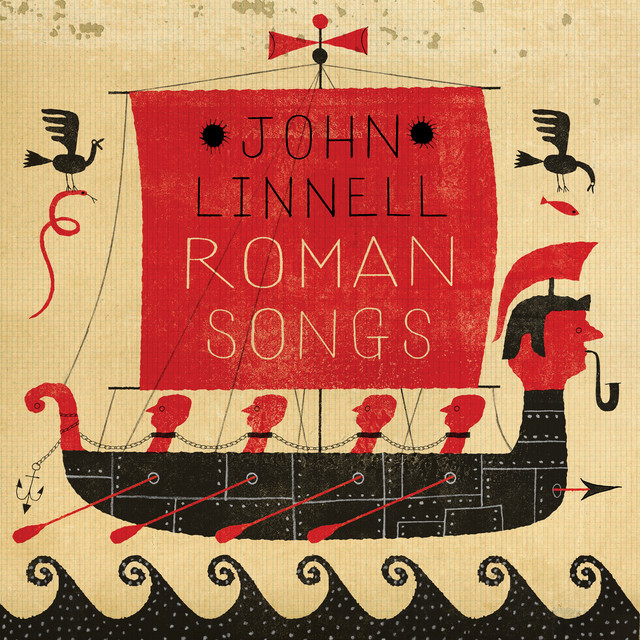
John Linnell · 2021
Producer