
Pricing and availability
We compare 600+ stores and found this item at 1 store. Prices updated .
Store
Reviews
Price




* Product prices and availability are updated by Equipboard every 24hrs and are subject to change. Equipboard may receive compensation for purchases made at participating retailers linked on this site. This compensation does not affect what products or prices are displayed, or the order of prices listed. For more information, please refer to our affiliate disclosure.
Description
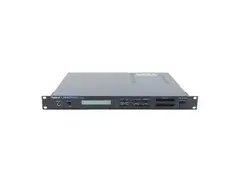
The Roland U-220 RS-PCM Sound Module is a versatile tool for musicians and producers seeking a robust palette of sounds without the bulk of traditional synthesizers. As a PCM-based sound module, it delivers an extensive library of high-quality sampled sounds, ranging from lush strings and orchestral instruments to dynamic drums and basses. Designed with the studio and live performance in mind, the U-220 offers easy integration into any setup with its MIDI compatibility, ensuring seamless communication with keyboards and other MIDI devices.
The sound module is renowned for its six-part multitimbral capability, allowing you to layer different sounds or assign them to different MIDI channels, thus broadening your creative possibilities. It comes equipped with a variety of onboard effects, including reverb and chorus, which enable you to shape and polish your sound directly from the module itself. Compact and efficient, the Roland U-220 fits into any rack unit, making it an ideal addition for those with limited space but unlimited ambition.
Key Features:
- PCM-based sound module with a wide array of sampled sounds
- Six-part multitimbral capability for layering and MIDI channel assignments
- Onboard effects including reverb and chorus
- MIDI compatibility for easy integration with other devices
- Compact design suitable for both studio and live performance setups
- Extensive library of sounds including strings, orchestral instruments, drums, and basses
Product specs
| Brand | Roland |
| Model | U-220 RS-PCM Sound Module |
| Finish | Black |
| Year | 1989 - 1992 |
| Made In | Japan |
| Categories | Digital Synthesizers, Rackmount Synths |
| Analog / Digital | Digital |
| MIDI I/O | MIDI Input, MIDI Output, MIDI Through |
| Polyphony | 30 Voices |
FAQs
-
What type of sounds can I expect from the Roland U-220 RS-PCM Sound Module?
-
The Roland U-220 is known for its high-quality PCM sounds, offering a range of acoustic and synthesized tones suitable for various genres, including pop, rock, and electronic music.
-
Is the Roland U-220 compatible with modern MIDI setups?
-
Yes, the Roland U-220 features MIDI Input, Output, and Through ports, making it compatible with contemporary MIDI setups for seamless integration into your studio or live rig.
-
How many voices of polyphony does the Roland U-220 offer?
-
The Roland U-220 provides 30 voices of polyphony, allowing for complex arrangements and layered sounds without note dropouts.
-
Can the Roland U-220 be used in a rackmount setup?
-
Yes, the Roland U-220 is designed as a rackmount synthesizer, making it ideal for studio environments where space optimization is key.
-
What is the primary use case for the Roland U-220 RS-PCM Sound Module?
-
The Roland U-220 is primarily used for adding diverse PCM-based sounds to your music production or live performance setup, offering a rich palette of tones from its digital engine.
Videos

Frank Michael Lischka (soundadapter)
Excellent Synthesizer Roland U-220 Inside View and Sound Example
Excellent Synthesizer Roland U-220 Inside View and Sound Example
Frank Michael Lischka (soundadapter)
U MIGHT BE THE 1 (demo) - Roland U-220 RS-PCM Sound Module Demo (You Might Be The One)

Romantique Tp
HIGHLANDER (demo) - Roland U-220 RS-PCM Sound Module Demo
Romantique Tp
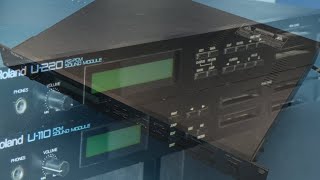
Roland U220 RS-PCM Sound Module Factory Demo ( Highlander )

House of Angels
Reviews
PROS
-
Contains classic 80s sounds including sampled strings, horns, keyboards, drums
-
Good selection of stock sounds for a variety of applications
-
Decent patch editing capabilities
-
Affordable price point compared to similar products
-
Familiar sounds reused in 1991 Sound Canvas, appealing for gaming
-
Simple to operate with straightforward control over tone and effects
CONS
-
Not ideal for producing modern music styles
-
Limited use compared to other modules in a setup
-
Small character screen can be a hindrance for in-depth editing
-
Limited control options may not satisfy advanced users
Owner Insights
We analyzed real musician discussions from forums and Reddit to find what players love, question, and tweak about Roland U-220 RS-PCM Sound Module.
Features and functionality
Use cases and applications
Comparisons
Value and pricing
-
Generally considered overpriced at $200 CAD, with historical prices ranging from $80 to $100 USD.
Source
Software and compatibility
-
Can integrate with a Moog Grandmother via MIDI, with possibilities of using its arpeggiator for polyphonic play on the U-220.
Source
User experience
-
Despite a basic interface, users find creative potential in sequencing and processing sounds through external effects like delay and reverb.
Source -
Owners appreciate the U-220's versatility in delivering essential pop song sounds, with its limited ROM memory impressively utilized.
Source -
One user keeps multiple units for different purposes: home use, band rehearsal, and as a backup, reflecting its reliability.
Source
3.5 out of 5
Based on 2 Reviews and 15 Ratings

544
Good, albeit quite limited
I've had it for a few months now, and honestly while I like what it has to offer, I couldn't help but notice how rarely I was actually using it in contrast to my other two modules I currently own (at the time of writing this).
A lot of the sounds on it are pretty darn great - really 80s sounding, and in addition a lot of these sounds are classics in the world of gaming, as they were reused in the 1991 Sound Canvas. Really nice bass, brass and guitars, and the other sounds are also not too shabby either (although I've never found an use for them).
It is simple to operate - the small character screen really isn't too big of a hindrance, considering there isn't much you can really control - just whatever tone you want to use, the global reverb/chorus levels, that kinda stuff.

219
A good ol' rompler that can still fill in the blanks
I really like the Roland U-220, I generally find it has a good selection of stock sounds and pretty decent patch editing capabilities that can fit into a lot of general applications, whether it's for an instrument up front or for something to fill in the blanks. Of course, I wouldn't say it's something you should stick onto your hardware list if you make particularly modern music, but for those who love an 80s or early 90s kick on our songs it's practically a perfect small little first rompler!
Artist usage
Add artist

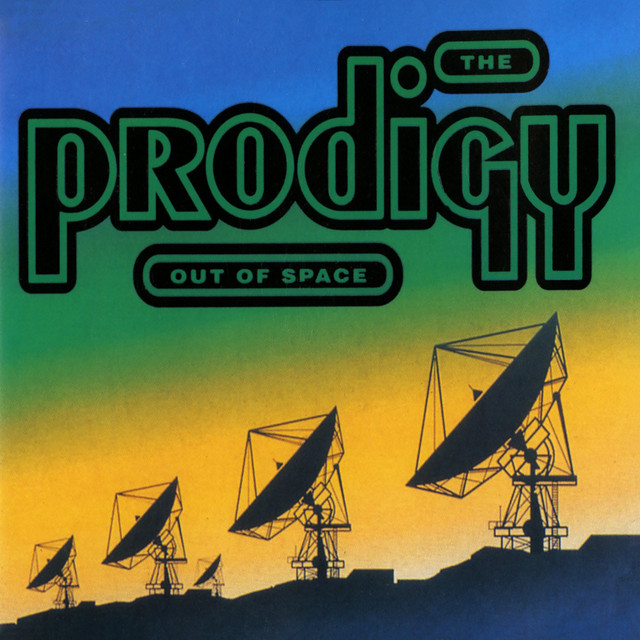
"I've had that years. That's one of my all-time favourites for strings; the strings on there are a Prodigy trademark! If anyone puts a bit of chorus on those strings, you get the sound from 'Out Of Space' straight away."


About:
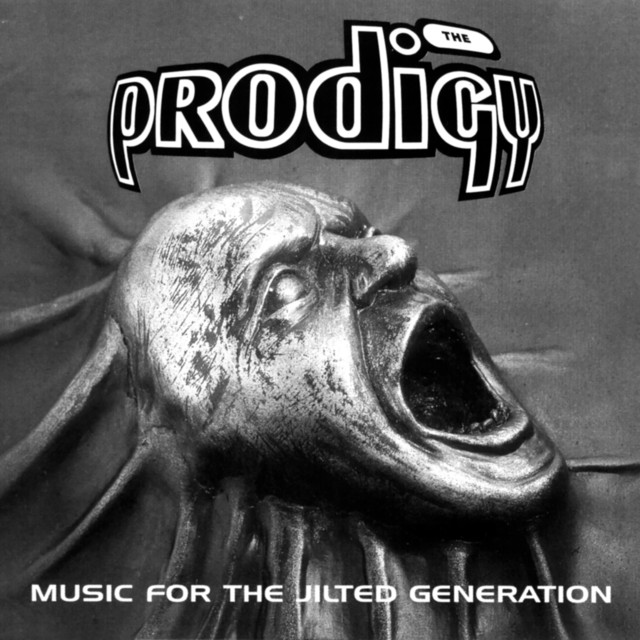
It's got Liam's favourite string sound on it. He has used the strings, piano and a few other sounds on Experience and Jilted albums.
Gear info:
128 high quality instruments, 6 part multitimbral and 30 note polyphony. This unit has the same specifications as the Roland U-20 keyboard without the keys. It has all the same sounds and features packaged in a compact single-space sound module.
Used:
Everybody in the Place, Out Of Space
Liam's comment: "I've had that years. That's one of my all-time favourites for strings; the strings on there are a Prodigy trademark! If anyone puts a bit of chorus on those strings, you get the sound from 'Out Of Space' straight away.

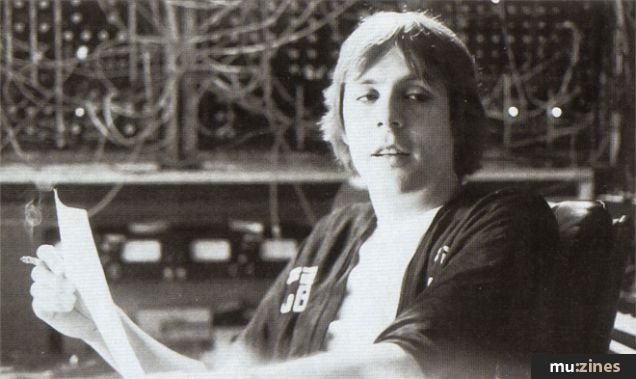
List of equipment used by Klaus Schulze, from the February 1993 issue of Sound on Sound:
4x Akai S1000PB (32MB) 2x Akai S1000KB (32MB) Akai S900 Akai S612 Akai S7000 Moog Modular CIII 2x Moog MiniMoog Studio Electronics MIDIMini Mellotron Yamaha CS80 Yamaha CP70 Yamaha TX81Z Yamaha SY99 Korg M1 Korg M1 EX Korg T1 Korg T3 Korg DVP1 Roland U110 Roland U220 Roland D50 Roland S50 sampler & monitor Roland Planet S & editor Roland Super Jupiter & editor 2 Roland TR505 Roland Octopad Roland JD800 Roland Super JX10 4x Hohner HS2/E sampler 5x Hohner HS1/E sampler Hohner HS1KB sampler Waldorf Microwave GDS computer synth Misc. Crumar keyboards Fairlight CMI Series II SCI Prophet 2000 SCI Prophet 2002 Emu Proteus/2 Emu Proteus/3 World Emu Emulator II Kurzweil K1000 Kawai K4 EMS Synthi A PPG Wave 2.2 Linn 9000 4x Oberheim DPX1 Yamaha RY30 drum machine Sonor timpanies and octo toms Paiste gongs and cymbals Martin 12-string guitar


In this article Linnel has a tower of rackmount gear Including the u-220


David Wise, renowned for composing the SNES Donkey Kong Country soundtracks, mentioned in a tweet that he once owned a Roland U-220 Sound Module before the SNES era. He noted that by the time he worked on these titles, he was using the Roland S770. Interestingly, the sounds from these modules are still featured in Roland's modern 'ZEN-Core Pro' sound sets.


In this fan mail page from his old site, Iwadare mentions the U-220 when asked what software or MIDI sequencers he uses when he creates music.

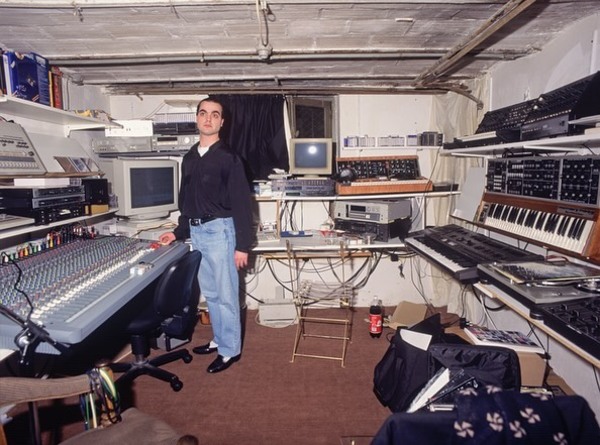
In a photograph posted on Instagram by Offworld Records, Ludovic Navarre, also known as St. Germain, is seen with a Roland U-220 RS-PCM Sound Module in his basement studio in 1995.

.jpg)

Eric Persing has had a unique and influential relationship with Roland Corp for two decades. He started as a product demonstrator in 1984, showing some of Roland's first MIDI instruments. He quickly became involved in the R&D side with Roland Japan, earning the title "Chief Sound Designer", and began contributing his design ideas, real-world studio experience and sound design expertise. Persing's skills have left their mark on countless classic Roland instruments.
He is the originator of many legendary Roland sounds that have become part of the vocabulary and lexicon of musical sound. These include the Factory D-50 sounds such as Fantasia, Soundtrack and Digital Native Dance, a majority of the JV/XP/XV series Classics, all the Factory JD-800 sounds, the original Juno "Hoover" sound and thousands of others.
Here is a partial list of the Roland instruments that Eric has contributed his sound design, sampling and design consulting skills:
Juno-106 Alpha Juno 1&2 JX-3P JX-8P JX-10 Jupiter 6 Super Jupiter D-50 D-550 D-110 D-10 D-20 D-70 MT-32 U-110 U-20 U-220 Sound Canvas JD-800 JD-990 JV-80 JV-90 JV-1000 JV-1080 JV-2080 XP-10 XP-50 XP-60 XP-80 XV-3080 XV-5050 XV-5080 Fantom JP-8000 JP-8080 S-10 S-220 S-50 S-550 S-770 S-760 S-750 MC-303 MC-500 MC-505 VP-9000 MSQ-700 MSQ-100 MKS-20 MKS-30 MKS-50 MKS-70 MKS-80 R-8 R-5 DR-660 DR-770 R-70 V-Drums V-Drums expansion board SRV-2000 DEP-5 RSP-550 R-880 SRV-330 SE-50 SE-70 VS-880 VS-1680 SR-JV series expansion boards SRX series expansion boards Sound Canvas Project series CD-ROM libraries Archives series CD-ROM libraries Composers series CD-ROM libraries

Michael Hädrich confirmed in a Reddit AMA, under the username MysteryDX7_Official, that he uses the Roland U-220 RS-PCM Sound Module in his current setup.


Andy uses a Roland D70 which is also used for a mother keyboard and is connected to a Roland U220. - Official Quo site


The master keyboard in use in Levine's studio is a Yamaha KX88, and other sound sources include Roland U220 and D550 synth mdoules, Roland R8M drum module, Ensoniq ESQ1M synth module, Korg Wavestation AD and Yamaha TX802 synths. Right next to them is an Atari Mega 4 with hard drive. Levine: "In all honesty, I can do everything on the Atari that my Mac with Notator Logic software upstairs can do. I have the Atari in my studio because the majority of people I'm working with use an Atari, and it's absolutely fine for sequencing and synth editing. Unless you want to do hard disk recording there's no point in getting rid of your Atari. My hard disk recorder and editor is still the Akai DD1000, because of the instantly‑removable cartridges. I record all my audio onto my ADATs and then use the DD1000 for editing real drums or guitars and cleaning up things, or making vocal comps."
Album Usage
The Roland U-220 RS-PCM Sound Module has been featured on the following albums:
Genre Usage
Based on how artists on Equipboard use this gear, it is most commonly found in the following genres.
Used With
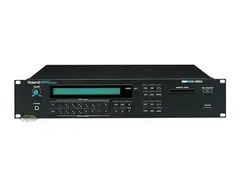
Based on how musicians on Equipboard use Roland U-220 RS-PCM Sound Module, it is most commonly used with the following gear.





More Roland Sound Modules
-m.webp?v=1784905256)
$320.50
in Sound Modules Rank


$1,156.83 - $1,999.99
in Sound Modules Rank


$1,388.00
in Sound Modules Rank


$238.29
in Sound Modules Rank


$625.00
in Sound Modules Rank


$119.00
in Sound Modules Rank


$550.00
in Sound Modules Rank


$3,900.00
in Sound Modules Rank


$1,211.75
in Sound Modules Rank


$500.00
in Sound Modules Rank


$209.00
in Sound Modules Rank


$200.00
in Sound Modules Rank


$330.00
in Sound Modules Rank


$349.00
in Sound Modules Rank


$585.00
in Sound Modules Rank


$131.06
in Sound Modules Rank


$195.28
in Sound Modules Rank


$59.57
in Sound Modules Rank

$1,699.99
in Sound Modules Rank


$200.00
in Sound Modules Rank


$627.98
in Sound Modules Rank


$160.00
in Sound Modules Rank


$160.00
in Sound Modules Rank


$125.60
in Sound Modules Rank


$15.00
in Sound Modules Rank


$2,248.00 - $2,899.99
in Sound Modules Rank

$1,046.63
in Sound Modules Rank


$1,459.00
in Sound Modules Rank


-m.webp?v=1784876535)


Accessories & Related Items



Community setups


Similar


Gear Guides






.webp)

Most Popular Sound Modules
Most Popular Brands
-
Added to Equipboard on by
CcyberkennyGearIQ 39
-


