
Michael Brook
Canadian guitarist
Role
Role
Michael Brook's Gear


ALTHOUGH BEST NOTED FOR HIS GUITAR WORK, Michael Brook also makes use of synthesised sound in the form of a Yamaha DX7, TX7 and a pair of TF1 modules in a TX816 rack. They don't play a particularly prominent part in his music, but they retain a strong individual identity courtesy of some sympathetic and effective programming — a rare feat in these days of FM preset mania
Find it on:


Recording: Allen & Heath Sabre 24:16:2 Mixing Desk Atari 1040ST Computer running C-Lab Notator software Digital Music MX8 MIDI Patchbay Fostex E16 Multitrack Panasonic 3700 DAT Machine Rauch Amp Sony DTC1000 DAT Machine Yamaha MCS2 MIDI Control Station Yamaha NS1000 Monitors
Find it on:

When Michael Brook gets going, this deliciously trance inducing music is produced. Repeating guitar phrases, ethnic percussion, and scintillating chordings all combine to produce a sound of intuitive brilliance. Just like Hybrid, Distant Village, and Midday from his debut, he knows how to mix interesting noises. Funnily enough a Casio 202 was used on that album, and the murky swamp percussion sound was produced by feeding real percussion into a compressor, then an AMS pitch-shifter, then into speakers which fed back the results an octave higher.
Find it on:

"Well I remember using the Electro-Harmonix 16-second digital delay, which was pretty radical for that time. You could have 16 seconds of delay and play whole phrases on top of each other. We also did a lot of improvising at the editing stage - sort of chopping pieces up, playing new parts, and editing them together again. We also used a Yamaha CS80 synth on Hybrid, and of course there was the buzz bass - a modified instrument which sounds like a bass sitar. It produces a beautiful sound. The idea was really taken from a tambura - it's like a cross between a bass guitar and a tambura. I also used this little Hawaiian guitar quite a lot actually."
Find it on:

"Well I remember using the Electro-Harmonix 16-second digital delay, which was pretty radical for that time. You could have 16 seconds of delay and play whole phrases on top of each other. We also did a lot of improvising at the editing stage - sort of chopping pieces up, playing new parts, and editing them together again. We also used a Yamaha CS80 synth on Hybrid, and of course there was the buzz bass - a modified instrument which sounds like a bass sitar. It produces a beautiful sound. The idea was really taken from a tambura - it's like a cross between a bass guitar and a tambura. I also used this little Hawaiian guitar quite a lot actually."
Find it on:

"There's more synthesizer and there's a real drummer. James Pinker is playing percussion on this track Urbana. Hear that spaghetti western guitar sound? I'm getting more interested in that sound now. I've done most of the music here at home; Brian Eno's helped out, so has Roger. I'm very pleased with the sound. I started out using the Atari computer really strongly, but then used less and less sequencer. It's not a bad way of doing it, gradually replacing things with less parts, using the sequencer to help compositionally. The computer is an Atari 1040ST running C-Lab Creator."
Find it on:

"There's more synthesizer and there's a real drummer. James Pinker is playing percussion on this track Urbana. Hear that spaghetti western guitar sound? I'm getting more interested in that sound now. I've done most of the music here at home; Brian Eno's helped out, so has Roger. I'm very pleased with the sound. I started out using the Atari computer really strongly, but then used less and less sequencer. It's not a bad way of doing it, gradually replacing things with less parts, using the sequencer to help compositionally. The computer is an Atari 1040ST running C-Lab Creator."
Find it on:

"That sound is actually a Roland R8 drum machine. It's kind of neat, just taking the whistle and shaker sounds on the drum machine and doubling everything on the computer, so it's playing as many notes as it possibly can all of one sound."
Find it on:

"This here's an Allen & Heath 16-track Saber mixing desk. They are a really good English company who actually replaced all the faders a year ago when I had some trouble with it. It doesn't have automated mixing but it has MIDI muting, which helps."
Find it on:

The monitors are Yamaha NS 1000s - they've got a big, beautiful sound. Then there's the 16-track Fostex, the Atari C-Lab, the patch panel... Here's a fantastic Eventide H3000 harmonizer. This is a thing I made called a VEWA - a vocal effects waveform animator. It adds vocal-like formants to a signal. It's sort of like a random vocoder. I used it quite a bit on Hybrid. This here is a Lexicon LXP1 digital reverb, which has an incredible quality to it. The Yamaha TX802 is the synthesizer I use. This Bel digital delay line I use live a lot. It produces 13-second loops in sync with MIDI, so it's like having a rhythm guitarist who can play for 13 seconds - that's very important for my live work. Here's the Yamaha SPX90 and Roland reverb I use sometimes."
Find it on:

"The monitors are Yamaha NS 1000s - they've got a big, beautiful sound. Then there's the 16-track Fostex, the Atari C-Lab, the patch panel... Here's a fantastic Eventide H3000 harmonizer. This is a thing I made called a VEWA - a vocal effects waveform animator. It adds vocal-like formants to a signal. It's sort of like a random vocoder. I used it quite a bit on Hybrid. This here is a Lexicon LXP1 digital reverb, which has an incredible quality to it. The Yamaha TX802 is the synthesizer I use. This Bel digital delay line I use live a lot. It produces 13-second loops in sync with MIDI, so it's like having a rhythm guitarist who can play for 13 seconds - that's very important for my live work. Here's the Yamaha SPX90 and Roland reverb I use sometimes."
Find it on:

"The monitors are Yamaha NS 1000s - they've got a big, beautiful sound. Then there's the 16-track Fostex, the Atari C-Lab, the patch panel... Here's a fantastic Eventide H3000 harmonizer. This is a thing I made called a VEWA - a vocal effects waveform animator. It adds vocal-like formants to a signal. It's sort of like a random vocoder. I used it quite a bit on Hybrid. This here is a Lexicon LXP1 digital reverb, which has an incredible quality to it. The Yamaha TX802 is the synthesizer I use. This Bel digital delay line I use live a lot. It produces 13-second loops in sync with MIDI, so it's like having a rhythm guitarist who can play for 13 seconds - that's very important for my live work. Here's the Yamaha SPX90 and Roland reverb I use sometimes."
Find it on:

"The monitors are Yamaha NS 1000s - they've got a big, beautiful sound. Then there's the 16-track Fostex, the Atari C-Lab, the patch panel... Here's a fantastic Eventide H3000 harmonizer. This is a thing I made called a VEWA - a vocal effects waveform animator. It adds vocal-like formants to a signal. It's sort of like a random vocoder. I used it quite a bit on Hybrid. This here is a Lexicon LXP1 digital reverb, which has an incredible quality to it. The Yamaha TX802 is the synthesizer I use. This Bel digital delay line I use live a lot. It produces 13-second loops in sync with MIDI, so it's like having a rhythm guitarist who can play for 13 seconds - that's very important for my live work. Here's the Yamaha SPX90 and Roland reverb I use sometimes."
Find it on:

"The monitors are Yamaha NS 1000s - they've got a big, beautiful sound. Then there's the 16-track Fostex, the Atari C-Lab, the patch panel... Here's a fantastic Eventide H3000 harmonizer. This is a thing I made called a VEWA - a vocal effects waveform animator. It adds vocal-like formants to a signal. It's sort of like a random vocoder. I used it quite a bit on Hybrid. This here is a Lexicon LXP1 digital reverb, which has an incredible quality to it. The Yamaha TX802 is the synthesizer I use. This Bel digital delay line I use live a lot. It produces 13-second loops in sync with MIDI, so it's like having a rhythm guitarist who can play for 13 seconds - that's very important for my live work. Here's the Yamaha SPX90 and Roland reverb I use sometimes."
Find it on:

"This piece here is a Drawmer M500, which does everything: compression, noise gating, limiting... it does nice tremolo, also, and in time with the music. I don't think anything else does that. Then there's a DAT machine, the infinite guitar box, a DX7, pedal boards, the buzz bass, and the Hawaiian guitar. How's that?"
Find it on:

"This piece here is a Drawmer M500, which does everything: compression, noise gating, limiting... it does nice tremolo, also, and in time with the music. I don't think anything else does that. Then there's a DAT machine, the infinite guitar box, a DX7, pedal boards, the buzz bass, and the Hawaiian guitar. How's that?"
Find it on:

Most of the album was recorded and mixed in Brook's flat, the guitarist having turned a spacious living room into a home studio centred around a 24-channel Allen & Heath Sabre mixing desk and a Fostex E16 multitrack, with monitoring via Yamaha NS1000s. Along with footpedals and rack-mount effects units, the studio includes an Atari 1040ST, C-Lab's Notator software, a Digital Music MX8 MIDI patchbay, a Yamaha DX7 synth with TX802 synth module, a Roland R8M drum module and (recently-acquired) S770 sampler.
Find it on:

Most of the album was recorded and mixed in Brook's flat, the guitarist having turned a spacious living room into a home studio centred around a 24-channel Allen & Heath Sabre mixing desk and a Fostex E16 multitrack, with monitoring via Yamaha NS1000s. Along with footpedals and rack-mount effects units, the studio includes an Atari 1040ST, C-Lab's Notator software, a Digital Music MX8 MIDI patchbay, a Yamaha DX7 synth with TX802 synth module, a Roland R8M drum module and (recently-acquired) S770 sampler.
Find it on:

Most of the album was recorded and mixed in Brook's flat, the guitarist having turned a spacious living room into a home studio centred around a 24-channel Allen & Heath Sabre mixing desk and a Fostex E16 multitrack, with monitoring via Yamaha NS1000s. Along with footpedals and rack-mount effects units, the studio includes an Atari 1040ST, C-Lab's Notator software, a Digital Music MX8 MIDI patchbay, a Yamaha DX7 synth with TX802 synth module, a Roland R8M drum module and (recently-acquired) S770 sampler.
Find it on:

Most of the album was recorded and mixed in Brook's flat, the guitarist having turned a spacious living room into a home studio centred around a 24-channel Allen & Heath Sabre mixing desk and a Fostex E16 multitrack, with monitoring via Yamaha NS1000s. Along with footpedals and rack-mount effects units, the studio includes an Atari 1040ST, C-Lab's Notator software, a Digital Music MX8 MIDI patchbay, a Yamaha DX7 synth with TX802 synth module, a Roland R8M drum module and (recently-acquired) S770 sampler.
Find it on:

For live work, Brook uses a Roland MC50 sequencer in place of his Atari and Notator setup. He transfers his sequences into the MC50 by playing them across via MIDI rather than by saving them as Standard MIDI Files and loading them in off disk.
Find it on:

From equipment list:
Guitar: Tokai Springy Sound Strat copy fitted with Infinite Guitar electronics and IVL pitch to-MIDI converter
Find it on:

From equipment list:
Pedals: ElectroHarmonix 16-second Delay E-H Memoryman Analogue Delay Sansamp Amp Simulator Korg OVD1 Overdrive Yamaha GE10M Graphic HQ DOD Compressor Hot Tubes Fuzz Ernie Ball Volume Pedals (x6)
Find it on:

Pedals: ElectroHarmonix 16-second Delay E-H Memoryman Analogue Delay Sansamp Amp Simulator Korg OVD1 Overdrive Yamaha GE10M Graphic HQ DOD Compressor Hot Tubes Fuzz Ernie Ball Volume Pedals (x6)
Find it on:

From equipment list:
Pedals: ElectroHarmonix 16-second Delay E-H Memoryman Analogue Delay Sansamp Amp Simulator Korg OVD1 Overdrive Yamaha GE10M Graphic HQ DOD Compressor Hot Tubes Fuzz Ernie Ball Volume Pedals (x6)
Find it on:


Rack Effects: Bel BD80S Sampling Delay Drawmer M500 Compressor Dulay 16 second Delay Line (custom-built) Eventide H3000 Harmoniser Lexicon LXP1 Reverb Yamaha SPX90 Multi-effects Processor Vocal Effects Waveform Animator (self-built)
Find it on:

From equipment list:
Instruments: Roland R8M Drum Module Roland S770 Sampler with Sony optical disk storage unit Simmons Portakit Yamaha DX7 Synth Yamaha TX802 Synth Module Yamaha TX816 Synth Module
Find it on:

From equipment list:
Recording: Allen & Heath Sabre 24:16:2 Mixing Desk Atari 1040ST Computer running C-Lab Notator software Digital Music MX8 MIDI Patchbay Fostex E16 Multitrack Panasonic 3700 DAT Machine Rauch Amp Sony DTC1000 DAT Machine Yamaha MCS2 MIDI Control Station Yamaha NS1000 Monitors
Find it on:

Live Setup:
Bel BD80S Sampling Delay Digital Music MX8 MIDI Patchbay Drawmer M500 Compressor Eventide H3000 Harmoniser IVL 7000 Mk2 Pitchrider pitch to MIDI converter Lexicon LXP1 Reverb Neve 1073 Pre-amp (used with guitar) Roland MC50 Sequencer Seck 18:8:2 Mixing Desk Simmons SPX 8:2 Rack-mount Mixer Tokai Guitar and pedals (see above) Yamaha MCS2 MIDI Control Station Yamaha SPX90 Multi-effects Processor Yamaha TX802 Synth Module
Find it on:

Live Setup:
Bel BD80S Sampling Delay Digital Music MX8 MIDI Patchbay Drawmer M500 Compressor Eventide H3000 Harmoniser IVL 7000 Mk2 Pitchrider pitch to MIDI converter Lexicon LXP1 Reverb Neve 1073 Pre-amp (used with guitar) Roland MC50 Sequencer Seck 18:8:2 Mixing Desk Simmons SPX 8:2 Rack-mount Mixer Tokai Guitar and pedals (see above) Yamaha MCS2 MIDI Control Station Yamaha SPX90 Multi-effects Processor Yamaha TX802 Synth Module
Find it on:
This is a community-built gear list for Michael Brook.
- Find relevant music gear like Guitars, Amplifiers, Effects Pedals, Pianos, Keyboards and Synthesizers, Microphones, Software Plugins and VSTs, Instruments, Studio Equipment, Headphones, and other instruments and add it to Michael Brook.
- The best places to look for gear usage are typically on the artist's social media, YouTube, live performance images, and interviews.
- To receive email updates when Michael Brook is seen with new gear, follow the artist.
Discography
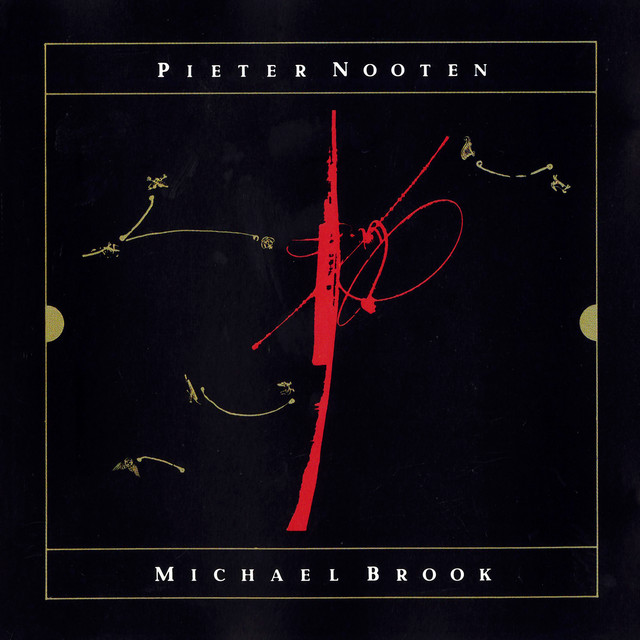
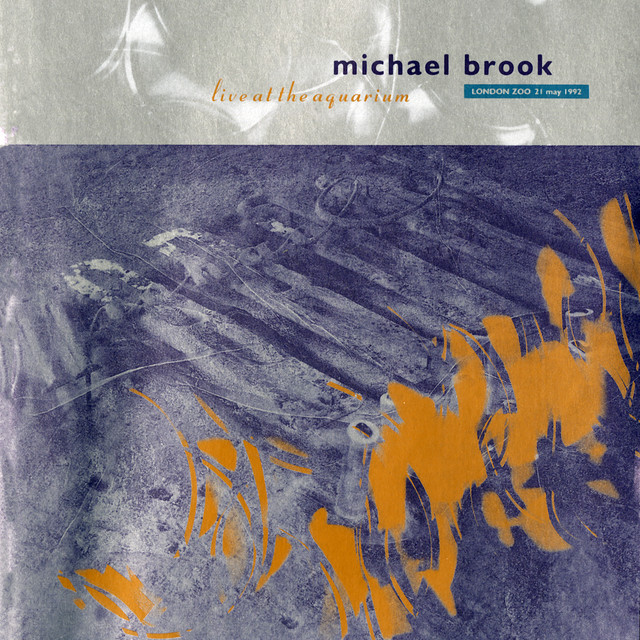

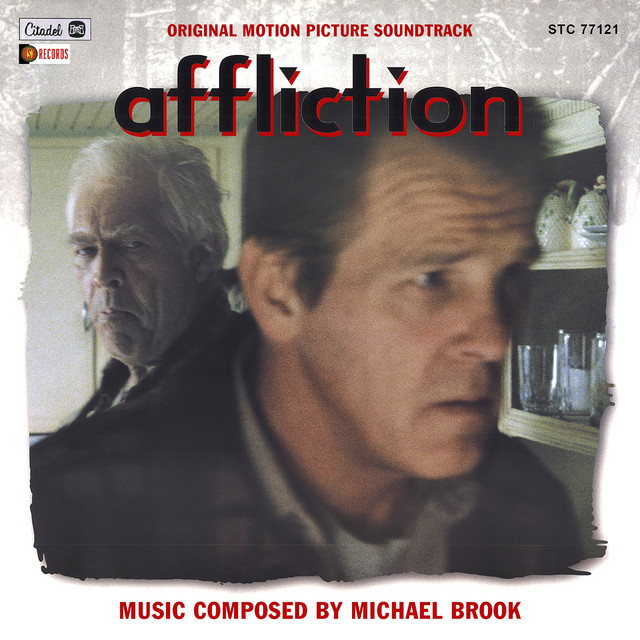
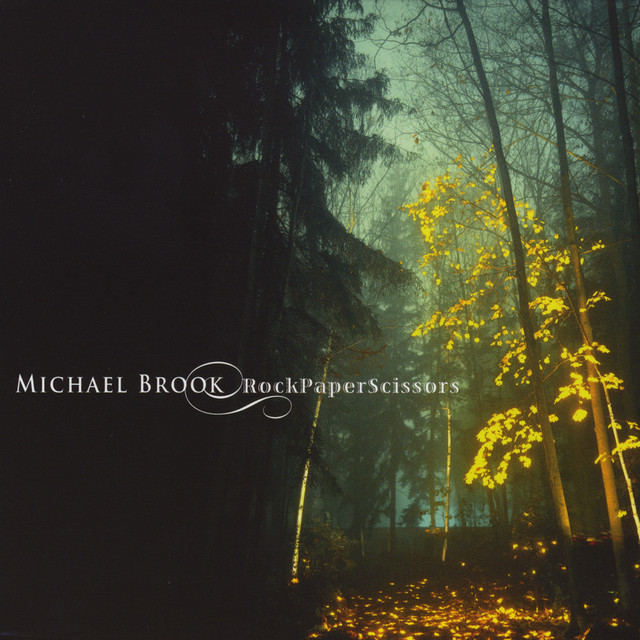
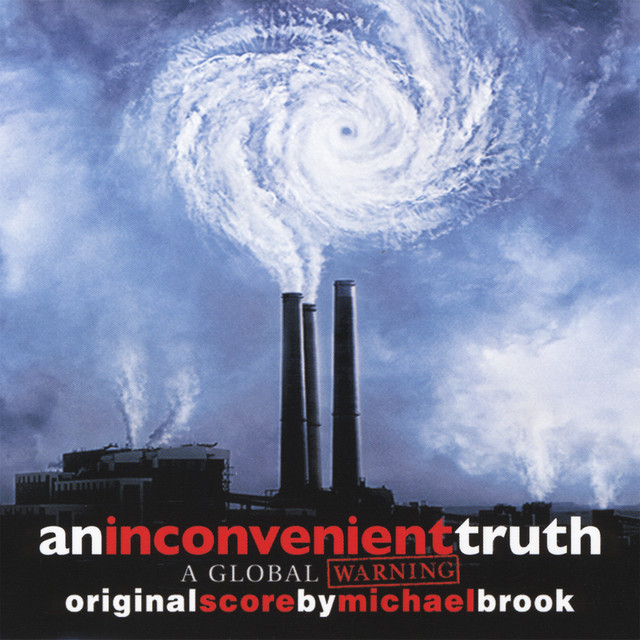
Album Credits
-
Michael Brook · 2019
Mixing Engineer Producer Recording Engineer -
Laraaji · 2013
Producer -
Michael Brook · 1997
Engineer Producer -

Jane Siberry · 1993
Mastering Engineer Mixing Engineer Producer -
Michael Brook · 1992
Mixing Engineer Producer Recording Engineer -
Laraaji · 1992
Producer -
Roger Eno · 1988
Producer -
Brian Eno · 1985
Mixing Engineer -
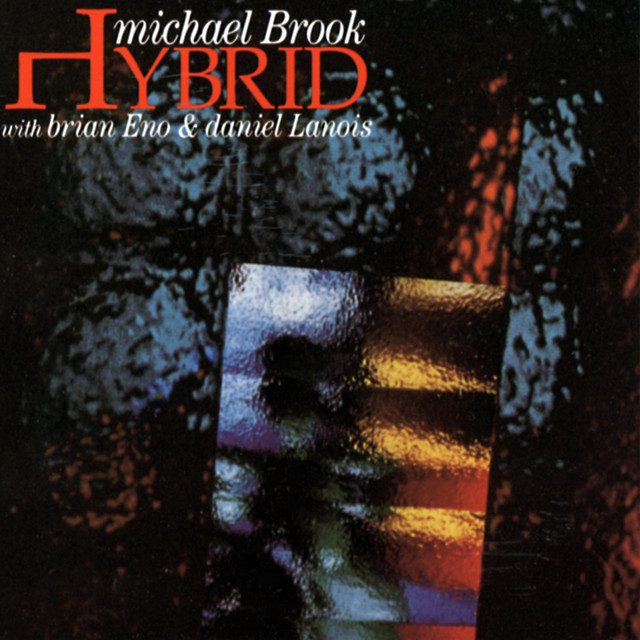
Michael Brook · 1985
Mixing Engineer Producer





