Nathan McCree
English music composer
Role
Group
Role
Group
Nathan McCree's Gear
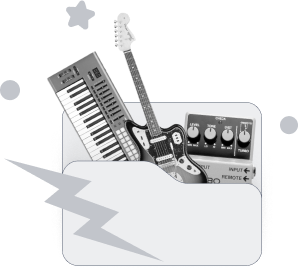


Visible in this photo from this December 6, 2019 guitarguitar interview.
NM: To be perfectly honest it hasn’t really changed in twenty years. In 1998 I bought a load of studio gear when I first went freelance. I bought a new Mackie mixing console, a Roland JV1080 (Expanded with the two Orchestral boards and a World board), an Akai sampler, a Focusrite compressor, a Rhode microphone and of course my PC running Cubase. The only thing I have added to that in twenty years is another Roland JV1080 (Expanded). I still use this kit to this day, in fact less of it. I have abandoned the Akai sampler in favour of my PC, but I don’t use orchestral sample libraries. All the orchestral sounds come from the 2 x JV1080s. I guess you could call me old school, but I know my kit and I know how to make it sound good.
GG: Does the technology make your job easier? Things sound perhaps more realistic, but does that make them better? Can you do more ‘in the box’ than before?
NM: No, not really. Sure I can do more things ‘in the box’ but it’s just a different way of working. I still have the same tasks to do. I just use less outboard gear than I used to. The Focusrite compressor for example is pretty much redundant these days for me, unless I want to compress something at the time of recording, like vocals or acoustic guitar for example.
Find it on:


In an interview with Guitarguitar, Nathan McCree discusses his use of the Roland JP-8000 Synthesizer in his compositions.
Find it on:

"NM: I was running Cubase on a Windows PC. I had a multi-port MIDI interface which allowed me to communicate with multiple external devices. For synthesizers I had a Roland JV90, and a Roland JV1080 which is the rack version of the JV90. Both of these were equipped with the Orchestral 1 & 2 Expansion Boards and the World Expansion Board. I also had an Ensoniq SQ1-Plus but I was using it less and less as I progressed with my orchestral scores – it wasn’t so good at producing real orchestral instrument sounds. I had a few other bits and pieces, an Ensoniq multi-effects rack and a Focusrite compressor, and that was about it."
Find it on:
-m.webp?v=1783782061)
"No the sampler was an Emu Esi-32 if I remember correctly" Confirming to use it in the 90s era.
Find it on:
-m.webp?v=1783868300)
"NM: I was running Cubase on a Windows PC. I had a multi-port MIDI interface which allowed me to communicate with multiple external devices. For synthesizers I had a Roland JV90, and a Roland JV1080 which is the rack version of the JV90. Both of these were equipped with the Orchestral 1 & 2 Expansion Boards and the World Expansion Board. I also had an Ensoniq SQ1-Plus but I was using it less and less as I progressed with my orchestral scores – it wasn’t so good at producing real orchestral instrument sounds. I had a few other bits and pieces, an Ensoniq multi-effects rack and a Focusrite compressor, and that was about it."
Find it on:

"NM: I was running Cubase on a Windows PC. I had a multi-port MIDI interface which allowed me to communicate with multiple external devices. For synthesizers I had a Roland JV90, and a Roland JV1080 which is the rack version of the JV90. Both of these were equipped with the Orchestral 1 & 2 Expansion Boards and the World Expansion Board. I also had an Ensoniq SQ1-Plus but I was using it less and less as I progressed with my orchestral scores – it wasn’t so good at producing real orchestral instrument sounds. I had a few other bits and pieces, an Ensoniq multi-effects rack and a Focusrite compressor, and that was about it."
Find it on:
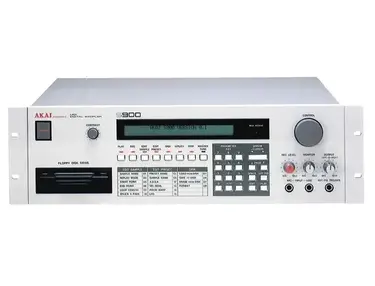
"I continued to use the Akai S9000 sampler for a few more years for electronic music but as soon as computers became fast enough for sample based editing inside the sequencing software, it too became a dust collector on my studio shelf along with other outboard gear which were replaced by VST instruments and Plugins."
Find it on:

"NM: I was running Cubase on a Windows PC. I had a multi-port MIDI interface which allowed me to communicate with multiple external devices. For synthesizers I had a Roland JV90, and a Roland JV1080 which is the rack version of the JV90. Both of these were equipped with the Orchestral 1 & 2 Expansion Boards and the World Expansion Board. I also had an Ensoniq SQ1-Plus but I was using it less and less as I progressed with my orchestral scores – it wasn’t so good at producing real orchestral instrument sounds. I had a few other bits and pieces, an Ensoniq multi-effects rack and a Focusrite compressor, and that was about it."
Find it on:

"NM: I was running Cubase on a Windows PC. I had a multi-port MIDI interface which allowed me to communicate with multiple external devices. For synthesizers I had a Roland JV90, and a Roland JV1080 which is the rack version of the JV90. Both of these were equipped with the Orchestral 1 & 2 Expansion Boards and the World Expansion Board. I also had an Ensoniq SQ1-Plus but I was using it less and less as I progressed with my orchestral scores – it wasn’t so good at producing real orchestral instrument sounds. I had a few other bits and pieces, an Ensoniq multi-effects rack and a Focusrite compressor, and that was about it."
Find it on:

"NM: I was running Cubase on a Windows PC. I had a multi-port MIDI interface which allowed me to communicate with multiple external devices. For synthesizers I had a Roland JV90, and a Roland JV1080 which is the rack version of the JV90. Both of these were equipped with the Orchestral 1 & 2 Expansion Boards and the World Expansion Board. I also had an Ensoniq SQ1-Plus but I was using it less and less as I progressed with my orchestral scores – it wasn’t so good at producing real orchestral instrument sounds. I had a few other bits and pieces, an Ensoniq multi-effects rack and a Focusrite compressor, and that was about it."
Find it on:

"I was running Cubase on a Windows PC. I had a multi-port MIDI interface which allowed me to communicate with multiple external devices. For synthesizers I had a Roland JV90, and a Roland JV1080 which is the rack version of the JV90. Both of these were equipped with the Orchestral 1 & 2 Expansion Boards and the World Expansion Board. I also had an Ensoniq SQ1-Plus but I was using it less and less as I progressed with my orchestral scores – it wasn’t so good at producing real orchestral instrument sounds. I had a few other bits and pieces, an Ensoniq multi-effects rack and a Focusrite compressor, and that was about it."
Find it on:


A MOTU MIDI Express 128 can be seen in his studio, above the pair of Roland JV1080s (last two photos).
Find it on:


Although the soundtrack consisted of CD audio, budgetary constraints forced Nathan to produce it in a MIDI studio: "I've never worked with an orchestra and had just a couple of synths — nothing spectacular. I had a Korg O1/W, an Ensoniq SQ1 Plus and a Roland D20. It was a bit of a bodge job, but it worked." - stated in the interview from soundonsound.
Find it on:

Although the soundtrack consisted of CD audio, budgetary constraints forced Nathan to produce it in a MIDI studio: "I've never worked with an orchestra and had just a couple of synths — nothing spectacular. I had a Korg O1/W, an Ensoniq SQ1 Plus and a Roland D20. It was a bit of a bodge job, but it worked." - stated in the interview from soundonsound.
Find it on:

A image of Nathan McCree showcasing his Sound Forge session in a interview at soundonsound, while editing his music for a cutscene from Tomb Raider 2 via a screencap from his PC back when.
Find it on:

"The keyboard rig in the Meode studio: from top, Roland D20, Ensoniq SQ1 Plus, Music Quest MIDI interface, Roland JV1080, Akai S3000 sampler, Roland JP8000."
Find it on:

Nathan and Matt's current studio is quite compact, and is still based around Cubase VST running on a fast PC with an Event Gina soundcard. Most of the processing is done using Sound Forge, though I did spot an Alesis MidiVerb III on the shelf above a Focusrite Compounder and a Dbx Project 1 compressor. "The Compounder is great and the bottom end control really works well to pump up the bass, but the Dbx doesn't seem to do much at all," admits Nathan.
Find it on:
This is a community-built gear list for Nathan McCree.
- Find relevant music gear like Software Plugins and VSTs, Keyboards and Synthesizers, Instruments, Studio Equipment, Headphones, and other instruments and add it to Nathan McCree.
- The best places to look for gear usage are typically on the artist's social media, YouTube, live performance images, and interviews.
- To receive email updates when Nathan McCree is seen with new gear, follow the artist.
-
Added to Equipboard on by
 mikantsumikiwi
GearIQ 6535
-
Updated
Discography
Album Credits
-
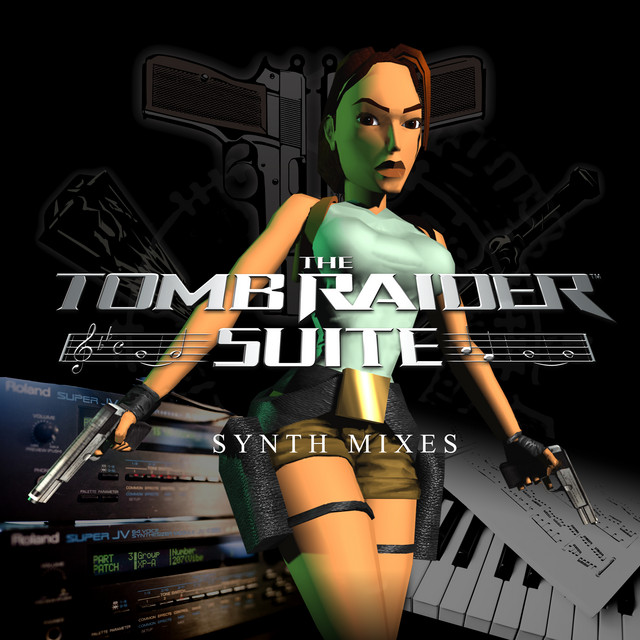
The Tomb Raider Suite Synth Mixes
Nathan McCree · 2021
Mixing Engineer Producer Recording Engineer