
Pricing and availability
We compare 600+ stores and found this item at 1 store. Prices updated .
Store
Reviews
Price




Average Price: $200
Budget/Beginner
$500
$1501+
Price Tier
Budget
Standard
High-end
* Product prices and availability are updated by Equipboard every 24hrs and are subject to change. Equipboard may receive compensation for purchases made at participating retailers linked on this site. This compensation does not affect what products or prices are displayed, or the order of prices listed. For more information, please refer to our affiliate disclosure.
Description
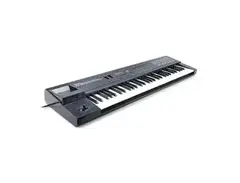
Step into the world of expressive digital sound with the Roland D-20, a trailblazing synthesizer that fuses classic digital synthesis with an intuitive interface. Ideal for musicians looking to expand their sonic palette, the D-20 offers a robust combination of Linear Arithmetic (LA) synthesis and a built-in 9-track sequencer, allowing for detailed sound crafting and composition. Whether you're performing live or working in the studio, this synth's versatility shines through with its ability to shape sounds that range from lush pads to cutting leads.
The Roland D-20 is equipped with 61 velocity-sensitive keys, offering a responsive touch that accommodates dynamic playing styles. Its onboard effects, including reverb and chorus, further enhance your creations by adding depth and dimension to your sound. With an array of preset tones and the capacity for user-created patches, you have the freedom to explore and innovate without boundaries.
The D-20's user-friendly interface ensures smooth navigation, making it accessible for both professional musicians and those new to synthesis. Its MIDI connectivity allows seamless integration into any setup, making this a timeless piece of gear for any artist looking to explore new sonic territories.
Key Features:
- Linear Arithmetic (LA) synthesis for complex, layered sounds
- 61 velocity-sensitive keys
- Built-in 9-track sequencer for comprehensive composition
- Onboard effects including reverb and chorus
- Wide array of preset tones with capacity for user patches
- MIDI connectivity for easy integration into live or studio environments
Product specs
| Brand | Roland |
| Model | D-20 61-Key Multi-Timbral Linear Synthesizer / Multitrack Sequencer |
| Finish | Black |
| Year | 1988 - 1992 |
| Made In | Japan |
| Categories | Digital Synthesizers, Workstation Keyboards |
| Analog / Digital | Digital |
| Key Size | Full Size |
| Keyboard Action | Synth Action |
| MIDI I/O | MIDI Input, MIDI Output, MIDI Through |
| Number of Keys | 61 Keys |
| Polyphony | 32 Voices |
FAQs
-
What are the key features of the Roland D-20 synthesizer?
-
The Roland D-20 is a 61-key digital synthesizer featuring a multi-timbral linear synthesizer engine and a built-in multitrack sequencer. It offers 32-voice polyphony and includes MIDI I/O capabilities, making it versatile for both live performances and studio use.
-
How does the Roland D-20 compare to the Roland D-10?
-
The Roland D-20 is similar to the D-10 but includes an onboard sequencer and disk drive, making it more suitable for musicians who want an all-in-one workstation without relying on external sequencing equipment.
-
Is the Roland D-20 suitable for live performances?
-
Yes, the Roland D-20 is suitable for live performances, offering a full-size 61-key synth action keyboard and 32-voice polyphony, which provides flexibility and depth for various musical styles.
-
Can the Roland D-20 be integrated with other MIDI devices?
-
The Roland D-20 includes MIDI Input, Output, and Through ports, allowing for seamless integration with other MIDI devices, making it a versatile addition to any setup.
-
What type of sound engine does the Roland D-20 use?
-
The Roland D-20 uses a digital sound engine with multi-timbral capabilities, allowing for rich and complex sound creation suitable for a wide range of musical genres.
Videos

Howard J Foster
Roland D20 - ALL Sounds and Rhythms in 30 Minutes ! Demo
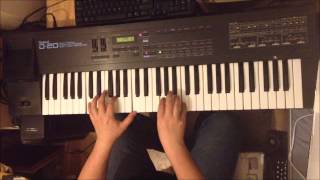
Roland D20 - ALL Sounds and Rhythms in 30 Minutes ! Demo
Howard J Foster
Roland D20 demo | Best of the presets | Roland D10 D110 synths

Woody Piano Shack
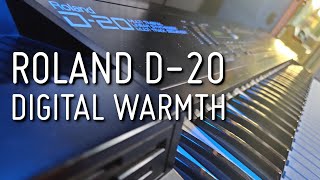
Roland D-20: Quite a lot better than you might think. The nostalgia factor is strong in this one.

Estuera
Roland D 20 demo

amiga Hassel
Roland D-20 sounds

Movie Nostalgy
The Unloved Underdog - The Roland D-20

Tetrafox Official
Roland D-20 v D-50 pt 1: Comparing sounds, sound demo

Patsonmusic
Roland D-20 early workstation with LA Beats - first look at this synth after 25 years.

Ted murena
Roland D-20 - legendary TR and CR-Drums

synthlegends
Reviews
PROS
-
Unique LA-synthesis offers obscure sound production capabilities
-
Features multi-timbral sequencer with automation for dynamic compositions
-
Includes a robust built-in Roland drum machine with customizable kits
-
Supports complex pitch ratio adjustments for creative sound design
-
Durable build quality ensures longevity
-
Offers a more affordable alternative to the iconic D-50
-
Dual patch playability for layered sounds
-
Built-in 80s reverb and delay effects for classic tones
-
MIDI compatibility for studio integration
-
Useful as a MIDI controller in home studios
CONS
-
Sound can exhibit aliasing and lack depth as a primary synth
-
Programming can be challenging due to single-fader interface and small LCD
-
Not ideal for authentic piano sounds
-
Lacks USB connectivity, requiring alternative methods for computer connection
-
May require additional programmer (PG-10) for easier sound editing
Owner Insights
We analyzed real musician discussions from forums and Reddit to find what players love, question, and tweak about Roland D-20.
Features and functionality
-
The D-20 has a challenging saving structure, with 'tones', 'timbres', and patches saved separately, which can be confusing and lead to saving errors.
Source -
The D-20 includes a built-in drum machine with sounds emulating classic Roland drum machines like the CR-78, 606, 707, 808, and 909.
Source -
The D-20 has a sequencer and is multitimbral, making it versatile for both live performance and studio use.
Source
User experience
Comparisons
-
The D-20 shares the same engine as the D110 and is generally cheaper than the newer D-05 Boutique model.
Source -
The D-05 is favored by some due to modern conveniences like USB programming and access to all ROM cards, unlike the vintage D-series models.
Source -
The D-20 is described as having a less advanced LA engine compared to the D-50, leading to a unique, albeit less polished, sound character.
Source
Use cases and applications
Critic Reviews
4.0 out of 5
Based on 1 Review and 9 Ratings

118
Great..
This keyboard I use like midi controller in my home studio..
Artist usage
Add artist
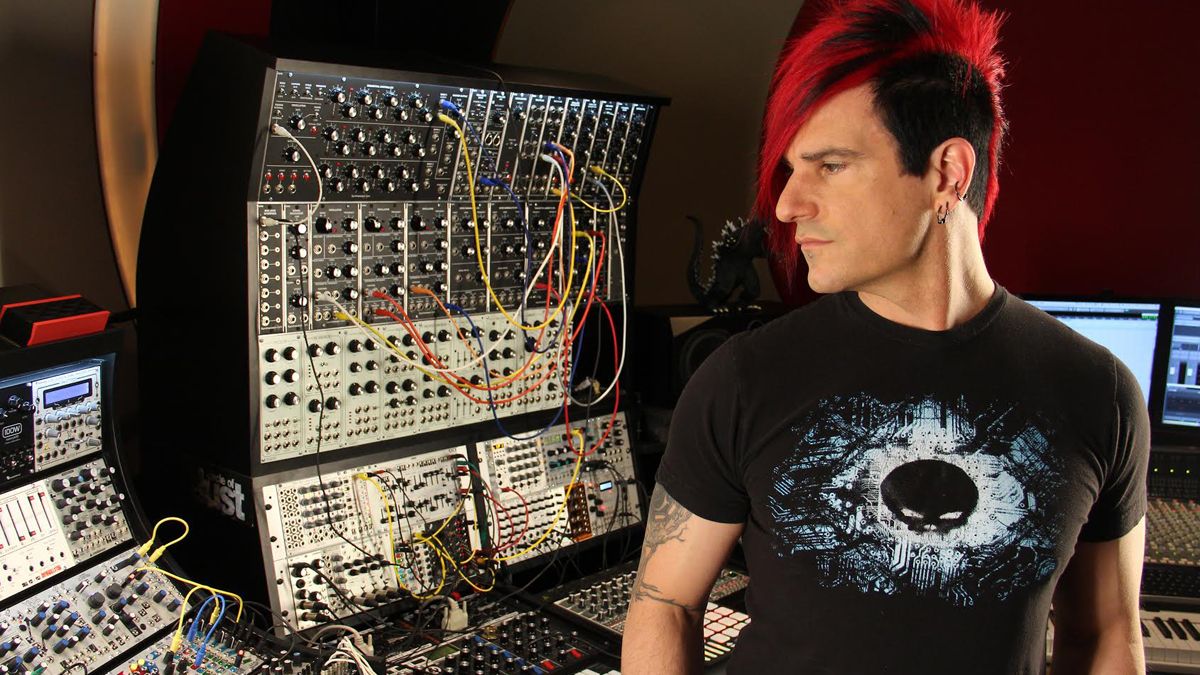
"I didn't get any money from my first record deal, but I told them if they wanted me to make an album I needed a sampler, so they bought me an Ensoniq EPS 16+, which is a mono sampler with 2MB of memory. My first three full length albums were made on those three pieces of gear, and a Roland D20."


Taken from an article authored by Richard Karsmakers in October of 1995.
Karl: What musical hardware do you use?
Jens: Oberheim Matrix12, matrix1000's, Matrix 6R, DPX-1. Korg PolySix (I have around 10 of those), Yamaha DX7+TX816 rack, Roland D20, DS-330, Hammond + Leslie (I have two actually), Korg CX3 as a "touring hammond", and a bunch of others. I also rent stuff a lot.
I'm not too crazy about the "new breed" of keyboards like the K2000 etc; they sound a bit thin to me. But whatever.

Eric Persing has had a unique and influential relationship with Roland Corp for two decades. He started as a product demonstrator in 1984, showing some of Roland's first MIDI instruments. He quickly became involved in the R&D side with Roland Japan, earning the title "Chief Sound Designer", and began contributing his design ideas, real-world studio experience and sound design expertise. Persing's skills have left their mark on countless classic Roland instruments.
He is the originator of many legendary Roland sounds that have become part of the vocabulary and lexicon of musical sound. These include the Factory D-50 sounds such as Fantasia, Soundtrack and Digital Native Dance, a majority of the JV/XP/XV series Classics, all the Factory JD-800 sounds, the original Juno "Hoover" sound and thousands of others.
Here is a partial list of the Roland instruments that Eric has contributed his sound design, sampling and design consulting skills:
Juno-106 Alpha Juno 1&2 JX-3P JX-8P JX-10 Jupiter 6 Super Jupiter D-50 D-550 D-110 D-10 D-20 D-70 MT-32 U-110 U-20 U-220 Sound Canvas JD-800 JD-990 JV-80 JV-90 JV-1000 JV-1080 JV-2080 XP-10 XP-50 XP-60 XP-80 XV-3080 XV-5050 XV-5080 Fantom JP-8000 JP-8080 S-10 S-220 S-50 S-550 S-770 S-760 S-750 MC-303 MC-500 MC-505 VP-9000 MSQ-700 MSQ-100 MKS-20 MKS-30 MKS-50 MKS-70 MKS-80 R-8 R-5 DR-660 DR-770 R-70 V-Drums V-Drums expansion board SRV-2000 DEP-5 RSP-550 R-880 SRV-330 SE-50 SE-70 VS-880 VS-1680 SR-JV series expansion boards SRX series expansion boards Sound Canvas Project series CD-ROM libraries Archives series CD-ROM libraries Composers series CD-ROM libraries


"I played piano in local pubs, creating all my own backing tracks on the Roland D20. That was very good practice and that was my first introduction to music technology."


Although the soundtrack consisted of CD audio, budgetary constraints forced Nathan to produce it in a MIDI studio: "I've never worked with an orchestra and had just a couple of synths — nothing spectacular. I had a Korg O1/W, an Ensoniq SQ1 Plus and a Roland D20. It was a bit of a bodge job, but it worked." - stated in the interview from soundonsound.

In the interview with MuzikXpress Olivier was asked which instruments were used on his 1992 underground Techno hit "Anasthasia". Olivier replied, he only relied on Roland D-20 and Akai S950. Same modules were also mentioned in another interview with Lucien Foort, who worked with him year earlier on another successful project Quadrophonia.
Olivier also mentioned sampling Oberheim Matrix 12 and Roland TR-909 at Target Records.


Finn Dalbeth recently purchased and subsequently sold a Roland D-20 synthesizer, as documented in a Tumblr post.


To access link use https://archive.org/web/ aka the waybackmachine
When he arrived back in Finland in 1994, Aleksi began sending demo tapes to Rephlex. By ’97 Aleksi had customized his Roland-D20. His sound was now more personal; distorted yet friendly. Rephlex had now heard it and his perseverance and dedication paid off. The energetic and diverse debut album Lactavent was released under the pseudonym Ovuca in ’99. The album included the best of his demo tapes ’89-‘97. Aleksi then started playing gigs internationally as Ovuca (a self invented word reflecting the self construction of his music without the aid of a computer).

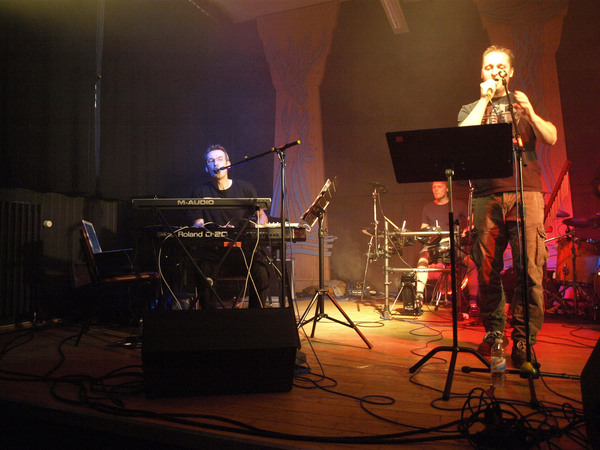
Seen in the linked picture.


A photograph from 2010, available on Facebook, definitively shows keyboardist Gregg Dokes utilizing a Roland D-20 synthesizer.


Genre Usage
Based on how artists on Equipboard use this gear, it is most commonly found in the following genres.
Used With
Based on how musicians on Equipboard use Roland D-20, it is most commonly used with the following gear.


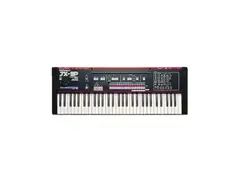

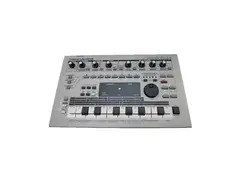


Community setups
Show yoursSimilar
Add recommendation1 alternative for Roland D-20, curated by the Equipboard community.

More Roland Synthesizers

$20,000.00
in Synthesizers Rank


$2,000.00
in Synthesizers Rank


$281.08 - $1,763.18
in Synthesizers Rank


$325.00 - $1,332.49
in Synthesizers Rank

.jpeg?v=1784399641)


$499.99 - $719.99
in Synthesizers Rank


$307.08 - $915.00
in Synthesizers Rank


$1,372.08 - $2,159.99
in Synthesizers Rank


$479.99 - $1,099.00
in Synthesizers Rank


-m.webp?v=1784386607)
$967.05
in Synthesizers Rank


$740.00
in Synthesizers Rank


$350.50 - $494.99
in Synthesizers Rank


$196.86
in Synthesizers Rank


$404.99 - $819.99
in Synthesizers Rank


-m.webp?v=1784386614)
$1,124.32
in Synthesizers Rank


$3,995.00
in Synthesizers Rank


$2,000.00
in Synthesizers Rank


$2,199.99 - $2,639.99
in Synthesizers Rank


$799.99 - $837.73
in Synthesizers Rank


$614.00 - $1,199.00
in Synthesizers Rank


$149.00 - $368.00
in Synthesizers Rank


$344.00 - $479.99
in Synthesizers Rank


$499.00
in Synthesizers Rank


$892.66
in Synthesizers Rank


$1,229.72
in Synthesizers Rank


$888.00 - $1,199.99
in Synthesizers Rank


$918.00 - $1,249.99
in Synthesizers Rank


$1,544.53


$652.00 - $1,888.00


$1,252.00 - $1,869.99


Accessories & Related Items
Gear Guides








Most Popular Synthesizers
Most Popular Brands
-
Added to Equipboard on by
 firak
firakGearIQ 6792
-


