Nik Kershaw
Role
Genre
Group
Credits
Role
Genre
Group
Credits
Nik Kershaw's Gear


In the YouTube video "30 years of PRS with Nik Kershaw & Jakko Jakszyk," Nik Kershaw is seen playing a black PRS CE 22 electric guitar from around 1992.
Find it on:


In this photo taken from International Musician & Recording World March 1984 issue, Nik Kershaw can be seen playing a Wal Mk. 1 bass, though it's not mentioned in the article included. Nik Kershaw did most of the bass parts on Human Racing, but on The Riddle he played on two tracks while the rest was sequenced or other bass players were brought in.
In Guitarist magazine December 1984, Kershaw admitted to cheating loads with his bass playing by using vari-speed. For example, the bass part in "Gone To Pieces" was recorded at half-speed.
Find it on:


"I've got a Fostex portastudio and TR808 drum computer. Then there's a Juno 6 and recently a Juno 60 for stage 'cos the '6' is virtually useless as you can't program it. Then there's the DX7, a Yamaha fretless bass, a Boss RX100 reverb plus some junky old AKG 90 microphones."
Find it on:

"As far as desks go, at home I've got an RSD 16 into 16 which is basically ample for what I require. That's patched into a Fostex B16 tape recorder. I've got a rack full of effects which I use on stage for guitar anyway but they're useful for this set-up too. It's got the Roland SDE3000 digital delay unit, an Ibanez harmoniser, a Yamaha compressor, and a Roland Dimension D."
Find it on:

In this photo taken from International Musician & Recording World March 1984 issue, Nik Kershaw can be seen with a PPG Wave 2.2, though it's not mentioned in the article included. It was used for the main riff in "Wouldn't It Be Good", alongside the Yamaha DX7.
Find it on:

"When I get into the studio I usually start with an RX11 to provide a basic rhythm. On a couple of the tracks, I even ended up keeping the RX bass drum and hi-hat this time, but I usually replace it all. The bass drum's fine but the hi-hat doesn't sound anything like a hi-hat. That didn't really matter because I wanted something that just kept on going through the track."
Find it on:

"I use whatever's handy", says Kershaw. "The Fairlight, Emulators, a JX10, old Oberheims, PPG Waves, my TX rack... I find DX sounds get lost so easily in a mix, but the TX helps push them back up."
Find it on:

In this photo taken from International Musician & Recording World March 1984 issue, Nik Kershaw can be seen singing into a Neumann U47 microphone.
Find it on:
-m.webp?v=1784559385)
"I've got a Fostex portastudio and TR808 drum computer. Then there's a Juno 6 and recently a Juno 60 for stage 'cos the '6' is virtually useless as you can't program it. Then there's the DX7, a Yamaha fretless bass, a Boss RX100 reverb plus some junky old AKG 90 microphones."
Find it on:

"I've got a Fostex portastudio and TR808 drum computer. Then there's a Juno 6 and recently a Juno 60 for stage 'cos the '6' is virtually useless as you can't program it. Then there's the DX7, a Yamaha fretless bass, a Boss RX100 reverb plus some junky old AKG 90 microphones."
Find it on:

"I've got a Fostex portastudio and TR808 drum computer. Then there's a Juno 6 and recently a Juno 60 for stage 'cos the '6' is virtually useless as you can't program it. Then there's the DX7, a Yamaha fretless bass, a Boss RX100 reverb plus some junky old AKG 90 microphones."
Find it on:

"I've got a Fostex portastudio and TR808 drum computer. Then there's a Juno 6 and recently a Juno 60 for stage 'cos the '6' is virtually useless as you can't program it. Then there's the DX7, a Yamaha fretless bass, a Boss RX100 reverb plus some junky old AKG 90 microphones."
Find it on:

"Well, most of the stuff goes straight into the portastudio, as I keep my Roland Bolt 60 for stage and use the direct output, via a Boss overdrive pedal, into the recorder. You can get quite a reasonable sound if you mess about. It's just a matter of taking your time to get something good."
Find it on:

"As far as desks go, at home I've got an RSD 16 into 16 which is basically ample for what I require. That's patched into a Fostex B16 tape recorder. I've got a rack full of effects which I use on stage for guitar anyway but they're useful for this set-up too. It's got the Roland SDE3000 digital delay unit, an Ibanez harmoniser, a Yamaha compressor, and a Roland Dimension D."
Find it on:

"Keyboard-wise, I've just got a Prophet 2000 sampler which is great fun. I've got a Roland Jupiter 6 and two Yamaha DX7s; an Oberheim OBXa synth which I'm just about to have adapted for MIDI so that I can sequence it from the QX1; and there's a beaten-up old Emulator 1 sampler, which I probably won't use any more now I've got the Prophet 2000."
Find it on:

"Keyboard-wise, I've just got a Prophet 2000 sampler which is great fun. I've got a Roland Jupiter 6 and two Yamaha DX7s; an Oberheim OBXa synth which I'm just about to have adapted for MIDI so that I can sequence it from the QX1; and there's a beaten-up old Emulator 1 sampler, which I probably won't use any more now I've got the Prophet 2000."
Find it on:

"Keyboard-wise, I've just got a Prophet 2000 sampler which is great fun. I've got a Roland Jupiter 6 and two Yamaha DX7s; an Oberheim OBXa synth which I'm just about to have adapted for MIDI so that I can sequence it from the QX1; and there's a beaten-up old Emulator 1 sampler, which I probably won't use any more now I've got the Prophet 2000."
Find it on:

"It's the very first track I've had the production credit on actually. A lot of the hard work was removed though, in terms of production, because I'd done some work preparing the arrangements before we went into the studio. At home I've got some new 'toys' that are well useful for that, like the Yamaha QX1. It's a digital sequencer... This is a technical magazine isn't it? You know, I could never talk to Smash Hits like this!"
Find it on:

"As far as desks go, at home I've got an RSD 16 into 16 which is basically ample for what I require. That's patched into a Fostex B16 tape recorder. I've got a rack full of effects which I use on stage for guitar anyway but they're useful for this set-up too. It's got the Roland SDE3000 digital delay unit, an Ibanez harmoniser, a Yamaha compressor, and a Roland Dimension D."
Find it on:





"Keyboard-wise, I've just got a Prophet 2000 sampler which is great fun. I've got a Roland Jupiter 6 and two Yamaha DX7s; an Oberheim OBXa synth which I'm just about to have adapted for MIDI so that I can sequence it from the QX1; and there's a beaten-up old Emulator 1 sampler, which I probably won't use any more now I've got the Prophet 2000."
Find it on:

"I use whatever's handy", says Kershaw. "The Fairlight, Emulators, a JX10, old Oberheims, PPG Waves, my TX rack... I find DX sounds get lost so easily in a mix, but the TX helps push them back up."
Find it on:

In this video https://www.youtube.com/watch?v=Lt79WzTA0Xs at 8:48 Nik says that he uses a Marshall JVM.
Find it on:

NIK KERSHAW
Fostex 250 4-track Roland Juno 60 Yamaha DX7 Roland TR808 Assorted Boss effects A 'duff old vocal' microphone TDK SAX C60s
"I haven't got too much gear because there is the danger of letting the machines run away with you — you can fool yourself into thinking that the more equipment you have the better the songs will be. I've had this set up for a year... it's brought me luck, so I thought I'd write the songs for this album on it.
"The 250 I prefer to the TEAC because I think it's got better heads, has Dolby C, and is more reliable.
"I have got some more effects since writing the album... I usually get most of my gear when I go on the road which is a bit Irish. I've now got a rack system for the guitar which I didn't have originally — I used my Boss effects instead, chorus, delay, all the usual ones.
"We've just moved and I've got my eye on the attic which is going to be a good room for it. Obviously I do intend to put more gear in there but time is the problem.
"Every now and then you can let the machines do some work for you. For instance I haven't got a sequencer but I did try running the clock-in of the Juno 60 arpeggiator with the TR808 and that produced an interesting bass line. But if you haven't got a sequencer, you have to do things like simultaneously changing the TR808 pattern and whatever chord you're playing. After 20 goes I resorted to splicing the part together on a multitrack in order to get it completed. Worked, though. It's a song called "Don Quixote" which is on the album.
"I've tried taking a Portastudio on the road but you don't get, (one), in the mood and (two), the time. One of the things I like doing in a big studio is multi-tracking guitars. You can't do that on a Fostex. Well, you can, but you wouldn't hear much else."
Find it on:
This is a community-built gear list for Nik Kershaw.
- Find relevant music gear like Microphones, Guitars, Amplifiers, Effects Pedals, Pianos, Keyboards and Synthesizers, Software Plugins and VSTs, Instruments, Studio Equipment, Headphones, and other instruments and add it to Nik Kershaw.
- The best places to look for gear usage are typically on the artist's social media, YouTube, live performance images, and interviews.
- To receive email updates when Nik Kershaw is seen with new gear, follow the artist.
Discography
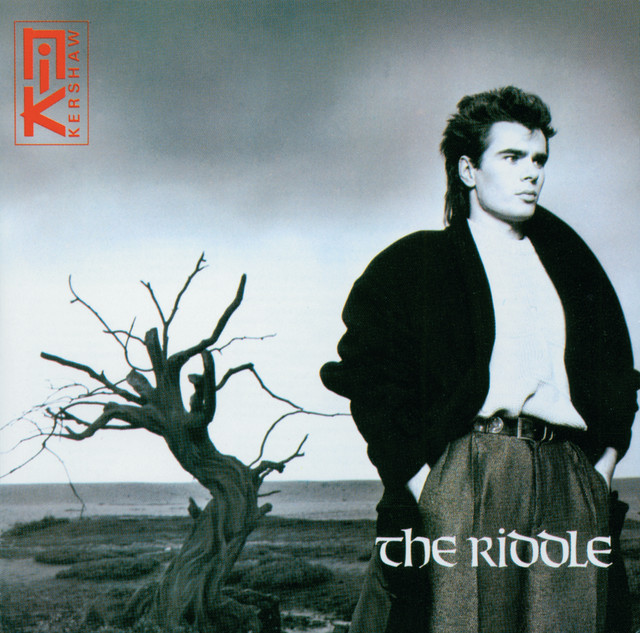
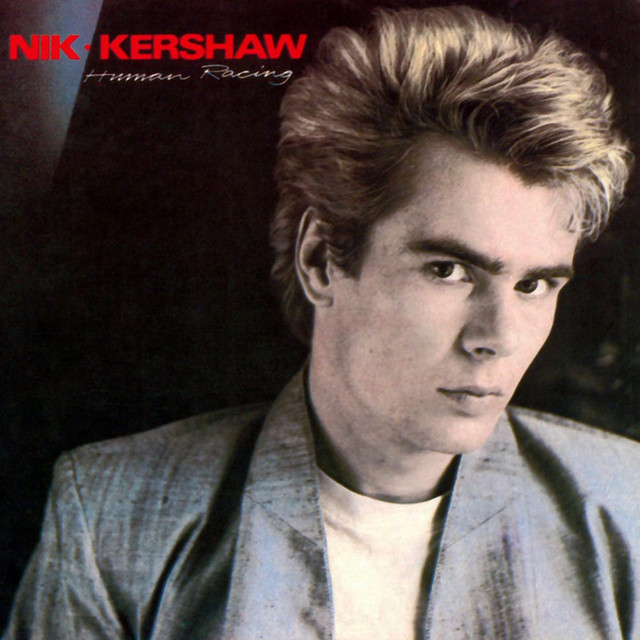
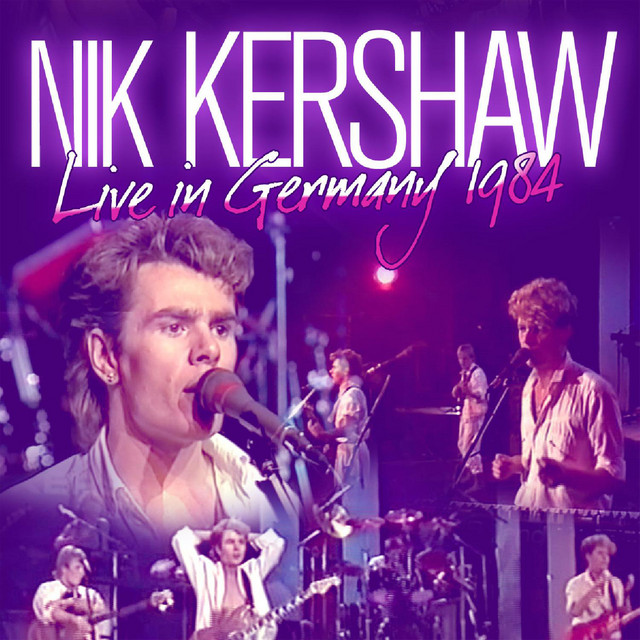
Album Credits
-
Nik Kershaw · 2022
Mixing Engineer -
Nik Kershaw · 2022
Producer -
Nik Kershaw · 2006
Producer Programmer -
Nik Kershaw · 2001
Producer Programmer -
Nik Kershaw · 1999
Producer -
Imogen Heap · 1998
Producer -
Bonnie Tyler · 1991
Producer Programmer -
Nik Kershaw · 1984
Producer