Q-Tip
American rapper
Role
Genre
Credits
Role
Genre
Credits
Q-Tip's Gear


In this video, Tip says:
"It's the epicenter to my music"
Find it on:


Used on People's Instinctive Travels and the Paths of Rhythm and The Renaissance, as respectively stated by recording engineer Bob Power in this November 8, 2016 Wax Poetics interview, recording engineer Blair Wells in Q-Tip's January 2008 Remix interview, and Q-Tip himself in this April 19, 2009 Moovmnt interview. Transcripts of the Remix interview can be found at the Future Producers forums and this Prince.org forum.
Wax Poetics
Also, back then, MIDI was in a very primitive state. MIDI is the language that computers, synthesizers, and samplers use to speak to each other. It was extremely primitive at that point. Q-Tip was sequencing on an SP-1200, and Ali had an Alesis eight-track MIDI sequencer and an Akai S950. Sampling technology was very primitive. The S950 had maybe a second and a half worth of memory. Putting together those complex, elaborate constructions was so difficult. It took a lot of time. We had to do things bit by bit because of the undeveloped memory for samplers at that point. We had to be creative in the way we approached things. People say we used twenty-four tracks, but we really had twenty-two tracks to deal with because you needed to print a synchronization code on one track and use another track as your guard band. Because samplers would only hold less than a second worth of sound at one time, we ended up putting little bits of things across different tracks and combining them later.
Remix
Q-Tip goes even further with aural textures than he did on Open, trying numerous methods to get to the sound he hears in his head. “The MPC3000 has been his main workhorse,” Wells says, “but there was a period where he went back to the [E-mu] SP-1200 for obvious tonal reasons. He's tried the MPC4000 and the 1000, and some of the Roland boxes like the Fantom [X-series workstation] with the drum pads, to rework his samples.”
Moovmnt
The one thing that always told me something was a Q-Tip production were the drums. What kind of equipment did you use?
The SP(1200) for drums and for the loops the (AKAI S)950. That’s something that Large Professor put me onto (the AKAI S950). I just liked the snap of it. For me… I was always into the big drums with the tin like smack of it
Find it on:


Part of Q-Tip home's studio. It can be seen in this excerpt from his 2016 CBS: This Morning interview at 0:06.
Find it on:

"I just built this studio, so currently I'm dealing with the renaissance, the MPC renaissance, the Ableton Push Live 9. And I like those because they're really like instruments to me."
Find it on:


"I just built this studio, so currently I'm dealing with the renaissance, the MPC renaissance, the Ableton Push Live 9. And I like those because they're really like instruments to me."
Find it on:
-m.webp?v=1784732342)
Featured on the album art for The Renaissance, two of its promotional photos (here and here), and the single art for "Get Up".
Find it on:

Used on "Life is Better", as stated in Q-Tip's January 2008 Remix interview, it. Transcripts can be found at the Future Producers forums (linked) and this Prince.org forum.
Sometimes the sound manipulation happened right at the source, as it did for the distorted-sounding Fender Rhodes that lends “Life's Circus” its principal character. “We took off the top of the Rhodes,” Q-Tip says, “and I taped some wax paper over the tines and then miked that to get that pop in the sound. I think it worked much better at making that happen than any effects pedal or plug-in could have.”
(...) Fender Rhodes Bass, Rhodes suitcase Mark I
Given Q-Tip's 73-key Mark II, it is likely that his Mark I is also a 73-key.
Find it on:


Used for The Renaissance, as stated in his January 2008 Remix interview. Transcripts can be found at the Future Producers forums (linked) and this Prince.org forum.
Just as Open benefited enormously from the signature thwack-driven power of drummer Mark Colenburg, so too did the beats on The Renaissance — many of which were either reprocessed from the original sessions or based on recuts that Colenburg tracked using a Clavia ddrum SE-4 electronic drum kit. The kit has long been a favorite of Q-Tip's for its signature ability to compress drum sounds into a tube-warmed veil that maintains the snap of the original sample while creating a gritty, tape-baked sheen.
“I got hip to that just through searching,” Tip explains. “I have the Roland V-Drums, but with the ddrum, the way the brain processes the sound is just dope. I sampled and chopped up a lot of the drums on the album and then routed them through that. There's compression when you load sounds into the brain, so it really keeps the integrity of the drum sounds nice and even. Then we triggered everything up — I use a Ludwig Vistalite acoustic kit with a Black Beauty snare — and we'd run it through the ddrum and put that back in the room, as well. We'd have a monitor in the room and then mic that, too.”
Once Colenburg's original drum tracks — which were usually recorded with a pair of Coles 4038 ribbon mics and various combinations for the kick, snare and hi-hat — had been processed and loaded into the electronic kit, a live pass of ddrums would often be blended in or used to entirely replace the original. “It was a headache to get the sounds into it,” Wells recalls. “You had to use an old-style MIDI sample dump. But once they were in there, Mark would replay his original drum sounds to give us a take with no dynamics and just a solid groove all the way through. That allowed us to really integrate the drum kit itself between being a real kit and an electronic one. It was all Tip's idea originally, and Mark obviously had a lot of fun with it.”
Find it on:

Part of Q-Tip's 2008 inventory, as listed in his January 2008 Remix interview. Transcripts can be found at the Future Producers forums (linked) and this Prince.org forum.
Chandler Limited LTD-1 expanded 10-series EQ/preamp, LTD-2 compressor, TG1 compressor, TG2 preamp
Find it on:



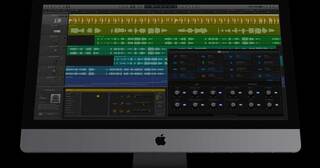
In a photo uploaded by a user, Q-Tip is shown using the Arturia V Collection 8, as mentioned in an article and on the Arturia website.
Find it on:

My new old baby.... Rhythm Ace #studio#theLastZulu #comingsoon
Find it on:

Used to produce We Got It from Here... Thank You 4 Your Service and other projects, before selling it via Vintage King. The sale was announced in this January 26, 2017 Vintage King blog post. In this excerpt from Q-Tip's 2016 CBS This Morning interview, which shows the console in Q-Tip's home studio, he mentions that it is the same console used for The Ramones' first two albums (Ramones and Leave Home) and Blondie's self-titled debut.
Hot off the release of the A Tribe Called Quest record, We Got It from Here... Thank You 4 Your Service, artist/producer Q-Tip reached out to Vintage King about purchasing a new console and selling his vintage API 3288. The desk, which was originally housed at the Radio City Studios in New York City, has belonged to Q-Tip for five years and was used during the production of the final Tribe record.
Teaming with Vintage King’s Darrin Fendley, the duo began searching for a new console to replace the API, as Q-Tip’s sonic ambitions for his next project called for something different. “Tip is very focused on all parts of the creation process. He's not one of those guys who throws sound quality out in an effort to ‘get the idea down’ as quick as possible and you can hear that in his work,” Fendley states. “I've never worked with him in the studio but he seems like one of those producers who has a clear idea of where he wants a track to end up before he gets started.”
(...) How long have you had the console and what are some of the records you’ve worked on with it?
I’ve had it for about five years, but I’ve only had it set up for about three years. The thing that drew me to it is that sound. I like the combination of the rock and roll sound and the R&B sound. I used it on the Tribe album, I did some Mariah Carey stuff, Pusha T, I did some stuff for [Lady] Gaga and Kendrick [Lamar].
(...) What’s your secret weapon in the studio?
I think it’s the API, you know. The circuitry, the way it was designed, the EQs are very concise and exact. You get a real sharpness and there is a clarity to it. You can hear the difference. I’m not trying to brag or nothing, but when you hear this album and you compare to all the other popular music out there, there’s a certain warmth to it. It has a certain declaration of sharpness. I think the thing about that board is the high mids, the mid thing on that board is really, really great. We dealt with a lot of guitars, a lot of keyboards and a lot of vocals on this record, I just love how it honed in on those frequencies. It has a nice punch to it. It really kicks you in the face. Guitars sound f[***]ing great on it. Keys sound amazing. Drums have a real attack on that thing. That’s my secret weapon, it’s the board.
(...) If you could pick where this console was going to go, who would you want to see it go to?
I would like to see it go in the hands of someone who is going to use it and not let it sit and relic, someone who is going to make good music on it and take care of it. I hate to see it go, but the only reason I’m getting rid of it is because I want to go a different route in the sound, otherwise I’d keep it. I would like to see someone take it because The Ramones made their first couple records on it, Blondie recorded their first album on it and now the Tribe album. I’d like to see somebody take it who is going to continue that.
Find it on:

Used for Q-Tip's verses on We Got It from Here... Thank You 4 Your Service, as can be seen in this photo from this article from the 2016 October/November issue of Complex.
Find it on:


Used for The Renaissance, as stated in his January 2008 Remix interview. Transcripts can be found at the Future Producers forums (linked) and this Prince.org forum.
With recording engineer Blair Wells waiting in the wings on a Digidesign Pro Tools|HD3 system, Tip would often take whole sections of live jams and either layer them with sampled elements — kicks, snares and claps in particular — or reprocess them entirely.
“Really the one consistent piece has always been Pro Tools,” Wells notes. “We have it set up so the [Chandler LTD-1] mic pres run direct into the Pro Tools rig, through the patch bay. We've got everything patchable so we can sample back out of Pro Tools or sample back in. We try to route everything in a flexible way so that we can really experiment with the tonality and the overall structure of the songs.”
Find it on:

Used for The Renaissance, as stated in his January 2008 Remix interview. Transcripts can be found at the Future Producers forums (linked) and this Prince.org forum.
Q-Tip goes even further with aural textures than he did on Open, trying numerous methods to get to the sound he hears in his head. “The MPC3000 has been his main workhorse,” [recording engineer Blair] Wells says, “but there was a period where he went back to the [E-mu] SP-1200 for obvious tonal reasons. He's tried the MPC4000 and the 1000, and some of the Roland boxes like the Fantom [X-series workstation] with the drum pads, to rework his samples.”
Find it on:

Part of Q-Tip's 2008 inventory, as listed in his January 2008 Remix interview. Transcripts can be found at the Future Producers forums (linked) and this Prince.org forum.
Shure SM57 mics
Find it on:
-m.webp?v=1784804515)
Part of Q-Tip's 2008 inventory, as listed in his January 2008 Remix interview. Transcripts can be found at the Future Producers forums (linked) and this Prince.org forum.
Universal Audio 1176LN compressor/limiter
Find it on:
-m.webp?v=1784806609)
Used for production on We Got It from Here... Thank You 4 Your Service, as can be seen in this photo from this article from the 2016 October/November issue of Complex. It can also be seen in three other photos from the article, given here, here and here.
Find it on:

Part of Q-Tip's home studio during the making of We Got It from Here... Thank You 4 Your Service, as can be seen in this photo from this article from the 2016 October/November issue of Complex.
Find it on:

Used on The Renaissance, as stated in this April 19, 2009 Moovmnt interview.
The one thing that always told me something was a Q-Tip production were the drums. What kind of equipment did you use?
The SP(1200) for drums and for the loops the (AKAI S)950. That’s something that Large Professor put me onto (the AKAI S950). I just liked the snap of it. For me… I was always into the big drums with the tin like smack of it
Find it on:

Used for The Renaissance, as stated in his January 2008 Remix interview. Transcripts can be found at the Future Producers forums (linked) and this Prince.org forum.
Q-Tip goes even further with aural textures than he did on Open, trying numerous methods to get to the sound he hears in his head. “The MPC3000 has been his main workhorse,” [recording engineer Blair] Wells says, “but there was a period where he went back to the [E-mu] SP-1200 for obvious tonal reasons. He's tried the MPC4000 and the 1000, and some of the Roland boxes like the Fantom [X-series workstation] with the drum pads, to rework his samples.”
Find it on:

Used to record Mark Colenburg's drumming for The Renaissance, as stated in Q-Tip's January 2008 Remix interview. Transcripts can be found at the Future Producers forums (linked) and this Prince.org forum.
Just as Open benefited enormously from the signature thwack-driven power of drummer Mark Colenburg, so too did the beats on The Renaissance — many of which were either reprocessed from the original sessions or based on recuts that Colenburg tracked using a Clavia ddrum SE-4 electronic drum kit. The kit has long been a favorite of Q-Tip's for its signature ability to compress drum sounds into a tube-warmed veil that maintains the snap of the original sample while creating a gritty, tape-baked sheen.
“I got hip to that just through searching,” Tip explains. “I have the Roland V-Drums, but with the ddrum, the way the brain processes the sound is just dope. I sampled and chopped up a lot of the drums on the album and then routed them through that. There's compression when you load sounds into the brain, so it really keeps the integrity of the drum sounds nice and even. Then we triggered everything up — I use a Ludwig Vistalite acoustic kit with a Black Beauty snare — and we'd run it through the ddrum and put that back in the room, as well. We'd have a monitor in the room and then mic that, too.”
Once Colenburg's original drum tracks — which were usually recorded with a pair of Coles 4038 ribbon mics and various combinations for the kick, snare and hi-hat — had been processed and loaded into the electronic kit, a live pass of ddrums would often be blended in or used to entirely replace the original. “It was a headache to get the sounds into it,” Wells recalls. “You had to use an old-style MIDI sample dump. But once they were in there, Mark would replay his original drum sounds to give us a take with no dynamics and just a solid groove all the way through. That allowed us to really integrate the drum kit itself between being a real kit and an electronic one. It was all Tip's idea originally, and Mark obviously had a lot of fun with it.”
Find it on:


Featured in two promotional photos for The Renaissance (the second can be found here).
Find it on:

Part of Q-Tip home's studio. It can be seen in this excerpt from his 2016 CBS: This Morning interview at 0:05.
Find it on:

Part of Q-Tip home's studio. It can be seen in this excerpt from his 2016 CBS: This Morning interview at 0:41.
Find it on:

Quoted on the official product page.
I am a stickler for the old synths so much that I have just about every keyboard of importance. Now with the V Collection, these damn keyboards are collecting dust!
Find it on:



Part of Q-Tip's 2008 inventory, as listed in his January 2008 Remix interview. Transcripts can be found at the Future Producers forums (linked) and this Prince.org forum.
Apple Mac G5 dual 2.5 GHz computer
Find it on:

Part of Q-Tip's 2008 inventory, as listed in his January 2008 Remix interview. Transcripts can be found at the Future Producers forums (linked) and this Prince.org forum.
Technics SL-1200s turntables
Find it on:


Part of Q-Tip's 2008 inventory, as listed in his January 2008 Remix interview. Transcripts can be found at the Future Producers forums (linked) and this Prince.org forum.
Vestax PMC-06 ProA VCA DJ mixer
Find it on:
-m.webp?v=1784332934)
Part of Q-Tip's 2008 inventory, as listed in his January 2008 Remix interview. Transcripts can be found at the Future Producers forums (linked) and this Prince.org forum.
Gibson ES-325 and Les Paul guitars (with Line 6 Vetta guitar combo amp and Echo Pro modeling effects processor)
Find it on:
This is a community-built gear list for Q-Tip.
- Find relevant music gear like Microphones, Headphones, Studio Gear, Studio Equipment, Software Plugins and VSTs, and other instruments and add it to Q-Tip.
- The best places to look for gear usage are typically on the artist's social media, YouTube, live performance images, and interviews.
- To receive email updates when Q-Tip is seen with new gear, follow the artist.
Discography
Album Credits
-
Roc Marciano · 2020
Producer -
Danny Brown · 2019
Producer -
Danny Brown · 2019
Producer -
Danny Brown · 2019
Producer -
Solange · 2016
Producer -
Esperanza Spalding · 2012
Producer -
Kanye West & Jay-Z · 2011
Mixing Engineer Producer -
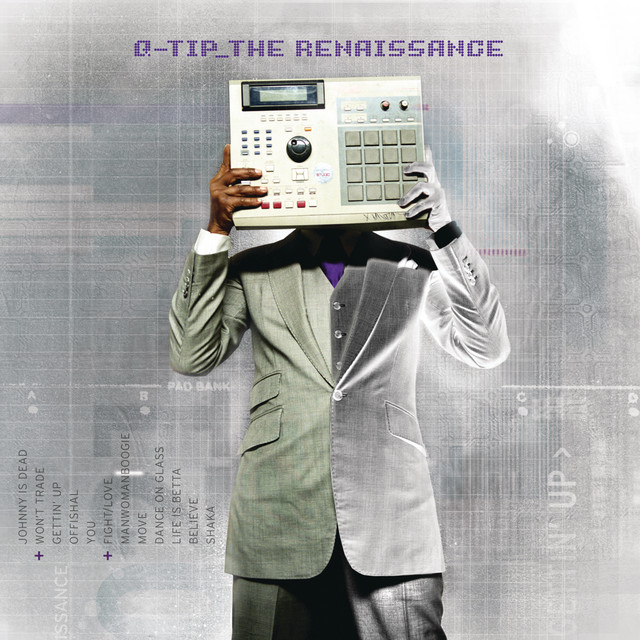
Q-Tip · 2008
Mixing Engineer Producer Programmer Recording Engineer -
Kurt Rosenwinkel · 2003
Producer -
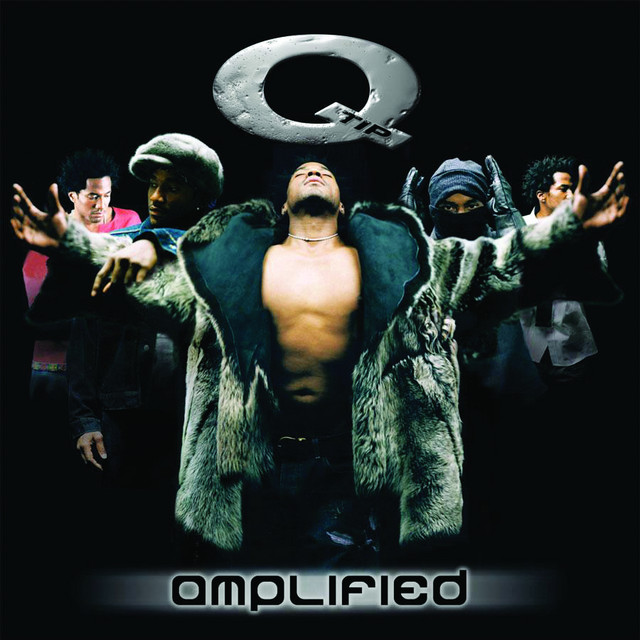
Q-Tip · 1999
Producer -
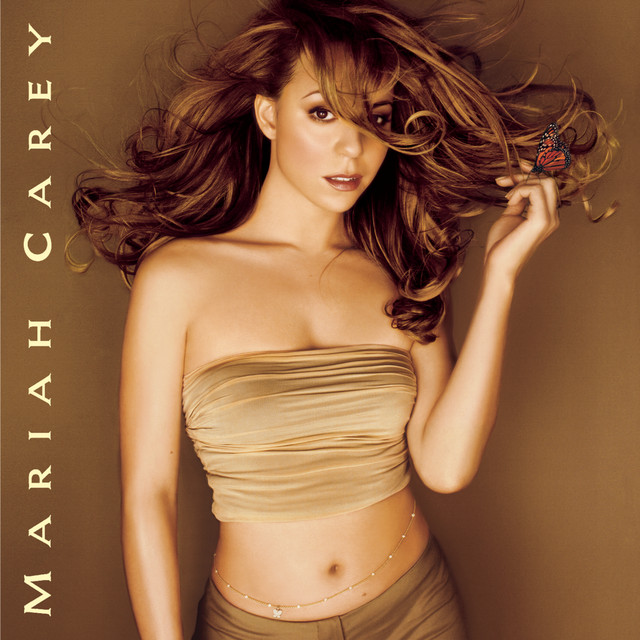
Mariah Carey · 1997
Programmer -
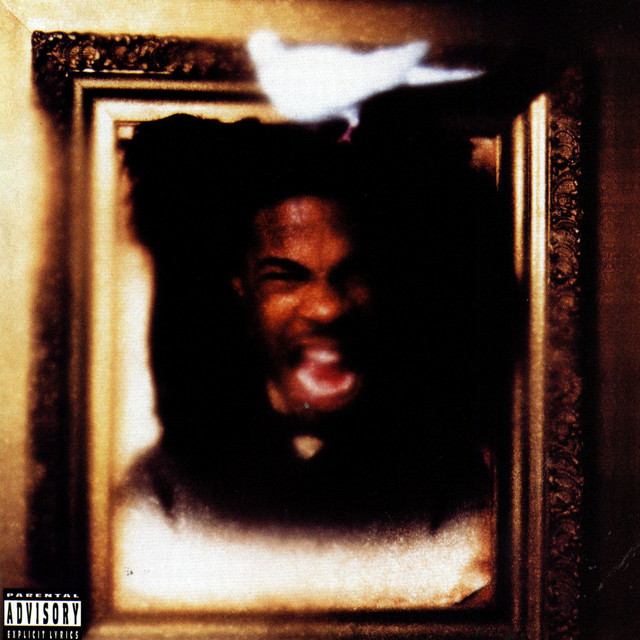
Busta Rhymes · 1996
Mixing Engineer