
Rory Gallagher
Irish guitarist and songwriter
Genre
Group
Credits
Genre
Group
Credits
Rory Gallagher's Gear


Pictured on Gallagher's official website and mentioned by Gallagher himself in the following interviews:
Then I got into a tweed Fender Bassman, and recently I got a Fender Concert, which is an old brown one, from around 1959, with four 10” speakers. I use a Hawk booster through that just to roughen it up a bit, or if it's a quiet number I plug straight in and keep the guitar clean sounding.
Guitarist, February 1985, "Rory Gallagher" by Bob Hewitt
I don’t like stacks much, except the Marshall 4x12s and 50 watt heads. I like combos miked through the PA - the Vox AC30 is my favourite. Sometimes I’ll link that up with a 50 watt Marshall twin combo. I’m fortunate enough to have a couple of the old Fender tweed covered amps - a Bassman and a Concert. I use them with a Hawk Booster, which was made by Di Marzio before he got into the pick-up business. It’s really difficult to find the perfect amp, especially if you play a Stratocaster, because there are limitations in terms of ‘dirtiness’ you can get. You sometimes have to use pre-amp, whereas if you use humbuckers, you’ve all the dirt but little clarity.
What about effects?
I use them off and on! I go through phases when I just use the Hawk Booster. At the moment I’m using some Boss units - a vibrato, flanger, octave divider and occasionally a distortion pack. I also have a little DOD analogue delay between the two amps. I don’t like rack units, I prefer the battery power - it makes less noise.
I don’t like the idea of radio transmitters on the guitar either. I much prefer that sort of umbilical cord between me and the amplifier - it makes you feel as if you’re in touch with something!
One thing I do insist on is a studio quality noise gate, but as regards effects I try to get as much from the guitar and amp as possible.
Guitar for the Practicing Musician, August 1991, "The Wearing of the Blues" by Vivian Campbell
I used to use these boosters made by DiMarzio. They were treble boosters with kind of a graphic on them.
Gallagher's personal unit was replicated by Flynn Amps for the Rory Gallagher Hawk Booster; its manual (uploaded online in November 2015) describes Gallagher's use of the Hawk II in depth, while its official product page includes two images of the interior (here and here).
Flynn Amps Rory Gallagher Hawk Booster Manual, 2010
In march [sic] 2008 we flew down to London on a mission to try and recreate Rory Gallagher’s favourite booster, the ‘Hawk®’. With help from Rory’s brother (and band tour manager) Donal Gallagher, Tom O’Driscoll (band roadie) and Daniel Gallagher (Donal’s musician son) we took Rory’s Hawk apart, meticulously photographed and carefully measured every component. It was from these sketches and photographs that the Rory Gallagher signature Hawk booster was born.
Designed as a multi-purpose device, the Hawk was intended to be used with guitars, keyboards, vocals and mixing desks. The 18V power supply meant that the Hawk was capable of massive output levels and Rory discovered that it could overdrive the input of any valve amp he used it with. Rich harmonics, wide dynamics, smooth sustain and a biting edge are all controlled from the guitar volume control. Rory used his primarily with his Tweed Fender amps but it can drive most valve amps into classic Rory tones. The Hawk was a ‘set and forget’ device that would normally be left on all the time and for guitar use it would be used last in the effect chain driving the amp hard.
From around 1973 onwards you can hear Rory use the Hawk almost exclusively, both live and in the studio. It’s a clear yet highly driven guitar tone that is precise, natural and completely unique to Rory’s music.
Find it on:


This article comes from the June 1978 issue of the Dutch publication Music Maker.
Rory Gallagher: “When I play “Cradle of Rock”, for instance, I don't know if you are familiar with that one, or “Jacknife Beat” I use the Stratocaster with the regular tuning and Fender Rock’n Roll light gauge strings. Playing something like “Bullfrog Blues” I use the Telecaster on which the strings will have the following thicknesses: 013, 015, 020 etc. In any case, thicker strings which produce a richer sound. If I could, I would like to use even thicker strings, but sometimes I tune the guitar in A or E and I use a capo for playing higher tunings. On the acoustical guitar, I take the tuning down to D or G. In that case, I use medium bronze earthwood strings. I always use rough wound strings, and also for playing slide. I know that Lowell George of Little Feat combines ground bass strings with other high strings”.
Find it on:


According to this Music Radar article "Rory’s best known amplifier was a remnant from his days in Irish power trio Taste. The guitarist created his searing signature tone by driving the amp hard and using his guitar volume to control his sound. The reverse of the amp bears marks of decades on tour."
Find it on:

Mentioned in this March 1978 Guitar Player interview.
Then I got into a tweed Fender Bassman, and recently I got a Fender Concert, which is an old brown one, from around 1959, with four 10” speakers. I use a Hawk booster through that just to roughen it up a bit, or if it's a quiet number I plug straight in and keep the guitar clean sounding.
Find it on:

Pictured on Gallagher's official website's "Effects / Pedals" page and mentioned in an interview in an August 1991 Guitar for the Practicing Musician interview with Vivian Campbell.
VIVIAN: You get a tremendous tone for a single-coil Strat. Are you using any kind of distortion device between the guitar and the amp?
RORY: I've got a Boss Graphic EQ.
VIVIAN: Is that a little 6 band?
RORY: Yeah, one of the real old green ones. And I've got a DOD analog. They're back on the amps, and that's set at the minimum setting, just for a little bit of slap-back. I've got a Dyna-comp, which is on all the time, to drive the songs from the leads. It's not for effect. It's a form of compression and I have it at a setting where the compression's really low on it. I usually use a Tube Screamer, which broke down on me. Last night I was using a Boss overdrive. I use them for some solos, not all solos. I was against using them for years. If I was doing a solo, I had to look at the monitor guy to turn it up and all this. So I keep close to the natural sound. I have a brown Boss octave thing.
VIVIAN: I heard that last night. You sounded like Prince! He uses that a lot.
RORY: I've got a Boss flanger, as opposed to a chorus, which I use sparingly, I use that only in “Shadow Play” and “Moon Child,” and one other song. That's my talk on technology. I have a Vox wah-wah which I did use for one or two gigs, but purely to click it on for slide solos. I used it in the studio, for some solos as well. I don't use it on-stage, because even as it is, I try to keep it simple, within reason.
Find it on:

From Rory's collection page, he used a 1921 Martin mandolin on songs such as "Going to my HomeTown"
Find it on:

Fender Stratocaster Electric Guitar
Solid Body Electric Guitars"Featuring an unusual three-tone sunburst finish, Rory used his 1958 Strat on some US tours around 1972. According to Rory’s brother, there’s a slim possibility it once belonged to Buddy Holly" - via Music Radar
Find it on:


In the YouTube video "Rory Gallagher - Tattoo'd Lady - Montreux 1994," Rory Gallagher is seen using Dunlop Herco Vintage '66 Heavy Gauge 1.0mm Picks during his performance.
Find it on:

According to this Music Radar article "Rory used the National resonator (left) for some thrilling slide work on his cover of Tony Joe White’s As The Crow Flies on the much-loved Irish Tour ’74 album. Likewise, the Esquire (right) also began to find favour around that time, again for slide work." It also mentions that this guitar was used on his 1974 Tour.
Find it on:

Used by Rory in Rockplast, 1982. Seen in the video from 0:50 forward.
This guitar was always tuned up one step.
Find it on:

Here Rory talks about his ME-5.
For all of his attention to the fine details of his sound Rory Gallagher insists that he isn't a programmer . He's a guitarist and proud of it.
'I have got a Boss ME-5 -the programmable effects board. I know what it will do and what I want it to do, but I don't actually bother programming it. I leave all that up to an engineer. I've never really been into programming, but I'm learning.
'The BE-5 is another matter. You just set it up as you need it. I'm enjoying using that in the studio because it allows you to work at the sound as you go along.'
Find it on:

In a live performance of "Bad Penny" at Montreux in 1985, Rory Gallagher can be seen using a 1973 Marshall JMP 50 Watt Lead Tube Amp, as captured in a YouTube video by ΜΟΥΣΟΥΡΑ ΜΕΣΟΛΟΓΓΙΟΥ ΑΙΤΩΛΟΑΚΑΡΝΑΝΙΑΣ.
Find it on:

In the video "Rory Gallagher - Moonchild Montreux 22nd July 1977," Rory Gallagher is seen using a Fender Bassman Combo Amp.
Find it on:

Pictured on Gallagher's official website's "Effects / Pedals" page and mentioned in an interview in an August 1991 Guitar for the Practicing Musician interview with Vivian Campbell.
VIVIAN: You get a tremendous tone for a single-coil Strat. Are you using any kind of distortion device between the guitar and the amp?
RORY: I've got a Boss Graphic EQ.
VIVIAN: Is that a little 6 band?
RORY: Yeah, one of the real old green ones. And I've got a DOD analog. They're back on the amps, and that's set at the minimum setting, just for a little bit of slap-back. I've got a Dyna-comp, which is on all the time, to drive the songs from the leads. It's not for effect. It's a form of compression and I have it at a setting where the compression's really low on it. I usually use a Tube Screamer, which broke down on me. Last night I was using a Boss overdrive. I use them for some solos, not all solos. I was against using them for years. If I was doing a solo, I had to look at the monitor guy to turn it up and all this. So I keep close to the natural sound. I have a brown Boss octave thing.
VIVIAN: I heard that last night. You sounded like Prince! He uses that a lot.
RORY: I've got a Boss flanger, as opposed to a chorus, which I use sparingly, I use that only in “Shadow Play” and “Moon Child,” and one other song. That's my talk on technology. I have a Vox wah-wah which I did use for one or two gigs, but purely to click it on for slide solos. I used it in the studio, for some solos as well. I don't use it on-stage, because even as it is, I try to keep it simple, within reason.
Find it on:

Rory Gallagher was seen a couple of times with Gibson Melody Maker, and is visible playing it in this photo.
Find it on:

In the 1980 performance of "Shadow Play" at Volkshaus Zurich, Rory Gallagher can be seen using the Marshall JMP 2104 50W 2x12 Combo amplifier.
Find it on:

According to this Music Radar article "The Dallas Rangemaster was the other key component of Rory’s simple setup and added bite to the tone from his AC30."
Find it on:

Visible in this photo of Gallagher posted to his estate's Instagram account.
Find it on:

According to this Music Radar article, "Rory’s go-to slide guitar during the first few years of his solo career due to its sharp tonal qualities. There’s a ’66 marking on the neck, but some sources have it as a ’67 model. He always paired it with a half-fingered brass slide." It also mentions that this telecaster was used on the albums Rory Gallagher, Deuce, and Live in Europe.
Find it on:

Pictured on Gallagher's official website's "Effects / Pedals" page and mentioned in an interview in an August 1991 Guitar for the Practicing Musician interview with Vivian Campbell.
VIVIAN: You get a tremendous tone for a single-coil Strat. Are you using any kind of distortion device between the guitar and the amp?
RORY: I've got a Boss Graphic EQ.
VIVIAN: Is that a little 6 band?
RORY: Yeah, one of the real old green ones. And I've got a DOD analog. They're back on the amps, and that's set at the minimum setting, just for a little bit of slap-back. I've got a Dyna-comp, which is on all the time, to drive the songs from the leads. It's not for effect. It's a form of compression and I have it at a setting where the compression's really low on it. I usually use a Tube Screamer, which broke down on me. Last night I was using a Boss overdrive. I use them for some solos, not all solos. I was against using them for years. If I was doing a solo, I had to look at the monitor guy to turn it up and all this. So I keep close to the natural sound. I have a brown Boss octave thing.
VIVIAN: I heard that last night. You sounded like Prince! He uses that a lot.
RORY: I've got a Boss flanger, as opposed to a chorus, which I use sparingly, I use that only in “Shadow Play” and “Moon Child,” and one other song. That's my talk on technology. I have a Vox wah-wah which I did use for one or two gigs, but purely to click it on for slide solos. I used it in the studio, for some solos as well. I don't use it on-stage, because even as it is, I try to keep it simple, within reason.
Find it on:

According to this Music Radar article, "With the addition of Lou Martin on keyboards to Rory’s band in 1973, the guitarist looked for an amp that would work better within the group’s fuller sound and began to favour Fender combos, such as this Fender Twin, which became a studio favourite. The amp has a very early serial number (0070), so Rory was cautious about taking it on the road." It also mentions that this amp was used on the albums Tattoo and Blueprint.
Find it on:

Rory had many guitars in his collection. One of these is the 1978 Fender Music Master. You can see him playing this guitar on an amazing cover of Nadine below.
Find it on:

Rare photo of Rory playing a 1959 Chet Atkins G6121.
Find it on:

Pictured on Gallagher's official website's "Effects / Pedals" page and mentioned in an interview in an August 1991 Guitar for the Practicing Musician interview with Vivian Campbell.
VIVIAN: You get a tremendous tone for a single-coil Strat. Are you using any kind of distortion device between the guitar and the amp?
RORY: I've got a Boss Graphic EQ.
VIVIAN: Is that a little 6 band?
RORY: Yeah, one of the real old green ones. And I've got a DOD analog. They're back on the amps, and that's set at the minimum setting, just for a little bit of slap-back. I've got a Dyna-comp, which is on all the time, to drive the songs from the leads. It's not for effect. It's a form of compression and I have it at a setting where the compression's really low on it. I usually use a Tube Screamer, which broke down on me. Last night I was using a Boss overdrive. I use them for some solos, not all solos. I was against using them for years. If I was doing a solo, I had to look at the monitor guy to turn it up and all this. So I keep close to the natural sound. I have a brown Boss octave thing.
VIVIAN: I heard that last night. You sounded like Prince! He uses that a lot.
RORY: I've got a Boss flanger, as opposed to a chorus, which I use sparingly, I use that only in “Shadow Play” and “Moon Child,” and one other song. That's my talk on technology. I have a Vox wah-wah which I did use for one or two gigs, but purely to click it on for slide solos. I used it in the studio, for some solos as well. I don't use it on-stage, because even as it is, I try to keep it simple, within reason.
Find it on:

Pictured on Gallagher's official website's "Effects / Pedals" page and mentioned in an interview in Kerrang No. 15, May 6-19 1982.
"Echo units are indispensable, however. I always have a small delay on one of my amps, like a Memory Man or a DOD, but if you want anything like that authentic Rock 'n' Roll sound, then you have to have tape echo. The Copicat is great for that, but you can also set it with a very shallow delay and it can compensate for dead halls.
Find it on:

Find it on:

A 1963 Corvette is featured in its own page on Gallagher's official website, in which his brother Donal recalls its acquisition. It is also mentioned in an interview in Kerrang No. 15, May 6-19 1982.
Gallagher's website
Purchased for $50-80 in a Pawnshop in the late 70s. This eventually became a substitute guitar for the Esquire.
At present I’m using a Gretsch Corvette for slide instead of the Esquire. The Corvette is Gretsch’s attempt at a Les Paul Junior, but I took off the Gretsch pickup because it was too weak and I put on a P90, which is an old black Gibson single coil pickup.
Beat Instrumental, March 1979
But for most of the open tuning things I’ve been using a Gretsch Corvette with the heavy strings. It’s a very tough guitar —my brother got it for me for 75 dollars in a pawn shop in Los Angeles. I took the pickup off that and put a P90 on. I should have hung on to it, in retrospect, because they’re very good pickups — similar to the Tennessean. But, in my opinion, the P90 is the best pickup for slide —it has the right overtones.
Guitarist Magazine, June 1987
Donal Gallagher:
While on a guitar shopping therapy session in downtown LA, we went into a store called Guitar Village, after a few minutes of the other customers blasting the same guitar riff over and over through mega amps, my head caved in and I told Rory I was going outside to feed the parking meter. Inadvertently, I had parked in front of a pawn-shop so, as an excuse to stay out of the ‘cacophony canyon’, I entered the shop to inquire about the Gretsch guitar wedged into their window.
“That’ll set you back $75” the keeper told me from behind his cell like grill, “You wanna look?” “Not sure I can afford it anyway” I haggled, with no intention of buying it but to waste time. “What you wanna spend?” “Around $50” I replied. Unknowingly I left the shop with a rare Gretsch ‘Corvette’ and put it in the car.
“No luck” Rory said when he finally returned to the car. “I picked something up, but if its no good the case will come in handy” I said and showed Rory what I had bought. “You’re kidding, how much?” he asked “$50” I said meekly “Quick let’s get out of here before they find out what they gave you and want it back” Rory said with glee.
The guitar would become a Rory favourite and would travel in Guitar Trunk 1 thereafter.
Kerrang
'I play a lot of slide guitar too and for that I often use a Gretsch Corvette, which I found in pawnshop in Los Angeles for 90 dollars. Most of the best slide players are dead now. The old bluesmen and people like Lowell George and Duane Allman, but Johnny Winter's still around and Schenker plays a bit and does the Edge in U2. But they're not really in the blues tradition like I am.
Find it on:

According to this Music Radar article, "A studio-only instrument, this Danelectro was used to record A Million Miles Away and Cradle Rock on 1973’s Tattoo album. Both would become live favourites, but Rory didn’t opt to use the Dano onstage." It also mentions that this Danelectro was used on the album Tattoo.
Find it on:

Mentioned (albeit erroneously as a "VT-44") in an interview in an August 1991 Guitar for the Practicing Musician interview with Vivian Campbell.
RORY: I used the Vox AC-30 for years and years, and I used to use a Rangemaster treble booster on it, which was great. I still have one at home. Very primitive, but I used to use the normal input in the Vox, which was not known as the brilliance input. It wouldn't be bright enough; therefore I used the Rangemaster. Then I went to a Fender Twin, a Tweed Twin, and I had a Deluxe which I bought for the studio. Then I had a Fender Bassman linked with the Twin for a long time. I used to use these boosters made by DiMarzio. They were treble boosters with kind of a graphic on them. Then I moved to Ampeg VT-22 linked with VT-44. Then I moved to Marshall 50 watt combo, and then I had two combos. Presently, in England. I was using a 50 watt Marshall with an AC-30 amp, and then an optional 4x12 Marshall which I use for big halls. This American tour, I'm using a Fender Twin Tweed, ‘55 model, with the Marshall 50 watt linked together, and a third one just for extra volume if needed.
Find it on:

Featured in a page on Gallagher's official website. It was notably used on Jinx.
Fender representatives Don Johnston and Larry Newman presented Rory with a brand new Pearl White 25th Anniversary Strat in New York in November 1979.
They thought I couldn’t afford a nice and clean guitar, and they were slightly embarrassed by the finish (of the 1961 Stratocaster) so they gave me a lovely white Anniversary Strat – which I used in the studio a lot. It has a great sound, but the odd thing is that nowadays the people are no longer offended by the look of the old guitars, because Adrian Belew has this old battered one, and late Stevie Ray Vaughan had a sunburst Strat with all the finish gone. But it was very nice of them to give me the white Strat. I must play it on stage now, and it’s began to loose some of the finish – the white shine.
The guitar was produced by Fender in 1979 as a limited run to celebrate the 25th year of production. The Strat featured a four-bolt maple neck with a large headstock and Sperzel tuners, standard Strat synchronized tremolo and three single-coil pickups. The first batch of 500 guitars was sprayed in a white finish that happened to turn yellow over-time, so Fender quickly changed it to a custom silver paint which was used on the rest of the 10,000 guitars which were produced under this line. Rory’s guitar was serial number #000004
Rory used this guitar mainly in the studio, more precisely on the album “Jinx”. Although he does not use a tremolo arm on his main Strat, the Anniversary Stratocaster tremolo was used in the studio by taking out two of the five springs from the back. Upon receiving the guitar he also removed the finish from the back of the neck and re-fretted it with larger frets to better fit his style of playing.
I was honored to receive a Strat from the Fender Company and I used it to record some of the tracks on ‘Jinx.’ But the first thing I did was to remove all the finish off the neck and put in some heavy frets. I also removed the middle tone pot – so it operates like a Telecaster.
Find it on:
This is a community-built gear list for Rory Gallagher.
- Find relevant music gear like Microphones, Guitars, Amplifiers, Effects Pedals, and other instruments and add it to Rory Gallagher.
- The best places to look for gear usage are typically on the artist's social media, YouTube, live performance images, and interviews.
- To receive email updates when Rory Gallagher is seen with new gear, follow the artist.
Discography
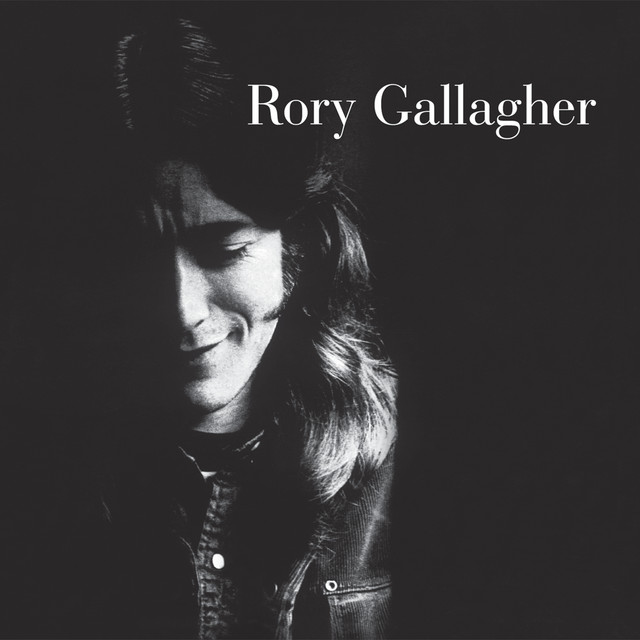
Rory Gallagher (Remastered 2017)
1971
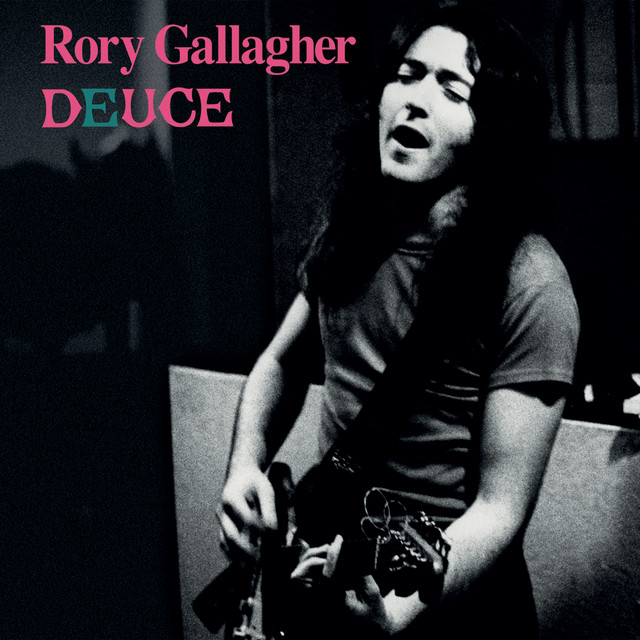
Deuce (Remastered 2017)
1971
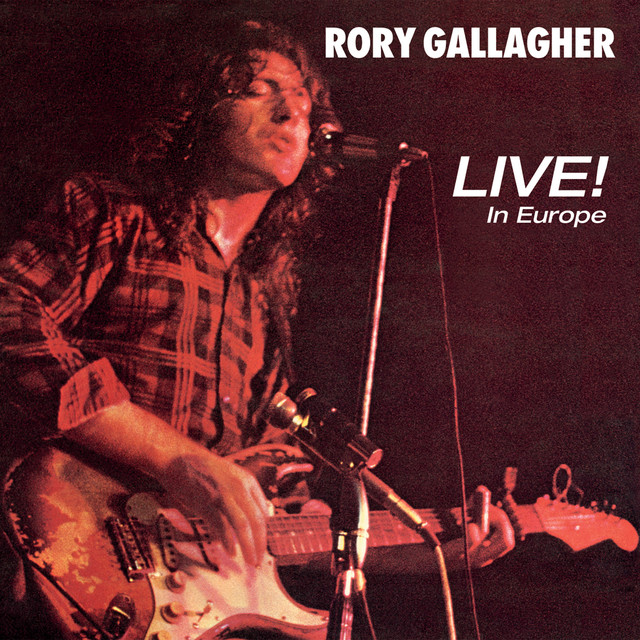
Live! In Europe (Remastered 2017)
1972
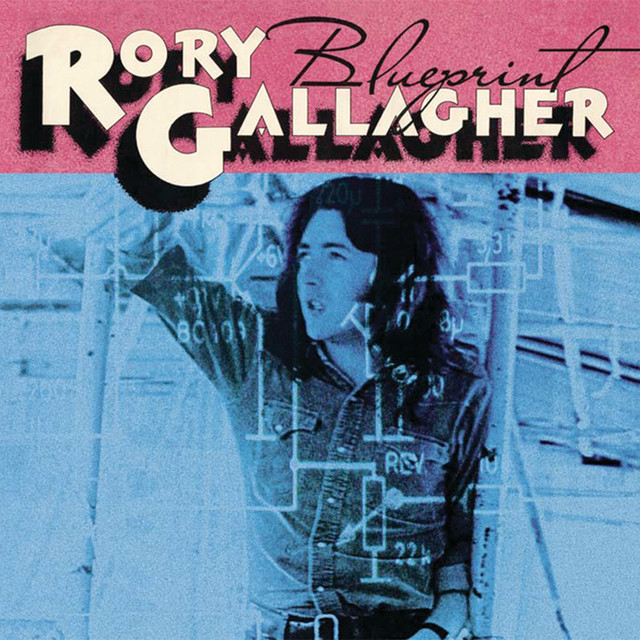
Blueprint (Remastered 2017)
1973
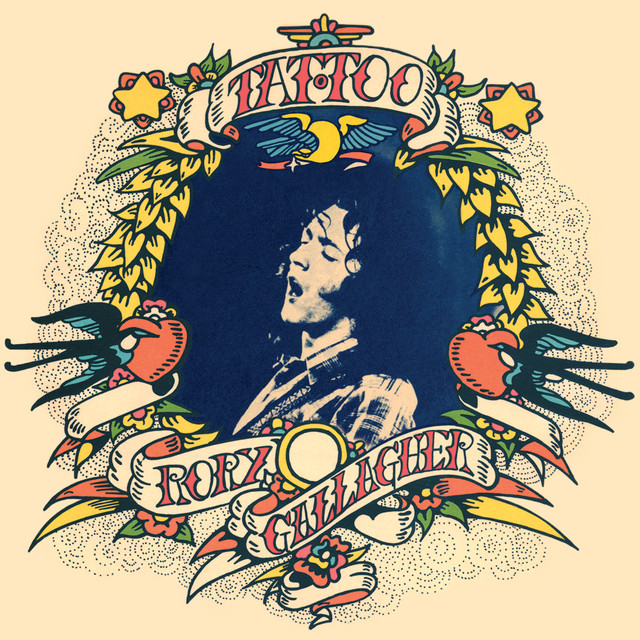
Tattoo (Remastered 2017)
1973
Irish Tour ‘74 (Live / Remastered 2017)
1974
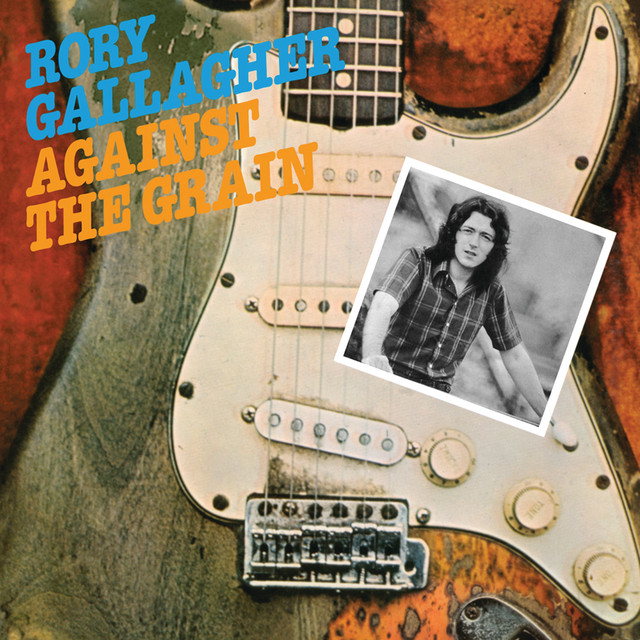
Against The Grain (Remastered 2017)
1975
Calling Card (Remastered 2017)
1976
Photo Finish (Remastered 2017)
1978
Top Priority (Remastered 2017)
1979
Stage Struck (Live / Remastered 2017)
1980
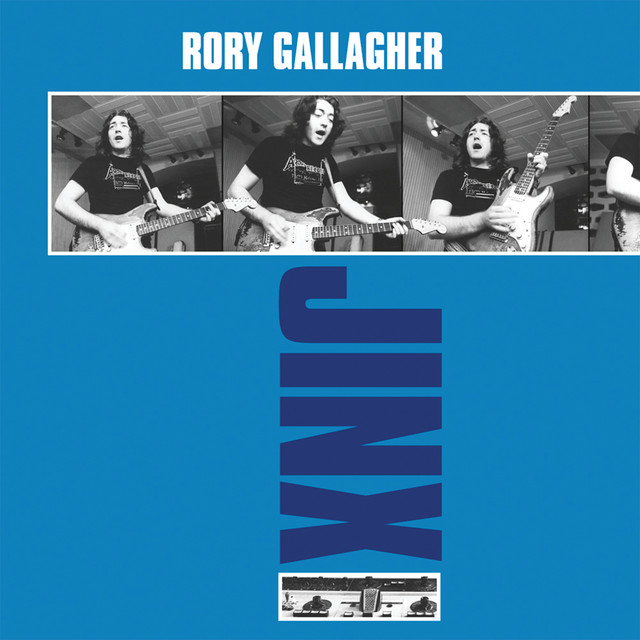
Jinx (Remastered 2017)
1982
Album Credits
-
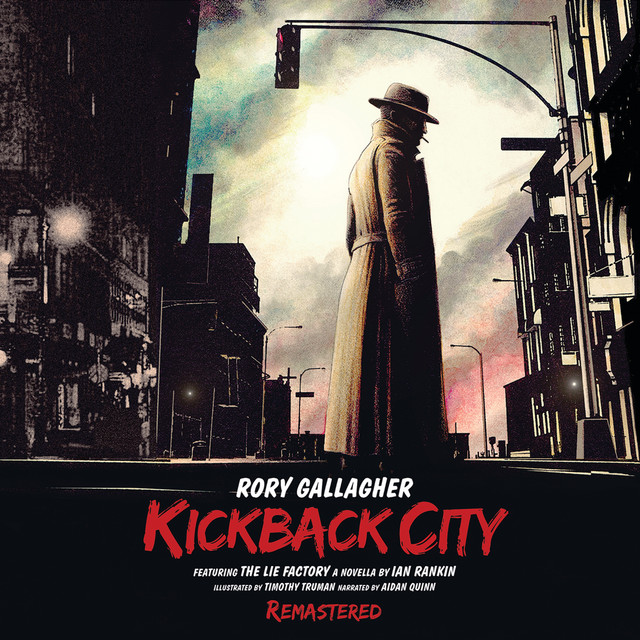
Rory Gallagher · 2013
Producer









.webp)