
Steve Stevens
US guitarist and songwriter
Role
Credits
Role
Credits
Steve Stevens' Gear


"I did go a little crazy with cables. I used Evidence, the Lyric HG. I read up on cables and know that Dave Gilmour was using it, and said, "Wow, it’s probably pretty good!" [laughs]
The studio that we recorded drums and mixed at, Blacksound, I gave them one and said, "Just try it." About a month later that guy had a bunch of guitar players in there and they did a cable shootout and he emailed me back and said, "Hey man, your cable won."
Not so much high-end, but mids, you know? I mean, I know what my pickups should sound like and this cable enhanced the upper mids on guitar. It gave it a lot of presence and a lot of punch. It’s a really great cable."
Find it on:


" I also brought my Knaggs signature guitar—the only one I had at the time—as well as a really good Les Paul goldtop reissue with a wraparound bridge, a Music Man Armada that has a chunk that sounds so great for rhythm, and a John Suhr Strat."
Find it on:


“The Germanium Drive pedal operates at a higher voltage than most other guitar pedals,” he said. “In doing so, it gives players a lot of headroom, so if you want to overdrive an amplifier, you run it through the Germanium Drive first. This pedal has a unique sonic ability in that it becomes part of the amp you’re using. The pedal marries your guitar to whatever amp you’re playing through.”
“Chandler pedals—like all their gear—are built like a tank,” says Stevens. “When I step on those pedals, I know they’ll be ready! The build quality of their equipment is fantastic. I’ve also been impressed with the pedals’ ability to ‘play well’ with other equipment. I’ve never had any issues whatsoever patching these pedals into my signal chain. I’ve used them both before and after other pedals and they work really well—no matter what order they’re in.”
Find it on:



In this video, Steve Stevens talks about his impressions of the PolyTune Clip. He praises the usability, design, brightness of the display, and accuracy.
Find it on:

Steve Stevens demonstrates the Roland G-5 VG Stratocaster®.
Find it on:


In this video Steve Stevens shows his current pedalboard. The SubnUp is in action at 4:20.
Find it on:


Featured on Sontronics' official "Famous Users" page.
"Finally a company that has designed microphones that are guitar amp-specific!
"The Sontronics DELTA is stunning... what a fantastic sounding mic. It pretty much sounded great right in front of the speaker with no EQ. I recently got a 1965 Sears Silvertone amp and the combination of the DELTA microphone and this vintage amp is just perfect.
"If it sounds good coming out of the amp, I can guarantee you that the DELTA will translate that perfectly, in almost 3D clarity. It blew away ribbon mics costing twice as much!"
Find it on:

Steve Stevens is an instructor on the online guitar lesson website JamPlay. The couses he offers include:
- ROCK IMPROVISATION
- BLUES BACKING IMPROVISATION
- STEVE'S WARMUP EXERCISES
- ALTERNATE PICKING EXERCISES
- WHAMMY BAR TECHNIQUES
- PERFORMANCE AND BAND TIPS
- SONG WRITING TIPS
- STEVE'S GEAR AND RECORDING PHILOSOPHY
...and others. His artist profile and courses can be seen here.
Find it on:

Steve posted the attached photo on Facebook with the following caption: “My pedalboard i built when joining Billy Idol. Used to record Rebel Yell album and touring up until 1987.”
Find it on:

Steve posted the attached photo on Facebook with the following caption: “My pedalboard i built when joining Billy Idol. Used to record Rebel Yell album and touring up until 1987.”
Find it on:

Steve Stevens posted a photo of this guitar on Facebook and stated he used it (a 1983 Kramer Pacer) to record 90% of the album Rebel Yell. Based on the two humbucker configuration and the year, this would be a Pacer Imperial.
Find it on:

"I did the raygun sound with a Lexicon PCM41 digital delay," Stevens explains. "It's got a mix control, and I just completely cut off my guitar signal from it and got the modulation. Then I played a harmonic on high G and used the modulation section to sweep that. Also, I had to use a compressor, to keep the note constant so that it could feed the PCM41."
Find it on:

Steve Stevens' main guitar parts were played on his Prototype, on which he'd installed coil-tap switches "for a Strat-type sound. The guitar was put through a Rockman — which has two outputs — and both of those were fed into a Roland Dimension D chorus. The Rockman's output was actually just in mono, and I ran the chamber echo to the Dimension D, to enable it to be stereo. From there it went into two delay lines, each with a different rate time. For example, you can put a delay of 200 milliseconds on the left side, and maybe a 202 millisecond delay on the right, resulting in a sort of psychoacoustic effect.
Find it on:

Steve Stevens isn't one of those musicians who need a separate country estate just to house their guitars — he estimates that at most he owns 30 — but his collection is noteworthy for its eclecticism and its customised peculiarities. Though his main instrument is the Hamer that bears his name, each of his Steve Stevens models is modified in fanciful, almost eccentric fashion.
Most extraordinary is the Raygun guitar, finished in black metal flake. Why is it called the Raygun? Hamer's Jol Dantzig explains: "Steve has this huge collection of toys, including robots and rayguns. We put one of the rayguns into the guitar and created a separate compartment in the back for the electronics so that you could actually 'play' the raygun through the amplifier. There are three momentary buttons and a slide switch on the face, arranged just behind the bridge. The varying combinations of buttons give you different pulse patterns. Steve played it for the first time at Live Aid with the Thompson Twins, and I'm sure that most people thought it was a synthesiser."
Pickups are a Seymour Duncan custom Allan Holdsworth model in the bridge and two Duncan APS-Is in the neck and middle positions.
The original Prototype SS Stevens is called "the Pac Man guitar with the Barney Rubble paint job," because its cracked day-glo finish has reminded some of Barney Rubble's shirt, according to Dantzig. It's gone through so many mutations by the finicky Stevens, JD Dworkow refers to it as "the testing pad." Pickups are the same as those on the Raygun. "We also just threw on an old non-fine-tuning Floyd Rose tremolo," says Dworkow, "one of the very first ever made." Much of Stevens' work is done by Manhattan luthier John Suhr, who's serviced instruments for the likes of Mark Knopfler, Mick Jagger, Brian Setzec, and Eddie Martinez.
Other unique examples of guitars that combine practicality and self-indulgence are a phosphorescent seafoam-green Hamer with a built-in Roland GR-700 controller; "the Christmas Tree," a three-quarter-size, three pickup Jackson Soloist painted in what Dworkow calls "this ridiculously grotesque purple-maroon metal-flake and strange green colour"; and a 1976 Ramirez Spanish acoustic "built before they stopped using the really good Rosewood. Steve picked it up in Chicago, and it's a beautiful guitar."
Rumours that Stevens is currently devising an electric six-string with portable bar, rotisserie, electric can opener and Waterpick are entirely unfounded. For now.
Find it on:



Steve Stevens isn't one of those musicians who need a separate country estate just to house their guitars — he estimates that at most he owns 30 — but his collection is noteworthy for its eclecticism and its customised peculiarities. Though his main instrument is the Hamer that bears his name, each of his Steve Stevens models is modified in fanciful, almost eccentric fashion.
Most extraordinary is the Raygun guitar, finished in black metal flake. Why is it called the Raygun? Hamer's Jol Dantzig explains: "Steve has this huge collection of toys, including robots and rayguns. We put one of the rayguns into the guitar and created a separate compartment in the back for the electronics so that you could actually 'play' the raygun through the amplifier. There are three momentary buttons and a slide switch on the face, arranged just behind the bridge. The varying combinations of buttons give you different pulse patterns. Steve played it for the first time at Live Aid with the Thompson Twins, and I'm sure that most people thought it was a synthesiser."
Pickups are a Seymour Duncan custom Allan Holdsworth model in the bridge and two Duncan APS-Is in the neck and middle positions.
The original Prototype SS Stevens is called "the Pac Man guitar with the Barney Rubble paint job," because its cracked day-glo finish has reminded some of Barney Rubble's shirt, according to Dantzig. It's gone through so many mutations by the finicky Stevens, JD Dworkow refers to it as "the testing pad." Pickups are the same as those on the Raygun. "We also just threw on an old non-fine-tuning Floyd Rose tremolo," says Dworkow, "one of the very first ever made." Much of Stevens' work is done by Manhattan luthier John Suhr, who's serviced instruments for the likes of Mark Knopfler, Mick Jagger, Brian Setzec, and Eddie Martinez.
Other unique examples of guitars that combine practicality and self-indulgence are a phosphorescent seafoam-green Hamer with a built-in Roland GR-700 controller; "the Christmas Tree," a three-quarter-size, three pickup Jackson Soloist painted in what Dworkow calls "this ridiculously grotesque purple-maroon metal-flake and strange green colour"; and a 1976 Ramirez Spanish acoustic "built before they stopped using the really good Rosewood. Steve picked it up in Chicago, and it's a beautiful guitar."
Rumours that Stevens is currently devising an electric six-string with portable bar, rotisserie, electric can opener and Waterpick are entirely unfounded. For now.
Find it on:

Stevens mentioned the use of Two Notes Torpedo Captor X in the end-of-the-year Guitar World 2022 issue.
Find it on:

Steve Stevens uses the Friedman SS100-v2, as showcased in the official Friedman video on YouTube. This updated version of the amplifier head features re-voiced dirty channels for enhanced percussiveness and dynamics, while maintaining the original's high-gain, plexi-like tones. The clean channel, prized for its high headroom and sparkling clarity, remains unchanged. Notably, the design now includes three channels and an all-black finish.
Find it on:

Steve Stevens is an endorsee of the Godin Multiac ACS-SA, specifically the unique black nylon-string model. This is confirmed by a user-uploaded photo.
Find it on:

Steve Stevens showed his recent touring rig on 4/11/2023. His caption explains that the Line 6 HX Effects processir is used in the fx loop of his Friedman SS100DLx amps.
Find it on:

In this YouTube https://m.youtube.com/watch?v=zjpp4NuHfas&embeds_referring_euri=https%3A%2F%2Fwww.guitarpedalx.com%2F&source_ve_path=OTY3MTQ&feature=emb_imp_woyt 1:00 Steve Stevens play J rockett archer
Find it on:

In a video by Rhett Shull titled "This Amp Can Do Everything," Steve Stevens is listed among the first few people who purchased the Soldano SLO 100 100-Watt Tube Guitar Amplifier.
Find it on:

Steve Stevens uses the Sustainiac Neck Pickup in his Knaggs Steve Stevens Severn XF guitar, which was designed to mimic the look of one of his old guitars, as revealed in a "Rig Rundown" by John Bohlinger on Premier Guitar.
Find it on:

Guitarist Steve Stevens uses Fishman Fluence Classic Humbucker Pickups in his Knaggs guitar, as confirmed in the "Steve Stevens Rig Rundown" by John Bohlinger for Premier Guitar.
Find it on:
-m.webp?v=1783177733)
In the Premier Guitar video "Steve Stevens Rig Rundown," hosted by John Bohlinger, it is confirmed that Steve Stevens uses the AMS Neve 8803 Dual EQ. The setup details highlight that both amp signals are routed through the Neve 8803 rack EQ into two RedSeven Amplification Amp Central Evo loadboxes, and then through their impulse response programs to the front of house.
Find it on:

Steve Stevens uses a pair of Friedman amplifier heads, including the Friedman Brown Eye 100W Tube Guitar Amp Head (often mistakenly referred to as a B100) and a Steve Stevens SS100, as confirmed by John Bohlinger in the "Steve Stevens Rig Rundown" on Premier Guitar.
Find it on:

Steve Stevens uses a Neural DSP Quad Cortex as a backup and for fly dates, as confirmed by John Bohlinger in the "Steve Stevens Rig Rundown" on Premier Guitar.
Find it on:

Steve Stevens utilizes the RJM Mastermind GT/22 MIDI Foot Controller on his pedalboard, as confirmed in the "Steve Stevens Rig Rundown" by John Bohlinger for Premier Guitar.
Find it on:

Steve Stevens utilizes the Fractal FM3 MK II Turbo Amp Modeler/FX Processor as part of his rig, as confirmed by the Premier Guitar video "Steve Stevens Rig Rundown" with John Bohlinger, where it is shown on his board alongside an RJM Mastermind GT.
Find it on:

According to a "Rig Rundown" video by John Bohlinger on Premier Guitar, guitarist Steve Stevens uses a TC Electronic PolyTune 2 Noir on his live pedalboard.
Find it on:

In a Premier Guitar Rig Rundown with John Bohlinger, Steve Stevens confirms that his live pedalboard includes the Xotic Effects Super Sweet Booster.
Find it on:
This is a community-built gear list for Steve Stevens.
- Find relevant music gear like Guitars, Amplifiers, Effects Pedals, and other instruments and add it to Steve Stevens.
- The best places to look for gear usage are typically on the artist's social media, YouTube, live performance images, and interviews.
- To receive email updates when Steve Stevens is seen with new gear, follow the artist.
Discography
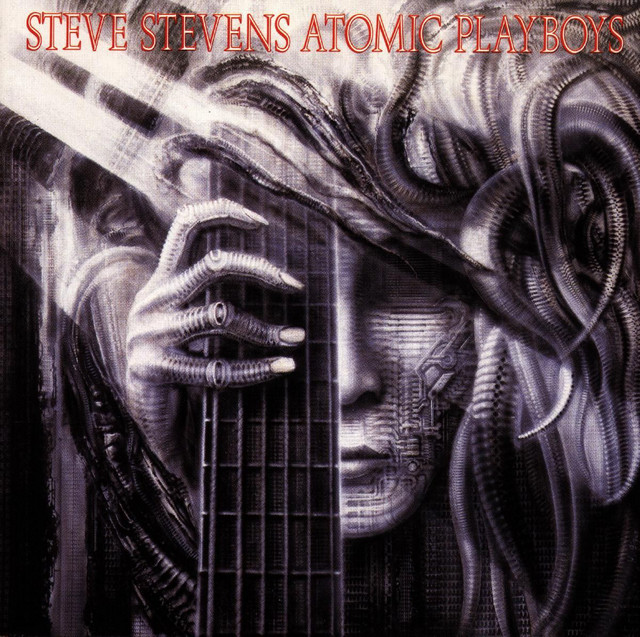
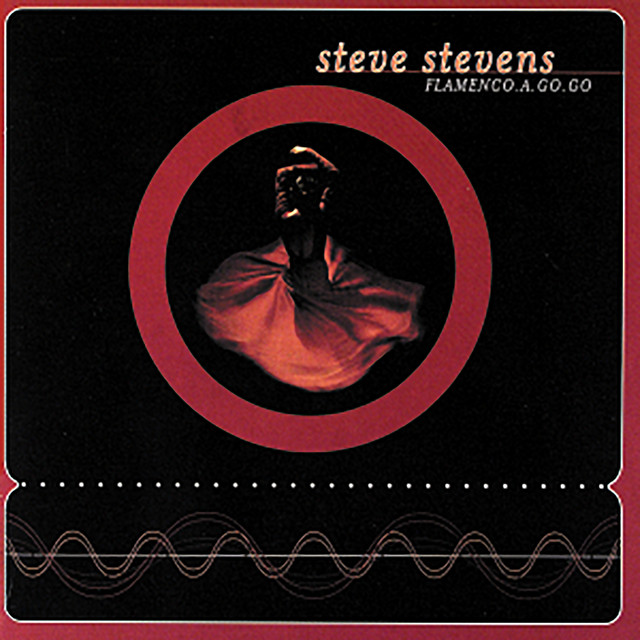
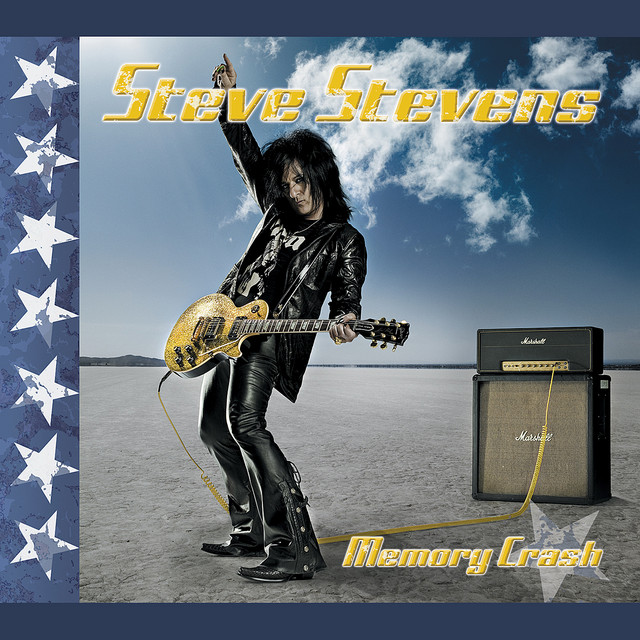
Album Credits
-
Terry Bozzio · 2005
Recording Engineer




.webp)
