Reb Beach
Role
Group
Credits
Role
Group
Credits
Reb Beach's Gear
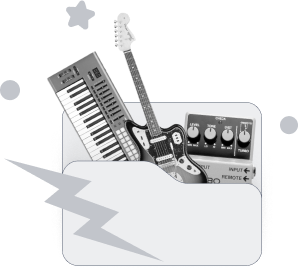


UPDATE - AUGUST 2005 Shown above is Reb's new pedalboard for the Whitesnake 2005 World Tour.
As you can see, there have been a number of changes to the board. Reb's old Danelectro delay has been replaced with a Digitech Digital Delay pedal. The Boss Metal Zone (famous for sucking out low end) is no more, replaced by a Fulltone Fat Boost.
Find it on:


In this photo we can see Reb Beach playing his Suhr Reb Beach guitar. In his official web site, he says, "My main guitar is the Suhr (pictured above) I bought at Rudy's Music Stop on 48th Street, New York in 1986. It is a solid Hawaiian Koa body with a Pau Ferro (Brazilian Rosewood) neck and stainless steel frets. It is very heavy, but has worn into my body over the years and I love it. The guitar is fitted with an original Floyd Rose tremelo system that is set up to pull back as well as forward like all my guitars, a John Suhr JST humbucker and 2 Suhr noiseless single coils".
Find it on:


The Ibanez RG560 was the guitar that convinced Reb to sign up to Ibanez for an endorsement deal in the early 90's. Following the success of the first Winger album, several companies approached Reb with endorsement offers, but it was the RG560 that swung it for Reb.
The following quotes are taken from the October 1990 edition of Guitar World magazine. Reb's guitar tech, Dave Lewis, talks about the RG560 - "Reb has 2 versions of the 560. The Black one is the guitar that made him decide to go with Ibanez. It's fairly Strat-shaped, with a mahogany body." The pickup configuration, consisting of 2 EMG SA single coils and 1 EMG 85 humbucker in the bridge position, offers a smooth, fluid, flat frequency response. "Reb likes to get a lot of crunch, but he doesn't like too much bass or treble. This combination is almost like a Les Paul in the rhythm mode".
Find it on:


For his solo work, Reb has used Mesa Boogie 4x12 speaker cabinets for some years. Larger in size than a regular Marshall cabinet, Reb's Mesa cabs are loaded with 30 watt Celestion speakers, which he mikes off-centre from the speaker cone. His taped guides for mic placement can be seen in the photo above.
For his live work with Whitesnake, Reb has been using regular Marshall straight front cabinets with vintage weave grill cloth with 4 cabs used in smaller venues and 6 in larger arenas.
The Marshall heads in the photo above are dummies and are not used.
Many thanks to Reb's tech on the Whitesnake 2004 Tour, Matt "Maddi" Schieferstein, for allowing us access to Reb's live rig.
Find it on:

AUGUST 2005 UPDATE - Reb switches to Custom Audio Electronics OD100 Amps! Shock! Horror! For the Whitesnake 2005 World Tour, Reb has retired his trusty Suhr-modded Marshalls (detailed below) and replaced them with the John Suhr-designed OD100 head. Reb explains why opposite...
For more information on the OD100 amplifier, visit the following sites:
Find it on:

In this YouTube video, Reb Beach gives a tour of his live rig with Whitesnake. At 3:59 into the video, he shows the Suhr Shiba Drive and Tc electronic Flashback delay.
Find it on:


-m.webp?v=1784127421)
In this YouTube video, Reb Beach demonstrates his amp and guitar. In 4:50 you can see him using Boss DD-3
Find it on:

Reb Beach is associated with the Ibanez RBM2NT Limited Edition Reb Beach Signature Series guitar, as noted in an article by BraveWords discussing his upcoming guitar clinics during his Italian tour.
Find it on:

As seen in this Kitty Hawk Quattro advertisement. Reb used this preamp on the first Winger album.
Find it on:

When I used to do clinics, if they didn't have a Mesa Boogie Rectifier I would request a 5150. They're very good, especially if you are going for a Van Halen tone. There is a mid frequency that I can never seem to dial in on those though.
Find it on:

According to EMG's webiste, Beach uses EMG 85 pickups.
Find it on:

At 4:55 Reb discusses his personal Ibanez that he designed.
Find it on:

he Ibanez WRB-3 has taken on almost mythical status amongst collectors of Ibanez guitars and fans of Reb. Once again, the guitar was designed by Reb himself in 1990. Always a fan of models such as Gibson's Explorer, Reb used that model as inspiration, adding his own twist with the extended lower horn and sleek curves, rather than the Explorer's hard, angular lines.
Only 100 of the guitars, decorated with the Winger graphic, were produced for sale in Japan only, each one personally signed and numbered by Reb. 3 guitars were also built for Reb himself. Unfortunately Reb was forced to sell all 3 of his WRB-3's "for rent in the 'dark time' we try not to remember".
The guitar came supplied with a form fit gig bag and an accessory set including strap, tremelo bar and grip pad.
Finding a genuine WRB-3 today is an almost impossible exercise as there were only 100 made. The last example in mint condition with all original accessories and gig bag was sold by Rich Harris on his Ibanez Rules website at www.ibanezrules.com If you know of one for sale, let us know!
Find it on:
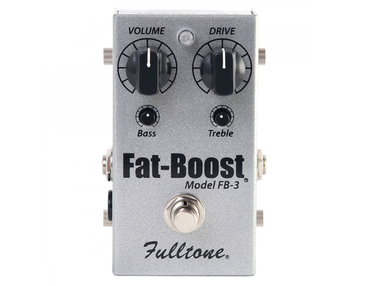
UPDATE - AUGUST 2005 Shown above is Reb's new pedalboard for the Whitesnake 2005 World Tour.
As you can see, there have been a number of changes to the board. Reb's old Danelectro delay has been replaced with a Digitech Digital Delay pedal. The Boss Metal Zone (famous for sucking out low end) is no more, replaced by a Fulltone Fat Boost
Find it on:

As you can see (above), Reb's pedalboard is constantly evolving as he adds and discards effects - it ain't the neatest thing you've ever seen! We asked Reb to describe his signal path: "My signal goes into very expensive Shure wireless units, which are the closest thing to being on a cable I have found. From there it goes into a Bradshaw router that helps with guitar changes. Then it goes to the pedalboard and out to the amps."
"The pedalboard signal goes to a Cry Baby wah, a Boss Metal Zone distortion, a Danelectro echo for long delays when making weird noises, a Boss tuner and a Digitech Whammy pedal, which is in a loop because it messes with my signal in line. The whammy pedal is great with the long delay for weird noises. Then to a A/B box, which chooses between clean or dirty amps."
"The clean line goes from the A/B box into a Guild Hartke bass head with a TC electronics multi effects unit for wetness. The bass head gives a very loud full clean sound. The other signal from the A/B box goes to the Marshall dirty heads."
Reb has recently replaced the Boss Overdrive pedal seen on his Homegrown DVD with the Boss Metal Zone, as he felt that the overdrive pedal (used for solo boost) was taking away too much low end. Anyone who has heard Reb's live sound on the 2004 Whitesnake tour will agree he made the right choice!
Find it on:

In a demo Reb Beach did in 2013 he says at 1:39 that he has been using these amps or a variation of these amps, basically his whole career.
Find it on:

The Pigtronix PolySaturator is such a good-sounding pedal. You can plug into a Fender Twin and make it sound like a Marshall. I couldn’t believe it. There’s crunch and low-end, and the EQ does a lot. Their echo pedal is phenomenally cool.
Find it on:

On smaller shows Reb is currently opting for Blackstar amplification (namely the HT-5). To augment this Reb has an ever changing array of pedals, but the mainstays seem to be a Crybaby wah, an old Digitech Whammy II, a Digitech delay and a Fulltone Fat Boost. If you're chasing that Reb tone, you should be fine with similar effects and a high gain Marshall style amp.
Find it on:

Thanks to his switch to OD100 amps, the Morley A/B box used to switch from Reb's Marshalls (dirty) to his Hartke bass head (clean) is gone, replaced by an OD100 switchbox. The left button switches from dirty to clean and the right button kicks in a lead boost for solos. Then there's the mysterious new "Nipple Switch"! We'll keep you guessing on that one!
Thanks again to Reb's tech, Cris Lepurage, for supplying the photo.
Find it on:

pedalboard
As you can see (above), Reb's pedalboard is constantly evolving as he adds and discards effects - it ain't the neatest thing you've ever seen! We asked Reb to describe his signal path: "My signal goes into very expensive Shure wireless units, which are the closest thing to being on a cable I have found. From there it goes into a Bradshaw router that helps with guitar changes. Then it goes to the pedalboard and out to the amps."
"The pedalboard signal goes to a Cry Baby wah, a Boss Metal Zone distortion, a Danelectro echo for long delays when making weird noises, a Boss tuner and a Digitech Whammy pedal, which is in a loop because it messes with my signal in line. The whammy pedal is great with the long delay for weird noises. Then to a A/B box, which chooses between clean or dirty amps."
"The clean line goes from the A/B box into a Guild Hartke bass head with a TC electronics multi effects unit for wetness. The bass head gives a very loud full clean sound. The other signal from the A/B box goes to the Marshall dirty heads."
Reb has recently replaced the Boss Overdrive pedal seen on his Homegrown DVD with the Boss Metal Zone, as he felt that the overdrive pedal (used for solo boost) was taking away too much low end. Anyone who has heard Reb's live sound on the 2004 Whitesnake tour will agree he made the right choice!
Find it on:

s you can see (above), Reb's pedalboard is constantly evolving as he adds and discards effects - it ain't the neatest thing you've ever seen! We asked Reb to describe his signal path: "My signal goes into very expensive Shure wireless units, which are the closest thing to being on a cable I have found. From there it goes into a Bradshaw router that helps with guitar changes. Then it goes to the pedalboard and out to the amps."
"The pedalboard signal goes to a Cry Baby wah, a Boss Metal Zone distortion, a Danelectro echo for long delays when making weird noises, a Boss tuner and a Digitech Whammy pedal, which is in a loop because it messes with my signal in line. The whammy pedal is great with the long delay for weird noises. Then to a A/B box, which chooses between clean or dirty amps."
"The clean line goes from the A/B box into a Guild Hartke bass head with a TC electronics multi effects unit for wetness. The bass head gives a very loud full clean sound. The other signal from the A/B box goes to the Marshall dirty heads."
Reb has recently replaced the Boss Overdrive pedal seen on his Homegrown DVD with the Boss Metal Zone, as he felt that the overdrive pedal (used for solo boost) was taking away too much low end. Anyone who has heard Reb's live sound on the 2004 Whitesnake tour will agree he made the right choice!
Find it on:

As you can see (above), Reb's pedalboard is constantly evolving as he adds and discards effects - it ain't the neatest thing you've ever seen! We asked Reb to describe his signal path: "My signal goes into very expensive Shure wireless units, which are the closest thing to being on a cable I have found. From there it goes into a Bradshaw router that helps with guitar changes. Then it goes to the pedalboard and out to the amps."
"The pedalboard signal goes to a Cry Baby wah, a Boss Metal Zone distortion, a Danelectro echo for long delays when making weird noises, a Boss tuner and a Digitech Whammy pedal, which is in a loop because it messes with my signal in line. The whammy pedal is great with the long delay for weird noises. Then to a A/B box, which chooses between clean or dirty amps."
"The clean line goes from the A/B box into a Guild Hartke bass head with a TC electronics multi effects unit for wetness. The bass head gives a very loud full clean sound. The other signal from the A/B box goes to the Marshall dirty heads."
Reb has recently replaced the Boss Overdrive pedal seen on his Homegrown DVD with the Boss Metal Zone, as he felt that the overdrive pedal (used for solo boost) was taking away too much low end. Anyone who has heard Reb's live sound on the 2004 Whitesnake tour will agree he made the right choice!
Find it on:
-m.webp?v=1784127422)
As you can see (above), Reb's pedalboard is constantly evolving as he adds and discards effects - it ain't the neatest thing you've ever seen! We asked Reb to describe his signal path: "My signal goes into very expensive Shure wireless units, which are the closest thing to being on a cable I have found. From there it goes into a Bradshaw router that helps with guitar changes. Then it goes to the pedalboard and out to the amps."
"The pedalboard signal goes to a Cry Baby wah, a Boss Metal Zone distortion, a Danelectro echo for long delays when making weird noises, a Boss tuner and a Digitech Whammy pedal, which is in a loop because it messes with my signal in line. The whammy pedal is great with the long delay for weird noises. Then to a A/B box, which chooses between clean or dirty amps."
"The clean line goes from the A/B box into a Guild Hartke bass head with a TC electronics multi effects unit for wetness. The bass head gives a very loud full clean sound. The other signal from the A/B box goes to the Marshall dirty heads."
Reb has recently replaced the Boss Overdrive pedal seen on his Homegrown DVD with the Boss Metal Zone, as he felt that the overdrive pedal (used for solo boost) was taking away too much low end. Anyone who has heard Reb's live sound on the 2004 Whitesnake tour will agree he made the right choice!
Find it on:

As you can see (above), Reb's pedalboard is constantly evolving as he adds and discards effects - it ain't the neatest thing you've ever seen! We asked Reb to describe his signal path: "My signal goes into very expensive Shure wireless units, which are the closest thing to being on a cable I have found. From there it goes into a Bradshaw router that helps with guitar changes. Then it goes to the pedalboard and out to the amps."
"The pedalboard signal goes to a Cry Baby wah, a Boss Metal Zone distortion, a Danelectro echo for long delays when making weird noises, a Boss tuner and a Digitech Whammy pedal, which is in a loop because it messes with my signal in line. The whammy pedal is great with the long delay for weird noises. Then to a A/B box, which chooses between clean or dirty amps."
"The clean line goes from the A/B box into a Guild Hartke bass head with a TC electronics multi effects unit for wetness. The bass head gives a very loud full clean sound. The other signal from the A/B box goes to the Marshall dirty heads."
Reb has recently replaced the Boss Overdrive pedal seen on his Homegrown DVD with the Boss Metal Zone, as he felt that the overdrive pedal (used for solo boost) was taking away too much low end. Anyone who has heard Reb's live sound on the 2004 Whitesnake tour will agree he made the right choice!
pedalboard pedalboard
- Pedal Power power supply
- Boss TU-2 Chromatic Tuner
- Boss LS-2 Line Selector
- Digitech Whammy II
- Danelectro Dan-Echo delay
- Boss MT-2 Metal Zone distortion
- Crybaby Wah-Wah
- Morley A-B box
Find it on:
-m.webp?v=1784127457)
In this YouTube video, Reb Beach gives a tour of his live rig with Whitesnake. At 3:59 into the video, he shows the Suhr Shiba Drive and Tc electronic Flashback delay
Find it on:


At 1:32 in the winger music video for seventeen Reb is seen playing a Kramer pacer 1984 edition.
Find it on:

https://www.guitarworld.com/features/reb-beach-whitesnake-pedalboard Guitar World : “If I had to choose one pedal to bring on a desert island, it would be a Suhr Riot [distortion] pedal because it makes any amp sound great, and I imagine the amp on a desert island would suck. A friend of mine did a show with [Aerosmith’s] Brad Whitford, and all they had was a crappy amp. My friend handed him a Riot pedal, and the sound went from crappy to amazing. Brad freaked out at the difference and bought one right away.”
Find it on:

This Guitar Geek rig diagram states that Reb Beach used an Ibanez Roadstar Custom.
Find it on:

This Guitar Geek rig diagram states that Reb Beach used an Ibanez Soundtank Delay pedal.
Find it on:
This is a community-built gear list for Reb Beach.
- Find relevant music gear like Guitars, Amplifiers, Effects Pedals, and other instruments and add it to Reb Beach.
- The best places to look for gear usage are typically on the artist's social media, YouTube, live performance images, and interviews.
- To receive email updates when Reb Beach is seen with new gear, follow the artist.
Discography
Album Credits
-
Reb Beach · 2020
Producer -
Reb Beach · 2002
Producer