Stevie Ray Vaughan
Credits
Credits
Stevie Ray Vaughan's Guitars


This guitar is displayed at a Guitar Center in Austin, Texas. It is displayed with the following notes:
Stevie Ray Vaughan “Lenny” Fender Stratocaster
In 1980, Stevie Ray Vaughan came across a ’65 Strat in a Texas pawnshop. Though the pickups had been ravaged by time, and the guitar had been sloppily refinished, something about the instrument resonated with the struggling artist. Vaughan’s wife Lenora pooled together $50 from seven of Vaughan’s friend to meet the $350 asking price, and presented the guitar to him on his birthday. Vaughan was so moved by the gift that he played the guitar all night and penned a song for his wife, playing it for her when she woke up the next morning. The song and the guitar would both go on to be the lovingly names “Lenny” - Lenora’s nickname.
Used while recording "Texas Flood" for the song "Lenny", hence the name of the song, according to a 2003 interview with Richard Mullen (published in Guitar World, December 2022 issue).
Find it on:


In the photo, Stevie Ray Vaughan is seen playing a Squier Stratocaster, likely borrowed from a tour crew member.
Find it on:


This custom made figured maple Hamiltone SRV guitar was also used by Stevie Ray Vaughan for stage work.
One of three ever made, this is a custom Strat-style guitar made for Vaughan by James Hamilton in Buffalo, NY, and presented to him as a gift from ZZ Top’s Billy Gibbons on April 29,1984.
Find it on:

In this photo, Vaughan is pictured with Gibson ES-335.
Find it on:



In this picture, Stevie Ray Vaughan is using a custom Stratocaster replica guitar made by Dallas guitar shop owner Charley Wirz, as is mentioned in this article. In the article, it reads, "he toured with a prized but small selection of Fender Stratocasters that included the famed 'Number One,' its sidekick called 'Lenny,' another called 'Butter,' one called 'Red,' and a Frankenstein model called 'Charley.' (The latter wasn't a true Stratocaster; it was assembled from spare parts by Charley Wirz, owner of Charley's Guitar Shop.)"
Find it on:

In this video, Stevie Ray Vaughan's "Number One" Stratocaster can be seen. 1984 Guitar World interview with Vaughan reveals the guitar to be a heavily modified 1959 Fender Stratocaster.
Besides absorbing the essence of Jimi's spirit, Stevie also took a technical tip from Hendrix (and players like Otis Rush) by mounting a left-handed bridge assembly on his '59 Strat. "I like it better, it just makes more sense to me, " he says. "You don't have to really hold on to it. It's right there." Other modifications oh his main ax include a drastic fret job. "I don't like Fender frets," he explains. "I just can't grab onto the strings. The frets just aren't big enough for me to be able to get into it at all, so I use Gibson Jumbo Bass frets. If I didn't, I'd wear 'em out in no time."
According to the 2003 interview with Richard Mullen, Vaughan's audio engineer, the guitar was mainly used on "Texas Flood". The interview was published in Guitar World, December 2022 issue.
Find it on:

In the 1980s, Stevie Ray Vaughan endorsed Tokai guitars and played the Tokai TST 50, as discussed on the Tokai Forum.
Find it on:

Throughout this video, Stevie Ray Vaughan can be seen playing a Guild JF 65-12.
Find it on:
-m.webp?v=1782327089)
On the srv archive website,you can go under his guitars and if you go to the section lesser known guitars you can find the article on his 1951 Fender Broadcaster (Nocaster) or Jimbo.
According to the website
This guitar was given to Stevie by his brother Jimmy around 1966, after Stevie had found it discarded and in bits, in a cupboard in the family home. Stevie put it back together and after Jimmy had given it to him, he added an extra pickup and changed the tone control into a second volume control. The guitar is inscribed "Jimbo" on the back of the body.
The guitar is actually historically significant for two reasons and even without the fact it was Stevie's, it is worth a lot.
In 1951 Fender launched a new guitar, called the Broadcaster. It quickly became apparent that there was already a guitar on the market called a Broadcaster, so Fender had to stop using the name. Unfortunately they'd already made a lot of these guitars, so while they were deciding on a new name, these existing ones were sent to guitar stores, without a logo on the headstock. Fender soon decided on the replacement name of Telecaster and went with that.
The guitars that were shipped without a logo became colloquially known as the "Nocaster" and are collectors' items because they were only available for a few months.
"Jimbo" is one of those guitars without a logo on the headstock and is therefore a "Nocaster"
In 1971, Stevie traded it for a '63 Epiphone Riviera, but after his rise to fame, he publicly begged for the guitar's return, pledging to pay whatever it took to buy it back, but no one came forward. It wasn't until the mid-2000s that the guitar was recognized for what it was, by a man called Loni Specter, a songwriter, photographer, and head of the Los Angeles Amp Show, who happened to see a session musician playing it.
Find it on:

In August 1986, at the Orpheum Theater on Beale Street in Memphis, TN, Stevie Ray Vaughan played a Takamine EG530SC Acoustic Guitar during a performance with Lonnie Mack, as seen in the YouTube video "Stevie Ray Vaughan with Lonnie Mack - Oreo Cookie Blues" by SRVMusicVideo.
Find it on:

Stevie Ray Vaughan short impromptu jam session with a Gibson Flying V, accompanied by Chris Layton on "couch" for MTV Japan from 1985.
Find it on:


In this video at 0:30, Vaughan can be seen holding what appears to be a Gibson L-1 Acoustic, he begins playing at 1:11.
Find it on:

This one-off doubleneck Stratocaster-Style guitar was used for the song "Pipeline" by Stevie Ray Vaughan and his brother Jimmie Vaughan.
Find it on:

In "https://srvarchive.com/guitars":
1980 Hendrix Tribute Stratocaster (Prototype) This guitar was purchased by Stevie in 1985, from Pete's Guitars in St Paul, MN. Fender made 4 prototypes for a guitar that they hoped to put into production. According to one source Fender could not get clearance from Hendrix's Estate, so the project was abandoned. However according to Mark Page, who worked for Fender, 25 of these guitars were made as a special run, for sale by guitar dealers in Texas.
Stevie's prototype was the second of 4 made. He can be seen using it for "Superstition" and "Willie the Wimp"at the 1987 Daytona Beach, FL show.
Find it on:

In the video, Stevie Ray Vaughan is seen playing a semi-hollow green Fender Stratocaster equipped with lipstick pickups, identified as a Benedict Groovemaster.
Find it on:


Stevie Ray Vaughan occasionally played a 1963 Epiphone Riviera Hollowbody Guitar, notably during performances of "Hideaway." Images from a Google search provide visual evidence of this usage.
Find it on:

SRV can be seen holding a national guitar in this picture
Find it on:

In this picture with his bassist Tommy Shannon, SRV can be ssen holding a guitar made by Kurt Hendrick
Find it on:

Stevie Ray Vaughn bought this Japanese made 'Diplomat' guitar while touring New Zealand in the mid 1980's. He ended up giving it to his girlfriend. Diplomats were mid range guitars manufactured for the New Zealand market only in the late 60's to early 70's. They are sought after within NZ today. They are what is referred to now as 'Law Suit' era guitars. (Information from stevieray.com).
Find it on:

This guitar was previously owned by Vince Martell, Vanilla Fudge’s lead guitarist, who sold it to Charley Wirz of Charley’s Guitar Shop in Dallas. The previous owner had hollowed out the body to mount four humbuckers but Wirz removed those and installed a new pickguard in which he placed a Fender single-coil pickup in the neck position. He also painted the whole body yellow, and installed Charvel brass tremolo system. Charley then gave the guitar to Stevie in early 1981, who added SRV decals where the two pickups would normally be placed, just under the strings. This was supposedly the guitar Stevie played on the album versions of “Honey Bee” and “Tell Me”, and live on DVD “Live at Montreux” for the last song on the set – “Collins Shuffle”.
Yellow was ultimately stolen in 1985 at the Albany International Airport in New York, and never recovered.
source: https://www.groundguitar.com/stevie-ray-vaughan-gear/
Find it on:

SRV can be seen playing this odd guitar in this picture
Find it on:

In this backstage picture from his time with Double Trouble, SRV can be seen playing a Danelectro doubleneck guitar
Find it on:

Stevie used the hollowbody Gibson Johnny Smith on the classic jazzy track "Stangs Swang" on the 1984 "Couldn't Stand The Weather" album.
Find it on:

In this image, Vaughan can be seen playing a Rickenbacker 360 Capri hollowbody.
Find it on:

Stevie Ray Vaughan frequently played a Fender Stratocaster electric guitar throughout his career, as evidenced in the photo linked.
Find it on:


Vaughn can be seen playing a Danelectro Longhorn Baritone in this live photo.
Find it on:

The source from Rockhurstauctions suggests a connection between Stevie Ray Vaughan and a Yamaha FG412SB acoustic guitar, highlighting a signed backstage pass on the guitar. However, there is no documented evidence supporting that Vaughan ever used or owned this model. His equipment is extensively cataloged, making this claim unlikely.
Find it on:

In this picture from srvarchive.com you can clearly see holding a Gibson Flying V guitar. You can tell it's specfically the medallion edition by the specific cherry coloration of the guitar and the gold medallion on the end of the v.
Find it on:

In this video you see stevie using a telecaster
Find it on:

This user-uploaded photo shows Stevie Ray Vaughan with the SRV Designed Guitar, highlighting his connection to this custom instrument.
Find it on:
This is a community-built gear list for Stevie Ray Vaughan.
- Find relevant music gear like Microphones, Guitars, Amplifiers, Effects Pedals, and other instruments and add it to Stevie Ray Vaughan.
- The best places to look for gear usage are typically on the artist's social media, YouTube, live performance images, and interviews.
- To receive email updates when Stevie Ray Vaughan is seen with new gear, follow the artist.
Discography
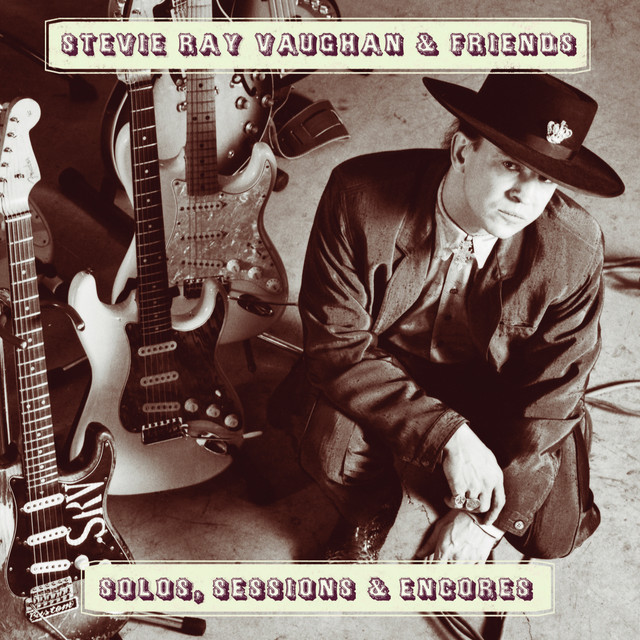
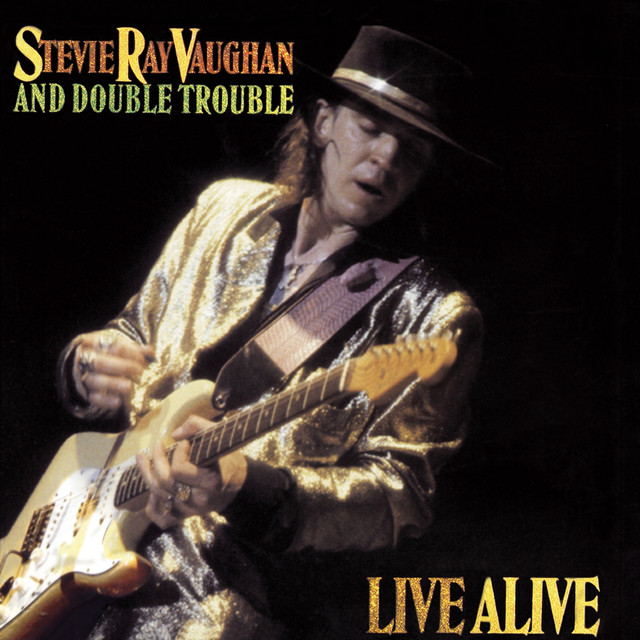
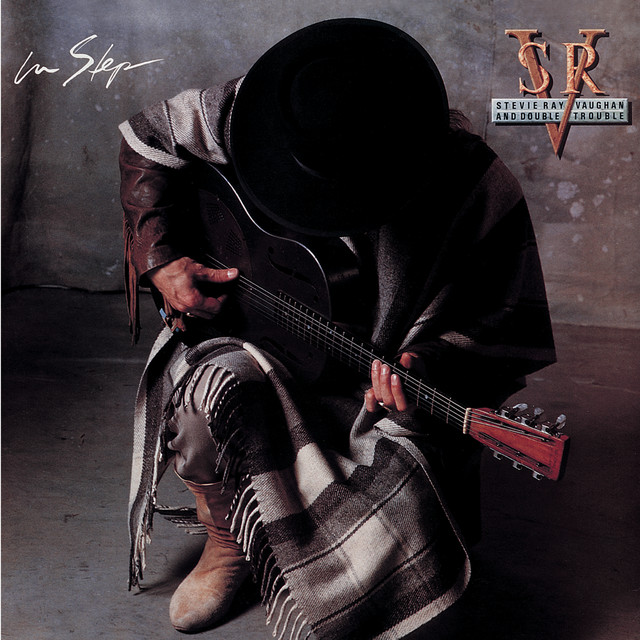
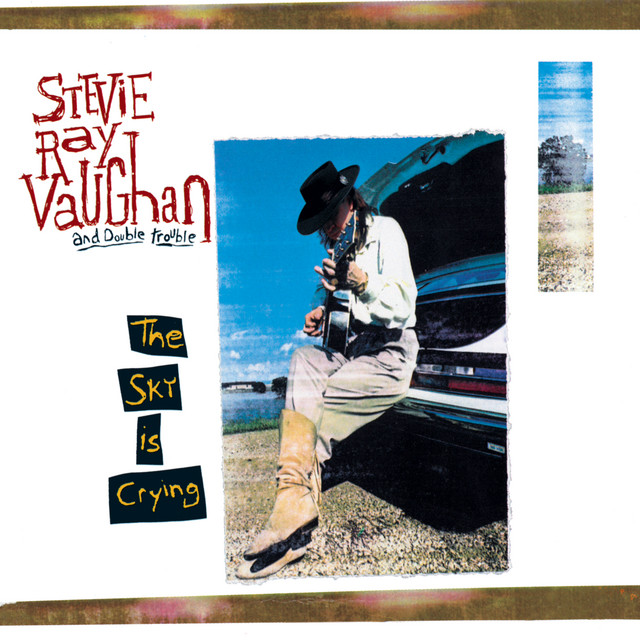
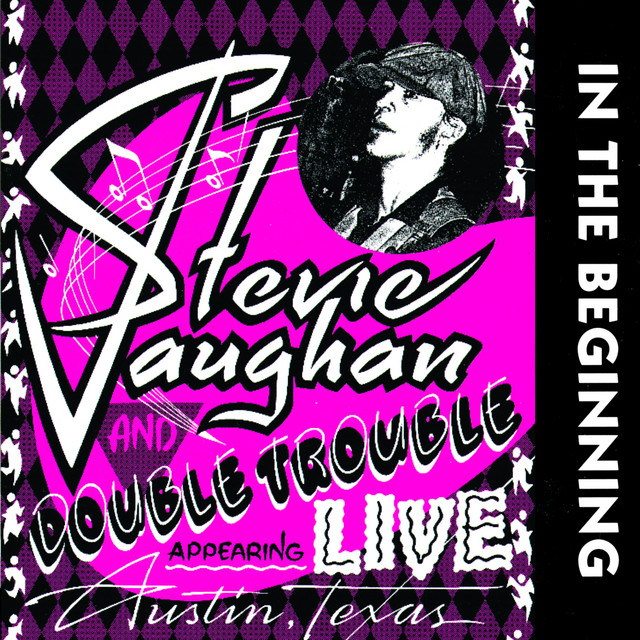
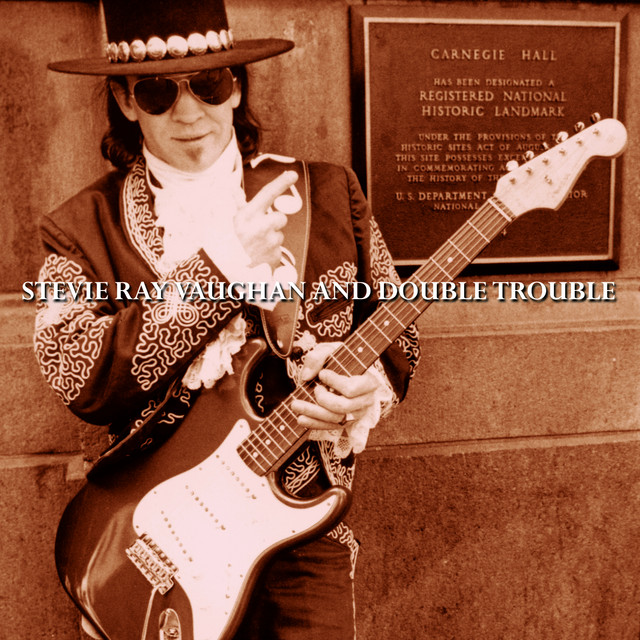
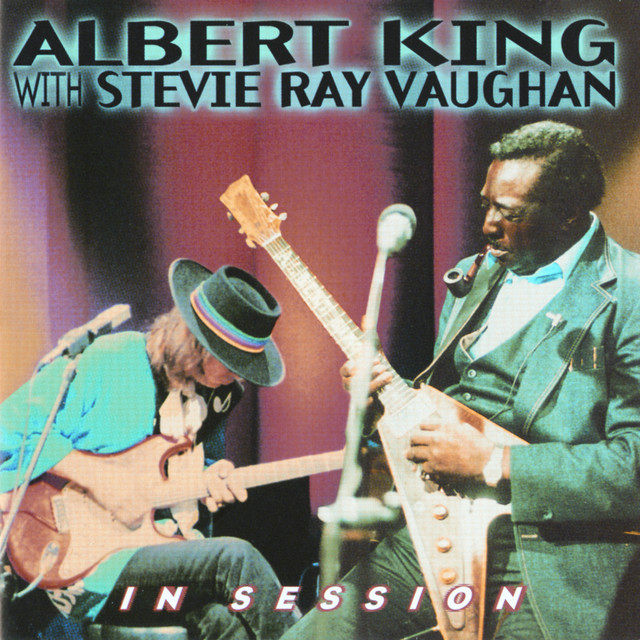
Album Credits
-
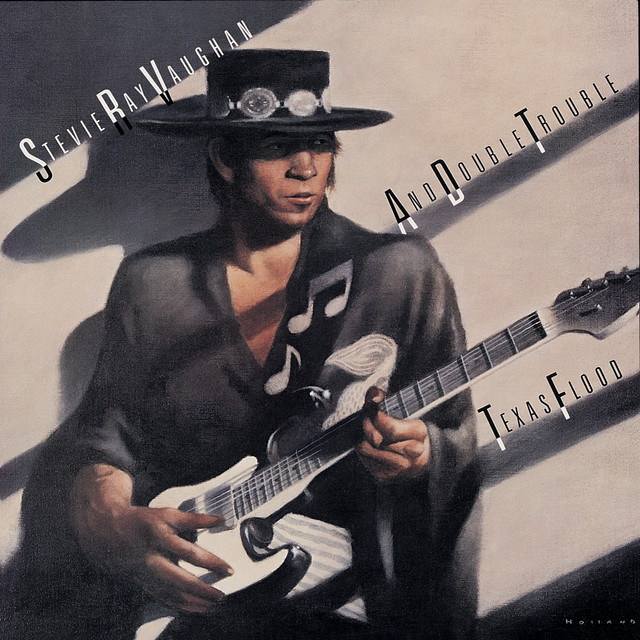
Stevie Ray Vaughan · 1983
Producer