Tom Lord-Alge
Role
Genre
Group
Role
Genre
Group
Tom Lord-Alge's Studio Equipment


"The first thing I do when I start a mix is transfer all the material to a high-definition, 24-bit Sony 3348 digital 48-track. I've been using the 3348 for seven or eight years now and it's a great production tool. Transferring all the material to it means I won't risk damaging or wearing out the original multitrack. I also never run anything live, from a sequencer. I don't want to have to worry about synchronisation or issues of sound level. So everything goes on the 3348, and the great thing about it is that it is easy to do a lot of internal bouncing with it. To start with I bounce everything to the tracks where I like them under my faders. Say the drums are on tracks 1 to 10. I like to have my drums on tracks 6 to 14. My favourite layout is to have the kick on channel 9, the snare on 10, the tom toms on 11 and 12, and the overheads on 13 and 14. The drum room mics will be on 7 and 8, the hi-hat on 6. The bass guitar will always be on 15 and 16. Channels 17-24 contain the main instruments, guitars, keyboards, or whatever they are. The lead vocal will be on 25 and any additional vocals go after that. Any music that's left over will go on 33 and upwards. If there's any percussion, like tambourines or things like that, it will go to channels 5 and down."
Find it on:


"One of my favourites is the Neve 2254; I have six of those. I find that they work really well on strings and background vocals. I also have six of the old Neve 2264s. They're great for drums and vocals. I have some old Calrec limiters that I use on vocals and guitars, when I want an unusual sound. And the Inward Connections VacRac tube limiter is just a great all-round compressor. I have eight channels of VacRac. You can't control the attack and release time on it, but the settings are very musical; 200mS release time and 80 or 100mS attack time. If I need more control I'll use the Empirical Labs Distressor."
Find it on:


"Chris loves the Urei 1176, but I find that it is used too much by everybody. I also have old Altec limiters, which sound good on bass. Then there's the Focusrite Red 3. I always put finished stereo mixes through the Focusrite. It pulls the mix together a bit. I set it for 1-2dB compression, really light; I call that 'kissing the Focusrite.'"
Find it on:

"To make a vocal command attention I'll put it through an Teletronix LA3A and maybe pummel it with 20dB of compression, so the meter is pinned down. If the beginnings of the words then have too much attack, I'll put the vocals through an SSL compressor with a really fast attack, to take off or smooth out the extra attack that the LA3A adds."
Find it on:

"One of my favourites is the Neve 2254; I have six of those. I find that they work really well on strings and background vocals. I also have six of the old Neve 2264s. They're great for drums and vocals. I have some old Calrec limiters that I use on vocals and guitars, when I want an unusual sound. And the Inward Connections VacRac tube limiter is just a great all-round compressor. I have eight channels of VacRac. You can't control the attack and release time on it, but the settings are very musical; 200mS release time and 80 or 100mS attack time. If I need more control I'll use the Empirical Labs Distressor."
Find it on:


"When it comes to drums, normally I start with a 2264X on the snare. With drums the attack time settings are of course very important, and the Neves don't have variable attack; but I just like the way they sound. If for some reason the Neve doesn't work out, I'm not afraid to try out my arsenal of compressors. I'll try a Distressor, Dbx 160X or patch in my Summit. If I want to mess with the transient of the drum sound, the Distressor is good; I can either smack the sound hard to sharpen the transient, or set it differently to smooth out the transient a bit."
Find it on:

"Guitars I EQ before they go into the compressor. I prefer the way that sounds to compressing before EQ. The Distressors work really well on guitars, though you have to fiddle around with them a bit. The Dbx 160 is also very good for guitars. If I hear an acoustic guitar that's a little 'spikey', I put a compressor on it with a very fast attack time, to lose some of that pick spike. I find that the Neve 2264X is really great for bass guitars. I run them at a 1.5:1 ratio and pummel it with 12dB compression, EQ-ing into it. If that's not to my liking, I'll put an 1176 on it."
Find it on:

"Live strings are usually recorded on eight tracks, plus two channels of room. What I do is mix those down to two busses, patch them across to the 2254 and pummel them. It makes the strings sound very rock and roll. Of course there are all sorts of other tricks that can help create distinctive sounds. I have the TC Electronic Fireworx multi-effects, and I often use a preset called 'Little Speaker'. It makes whatever you put through it sound terrible, and that can create a cool effect on drums, vocals or guitars. It's really like a low- and high-pass filter cranked up all the way, just letting the mid-range through. I may do that on the SSL as well; use the high- and low-pass filter, crank the mid-range up all the way and compress it to Jesus, make it sound like the radio, or whatever."
Find it on:

Tom Lord-Alge includes the Atari 1040 ST in his gear list, as detailed in Sound On Sound.
Find it on:

In an article published by Sound On Sound, mix engineer Tom Lord-Alge is noted to have the E-mu SP-1200 included in his equipment list.
Find it on:

Tom Lord-Alge's use of the Linn Electronics Linn 9000 drum machine is mentioned in the equipment list featured in the Sound on Sound article "Tom Lord-Alge: From Manson To Hanson."
Find it on:
-m.webp?v=1783318437)
Tom Lord-Alge uses the Roland TR-808 Rhythm Composer, as listed in his equipment lineup in Sound on Sound.
Find it on:
-m.webp?v=1783349877)
In an article from Soundonsound, Tom Lord-Alge's Roland TR-909 Rhythm Composer is mentioned as part of his equipment list.
Find it on:

In the Sound on Sound article, Tom Lord-Alge's equipment list includes the Linn Electronics LinnDrum, highlighting its use in his mixing work.
Find it on:

Mix engineer Tom Lord-Alge is listed as using the Akai S1000 audio sampler, as noted in Sound On Sound.
Find it on:


“Every so often a piece of gear comes out that inspires you. I was quite happy with my Apogee Symphony Mk II 2×6 for my 96k printing rig. It sounded great and worked perfectly right out of the box, but then I got the 2×6 SE card and was blown away and how great it sounds! The 2×6 SE inspires me on a daily basis, knowing that what is coming out of my console is getting to the listener EXACTLY the way it sounds at my studio!”
Find it on:





Timestamp: 8:32, 16:42 In this behind-the-scenes video from Tom's Spank Studio in Austin, TX, you can see G SSL Type 4000. It is an MKII version from 2022.
Find it on:

Included in Tom Lord Alge's gear list in the April 200 issue of Sound on Sound.
Find it on:

Included in Tom Lord Alge's gear list in the April 2000 issue of Sound on Sound.
Find it on:

Included in Tom Lord Alge's gear list in the April 2000 issue of Sound on Sound.
Find it on:
This is a community-built gear list for Tom Lord-Alge.
- Find relevant music gear like Studio Equipment, Software Plugins and VSTs, Headphones, and other instruments and add it to Tom Lord-Alge.
- The best places to look for gear usage are typically on the artist's social media, YouTube, live performance images, and interviews.
- To receive email updates when Tom Lord-Alge is seen with new gear, follow the artist.
-
-
Updated
Album Credits
-
Joyce Manor & Joyce Manor · 2026
Mixing Engineer -
All My Friends Are So Depressed
Joyce Manor & Joyce Manor · 2025
Mixing Engineer -
Joyce Manor & Joyce Manor · 2025
Mixing Engineer -
Dir En Grey · 2024
Mixing Engineer -
The Oral Cigarettes · 2024
Mixing Engineer -
The Oral Cigarettes · 2021
Mixing Engineer -
Blue Öyster Cult · 2020
Mixing Engineer -
Blue Öyster Cult · 2020
Mixing Engineer -
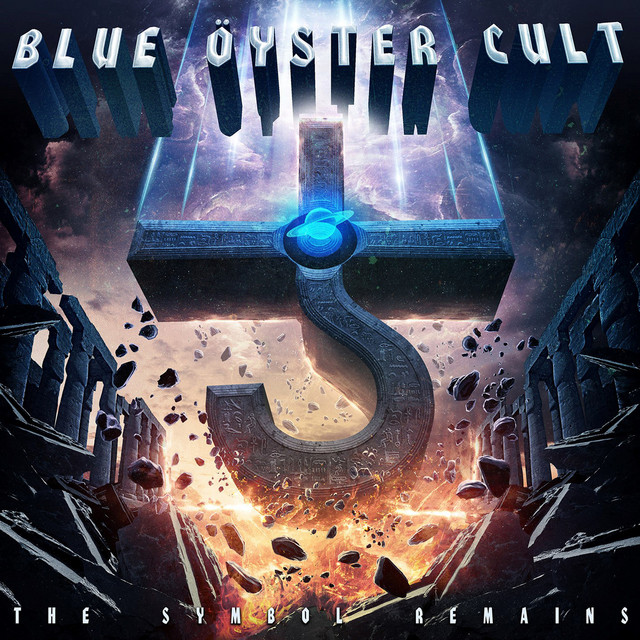
Blue Öyster Cult · 2020
Mixing Engineer -
Orchestral Manoeuvres in the Dark · 2019
Engineer Mixing Engineer Producer Recording Engineer -

Third Eye Blind · 2019
Mixing Engineer -
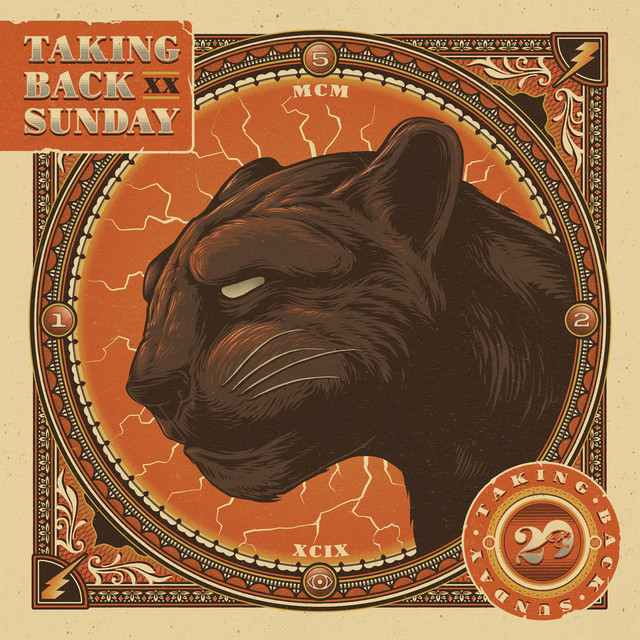
Taking Back Sunday · 2019
Mixing Engineer