

Pricing and availability




* Product prices and availability are updated by Equipboard every 24hrs and are subject to change. Equipboard may receive compensation for purchases made at participating retailers linked on this site. This compensation does not affect what products or prices are displayed, or the order of prices listed. For more information, please refer to our affiliate disclosure.
Description
Unleash your creative potential with the TC Electronic FireworX Multi Effect Processor, a powerhouse of sonic versatility designed for both studio professionals and live performers. This robust unit boasts a 64-position routing grid, allowing you to place and wire algorithms effortlessly for a customized audio experience. At its core is the renowned TC DARC3 chip, providing an impressive 80 million instructions per second, ensuring you're never limited by processing power.
With a rich palette of effects including vocoders, ring modulation, multi-tap delays, and reverse reverbs, the FireworX offers an unprecedented level of creativity. Whether you're looking to craft lush sonic landscapes or gritty, experimental textures, the possibilities are virtually endless. The intuitive interface allows for seamless integration of external effects and feedback loops, making it a perfect fit for any complex signal chain.
This processor also features a comprehensive Modifier Matrix, which includes eight external control inputs and eight internal modifiers like ADSRs and LFOs, giving you the freedom to tailor your sound with precision. With 400 factory presets and room for 200 user presets, you can store and recall your favorite settings with ease, and even expand with a PCMCIA card for additional storage.
Key Features:
- 64-position routing grid for custom effect placement
- TC DARC3 chip with 80 million ips processing power
- Extensive effect library: vocoder, ring modulation, multi-tap delay, reverse delay, reverb, chorus, flange, phase, pitch, and more
- Modifier Matrix with 8 external and 8 internal controls
- 400 factory presets and 200 user preset slots, expandable with PCMCIA card
- Comprehensive digital and analog I/O for versatile setup options
Product specs
| Output Dither | HPF TPDF dither 8-24 bit |
| Word Clock Input | RCA Phono, 75 ohm, 0.6 to 10 Vpp |
| Sample Rates | 44.1 kHz, 48 kHz |
| Processing Delay | 0.2 ms @ 48 kHz |
| Frequency Response DIO | 20Hz to 23.9kHz +0,01/-0,1 dB @ 48 kHz |
| Analog Input Connectors | XLR balanced (pin 2 hot) |
| Impedance | 100 ohm (active transformer) |
| Max. Input Level | +22 dBu (balanced) |
| Min. Input Level | -10 dBu |
| Sensitivity | @ 12dB headroom: -22dBu to +10dBu |
| A to D Conversion | 24 bit (1 bit, 128 times oversampling) |
| A to D Delay | 0.8 ms @ 48 kHz |
| Dynamic Range | >100dB (unweighted), >104dB (A) |
| THD | -86 dB (0.005%) @ 1 kHz, -6 dBFS (FS @ +16 dBu) |
| Frequency Response | 10Hz to 20kHz: +0/-0.5dB |
| Crosstalk | <-60dB, 10Hz to 20kHz typical -90dB @ 1kHz |
| Analog Output Connectors | XLR balanced (pin 2 hot) |
| Max. Output Level | +22 dBu (balanced) |
| Full Scale Output Range | -10dBu to +22dBu |
| D to A Conversion | 128 times oversampling) |
| D to A Delay | 0.5 ms @ 48 kHz |
| EMC complies with | EN 55103-1, EN 55103-2 and Class B limits of FCC rules, part 15 |
| Safety certified to | IEC 65, EN 60065, UL 1419 and CSA E65 |
| Operating Temperature | 32 F to 122 F (0 C to 50 C) |
| Storage Temperature | -22 F to 167 F (-30 C to 70 C) |
| Humidity | Max. 90 % non-condensing |
| PCMCIA Interface Connector | PC Card, 68 pin type 1 cards |
| Standards | PCMCIA 2.0, JEIDA 4.0 |
| Card Format | Supports up to 2 MB SRAM |
| Control Interface | MIDI In/Out/Through: 5 Pin DIN |
| GPI, Pedal, Fader | 1/4" phone jack |
| General Finish | Anodized aluminum front, Plated and painted steel chassis |
| Dimensions | 56 x 128 dot graphic LCD-display |
| Weight | 5.2 lb. (2.35 kg) |
| Mains Voltage | 100 to 240 VAC, 50 to 60 Hz (auto-select) |
| Power Consumption | <20 W |
| Backup Battery Life | >10 years |
| Warranty Parts and Labor | 1 year |
FAQs
-
What types of effects can the TC Electronic FireworX Multi Effect Processor produce?
-
The TC Electronic FireworX offers a full range of studio-quality effects, including reverb, delay, modulation, and dynamic processing, all of which can be arranged in a custom 8x8 routing grid.
-
How does the routing grid work on the TC Electronic FireworX?
-
The FireworX features an 8x8 position routing grid that allows users to place algorithms in parallel or serial configurations, automatically wiring them together based on their position.
-
Is the TC Electronic FireworX compatible with MIDI devices?
-
Yes, the TC Electronic FireworX includes MIDI In/Out/Through ports, allowing it to integrate seamlessly with other MIDI-compatible devices for synchronized performance.
-
Can the TC Electronic FireworX Multi Effect Processor be used in a live performance setting?
-
Yes, with its dynamic resource allocation and MIDI sync capabilities, the FireworX is well-suited for both studio and live performance environments.
-
What kind of display does the TC Electronic FireworX have?
-
The FireworX is equipped with a 56 x 128 dot graphic LCD-display, providing clear visual feedback for easy navigation and parameter adjustments.
Videos

M.B.B.
TC FIREWORX
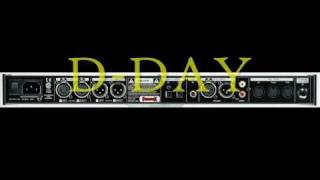
TC FIREWORX
M.B.B.
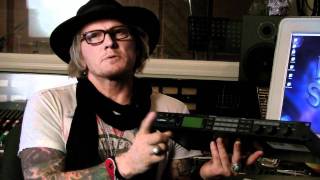
Matt Sorum talks about the FireWorx from TC Electronic

TC Electronic
Reviews
Owner Insights
We analyzed real musician discussions from forums and Reddit to find what players love, question, and tweak about TC Electronic FireworX Multi Effect Processor.
Features and functionality
-
The TC Electronic FireworX is praised for producing unique, evolving effects that integrate seamlessly into mixes, described as "strange, weird, brutal" by users.
Source -
The FireworX allows for deep MIDI implementation, enabling extensive control over effects parameters via external gear.
Source -
The FireworX is recognized for its macro knob functionality, enabling complex effect mapping, which can control multiple parameters simultaneously, enhancing creative sound manipulation.
Source
Comparisons
-
The FireworX is often likened to the Eventide H3000 and Ensoniq DP4 for its ability to create complex, otherworldly effects, yet remains a "forgotten box."
Source -
Often labeled as the "poor man's Eventide," the FireworX offers similar complex effects at a more accessible price point.
Source -
The FireworX is compared to the Eventide Eclipse and Ensoniq DP/4 for creative effects but is noted as more accessible in terms of reusability due to macro knob mapping.
Source
Use cases and applications
-
Particularly effective for synths rather than guitars, with users emphasizing the need for more synth-specific demos to showcase its capabilities.
Source -
Users have noted that the FireworX excels in creating unique, atmospheric soundscapes when used with synthesizers and electronic instruments.
Source -
The FireworX is particularly favored for its ability to humanize digital sounds, adding warmth and depth to otherwise sterile audio.
Source -
The FireworX is suitable for users seeking to apply DJ-like performance effects, making it a versatile choice for live electronic music performances.
Source
Other
-
There's a sentiment that the FireworX embodies the creative spirit of late '90s effects processors, utilizing both digital and analog components for a unique sound profile.
Source
User experience
-
It's mentioned that the FireworX can be challenging to dial in initially but rewarding once mastered, providing a wide range of creative potentials.
Source
Build quality
-
Owners appreciate the robust construction of the FireworX, noting its reliability even after extensive use.
Source
4.5 out of 5
Based on 2 Reviews and 10 Ratings

41029
up to TC's high standards, not a desert island box
lots of bread and butter stuff aimed at vocals, includes some high quality but gimmicky effects... cool when used subtley. Really a unique processor. Was handy for live sound because it provide things like the telephone speaker patch that you could quick punch in to replicate an album sound for a band if you knew their tunes. There's nothing I would use this for today in a recording situation, but when native processing was more limited it was a handy box when mixing or just to give the singer some cool foldback fx when tracking with zero latency (in the days before UAD boxes)

Artist usage
Add artist
Guitar World magazine's April 2000 issue shows the FireworX unit as listed as being one of Robert's effects. An archived version of this article can be found here.


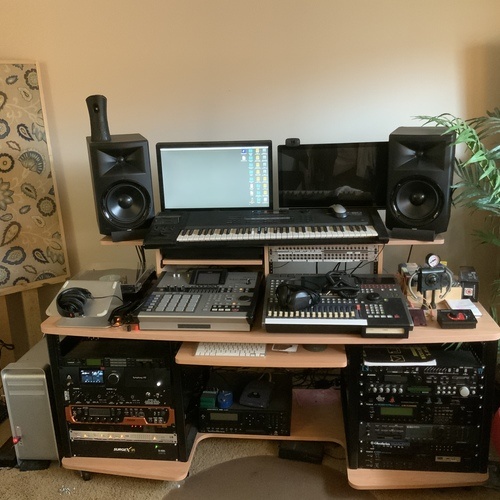
Tom Rowlands, of Chemical Brothers fame, working in his studio. Just check out the complete list of this synthesizer nerd … an instant daydream … and also explains the original sounds on their records!


"Amon also uses a TC Fireworx multi-effects, which contrary to conventional wisdom, he doesn't place on an aux buss on his mixer, as he explains. "I don't like to have effects running in real time in the final mix, I like to have the sound already recorded with the effects in my arrangement. I suppose it's having the control of say, the modulation sweep peaking at an exact point and I know every time the sample is triggered, it'll be at that point.""


The FireworX can be seen 11:44 into this video


you can see the FireoworX at 1:55 in the video

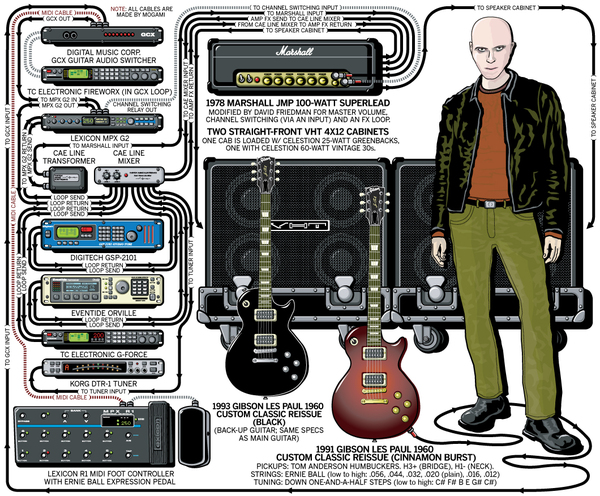
Billy Howerdel used a TC Electronic FireworX Multi Effect Processor in 2004, according to Guitar Geek.


This is one of many pieces of gear listed in a 2007 Computer Music feature on Venetian Snares.

A source close to Aaron during his tenure with Nine Inch Nails confirmed he used the TC Electronic Fireworx for specific tremelo sounds as well as a noise gate for pedals.


Optical lists it in this reddit AMA comment.


In this archived version of a December 2000 article from Sound On Sound, Underworld bandmate Hyde explains his then-current live rig. "Other elements are a TC Electronic Fireworx for guitar effects, Triaxis, Roland GR1 guitar synth, and Roland GK2A MIDI trigger -- I have a Roland GR50 chopped up in a slim box behind my guitar."


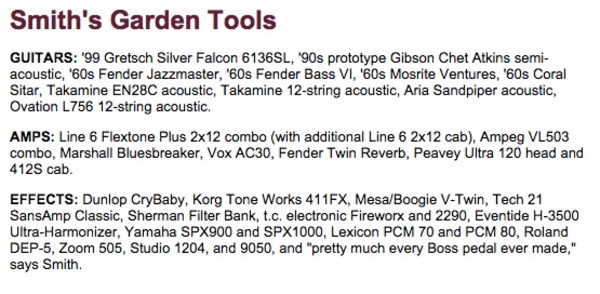
A T.C. Electronics Fireworx multi-effect processor is shown in a chart depicting Yasunori's studio circa 2002.


"Live strings are usually recorded on eight tracks, plus two channels of room. What I do is mix those down to two busses, patch them across to the 2254 and pummel them. It makes the strings sound very rock and roll. Of course there are all sorts of other tricks that can help create distinctive sounds. I have the TC Electronic Fireworx multi-effects, and I often use a preset called 'Little Speaker'. It makes whatever you put through it sound terrible, and that can create a cool effect on drums, vocals or guitars. It's really like a low- and high-pass filter cranked up all the way, just letting the mid-range through. I may do that on the SSL as well; use the high- and low-pass filter, crank the mid-range up all the way and compress it to Jesus, make it sound like the radio, or whatever."
Album Usage
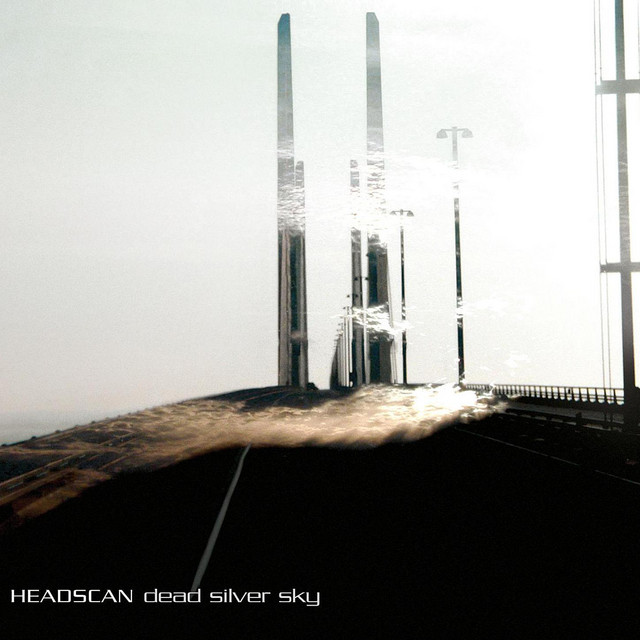
The TC Electronic FireworX Multi Effect Processor has been featured on the following albums:
Genre Usage
Based on how artists on Equipboard use this gear, it is most commonly found in the following genres.
Used With
Based on how musicians on Equipboard use TC Electronic FireworX Multi Effect Processor, it is most commonly used with the following gear.


-s.webp?v=1783582448)



Community setups
Show yours
More TC Electronic Effects Processors
-m.webp?v=1783609167)
$296.54 - $936.00
in Effects Processors Rank


$165.00 - $599.99
in Effects Processors Rank


$149.00 - $638.00
in Effects Processors Rank


$357.28
in Effects Processors Rank


$219.00 - $1,472.00
in Effects Processors Rank


$75.00 - $79.00
in Effects Processors Rank


$120.00
in Effects Processors Rank


-m.webp?v=1783600700)


-m.webp?v=1783636812)


Similar


Most Popular Effects Processors
Most Popular Brands
-
Added to Equipboard on by
 equipboard
Gear IQ 4934
-


