
Tom Waits
Role
Genre
Group
Role
Genre
Group
Tom Waits' Gear


Used for the piano on Mule Variations, as stated by producer Jacquire King in this interview from issue 9 of Audio Technology Magazine.
The upright piano was recorded with an AKG 414 or a 451, and often put through the Sony reel to reel ‘mic preamp’. Acoustic guitars were miked with a Neumann KM84 or AKG 451, guitar amps were either a Shure SM57 or Sennheiser 421, bass amp with a Neumann U47, and acoustic bass with an Neumann M49, U47 or 582, routed via a Neve 2254 compressor.
One may note that Prairie Sun Studios' equipment list has two C414 models, the C414EB and the C414B-ULS, offering confusion as to which version was used. Yet, this March 28, 2006 Pro Sound Network feature on Prairie Sun Studios offers an equipment list with only the C414EB, evincing that this was the microphone Waits used.
Find it on:


Used as a vocal mic, as mentioned in this interview from the October 1987 issue of Musician Magazine, as documented in this page from the website Tom Waits Library.
Microphones of choice include a Ribbon ("Dave Garroway") and RCA high-impedance mikes; Waits usually sings through a Shure Green Bullet (used mostly by harmonica players). Also an Altec 21D vocal mike- "because Sinatra used it."
Find it on:

Documented in this page from the website Tom Waits Library.
BF (1987): "Likening the sterile confines of the studio to an emergency ward, Waits seems intent on performing some very unorthodox operations. Take "Innocent When You Dream," which appears in two disguises on Frank's Wild Years. The "barroom version" puts across the melancholy melody (reminiscent of a mournful Irish drinking song) by way of pump organ, upright bass, violin and piano. A second version closes out side two, stripped down and scratched up enough to inspire visions of an ancient Victrola. Says Waits: "The '78 version' of that was originally recorded at home on a little cassette player ["the Tascam 244, the one with the clamshell holster"]. I sang into a seven-dollar microphone and saved the tape. Then I transferred that to 24-track and overdubbed Larry Taylor on upright, and then we mastered that. Texture is real important to me; it's like attaining grain or putting it a little out of focus. I don't like cleanliness. I like surface noise. It kind of becomes the glue of what you're doing sometimes."(Source: "Better Waits Than Ever" Music & Sound Output: Bill Forman. Vol. 7, No. 11. October, 1987)
BF (1987): "But don't expect '78 versions' of any of these new songs, for Waits' Tascarn four-track is gone, clamshell holster and all. "Stolen in New York," he shakes his head, suppressing a smile. "That's why I left - they beat me up." (Source: "Better Waits Than Ever" Music & Sound Output: Bill Forman. Vol. 7, No. 11. October, 1987)
Find it on:

Documented extensively on this page from the website Tom Waits Library.
Tom Waits (1987): "When I finally discovered what a bullhorn can do to your whole sound, it was a big moment for me. I'd never sung through a bullhorn. I'd tried to get that effect in other ways. I tried cupping my hands, singing into tin cans, using those 7-dollar harmonica microphones, singing into pipes and there it was. A battery-operated bullhorn. Available at Radio Shack for $29.95." (Source: "From the set of Ironweed, Tom Waits talks with Rip Rense" New York Post: Rip Rense. Early 1987)
Tom Waits (1987): "Little opera line, there (Blow Wind Blow). Got a little carnival thing in it. Glockenspiel, pump organ. Used the bullhorn on it." (Source: "From the set of Ironweed, Tom Waits talks with Rip Rense" New York Post: Rip Rense. Early 1987)
Mark Rowland (1987): It's true you sang several of the new tunes through a police bullhorn? TW: "I've tried to simulate that sound in a variety of ways - singing into trumpet mutes, jars, my hands, pipes, different environments. But the bullhorn put me in the driver's seat. There's so much you can do to manipulate the image, so much technology at your beck and call. But still you gotta make choices. A lot of this stuff is 24-track; I finally allowed that and joined the twentieth century, at least in that regard." (Source: "Tom Waits is flying upside down (on purpose)" Musician: Mark Rowland. October, 1987)
Mark Rowland (1987): "The current apple of his musical arsenal, for instance, is a police bullhorn, through which Waits fashioned many of the vocals you hear on Frank's Wild Years. Not just any horn, of course, but an MP5 Fanon transistorized megaphone (with public address loudspeaker). "It's made in Taiwan," Waits adds proudly." (Source: "Tom Waits is flying upside down (on purpose)" Sidebar. Musician: Mark Rowland. October, 1987)
Bill Forman (1987): "Another innovation on Frank's Wild Years is the prevalence of the bullhorn, which Waits sings through on at least four cuts. TW: "Well, I tried to obtain that same sound in other ways, by using broken microphones, singing into tin cans, cupping my hands around the microphone, putting the vocal through an Auratone speaker, which is like a car radio speaker, and then miking that. Practically even considered at one point making a record and then broadcasting the record through like a radio station and then having it come out of the car and then mike the car ... and then it just became too complicated, you know? So a bullhorn seemed to be the answer to it all."(Source: "Better Waits Than Ever" Music & Sound Output: Bill Forman. Vol. 7, No. 11. October, 1987)
Tom Waits (1996): "Around 1982, my wife Kathleen encouraged me to try singing through a police bullhorn to make my voice stand out in relief when incorporated with instruments of the same color. Of course, it's possible to do the same thing with an equalizer, but nothing beats the drama of a bullhorn. My engineer Biff Dawes purchased me my first, and it was love at first sight -- I never record or tour without it. I also try to buy a new one every year, because they continue to "improve" upon them. I find the older 80s models (the Fanon is available at Radio Shack for about $29.95) superior; they're warmer to the ear. Also interesting to explore are the ones made for children, that can change a voice from monster to spaceman to robot. I found humming through them can give you a sound much like Blue Cheer's guitar sound on "Summertime Blues." In addition to these I also own a 1944 electric megaphone, issued by the Navy Bureau of Ships and made by the Guided Radio Corps of New York. The bell is 24 inches in diameter and it's battleship gray. If you want to feel "Federal", it's the one for you." (Source: "Sound Hound": Foreword by Tom Waits to Bart Hopkin's book/ CD: "Gravikords Whirlies & Pyrophones - Experimental Musical Instruments." Publisher: Ellipsis Arts. October, 1996)
Paul Tingen (2000): "Hitting a hotel room and recording this into a boombox, as Waits did, is clearly a low-fi approach, just as recording a group of musicians outside with an old shotgun mic is. Waits also sang a few things through an amplified megaphone on Chocolate Jesus, and through a two-foot long PVC pipe on Get Behind The Mule." (Source: "California Screamin'" Audiomedia magazine (UK), by Paul Tingen. February, 2000)
Find it on:

Used as a vocal mic, as mentioned in this interview from the October 1987 issue of Musician Magazine, as documented in this page from the website Tom Waits Library.
Microphones of choice include a Ribbon ("Dave Garroway") and RCA high-impedance mikes; Waits usually sings through a Shure Green Bullet (used mostly by harmonica players). Also an Altec 21D vocal mike- "because Sinatra used it."
Garroway was famous for his use of the BK-4A Starmaker lavalier ribbon mic.
Find it on:

In this photo, tom waits can be seen holding his Martin 0-15. This guitar has been misidentified as a very similar guitar, the martin 0-17, which has always had 20 frets. The difference in fretboard extension and resulting soundhole placement are the primary differences between the two models. Although new "custom 0-15" guitars have 20 frets, All vintage martin 0-15 guitars have 19 frets,. Every photo of Toms Waits holding a mahogany Martin is a guitar with 19 frets, which means it is definitely a 0-15 and definitely not an 0-17.
Find it on:

Used for the piano on the "jazz band recordings" of Foreign Affairs, as is visible in "Bones Howe's layout diagrams for the Foreign Affairs sessions at Wally Heider Studio 4, showing the layout for the jazz band recordings" (pictured) from this February 2004 Sound on Sound interview with producer "Bones" Howe.
Find it on:

Used for vocals on Bone Machine, as stated by engineer Biff Dawes in this February 6, 2015 Mix Online interview.
"Prairie Sun had a lot of good outboard equipment, too,” the engineer continues. “Along with the Neve mic pre’s, I would have also used an LA-2A or 1176 on his vocal.”
It was also used for vocals on Mule Variations, as stated by producer Jacquire King in this interview from issue 9 of Audio Technology Magazine.
"Tom’s vocals were always recorded with an Neumann M49, through a Neve mic pre and Teletronic LA2A tube limiter – although we often altered the sound of it afterwards."
Find it on:


Used extensively on Mule Variations, as stated by producer Jacques King in this interview from issue 9 of Audio Technology Magazine.
Acoustic guitars were miked with a Neumann KM84 or AKG 451, guitar amps were either a Shure SM57 or Sennheiser 421, bass amp with a Neumann U47, and acoustic bass with an Neumann M49, U47 or 582, routed via a Neve 2254 compressor.
In the far left of this image of Prairie Sun Studios' Studio A, the 2254 is seen to be the E version.
Find it on:


Used for the piano and acoustic guitar on Mule Variations, as stated by producer Jacquire King in this interview from issue 9 of Audio Technology Magazine.
The upright piano was recorded with an AKG 414 or a 451, and often put through the Sony reel to reel ‘mic preamp’. Acoustic guitars were miked with a Neumann KM84 or AKG 451, guitar amps were either a Shure SM57 or Sennheiser 421, bass amp with a Neumann U47, and acoustic bass with an Neumann M49, U47 or 582, routed via a Neve 2254 compressor.
The lack of specification suggests an original E version (given that the rest of the microphones are XLR, the 451 would be, too, most likely, as opposed to the DIN-based C version).
Find it on:

Used for sampling into Pro Tools for Mule Variations, as stated by producer Jacquire King in this interview from issue 9 of Audio Technology Magazine.
All this tape detail brings us to the questions about the reasons for Mule Variations’ analogue bias, whether Waits is an analogue stalwart, and if so, why his interest in using ProTools?
Jacquire King: "I think Tom definitely feels that analogue has a better overall sound, though I don’t think he looks down on digital. For this album he wanted to experiment with playing loops, and the possibility of changing the arrangements on the songs. I suspect he’d been hearing from friends and associates how powerful ProTools was and wanted to check it out. But the overall sound of the album is analogue. ProTools is just a component. I did some loops, such as Tom’s mental hotel bashing on Big In Japan, the Optigan keyboard sound on Lowside Of The Road, and the vinyl needle sound on Black Market Baby. On Filipino Box Spring Hog I actually changed the arrangement of some of the overdubs, though the drum and vocal performance are true to the take. In the latter track there were also some voices that Tom had recorded into a small toy sampler for kids, and I sampled that into ProTools. All this was manipulated in ProTools and then laid back to tape.
"I have a large ProTools system – 24 I/O, with three 888 interfaces and 40GB of hard drive space. I just love the things I can do with it, in terms of looping, vocal comping, pitch correction, changing arrangements and so on. I’m not a big fan of ProTools’ plug-ins though. I believe real life analogue effects sound better. I love the way analogue sounds. What’s so great is that it’s possible to get a reaction from analogue, by overloading the tape. Also analogue reigns supreme for transient sounds, like drums and percussive-type things. But the advantages ProTools offers you, in terms of being able to manipulate sound and fine tune things, are awesome. So I strongly believe in using them both together. Because I did almost only looping, I used ProTools very minimally on Mule Variations."
King laid down all ProTools elements to the analogue 24-track for the mix, which also took place at Prairie Sun, without automation.
Find it on:
-m.webp?v=1783203979)
Used live as a vocal mic, as is visible in this photo and this other photo.
Find it on:

In this 1981 performance of "The Piano's Been Drinking" on the Irish late night chat show The Late Late Show, Tom Waits sings while playing a Yamaha grand piano.
Find it on:
This is a community-built gear list for Tom Waits.
- Find relevant music gear like Microphones, Guitars, Amplifiers, Effects Pedals, Pianos, Keyboards and Synthesizers, and other instruments and add it to Tom Waits.
- The best places to look for gear usage are typically on the artist's social media, YouTube, live performance images, and interviews.
- To receive email updates when Tom Waits is seen with new gear, follow the artist.
-
Added to Equipboard on by
.jpg?v=1782968794) gchiaren
gchiarenGear IQ 37552
-
Updated
Discography
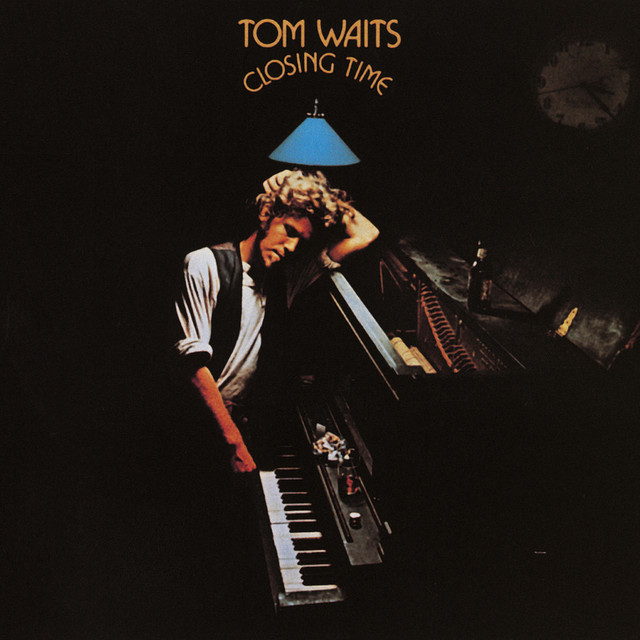
Closing Time (Remastered)
1973
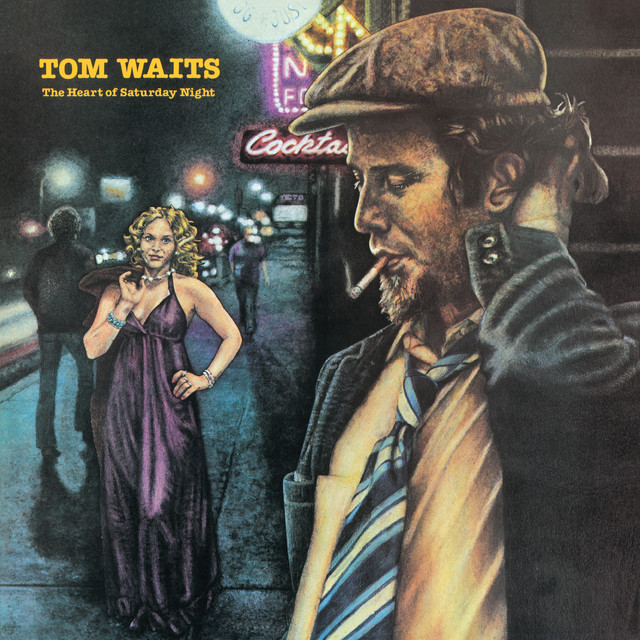
The Heart Of Saturday Night (Remastered)
1974
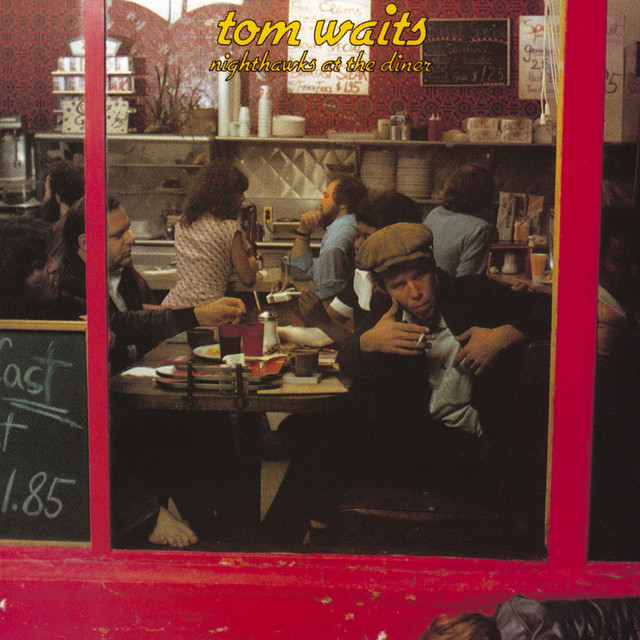
Nighthawks At The Diner (Remastered)
1975
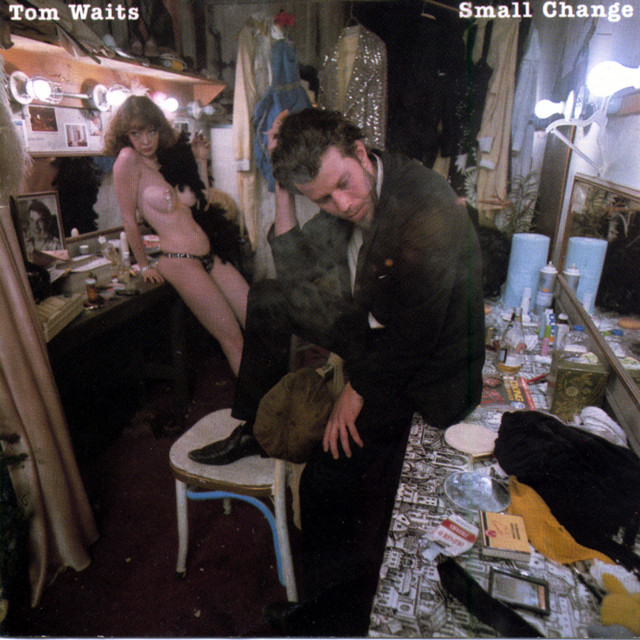
Small Change (Remastered)
1976
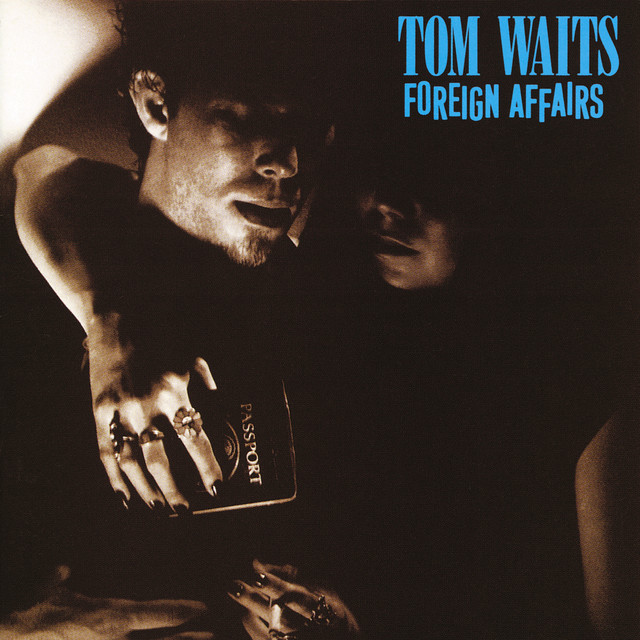
Foreign Affairs (Remastered)
1977
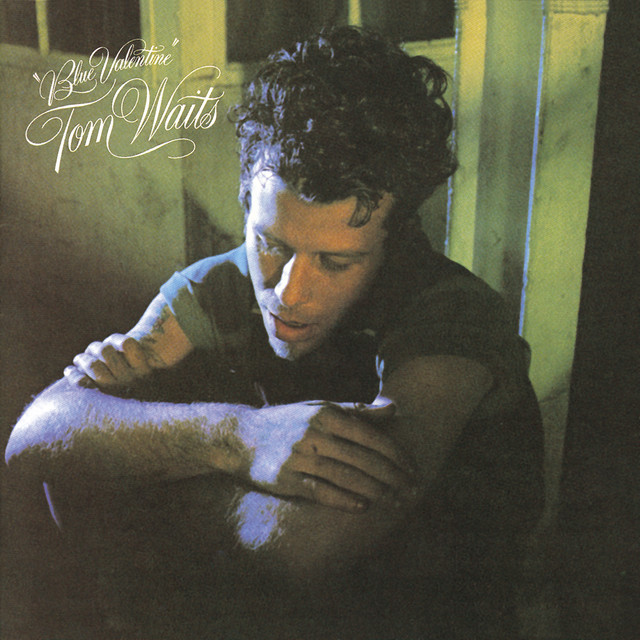
Blue Valentine (Remastered)
1978
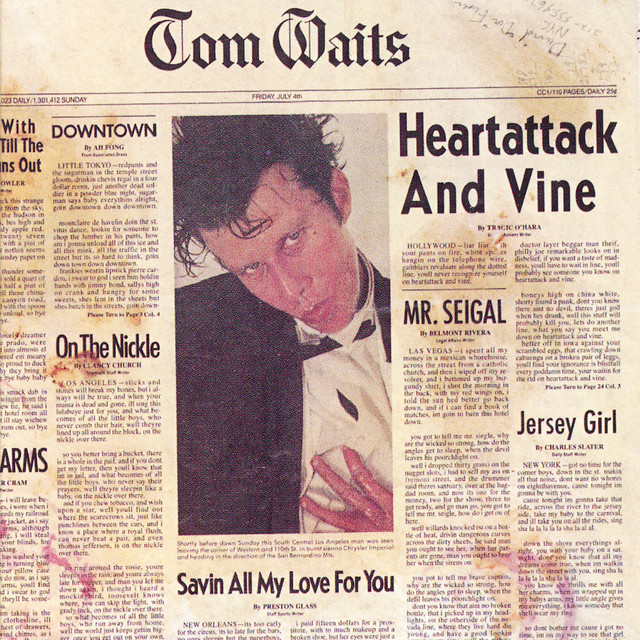
Heartattack And Vine (Remastered)
1980
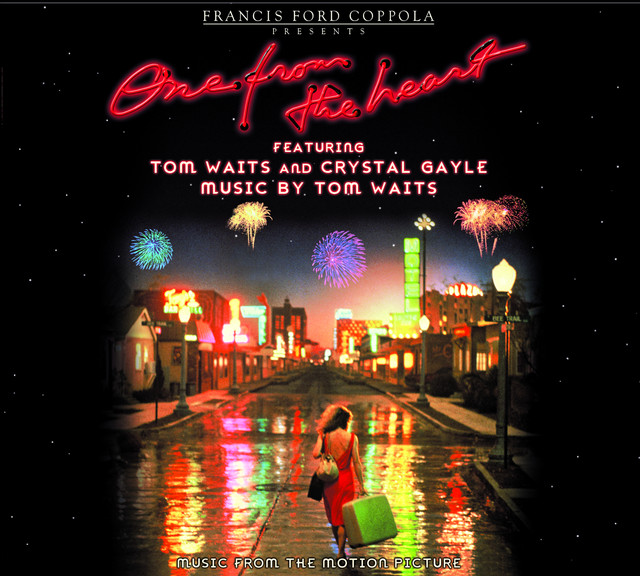
Music From The Original Motion Picture "One From The Heart"
1982
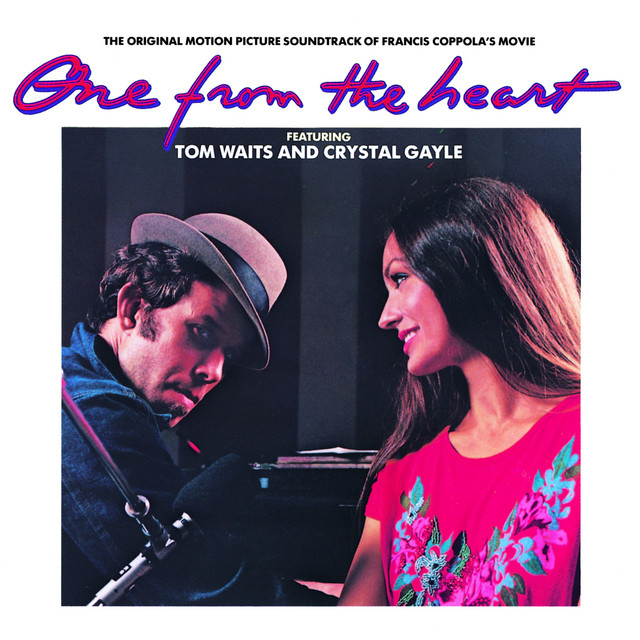
The Original Motion Picture Soundtrack of Francis Coppola's Movie ONE FROM THE HEART
1982
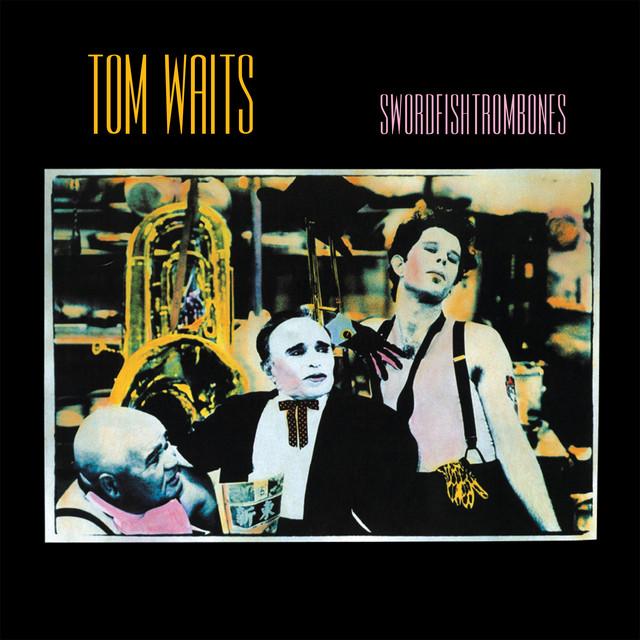
Swordfishtrombones (2023 Remaster)
1983

Rain Dogs (2023 Remaster)
1985
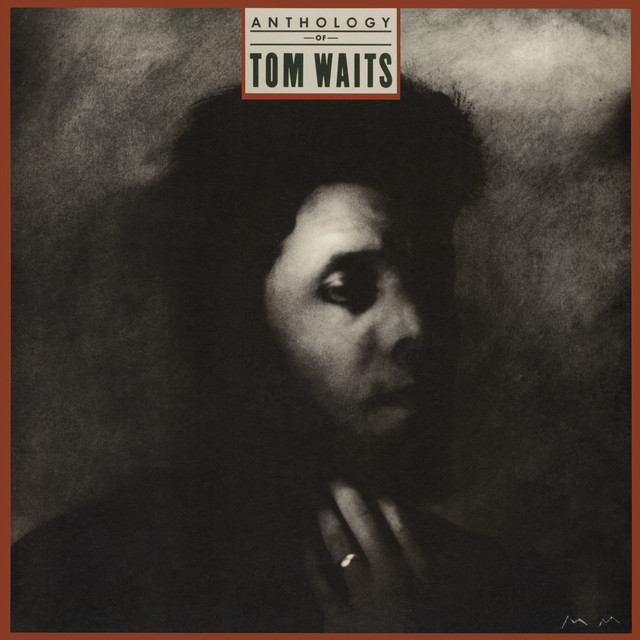
Anthology Of Tom Waits
1985
Album Credits
-
Tom Waits · 2022
Producer -
Metric · 2012
Producer -

Primus · 2006
Producer -
Tom Waits · 1991
Producer -

Tom Waits · 1988
Producer



.jpeg?v=1783110491)




