This page about AKG C 451 E/C (Original) is a stub. You can help improve it:


Pricing and availability




* Product prices and availability are updated by Equipboard every 24hrs and are subject to change. Equipboard may receive compensation for purchases made at participating retailers linked on this site. This compensation does not affect what products or prices are displayed, or the order of prices listed. For more information, please refer to our affiliate disclosure.
Description
The AKG C 451 E/C is a vintage legend among condenser microphones, offering a pristine sound quality that has made it a staple in studios since its debut. Renowned for its detailed and transparent sound, this microphone is a favorite for capturing the nuances of acoustic instruments, overheads, and choirs. Its classic design is not just visually appealing but also functional, with a modular capsule system that allows for versatility in recording settings. The C 451 E/C uses a cardioid polar pattern, effectively reducing unwanted ambient noise and focusing on the main sound source, making it ideal for both professional studio environments and live recordings.
Crafted with precision, the AKG C 451 E/C features a transformerless output stage, ensuring minimal signal coloration and high SPL handling capability. This microphone is beloved for its fast transient response, which captures the subtle intricacies of sound, delivering crisp highs and a well-balanced frequency response. Its reliability and durability have made it a go-to choice for engineers and musicians looking for a consistent and trustworthy microphone.
Key Features:
- Cardioid polar pattern for focused sound capture
- Transformerless output stage for minimal signal distortion
- Fast transient response for clear and detailed audio reproduction
- Modular capsule design for versatile recording options
- High SPL handling capability
- Vintage design with modern functionality
- Ideal for acoustic instruments, overheads, and vocals
Videos

ppm6.tv
AKG 451 or AKG Blueline SE 300B - How classic is classic?
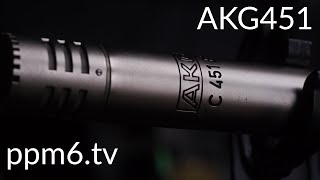
AKG 451 or AKG Blueline SE 300B - How classic is classic?
ppm6.tv
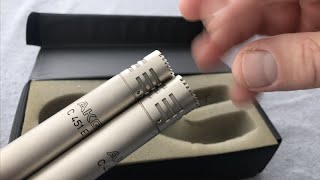
The AKG C451E Microphone

PRODUCE MUSIC AT HOME
AKG 451E SHOOTOUT 1969 vs.1976
PRODUCE MUSIC AT HOME
Reviews
Owner Insights
We analyzed real musician discussions from forums and Reddit to find what players love, question, and tweak about AKG C 451 E/C (Original).
Comparisons
-
The AKG C 451 E/EB retains transformers, unlike the transformerless C 451 B, offering a different sound character.
Source -
Users compare the C 451's detailed, brighter sound to the SM57's and C414's fuller tones, indicating a preference for detailed instrument recording.
Source -
The Austrian Audio CC8, inspired by the C451, is noted for being slightly darker but EQ-friendly, offering brightness without harshness.
Source -
The Audio-Technica AT4051b is praised for its versatility, handling high SPL with pad and low cut switches, suitable for various instruments like bass cabs and woodwinds.
Source -
Owners highlight the Josephson C42 as slightly brighter than the C451B, ideal for overheads with darker cymbals, while the AT4051b suits brighter cymbals.
Source -
The Sennheiser MKH 20 and Neumann KM84 are recommended for those seeking smoother alternatives to the C451B's brightness.
Source
Use cases and applications
-
Owners frequently use the AKG C 451 E for recording hi-hats, acoustic guitars, and as overheads, noting its brightness complements darker audio sources.
Source -
The C 451 is favored for darker-sounding pianos, capturing a glittery high-end when mic'd on the hammer side with the lid removed.
Source -
The Josephson e22 is highly regarded for versatility, performing well on acoustic instruments and toms with minimal need for gating.
Source
User experience
Critic Reviews
Based on 0 Reviews and 0 Ratings
Artist usage
Add artist

Used for the snare on Nevermind, as stated by producer Butch Vig in this March 1997 Sound on Sound interview.
"In the case of Dave Grohl's kit I used an AKG D12 and a FET 47 on the kick, and then we built a drum tunnel consisting of old drum shells attached to the bass drum and extended out about six feet. That way you can move a mic back three to four feet, and the FET 47 was a little farther away from where the front head would have been. By having the drum tunnel, you isolate the room, so that you don't get all of the cymbal bleed, or whatever."
Otherwise the drum miking was fairly standard: a Shure SM57 on the snare, along with an AKG 451, Sennheiser 421s on the toms, AKG 414s and Neumann KM84s on the cymbals, and Neumann U87s for distant room mics.


Used for the upright bass on David Crosby's Lighthouse, as stated by mix engineer Fab Dupont in this December 2016 Sound on Sound interview. League can be seen recording with the mic here.
Electric and upright basses were tracked quickly, one-take style, by Michael. It went so fast that I am not 100 percent sure what gear we used. I’m pretty sure the electric bass went through the Apollo Twin rig into an Ampeg amp that was lying there. For the upright, I can tell from pictures that I used my usual two-microphone system, with a large-diaphragm cardioid condenser in front of the beast and a small-diaphragm omni shoved in the bridge. In this case I used one of their ELA M251s and an AKG C451, but I vaguely remember they only had a cardioid head. I also remember that, for fun, I added a Coles ribbon next to the 251. I ended up using a blend of all three during the mix.


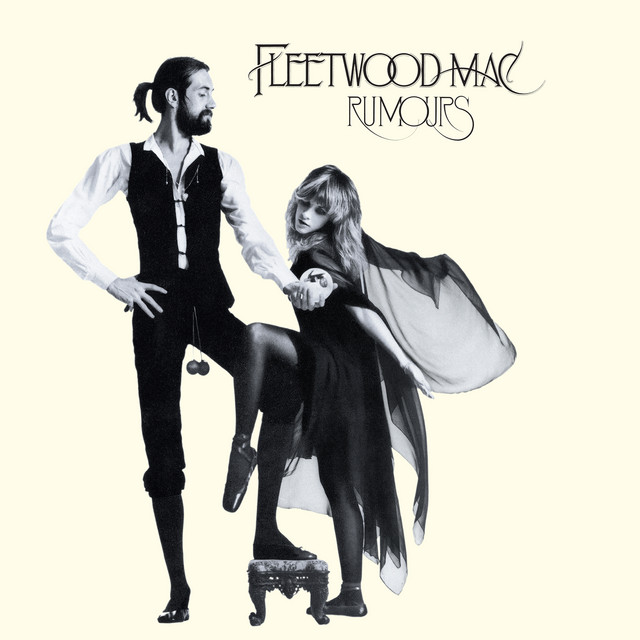
Used for the guitar on Rumours, as stated by producer Ken Caillat in this August 2007 Sound on Sound interview.
"For Lindsey I always used an SM57 and a 451. I found that those two mics complemented each other, and if I put the 57 about an inch from the cloth and the 451 about two inches from the speaker, a little off to the side, and then moved the two faders up and down both together and independently, I could change the sound radically. And you'd get a really interesting sound if you also put phase on one of them. Added to that there was always a direct, although I didn't use that so much with Lindsey unless we were feeding a Leslie with it. We had everything mic'd up for whatever effects we wanted.


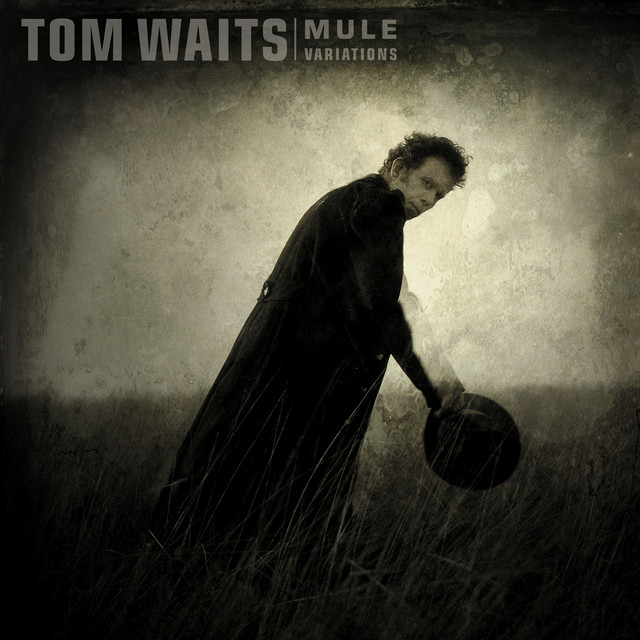
Used for the piano and acoustic guitar on Mule Variations, as stated by producer Jacquire King in this interview from issue 9 of Audio Technology Magazine.
The upright piano was recorded with an AKG 414 or a 451, and often put through the Sony reel to reel ‘mic preamp’. Acoustic guitars were miked with a Neumann KM84 or AKG 451, guitar amps were either a Shure SM57 or Sennheiser 421, bass amp with a Neumann U47, and acoustic bass with an Neumann M49, U47 or 582, routed via a Neve 2254 compressor.
The lack of specification suggests an original E version (given that the rest of the microphones are XLR, the 451 would be, too, most likely, as opposed to the DIN-based C version).


Part of Q-Tip's 2008 inventory, as listed in his January 2008 Remix interview. Transcripts can be found at the Future Producers forums (linked) and this Prince.org forum.
AKG C 451, D 12 and D 112 drum mics
The lack of specification and its inclusion with the vintage D12 suggests an original E version (given that the rest of the microphones are XLR, the 451 would be, too, most likely, as opposed to the DIN-based C version).

Used on the hi-hats for John Mayer's Continuum, as stated by recording engineer Chad Franscoviak in this October 1, 2006 Mix Online interview.
Jordan's assortment of drums — which seemed to be endless, Franscoviak says with a laugh — were miked fairly conventionally: an AKG D 112, an RE20, a 421 or a Beyer M88 on the kick; snares got 57s on top and bottom; M88s on the toms; an AKG 451 on hi-hats; and on overheads, he either used a U67 or U87.
The only trick that Franscoviak used, which he fully admits stealing from Joe Ferla, was putting a Coles 4038 ribbon mic directly over the center of the kit, parallel to the ground and as close in as possible without impeding Jordan's playing. “I generally compressed the snot out of that and I would run it through a Fairchild,” he says. “That's a really interesting trick because you have all of your tight sounds, but you add that 4038 and it makes everything more exciting.”
He also put a U47 about 18 inches off the ground and four to seven feet in front of the kick drum for a very specific sound. “At some point, we were going to hit that low-end waveform just right and it was going to fill that kick drum out,” Franscoviak explains. “I would compress it a lot with an 1176, a lot harder than the overhead, because I wanted that low end to be there for every hit.”
The official microphone list of Sound on Sound Studios (relocated to New Jersey from the New York location where the recording of Continuum began) specifies two 451 Es.


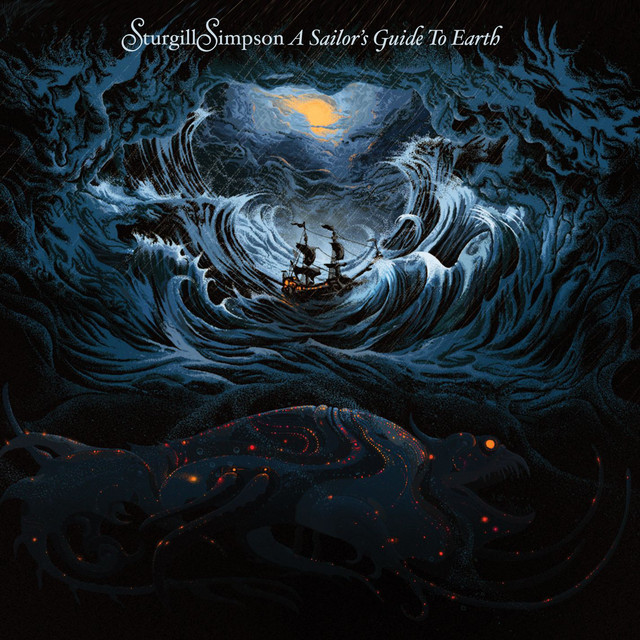
Used for the acoustic guitar on A Sailor’s Guide to Earth, as stated by producer David Ferguson in this May 4, 2016 Mix Online interview.
On the songs that include acoustic guitar, such as the second track, “Breakers Roar,” Simpson plays while he sings and Ferguson captured his guitar with an AKG 451, into a UA 2-610 preamp, and to Pro Tools HD11.
The lack of specification suggests an original E version.

Used for the keyboards on Rumours, as stated by producer Ken Caillat in this August 2007 Sound on Sound interview.
"For Lindsey I always used an SM57 and a 451. I found that those two mics complemented each other, and if I put the 57 about an inch from the cloth and the 451 about two inches from the speaker, a little off to the side, and then moved the two faders up and down both together and independently, I could change the sound radically. And you'd get a really interesting sound if you also put phase on one of them. Added to that there was always a direct, although I didn't use that so much with Lindsey unless we were feeding a Leslie with it. We had everything mic'd up for whatever effects we wanted.
"The same applied to the keyboards — a grand piano, Rhodes, Wurlitzer and [Hammond] B3. Pretty much all of the electronic stuff was recorded direct, but again we'd have an amp in another room in case we wanted that sound on a keyboard. It all depended. We had plenty of time, so when they started playing we'd dial up everything. You know, 'Let's put a little amp on that. It'll fill out the sound better.' Basically, it was like we were mixing while we were recording."

Used as overheads on Rumours, as stated by producer Ken Caillat in this August 2007 Sound on Sound interview.
In terms of the miking, Mick Fleetwood's kit was recorded with two AKG 451s overhead, an AKG C414 with a 20dB pad on the snare, dynamic mics for the toms and a Sennheiser 441 on the kick.
"Mick was always a fanatic for headphones," Caillat remarks. "He had to hear everything perfectly through them, so I'd have an assistant dedicated to just taking care of them. He had to be able to hear the part to play the part, and he was a really heavy hitter of everything except the kick drum. We used to call him 'Feather Foot', because there'd be these tremendous snare and tom hits while the kick was going 'pfff-pfff, pfff-pfff.' In fact, if you solo'd the kick you could hear him going, 'Ag, ag, ag, ag,' all the time he was playing. It was loud enough to come through the kick drum, and you couldn't hear anything else with the gates on the snare and so on.
Album Usage
The AKG C 451 E/C (Original) has been featured on the following albums:

Genre Usage
Based on how artists on Equipboard use this gear, it is most commonly found in the following genres.
Used With
Based on how musicians on Equipboard use AKG C 451 E/C (Original), it is most commonly used with the following gear.
-s.webp?v=1784458938)


-s.webp?v=1784458891)



More AKG Condenser Microphones

$759.05 - $1,299.00
in Condenser Microphones Rank


$859.00 - $1,299.00
in Condenser Microphones Rank


$360.50 - $665.00
in Condenser Microphones Rank


$317.50 - $749.00
in Condenser Microphones Rank


$110.00 - $208.28
in Condenser Microphones Rank


$800.00
in Condenser Microphones Rank


.jpg?v=1784480613)

$5,309.35 - $8,649.00
in Condenser Microphones Rank


$149.00 - $259.00
in Condenser Microphones Rank


$79.99 - $129.00
in Condenser Microphones Rank


$60.00 - $279.98
in Condenser Microphones Rank


$3,460.02 - $8,649.00
in Condenser Microphones Rank


$60.00 - $335.00
in Condenser Microphones Rank


-m.webp?v=1784525875)
$149.00 - $259.00
in Condenser Microphones Rank


$1,249.00 - $1,299.00


-m.webp?v=1784502040)

$79.99 - $129.00


$209.00 - $299.00


-m.webp?v=1784473489)


$381.80 - $1,299.00


.jpeg?v=1784480614)


Community setups


Similar


Gear Guides








Most Popular Condenser Microphones
Most Popular Brands
-
Added to Equipboard on by
 eyeseeofficial
GearIQ 161592
-


