
Trevor Horn
Role
Genre
Group
Role
Genre
Group
Trevor Horn's Gear
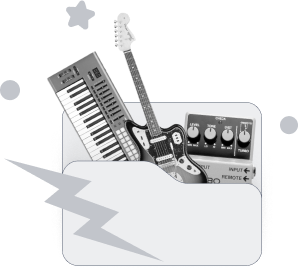


"I had this Oberheim rig, which was a DMX,aDSX and a keyboard."
Find it on:


Horn can be seen playing an Aria SB-1000 Bass in the music video for "Video Killed the Radio Star" by The Buggles; a clear shot of it can be seen at 2:49.
Find it on:

Horn can be seen in this image playing a Carruthers Guitars CB5 Bass.
Find it on:

The "Pro Tools Rig" at Trevor Horn's Sarm West Coast LA studio includes: Mac Pro, Digidesign 192, Apogee Symphony, Apogee AD8000 SE, Digidesign Sync I/O, Pro Tools 10 HD2, Logic Pro X
Find it on:

Trevor Horn's Sarm West Coast LA studio uses Logic Pro X, according to the Sarm website.
Find it on:
-m.webp?v=1784622696)
The preamps at Trevor Horn's Sarm West Coast LA studio include: "SSL AWS 924 (24 Channel) Console, Avalon 737sp, Focusrite Red (4 Channel)"
Find it on:





It was in 1983, while producing at a small studio named the Producer's Workshop on London's Fulham Road, that Steve Lipson received a call asking him to spend a couple of days engineering for Trevor Horn. This would be at Sarm West, where an SSL E-Series console was supplemented by a couple of Studer A80 tape machines.
Find it on:

Roland Cube 30 is included in the list of instruments used at Trevor Horn's Sarm LA studio.
Find it on:
-m.webp?v=1784559385)
Horn states in this interview with Roland that his first experience with Roland gear was a TR-808.
Find it on:

"I’ve got a Roland JX-8P that I’m really fond of," Horn states in this interview with Roland.
Find it on:
-m.webp?v=1784473034)
Horn states in this interview with Roland that he owns a Roland Juno-106.
Find it on:

Horn can be seen playing a Fender Jazz Bass in this photo.
Find it on:


Horn can be seen playing a Yamaha SG2000 in this photo.
Find it on:

in this performance of "clean clean" horn can be seen playing a gibson ripper bass.
Find it on:

This article includes a photo of Trevor Horn at an SSL 4000E console.
Find it on:

"We produced the Bass drum sound on 'Relax' by combining a Linn 2 base drum together with a sampled E-note, played on a bass guitar. There's nothing like this. Most speakers have problems with notes lower than the 'E' on a bass guitar. Nowadays we go up to five notes below the 'E', using synth basses, but you need large speakers for that. The 'E' however has power, even when played on the radio. 'D' isn't bad, too, but the 'E' is better. We combined this sound with a Fairlight, which played a sampled piano sound in quavers. This combination of Linn and Fairlight was also used when the Frankies played the song live." "The 'Relax'-groove was in my Linn 2 long before. It was my favorite pattern and I tinkered on it all the time. I always thought of it as some kind of 'English Square Dance', but when I saw it's impact on the band, I realized that you could make a good dance record out of it."
Find it on:

For the 12-inch ‘US Remix’ of ‘The Look Of Love’, Trevor Horn utilised the Fairlight to create a groundbreaking extended mix which chimed with early hip-hop records, using the sampler to bend and ‘scratch’ various elements of the track. “I actually think that was the best 12-inch I ever did,” he says. “Everything kind of came together on that one. What I’d said to JJ was, ‘I want bits of everything on the Fairlight — bits of the strings, bits of the vocal, just anything.’ I seemed to manage to get a narrative through it, playing these things on the Fairlight keyboard."
Find it on:



"I use the CEB-3 bass Chorus, the bass Reverb and the OC-3 Octaver as well. I have a bass pedal board and a guitar pedal board, and I have them on that."
Find it on:

"It's been astonishing," says Horn. "We've been going through multitracks for this show, and 'Living In The Pastic Age' and 'Video Killed The Radio Star' were both played. We played them from one end to the other because there was no way that you could drop in on the machine that we had. It was a 24-track machine that you could drop in on but it was very hard to get out. You had to do the backing track in its entirety, so both songs — 'Living In The Pastic Age' and 'Video Killed The Radio Star' — were started with just piano, bass, drums and a [Korg MP7] Mini Pops Junior rhythm box, which we played to."
Find it on:
-m.webp?v=1784559408)
The monitoring at Trevor Horn's Sarm West Coast LA studio consists of "Quested Custom Main Monitors + 3 Subs" and "Yamaha NS10M + Yamaha PC2602 Monitors"
Find it on:

The preamps at Trevor Horn's Sarm West Coast LA studio include: "SSL AWS 924 (24 Channel) Console, Avalon 737sp, Focusrite Red (4 Channel)"
Find it on:

"When I worked with Trevor, our main format was pretty much the Sony 3348 [48-track digital tape recorder]. We also had Digidesign's Sound Designer, which was the beginning of Pro Tools, and which could only be used for two-track digital editing. There was no way you could use it as a stand-alone recorder. Pro Tools crashed all the time, it was a nightmare. I saw it going from twotrack to eight-track, to 24-track. I've worked with Pro Tools from the beginning, so it's not an alien format for me. I love what I can do with it."
Find it on:

"That sequencer was hooked up to a Minimoog that had CV and Gate on it. And with that rig I thee wed! You know, those CV/Gate things were much tighter than MIDI. They were spot bollock on! Spot on. Much better feel than just your normal MIDI rig these days."
Find it on:


"During the recording of 'Relax', having become more familiar with Trevor and his wife Jill, I had suggested that they buy this digital tape machine called a Sony F1. It was a Betamax two-track recorder and it wasn't that expensive, so they went for it, and that was a revelation because we could now record loads of stuff and it was pristine quality."
Find it on:

"It’s good to have in the studio because the vocoder is a really useful item sometimes; it’s a way of arranging vocals without actually having to sing them, and it’s also a way of hearing what certain harmonies might sound like without having to do them. So from that point of view it’s a really useful piece of equipment. I would use it as a songwriting tool, absolutely," Horn says about his Roland VP-770, in this interview.
Find it on:

Trevor Horn's Sarm West Coast LA studio uses a Mac Pro, according to the Sarm website.
Find it on:

"I use the CEB-3 bass Chorus, the bass Reverb and the OC-3 Octaver as well. I have a bass pedal board and a guitar pedal board, and I have them on that."
Find it on:

"The first program that I really got into was Studio Vision, and on the first Seal album, 'Future Love Paradise' was originally recorded with two tracks of MIDI, one track of audio straight into Studio Vision — the drums were MIDI drums, and a keyboard and Seal's vocals. That's how we started and we built it all on top of that. And that would have been '90/91, one of the first ones that I did. That's where all that stuff began."
Find it on:

Trevor Horn's Sarm West Coast LA studio uses a Digidesign 192, according to the Sarm website.
Find it on:

Trevor Horn's Sarm West Coast LA studio uses Pro Tools 10, according to the Sarm website.
Find it on:


This is a community-built gear list for Trevor Horn.
- Find relevant music gear like Microphones, Bass Guitars, Amplifiers, Effects Pedals, Studio Equipment, Software Plugins and VSTs, Headphones, and other instruments and add it to Trevor Horn.
- The best places to look for gear usage are typically on the artist's social media, YouTube, live performance images, and interviews.
- To receive email updates when Trevor Horn is seen with new gear, follow the artist.
Discography
![Trevor Horn Reimagines The Eighties (feat. The Sarm Orchestra) [Instrumentals] album cover](https://images.equipboard.com/uploads/album/image/402713/trevor-horn-reimagines-the-eighties-feat-the-sarm-orchestra-instrumentals.jpg)
Album Credits
-

Tina Turner · 2025
Producer -
Producer
-
ABC · 2023
Producer -
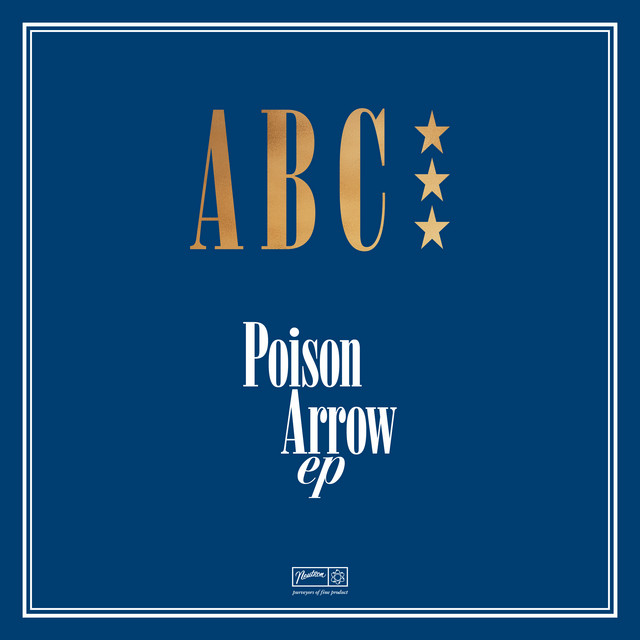
ABC · 2023
Producer -
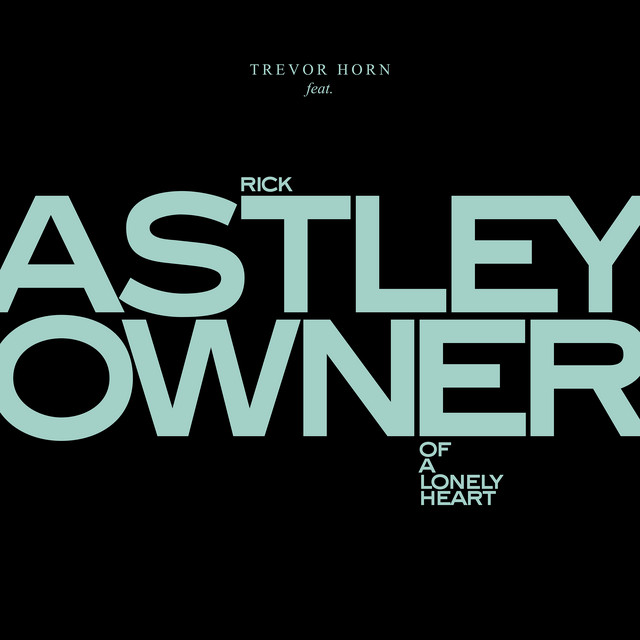
Trevor Horn & Rick Astley · 2023
Producer -
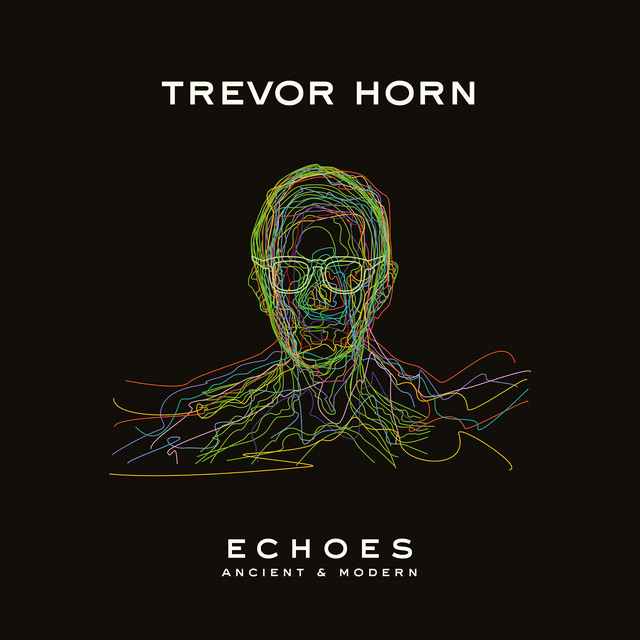
Trevor Horn · 2023
Producer Programmer -
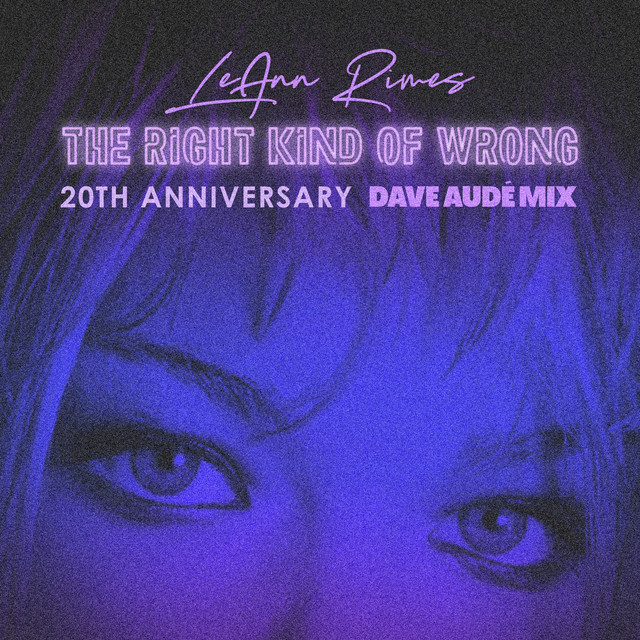
The Right Kind Of Wrong (Dave Audé Mix)
Dave Audé & LeAnn Rimes · 2020
Producer -
But I Do Love You (Dave Audé Mix)
Dave Audé & LeAnn Rimes · 2020
Producer -
Can't Fight The Moonlight (Dave Audé Mix)
Dave Audé & LeAnn Rimes · 2020
Producer -
Please Remember (Dave Audé Mix)
Dave Audé & LeAnn Rimes · 2020
Producer -
Blackfield · 2020
Mixing Engineer Producer -
Kings & Queens Of The Underground
Billy Idol & Billy Idol · 2014
Producer Programmer


.webp)