This page about Opcode Studio Vision is a stub. You can help improve it:


Pricing and availability


* Product prices and availability are updated by Equipboard every 24hrs and are subject to change. Equipboard may receive compensation for purchases made at participating retailers linked on this site. This compensation does not affect what products or prices are displayed, or the order of prices listed. For more information, please refer to our affiliate disclosure.
Description
Unleash your creativity with Opcode Studio Vision, the pioneering DAW software that revolutionized music production in the digital age. Initially released in the early 1990s, Studio Vision was the first software to combine MIDI sequencing with digital audio capabilities, setting the standard for future DAWs. Its user-friendly interface and comprehensive feature set make it an ideal choice for both budding musicians and seasoned producers who value efficiency and innovation in their workflow.
Studio Vision's seamless integration of MIDI and audio tracks allows for intricate layering and detailed editing, giving you the power to shape your sound with precision. Its real-time effects processing and non-destructive editing let you experiment without limits, ensuring that your creative process remains fluid and adaptive. Whether you're composing complex compositions or laying down simple loops, Studio Vision provides the tools you need to bring your musical ideas to life.
This software supports a wide range of plugins and external hardware, offering flexibility for studio and live performance settings. Its compatibility with various file formats makes sharing and collaborating on projects a breeze, while its extensive library of virtual instruments and effects provides endless sonic possibilities.
Key Features:
- First DAW to combine MIDI sequencing and digital audio
- User-friendly interface with comprehensive feature set
- Seamless integration of MIDI and audio tracks
- Real-time effects processing and non-destructive editing
- Supports a wide range of plugins and external hardware
- Compatible with various file formats for easy collaboration
- Extensive library of virtual instruments and effects
Videos

Lost in History
Opcode Studio Vision (1990)

Opcode Studio Vision (1990)
Lost in History
Reviews
Critic Reviews
4.0 out of 5
Based on 0 Reviews and 2 Ratings
Artist usage
Add artist

1994 interview: "TR: Pretty much any real instrument like guitar or vocals or bass was recorded into the computer first; I use Opcode's Studio Vision all the time now for sequencing. Usually I'd loop something and then play along with it for a while, then I'd go back and listen. If anything was decent, I'd cut it together into something cool. All the guitars I played were cut up and put together like that."


"I'm using Performer and also, sometimes, Vision", he explains. "For hard-disk recording I'm using Studio Vision because Digital Performer isn't working so well yet. It's going to be better but it just came out - I've got the 1.01 version, so it's too young."


"I used to use [Opcode Studio] Vision for a really long time, and then when Gibson bought Vision and they shut it down, I went into a panic."


"Our sound sources include quite a lot of original analog gear (OSCAR, Korg Poly-6, EMS synthi, Roland Juno60 - all midi-retro fitted BTW) plus the usual samplers (Emax, s1000, Samplecell II). These are controlled by sequencers including Studio Vision, Cubase and the "retro-style" Doepfer (originally made for Kraftwerk). The sounds are intially effected by various standard echoes and FX including a Roland SDX-330 Dimensional Expander (3D-ish) and a Boss SE70 (good vocoder presets!)."


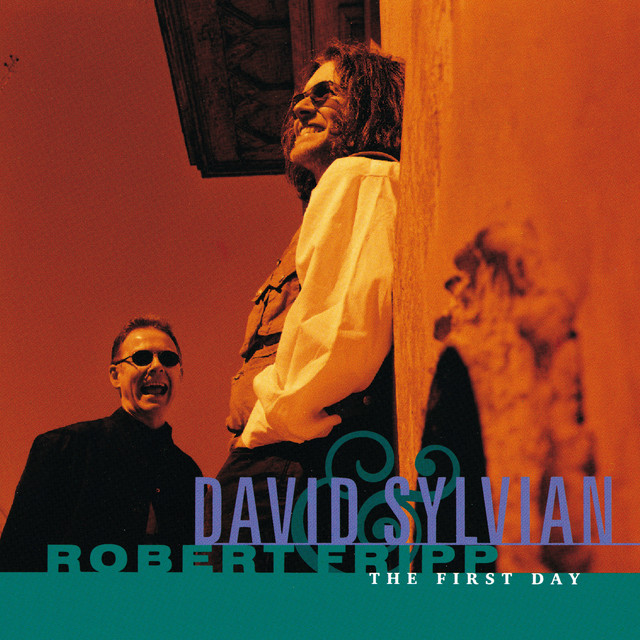
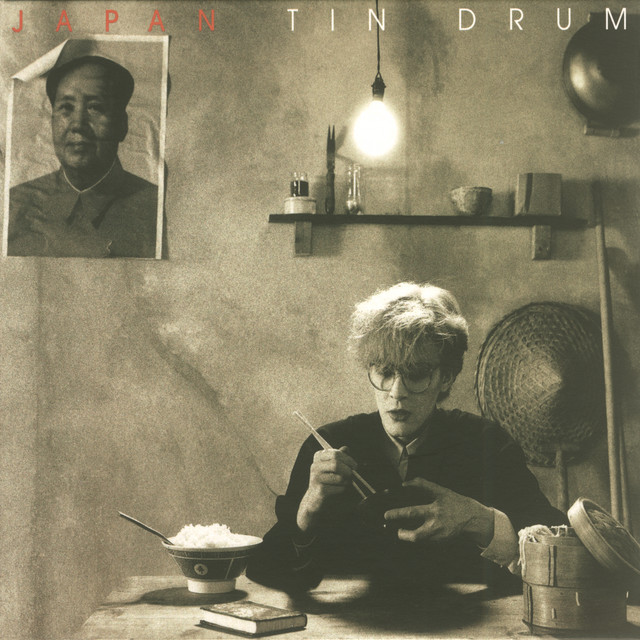
In the Sound on Sound article "David Sylvian: Recording Tin Drum & The First Day," David Sylvian mentions using Opcode Studio Vision in the 23rd paragraph, 2nd line.

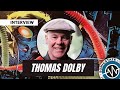
In an interview with Sonicstate, Thomas Dolby discusses his use of the Opcode Studio Vision DAW at the 24:14 mark in the video, confirming that he began utilizing this software later in his career. This serves as direct evidence of his engagement with this music gear.


"The first program that I really got into was Studio Vision, and on the first Seal album, 'Future Love Paradise' was originally recorded with two tracks of MIDI, one track of audio straight into Studio Vision — the drums were MIDI drums, and a keyboard and Seal's vocals. That's how we started and we built it all on top of that. And that would have been '90/91, one of the first ones that I did. That's where all that stuff began."


"Instead I decided to concentrate on my songwriting tools — my keyboards and the Mac with Studio Vision software. When I get into songwriting mode, I'll get an engineer in for the morning to set me up on the desk, so that I only have to work the big faders and a few effects. For the actual songwriting process I need to be on my own. But for demoing and tracklaying I need people around me to bounce ideas off."

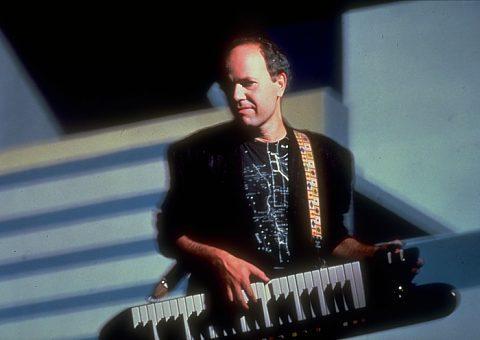
I still use Opcode Studio Vision, after five years. It was murdered by Gibson!
It’s still the most logical MIDI-integrated sequencer. As far as the MIDI part, Studio Vision is still my favorite. I’ve got a Mac set aside that runs System 9.2. It’s completely stable, it all works. There’s no reason it won’t work for another ten years.

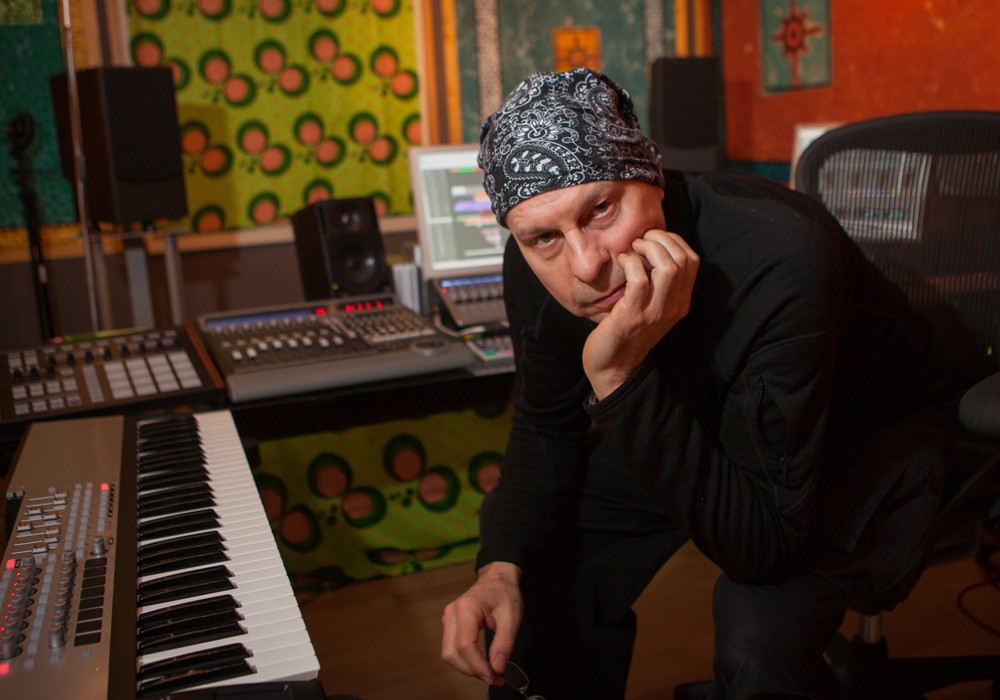
"I was a big Studio Vision user. They went out of business. Then I had a long relationship with Cubase. I was an Emagic Creator and Notator user on the Atari way back."


"We don't always work together. Sometimes I come over from the US with some ideas on cassette, created on a Macintosh Quadra 840 running Studio Vision. That's great because you can compose on it and run audio alongside - it has four audio tracks but only two outputs, which are demo quality. So there's some MIDI on the album, but also a lot of live playing which is added afterwards."


Album Usage
The Opcode Studio Vision has been featured on the following albums:
Genre Usage
Based on how artists on Equipboard use this gear, it is most commonly found in the following genres.
Used With
Based on how musicians on Equipboard use Opcode Studio Vision, it is most commonly used with the following gear.






More DAW Software

$225.00 - $599.00
in DAW Software Rank


$266.00 - $349.00
in DAW Software Rank


-m.webp?v=1784973641)
$99.99 - $344.00
in DAW Software Rank


$99.00 - $399.99
in DAW Software Rank


$139.00 - $179.00
in DAW Software Rank


$398.00
in DAW Software Rank
-m.webp?v=1784973637)
$409.00 - $499.00
in DAW Software Rank


$119.00 - $295.00
in DAW Software Rank


$209.00 - $329.99
in DAW Software Rank


$199.00
in DAW Software Rank


$0.00
in DAW Software Rank


$515.00 - $579.99
in DAW Software Rank


.png?v=1784984897)


$75.00
in DAW Software Rank


$359.00 - $449.00
in DAW Software Rank


$199.99
in DAW Software Rank
.jpg?v=1785029339)


$129.00 - $179.00
in DAW Software Rank


$395.00 - $499.00
in DAW Software Rank


$136.00 - $179.00
in DAW Software Rank

$139.99 - $199.99
in DAW Software Rank


$366.00 - $579.99
in DAW Software Rank


$579.99
in DAW Software Rank


$209.00 - $269.00
in DAW Software Rank


$149.00 - $201.00
in DAW Software Rank


$579.99
in DAW Software Rank


$375.00 - $399.95
in DAW Software Rank

$139.00 - $249.00
in DAW Software Rank


$479.00 - $528.00
in DAW Software Rank

$206.00
in DAW Software Rank

Community setups


Similar


Gear Guides







Most Popular DAW Software
Most Popular Brands
-
Added to Equipboard on by
 kugupu
GearIQ 1294
-


