Wally Badarou
Group
Credits
Group
Credits
Wally Badarou's Gear
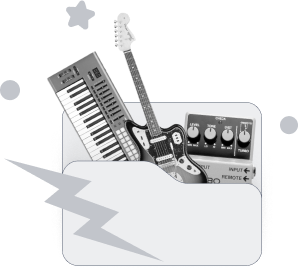


BADAROU'S COMPASS POINT studio has a full Synclavier system as its centerpiece. Apart from that, there's a Macintosh computer, a DX7, a couple of TX816 modules, a Roland digital piano and two analogue synths: an Oberheim OB8 and a Prophet 600.
Find it on:


Wally Badarou praises the Arturia ARP 2600 V3 Software Synthesizer, highlighting its ability to rejuvenate the legendary ARP 2600's legacy with enhanced power and versatility. This sentiment is reflected in the Arturia overview.
Find it on:




'Just like - and for as far back as - "Fisherman", I came up with just the beginning of it, browsing through the features and presets of my newly acquired Sequential Circuits Prophet 600. It didn't mean much to me by then, but having a cassette recorder ready, I taped it just in case.'
Find it on:

What did happen, though, was that he was introduced - in 1979 - to Robin Scott, who was preparing the recording of M's single 'Pop Musik'. Badarou put a newly acquired Korg 800DV synthesiser to good use ("it was a pretty neat machine - most of the synth sounds on the single are from it"), and when 'Pop Musik' became an immense international hit, it gave him his ticket to the international music scene.
Find it on:

BADAROU'S COMPASS POINT studio has a full Synclavier system as its centerpiece. Apart from that, there's a Macintosh computer, a DX7, a couple of TX816 modules, a Roland digital piano and two analogue synths: an Oberheim OB8 and a Prophet 600.
Find it on:

BADAROU'S COMPASS POINT studio has a full Synclavier system as its centerpiece. Apart from that, there's a Macintosh computer, a DX7, a couple of TX816 modules, a Roland digital piano and two analogue synths: an Oberheim OB8 and a Prophet 600.
Find it on:

BADAROU'S COMPASS POINT studio has a full Synclavier system as its centerpiece. Apart from that, there's a Macintosh computer, a DX7, a couple of TX816 modules, a Roland digital piano and two analogue synths: an Oberheim OB8 and a Prophet 600.
Find it on:

"Mark and I usually start out spending time writing songs, and then we go into choosing synth sounds, setting tempos and writing sequences. On the synth side we work mainly on the DX7 and the TX racks, and there's also a couple of Roland machines like the Juno 6. The whole band joins in the pre-production, but Mark and I are more involved on the technology side, so we probably have a more predominant influence over the way things are going to be recorded in the studio."
Find it on:

"Take for instance the MSQ700, the Roland sequencer we used a couple of times with Level 42. It gives a different feeling to each note, depending on how long you've been holding this or that key, even if you quantise. On top of that, it takes somebody to create a part, so even if you step write, it's still human."
Find it on:

"At home I have a DX7, a Prophet 600, the Linn 9000, a couple of TX racks, a Macintosh with Performer sequencing software, and an eight-track mixing desk for making some rough cassette mixes and to add effects. I just use it for recording ideas, which I later work out in Nassau. I create by improvising, and having a recorder open all the time."
Find it on:

'Once back there, I did not stop shuttling between studio A & B, carving Prophet 5 synthesizer tracks to almost everything that was recorded at Compass Point that year, and the following years, to the point where I finally got nicknamed "Prophet".'
Find it on:


"It involved a New England Digital’s Synclavier II PSMT system, and early MOTU’s Performer sequencer running on Apple Macintosh SE-30, both controlling an impressive array of tone modules via MIDI exclusively. All synths were mixed through an Allen & Heath Brenell 20-channel desk directly to a Sony PCM-F1 digital stereo system, no tape machine in between, and absolutely no sampling involved (neither Digital Performer, nor ProTools existed yet)."
Find it on:

"It involved a New England Digital’s Synclavier II PSMT system, and early MOTU’s Performer sequencer running on Apple Macintosh SE-30, both controlling an impressive array of tone modules via MIDI exclusively. All synths were mixed through an Allen & Heath Brenell 20-channel desk directly to a Sony PCM-F1 digital stereo system, no tape machine in between, and absolutely no sampling involved (neither Digital Performer, nor ProTools existed yet)."
Find it on:

"Tone modules consisted of Sequential Circuits Prophet 5, Oberheim OB8, Yamaha TX-816s, Korg DVP-1, and Synclavier’s own FM modules. Lexicon PCM-70 was the only reverb unit used throughout the album."
Find it on:

"Tone modules consisted of Sequential Circuits Prophet 5, Oberheim OB8, Yamaha TX-816s, Korg DVP-1, and Synclavier’s own FM modules. Lexicon PCM-70 was the only reverb unit used throughout the album."
Find it on:
This is a community-built gear list for Wally Badarou.
- Find relevant music gear like Pianos, Keyboards and Synthesizers, Microphones, Studio Equipment, Software Plugins and VSTs, Headphones, and other instruments and add it to Wally Badarou.
- The best places to look for gear usage are typically on the artist's social media, YouTube, live performance images, and interviews.
- To receive email updates when Wally Badarou is seen with new gear, follow the artist.
Album Credits
-
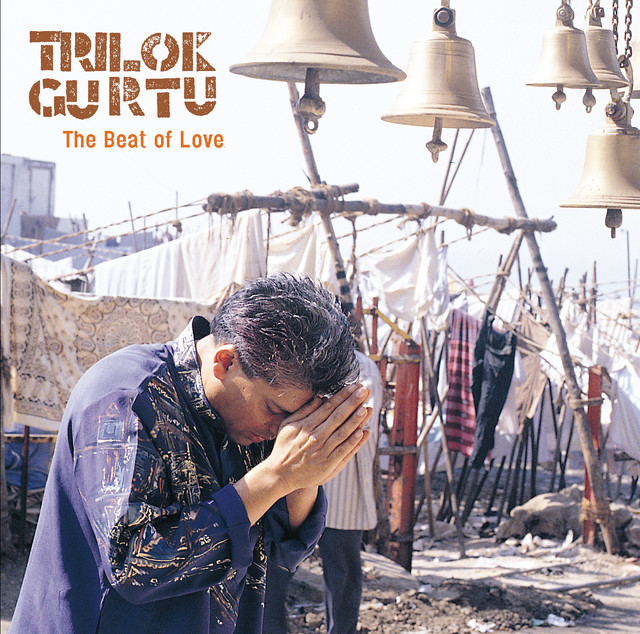
Trilok Gurtu · 2001
Producer