

Pricing and availability
We compare 600+ stores and found this item at 1 store. Prices updated .
Store
Reviews
Price




* Product prices and availability are updated by Equipboard every 24hrs and are subject to change. Equipboard may receive compensation for purchases made at participating retailers linked on this site. This compensation does not affect what products or prices are displayed, or the order of prices listed. For more information, please refer to our affiliate disclosure.
Description
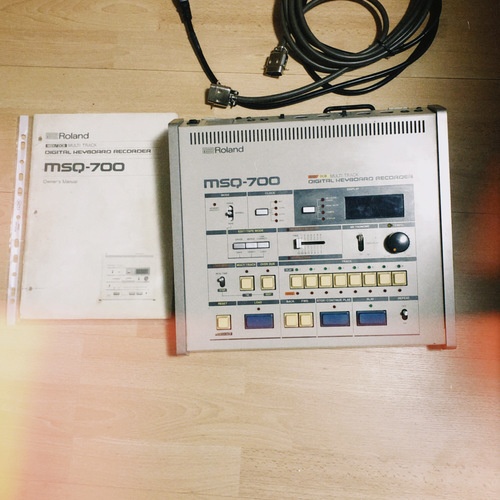
The MSQ-700 from year 1984 is an 8-track MIDI-sequencer that holds up to 6,500 notes that can be stored. Several functions of the MSQ-700 include a chain function, multi-track function, overdubbing and a merge function. Use it to control your TR-909, or Juno-60 or any other MIDI equipment. The MSQ-700 is compatible with both MIDI and Roland's proprietary DCB sync methods,although it can't do both at the same time.
Product specs
| Brand | Roland |
| Model | MSQ-700 Multitrack Digital Keyboard Recorder |
| Finish | Beige |
| Year | 1984 - 1986 |
| Made In | Japan |
| Categories | Sequencers |
| Analog / Digital | Digital |
| MIDI I/O | MIDI Input, MIDI Output |
FAQs
-
What type of sequencing capabilities does the Roland MSQ-700 offer?
-
The Roland MSQ-700 provides multitrack digital sequencing, allowing you to record and play back multiple tracks of MIDI data. It supports real-time and step-time recording modes, making it versatile for various sequencing needs.
-
Is the Roland MSQ-700 compatible with modern MIDI equipment?
-
Yes, the Roland MSQ-700 features standard MIDI input and output connections, allowing it to interface with most modern MIDI-compatible devices, despite its vintage origins.
-
How does the Roland MSQ-700 handle MIDI data storage?
-
The Roland MSQ-700 stores MIDI data internally and can back up sequences via cassette tape, which was standard for the era when it was produced.
-
Can the Roland MSQ-700 be used with other Roland instruments from the 1980s?
-
Yes, the Roland MSQ-700 can be effectively used with other Roland instruments from the 1980s, particularly those with MIDI capabilities, enhancing your vintage setup's sequencing potential.
-
What are the primary uses of the Roland MSQ-700 in a modern setup?
-
In a modern setup, the Roland MSQ-700 can be used for sequencing vintage synths or as a unique tool for creating retro-inspired music due to its distinct workflow and sound character.
Videos

SynthMania
Sequencing 1983 style with Jupiter-8, LinnDrum, and MSQ-700
Sequencing 1983 style with Jupiter-8, LinnDrum, and MSQ-700
SynthMania
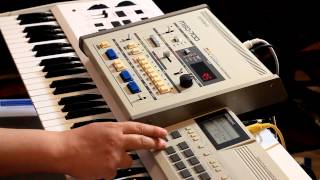
Roland MSQ-700, Bit 99 and TR-505
SynthMania
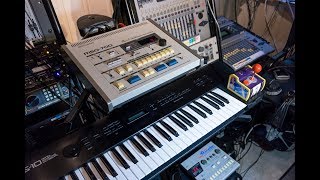
Roland MSQ-700 sequencer - Fast and Fun

Espen Kraft
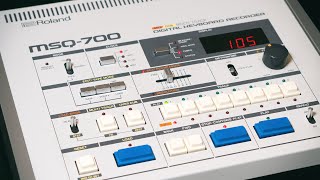
Roland MSQ-700 | Super Quirky
Espen Kraft
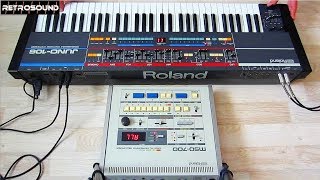
Roland MSQ-700 MIDI/DCB Hardware Sequencer (1984) How to record a sequence

RetroSound
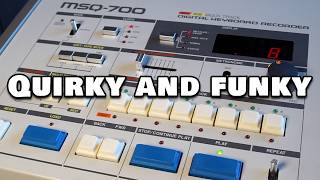
Roland MSQ-700 Quantisation | Highly unpredictable and fun - borderline bizarre
Espen Kraft

Roland MSQ-700 | The blood splattered beyond
Espen Kraft
Reviews
Owner Insights
We analyzed real musician discussions from forums and Reddit to find what players love, question, and tweak about Roland MSQ-700.
Features and functionality
-
The Roland MSQ-700 requires a MIDI keyboard controller like the Arturia Keystep Pro to switch MIDI channels for multiple synths.
Source -
The sequencer allows up to 127 MIDI devices, but practical usage often involves controlling up to 8 devices by sharing MIDI channels.
Source -
The MSQ-700 records on a single MIDI channel at a time, with limitations in handling multi-channel playback to different synths simultaneously.
Source -
Users can select different MIDI channels per track, up to 16 channels per track, allowing for some flexibility despite recording limitations.
Source
Setup and maintenance
-
Users can synchronize a drum machine with the MSQ-700 by setting the drum machine as the master clock and the MSQ as the slave.
Source -
The MSQ-700 cannot simultaneously use DCB and MIDI; it must run sequences via one connection at a time.
Source -
Tape load/save functionality can be emulated as an audio file on a computer or phone, providing a modern workaround for saving sequences.
Source -
Troubleshooting should start with basic checks: cracked solder joints, leaking capacitors, and ensuring +5v between pin 40 and pin 20 on the microprocessor.
Source -
Ensure the /RESET circuit works by checking it starts low and then goes high on power-up, using a logic probe with audio beep for easier detection.
Source -
Testing the clock signal on pins 2 or 3 of the microprocessor may require an oscilloscope, as it's often visible on just one pin.
Source -
Issues with LEDs may involve sourcing replacements; it's unclear if they are standard parts or if availability is limited.
Source -
Accidental activation of service mode can cause non-responsiveness; ensure all mainboard dip switches are set to normal mode.
Source
User experience
Critic Reviews
4.5 out of 5
Based on 0 Reviews and 5 Ratings
Artist usage
Add artist

OPN's MSQ can be seen at 6:43 in this video.

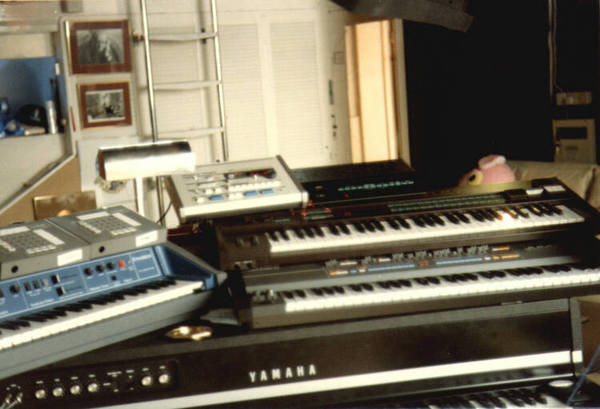
This image, from Vangelis' website, shows, among other devices, a Roland MSQ-700, used by Vangelis at Nemo Studios.


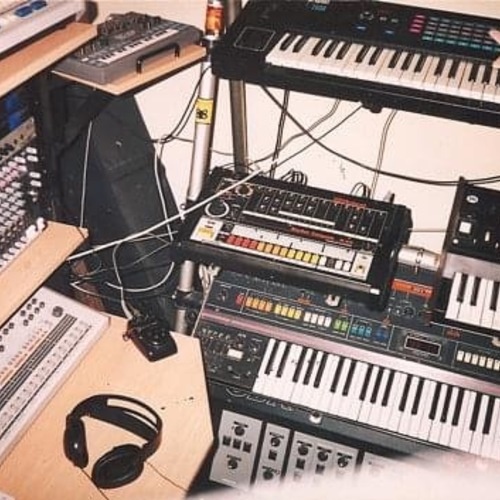
In a user-uploaded photo from cEvin Key's former Subconscious Studios, the Roland MSQ-700 sequencer is visible in a rack setup.


In this article, it mentions the Roland MSQ-700 sequencer in William Orbit’s equipment list.


As listed in this 1990 interview on the Music Magazine Archive

Four Roland MSQ-700 sequencers can be seen in Greg's synth rig during this concert. A better shot of them can be seen around the 12:11 mark in the video, during "Touch and Go".

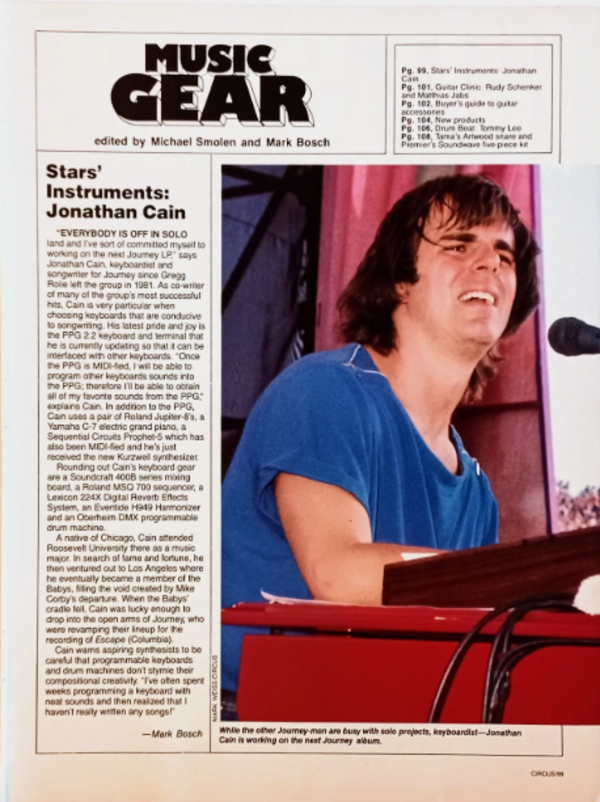
In the early 1980s, Jonathan Cain used the Roland MSQ-700 sequencer during his time with Journey, as reported by Circus Magazine.

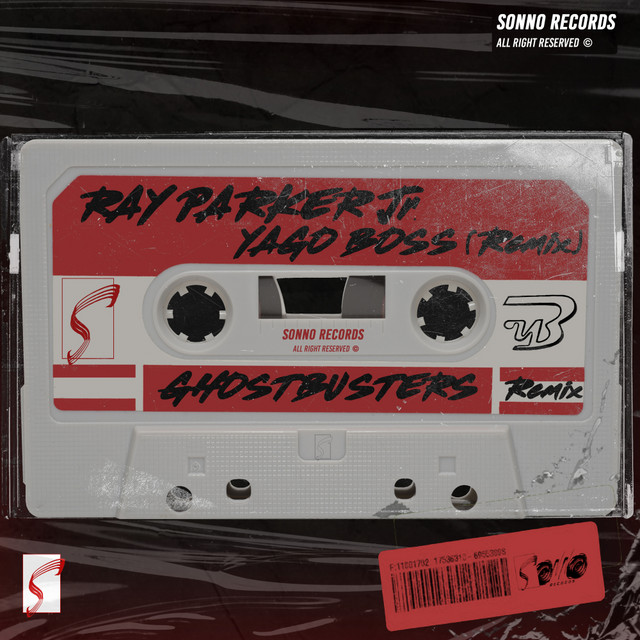
Ray Parker Jr. says in this interview that he used a Roland Jupiter 6, Roland MSQ 700 and Linndrum on "Ghostbusters."


De Vries first cut his programming teeth on an Roland MSQ700, and then moved on to the Atari, initially running Hybrid Arts' Midi Track software, and then C‑Lab's Notator. A few years ago he finally switched to Macintosh and Digidesign, on which he still runs C‑Lab/Emagic software, namely Logic Audio: "I was quite slow switching from the Atari to the Mac, because I had experiences of working alongside people with Macs that appeared to be crashing all the time. But things are a lot better now, and I am really happy with my Macintosh, although admittedly the timing could be better on it. The timing of the Atari was probably more stable, but then, are you going to spend your whole life worrying about the fact that there is a millisecond delay on the bass drum, or are you going to listen to the music and try to make that sound good? The '80s ethic seemed very much to make sure that everything was very precise and glued to a grid, but there's room for things to be much sloppier now, and better for it."

Eric Persing has had a unique and influential relationship with Roland Corp for two decades. He started as a product demonstrator in 1984, showing some of Roland's first MIDI instruments. He quickly became involved in the R&D side with Roland Japan, earning the title "Chief Sound Designer", and began contributing his design ideas, real-world studio experience and sound design expertise. Persing's skills have left their mark on countless classic Roland instruments.
He is the originator of many legendary Roland sounds that have become part of the vocabulary and lexicon of musical sound. These include the Factory D-50 sounds such as Fantasia, Soundtrack and Digital Native Dance, a majority of the JV/XP/XV series Classics, all the Factory JD-800 sounds, the original Juno "Hoover" sound and thousands of others.
Here is a partial list of the Roland instruments that Eric has contributed his sound design, sampling and design consulting skills:
Juno-106 Alpha Juno 1&2 JX-3P JX-8P JX-10 Jupiter 6 Super Jupiter D-50 D-550 D-110 D-10 D-20 D-70 MT-32 U-110 U-20 U-220 Sound Canvas JD-800 JD-990 JV-80 JV-90 JV-1000 JV-1080 JV-2080 XP-10 XP-50 XP-60 XP-80 XV-3080 XV-5050 XV-5080 Fantom JP-8000 JP-8080 S-10 S-220 S-50 S-550 S-770 S-760 S-750 MC-303 MC-500 MC-505 VP-9000 MSQ-700 MSQ-100 MKS-20 MKS-30 MKS-50 MKS-70 MKS-80 R-8 R-5 DR-660 DR-770 R-70 V-Drums V-Drums expansion board SRV-2000 DEP-5 RSP-550 R-880 SRV-330 SE-50 SE-70 VS-880 VS-1680 SR-JV series expansion boards SRX series expansion boards Sound Canvas Project series CD-ROM libraries Archives series CD-ROM libraries Composers series CD-ROM libraries


Stephen Hague discusses programming the bassline for the Pet Shop Boys' "Love Comes Quickly" with an MSQ-700 sequencer:
The bassline of [Love Comes Quickly] is interesting because, originally, it was going to be a down-beat set up as it is in the intro. I had programmed it on an MSQ700, but something got screwed up when it came back sync'd from tape and the whole thing was delayed by exactly half a beat. I thought it sounded really cool so I had to re-write the bass sequence with that in mind.
Album Usage
The Roland MSQ-700 has been featured on the following albums:
Genre Usage
Based on how artists on Equipboard use this gear, it is most commonly found in the following genres.
Used With
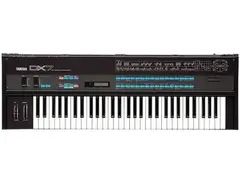
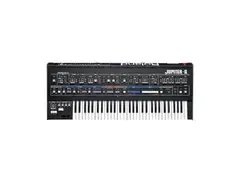
Based on how musicians on Equipboard use Roland MSQ-700, it is most commonly used with the following gear.

-s.webp?v=1784559389)


-s.webp?v=1784559385)


Community setups
Show yours

More Roland Audio Sequencers

$387.76 - $1,100.00
in Audio Sequencers Rank


$125.00
in Audio Sequencers Rank


$2,300.00
in Audio Sequencers Rank


$105.00
in Audio Sequencers Rank


$175.00
in Audio Sequencers Rank


$145.06
in Audio Sequencers Rank


$650.00
in Audio Sequencers Rank


$65.00
in Audio Sequencers Rank


$235.00
in Audio Sequencers Rank


$135.00
in Audio Sequencers Rank


$99.00 - $273.00
in Audio Sequencers Rank


$103.25 - $149.99
in Audio Sequencers Rank


$83.00 - $99.00
in Audio Sequencers Rank


$477.00 - $612.99
in Audio Sequencers Rank


$1,495.00
in Audio Sequencers Rank


$632.35
in Audio Sequencers Rank


$299.00
in Audio Sequencers Rank


$211.00 - $329.99
in Audio Sequencers Rank


$1,495.00
in Audio Sequencers Rank


$1,431.73
in Audio Sequencers Rank


-m.webp?v=1784455250)
$1,222.00 - $1,311.23
in Audio Sequencers Rank


$83.00 - $99.00
in Audio Sequencers Rank

$175.00 - $368.46
in Audio Sequencers Rank


$199.99 - $375.00
in Audio Sequencers Rank


$25.00 - $119.95
in Audio Sequencers Rank

$620.42 - $1,199.00
in Audio Sequencers Rank


$546.99
in Audio Sequencers Rank


$499.00 - $525.00
in Audio Sequencers Rank


$1,290.00
in Audio Sequencers Rank


-m.webp?v=1784332394)


$298.28
in Audio Sequencers Rank


$105.00
in Audio Sequencers Rank

Accessories & Related Items

Similar


Gear Guides



Most Popular Audio Sequencers
Most Popular Brands
-
Added to Equipboard on by
 nutritiouspig
GearIQ 785
-


