Trey Spruance
Role
Genre
Credits
Role
Genre
Credits
Trey Spruance's Gear


seen playing this guitar in the live performance throughout the whole show such as 2:40
Find it on:


Trey Spruance is seen using the Peavey Classic Chorus 212 amplifier in a photo available on Google Images.
Find it on:


Trey: “For most of the record, my tone is coming from this big thick amp simulator – the Amptweaker Tight Metal Pro pedal. I know how temperamental 5150s are and we were renting equipment everywhere we went. I just wanted a reliable and consistent tone wherever we are. "
Find it on:
-m.webp?v=1784646117)
he is seen in the video's image next to the amp
Find it on:
-m.webp?v=1784645947)
At 1:58 "Squier" logo can be seen at guitar's head
Find it on:

During this performance, Trey is seen playing this guitar.
Find it on:


This is embarrassing: With the very first [Line 6] POD. We went to a studio with the drums and bass and I added the guitar parts later. The clean guitars were on the Fender Twin. That's not portable. It's not like you have more than 16 tracks to work with before it starts choking. This is all to the credit of Samplitude.
Find it on:

"I use a POD direct, going through a spring reverb for the clean sound - and a Marshall JMP1 direct for the dirty. That's it - totally bare-bones. I know the guitar is a pretty visual instrument and all, but literally %95 of what I do in the band has to do with production, programming and keyboard arranging - there's very little time to fuck around with the guitar.
Find it on:

he's playing a les paul live with Faith no More
Find it on:


In the video "Mr. Bungle Live In Oakland, CA 3-31-1991-11. Dead Goon" by MrBungleChannel on YouTube, Trey Spruance is seen with a Peavey Stereo Chorus 400 amplifier on stage.
Find it on:

Trey Spruance Mr. Bungle Bill Graham Civic Auditorium 12/31/1992 seen playing this guitar in the attached image
Find it on:

“Then I went to the Schecter factory after we’d done the gigs, they gave me a couple of Foxgear pedals which I used on the record. One I got a lot of use out of was the Anubi. That was responsible for all the long sustains and cascading walls of sound. "
Find it on:

In the live performance of "Vajra" at Amoeba Records, Trey Spruance plays a Teisco May Queen guitar.
Find it on:

From a 1999 guitar player interview - "With such a production-minded approach to making music, it can get tricky
recreating Mr. Bungle's and Secret Chiefs 3's studio material onstage -
especially when Spruance is responsible for a melange of guitar parts,
keyboard parts, and samples. To keep from getting overwhelmed, he designed
a guitar rig that is as uncomplicated as possible: a blackface Fender
Twin Reverb for clean parts and a Marshall JMP-1 preamp for dirty parts.
("I use the speaker-emulator output and go direct - there's less feedback
and less hassle. I'm never going to bring a big speaker cabinet on the
road again.") A Whirlwind A/B box toggles between the two amps, and a
footswitch turns the Twin's reverb and vibrato on and off."
Find it on:


He is playing this guitar in the image
Find it on:

“I had to go out and buy a good guitar because I’ve never really had a decent one! My first guitar was actually good, a G&L F-100, and then it was all downhill from there. Just complete crap and junk. Any picture you see of me, I’ll be playing a piece of shit. "
Find it on:

at 5:34, you can see Trey playing this guitar live
Find it on:
-m.webp?v=1784559790)
In this image, Trey is playing this guitar live
Find it on:

In a photo sourced from Ztmag, Trey Spruance is seen playing a Fender Stratocaster Electric Guitar during a concert.
Find it on:

During the perfomance of "Barakiel" he used a Danelectro56-U2 Baritone.
Find it on:

Trey is playing Horsemen Of The Invisible song with Coral electric sitar .
Find it on:

Well, sort of. I got a PC laptop. A Quantex, 10 gig, black monster that had a PCMCIA slot and Samplitude 3. I found a Korean company called Ego-Sys, that at the time was creating this thing called a WaMi Box — this breakout box that had S/PDIF in on it, which enabled me to hook it into my HHB Portadat, which had really good preamps. The chain was crazy: [AKG] C 414s into my Telefunken V72s, into the HHB DAT, engage the record head and then run the S/PDIF into the WaMi Box and into the laptop. And this was a portable setup. I took it with me on tour with Mr. Bungle and recorded a lot.
Find it on:

Well, sort of. I got a PC laptop. A Quantex, 10 gig, black monster that had a PCMCIA slot and Samplitude 3. I found a Korean company called Ego-Sys, that at the time was creating this thing called a WaMi Box — this breakout box that had S/PDIF in on it, which enabled me to hook it into my HHB Portadat, which had really good preamps. The chain was crazy: [AKG] C 414s into my Telefunken V72s, into the HHB DAT, engage the record head and then run the S/PDIF into the WaMi Box and into the laptop. And this was a portable setup. I took it with me on tour with Mr. Bungle and recorded a lot.
Find it on:

This is embarrassing: With the very first [Line 6] POD. We went to a studio with the drums and bass and I added the guitar parts later. The clean guitars were on the Fender Twin. That's not portable. It's not like you have more than 16 tracks to work with before it starts choking. This is all to the credit of Samplitude.
Find it on:

"All of those keyboards (Jeff/Roto's, and Bar's) are hooked up via MIDI to my K2500. There are three to five total keymaps per song (one for each keyboard, sometimes two on Roto's channel, and three in the case of Robots). Some of these keymaps are 32 layers deep with different up to 38 programmed sounds and samples on ONE KEYMAP. Each keymap is divided up into "zones" where these parts can be grouped strategically, and played once all the locations are memorized.
Find it on:

the amps are on stage with Trey in this video
Find it on:

the amps are on stage with Trey in this video
Find it on:

the amps are on stage with Trey in this video
Find it on:
-m.webp?v=1784631701)
From a 1999 guitar player interview- "With such a production-minded approach to making music, it can get tricky
recreating Mr. Bungle's and Secret Chiefs 3's studio material onstage -
especially when Spruance is responsible for a melange of guitar parts,
keyboard parts, and samples. To keep from getting overwhelmed, he designed
a guitar rig that is as uncomplicated as possible: a blackface Fender
Twin Reverb for clean parts and a Marshall JMP-1 preamp for dirty parts.
("I use the speaker-emulator output and go direct - there's less feedback
and less hassle. I'm never going to bring a big speaker cabinet on the
road again.") A Whirlwind A/B box toggles between the two amps, and a
footswitch turns the Twin's reverb and vibrato on and off."
Find it on:
This is a community-built gear list for Trey Spruance.
- Find relevant music gear like Guitars, Amplifiers, Effects Pedals, Pianos, Keyboards and Synthesizers, Microphones, and other instruments and add it to Trey Spruance.
- The best places to look for gear usage are typically on the artist's social media, YouTube, live performance images, and interviews.
- To receive email updates when Trey Spruance is seen with new gear, follow the artist.
Album Credits
-
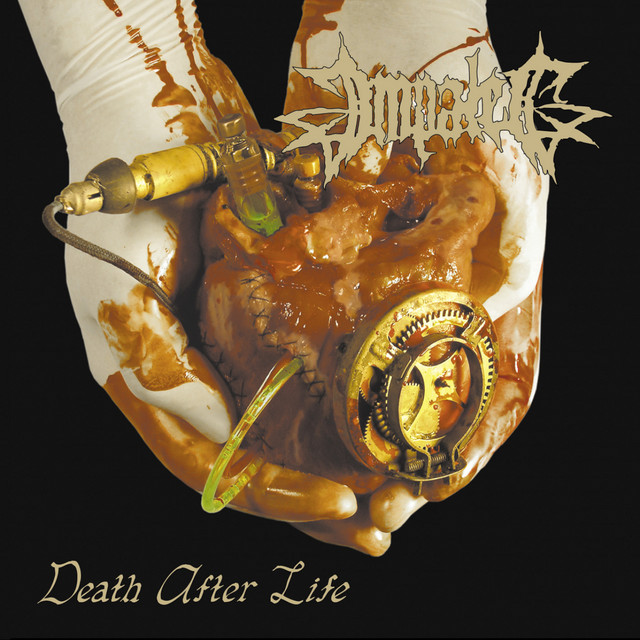
Impaled · 2005
Producer Recording Engineer