Philip Glass
US composer & pianist
Role
Genre
Credits
Role
Genre
Credits
Philip Glass' Gear


"The best string sound is a composite one. We'll use a sound from the OBX, then combine it with the Prophet 5 and the DX7. No one company makes a perfect programme. I prefer real people, but the synthesisers can definitely do things that real people can't. We can smooth out a string section. We'll take a string section with 12 strings, and put our MIDI'd-together string sound and we can pump that out to sound like 28 strings. The Mishima soundtrack is a good example. That's a small section, maybe 18 strings, but you listen to it, it's gorgeous."
http://www.muzines.co.uk/articles/the-glass-bead-game/4927
Michael Riesman on plogue.com stated "Over the years of my involvement, the Ensemble went through a series of migrations to new hardware. The first was the replacement of one of the Farfisas by a Yamaha YC45-D dual manual electric organ, a wonderful machine with touch sensitivity and adjustable percussive attack. After that, we added an Arp Explorer synthesizer. Next came a Sequential Circuits Prophet 5, then an Oberheim OBXa, then a Yamaha DX-7 (one of the first in the US, hand-carried back from a tour in Japan), then an Emulator I sampler (serial #002), then a Roland Juno-106 and a Roland JX3P, and an Emulator II sampler, and then, as we adopted MIDI controllers and rack modules, a Roland Super Jupiter, a Yamaha TX-816 rack and a YTX-802, several Oberheim Matrix-6R. and a number of Akai S-900 samplers, later replaced with Digidesign Samplecell I cards running on Mac IIs."
The image is of PG posing with his DX-7 from Getty Images.
Find it on:


The Farfisa Mini Compact organ was a big part of the Philip Glass Ensemble’s sound. Often times, several Mini Compacts would be played on stage at once.
Michael Riesman (longtime Philip Glass Ensemble Musical Director) said in this interview, "When I joined, the keyboards consisted of three Farfisa Mini-Compact organs. That was it. Over the years of my involvement, the Ensemble went through a series of migrations to new hardware. The first was the replacement of one of the Farfisas by a Yamaha YC45-D dual manual electric organ, a wonderful machine with touch sensitivity and adjustable percussive attack."
Also in Philip Glass's book, Words Without Music, Philip goes into detail about finding Farfisas in classified sections and the like, "I picked up three Farfisa electric organs for two hundred dollars each from the Buy-Lines. This kind of used keyboard was easy to come by. Usually a few weeks after Christmas they could be found for sale. I always found them, without exception, in a knotty-pine paneled basement in Queens."
Glass still plays the Farfisa Mini Compact today, as you can see here.
Find it on:

"But now I've got an Emulator and an Emulator II, two DX9's, an Oberheim, a Prophet, a Roland JX3-P and so on, and I'd say at this point that the synth has a generic sound of its own; when I wrote parts for the synths I used to write "woodwind" and "brass" to indicate the kind of sound, but now I tend to just write "bass synth" or "wind synth" because they have sounds of their own. And even when you think you're hearing an acoustic instrument on the albums there's a synth doubling it an octave below, which gives you a bigger bottom end."
Find it on:

This image was posted on PG's twitter account on November 25, 2018 with the caption "Philip Glass, Nova Scotia, November 2018." This is from his residence in Nova Scotia, BC as seen in Glass: A Portrait of Philip in Twelve Parts.
Find it on:

At :25, Philip Glass is playing a Sequential Circuits Prophet 5.
Find it on:


"The best string sound is a composite one. We'll use a sound from the OBX, then combine it with the Prophet 5 and the DX7. No one company makes a perfect programme. I prefer real people, but the synthesisers can definitely do things that real people can't. We can smooth out a string section. We'll take a string section with 12 strings, and put our MIDI'd-together string sound and we can pump that out to sound like 28 strings. The Mishima soundtrack is a good example. That's a small section, maybe 18 strings, but you listen to it, it's gorgeous."
Find it on:

"But now I've got an Emulator and an Emulator II, two DX9's, an Oberheim, a Prophet, a Roland JX3-P and so on, and I'd say at this point that the synth has a generic sound of its own; when I wrote parts for the synths I used to write "woodwind" and "brass" to indicate the kind of sound, but now I tend to just write "bass synth" or "wind synth" because they have sounds of their own. And even when you think you're hearing an acoustic instrument on the albums there's a synth doubling it an octave below, which gives you a bigger bottom end."
Find it on:

So Glass, who had a conventional classical music training before becoming influenced by Indian music and studying with Ravi Shankar, was quick to take up the opportunities afforded by electric keyboards (originally Farfisa organs and ARP Pro Soloist synths) on his earlier records such as Music in Similar Motion (Chatham Square), Music In Twelve Parts (Caroline) and North Star (Virgin). So why haven't other classical musicians followed his ideas of "extended instrumentation", overdubbing and multitrack recording?
Find it on:



What’s next for Michael Riesman? Any upcoming project you’d like to share with us ?
The big thing at the moment is that I’m the music director for the revival of Einstein on the Beach, currently on a world tour, and next in London, Toronto, New York, and UC Berkeley.
We’re not using any MIDI for that. We decided to use stand-alone keyboards only, to simplify the audio setup. That’s the way we did it in 1976 with Farfisas and a Yamaha YC45-D. Now we are using Kurzweil PC3K8s
Find it on:

"But now I've got an Emulator and an Emulator II, two DX9's, an Oberheim, a Prophet, a Roland JX3-P and so on, and I'd say at this point that the synth has a generic sound of its own; when I wrote parts for the synths I used to write "woodwind" and "brass" to indicate the kind of sound, but now I tend to just write "bass synth" or "wind synth" because they have sounds of their own. And even when you think you're hearing an acoustic instrument on the albums there's a synth doubling it an octave below, which gives you a bigger bottom end."
Find it on:

Seen in this YouTube video being played by Philip Glass. This was posted on Youtube in October 2020 and the video is from the the South Bank Show (S10, E12) which aired on January 18th, 1987. This means that this interview/music was initially taped in late '86 or early January '87. Skip to 17min, 38 seconds to view the dual-manual Yamaha YC-45D behemoth being played.
Another source has the Yamaha YC-45D being played on the PG's "Glass: Dance Pieces" album: http://philipglass.com/glassnotes/dance-notes-by-michael-riesman/
Michael Riesman (Philip Glass Ensemble's Music Director) notes "The three sections of "Dance" that were restored and are now being performed are Dance I, Dance IV, and Dance III. These are the only sections for which film was made. In the original production, Dance II and Dance V were performed without film. In recent years, Childs has presented the work with film sections only, with Dance IV replacing Dance II as a middle movement, and renamed "Dance II".
The restoration involved both image and sound. The image was transferred to digital along with the audio from the film. Since this audio was of relatively poor quality, due both to its optical format and to film deterioration, I was approached by the people involved in the restoration to find out if it could be improved. I went back to the original source materials and, using time-adjustment tools to synchronize with the film audio, replaced the entire audio track.
The album "Dance" was mixed from the same source tapes as the film track for Dances I and III. However, on the album, Dances II and IV were re-recorded. The re-recording of Dance IV was done without reference to the original and thus could not be synchronized with the film because the tempos are too different.
On the original recording for Dance IV the organ was a Yamaha YC45D dual manual electric organ, which was also used on the album for Dance II. On the album, pipe organ samples were used for Dance IV. As far as I know, no chords were changed in album version, but the use of samples, which are less aggressive than the electronic original, would have softened the dissonances."
Find it on:
-m.webp?v=1785025532)
Michael Riesman on plogue.com states "Over the years of my involvement, the Ensemble went through a series of migrations to new hardware. The first was the replacement of one of the Farfisas by a Yamaha YC45-D dual manual electric organ, a wonderful machine with touch sensitivity and adjustable percussive attack. After that, we added an Arp Explorer synthesizer. Next came a Sequential Circuits Prophet 5, then an Oberheim OBXa, then a Yamaha Dx7 (one of the first in the US, hand-carried back from a tour in Japan), then an Emulator I sampler (serial #002), then a Roland Juno-106 and a Roland JX3P, and an Emulator II sampler, and then, as we adopted MIDI controllers and rack modules, a Roland Super Jupiter, a Yamaha TX-816 rack and a YTX-802, several Oberheim Matrix-6R. and a number of Akai S-900 samplers, later replaced with Digidesign Samplecell I cards running on Mac IIs."
This image is PG playing on a Juno 106 from Getty Images.
Find it on:

You’ve joined the Philip Glass Ensemble in 1974. I guess the live rig has changed a few times over all these years. Could you share with us how your setup has evolved until the latest pre-Bidule setup?
When I joined, the keyboards consisted of 3 Farfisa Mini-Compact organs. That was it. Over the years of my involvement, the Ensemble went through a series of migrations to new hardware. The first was the replacement of one of the Farfisas by a Yamaha YC45-D dual manual electric organ, a wonderful machine with touch sensitivity and adjustable percussive attack. After that, we added an Arp Explorer synthesizer. Next came a Sequential Circuits Prophet 5, then an Oberheim OBXa, then a Yamaha Dx7 (one of the first in the US, hand-carried back from a tour in Japan), then an Emulator I sampler (serial #002), then a Roland Juno-106 and a Roland JX3P, and an Emulator II sampler, and then, as we adopted MIDI controllers and rack modules, a Roland Super Jupiter, a Yamaha TX-816 rack and a YTX-802, several Oberheim Matrix-6R. and a number of Akai S-900 samplers, later replaced with Digidesign Samplecell I cards running on Mac IIs.
Find it on:

Philip Glass is seen playing a Roland JX-3P at 10min 42 seconds of this YouTube video and shortly after a Sequential Circuits Six-Trak is seen next to him, ready to be played at around 10min 45 seconds.
Find it on:

Philip Glass' Looking Glass Studios features "a 48-track G Series SSL console; Otari 2-inch, Pro Tools and Logic/G4 recording systems; and plenty of outboard boxes."
Find it on:

Philip Glass' Looking Glass Studios features "a 48-track G Series SSL console; Otari 2-inch, Pro Tools and Logic/G4 recording systems; and plenty of outboard boxes."
Find it on:

"But now I've got an Emulator and an Emulator II, two DX9's, an Oberheim, a Prophet, a Roland JX3-P and so on, and I'd say at this point that the synth has a generic sound of its own; when I wrote parts for the synths I used to write "woodwind" and "brass" to indicate the kind of sound, but now I tend to just write "bass synth" or "wind synth" because they have sounds of their own. And even when you think you're hearing an acoustic instrument on the albums there's a synth doubling it an octave below, which gives you a bigger bottom end."
Find it on:

Quoted on the official product page.
V-Collection 5 has been an invaluable resource in recreating the sounds we used in the original Philip Glass Ensemble pieces during the 70s and 80s. The interface is easy to use and sounds just like original units.
Find it on:

In this YouTube video [1:32:05 and on for another 2-3 minutes] you can see the Kurt Munkacsi manning the sound board for the Philip Glass Ensemble. It consists of the Allen & Heath 248 and an additional unit from Allen & Heath. You can also clearly see Farfisa Mini Compact organs being played by Philip Glass and Michael Riesman. Apparently the Allen & Heath 248 mixer came out in 1973.
Find it on:

Philip Glass is seen in the 3rd and 5th photographs on this interview page sitting behind a Farfisa Combo Compact organ (probably the grey version). It seems very likely that the bigger Combo Compact was too troublesome to repair, too expensive to acquire, or too much organ for what the ensemble required and so the smaller Mini Compact was seen more often in live and rehearsal media of the PGE during this time. Philip Glass writes about such topics in his 2015 memoir "Words Without Music."
http://www.paristransatlantic.com/magazine/interviews/landry.html
Find it on:

Michael Riesman says "Finally, the last pre-Bidule rig, initially set up in 2004, ended up consisting of a TX-816 rack, 2 TX-802s, 2 Matrix 6Rs, 5 Matrix 1000s, and a PC hosting Synthogy Ivory for piano sounds, all fed into a Pro Tools 5 system running on a Mac G4 4-slot computer housing 2 Pro Tools cards, 2 Samplecell II cards, and an instance of Soft Samplecell."
Find it on:
-m.webp?v=1784973604)
Do you have any feature you’d like to see in a future version of Bidule ?
I am really pleased to say that I really cannot think of anything I wanted to do with Bidule that I wasn’t able to accomplish with it as it is now. The only thing I had been thinking I might need to ask for was a way to use Bidule as a MIDi-controlled amplifier. The issue is that both in the hardware days (Yamaha, Oberheim, Samplecell) and now, there is no standard for MIDI volume, meaning that the curve for different manufacturers is arbitrary, and if you are combining different sources, as I do, they won’t track MIDI volume in sync. For example, if MIDI volume value 127 is 0 dB, how many dB down is MIDI volume 64? In the past, I had to use matrix modulation in the Oberheims and Samplecells to match the curve of the Yamahas, which I took as the standard only because they couldn’t be adjusted. Now with the instruments I’m using, Native Instruments Kontakt and FM8, and LinPlug Alpha, the volume tracking problem persists. So, instead of contorting one thing or another to equalize volume curves on the MIDI side, I discovered without having to ask for it that that I could simply use the MIDI volume parameter as the source for a Bidule gain module. Problem solved.
Find it on:


You’ve joined the Philip Glass Ensemble in 1974. I guess the live rig has changed a few times over all these years. Could you share with us how your setup has evolved until the latest pre-Bidule setup?
When I joined, the keyboards consisted of 3 Farfisa Mini-Compact organs. That was it. [...] Finally, the last pre-Bidule rig, initially set up in 2004, ended up consisting of a TX-816 rack, 2 TX-802s, 2 Matrix 6Rs, 5 Matrix 1000s, and a PC hosting Synthogy Ivory for piano sounds, all fed into a Pro Tools 5 system running on a Mac G4 4-slot computer housing 2 Pro Tools cards, 2 Samplecell II cards, and an instance of Soft Samplecell. The Pro Tools rig was just for mixing (no sequences or other virtual instruments or audio playback), with the hardware fed into 3 888 interfaces and the Samplecells fed directly into the TDM bus and showing up as inputs (cards) or Rewire instruments (Soft Samplecell) in Pro Tools. Performer 5.5 was used as the front end for MIDI, because Pro Tools had a problem with our Aphex trigger-to-MIDI converters, which did not (by default) send any note offs. In Pro Tools, the MIDI buffer would eventually fill up and crash Pro Tools because it was keeping track of all the note-ons without note-offs. This drove me nuts in rehearsal until I finally figured out what was going on and took Pro Tools out of the MIDI equation and all was well. I still to this day don’t use Pro Tools for any MIDI.
Find it on:

You’ve joined the Philip Glass Ensemble in 1974. I guess the live rig has changed a few times over all these years. Could you share with us how your setup has evolved until the latest pre-Bidule setup?
When I joined, the keyboards consisted of 3 Farfisa Mini-Compact organs. That was it. Over the years of my involvement, the Ensemble went through a series of migrations to new hardware. The first was the replacement of one of the Farfisas by a Yamaha YC45-D dual manual electric organ, a wonderful machine with touch sensitivity and adjustable percussive attack. After that, we added an Arp Explorer synthesizer. Next came a Sequential Circuits Prophet 5, then an Oberheim OBXa, then a Yamaha Dx7 (one of the first in the US, hand-carried back from a tour in Japan), then an Emulator I sampler (serial #002), then a Roland Juno-106 and a Roland JX3P, and an Emulator II sampler, and then, as we adopted MIDI controllers and rack modules, a Roland Super Jupiter, a Yamaha TX-816 rack and a YTX-802, several Oberheim Matrix-6R. and a number of Akai S-900 samplers, later replaced with Digidesign Samplecell I cards running on Mac IIs.
Find it on:

From a December 1983 in Electronics & Music Maker interview with Philip Glass:
Glass' first recorded work, Music In Similar Motion, was released in 1969 on his own Chatham Square label, and bears a strong resemblance to Terry Riley's A Rainbow In Curved Air, while the music's sheer minimalism has hints of John Cage or Stockhausen. Until recently, Glass' ensemble began every concert with an excerpt from Music In Similar Motion, and it's a work that's still dear to him as a composer.
'It's got a few nice little compositional tricks in it. For instance there's a bit near the end where it adds and subtracts in the same figure, and that makes the piece interesting arithmetically. Of course, that isn't all there is to it because it's also got a tremendous emotional impact, because it's so repetitive, so monotonous. The reason we always played it first was that people either loved it or hated it. Quite a few people used to walk out after the first twenty minutes. It was a way of finding out which members of the audience were really interested in my music.
'The instrumentation we had in '69 was very basic. Most of the LP was recorded on an old Farfisa organ, a dual-manual one. I got quite attached to it, but eventually I think it just fell apart. Fortunately I succeeded in finding a similar sort of sound on the Prophet 5 a couple of years back, so I've stored that in memory which means I've got access to that organ sound at any time.'
Find it on:

Philip Glass' Looking Glass Studio features "a 48-track G Series SSL console; Otari 2-inch, Pro Tools and Logic/G4 recording systems; and plenty of outboard boxes.
Find it on:


In the 2nd picture down on this interview site, the PGE appears to be using a Wurlitzer 140B electric piano. Philip Glass has his back to the camera, but it's fairly clear that this is indeed the PGE due to the layout of the performers and of course due to the vest and PG's hairstyle. The photo of this performance indicates that this was probably very early in the history of the PGE.
Find it on:

In an interview featured on Plogue's website, Michael Riesman discusses his evolving live rig since joining the Philip Glass Ensemble in 1974. He provides insights into the setup changes leading up to the integration of Plogue Bidule, highlighting its role in their performances.
Find it on:

Do you have any feature you’d like to see in a future version of Bidule ?
I am really pleased to say that I really cannot think of anything I wanted to do with Bidule that I wasn’t able to accomplish with it as it is now. The only thing I had been thinking I might need to ask for was a way to use Bidule as a MIDi-controlled amplifier. The issue is that both in the hardware days (Yamaha, Oberheim, Samplecell) and now, there is no standard for MIDI volume, meaning that the curve for different manufacturers is arbitrary, and if you are combining different sources, as I do, they won’t track MIDI volume in sync. For example, if MIDI volume value 127 is 0 dB, how many dB down is MIDI volume 64? In the past, I had to use matrix modulation in the Oberheims and Samplecells to match the curve of the Yamahas, which I took as the standard only because they couldn’t be adjusted. Now with the instruments I’m using, Native Instruments Kontakt and FM8, and LinPlug Alpha, the volume tracking problem persists. So, instead of contorting one thing or another to equalize volume curves on the MIDI side, I discovered without having to ask for it that that I could simply use the MIDI volume parameter as the source for a Bidule gain module. Problem solved.
*sounds like it could be an earlier version of Alpha
Find it on:

When I joined, the keyboards consisted of 3 Farfisa Mini-Compact organs. That was it.
Over the years of my involvement, the Ensemble went through a series of migrations to new hardware. The first was the replacement of one of the Farfisas by a Yamaha YC45-D dual manual electric organ, a wonderful machine with touch sensitivity and adjustable percussive attack. After that, we added an Arp Explorer synthesizer. Next came a Sequential Circuits Prophet 5, then an Oberheim OBXa, then a Yamaha Dx7 (one of the first in the US, hand-carried back from a tour in Japan), then an Emulator I sampler (serial #002), then a Roland Juno-106 and a Roland JX3P, and an Emulator II sampler, and then, as we adopted MIDI controllers and rack modules, a Roland Super Jupiter, a Yamaha TX-816 rack and a Yamaha TX802, several Oberheim Matrix-6R. and a number of Akai S-900 samplers, later replaced with Digidesign Samplecell I cards running on Mac IIs.
Find it on:
This is a community-built gear list for Philip Glass.
- Find relevant music gear like Software Plugins and VSTs, Keyboards and Synthesizers, Instruments, Studio Equipment, Headphones, and other instruments and add it to Philip Glass.
- The best places to look for gear usage are typically on the artist's social media, YouTube, live performance images, and interviews.
- To receive email updates when Philip Glass is seen with new gear, follow the artist.
Discography
North Star
1977
Glass: Einstein On The Beach
1979
Glass: Dance Nos. 1-5
1980
Glassworks - Expanded Edition
1982
Glassworks & Interview with Philip Glass with Selections from Glassworks
1982
Glass: The Photographer
1983
Koyaanisqatsi
1983
Glass: Satyagraha
1985
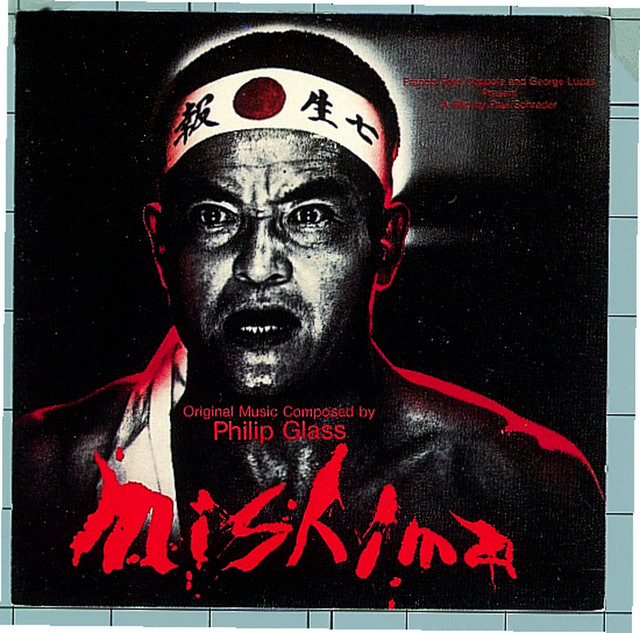
Mishima
1985
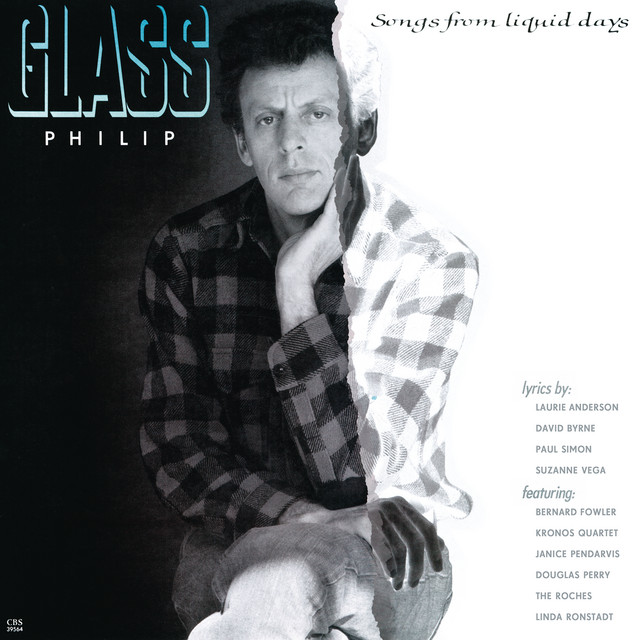
Glass: Songs from Liquid Days
1986
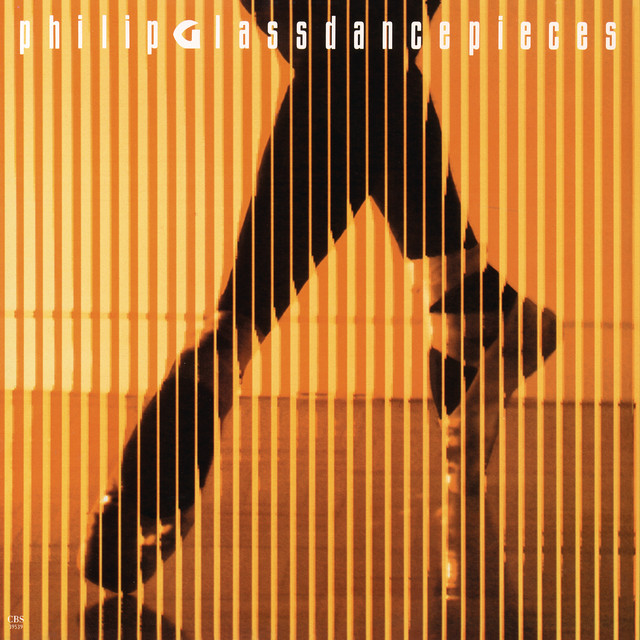
Glass: Dancepieces
1987
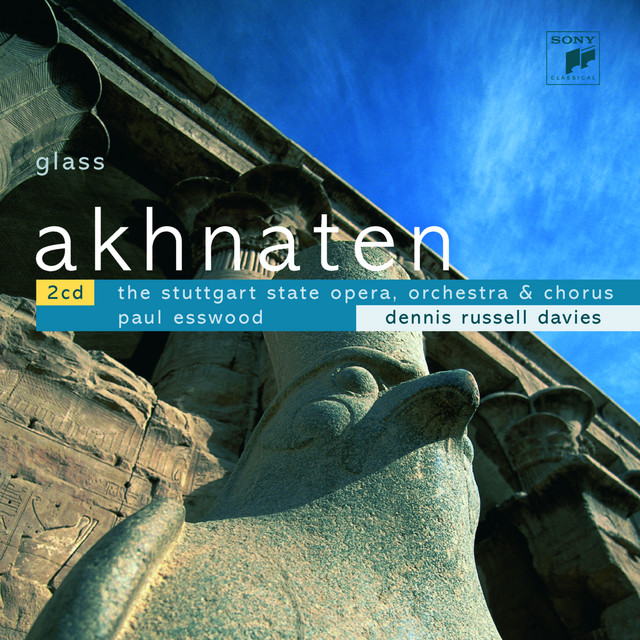
Glass: Akhnaten
1987
Album Credits
-
Philip Glass · 1989
Producer -
Ray Manzarek · 1983
Producer