Nylon Dreams: The Finest Classical Guitars of 2026


By Gear Experts
By Gear Experts
Table of Contents

Equipboard
Equipboard is the world's largest community of artists and their gear. Read our review process.
We are reader-supported. When you buy through links on our site, we may earn an affiliate commission. Learn more.
Our Picks


Best Budget Classical Guitar: A refined update to a long-standing favorite in music classrooms worldwide. The C40II offers everything a developing guitarist needs without overreaching or cutting corners on essential quality factors.
Read more


Manuel Rodriguez C11 Caballero 11

Cordoba C9 - Canadian Cedar Top
Best Mid-Range Classical Guitar: With its blend of traditional construction, premium materials, and consistent quality control, the C9 establishes itself as an instrument that serious players can confidently invest in for long-term musical growth.
Read more
Taylor 812ce-N Acoustic-Electric Guitar
Best High-End Classical Guitar: For serious enthusiasts and performing professionals who demand the finest in build quality, sound, and playability, the 812ce-N represents a premium investment that delivers inspirational musical experiences for decades.
Read more
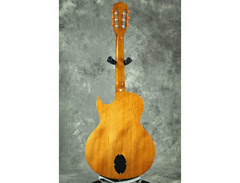
Best Classical Guitar For Playability: With its thoughtful ergonomics, reliable electronics, and musical voice, the eact42s removes barriers between player and musical expression without compromising on the essential qualities that make classical guitars special.
Read more
Best Crossover Guitar: With its thoughtful ergonomics, reliable electronics, and musical versatility, the 12e-N removes barriers between diverse playing styles while delivering the essential warmth and expressiveness that draws musicians to nylon-string instruments.
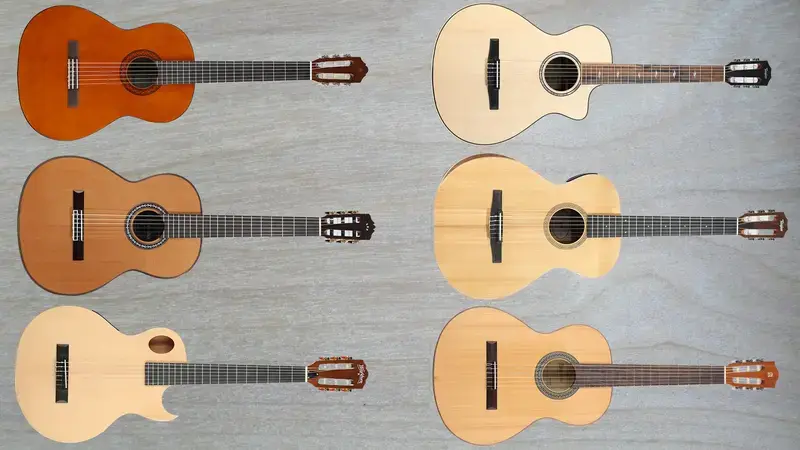
Read moreThe rich, warm tones of a well-made classical guitar can elevate your playing experience from ordinary to extraordinary. With countless options available , finding the instrument that perfectly matches your playing style, preferences, and budget requires thoughtful consideration.
This guide will walk you through the essential factors that influence tone, playability, and value when selecting a classical guitar. From tonewoods and construction to playability features and recommended models, we'll provide the knowledge you need to make an informed decision that will support your musical journey for years to come.
Why Classical Guitar Choice Matters

Let's be honest - picking the right classical guitar really does make a huge difference in your musical journey. It's not just about having a pretty instrument to show off (though that's nice too).
When you find a guitar that fits you well, playing becomes so much more enjoyable. Your hands move more naturally, you don't get as tired, and you can focus on making music instead of fighting with your instrument. A comfortable guitar means longer practice sessions without your hands cramping up or your back aching - and that means faster progress.
The sound of your guitar shapes your musical personality too. Some guitars have a bright, clear voice that makes technical passages sparkle, while others have this warm, rich tone that makes even simple melodies sound profound. You'll naturally gravitate toward playing music that sounds best on your particular instrument.
How well your guitar is built affects everything about your experience. A well-made guitar stays in tune, has consistent sound across all frets, and doesn't buzz or rattle when you play. Good construction means your guitar might actually sound better the more you play it over the years, developing character and depth that new instruments just don't have.
Perhaps the most important thing? The right guitar makes you want to play more. When you love the feel and sound of your instrument, you'll find yourself reaching for it during spare moments, practicing without it feeling like practice.
Key Factors to Consider

Alright, let's get into what really matters when you're shopping for a classical guitar. Cutting through the marketing hype, here are the things you should actually pay attention to when picking your instrument.
Tonewoods & Sound Characteristics
The wood your guitar is made from shapes its voice in a big way. It's like each type of wood has its own personality that comes through in the sound.
For the top of the guitar (what we call the soundboard), you've basically got two main players: cedar and spruce. Cedar gives you this warm, rich sound right off the bat. It responds really well even to a light touch, which is great if you play more intimate, expressive music. Spruce, on the other hand, has a brighter, clearer sound that projects better. It usually takes some time to "break in" and reach its full potential, but many players swear the wait is worth it.
The back and sides add their own flavor to the mix. Mahogany gives you a balanced, focused sound that works for pretty much anything you want to play. Rosewood adds this amazing depth and complexity, with stronger bass and sparkling highs. Maple creates a bright, clean sound that stands out well if you're playing with other musicians.
The wood used for the fretboard affects how the guitar feels under your fingers. Ebony is smooth and dense, with a responsive feel that many players love for technical playing. Rosewood has natural oils that make it feel comfortable during long practice sessions.
No wood is objectively "better" than others – they're just different. Your favorite music, how you play, and just your personal taste should guide what works best for you.
Guitar Construction & Build Quality
The solid wood versus laminate question is a big one. Solid wood vibrates more naturally and actually gets better with age as the wood "opens up." A solid top with laminate back and sides gives you most of the tonal benefits at a price that won't make you cry. Full laminate guitars are tougher and more consistent, but they usually don't develop that special character that comes with age.
Handmade versus factory-made is another consideration. Handcrafted guitars get more individual attention, with luthiers adjusting things like bracing and wood thickness to bring out the best sound. Factory guitars benefit from precise machinery and can offer surprisingly good quality without breaking the bank.
Body size and scale length affect both sound and comfort. Bigger bodies generally make more sound with deeper bass, while smaller bodies are easier to handle, especially for smaller players. The standard 650mm scale length gives you normal string tension, while shorter scales make the strings easier to press down but might not project as well. Finding the right mix of body size and scale length can make a massive difference in how comfortable your guitar feels to play.
Playability & Comfort
The playability features of your guitar directly impact how easily you can make music with it.
Nut width and neck profile determine how your hand sits on the guitar. Traditional classical guitars have wider nuts (around 52mm) that give you plenty of room for complex finger movements. Narrower nuts (48mm or less) can feel more natural if you have smaller hands or if you're coming from playing other types of guitars. The neck profile - whether more rounded or flatter - affects how your hand naturally positions itself. The right neck for you should let your hand maintain a good position without feeling strained or stretched.
Action height (how far the strings are from the fretboard) and string tension create the resistance you feel when playing. Lower action makes pressing the strings down easier but can cause buzzing if it's too low. Higher action gives strings more room to vibrate but requires more finger strength.
A cutaway in the body lets you reach the higher frets more easily, which helps if you play modern music that goes up there. Traditional bodies without cutaways keep more air inside, potentially giving you fuller bass. This choice really depends on what kind of music you usually play.
Price Ranges & Value Considerations
Entry-level classical guitars have gotten way better in recent years. These instruments focus on being playable with decent sound, using simpler construction and more affordable materials. While they might not have all the bells and whistles, many budget guitars today offer amazing value and can serve students well for years.
Mid-range instruments are a significant step up in materials and construction. You'll typically find solid tops, better tuning machines, and more careful setup. Many serious students and advancing players find this range hits the sweet spot of quality and value, with instruments that can grow with you for years.
High-end classical guitars feature premium materials and meticulous attention to detail throughout. These instruments offer subtle tonal colors, exceptional playability, and a responsiveness that can truly inspire your playing. While the improvements might seem subtle compared to good mid-range instruments, these refinements add up to create guitars that feel almost like an extension of your musical thoughts.
Common Differences Among Classical Guitar Models
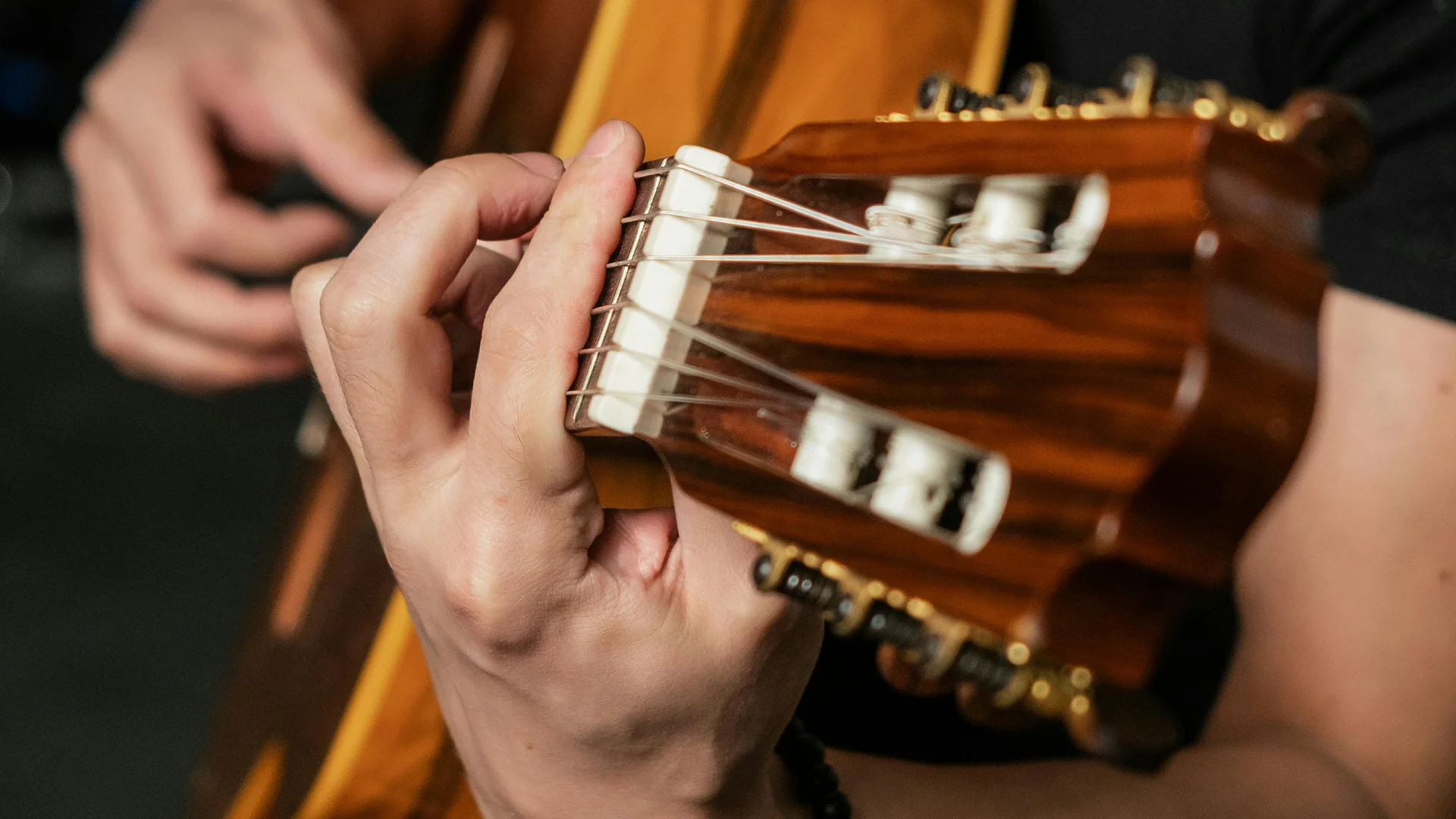
Not all classical guitars are created equal. Understanding the different types available helps you narrow down exactly what kind of instrument will serve your musical needs best. Let's explore the main variations you'll encounter in today's market.
Traditional Classical vs. Flamenco Guitars
Traditional classical guitars emphasize rich, balanced tone with substantial sustain and resonance. They typically feature slightly higher action, allowing strings to vibrate freely without buzzing. The bodies are constructed with sturdier builds that emphasize projection and tonal development.
Flamenco guitars take a different approach altogether. They're designed for a more percussive playing style with quick response and minimal sustain. The attack and decay of notes happens more rapidly, creating that distinctive flamenco snap and crispness.
For a more in-depth look at how classical guitars and flamenco guitars differ, click here.
Nylon-String Hybrid & Crossover Guitars
Hybrid and crossover guitars represent a modern evolution that blends classical guitar elements with features from other guitar traditions. These instruments are designed to make nylon-string playing more accessible to musicians coming from steel-string or electric backgrounds.
Crossover guitars typically feature narrower necks (often 48mm at the nut compared to the traditional 52mm), thinner neck profiles, and radiused fingerboards that feel more familiar to non-classical players. Many include cutaways for upper fret access and onboard electronics for amplified performance. The overall design philosophy prioritizes comfort and versatility over strict adherence to classical traditions.
These instruments excel in contemporary contexts, world music, and fusion styles where traditional classical guitar techniques blend with approaches from other genres. For players with diverse musical interests or those transitioning from other guitar styles, crossover models can offer an inviting entry point to the nylon-string world without requiring immediate adaptation to the wider neck of traditional instruments.
Electrified Classical Guitars
As classical guitarists increasingly perform in amplified settings, electrified classical guitars have evolved to meet these modern demands. Unlike simple acoustic guitars with pickups added, these instruments are designed from the ground up to sound great both acoustically and amplified.
The best electrified classical guitars maintain traditional construction elements that preserve authentic nylon-string tone while incorporating carefully designed pickup and preamp systems. These pickups can include undersaddle piezo elements, internal microphones, or combinations of both to capture the full tonal palette of the instrument.
Recommended Classical Guitars
Now that we've covered the important factors to consider when choosing a classical guitar, let's look at some specific models that stand out. We've selected exceptional instruments across various categories to help you find the perfect match for your needs, playing style, and budget. Each recommendation balances quality, playability, and value while excelling in its particular category.
These guitars represent some of the finest options currently available, from accessible student models to professional-grade instruments.
Cordoba C5
4.5 (4)









Average Price: $371
Standard/Professional
$100
$601+
Budget
Standard
High-end
- Rich, warm sound due to solid cedar top
- Great value for its price range
- Beautiful craftsmanship and finish
- Easy playability, suitable for all skill levels
- See 6 more
- Potential string breakage issues
- Some reports of sharp fret ends causing minor cuts
- Cedar top can be prone to dings and scratches
- Slight intonation inaccuracies around the 12th fret
Musicians the world over have been raving about all of Cordoba’s recent line up. From ukuleles to classical guitars, by all accounts Cordoba has really been knocking it out of the park. One of their more notable models, the C5 is widely regarded as one of the best mid-range classical guitars on the market.
The Cordoba C5 features a solid cedar top, and it’s a great example of the warm and mellow voicing that cedar topped guitars are known for. While the back and sides of the instrument are laminated mahogany, the guitar still compares very well to instruments made from solid wood. There’s a stigma against guitars made with laminate as opposed to solid wood, but it’s a bit overblown. A good laminate guitar can perform perfectly well in most settings, and even though it will never sound quite as good as a guitar made exclusively from solid wood laminate construction won’t necessarily limit you in any noticeable way.
The Cordoba C5 comes with a nut width of 52mm and a scale length of 650mm, which is sure to impress classical guitar traditionalists. As an added bonus, the C5 features a natural high gloss PU and a hand carved headstock. The guitar ships strung with Savarez Cristal Corum high tension strings,
The Cordoba C5 tone is generally considered to be incredibly well balanced for its price range. While the cedar top definitely skews the sound more towards warm and mellow sounds, it’s not to the point where the guitar sounds muddy.
Make no mistake, the Cordoba C5 is definitely a proper instrument. All too often companies churn out cheap classical guitars because they appeal to beginners since they’re physically easier to play. That’s definitely not the case with the Cordoba. While it may not be a custom made instrument, it’s definitely capable of carrying you through a performance or recording session. It’s also a great option for the guitar player who’s already competent on a different type of guitar (whether that’s acoustic or electric) and is looking to add some classical stylings to their repertoire.
As far as quality is concerned, the Cordoba C5 is generally regarded to perform very well. When you look at the quality of any model of instrument you have to take a wide variety of reviews into account. Of course there’s always going to be anecdotes where a guitar came from the factory or retailer with issues, but with the scale these companies work on that really shouldn’t surprise anyone.
The main appeal of the Cordoba C5 is its dedication to traditional construction and materials. Or at least as close of an approximation as can be made at an entry to mid-level price point. A lot of guitars at this price point are made more like your standard acoustic guitar, though they are generally braced a bit lighter and made of thinner wood on the top, back and sides.
However, a classical guitar is not just a lightly built steel string acoustic. There’s actually a lot of different factors that go into getting a genuine classical sound. The bracing pattern needs to be changed to compensate for the different tone of nylon strings, the thickness of the body needs to be carefully considered in order to maintain an appropriate volume without becoming too bassy, and the action needs to be set a bit higher than a standard steel string.
The Cordoba C5 nails every aspect of this. It is a classical guitar through and through, and because of that it’s head and shoulders above the vast majority of classical guitars that are on the market today. The build quality is superb, and the guitar definitely nails the trademark classical sound.
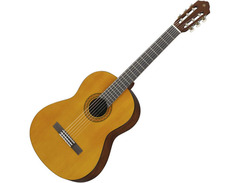
Yamaha C40
4.0 (72)
The Student's Reliable Companion


Average Price: $162
Standard/Professional
$100
$601+
Budget
Standard
High-end
- Affordable yet high-quality sound and projection for an entry-level guitar.
- Durable and aesthetically pleasing build with a smooth finish.
- Rosewood fretboard praised for feel and playability.
- Suitable for both beginners and experienced players seeking a budget option.
- See 6 more
- Some reports of fret buzz, particularly on certain frets.
- Slight imperfections in craftsmanship, such as uneven fret edges.
- Higher action than some more expensive models.
- Laminated top, not solid wood, affecting tone depth.
- See 3 more
Construction and Materials
The Yamaha C40 features a spruce top that delivers clear projection and articulation, paired with meranti back and sides for durability and warmth. The nato neck provides good stability through changing conditions, while the 19-fret rosewood fingerboard offers a smooth playing surface for beginners. The internal bracing follows classical traditions scaled appropriately for this instrument, allowing the top to vibrate effectively despite using more affordable woods.
Sound Characteristics
The C40II produces a balanced voice with controlled bass response and clear trebles without harshness. This tonal balance helps students develop proper technique by clearly revealing both strengths and weaknesses in their playing. While it lacks the complex overtones of premium instruments, the fundamental tone serves classical repertoire well and responds nicely to changes in right-hand position.
Playability and Comfort
With a traditional 52mm nut width and moderate action, the C40II introduces students to classical specifications while remaining accessible. The body dimensions balance sound production with physical comfort, making it suitable for players of various ages and sizes. One standout feature is its consistent intonation across the fingerboard, crucial for developing a good musical ear during formative learning stages.
Ideal For
Perfect for beginners, students, and as a second instrument for more advanced players who need a reliable practice guitar for travel. Teachers consistently recommend it knowing the instrument supports rather than hinders student progress. The C40 delivers everything a developing guitarist needs without unnecessary frills or compromising on essential quality.
See how artists use this





La Patrie Concert CW QI

Far from a one trick pony, the La Patrie Concert CW QI is an innovative and versatile acoustic electric nylon string guitar produced by the Godin instrument conglomerate. The company has produced just about every type of guitar imaginable at one point or another, and their name has quickly become synonymous with supreme quality at a very attractive price.
The Concert CW QI is no exception to this trend, and it’s no surprise that it’s incredibly highly regarded by musicians the world over. It has a host of great features, and you would be hard pressed to find its match tonally at this price point. Features
The La Patrie Concert CW QI is a bit of a departure form the standard classical guitar. The guitar features a cut away (exactly what it sounds like, a cutaway is a curve where the body meets the neck that allows to easier access to the upper frets of an instrument), which isn’t commonly found on mid to upper level nylon string guitars. Cutaways have a bit of a stigma associated with them because some people believe that having a cutaway on an instrument will negatively effect the tone. This makes sense in theory, but it’s debatable as to how much of a difference it actually makes in practice. So long as the guitar was built well in the first place and uses resonant tonewoods it will still sound perfectly fine. The La Patrie Concert CW QI is also constructed with solid tonewoods, which is pretty remarkable considering it’s price point. The top is solid pressure tested cedar, and the back and sides are solid mahogany. The mahogany and cedar pairing may make the guitar sound a bit dark, so it may be a good idea to look at a brighter sounding nylon string to compensate for this. However, your experience will vary based on your playing style.
Though the guitar may not utilize a standard classical body shape, the nut width and scale length are standard for a nylon string guitar. The Concert CW QI also features an under the saddle active transducer pickup, which will make it a perfect fit for the gigging guitarist on a modest budget.
The Concert CW QI comes with a high-gloss custom polished finish, as well as a tusq nut and saddle manufactured by Graphtech. For those of you who may not be aware, tusq is a synthetic material that is more structurally consistent than bone or ivory. It’s a matter of debate as to whether or not this leads to a better sound, but tusq is definitely not objectively worse than any other saddle or nut material.
The La Patrie Concert CW QI could be considered the gigging musician’s nylon string guitar. It’s by no means cheap, but it’s not so expensive that it’d be a disastrous loss for the average musician. The guitar may be voiced a tad dark, but this can definitely be compensated for with the right strings, technique, or equalization if you happen to plugging in for a recording or live performance.
The Concert CW QI is a great example of the warm and mellow tones that you can only get with a cedar topped nylon string guitar. It’s not quite as lively as a spruce topped nylon string, or even a cedar topped guitar with rosewood back and sides, but it’s still perfectly capable of sounding extraordinary in the hands of a good musician.
As far as build quality is concerned, the Concert CW QI performs just as well as any other guitar in its price range. There’s no widespread reports of the guitar being overly fragile (though in case you weren’t aware because nylon string guitars are built thinner than their steel string counterparts they are more delicate as a general rule), and there’s nothing in the specifications of the model that suggest it would be more fragile to changes in temperature or humidity than any other guitar would be.
The La Patrie Concert CW QI is a great option for the musician who’s seeking a mellow and warm nylon string sound and doesn’t necessarily care about getting an instrument with a less traditional sound and appearance. It also may find a fit with classical guitarists who find prefer to plug in to an acoustic amp or P.A. system when they preform live, as the electronics on the Concert CW QI are perfectly capable of producing a great approximation of an acoustic tone.
The guitar may not be a perfect fit for those who are looking for in instrument strictly for classical, but the La Patrie is definitely a great fit for those of you who dabble in the various genres associated with nylon string guitars.
Manuel Rodriguez C11 Caballero 11
4.5 (2)

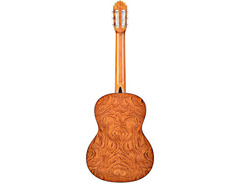
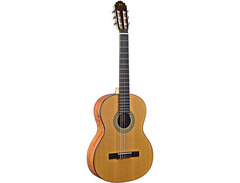
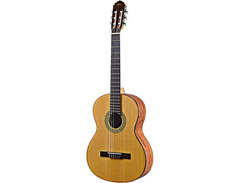
Since the late 1950s the Rodriguez family has been turning out some of most desirable classical guitars in the world, and if you’re on a budget the Manuel Rodriguez Caballero 11 is no exception. The guitar has an intricacy and beauty that is almost impossible to find from any other instrument at this price level.
If you’ve been considering whether or not to purchase a Manuel Rodriguez Caballero 11, the following sections will give you all the information to decide if this guitar will be a good fit for your needs and your budget, and it will detail all the specifications, sound quality, and features that go into making this guitar what it is. Also, this review is only on the cedar topped version of this guitar, as there is also a model made with spruce.
Like many guitars in this price range, the Manuel Rodriguez Caballero 11 isn’t solely constructed form solid woods. Though, the company definitely does take a careful approach when selecting the wood for the soundboard (or top as it’s generally referred to) and the back and sides. In order to be accepted into the facility, the wood spends two years drying from the time it was cut down before it’s even turned into lumber. Next, the cuts of wood that will eventually go on to become a guitar are selected based on the grain pattern. Lastly, before the wood is transformed into an instrument it’s stored inside a humidity controlled portion of the factory.
The top of the guitar is Canadian cedar, which is highly sought ofter due to it’s uniquely warm and complex tone. The back and sides are bubinga, Bubinga is a tonewood that falls somewhere between mahogany and rosewood, with some of the warmth that’s generally found in mahogany and some of the clarity that’s generally expected from rosewood.
Structurally, the guitar is pretty standard for what you’d expect from a classical guitar. The nut width is 52mm, and the scale length is 650mm. From the bracing to the headstock, this guitar is a dream for those of you who admire a traditional feel from your classical guitars.
For those of you who plan on performing live, keep in mind that this guitar does not come standard with electronics of any kind. Classical guitarists generally prefer to use a mic regardless, but it’s definitely something that you should be aware of. There are classical guitars in the price range that do come with electronics, but they also have to sacrifice some tone or durability in order to do so.
If you’re against miking, there are options available for great sounding pickups that can be either temporarily or permanently installed. Expect to spend around $300 if you decide to go this route, as that’s a rough estimate of what you’re final cost will end up being once you find a good quality pickups and a competent luthier to install it.
The sound of the Manuel Rodriguez Caballero can best be described as surprisingly complex for it’s price point. Of course the guitar embodies the tonal traits that one would expect from a cedar topped classical guitar, it’s warm (focused on low and mid-range frequencies, with treble frequencies that are present but not overpowering), but it also has a richness to the notes that one wouldn’t expect from a sub-$500 instrument. While the type of wood used in the guitar definitely helps with this, you can really only get a guitar to sound like this by proper building techniques. Just because a guitar uses the most expensive tonewoods a luthier could get his/her hands on does not mean that it will be a good sounding instrument, it’s all about how well it was constructed to begin with.
As far as quality is concerned, the Caballero 11 performs very well in every respect. There’s no issues with this guitar that are commonly reported, and there’s nothing to suggest that there’s a flaw inherent to the model that will one day impact it’s playability or sound. One of the high points of this guitar is the care that went into designing its appearance. The natural finish is gorgeous, and the Caballero 11 even utilizes Indian rosewood for its inlay.
The Manuel Rodriguez Caballero 11 is the perfect entry into the classical guitar world. The guitar is built wonderfully, and though it’s a bit more expensive than some beginner instruments its quality more than justifies its cost. It’s adherence to classical guitar convention also ensures that it will be a perfect fit for the musician looking to capture a trademark classical guitar tone.
Simply put, the Manual Rodriguez is an instrument that any guitar player would be proud to have. It’s got a great tone, and it has the potential to be a lifelong companion for the musician who’s willing to give it the care and attention that it deserves.
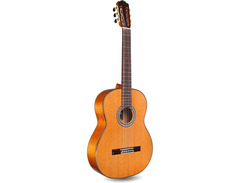
Cordoba C9 - Canadian Cedar Top
5.0 (1)
The Working Musician's Premium Choice

Average Price: $1,054
High-end/Boutique
$100
$601+
Budget
Standard
High-end
- Warm, round sound with powerful bass and clear trebles
- Beautiful, flawless craftsmanship with a glass-like shine
- Full-bodied, chorus-like sound enhances classical pieces
- Excellent value for a premium instrument within a middle-range price
- See 6 more
- Some guitars may have fret buzz issues
- Neck weight can cause balance issues for some players
- Occasional need for retuning, especially in varying climates
- Initial strings may require replacement for optimal sound
Construction and Materials
The Cordoba C9 features a solid Canadian cedar top that offers immediate warmth and responsiveness, complemented by solid mahogany back and sides for focused midrange and balanced projection. The hand-carved mahogany neck with traditional Spanish heel construction enhances structural stability and sustain. The Indian rosewood fingerboard and bridge, along with bone nut and saddle, elevate tonal transfer and allow subtle playing nuances to translate into sound.
Sound Characteristics
This guitar produces a rich voice with distinct character across all registers – defined bass notes, singing trebles, and focused midrange that keeps counterpoint lines clear. Its impressive dynamic range handles everything from delicate pianissimo to authoritative fortissimo without tonal degradation. The balance between fundamental notes and overtones creates a mature sound quality rarely found in this price category.
Playability and Comfort
With classical dimensions (650mm scale, 52mm nut) and a comfortable C-shaped neck profile, the C9 accommodates both traditional and contemporary techniques. The high-quality tuning machines maintain stable tuning through environmental changes and extended playing. The neck profile reduces hand fatigue during long sessions, allowing players to focus on expression rather than fighting the instrument.
Ideal For
The C9 excels as a performance instrument for advancing students, teachers, and working musicians who need reliable, musical response across various playing situations. It serves equally well as a practice instrument and a stage-worthy performance tool. For players transitioning from student models to their first serious guitar, the C9 represents an investment that will continue to satisfy as skills develop.
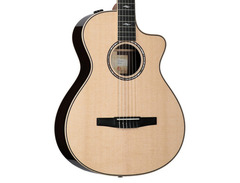
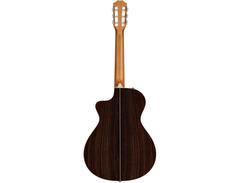
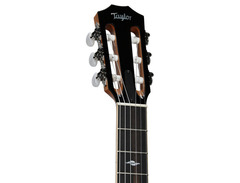
Taylor 812ce-N Acoustic-Electric Guitar
The Premium Performance Instrument

Average Price: $3,909
High-end/Boutique
$200
$1001+
Budget
Standard
High-end
- Excellent playability with a comfortable neck, suitable for acoustic or electric players
- Balanced, powerful sound with a rich lower end and clear mid-range
- High-quality construction with beautiful striations in the ebony fingerboard
- Versatile for various genres, from swing to jazz, with easy tonal adjustments
- See 5 more
- Some issues with fingerboard finish, appearing blotchy or stained
- May not suit players with larger hands due to neck size
Construction and Materials
The Taylor 812ce-N features a solid Sitka spruce top that delivers exceptional clarity and dynamic range, paired with solid Indian rosewood back and sides that add depth and richness to the tone. The Grand Concert body shape provides excellent balance between intimate expression and stage-worthy projection. The mahogany neck with ebony fingerboard offers smooth playability and precise intonation across all positions.
The Venetian cutaway elegantly provides access to upper frets without compromising the instrument's visual appeal or tonal integrity. The combination of premium tonewoods and Taylor's precision manufacturing creates an instrument that feels remarkably consistent and reliable, regardless of playing environment. The impeccable binding, inlays, and finish reflect the attention to detail expected at this level.
Sound Characteristics
The 812ce-N produces a voice that respects classical guitar traditions while introducing tonal characteristics unique to Taylor's building philosophy. The bass response delivers definition and articulation rather than overwhelming boom, while the treble strings provide sweet sustain with remarkable clarity. The midrange presence helps melodic lines stand out in both solo and ensemble settings, making this an exceptionally versatile instrument.
One of this model's strengths is its balanced voice across all registers, ensuring consistent volume and character whether playing single-note melodies or complex chord voicings. The spruce top's natural compression helps notes blend harmoniously while still allowing individual voices to speak clearly in contrapuntal passages.
Playability and Comfort
Taylor's neck design offers a slightly flatter profile than traditional classical guitars, making it particularly welcoming for players who switch between different guitar types. The string spacing strikes a thoughtful balance between classical traditions and contemporary comfort. The precise setup and consistently low action eliminate the struggle often associated with classical guitars, allowing players to focus entirely on musical expression.
The built-in ES-N electronics system captures the guitar's natural acoustic voice faithfully when amplified, with controls discreetly positioned to maintain the instrument's elegant appearance. Weight-relieved bracing patterns keep the guitar remarkably responsive while reducing player fatigue during long performances.
Ideal For
The Taylor 812ce-N excels as a performance instrument for professional players working across multiple musical contexts. It particularly shines for recording artists who need reliable, consistent tone that requires minimal processing to sound exceptional in studio environments. The instrument bridges classical and contemporary worlds effectively, making it ideal for players whose repertoire spans traditional classical pieces alongside modern compositions, jazz arrangements, or world music styles.
See how artists use this






washburn eact42s
The Accessibility Champion

Average Price: $567
Standard/Professional
$100
$601+
Budget
Standard
High-end
- Excellent action and playability straight out of the box
- Provides good volume unplugged, suitable for practice
- Compact size ideal for fingerstyle playing
- Diverse equalizer for both punchy and mellow tones
- See 6 more
- Fret ends may require adjustment or filing
- Some feel it is overpriced for its sound quality
Construction and Materials
The Washburn eact42s combines a solid spruce top with mahogany back and sides, creating a balanced tonal foundation with excellent projection. The quartersawn, X-scalloped spruce bracing enhances resonance while maintaining structural integrity, allowing the top to vibrate more freely than conventional bracing patterns. The mahogany neck provides stability and comfortable hand feel, complemented by a rosewood fingerboard that offers smooth playability across all positions.
The Florentine cutaway design provides exceptional access to upper frets without compromising the instrument's structural integrity or bass response. The gloss finish is applied with care to enhance rather than inhibit the tonewoods' natural resonance, striking an ideal balance between protection and tonal transparency. Thoughtful construction details like reinforced neck joints and precisely cut bone nuts demonstrate Washburn's commitment to durability.
Sound Characteristics
This guitar produces a voice that balances traditional classical warmth with modern clarity and articulation. Bass notes remain defined even during complex passages, while treble strings offer sweet sustain without harshness. The midrange response particularly stands out, with a focused quality that helps melodic lines project clearly in both solo and accompaniment contexts.
One of the eact42s's notable strengths is its even response across all registers and positions, eliminating the "dead spots" that plague many instruments in this category. The solid spruce top contributes to excellent dynamic range, responding sensitively to subtle changes in right-hand technique and allowing for expressive tonal shading throughout the guitar's voice.
Playability and Comfort
Washburn has crafted the eact42s with player comfort as a primary consideration. The neck profile feels inviting for players with diverse hand sizes and technical backgrounds, while the action comes set to strike an ideal balance between playability and tonal clarity. The slightly radiused fingerboard reduces hand fatigue during extended playing sessions, making this an excellent choice for players who struggle with traditional flat classical fingerboards.
The built-in pickup system with four-band EQ delivers impressive amplified tone while remaining unobtrusive during acoustic play. The onboard tuner adds practical functionality for performers without compromising the instrument's classical aesthetic. Weight distribution and body contours have been carefully designed to minimize player fatigue during long sessions.
Ideal For
The Washburn eact42s serves perfectly as a main instrument for players who prioritize comfort and playability alongside quality tone. It particularly excels for players transitioning from other guitar styles to nylon strings, those with hand issues that make traditional classical guitars challenging, or performers requiring amplified capability. For teachers and institutions seeking instruments that accommodate diverse student needs while maintaining professional sound quality, this model offers exceptional value and versatility.
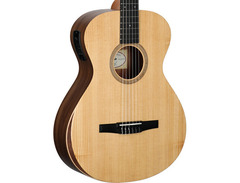
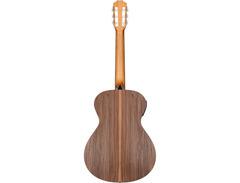
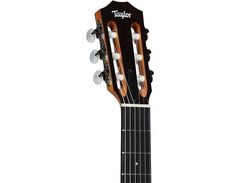
Taylor Academy 12e-N
The Crossover Virtuoso

Average Price: $776
High-end/Boutique
$100
$601+
Budget
Standard
High-end
- Excellent playability, typical of Taylor guitars
- Built-in tuner is convenient and accurate
- Armrest cutaway significantly enhances comfort
- Lightweight design compared to similar models
- See 6 more
- Pricier for an entry-level guitar
- Materials used aren’t high-end, which keeps costs down
- Initial string setup may require adjustment
Construction and Materials
The Taylor Academy 12e-N artfully balances tradition and innovation with its solid spruce top and layered sapele back and sides. This wood combination delivers excellent projection with balanced warmth, creating a voice that honors classical guitar tradition while introducing contemporary character. The scaled-down Grand Concert body shape makes the transition to nylon strings more comfortable for players accustomed to steel-string acoustics while maintaining excellent tonal properties.
The patented Taylor neck design offers remarkable stability and comfort, featuring a slightly narrower profile than traditional classical guitars. The ebony fingerboard provides smooth playability and precise intonation across all positions, supporting both traditional classical techniques and approaches borrowed from other styles. The cutaway body design provides easy access to upper frets without compromising the instrument's foundational tone.
Sound Characteristics
This guitar produces a voice that respectfully bridges classical and contemporary worlds. Bass notes offer definition and clarity rather than overwhelming resonance, while treble strings deliver sweet articulation with excellent note separation. The midrange presence helps melodic lines project clearly in mixed instrument settings, making this an exceptionally versatile guitar for diverse musical contexts.
One of the 12e-N's strengths is its balanced voice across all registers, ensuring consistent volume and character whether playing fingerstyle patterns, single-note melodies, or chord progressions. The solid spruce top contributes excellent dynamic range, responding faithfully to both delicate touches and more assertive playing approaches.
Playability and Comfort
Taylor has crafted the Academy 12e-N to welcome players from diverse backgrounds. The neck profile and string spacing make transitioning between guitar types more intuitive, while the slightly radiused fingerboard reduces hand fatigue during extended playing. The carefully designed armrest bevel on the lower bout eliminates the sharp edge that can cause discomfort during long sessions, demonstrating Taylor's attention to player experience.
The onboard ES-N electronics system delivers remarkably natural amplified tone with simple, intuitive controls that don't distract from the playing experience. The lightweight body design and balanced weight distribution minimize player fatigue during long performances, while the slightly reduced body depth makes the instrument feel immediately familiar to steel-string players.
Ideal For
The Taylor Academy 12e-N serves perfectly as a primary instrument for players exploring nylon-string sounds without wanting to fully commit to traditional classical technique or body dimensions. It particularly excels for steel-string guitarists incorporating nylon tones into their musical vocabulary, singer-songwriters seeking warmer accompaniment options, or performing musicians who need amplified nylon-string capability. For versatile players working across multiple genres who desire one instrument that can authentically capture both traditional and contemporary nylon-string voices, this model offers remarkable flexibility and value.
See how artists use this





.jpg)
Godin Multiac Grand Concert SA


Average Price: $2,312
High-end/Boutique
$100
$601+
Budget
Standard
High-end
- MIDI access allows for versatile recording and performance capabilities
- Feels and plays like a true classical guitar
- Zero feedback when amplified, ideal for live performances
- Solid construction with high-quality materials like mahogany and cedar
- See 6 more
- Heavier than typical classical guitars, may be tiring for some players
- High action and wider neck may hinder fast solo playing
- Not ideal for purely acoustic performance, lacks unplugged volume
- Requires external gear like Roland GR-55 for full MIDI functionality
- See 3 more
Boasting a slick look and some very impressive specs, the Godin Multiac Concert has quickly become one of the go to instruments for musicians who require an accurate acoustic sound without the feedback issues that plague most acoustic instruments.
Though the price point may scare off some, but those of you without pockets deep enough to afford it will not be disappointed. It’s a guitar that’s just as home busting out some swinging fusion jazz licks as it is playing the fast and complicated passages that unique to classical music.
The Godin Multiac Concert SA is a professional quality instrument, though we wouldn’t really describe it as a true acoustic guitar. It’s aimed at musicians who focus on synth sounds, fusion, jazz, or acoustic voiced live performance. You wouldn’t be too far off in considering it the nylon version of Taylor’s T5.
That’s not to say that the Concert SA has no acoustic value. In fact, it actually does have a solid cedar top. The guitar also features a mahogany neck, a Richlite fretboard, and a chambered mahogany body. While it may be a bit quiet, the guitar well also sound perfectly fine when used unplugged for practice. Just keep in mind that the acoustic properties of the instrument are meant to enhance the sound of the electronics. If you go in looking for a guitar that will hold up well in an acoustic ensemble or jam, or a secret weapon for your recording studio you may want to consider looking elsewhere.
The Godin Multiac Grand Concert SA is meant to feel as much like a classical guitar as possible as far as the playing surfaces are concerned (body, neck angle, and neck dimensions). The guitar features a relatively traditional nut width. It may be a bit of the standard 52mm, but it’s such a small difference that it’s not going to be much of a transition for a musician who is accustomed to playing a classical guitar. The scale length of the guitar is 650mm, which is standard for a classical guitar. For finish options available for this guitar, the Godin Multiac Concert SA comes in either a natural high-gloss finish or a white high-gloss finish.
For some musicians, the main appeal of the Multiac Concert SA may be the custom RMC electronics, which allows you to directly control a variety of synths with your guitar. It’s not really all that common of a feature, and it adds oodles of versatility to a guitar that’s already well suited to a ton of different genres.
As far as sound is concerned, the Godin Multiac Concert SA is great for live performance. Though the guitar may not look like what you’d generally imagine a classical guitar to appear like, when plugged into the right equipment it’s capable of producing a sound that would stun even the most staunch classical guitar traditionalists.
That’s not to say that the Concert SA is strictly a classical guitar of course. As mentioned above, this instrument can handle just about any genre where a nylon string guitar would generally be used. That includes some forms of jazz, flamenco, and just about an type of finger style arrangement (excluding the blues of course).
There’s not much to say about the RMC electronics except that they’re perfectly functional in every regard. They’re obviously made out of high-quality materials, and as a general rule should be fitted with the same proficiency you would expect any other Godin instrument to have. So long as you’re not overly rough you’re most likely never going to run into a problem with this aspect of the guitar.
Quality wise, the Godin Multiac Concert SA hasn’t received a word negative attention from the wider public. Of course there will always be the unlucky few who manage to pick up a lemon, but as far as the overall quality of the model is concerned there’s just not really any complaints to be found. The fit and finish are both handled with the care and attention to detail that one would expect at this price point, and the tuners perform their role adequately as well.
The guitar is capable of filling an absolutely staggering amount of different roles, and when you consider the insrument’s sound as well as the quality of the materials used in its construction the price really is perfectly reasonable.; even if it may be a bit of a stretch for those of you who are on a budget. As an added bonus, it also looks pretty cool.


Setting Up and Caring for Your Classical Guitar
Proper setup and maintenance directly impact your playing experience and the longevity of your instrument. A few key practices will keep your guitar sounding and playing its best.
String Selection and Changing
Classical strings come in different tensions, affecting both tone and playability. Medium tension strings offer beginners a good balance between ease of playing and sound quality. Change strings one at a time to maintain neck stability, and always stretch new strings gently to help them stabilize tuning more quickly.
Humidity Control and Storage
Classical guitars are particularly sensitive to environmental conditions. Keep humidity between 45-55% to prevent structural issues like cracks or warping. In dry climates, use a guitar humidifier inside the case or a room humidifier to protect your instrument. Avoid exposing your guitar to sudden temperature changes, and store it in its case when not in use, particularly in areas with significant seasonal variations.
Cleaning and Maintenance
Wipe down strings and the fingerboard with a clean cloth after playing. When changing strings, take the opportunity to condition rosewood or ebony fingerboards that can dry out over time. For the body, use only cleaners specifically designed for guitar finishes to avoid damage.
Regularly check for buzzing strings, tuning stability issues, or structural concerns like seam separations.
FAQ

Do all classical guitars sound the same?
Not at all. Cedar tops sound warm and responsive, while spruce sounds brighter with more projection. Back and side woods further shape the tone – rosewood adds complexity, mahogany focuses the midrange. Each guitar has its unique voice that matches differently with each player's touch.
Is it worth paying more for an expensive classical guitar?
Higher prices often mean better materials and construction, but not always better for you. Some affordable guitars from lesser-known makers outperform pricier branded instruments. The most important factor is how well it suits your playing style and musical needs.
Are cutaways necessary on classical guitars?
Not for traditional repertoire, which rarely goes beyond the 12th fret. Consider a cutaway only if you play contemporary styles or frequently need higher positions. Traditional body shapes may better serve classical music's tonal requirements.
Can classical guitars be effectively amplified?
Yes, through built-in electronics or external microphones. Purpose-built electro-classical guitars deliver natural amplified sound. Microphone systems offer excellent results in quieter venues. Many professionals use combination systems for the best balance.
Will my playing improve if I upgrade my guitar?
Better instruments offer improved intonation, tone, and playability, making practice more enjoyable. However, they won't replace good technique. Upgrade when your current guitar limits your expression or when you can clearly hear the differences in advanced instruments.
Conclusion

Finding the perfect classical guitar is a journey that balances craftsmanship, sound, and value. The right instrument inspires practice and elevates your music beyond mere notes on a page.
The best guitar isn't the most expensive – it's the one that feels natural in your hands and produces a voice that moves you. Trust your ears and hands over specifications and marketing claims.
Take time to try instruments whenever possible. Notice how each responds to your touch and whether its voice suits your musical style. From the student-friendly Yamaha C40II to the professional Taylor 812ce-N Grand Concert, the Cordoba C9 to the playable Washburn eact42s, the authentic Alhambra 2F to the versatile Taylor Academy 12e-N – today's market offers exceptional options at every level.
A well-chosen classical guitar grows with you as your skills develop and your musical voice evolves.
Top Ranked Classical & Nylon-String Guitars on Equipboard


About the authors
Mason is a freelance music gear writer that contributes to Equipboard, Reverb, TuneCore, Music Aficionado, and more. He plays the guitar and mandolin and resides in Wyoming. Read more
S. Jino is an accomplished multi-instrumentalist and music producer based in Kolkata, India, distinguished by his self-taught mastery and unique blend of technical acumen and musical performance. His extensive experience was forged through hands-on dedication, starting with the full restoration of a broken guitar. Jino's capabilities span keyboards, pedals, and advanced digital production, reflecting a comprehensive skill set developed independently. As a significant contributor to the music scene, Jino regularly performs with worship bands and college ensembles. He has also established himself as a reliable and authoritative professional in freelance mixing, mastering, and original music creation. Inspired by the innovative sounds of Brian May and David Gilmour, and influenced by Kolkata's vibrant metal community, Jino is committed to the intricate art of vintage gear restoration and the continuous exploration of music and technology fusion. His current professional setup, featuring a meticulously restored nameless guitar, a Fender Player Strat, and a Boss Katana 50. Read more
New in Classical & Nylon-String Guitars

$363.00 - $449.99
in Classical & Nylon-String Guitars Rank


$1,199.00 - $1,199.99
in Classical & Nylon-String Guitars Rank





.webp)





.webp)