Guitar Bridges Decoded: Your Complete Guide to Finding the Perfect Match

By Gear Experts

By Gear Experts
Table of Contents

Equipboard
Equipboard is the world's largest community of artists and their gear. Read our review process.
We are reader-supported. When you buy through links on our site, we may earn an affiliate commission. Learn more.
Imagine spending countless hours researching the perfect pickups, carefully considering different tonewoods, and meticulously selecting an amplifier that captures your sound. Yet there's one component that often gets overlooked, quietly doing the heavy lifting behind every note you play. Your guitar's bridge isn't just a piece of hardware holding your strings in place. It's the crucial link between your strings and your guitar's body, fundamentally shaping your tone, sustain, tuning stability, and overall playing experience.
Most guitarists can tell you about their favorite pickup brand or preferred tube amp, but ask them about their bridge and you might get a blank stare. This oversight is a missed opportunity because the bridge you choose can make the difference between a guitar that sings with endless sustain and one that feels lifeless under your fingers.
The Basics: What is a Guitar Bridge?

Understanding guitar bridges starts with grasping their fundamental purpose. At its core, a guitar bridge serves as the anchor point for your strings while transferring their vibrations directly into your guitar's body. Think of it as an important link in a chain that starts with your pick striking the strings and ends with sound waves emanating from your guitar's wood.
The bridge accomplishes this through several key components working together. The saddles hold each individual string and allow for precise adjustments to intonation and string height. The baseplate provides the mounting surface that connects to your guitar's body, creating the crucial vibration transfer pathway. On tremolo-equipped guitars, you'll also find a tremolo arm (often called a whammy bar) that allows you to manipulate pitch by changing string tension.
The Great Divide: Fixed vs. Tremolo Bridges
Every guitar bridge falls into one of two fundamental categories, and this distinction shapes everything about how your guitar performs. Fixed bridges, also known as hardtails, are mounted solidly to the guitar body with no moving parts. They're designed to stay put, providing maximum string-to-body contact and unwavering tuning stability.
Tremolo bridges, on the other hand, are engineered to move. They pivot or float, allowing you to bend notes up or down by manipulating the tremolo arm. This movement comes with trade-offs, but it opens up a world of expressive possibilities that simply aren't available with fixed bridges.
Fixed Bridges: The Foundation of Sustain
Fixed bridges represent the purist approach to guitar design. Without any moving parts to absorb energy, every vibration from your strings transfers directly into the guitar body, creating the kind of resonant, singing sustain that has powered countless classic recordings. These bridges prioritize stability and tone transfer above all else, making them the go-to choice for players who value consistency and maximum acoustic coupling.
The beauty of fixed bridges lies in their simplicity and effectiveness. When your strings are anchored to a solid, immovable platform, you get the most direct energy transfer possible. This translates to guitars that respond immediately to your touch, hold their tuning remarkably well, and deliver the kind of authoritative attack that cuts through any mix.
Hardtail Bridges
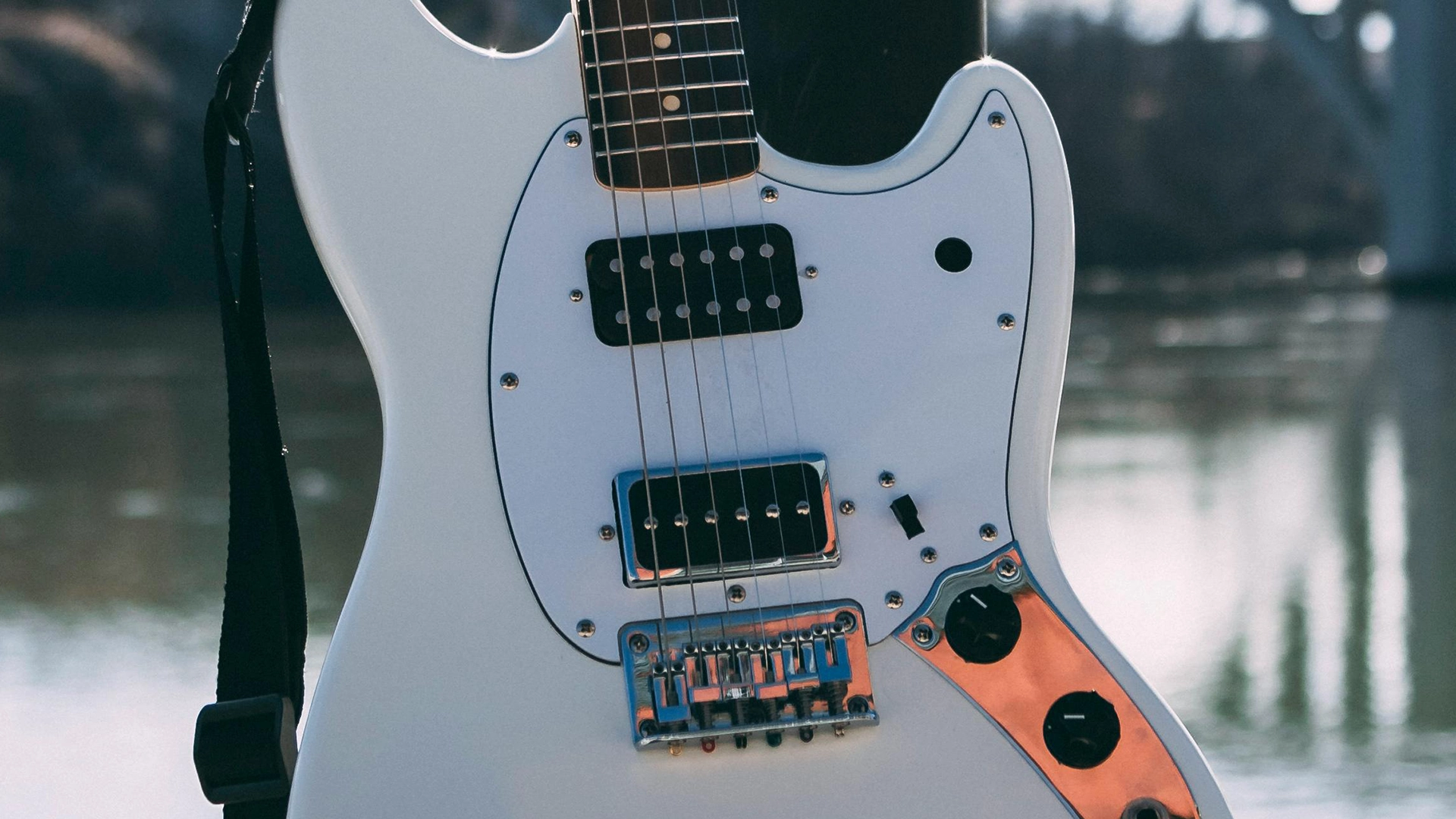
Hardtail bridges are the most straightforward approach to string anchoring, featuring a non-moving bridge mounted directly to the guitar's body. This design philosophy eliminates any variables that could interfere with pure string-to-body energy transfer, making hardtails the choice for players who prioritize sustain and tuning stability above all else.
The term "hardtail" has become somewhat synonymous with reliability in guitar circles. When you see a hardtail-equipped guitar, you know you're looking at an instrument designed for consistency and performance. These bridges don't require complex setup procedures or ongoing maintenance beyond basic string changes and occasional saddle adjustments.
Tune-o-Matic Bridges
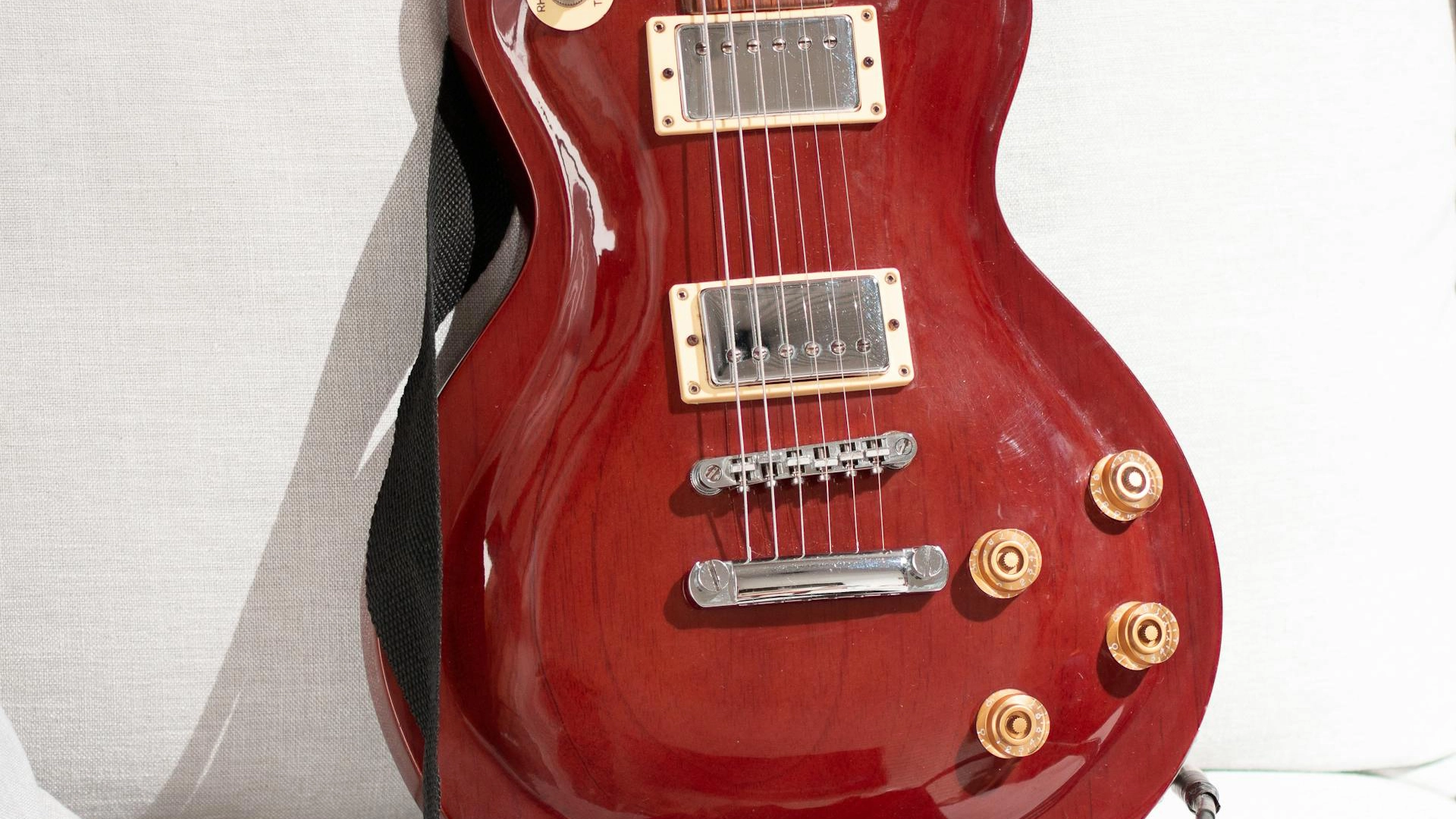
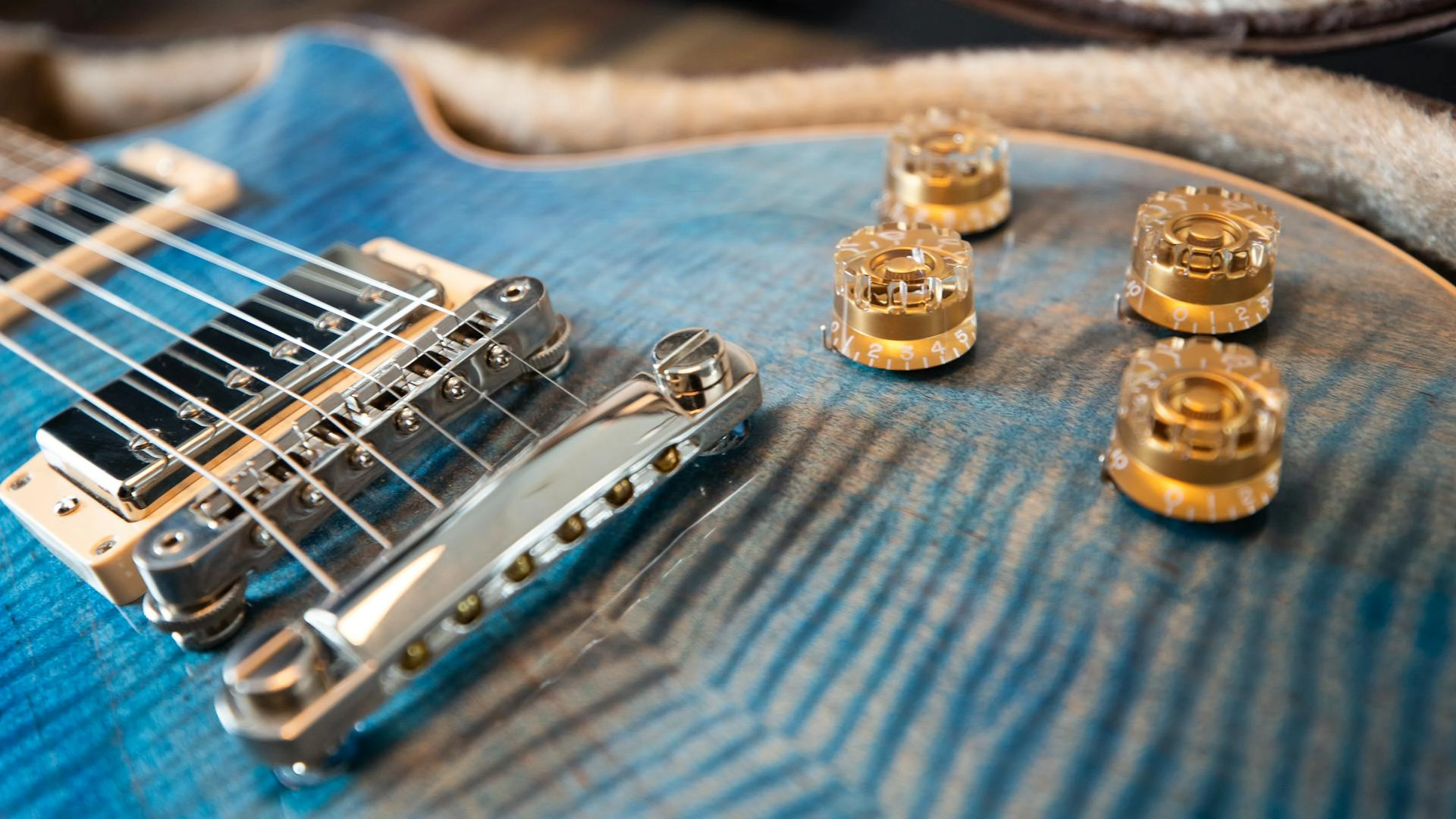
The Tune-o-Matic bridge is as one of the most successful guitar hardware designs ever created. Developed by Gibson in the 1950s, this system combines a curved bridge with individual saddles and a separate stop-bar tailpiece. You'll find this setup on virtually every Les Paul, many SGs, and countless other guitars across all price ranges.
What makes the Tune-o-Matic special is its adjustability and rock-solid performance. Each string sits on its own saddle that can be moved forward or backward for perfect intonation, while the entire bridge can be raised or lowered to set your preferred action. The separate stop-bar tailpiece, positioned behind the bridge, provides the string anchor point and can also be adjusted for different string tensions and tonal characteristics.
Players love Tune-o-Matic bridges for their reliability and tonal authority. The solid brass or aluminum construction, combined with the direct mounting to the guitar top, creates a platform that enhances sustain while adding a certain midrange focus that helps guitars cut through dense mixes. Artists like Jimmy Page and Slash have relied on Tune-o-Matic equipped Les Pauls for their most iconic performances.
String-Through-Body Design
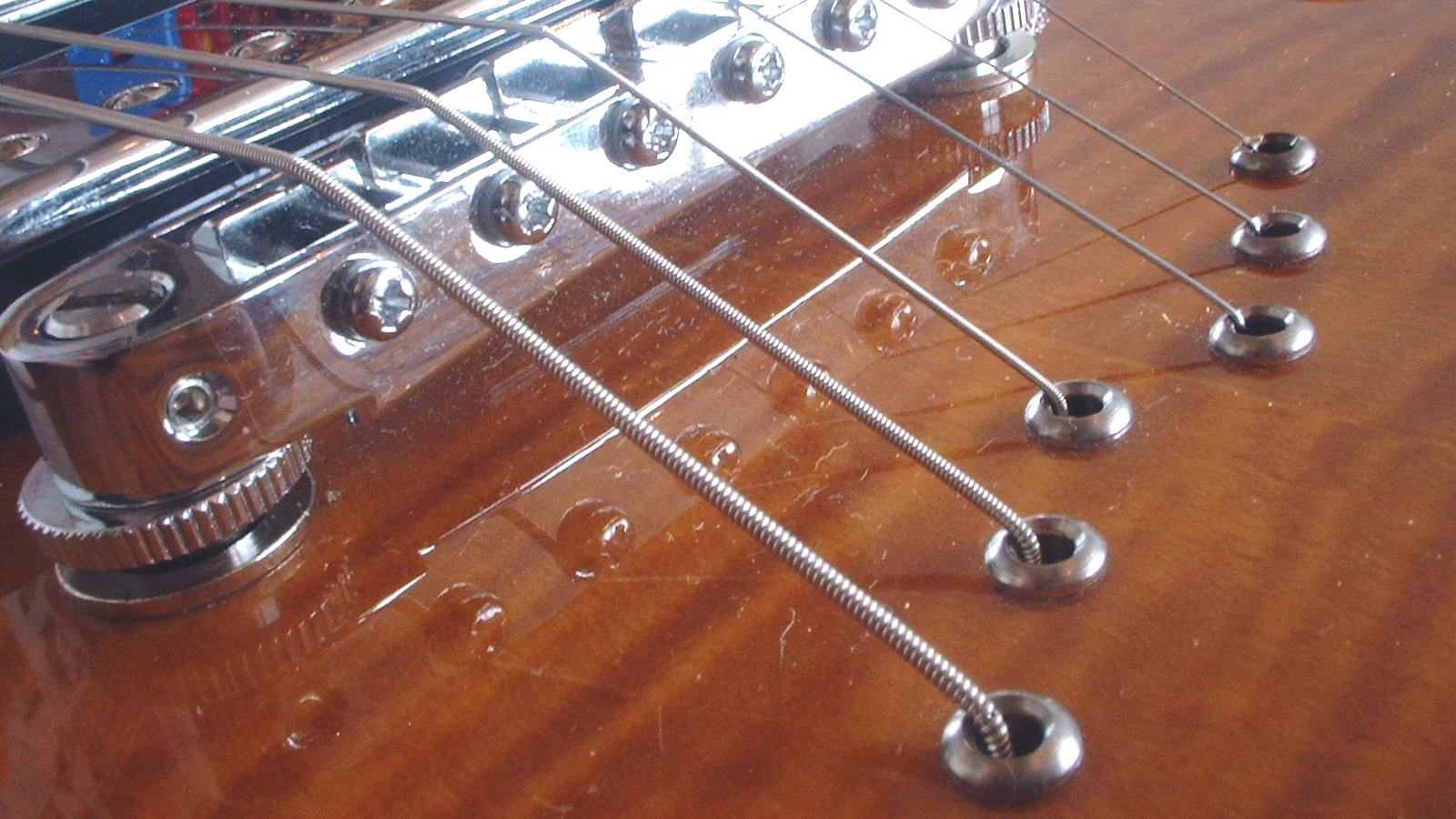
The string-through-body approach, most famously employed on Fender Telecasters, takes the concept of solid anchoring to its logical extreme. Instead of terminating at a surface-mounted tailpiece, the strings pass completely through the guitar body and are anchored from behind. This creates the most direct possible connection between your strings and the guitar's wood.
This design philosophy produces some unique tonal characteristics. Many players describe string-through guitars as having increased sustain and enhanced resonance, with a particular emphasis on fundamental frequencies. The strings' energy has nowhere to go except directly into the guitar body, creating what many describe as a more "woody" or "organic" tone compared to surface-mounted systems.
The mechanical advantages extend beyond tone. String-through designs often allow for lower string action since the sharp break angle over the bridge saddles increases downward pressure on the strings. This can make for easier playability and improved note articulation, particularly on the wound strings where definition can sometimes suffer with other bridge types.
Wraparound Bridges
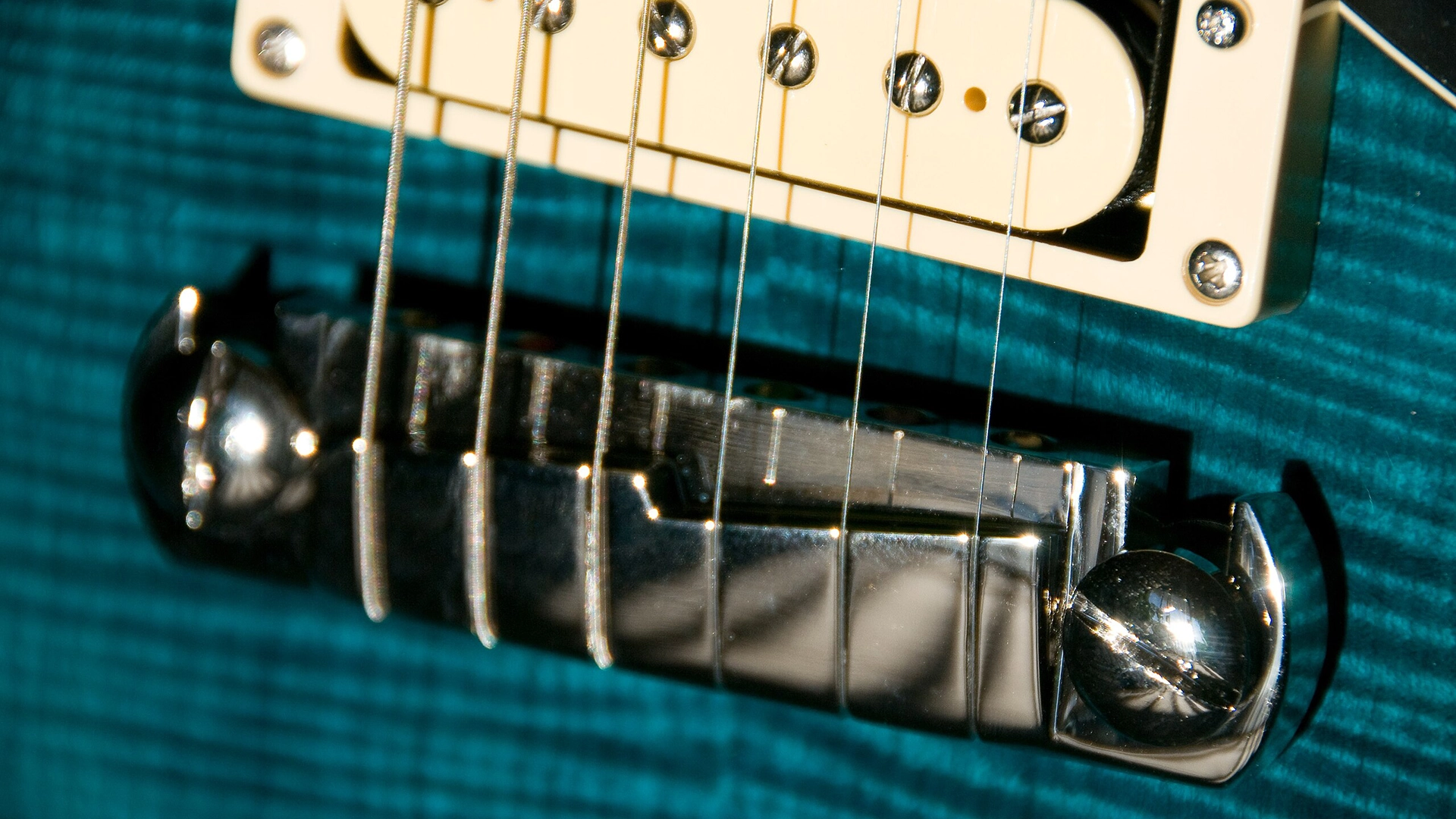
Wraparound bridges combine the bridge and tailpiece into a single unit, creating an elegantly simple solution that's both functional and visually distinctive. Gibson pioneered this design on guitars like the Les Paul Junior and continues to use variations of it today. The concept is straightforward: strings pass over a single curved piece of metal that handles both pitch determination and string anchoring.
The tonal character of wraparound bridges tends to emphasize midrange warmth and woody resonance. Without a separate tailpiece, the entire string length from tuning peg to anchor point interacts with a single piece of hardware, creating what many describe as a more "cohesive" sound. This design particularly excels at producing the kind of singing sustain that made early Les Paul Juniors legendary among blues and rock players.
Modern wraparound bridges often include individual string height adjustment, addressing one of the historical limitations of this design. However, intonation adjustment can still be limited compared to bridges with individually adjustable saddles, making precise setup more challenging on some models.
The visual appeal of wraparound bridges shouldn't be overlooked either. Their clean, minimalist appearance complements the aesthetic of guitars designed for pure rock and roll attitude, making them popular choices for players who value both form and function.
Tremolo Bridges: The Path to Expressive Playing
Tremolo bridges open up an entirely different world of guitar playing, one where pitch becomes fluid and expression extends far beyond what's possible with fretted notes alone. These dynamic systems sacrifice some of the pure sustain and tuning stability of fixed bridges in exchange for the ability to bend notes, create vibrato effects, and add textural elements that simply can't be achieved any other way.
The magic of tremolo systems lies in their ability to change string tension in real time. By moving the bridge assembly, you're effectively lengthening or shortening the speaking length of all strings simultaneously, creating pitch changes that can range from subtle vibrato to dramatic dive bombs.
Vintage-Style Tremolo (Stratocaster)
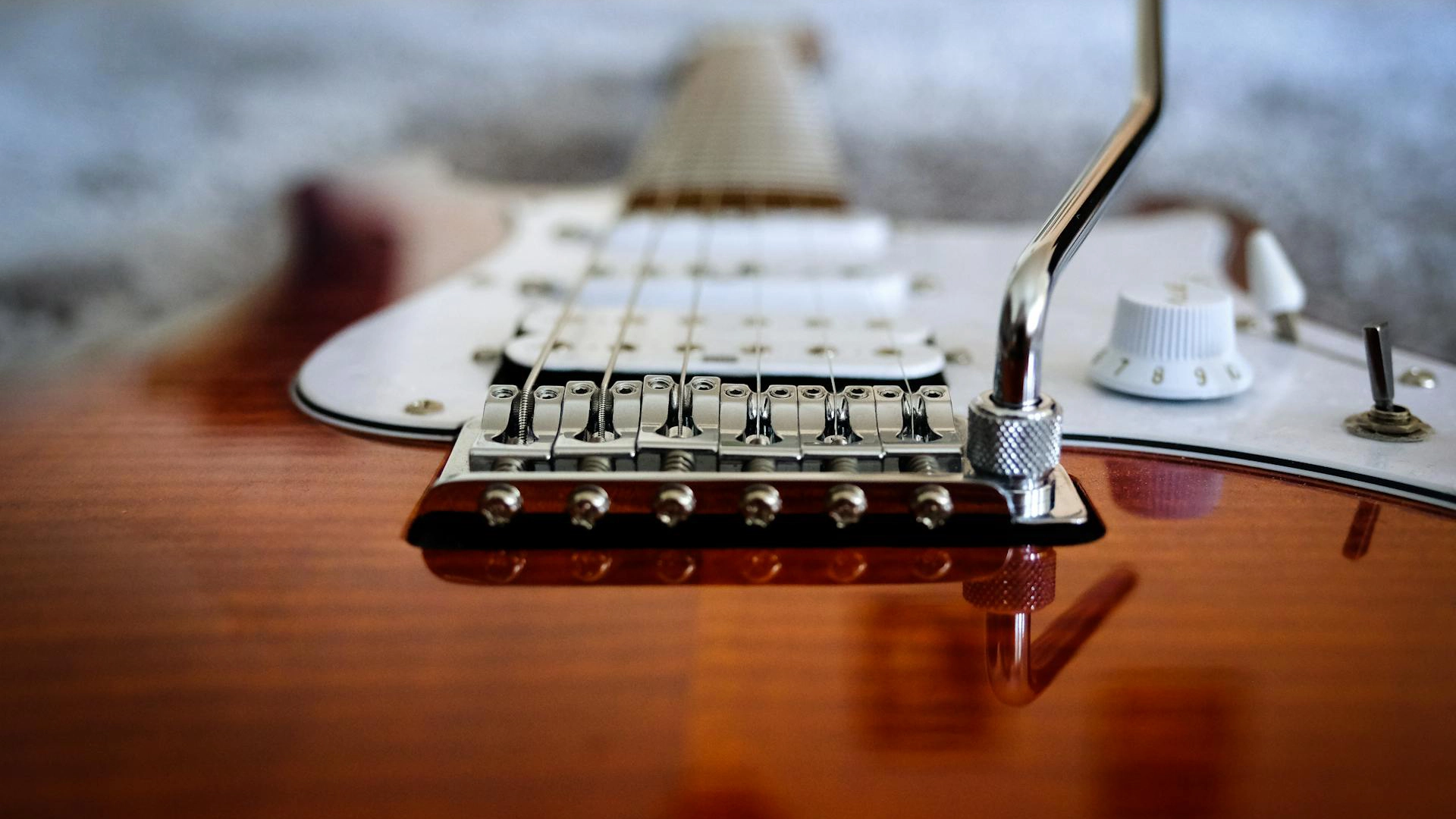
The Fender Stratocaster tremolo, introduced in 1954, established the template for what most players think of when they hear "tremolo bridge." This ingenious system uses a series of springs in the guitar's back cavity to balance against string tension, creating a floating platform that can move in both directions when the tremolo arm is engaged.
The setup possibilities with vintage-style tremolos are extensive. Many players prefer to "deck" their tremolo, setting it so the bridge sits flat against the guitar body and only allows downward pitch bends. This approach maximizes tuning stability while retaining some tremolo functionality. Others set their tremolo to float, allowing both upward and downward pitch manipulation at the cost of some tuning stability.
Tonally, vintage tremolo systems add a particular character that's become synonymous with classic guitar sounds. The floating bridge assembly and spring tension create what many describe as a more "airy" or "lively" tone compared to fixed bridges. There's often a slight reduction in sustain, but this is offset by the unique harmonic content and dynamic response that only a properly set up tremolo can provide.
The key to living happily with a vintage tremolo is understanding its quirks. String bending affects the pitch of other strings slightly, and aggressive tremolo use can temporarily detune the guitar. However, these characteristics have become part of the instrument's charm, and countless players like David Gilmour and Hendrix wouldn't have their Stratocasters any other way.
Locking Tremolo (Floyd Rose)
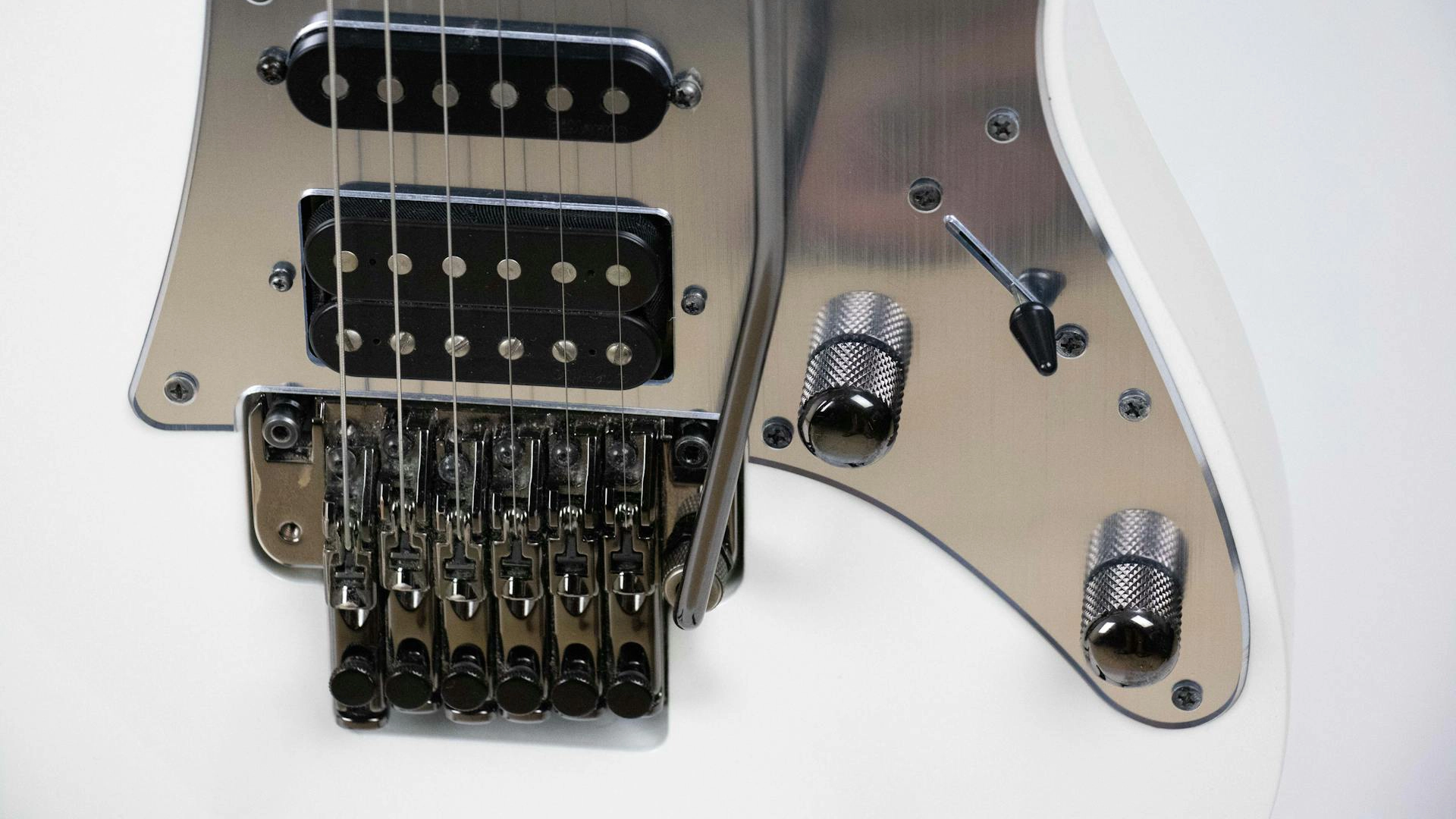
Floyd Rose locking tremolo systems represent the extreme evolution of tremolo design, engineered specifically for players who demand maximum pitch manipulation without sacrificing tuning stability. The "double-locking" concept clamps strings at both the bridge and the nut, creating a system that can handle the most aggressive playing techniques while returning precisely to pitch.
The Floyd Rose system revolutionized rock and metal guitar playing in the 1980s. Suddenly, players could perform dramatic dive bombs, screaming harmonics, and wild pitch bends without worrying about going out of tune. Artists like Eddie Van Halen and Steve Vai pushed these systems to their limits, creating sounds that simply weren't possible with any other bridge design.
However, this performance comes with trade-offs. String changes become more complex, requiring specific procedures and tools. Setup and maintenance are more involved than with simpler bridge designs. The locking mechanism and fine-tuners add visual bulk that some players find unappealing. Despite these challenges, for players who need maximum tremolo performance, locking systems remain unmatched.
The sonic characteristics of Floyd Rose systems tend toward the precise and controlled. The locked strings and solid bridge construction create excellent sustain for a tremolo system, though some players note a slightly more "clinical" tone compared to vintage-style tremolos. This precision makes Floyd Rose systems particularly effective in high-gain situations where note definition is crucial.
Other Notable Tremolo Systems
Beyond the mainstream Stratocaster and Floyd Rose designs, several other tremolo systems have carved out their own niches in guitar history. Each brings unique characteristics and appeals to specific playing styles and aesthetic preferences.
Bigsby Vibrato
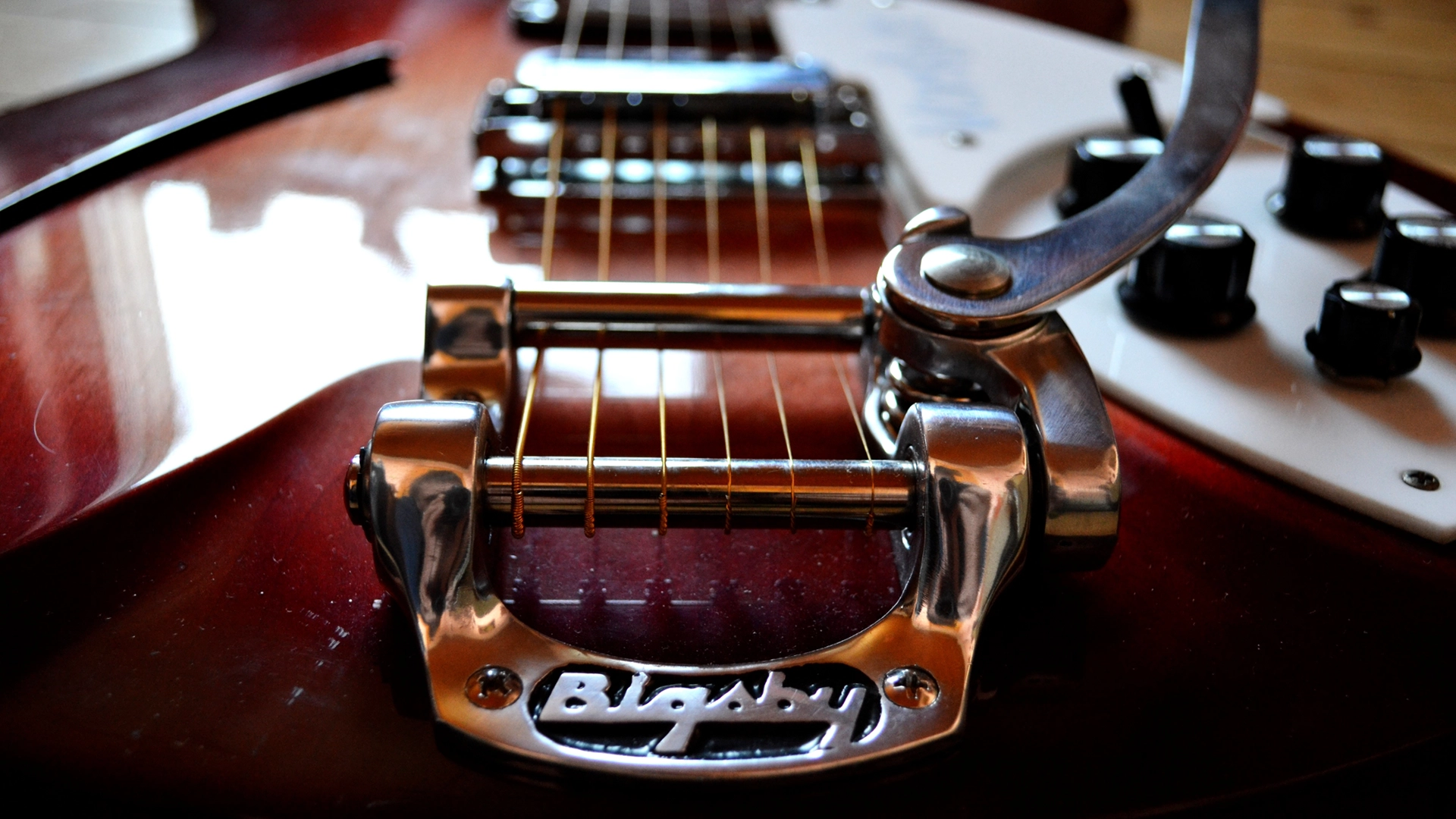
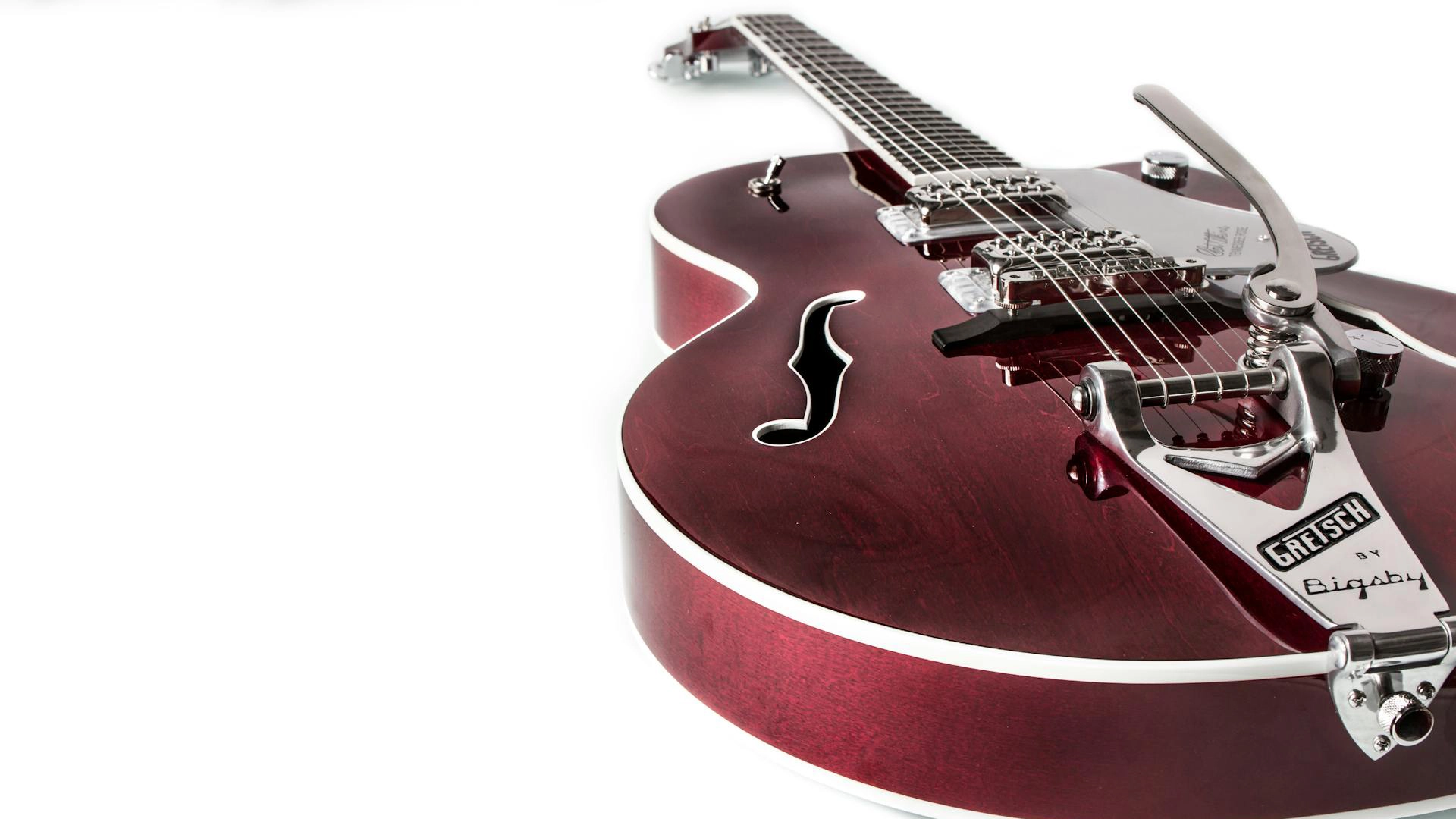
The Bigsby vibrato occupies a unique position in the tremolo world, offering a distinctly different approach to pitch manipulation. Unlike spring-loaded systems, the Bigsby uses a rotating arm mechanism that creates smooth, subtle vibrato effects rather than dramatic pitch bends. This design philosophy produces what many consider the most musical and controllable vibrato available.
Tonally, Bigsby systems add their own flavor to a guitar's voice. The string path over the roller bridge and around the vibrato arm creates additional mass and a different resonance pattern compared to other tremolo designs. Many players describe Bigsby-equipped guitars as having a rounder, warmer tone with enhanced midrange character.
The Bigsby's visual appeal cannot be understated. The distinctive curved tailpiece and polished finish have graced everything from Gretsch hollow-bodies to Les Pauls, adding an element of vintage elegance that complements traditional guitar aesthetics perfectly. This combination of function and form has kept Bigsby systems popular across multiple generations of players.
While Bigsby systems excel at subtle vibrato and gentle pitch bends, they're not designed for extreme techniques. The mechanism's design limits the range of pitch manipulation compared to spring-loaded systems, but this limitation is often seen as a feature rather than a bug by players who prefer more controlled, musical vibrato effects.
Maestro Vibrola
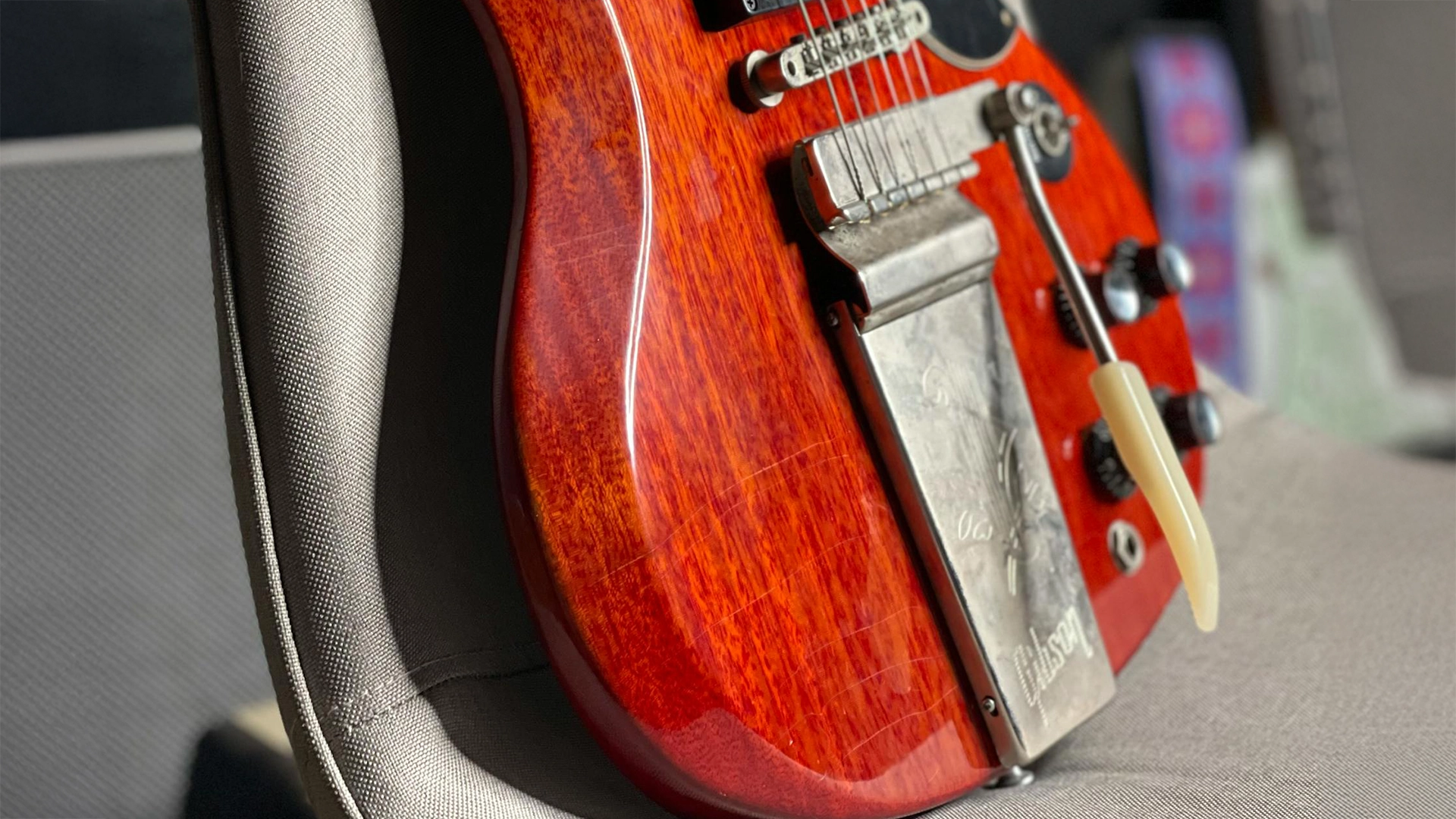
Gibson's Maestro Vibrola is the company's distinctive approach to tremolo design, featuring a long metal tailpiece with an integrated vibrato lever. Found on many SGs and Firebirds, this system creates smooth, subtle vibrato effects similar to a Bigsby but with a different feel and response that's uniquely Gibson.
The Maestro's distinctive "Lyre" engraving and vintage aesthetic make it a visual centerpiece on any guitar. Functionally, it provides controlled vibrato without the extreme range of modern tremolo systems, making it ideal for players who want subtle pitch manipulation without sacrificing too much tuning stability.
The tonal characteristics of Maestro-equipped guitars tend toward warmth and richness, with the additional mass of the vibrato mechanism adding to the guitar's overall resonance. Players often describe a certain "woody" quality that complements Gibson's traditional tonewoods beautifully.
Setup and maintenance of Maestro systems require understanding their unique mechanical characteristics, but they're generally more forgiving than complex locking systems while offering more expressive range than fixed bridges.
Sideways Vibrola
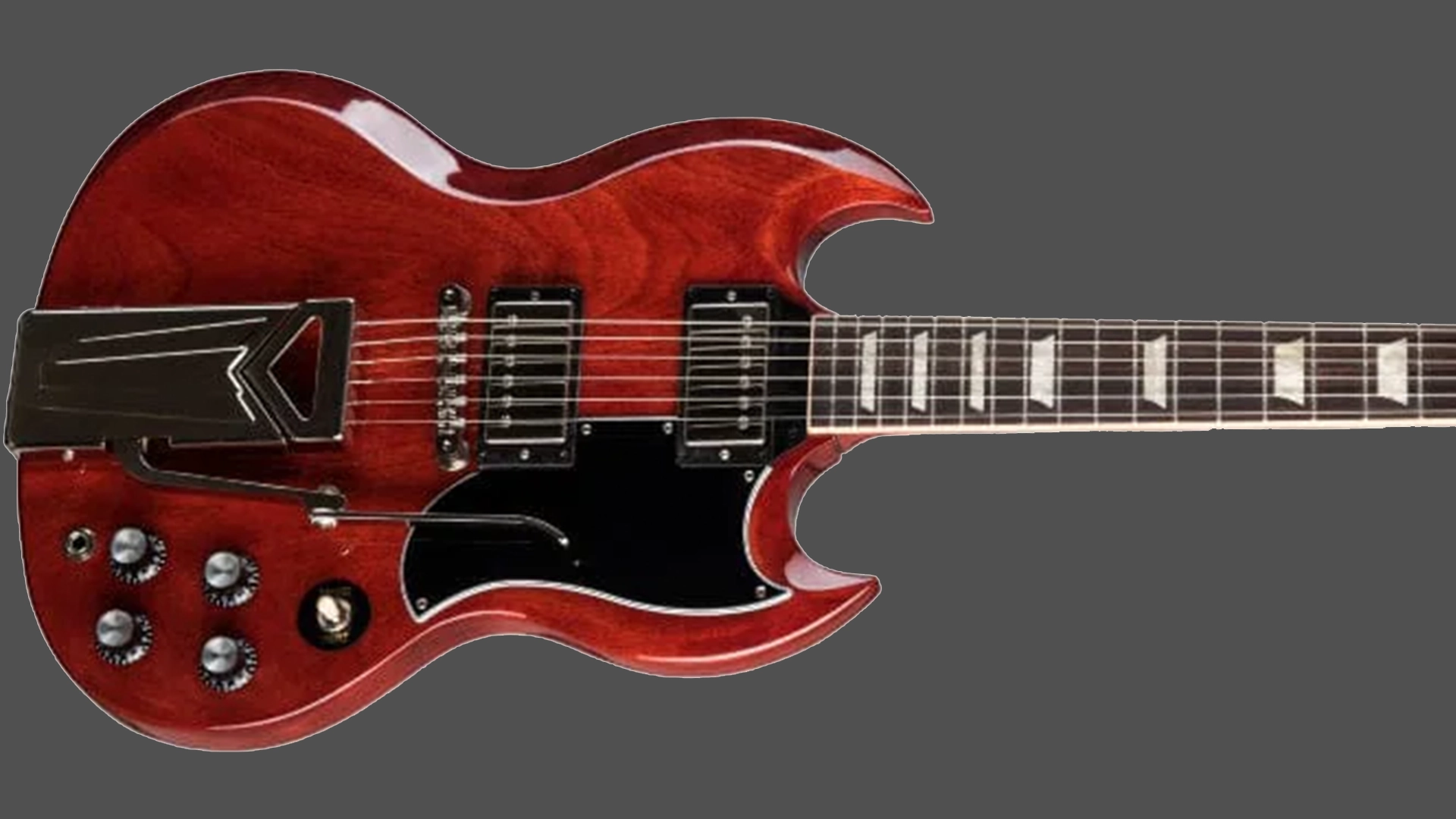
Perhaps the most notorious of Gibson's tremolo experiments was the Sideways Vibrola of the early 1960s. This unique system operated side-to-side rather than up-and-down, creating a completely different feel and sound that puzzled many players but fascinated others with its unconventional approach.
The Sideways Vibrola's side-to-side action created vibrato effects that were unlike anything else available. Instead of the typical pitch bends created by lengthening or shortening strings, this system created a warbling effect that some players found musical while others struggled to incorporate into their playing.
While historically significant and visually striking, the Sideways Vibrola proved challenging for many players to use effectively, leading to its relatively short production run. The system's complexity and unconventional operation made it more of a novelty than a practical tool for most guitarists.
Modern reissues have attempted to improve the Sideways Vibrola's functionality while maintaining its vintage appeal. These updated versions address some of the original design's limitations while preserving the unique character that makes this system a conversation piece among vintage guitar enthusiasts.
Offset Tremolo (Jazzmaster/Jaguar)
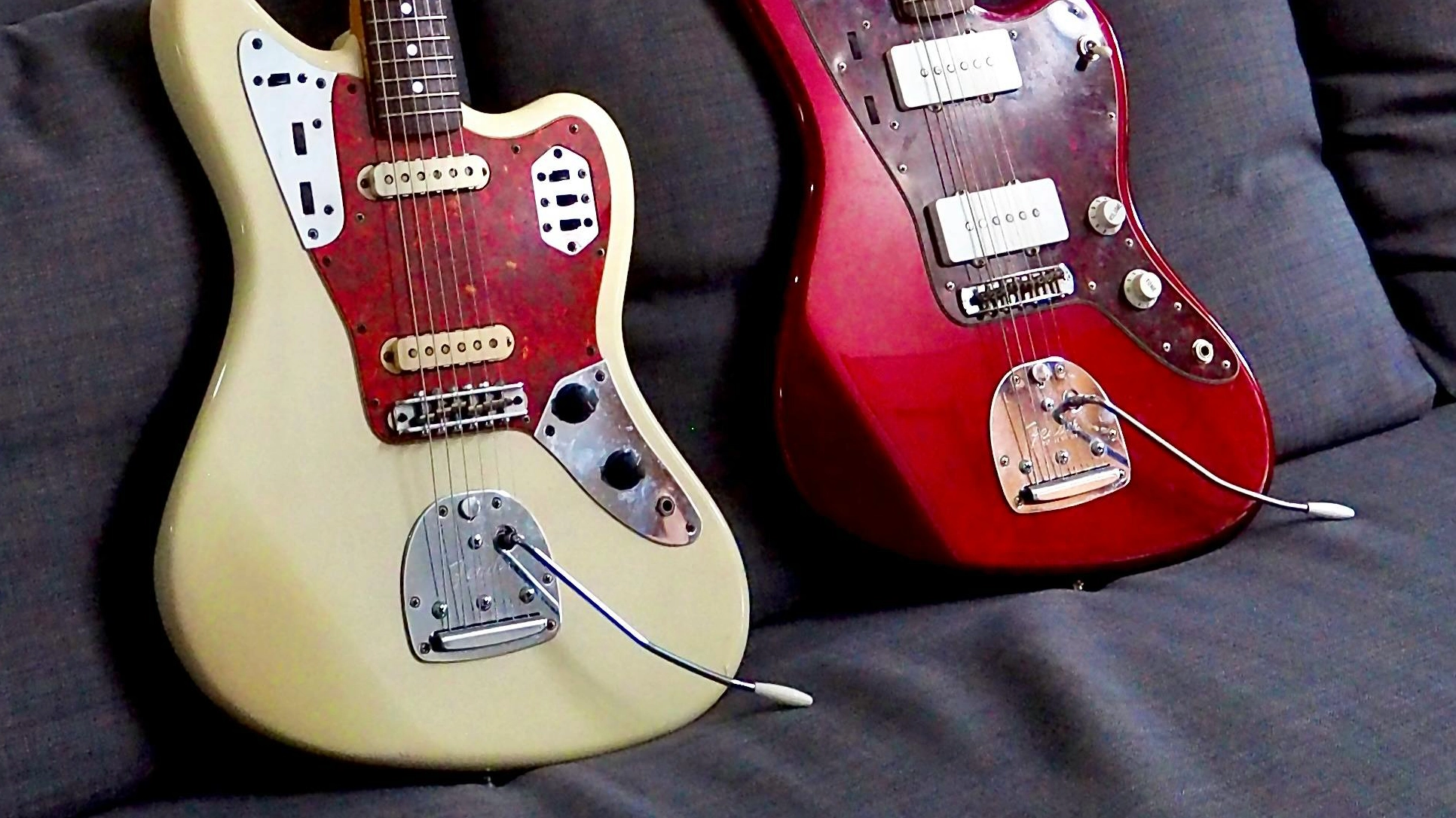
The offset tremolo systems found on Fender Jazzmaster and Jaguar guitars represent yet another approach to vibrato design. These systems feature a long tremolo arm and a unique floating bridge setup that creates atmospheric, surfy vibrato effects that have become synonymous with alternative and indie rock sounds.
The offset tremolo's design creates smooth, wide vibrato sweeps that feel different from any other tremolo system. The long arm provides excellent leverage and control, while the floating bridge assembly responds to light touches with graceful pitch bends. This sensitivity makes the offset tremolo particularly expressive for players who integrate vibrato into their regular playing technique.
However, the offset tremolo's bridge design has been a source of discussion among players for decades. The individual string saddles can move during aggressive playing, and the system requires careful setup to achieve optimal performance. Despite these quirks, the unique sound and feel of offset tremolo systems have attracted dedicated followings among players seeking distinctive tonal textures.
The sonic character of offset tremolo systems tends toward the atmospheric and textural. The bridge design and tremolo mechanism work together to create sounds that excel in reverb-drenched environments and complement the warm, round pickups typically found on Jazzmaster and Jaguar guitars.
The Sound Difference: A Direct Comparison
Understanding the practical differences between bridge types requires looking beyond technical specifications to consider how each system affects your actual playing experience. The following comparison covers the key characteristics that matter most to working guitarists.
| Bridge Type | Key Feature | Tuning Stability | Sustain | Sonic Character | Best For | Maintenance/Setup |
|---|---|---|---|---|---|---|
| Tune-o-Matic | Fixed with adjustable saddles | Excellent | Maximum | Punchy, midrange focused | Rock, Metal, Jazz | Easy |
| String-Through-Body | Strings pass through body | Excellent | Maximum | Resonant, woody | Country, Rock, Blues | Easy |
| Wraparound | Combined bridge/tailpiece | Excellent | Maximum | Warm, cohesive | Blues, Classic Rock | Easy |
| Vintage Tremolo | Spring-loaded floating | Good | Good | Airy, lively | Blues, Classic Rock, Country | Moderate |
| Floyd Rose | Double-locking system | Superior | Reduced | Precise, controlled | Metal, Hard Rock | Difficult |
| Bigsby | Rotating arm mechanism | Moderate | Good | Warm, smooth vibrato | Rockabilly, Country, Jazz | Moderate |
| Maestro Vibrola | Long tailpiece design | Good | Good | Woody, rich | Classic Rock, Blues | Moderate |
| Sideways Vibrola | Side-to-side action | Can be tricky | Good | Unique warbling | Vintage enthusiasts | Difficult |
| Offset Tremolo | Long arm floating | Moderate | Good | Atmospheric, textural | Surf Rock, Alternative, Indie | Moderate |
Understanding the Trade-offs
This comparison reveals the fundamental trade-offs inherent in bridge design. Fixed bridges consistently deliver maximum sustain and tuning stability but offer no vibrato capabilities. They excel in situations where consistency and power are paramount, making them ideal for heavy rock, metal, and jazz applications where every note needs to ring clearly.
Tremolo systems each make different compromises between stability and expressiveness. Vintage-style tremolos offer moderate performance in all areas while providing classic vibrato sounds. Floyd Rose systems maximize tremolo performance at the cost of setup complexity. Bigsby and Maestro systems prioritize musical vibrato over extreme effects.
Specialized systems like the Sideways Vibrola and offset tremolos serve specific niches, offering unique sounds and feels that appeal to players seeking distinctive tonal characteristics. These systems often require dedication to master but reward players with truly individual voices.
Matching Bridge to Musical Style
The "best" bridge type depends entirely on your musical context and personal priorities. Studio players often gravitate toward fixed bridges for their consistency and maximum sustain, while live performers might choose tremolo systems that add visual and sonic excitement to their performances.
Genre considerations play a crucial role in bridge selection. Metal and hard rock players typically prefer either fixed bridges for maximum aggression or Floyd Rose systems for extreme effects. Blues and country players often choose vintage tremolos or Bigsby systems for their musical vibrato capabilities. Alternative and indie players frequently opt for offset systems to achieve their signature atmospheric sounds.
Playing style matters as much as musical genre. Players who rely heavily on string bending might prefer fixed bridges to avoid the pitch interactions common with tremolo systems. Conversely, players who integrate vibrato into their regular technique will find tremolo systems essential to their musical expression.
Conclusion
The guitar bridge you choose becomes part of your musical identity, shaping not just how your instrument sounds but how it responds to your touch and inspires your playing. There's no universally "best" bridge type because each serves different musical needs and playing preferences. A jazz guitarist seeking maximum sustain and tuning stability will make a very different choice than a surf rock player who needs atmospheric vibrato effects.
Understanding these differences empowers you to make informed decisions whether you're buying your next guitar, planning an upgrade, or simply trying to understand why different instruments feel so unique under your fingers. The bridge isn't just hardware holding your strings in place. It's a fundamental part of your guitar's voice and personality, influencing everything from how long your notes ring to how expressive your vibrato can be.
Many guitar players, especially as they become more experienced, keep multiple guitars with different bridge types to cover various musical situations. They might have a Les Paul with a Tune-o-Matic for rock gigs, a Stratocaster with vintage tremolo for blues sessions, and a Telecaster with string-through design for country work. Others find their perfect bridge type early and stick with it throughout their entire playing career, building their technique and musical voice around that single approach. Neither approach is right or wrong – it's simply about finding what works for your musical journey and personal preferences.
Take time to play different bridge types and pay attention to how they affect your playing style and musical expression. The right bridge will feel natural and inspire you to explore new musical territories, while the wrong choice might leave you fighting against your instrument instead of making music with it.
Top Ranked Guitar Bridges and Tailpieces on Equipboard


About the authors
Michael R. Pierce is the co-founder of Equipboard and a lifelong musician with over 25 years of experience as a guitarist and gear enthusiast. He blends solid music theory chops (thanks to formal training in guitar, piano, and trumpet) with real-world experience, always exploring and experimenting across genres like rock, blues, and hip-hop. Michael launched Equipboard in 2013 after graduating from The University of Texas at Austin, leveraging his unique blend of musical passion, technological acumen, and community building. His current go-to rig features a Fender American Original ‘50s Telecaster, Analogman King of Tone, Strymon Flint, and a Fender ‘57 Custom Champ. Read more