Powering Up: The Ultimate Guide to the Best PA Systems

By Gear Experts

By Gear Experts
Table of Contents

Equipboard
Equipboard is the world's largest community of artists and their gear. Read our review process.
We are reader-supported. When you buy through links on our site, we may earn an affiliate commission. Learn more.
Our Picks

The QSC K12.2 is a versatile, professional-grade powered speaker that combines exceptional audio quality, advanced DSP features, and durable construction, making it a top choice for performers and venues of all sizes.
Read more


Bose L1 Pro8 Portable Line Array System
The Bose L1 Pro8 is a revolutionary portable PA system that delivers consistent, high-quality sound with innovative line array technology, built-in mixing capabilities, and exceptional portability, making it ideal for solo performers, small ensembles, and presenters in intimate to medium-sized venues.
Read more
The Yamaha DBR12 delivers professional-grade sound quality, intelligent processing, and robust reliability at a budget-friendly price, making it an exceptional choice for musicians, DJs, and organizations seeking dependable sound reinforcement on a modest budget.
Read more
Pioneer XPRS15 15" 2-Way Full Range Speakers
The Pioneer XPRS15 is a professional-grade loudspeaker that combines powerful Class D amplification, advanced DSP, and rugged construction, making it a top choice for demanding applications like large-scale live performances, touring, and high-end installations.
Read more

Mackie Thump GO Battery-powered Loudspeaker
The Mackie Thump series is a compact, affordable powered speaker solution that delivers reliable performance, versatile features, and professional-quality sound, making it ideal for small venues, mobile DJs, and budget-conscious users.
Read moreA great PA system can make or break your sound. Whether you're a band playing local gigs, a speaker addressing a packed conference room, or running a venue that hosts everything from poetry slams to rock concerts, the right PA system turns your sound from barely-there to everywhere-just-right.
But let's be real – shopping for PA gear can feel overwhelming. Between watts and channels, active and passive speakers, and price tags that range from "weekend warrior" to "second mortgage," it's easy to get lost in the technical maze. That's exactly why we put together this guide.
Think of a PA system as your sound's superhero cape. It takes your voice or instruments and gives them the power to reach every corner of the room with clarity and punch. The trick is finding the system that matches your specific needs – because what works for a coffeehouse acoustic set might not cut it for a pumping dance party.
In this guide, we're stripping away the jargon and getting straight to what matters. We'll walk through the best PA systems for every situation, break down the must-have features, and help you understand exactly what you need (and what you don't). Whether you're buying your first system or upgrading your current setup, we've got you covered.
Types of PA Systems: Finding Your Perfect Match

Portable PA Systems: The Road Warriors
Think of these as the Swiss Army knives of the PA world. Compact enough to fit in your car but powerful enough to handle a small gig, portable PAs are perfect for solo artists, DJs, and presenters on the move. Most come with everything built into one or two pieces: speakers, mixer, and sometimes even effects. They're not just about convenience though – many modern portable systems pack impressive sound quality into their smaller frames. The sweet spot for these systems? Coffee shops, outdoor ceremonies, business presentations, and smaller venues where setup time is tight.
PA Systems for Live Bands: The Heavy Hitters
When you need serious power and flexibility, band PA systems step up to the plate. These typically involve multiple components: main speakers, monitors, a separate mixer, and possibly subwoofers for that chest-thumping low end. They're built to handle the complexity of a full band setup, with enough inputs for drums, guitars, keyboards, and vocals. While they require more setup time and knowledge to operate, they reward you with superior sound quality and the ability to dial in a perfect mix for larger spaces and louder performances.
Wireless PA Systems: The New School
The latest evolution in PA technology, wireless systems cut the cord without cutting corners on sound quality. They often feature Bluetooth connectivity for streaming music, wireless microphones, and even smartphone control apps. While they might not match the raw power of traditional systems, they're game-changers for mobile DJs, speakers who like to move around, or anyone who wants minimal setup hassle. Just remember - with wireless systems, you'll want to keep backup cables handy, just in case.
Active vs. Passive Systems: The Power Players
This is where we get into how PA systems handle power, and it's simpler than it sounds:
Active (Powered) Systems
These have built-in amplifiers - just plug them in and play. They're generally easier to set up and more foolproof, since the amp and speakers are perfectly matched. Perfect for those who want a streamlined setup without worrying about matching separate components.
Passive Systems
These need external amplifiers to work, which means more pieces to carry but also more flexibility in how you power your system. Many professional setups use passive systems because they offer more control over your sound and can be easier to repair - if one component fails, you don't have to replace the whole speaker.
The beauty of today's PA market is that you're no longer locked into one type of system. Many manufacturers offer hybrid solutions that combine elements of different categories. For instance, you might find a portable system with enough power for a small band, or a wireless system with the connectivity options typically found in larger setups.
The key is matching the type of PA to your typical use case – because the best system is the one that meets your needs without overcomplicating your setup or breaking your budget. In the next section, we'll dig into the specific features that can make or break your PA experience.
Top Features to Look for in a PA System: Beyond the Basics

Power Output: How Loud Is Loud Enough?
Power isn't just about being loud, it's about having enough headroom to keep your sound clean and clear. Think of it like a car's engine: you want enough power to cruise comfortably without redlining the engine.
A good rule of thumb:
- Small venue (up to 50 people): 500-1,000 watts
- Medium venue (50-200 people): 1,000-2,000 watts
- Large venue (200-500 people): 2,000+ watts
But remember: these numbers aren't just about volume. More power means better sound quality at lower volumes, because your system isn't struggling to keep up.
Portability: The Setup Struggle Is Real
Weight and ease of transport can make or break your gigging experience. Consider:
- One-piece systems: Great for solo performers, but limited in power
- Split systems: More versatile but require multiple trips from the car
- Rolling cases and built-in handles: Small details that make a huge difference
- Setup time: Can you have it running in 10 minutes, or do you need an hour?
Connectivity: Plugging Into Your Needs
Modern PA systems are connectivity powerhouses. Here's what to look for:
- XLR inputs for microphones (look for at least 2)
- 1/4" inputs for instruments
- RCA or 3.5mm inputs for music playback
- Bluetooth connectivity for wireless streaming
- USB ports for direct recording or playback
- Digital interfaces for connecting to laptops or tablets
Built-In Effects: Sound Shaping Made Simple
Many modern systems come with onboard processing that can enhance your sound:
- Channel EQ: Essential for taming feedback and shaping your tone
- Reverb: Adds depth to vocals and instruments
- Compression: Helps control volume spikes
- Anti-feedback systems: Can save your ears and your show
- Presets: Quick starting points for different applications
Wireless Capabilities: Cutting the Cord
Wireless features aren't just convenient – they're becoming essential:
- Bluetooth audio streaming for backing tracks
- Wireless microphone compatibility
- Remote control via smartphone apps
- Digital mixing capabilities
- Multi-speaker linking for larger setups
Durability and Reliability: Built to Last
The best features mean nothing if your system can't survive regular use:
- Look for metal grilles and corner protectors
- Check the quality of input jacks and controls
- Consider weather resistance for outdoor use
- Read up on warranty coverage
- Research the manufacturer's repair network
Expandability: Room to Grow
Think about the future when choosing your system:
- Can you add more speakers later?
- Does it have enough inputs for your growing needs?
- Is the mixer replaceable or upgradeable?
- Can it integrate with other audio equipment?
Remember, the best PA system isn't necessarily the one with the most features - it's the one that has the right features for your needs. Consider how you'll actually use the system, not just what looks good on paper. A simple system that you know how to use well will always sound better than a complex one that's poorly understood.
Coming up next, we'll look at specific PA systems that excel in different situations, helping you narrow down your choices based on real-world applications.
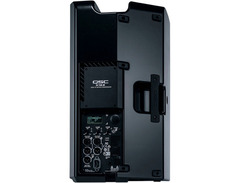
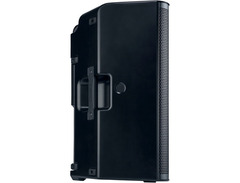
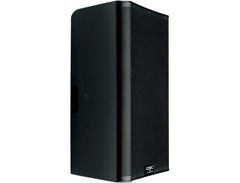
QSC K12.2 Active Loudspeaker
4.5 (2)
The All-Rounder









- Exceptional sound clarity and power at any volume level
- Durable build quality with professional aesthetics
- Versatile use for DJs, bands, and stage monitors
- Easy-to-use interface with intuitive settings
- See 4 more
- Prone to scratches without protective covers
- Requires careful handling for road use to ensure longevity
| Total Power | 2000w |
| Weight | 39 lbs. |
This powered loudspeaker system represents the sweet spot where premium audio quality meets real-world practicality, making it our top overall pick for performers who demand excellence.
At the heart of the K12.2 sits a formidable 1800W for the low-frequency driver (LF) and 225W for the high-frequency driver (HF), totaling 2025W peak Class D amplification system. The 12" low-frequency driver handles the lows and mids with remarkable authority, while the 1.4" titanium diaphragm compression driver delivers crystal-clear highs through QSC's custom-designed Director waveguide. This combination creates a wide 75-degree coverage pattern that fills venues evenly with sound.
What truly sets the K12.2 apart is its sophisticated DSP (Digital Signal Processing) system. QSC's engineers have packed in advanced features like DMT™ (Directivity Matched Transition), which ensures uniform frequency response across the entire coverage area. The system's Intrinsic Correction™ actively tunes the speaker in real-time, maintaining sonic clarity even at demanding output levels.
In practice, the K12.2 demonstrates why it's become an industry standard. At smaller venues, it delivers pristine audio with headroom to spare. Push it harder at medium-sized events, and it maintains its composure – the bass stays tight, the mids remain articulate, and the highs never become harsh.
The system's versatility shines in various scenarios:
- As main speakers for a band, they provide enough punch to fill venues up to 300 people
- For corporate presentations, they deliver crystal-clear speech with natural warmth
- As DJ monitors or mains, they handle electronic music with impressive bass response
- In monitor position, they cut through stage noise while resisting feedback
The K12.2's onboard mixer and DSP section deserves special attention. You'll find:
- Multiple input options: dual combo XLR/1/4" inputs plus stereo RCA
- Built-in crossover settings for seamless subwoofer integration
- Factory presets for common applications (Live Sound, Stage Monitor, Dance Music)
- Scene memory for storing custom settings
- Advanced thermal protection that keeps the system running safely during extended use
QSC's attention to detail extends to the physical construction. The ABS cabinet is internally braced to eliminate unwanted resonances, while the heavy-duty steel grille protects the components without affecting sound quality. Tour-grade handles are positioned for balanced carrying, and the cabinet includes multiple M10 mounting points for permanent installation.
The K12.2 excels in a wide range of settings, making it a versatile choice for various applications. In live music venues, it delivers excellent clarity for both vocals and instruments, while mobile DJs appreciate its powerful low-end performance and pristine sound quality for music playback. For corporate events, it offers professional-grade audio for speeches and background music, and in houses of worship, it handles both speech and live music with equal proficiency. Theatrical productions benefit from its ability to support both effects playback and live sound, and rental companies value its durability and reliability for constant use.
The K12.2 represents a significant investment. However, its versatility, reliability, and professional-grade sound quality make it a cost-effective choice for users who need one system to handle multiple applications. The build quality suggests years of reliable service, while QSC's reputation for customer support adds extra value.
The QSC K12.2 isn't just another powered speaker – it's a professional tool that delivers consistent, high-quality sound across a wide range of applications. While it may be more than some users need for basic sound reinforcement, those who require versatile, professional-grade audio will find it to be an invaluable asset. Its combination of power, clarity, and reliability makes it our top overall choice for professional sound reinforcement.


Bose L1 Pro8 Portable Line Array System
Best Portable PA Option


Average Price: $1,269
Standard/Professional
$499
$1500+
Budget
Standard
High-end
- Outstanding sound quality with clear treble and deep bass
- Lightweight and easily portable, ideal for gigs and events
- Quick and easy assembly, under a minute to set up
- Bluetooth connectivity works flawlessly, facilitating wireless music streaming
- See 5 more
- Line array tower connection can be unstable during use
- No protective cover included with purchase, despite high price
- Lack of a master volume control is inconvenient for some users
For solo performers, singer-songwriters, and presenters who prioritize portability without sacrificing sound quality, the Bose L1 Pro8 represents a revolutionary approach to portable PA design. This system reimagines what's possible in the portable sound reinforcement category.
The L1 Pro8 features Bose's proprietary line array technology, utilizing eight articulated 2" neodymium drivers arranged in a vertical array. This unique configuration is complemented by an integrated 7" × 13" subwoofer, creating a full-range system that delivers 180-degree horizontal coverage. The system's C-shaped line array ensures consistent sound levels from front to back, effectively eliminating the typical volume drop-off you get with conventional speakers.
Powered by a sophisticated Class D amplification system, the L1 Pro8 delivers 160 watts of continuous power through its array and subwoofer. While this might seem modest compared to traditional systems, Bose's waveguide technology and careful driver arrangement make every watt count, producing remarkably even coverage and impressive sound pressure levels.
In practice, the L1 Pro8 shines in intimate to medium-sized venues. Its most remarkable feature is the consistency of sound throughout the space. Whether your audience is seated directly in front or off to the sides, they experience the same clarity and detail in the audio. This makes it particularly effective for:
- Coffee house performances where audience members are scattered throughout the room
- Small outdoor gatherings where sound needs to travel without becoming harsh
- Corporate presentations where clear speech intelligibility is crucial
- Intimate wedding ceremonies and cocktail hours
- Small ensemble performances in restaurants and lounges
The built-in mixer section is where the L1 Pro8 really shows its modern design approach:
- Two combo XLR-1/4" inputs with independent tone controls
- Dedicated 1/8" aux input for backing tracks
- Bluetooth streaming capability for wireless audio
- ToneMatch preset buttons for quick optimization of microphone and acoustic instrument sounds
- Built-in reverb effect with level control
- Phantom power for condenser microphones
- Companion app for detailed mixer control via smartphone
Bose has engineered the L1 Pro8 with mobility in mind. The entire system breaks down into three main components that fit together in a clever modular design. The subwoofer doubles as a base unit and storage case for the array sections, while integrated handles make transportation straightforward. Despite its impressive size when assembled, the system weighs just 38.9 pounds total.
The construction quality of the system is highly impressive, featuring a rugged polycarbonate enclosure for the array sections and durable composite materials for the subwoofer cabinet. Weather-resistant grilles safeguard all drivers, ensuring reliability in various conditions. The design includes quick-release mechanical connections for fast and efficient setup, along with an integrated cable management system to keep installations clean and organized.
The L1 Pro8 is a versatile solution that excels in various scenarios, including solo acoustic performances and small jazz ensembles, where its clarity and balanced sound shine. It is equally well-suited for corporate presentations and speeches, offering professional-grade audio, as well as for providing background music at upscale events. Mobile DJs working in intimate venues will appreciate its portability and sound quality, while its reliability makes it ideal for classroom settings and educational purposes. Additionally, it performs exceptionally well in smaller religious services, delivering clear and consistent audio tailored to the space.
Its unique design approach, built-in mixing capabilities, and exceptional portability offer considerable value for the right user. The system effectively eliminates the need for separate monitors, reducing both cost and setup complexity.
The Bose L1 Pro8 isn't trying to be all things to all users – instead, it excels in its specific niche. For solo performers, small ensembles, and presenters who need exceptional portability and consistent coverage, it's a game-changing system. While it may not have the raw power for full band situations or large venues, its innovative design and thoughtful features make it our top choice for portable applications where quality and ease of use are paramount.
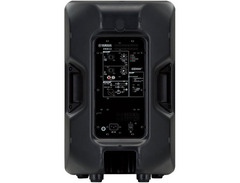
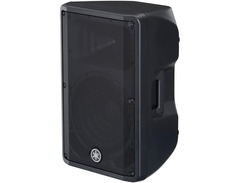
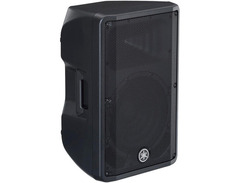
Yamaha DBR12
5.0 (1)
Best Budget PA Option

- Deep bass response compared to smaller models
- Lightweight and easy to carry
- High clarity and boldness in sound
- Versatile EQ settings for fine-tuning
- See 6 more
- Some initially preferred more expensive QSC K12 cabinets
- Limited experience with live performance feedback
| Total Power | 1000w |
| Weight | 34.8 lbs. |
When affordability meets professional-grade reliability, you get the Yamaha DBR12. This powered loudspeaker system proves that "budget-friendly" doesn't mean compromising on sound quality or dependability, making it a perfect entry point into professional sound reinforcement.
The DBR12 is built around a bi-amplified design delivering 1000W of peak power (465W continuous). At its core, you'll find a 12" LF driver paired with a precision-engineered 1.4" compression driver. Yamaha's intelligent DSP technology includes their FIR-X tuning, which uses advanced filtering to ensure precise crossover points and optimized frequency response.
What sets this speaker apart in its price range is Yamaha's D-CONTOUR (Dynamic CONTOUR) multi-band compressor. This intelligent processing monitors output levels in real-time, providing dynamic EQ adjustments that maintain clarity and punch even at higher volumes – a feature typically found in much more expensive systems.
In practical applications, the DBR12 consistently surprises users with its capability. The system handles everything from speech to full-range music with remarkable clarity. The 12" woofer provides solid low-frequency response down to 52Hz, while the compression driver delivers crisp, detailed highs without harshness.
The speaker particularly excels in:
- Small to medium-sized music performances
- Mobile DJ applications
- Public speaking events
- Houses of worship
- School auditoriums
- Community events
The DBR12 proves that budget-friendly doesn’t mean feature-light, packing in a range of practical options that make it a powerhouse in its class. It offers dual balanced XLR/TRS combo inputs and RCA unbalanced inputs, letting you connect everything from pro audio gear to consumer devices with ease. Each input has independent level controls, giving you precise control over your mix, while a 2-band EQ provides simple sound shaping on the fly. Its selectable D-CONTOUR presets let you switch seamlessly between FOH/MAIN or MONITOR modes, tailoring the speaker’s response to your setup. To top it off, protection circuits guard against power, DC, and thermal issues, and LED indicators keep you informed with signal presence and limiting feedback - all wrapped up in a speaker that punches well above its price tag.
Yamaha’s expertise in crafting road-worthy gear is evident in the DBR12’s robust construction. Its durable ABS enclosure, reinforced with extensive internal bracing, ensures long-lasting reliability, while a powder-coated steel grille provides added protection. Ergonomic handles are seamlessly integrated into the cabinet design for easy transport, and its 50° wedge angle makes it ideal for floor monitor applications. The DBR12 also features multiple M8 rigging points for versatile installation options and a pole mount socket with two-angle selection (0° or 7°) for flexible placement in various performance settings.
At approximately $399 per speaker, the DBR12 represents exceptional value. The combination of Yamaha's proven reliability, professional-grade components, and intelligent processing makes it a smart investment for those entering the professional audio world or organizations working with limited budgets.
The Yamaha DBR12 stands as proof that professional-quality sound doesn't have to break the bank. While it may lack some of the advanced features found in more expensive systems, it delivers where it matters most: sound quality and reliability. For users stepping up from consumer-grade speakers or organizations needing dependable sound reinforcement on a budget, the DBR12 provides an ideal balance of performance, durability, and affordability that's hard to beat in its price range.
Whether you're a budding musician, a growing church, or a DJ just starting out, the DBR12 offers a legitimate entry point into professional sound reinforcement without the premium price tag. It's this combination of quality, versatility, and value that makes it our top choice in the budget category.
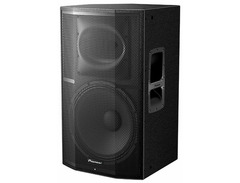
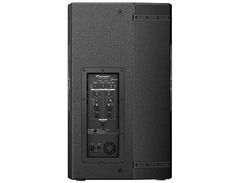
Pioneer XPRS15 15" 2-Way Full Range Speakers
5.0 (1)
Best Pro Option

| Total Power | 2000w |
| Weight | 55.56 lbs. |
When it comes to serious professional applications where power meets precision, the Pioneer XPRS15 stands as a testament to Pioneer's pro audio engineering prowess. While Pioneer might be better known for their DJ gear, this system proves they're a force to be reckoned with in professional sound reinforcement.
At the core of the XPRS15 sits a powerhouse Class D amplification system delivering 2400W of peak power (1200W continuous). The carefully engineered 15" custom woofer handles the low end with authority, while a 1.75" compression driver mounted to a precision waveguide ensures crystal-clear high frequencies. Pioneer's proprietary TWPD™ (Tweeter Wave Progressive Distance) technology creates exceptionally wide dispersion without sacrificing clarity.
The onboard DSP is where the XPRS15 really flexes its muscles, featuring Pioneer's Power Control Technology (PowerCON™) and 96kHz/24-bit processing. This sophisticated system continuously monitors and adjusts performance parameters, ensuring optimal sound quality while protecting the components.
In real-world applications, the XPRS15 demonstrates why it's a professional's choice. The system maintains exceptional clarity and control even at extreme SPLs, thanks to its advanced limiting and thermal protection systems. Bass response is tight and punchy, while the highs remain smooth and detailed without becoming harsh.
The system particularly shines in:
- Large-scale live music performances
- Professional touring applications
- High-end club installations
- Festival sound systems
- Large outdoor events
- Professional mobile DJ rigs
The XPRS15 is a powerhouse designed with professionals in mind, offering a feature set that’s as versatile as it is impressive. Dual XLR/TRS combo inputs with individual gain controls let you connect multiple sources with precision, while the XLR through output makes system expansion a breeze. Its 4-position DSP presets (FLAT, BASS+, SPEECH, WEDGE) adapt effortlessly to any scenario, backed by a precision 24dB/octave crossover for exceptional sound clarity. For bass enthusiasts, the cardioid mode is a game-changer in subwoofer arrays, delivering focused low-end performance. LED indicators keep you in the know with power, signal, and limiting status at a glance, and the built-in Ethernet port enables remote monitoring and control for seamless management. For those looking to push the envelope, integration with the optional Pioneer Pro Audio Manager software takes your setup to the next level.
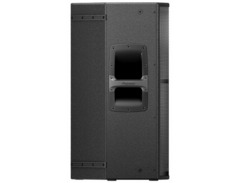
The XPRS15 is built to withstand the demands of professional use, combining durability with thoughtful design. Its 15mm birch plywood cabinet, fortified with a protective polymer coating, offers a robust shell for any gig or tour. A heavy-duty steel grille with acoustic foam backing safeguards the internals while maintaining pristine audio performance. With eight strategically placed fly points, installation is versatile and effortless, complemented by a dual-angle pole mount socket (0° or 7°) for precise positioning. Four professional-grade handles ensure easy transport, and optional tour-grade casters make mobility a breeze. Adding to its rugged credentials, impact-resistant corner protection ensures it can handle the inevitable bumps and bruises of the road.
Its combination of power, advanced features, and build quality make it a cost-effective choice for professionals who demand uncompromising performance and reliability.
The Pioneer XPRS15 stands as a professional tool that delivers exceptional performance in demanding situations. It's not trying to be all things to all users – instead, it focuses on providing the power, clarity, and reliability that professional users require. While it may be more than some users need, those requiring truly professional-grade sound reinforcement will find it to be an indispensable tool in their arsenal.
The system's combination of raw power, sophisticated processing, and robust construction makes it our top choice for professional applications where compromise isn't an option. Whether you're a touring professional, high-end rental house, or venue owner, the XPRS15 delivers the goods night after night.
Mackie Thump GO Battery-powered Loudspeaker
Best Small Venue PA Option

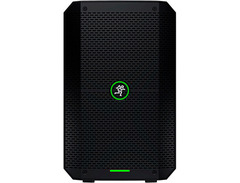
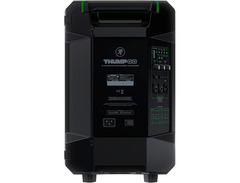
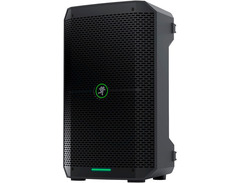
| Total Power | 200w peak class d |
| Weight | 17.6 lbs. |
In the world of compact PA solutions, the Mackie Thump series has earned its reputation as a reliable workhorse for small venues and mobile applications. This powered speaker system proves that good things can come in affordable packages, especially when backed by Mackie's decades of experience in professional audio.
The Thump series centers around a bi-amplified Class D power system delivering 1300W of peak power. Its 12" custom-designed woofer handles the low frequencies with surprising authority, while the 1.4" titanium compression driver ensures crisp, clear highs. Mackie's Dynamic Bass Response technology actively monitors and adjusts low-frequency response, ensuring tight, controlled bass at any volume level.
The system's built-in thermal limiting and protection circuits work behind the scenes to prevent system damage during extended use, while the precision crossover ensures smooth transition between drivers. Mackie's proprietary processing includes speaker modes optimized for different applications.
In practical applications, the Thump demonstrates remarkable versatility. The system handles everything from speech to DJ music with confidence, maintaining clarity and punch at volumes appropriate for small to medium-sized spaces. The built-in mixer section proves invaluable for simple setups, eliminating the need for external mixing in many situations.
The system excels in:
- Small music venues
- Fitness studios
- Restaurants and bars
- Community centers
- Mobile DJ events
- Small outdoor gatherings
- Corporate presentations
The Thump proves that affordability doesn’t have to mean compromise, offering a range of professional features that punch above its price. It boasts a two-channel built-in mixer with combo XLR/TRS inputs, each equipped with individual level controls for seamless source blending. A mix output allows for easy system expansion, while four application-specific speaker modes tailor the sound to suit any scenario. The user-adjustable 3-band EQ provides hands-on sound shaping, and the built-in Feedback Elimination circuitry keeps your audio clean and clear. Automatic protection and limiting ensure reliable performance, and signal/clip indicator LEDs give you instant visual feedback to keep your setup running smoothly.
The Thump is built to handle the demands of the road with a focus on practical durability. Its impact-resistant polypropylene cabinet and powder-coated steel grille provide rugged protection, ensuring it stands up to tough environments. Thoughtful design features like an integrated carrying handle and side handles make transport a breeze, while a dual-angle pole mount socket and monitor wedge capability add versatility for various setups. The stackable cabinet design makes storage and transport more efficient, and rubber feet provide stable placement, whether it’s on stage or in a rehearsal space.
The Thump has a combination of features, power, and reliability makes it an attractive option for users who need professional sound quality without breaking the bank.
The Mackie Thump succeeds in delivering professional-quality sound in a compact, affordable package. While it may not have the raw power or advanced features of more expensive systems, it provides exactly what's needed for small venue applications: reliable performance, easy setup, and sound quality that belies its price point.
For small venue owners, mobile DJs, fitness instructors, or anyone needing quality sound reinforcement in smaller spaces, the Thump offers an ideal combination of performance and value. Its proven reliability, coupled with Mackie's reputation for customer support, makes it our top choice for small venue applications where budget-conscious quality is the priority.
PA System Buying Guide: Making the Right Choice

Let's break down the essential factors you need to consider before making your investment.
Understanding Venue Size and Acoustics
The relationship between your venue and your PA system is crucial. A system that sounds perfect in a small coffee shop might struggle in a larger space, while an oversized system in a small room can create more problems than it solves.
For small venues (up to 100 people), you're typically looking at systems in the 500-1,000 watt range. These spaces benefit from speakers with good dispersion patterns rather than raw power. Consider how the room's surfaces affect sound – hardwood and concrete create reflections that can make even a modest system sound larger than life.
Medium-sized venues (100-300 people) generally require systems in the 1,000-2,000 watt range. Here's where speaker placement becomes critical. The right positioning can ensure even coverage without creating dead spots or overwhelming the front rows.
Large venues (300+ people) need serious power, typically 2,000 watts or more per speaker. But it's not just about volume - these spaces often require multiple speakers, carefully positioned and time-aligned to provide consistent coverage throughout the venue.
Channel Requirements and Input Flexibility
Think about everything you'll need to connect to your PA system. A solo acoustic performer might only need two channels for a microphone and guitar. But a full band? That's a different story entirely.
For speaking engagements or solo performers, a simple 2-4 channel mixer might suffice. However, if you're running a band, consider how many instruments and vocals you'll need to accommodate. Remember to account for growth – that four-piece band might add a keyboard player next month.
Modern PA systems often include built-in mixing capabilities, but consider whether these will meet your needs. Built-in mixers are convenient but can be limiting if your requirements grow. Sometimes investing in a separate mixer provides more flexibility for the future.
The Active vs. Passive Decision
The choice between active and passive speakers often comes down to your specific situation. Active speakers, with their built-in amplification, offer convenience and guaranteed compatibility between components. They're typically easier to set up and require less technical knowledge to operate effectively.
Passive systems require separate amplifiers but offer more flexibility in system design and easier maintenance – if an amp fails, you don't need to replace the entire speaker. They're often preferred in permanent installations where weight is a concern (since the amps can be rack-mounted elsewhere) or when you need precise control over system configuration.
Build Quality and Durability Considerations
Your PA system's durability needs depend largely on how you'll use it. For permanent installation in a climate-controlled venue, you might focus less on rugged construction and more on sound quality. But for mobile DJs or touring bands, durability becomes crucial.
Look for features like:
- Corner protection and robust grilles for speaker protection
- Quality handle design and placement for easy transportation
- Weather resistance if you'll be using the system outdoors
- Cooling systems for extended use
- Quality of input jacks and controls that can withstand repeated use
The cabinet construction material matters too. While plastic cabinets are lighter and more affordable, wooden cabinets (particularly birch plywood) often provide better acoustics and durability. The key is matching the construction to your needs – don't pay for road-ready durability if your system will never leave a single venue.
Frequently Asked Questions About PA Systems
What's the Difference Between Active and Passive PA Systems?
Active PA systems have built-in amplifiers – just plug in your sound source and you're ready to go. Each speaker has its own amp, making setup simple but repairs more complex. Passive systems need separate amplifiers, which means more gear to carry but more flexibility in system design and easier maintenance. Active systems are typically better for mobile use, while passive systems often work better in permanent installations.
How Much Power Do I Need for My Audience Size?
For reliable performance, follow these guidelines:
- 50-100 people: 500-1,000 watts
- 100-300 people: 1,000-2,000 watts
- 300-500 people: 2,000-4,000 watts
Remember that these numbers assume average room acoustics and typical music levels. Speech-only events need less power, while bass-heavy music requires more. Always factor in headroom – having extra power ensures clean sound even at peak volumes.
Are Wireless PA Systems Reliable?
Modern wireless PA systems are highly reliable when properly set up. Today's digital systems avoid most interference issues that plagued older analog equipment. However, success depends on proper battery management, staying within the recommended range (typically 100-200 feet), and avoiding physical obstacles between transmitters and receivers. Always have backup cables ready for critical events.
Can a Portable PA System Work for a Full Band?
Yes, if you choose the right system. You'll need at least 1000W per side for a typical four-piece band in small venues. Ensure the system has enough input channels (minimum 8-12 for a basic band setup) and consider adding a subwoofer for bass-heavy music. Monitor capabilities are crucial – either through dedicated monitor speakers or sufficient aux sends for in-ear systems.
How Do I Prevent Feedback in My PA System?
Feedback control starts with proper speaker placement. Keep main speakers in front of microphones and aim monitors away from mic pickup patterns. Set gain levels carefully – start with mixer faders at zero, slowly raise the gain until you hear the signal, then back off slightly. Most modern PA systems include feedback suppression, but proper setup is still crucial. If feedback persists, try using a graphic EQ to identify and reduce problematic frequencies.
What About Adding Subwoofers?
You need subwoofers if you're handling bass-heavy music, DJing, or working with electronic instruments. For reference, most full-range speakers handle frequencies down to about 50Hz, while subwoofers can reach 30Hz or lower. Look for powered subwoofers that match your main speakers' power rating. One subwoofer per side is typical for most setups, though a single, centered sub can work for smaller venues. Consider crossover points carefully – most systems work best with subs crossed over between 80-120Hz.
The Bottom Line: Choosing Your Perfect PA System
After diving deep into the world of PA systems, one thing becomes clear: there's no one-size-fits-all solution. The best PA system is the one that matches your specific needs, venue size, and budget while providing room for growth.
For mobile DJs and solo performers, the QSC K12.2 remains our top overall pick, offering exceptional versatility and reliability. Those prioritizing portability will find the Bose L1 Pro8's innovative design hard to beat. Budget-conscious buyers should seriously consider the Yamaha DBR12, which delivers professional features without breaking the bank. For those demanding premium performance, the Pioneer XPRS15 stands ready to deliver, while venues with modest needs will find the Mackie Thump hits the sweet spot of performance and value.
Remember that power ratings, while important, aren't everything. Consider your typical venues, the kind of sound you need to reproduce, and how often you'll be moving your system. Factor in future needs too – it's often worth spending a bit more now to avoid upgrading later.
Most importantly, try to hear your prospective system in person if possible. Specs and reviews are helpful, but nothing beats hearing how a PA system performs in a space similar to where you'll be using it. Your ears are the final judge.
The perfect PA system is out there – one that balances your needs, budget, and aspirations. Use this guide as your roadmap, but trust your ears and experience to make the final call.
Top Ranked PA Systems on Equipboard


$79.26 - $918.00
5.0 (2)
5.0 (2)

About the authors
Juan Spinelli is a multi-instrumentalist musician, but more of a guitarist than anything else. Based in Buenos Aires, Argentina, he started playing at a very early age and learned various instruments such as flute, clarinet, percussion, didjeridoo, cavaquinho, bass and more. Today, he also works as a music producer and sound engineer, collaborating in several projects in his city and with artists from all over the world. Read more
New in PA Systems


$1,145.00 - $1,499.00
in PA Systems Rank

$1,999.00
in PA Systems Rank


$999.00 - $1,099.00
in PA Systems Rank