Legendary Guitar Amplifiers to Rock Your World


By Gear Experts

By Gear Experts
Table of Contents

Equipboard
Equipboard is the world's largest community of artists and their gear. Read our review process.
We are reader-supported. When you buy through links on our site, we may earn an affiliate commission. Learn more.
Our Picks


-l.webp?v=1783868161)
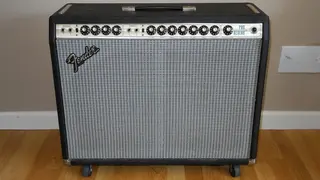
The Fender '65 Twin Reverb is a legendary 85-watt amp known for its pristine clean tones, massive headroom, lush effects, and robust build, making it ideal for professional jazz, country, and clean-heavy styles.
Read more


Mesa/Boogie Dual Rectifier 100W 3-channel Solo Head (Multi-Watt)
The Mesa Boogie Dual Rectifier is a legendary, versatile amplifier renowned for its crushing high-gain tones, pristine cleans, and rugged build quality, making it an enduring rock icon.
Read more-l.webp?v=1783864899)
A legendary solid-state amp that delivers pristine cleans and lush stereo chorus, perfect for jazz guitarists seeking tonal purity and spacious sound.
Read more
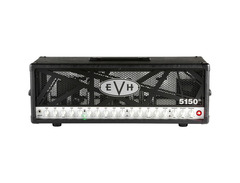
EVH 5150 III 100-Watt Tube Head
The EVH 5150III 100W 6L6 is a high-gain amplifier renowned for its crushing power, exceptional clarity, and ability to deliver unparalleled tone for a wide range of metal styles, from classic heavy metal to modern djent.
Read moreThe Best Guitar Amplifiers: A Comprehensive Guide for Every Style and Budget
Every guitarist knows that an instrument is only half the musical equation. The amplifier transforms raw guitar signals into the sonic landscape that defines a musician's unique voice. More than just a volume booster, an amplifier shapes tone, character, and emotional expression.
Finding the perfect guitar amp can be a game-changer for your sound. It's about finding a partner that brings out the best in your playing. Whether you're just starting out or you've been shredding for years, the right amp can inspire you to push your boundaries and discover new sonic territories.
In this guide, we'll cut through the noise and get to the heart of what makes a great guitar amp. We'll explore everything from old-school tube warmth to cutting-edge digital modeling, helping you navigate the sea of options out there. You'll get the lowdown on top picks for different styles, must-know features, and answers to those burning questions every guitarist has about amps.
Types of Guitar Amplifiers
Before we dive into specific recommendations, let's break down the main types of guitar amps you'll encounter. Each has its own unique characteristics that can dramatically shape your tone.
Tube Amps: The Classic Warmth
Tube amps, also known as valve amps, are the old-school legends of the guitar world. They use vacuum tubes to amplify your signal, resulting in a warm, rich tone that many players swear by.
Tone Characteristics: Tube amps are known for their natural compression and harmonic richness. They tend to break up beautifully when pushed, creating that coveted smooth overdrive. This makes them particularly popular in genres like blues, classic rock, and jazz.
Responsiveness: One of the key features of tube amps is their dynamic response. They react sensitively to your playing, getting louder and dirtier as you dig in harder. This interaction between player and amp is a big part of their appeal.
Maintenance: It's worth noting that tube amps require more maintenance than their solid-state counterparts. Tubes wear out over time and need replacing, and the amps themselves can be heavier and more fragile.
Solid-State Amps: Reliability and Clarity
Solid-state amps use transistors instead of tubes to amplify your signal. They've come a long way since their introduction and are now capable of producing excellent tones.
Consistency: One of the biggest advantages of solid-state amps is their reliability. They're less prone to breakdowns, don't require tube replacements, and generally maintain their tone consistently over time.
Clean Tones: While they can do distortion, solid-state amps really shine when it comes to clean tones. They can provide crystal-clear, articulate sounds that stay clean even at high volumes.
Lightweight: Solid-state technology allows for much lighter amps compared to their tube counterparts, making them a favorite for gigging musicians who need to haul their own gear.
Modeling Amps: Digital Versatility
Modeling amps use digital technology to simulate the sounds of various amp types and even specific amp models. They've become increasingly popular due to their versatility and convenience.
Tone Variety: With a modeling amp, you can switch between different amp sounds at the push of a button. Want a British stack for one song and an American tweed for the next? No problem.
Effects Integration: Many modeling amps come with built-in effects, eliminating the need for separate pedals. This can be a huge space and budget saver, especially for beginners or bedroom players.
Recording Friendly: Most modeling amps offer direct recording outputs, making them ideal for home recording setups. Some even double as audio interfaces for your computer.
Speaker Considerations: To get the most out of a modeling amp, many players opt for a Full Range, Flat Response (FRFR) speaker or a neutral sound system. These speakers accurately reproduce the modeled tones without adding their own coloration, ensuring you hear the amp models as intended.
Hybrid Amps: The Best of Both Worlds
Hybrid amps aim to combine the best aspects of tube and solid-state technology. They typically use tubes in the preamp section for tone coloration and solid-state components in the power amp for reliability and consistency.
Balanced Tone: Hybrid amps often deliver a nice middle ground between the warmth of tubes and the clarity of solid-state. They can be a great option if you're after tube-like tones but with more reliability and less maintenance.
Versatility: Many hybrid amps are designed to excel at both clean and overdriven tones, making them versatile choices for players who need a range of sounds.
The Best Guitar Amps: Top Picks for Every Style and Category
Choosing the perfect guitar amplifier can be a daunting task, given the vast array of options available. To help you navigate this sonic landscape, we've carefully selected and reviewed some of the best amplifiers across various categories and genres. Our picks are based on tone quality, versatility, reliability, and overall value, ensuring that each amp delivers where it counts.
Additionally, we've included genre-specific recommendations for Metal, Jazz, Indie/Alternative, and Rock, recognizing that certain amplifiers excel in particular musical contexts. These picks cater to the unique tonal requirements and performance demands of each genre.
Vox AC30 Guitar Combo Amp
5.0 (285)









Average Price: $923
High-end/Boutique
$300
$701+
Budget
Standard
High-end
- Exceptional clear and versatile sound, perfect for various music styles
- Superior clean tones and the ability to produce a classic Vox overdrive
- Great with pedals, enhancing effects without noise
- Simplified control with minimal knobs for easy use
- See 6 more
- Some users find the stock speaker and tubes lacking, requiring upgrades
- Despite being lighter, still heavy and cumbersome for some to carry
- Single channel limits tonal variety compared to multi-channel amps
- Lacks the vibrato feature found in other Vox models
- See 1 more
| Amp Type | tube |
| Total Power | 30w |
| Speaker Size | 1 x 12" celestion vx12 |
| Onboard Reverb | yes |
| Weight | 54.01 lbs. |
The Vox AC30 was originally conceptualized in 1959. The amplifier was actually inspired by a decrease in the sales of Vox’s AC15. The market was being saturated by the Fender Twin, which at the time had a significantly higher wattage than the AC15. With the advent of rock and roll the electric guitar began to take off to an insane degree, and soon it became the weapon of choice for hobbyists and professional gigging musicians alike. However, as the electric guitar exploded in popularity there eventually came an arms race in terms of wattage. Professional musicians required larger and larger amplifiers as audiences grew, and companies were happy to provide them.
As previously mentioned, the Vox AC30 was an attempt to capitalize on the growing need for a louder amplifier. Once this amp hit the market it was used by some of the most notable musicians at the time, which in turn led to it being the amp of choice for dozens of professional acts years later. Some influential users of the AC30 are John Lennon, Mark Knopfler, Pete Townshend, Ritchie Blackmore, Peter Buck, Noel Gallagher, and Matthew Bellamy.
The most notable feature of the Vox AC30C2 is that it features a master volume switch, which while not an unheard of feature it definitely makes a tube amplifier significantly more controllable. The main challenge most musicians face while using a tube amp is that they find that it’s just too loud to be usable for practice or small venues. This issue is solved by a master volume control. A master volume control can be thought of as tricking the amp into thinking it’s operating at a high-volume, while in reality it’s at a comfortable volume for the situation. This allows you to maintain a that great all tube tone without playing at a volume that would be disturbing to those around you.
There’s also a top boost feature, which enhances the higher frequencies of the amplifier while increasing overall gain. This boost can almost be thought of as an overdrive pedal, as it can take your amplifier from a signature Vox chimey clean to a light overdrive through use of a separately purchased pedal.
Lastly, the Vox AC30C2 is a 2x12 model, meaning it has two twelve inch speakers. This is pretty standard for combo amplifiers, and it’s also representative of the previous configurations of the model. As an added bonus, the Vox AC30C2 also has an onboard tremolo as well as spring reverb. Both of these effects are analog, and they sound as good as any vintage voiced amplifier effect.
The Vox AC30C2 is a perfectly modern iteration of the classic Vox sound, and as such it should be a perfect fit for anyone who’s looking for a tone that emulates artists who used the amplifier. The Vox AC30C2 is chimey (this adjective is a bit hard to describe, so if you’re not sure what it means in this context check out a few demos of this amp) and emphasizes high-end frequencies. It’s also capable of producing some aggressive distortion in the right scenarios. Vox can almost be thought of as the middle ground between Marshall and Fender. These amps still sound great clean, but they’re capable of sounding great under heavier levels of distortion. AC30s are still not ideal for metal or heavier types of punk, if that’s what you’re looking for you should give Marshall a shot.
The AC302 is as well built as any amp in this price range, and it’s made significantly better than vintage examples. Though they’re prohibitively expensive, vintage amplifiers suffer from a host of problems. Generally, vintage amplifiers require a significant investment at the outset in addition to requiring an examination from an experienced amplifier tech. There have actually been several reports of musicians being electrocuted by improperly grounded amplifiers. So while vintage amplifiers may have a unique appeal, modern reissues are both much safer and significantly less expensive.
The Vox AC302 is a modern iteration of one of the most important amplifiers in music history, and as such it has a lot to live up to. Thankfully for musicians everywhere, this amplifier lives up to its legacy in every regard. As far as all-tube amplifiers are concerned, the Vox AC30C2 is also incredibly fairly priced.
See how artists use this




Fender '65 Twin Reverb
5.0 (130)
The King of Clean Tones
-s.webp?v=1783868161)


Average Price: $1,948
High-end/Boutique
$300
$701+
Budget
Standard
High-end
- Unmatched clean tones, ideal for blues, rock, and country
- Excellent reverb and tremolo effects built-in
- Handles pedals well, offering versatility in sound
- Highly sensitive controls for precise tonal adjustments
- See 6 more
- Extremely loud, potentially too much for small venues or home use
- Heavy and cumbersome to transport without assistance
- High price point may be prohibitive for some
- Lacks natural break-up/distortion at high volumes
- See 3 more
| Amp Type | tube |
| Total Power | 85w |
| Speaker Size | 2 x 12" |
| Onboard Reverb | yes |
| Weight | 64 lbs. |
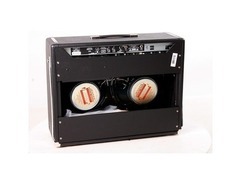
The Fender '65 Twin Reverb is an icon in the world of guitar amplification, renowned for its exceptional clean tones and seemingly endless headroom. This 85-watt behemoth has been the go-to amp for professional guitarists across multiple genres for decades, and for good reason – it provides the perfect canvas for nuanced playing and complex harmonies.
At the heart of the Twin Reverb are two 6L6 power tubes and four 12AX7 preamp tubes, working in harmony to produce a sound that's both powerful and articulate. The amp's clean tone is nothing short of legendary – crystalline and shimmering at lower volumes, with a gradual, musical breakup when pushed to the limits.
One of the Twin Reverb's most notable features is its massive headroom. With 85 watts of power driving two 12-inch Jensen C-12K speakers, this amp can handle extreme dynamics without breaking a sweat. This makes it ideal for styles that require pristine cleans even at high volumes, such as jazz, country, and pedal-heavy ambient music.
The amp's control layout is straightforward yet effective. The dual-channel design (Normal and Vibrato) offers flexibility, with each channel featuring its own volume control and shared treble, middle, bass, and presence controls. The bright switch on the Vibrato channel adds extra sparkle to the top end, perfect for cutting through in a band mix or adding brilliance to darker-sounding guitars.
The Twin Reverb's effects are a huge part of its appeal. The tube-driven spring reverb is lush and three-dimensional, adding depth to your tone without muddying the clarity. It's perfect for creating ambient textures or adding a subtle roominess to your sound. The vibrato circuit (which is actually a tremolo effect) offers a range of pulsing effects that can add movement and interest to sustained chords or solo lines.
While primarily known for its clean tones, the Twin Reverb can produce a sweet, musical overdrive when pushed hard. This overdriven sound, while not typically associated with the amp, can be perfect for blues or classic rock when you really crank it up.
The Twin Reverb's robust construction is designed to withstand the rigors of professional use. However, this durability comes at the cost of significant weight – at around 64 pounds, it's not the most portable amp on the market. But for many players, the unmatched tone is worth the extra effort in transport.
For recording and live sound reinforcement, the Twin Reverb is a dream. Its clear, uncolored tone makes it an ideal platform for mic'ing up in the studio or on stage. Many sound engineers consider it one of the easiest amps to work with due to its consistent and balanced output.
The Fender '65 Twin Reverb has been used by countless greats over the years, from jazz legends like Pat Metheny to rock icons like Eric Clapton. Its ability to provide a clean, uncolored platform for a guitarist's tone has made it a staple in professional rigs around the world.
For players seeking an amp that prioritizes clean headroom, tonal purity, and professional-grade reverb and tremolo, the Fender '65 Twin Reverb remains the gold standard. While it may be overkill for bedroom players or those who primarily need overdriven tones, for clean-tone aficionados and working professionals, the Twin Reverb is an investment in classic tone that continues to deliver the goods, from intimate jazz clubs to major concert halls.
See how artists use this



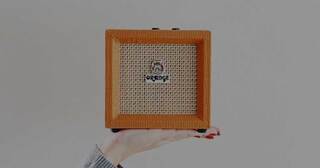
Orange Micro Terror
4.5 (175)
-s.webp?v=1783868180)

-l.webp?v=1783868180)
Average Price: $143
Budget/Beginner
$300
$801+
Budget
Standard
High-end
- Compact and lightweight, highly portable
- Surprisingly loud, capable of powering 4x12 cabs
- Versatile tone, from jazzy cleans to heavy metal
- Warm tube preamp sound, with a solid-state power stage
- See 6 more
- Lacks an effects loop
- Tone control is basic, can lead to extreme tonal changes
- Headphone output quality is poor
- Some find it too bright or lacking clean headroom at high volumes
- See 4 more
| Amp Type | hybrid |
| Total Power | 20w |
| Weight | 1.87 lbs. |
Founded in 1968 by professional musician and electronic designer Clifford Cooper, the English amplifier company produces one of the most iconic amplifiers on the market today. The original Orange shop actually didn’t modify or produce amplifiers or music equipment (which is how companies like Mesa Boogie and Fender got their start), instead Cooper actually focused on selling used musical equipment. This business model actually proved to be pretty popular in the area, as much like today musicians were fascinated by vintage musical equipment. Vintage instruments have always had a unique appeal, though the prices of used instruments in the late 60s hadn’t ballooned to the extremes that they have now.
Cooper invested the profits from his business into producing his own line of amplifiers. Cooper designed the original Orange amplifiers, but they were produced by the Huddersfield based company Radio Craft. Professional touring musician Mick Dines (who was a salesman in the Orange shop when he wasn’t on the road), also had input on the original Orange amplifier designs. His input was invaluable, because as a touring musician he understood the stress that an amplifier would be put under when used in a professional setting. Originally released in 2012, the Orange Micro Terror is a worthy successor to the legacy that Orange amplifiers have built in their last five decades of business. The amp has a unique appeal to musicians on the hunt for a low watt amplifier, and is easily one of the most affordable amplifiers on the market that offers a genuine tube amplifier tone.
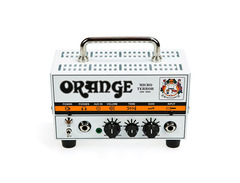
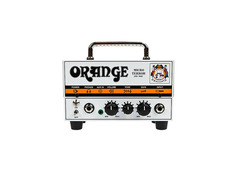
The standout feature of this amplifier is it’s diminutive proportions. The amp is 5.3” tall and 6.5” wide. The main benefit of this is that it cuts down on the space necessary for storage, which is a plus for musicians with limited room available to them.
The Orange Micro Terror is also a hybrid amplifier. Hybrid amplifiers combine solid-state and tube technology. This configuration offers the pros of both approaches. The pre-amp section features a tube, which allows the amp to achieve organic sounding overdrive and distortion. The solid-state power section offers the durability exclusive to solid-state amplifiers, and it also saves musicians from the added cost of having to re-tube an amplifier. The only con of this configuration is that a hybrid amp doesn’t sound quite as good as a full tube design, but while the difference is noticeable a hybrid amplifier will still generally sound better than a comparatively priced solid-state amplifier.
One thing to consider with the Micro Terror is that it does not come with an accompanying cabinet, meaning that one will have to be purchased separately. The recommended cabinet for this amp is the Orange PPC108 1x8. We would recommend pairing the Orange Micro Terror with this cabinet as the amp and cabinet are both designed to work together.
The Orange Micro Terror is geared towards modern distortion sounds and classic rock. There is only one channel unfortunately, so in order to switch up the tone mid-song you are going to have to either use a pedal or adjust the amps settings on the fly.
Unfortunately, the Orange Micro Terror doesn’t have the best cleans. But then again, if you’re looking for a great clean tone on the cheap you should generally look at picking up a used Fender tube amp (which will generally run you $400 to $500 for a combo configuration). The cleans on the Orange Micro Terror are useable, but they’re not quite the strong point of this amp, which is geared toward guitarist who love a good high-gain sound.
In fact, this amp is surprisingly good, and makes this list because it offers outstanding capabilities for the price. The tones coming from it are amazing, and we can legitimately say that without even considering the price point. Orange nailed the drive and tones here, and if you dismiss the Micro Terror as a novelty because of its size you are in for quite a surprise.
As far as quality is concerned, Orange nailed it. The Orange Micro Terror is representative of the general quality of Orange products. If anything, considering that the Micro Terror is a hybrid amp you’re actually less likely to run into any problems. Tube amps require a significantly larger amount of maintenance than solid-state amplifiers, so if you’re on a budget or you’re not used to doing your own repairs the Orange Micro Terror might be a great fit.
Also, there’s no documented problems with this amp. This is pretty unique for a hybrid amp at this price range, as generally cheaper hybrid amps are prone to a number of quality control issues.
The Orange Micro Terror presents a great value to musicians on the hunt for a low cost amplifier that can approximate the organic distortion of a tube amplifier.
See how artists use this


.jpg)




Marshall JVM410H
5.0 (66)


Average Price: $1,718
High-end/Boutique
$300
$801+
Budget
Standard
High-end
- Exceptional versatility with 4 channels and 3 modes per channel
- Excellent for live and studio settings with distinct clean and high-gain tones
- Simple to dial in a wide range of sounds for different music genres
- Durable construction and reliable performance over time
- See 6 more
- High gain settings produce noticeable hiss, difficult to eliminate even with noise gates
- Expensive, making it a significant investment
- Some users report issues with quality control, like missing screws or plastic components
- Effects loop can color the tone negatively with certain setups
- See 3 more
| Amp Type | tube |
| Total Power | 100w |
| Onboard Reverb | yes |
| Weight | 48.5 lbs. |
A peer to Fender and Vox, Marshall is one of the most iconic manufacturers of amplifiers that the world has ever seen. Founded by Jim Marshall, the original iteration of the company was actually aimed exclusively at drummers. Marshall’s first store in London specialized in selling drums, cymbals, drum related accessories, in addition to providing drum lessons. It wasn’t until Marshall was pushed to produce amps for Ritchie Blackmore and Pete Townshend that Marshall dipped his toe into the world of amplification.
The original Marshall amps were actually intended to be a cheaper alternative to Fender amplifiers, which at the time were incredibly expensive to import to the U.K. Like many innovators, Marshall actually designed his first products in his garage. Marshall was also one of first manufacturers to offer a separate head and cabinet, an innovation that went on to become one of defining features of Marshall amplification.
Some notable users of Marshall amplifiers are Eric Clapton, Kurt Cobain, Phil Collen, Billie Joe Armstrong, Jack Bruce, Billy Corgan, Ace Frehley, Billy Gibbons, Buddy Guy, and Jimi Hendrix.
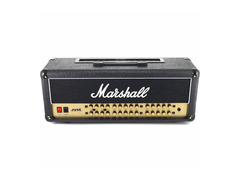
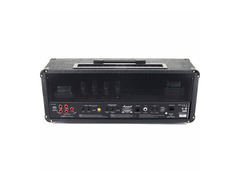
The Marshall JVM-410H Joe Satriani Signature Guitar Amplifier Head is based off the celebrated JVM-410H circuit, and offers a variety of features that will surely impress the most discerning musicians among us.
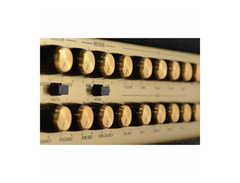
The standout feature for this amp head is that it’s split into four different channels. While most guitarists probably aren’t going to need this feature, it does have a lot of utility for guitarists who need to cover a variety of sounds over the course of a gig or performance. The four separate channels (clean, crunch, od1 and od2) each feature a different level of base gain in addition to their own EQ. This is great for gigs because it allows you to customize the profile of your distortion without having to purchase any extra pedals.
As an added bonus, the JVM-410H Joe Satriani also features a built in noise gate. A noise gate is a pedal (or in this case a circuit built into the amp) that is used to control unwanted frequencies. It reduces things like amplifier or pickup hum, which is a huge plus if you plan on recording with this amp.
Marshall is known for being the amp of choice for the majority of rock music.. Marshall amplifiers have been used on some of the most important albums in music history, and there’s a reason that they’re still being widely used to this day.
For those of you haven’t played through a Marshall before, it’s important to recognize that these amps are geared more towards distortion than clean tones. Fender is generally considered the gold standard for clean tones, while Marshall is thought of as the pinnacle of a great distorted tone. Vox is somewhere in between the two.
As a general rule, the clean channel on Marshall amplifiers is a bit dark and flat. It’s not bad by any means, but it’s never going to be a good fit for jazz or country. However, the gain channel on most Marshall amplifiers is great for everything from Grunge to metal. The amp is also capable of producing a great blues tone, and the early Marshall amps were actually used extensively by Eric Clapton towards the beginning of his career.
As far as quality is concerned, the Marshall JVM-410H is representative of the quality that Marshall has always maintained with its amplifiers. This is a professional quality amp head, so you’re not likely to run into many issues in your first few years of using the amplifier. Of course you’re going to have to get this amp re-tubed and biased from time to time, but that’s to be expected with any tube amplifier.
The only bad thing to say about this amp head is that it doesn’t come with any cabinets. This isn’t a problem unique to this head by any means, but it does mean that musicians who purchase it are looking at another hefty investment to get a good quality cabinet (or two, depending on your needs) if they don’t already have one. This pushes the overall investment that required for this amp into the $3000 range should you decide to purchase it new.
While this amp may be out of the price range of most musicians, it does offer a unique utility to the musician who’s willing to invest in quality. While this amp if a high-end model, there are other Marshall amps that will sound similar but cost you less. If you don’t require the extra features provided by this amp feel free to check out Marshall’s site so you can evaluate all of your options.
See how artists use this







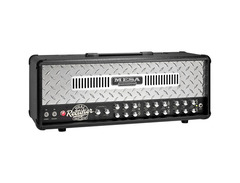
Mesa/Boogie Dual Rectifier 100W 3-channel Solo Head (Multi-Watt)
5.0 (110)
The High-Gain Icon

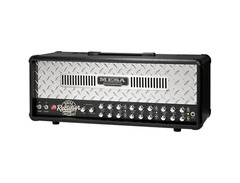

Average Price: $2,639
High-end/Boutique
$300
$801+
Budget
Standard
High-end
- Exceptional tone and sound quality right out of the box
- Crystal clear clean channel with three distinct modes
- Iconic 'Recto' metal/rock sound with deep gain
- Highly versatile for different music genres
- See 5 more
- Some may find it over-featured and complex
- Stock valves perceived as brittle-sounding by some users
- Rear panel adjustments can be inconvenient
- Not everyone's favorite, as sound preferences vary
| Amp Type | tube |
| Total Power | 100w/50w |
| Weight | 41 lbs. |
The Mesa Boogie Dual Rectifier isn’t just an amplifier - it’s a legend. Since its release in the early 1990s, this powerhouse has become the definitive sound of heavy music. From metal’s crushing riffs to hard rock’s soaring leads, the Dual Rectifier has been the go-to weapon for guitarists looking to melt faces and blow minds. But its appeal goes beyond brute force; this amp is as versatile as it is iconic, earning its place in music history.
Mesa Boogie started as a humble repair shop in the 1970s, hot-rodding Fender amps to squeeze out more gain and character. Those tinkering experiments snowballed into creating their own amps, culminating in the Dual Rectifier- a game-changer for guitarists. It wasn’t just about volume; it was about tone, flexibility, and pushing the boundaries of what an amp could do.
What makes the Dual Rectifier special is its sheer versatility. This beast features three fully independent channels, each capable of radically different tones. The clean channel surprises with its clarity and warmth, offering sparkling tones that rival boutique clean amps. Need some grit? Dial it in for a bluesy, responsive overdrive that oozes soul. Then there’s the real star of the show: the high-gain channels. These are where the magic happens, delivering tight, aggressive distortion that cuts like a knife and roars like a thunderstorm. Whether you’re chugging metal riffs, blasting punk chords, or ripping through lead solos, the Dual Rectifier is ready to blow the doors off.
With its 50/100-watt switchable power, you can tailor the amp to your setting. At 50 watts, you get rich tube saturation perfect for studio recording. Crank it to 100 watts, and you’ve got a live rig with headroom to spare, ensuring your sound dominates any stage. The amp’s tube configuration, featuring 6L6 power tubes (and optional EL34s), gives you the best of both worlds: a modern, punchy attack or a more vintage, saggy vibe. Oh, and let’s not forget the rectifier switching. You can toggle between silicon diodes for sharp, aggressive tones or tube rectification for a smoother, old-school feel. It’s like having two amps in one.
This amp isn’t just about sound - it’s built to last. Mesa Boogie has a reputation for crafting amps that are as indestructible as they are beautiful, and the Dual Rectifier is no exception. Its rugged steel chassis and hand-wired circuits are ready for the rigors of the road. The attention to detail is impeccable, from the premium transformers to the robust pots and jacks. Sure, it’s heavy (about 40 pounds for the head), but that’s the price of owning a tank that doubles as an amp. If you’re a touring musician, the Dual Rectifier is a reliable workhorse that won’t let you down.
Let’s talk tone. This amp delivers the high-gain crunch and sustain that have defined modern metal and hard rock. But it doesn’t stop there. The clean channel offers a lush, pristine sound that’s rare in high-gain amps, making it versatile enough for players who need a little bit of everything. Want thick, creamy overdrive? It does that, too, with dynamic responsiveness that rewards subtlety and aggression alike. And when you push it into full-on distortion, the Dual Rectifier unleashes a wall of sound that’s tight, articulate, and packed with harmonic richness.
The Mesa Boogie Dual Rectifier isn’t cheap, and it isn’t light. But for those willing to invest, it’s a ticket to tonal nirvana. This amp has earned its legendary status by delivering unrivaled performance and versatility. Whether you’re in the studio, on the stage, or just jamming at home, the Dual Rectifier has the firepower to bring your sound to life. It’s not just an amp - it’s a sonic powerhouse that continues to inspire guitarists across generations.
See how artists use this


.jpeg?v=1783873076)
.jpeg?v=1783873076)




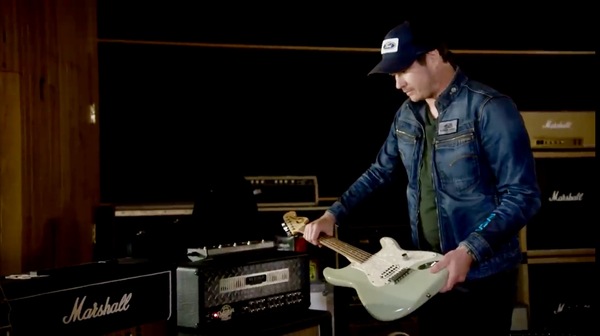
Roland JC-120 Jazz Chorus
4.5 (121)
The Solid State Jazz Icon
-s.webp?v=1783864899)
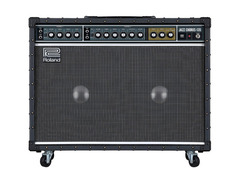


Average Price: $1,077
High-end/Boutique
$300
$701+
Budget
Standard
High-end
- Legendary clean tone, unmatched in clarity and warmth
- Iconic, lush chorus and vibrato effects built-in
- Exceptional build quality, especially in older models
- Handles pedals and external effects exceptionally well
- See 6 more
- Distortion channel is not suitable for heavy genres
- Large and heavy, making it difficult to transport
- Some models develop a hiss over time due to lesser quality parts
- Original models lack modern features like stereo input options
- See 5 more
| Amp Type | solid state |
| Total Power | 2 x 60w |
| Speaker Size | 2 x 12" |
| Onboard Reverb | yes |
| Weight | 61.73 lbs. |
This 120-watt solid-state powerhouse has been a favorite among jazz guitarists for decades, offering a combination of crystal-clear clean tones and a signature stereo chorus effect that creates a sound like no other.
At the heart of the JC-120's appeal is its exceptional clean tone. Unlike tube amps, the solid-state design provides unwavering clarity even at high volumes. This makes it ideal for jazz players who need their complex chord voicings and intricate single-note lines to cut through with pristine definition. The amp's high headroom ensures that your tone remains clean and undistorted, even when pushed to stage-filling volumes.
The stereo chorus effect is where the JC-120 truly shines. This built-in effect, which gives the amp its "Jazz Chorus" moniker, creates a lush, three-dimensional sound that seems to envelop the listener. For jazz guitarists, this can add a subtle shimmer to comping chords or a spacious quality to solo lines. The effect is adjustable, allowing you to dial in anything from a subtle widening of the sound to a more pronounced, swirling chorus.
The amp's dual 12-inch speakers, each powered by its own 60-watt amplifier, contribute to its expansive stereo sound. This configuration not only enhances the chorus effect but also provides excellent dispersion of sound, ensuring that your tone is consistently clear from any listening angle.
Tone shaping on the JC-120 is comprehensive. The three-band EQ (bass, middle, treble) offers precise control over your sound, while the bright switch can add extra sparkle when needed. The amp also features a "Jazz Chorus" switch that engages both the chorus and vibrato effects simultaneously, creating a unique modulated sound that's become a signature of the amp.
One of the JC-120's most appreciated features among jazz players is its excellent pedal platform capabilities. The amp's clean, neutral tone provides the perfect canvas for effects pedals, allowing guitarists to expand their sonic palette without the amp coloring the sound of their pedals.
The built-in reverb is another standout feature. Unlike the spring reverbs found in many tube amps, the JC-120's reverb is smooth and natural-sounding, adding depth to your tone without overwhelming it. This can be particularly useful for creating ambient textures in modern jazz contexts.
While primarily known for its clean tones, the JC-120 also includes a distortion channel. While not typically used in traditional jazz, this can be useful for fusion players or those who occasionally need a grittier tone.
The Roland JC-120 has been used by a diverse array of players, from jazz fusion pioneer Pat Metheny to Andy Summers of The Police. Its reliability, consistent tone, and unique stereo capabilities have made it a staple on stages and in studios worldwide.
For jazz guitarists seeking an amp that offers unwavering clean tones, a unique stereo spread, and excellent reliability, the Roland JC-120 Jazz Chorus is a top contender. It provides a distinct alternative to traditional tube amps, offering a sound that's become a classic in its own right.
See how artists use this




EVH 5150 III 100-Watt Tube Head
5.0 (17)
The Modern Metal Maestro

Average Price: $1,922
High-end/Boutique
$300
$801+
Budget
Standard
High-end
- Versatile with three distinct channels (clean, crunch, heavy)
- Each channel has independent EQ settings
- Superior tone and sustain, especially on high gain
- Comes with a footswitch for seamless channel and effects loop switching
- See 6 more
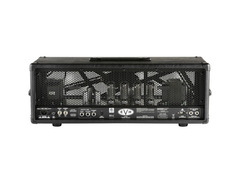
- Power & standby switches inconveniently located at the back
- Large and heavy, not the most portable option
- No onboard effects, external reverb/delay recommended
- Some find it too powerful for home use
- See 1 more
| Amp Type | tube |
| Total Power | 100w |
| Weight | 55 lbs. |
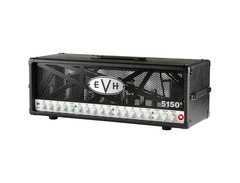
The EVH 5150III 100W 6L6 is a high-gain juggernaut born from Eddie Van Halen's quest for the ultimate rock tone. This amplifier is a staple in the metal community, renowned for its ability to deliver crushing rhythms and soaring leads with unparalleled power and clarity.
At the heart of the 5150III lies a three-channel preamp, each meticulously voiced to cover the spectrum of metal tones. The clean channel offers surprising headroom and clarity, ideal for sparkling cleans, arpeggios, and even some light overdrive. The crunch channel delivers a wide range of rock tones, from classic crunch to modern aggression, perfect for rhythm work and driving riffs. However, it's the lead channel where this amp truly excels, unleashing a torrent of molten lava with incredible note definition and sustain.
The 100-watt output, driven by four 6L6 power tubes, provides the sheer power and headroom required to conquer any stage. This amp will effortlessly cut through the loudest band, delivering the crushing volume and impact that metal demands. The power section contributes significantly to the amp's character, adding a thick, saturated tone that enhances sustain and gives solos a singing quality.
One of the 5150III's most impressive feats is its ability to maintain clarity even at extreme gain levels. Palm-muted riffs remain tight and articulate, while complex chords retain their definition, a crucial aspect for modern metal styles that demand both heaviness and precision.
The amp's control set offers extensive tonal shaping possibilities. Each channel features independent gain and EQ controls, allowing for precise sculpting of your sound. The presence and resonance controls on the power amp section provide further refinement, letting you dial in the perfect amount of top-end sizzle and low-end punch.
For metal players who incorporate effects, the 5150III includes a series effects loop. This feature ensures that time-based effects like delay and reverb retain their clarity and don't get lost in the high-gain onslaught.
While the EVH 5150III 100W 6L6 excels at high-gain metal, it's versatile enough to cover a wide range of rock and metal styles. From classic heavy metal to modern djent and even some hard rock, this amp delivers the goods. Its tonal palette has made it a favorite among metal guitarists, including luminaries like Periphery's Misha Mansoor and Alter Bridge's Mark Tremonti.
For metal players seeking an amplifier that delivers crushing power, exceptional clarity, and the ultimate in high-gain performance, the EVH 5150III 100W 6L6 is the undisputed king. This is an amp built for the stage, designed to unleash the full fury of your metal vision.
See how artists use this






Key Features to Consider When Choosing an Amp

Selecting the right amplifier is crucial for achieving your desired tone and meeting your practical needs. Here are the key features to consider when making your choice:
Wattage: Power for Your Needs
Wattage is often misunderstood in the world of guitar amps. While higher wattage generally means more volume, it's not a linear relationship. The key is to match the amp's power to your specific requirements.
For home practice, a low-wattage amp (1-20 watts) is usually sufficient. These amps can produce great tone at lower volumes, making them ideal for bedroom players. Many modern low-wattage amps also include power scaling features, allowing you to reduce the output for even quieter practice.
For small gigs or rehearsals, a medium-wattage amp (20-50 watts) often provides the perfect balance of power and portability. These amps typically offer enough headroom for clean tones at band volumes while still allowing for power tube saturation at reasonable levels.
For larger venues or outdoor performances, high-wattage amps (50 watts and above) come into play. These amps provide the necessary headroom and projection to fill larger spaces. However, remember that doubling the wattage doesn't double the volume – it only increases it by about 3 decibels.
Solid-state amps generally need higher wattage to compete with tube amps in terms of volume. A 100-watt solid-state amp might be roughly equivalent in volume to a 50-watt tube amp.
Portability: From Home to Stage
The size and weight of an amp can be crucial, especially for gigging musicians. While larger amps often provide more power and sometimes better tone, they can be challenging to transport regularly.
Combo amps, which combine the amplifier and speaker in one unit, are generally more portable than separate head and cabinet setups. However, for very large gigs, a head and cabinet might be more practical as they can be carried separately.
Consider the venues you'll be playing most often. For home use and small gigs, a portable combo amp might be ideal. For larger venues where the amp will be mic'd through a PA system, a smaller, high-quality amp can work well.
Many modern amps offer great tone in surprisingly compact packages. Digital modeling amps, in particular, can provide a wide range of sounds in a lightweight, portable format.
Built-In Features: Effects and Connectivity
Today's amps often come with a variety of built-in features that can expand your tonal palette and increase versatility:
Effects: Many amps include built-in effects like reverb, delay, chorus, and more. These can be convenient, especially for players who don't want to deal with separate pedals.
Multiple Channels: Amps with multiple channels allow you to switch between different tones (e.g., clean and overdriven) at the press of a button.
Digital Connectivity: Some amps offer USB connections for direct recording or integration with digital audio workstations.
Bluetooth: This feature allows you to stream backing tracks through your amp, which can be great for practice.
Power Scaling: This feature lets you reduce the amp's output power, allowing for cranked tones at lower volumes.
Speaker-Emulated Outputs: These allow you to connect directly to a PA or recording interface while simulating the sound of a mic'd speaker cabinet.
Budget: Balancing Quality and Price
While it's tempting to focus solely on price, it's important to consider long-term value. A more expensive amp that meets all your needs and inspires you to play more might be a better investment than a cheaper one that falls short.
Consider what features are most important to you and prioritize accordingly. For some players, a simple, high-quality tube amp might be worth the investment. For others, a feature-packed modeling amp might offer better value.
Remember that the used market can be a great way to get high-quality amps at lower prices. Many professional-grade amps are built to last and can provide excellent value on the second-hand market.
Ultimately, the best amp for you is one that inspires you to play more and helps you achieve the tones you hear in your head. By considering these key features – wattage, portability, built-in features, and your budget – you'll be well-equipped to choose an amp that meets your needs and helps you grow as a guitarist.
Frequently Asked Questions
When it comes to guitar amplifiers, there are several common questions that players often ask. Let's address some of these to help you make a more informed decision.
What's the difference between tube and solid-state amps? Tube amps use vacuum tubes in their circuitry, while solid-state amps use transistors. The key differences are in tone, responsiveness, maintenance, and weight. Tube amps are known for their warm, rich tone and natural compression. They tend to distort in a way that many players find musical and pleasing. Solid-state amps typically offer a cleaner, more precise sound with less coloration. In terms of responsiveness, tube amps are highly reactive to playing dynamics. They respond to your touch, getting louder and dirtier as you play harder. Solid-state amps generally have a more consistent response regardless of playing intensity. Maintenance-wise, tube amps require more upkeep. Tubes wear out over time and need replacing. Solid-state amps are generally more reliable and require less maintenance. When it comes to weight, tube amps are usually heavier due to the transformers needed for the tubes, while solid-state amps are typically lighter and more portable.
How much wattage do I need for my gigs? The wattage you need depends on several factors: venue size, whether you're mic'd through a PA, how much clean headroom you need, and your band's overall volume. As a rough guide, for home practice, 1-20 watts is usually sufficient. Small gigs in coffee shops or small bars might require 15-50 watts. Medium venues often call for 50-100 watts, while large venues might need 100 watts or more. Remember, these are general guidelines. A 50-watt tube amp can be loud enough for many medium-sized venues, especially if mic'd through a PA system. It's also worth noting that the perceived volume doesn't increase linearly with wattage. Doubling the wattage only results in about a 3dB increase in volume, which is just noticeable to the human ear.
Are modeling amps good for beginners? Modeling amps can be excellent for beginners for several reasons. They offer a wide range of amp and effect simulations, allowing beginners to explore different tones without buying multiple amps or pedals. Many modeling amps include built-in practice features like metronomes and drum loops, and often allow connection to computers for recording. They typically have headphone outputs, allowing for silent practice, which is crucial for many beginners. Modeling amps often provide great value, offering many features at a lower price point than comparable traditional setups. Their user-friendly interfaces make it easy for beginners to experiment with different sounds. However, some argue that beginners should start with simpler amps to focus on developing their playing skills rather than tweaking settings. Ultimately, the best choice depends on the individual's goals and learning style.
Can I use a practice amp for live performances? While it's possible to use a practice amp for live performances, it may not be ideal for several reasons. Most practice amps don't have enough power to compete with a full band, especially in venues without PA support. Practice amps are often designed for low-volume play and may not sound their best when pushed to higher volumes. Many practice amps lack features useful for live play, such as effects loops or multiple channels. However, for very small venues or acoustic performances, a practice amp might suffice. Additionally, some modern practice amps are designed with live play in mind and may work well for small gigs. If you're considering using your practice amp live, it's crucial to test it in a band setting first. If it's not loud enough or doesn't cut through the mix, you may need to consider a more powerful amp for live performances. Remember, the goal is to be heard clearly without straining your amp, which could lead to poor tone or even damage to the equipment.
Finding Your Perfect Amp

Choosing the right guitar amplifier is a deeply personal journey that goes beyond mere specifications and features. It's about finding a musical partner that inspires you to play, helps you express your unique voice, and reliably delivers the tones you hear in your head.
As you embark on your quest for the perfect amp, remember that there's no universally "best" amplifier. What works beautifully for one guitarist might fall short for another. Your ideal amp will depend on your playing style, the genres you prefer, your practical needs, and even your future aspirations as a musician.
Consider your primary use case. Are you mainly a bedroom player looking for great tone at low volumes? A gigging musician who needs reliability and versatility? Or a studio enthusiast seeking the utmost in tonal purity? Each scenario might lead you to a different amplifier choice.
Don't underestimate the importance of trying amps in person whenever possible. Specs and reviews can guide you, but there's no substitute for playing through an amp yourself. Pay attention to how it responds to your touch, how it sounds at various volumes, and how intuitive its controls feel.
Keep in mind that your perfect amp might change as you evolve as a player. Many guitarists find that their amplifier preferences shift as they explore new styles or as their playing improves. It's perfectly normal to outgrow an amp or to discover new needs as your musical journey progresses.
Remember that the amp is just one part of your overall tone. Your guitar, pickups, effects pedals, and even your playing technique all contribute to your sound. The perfect amp for you will complement these elements and help bring out the best in your entire rig.
Finally, trust your ears and your instincts. While it's valuable to seek advice and read reviews, ultimately, you're the one who'll be playing through this amp. If an amplifier makes you want to keep playing and helps you sound the way you want to sound, that's a strong sign you're on the right track.
The world of guitar amplifiers is vast and varied, offering something for every player and every style. Whether you end up with a vintage tube classic, a modern digital modeling marvel, or something in between, the perfect amp for you is out there. Happy hunting, and may you find an amplifier that brings your musical vision to life.
Plug In, Turn Up, and Rock On!
Now that you're armed with knowledge about the best guitar amplifiers for every style and budget, it's time to take the next step in your tonal journey. Don't let analysis paralysis hold you back – the perfect amp is waiting for you to discover it.
Head to your local guitar shop and get your hands on some of these amps. Feel the warmth of tube saturation, experience the clarity of solid-state, and explore the vast possibilities of modeling technology. Remember, the best amp is the one that makes you want to play more.
Share your amp experiences with fellow guitarists. Join online forums, participate in local jam sessions, and don't be afraid to ask questions. The guitar community is vast and always eager to discuss gear.
Most importantly, keep playing. Whether you're rocking a practice amp in your bedroom or cranking a stack on stage, it's your passion and creativity that truly make the music come alive.
Top Ranked Guitar Amplifier Heads on Equipboard


$1,800.00 - $3,299.00
5.0 (110)
5.0 (110)

$599.00 - $1,999.99
5.0 (59)
5.0 (59)

$1,349.00 - $1,848.00
5.0 (34)
5.0 (34)
About the authors
Mason is a freelance music gear writer that contributes to Equipboard, Reverb, TuneCore, Music Aficionado, and more. He plays the guitar and mandolin and resides in Wyoming. Read more
S. Jino is an accomplished multi-instrumentalist and music producer based in Kolkata, India, distinguished by his self-taught mastery and unique blend of technical acumen and musical performance. His extensive experience was forged through hands-on dedication, starting with the full restoration of a broken guitar. Jino's capabilities span keyboards, pedals, and advanced digital production, reflecting a comprehensive skill set developed independently. As a significant contributor to the music scene, Jino regularly performs with worship bands and college ensembles. He has also established himself as a reliable and authoritative professional in freelance mixing, mastering, and original music creation. Inspired by the innovative sounds of Brian May and David Gilmour, and influenced by Kolkata's vibrant metal community, Jino is committed to the intricate art of vintage gear restoration and the continuous exploration of music and technology fusion. His current professional setup, featuring a meticulously restored nameless guitar, a Fender Player Strat, and a Boss Katana 50. Read more
Comments
Sign Up or Log In to add comments

838
Morgan RCA35R

45
I like the Orange Micro Terror & it's Micro Dark version. But after comparing a hybrid tube/solid state 20W amp to the 5W Bugera T5 Infinium all tube, I'd have to say that on sale at the price of the Orange White lunchbox, the Bugera was the better amp of the two lunchboxes. Unfortunately, I didn't get a chance to compare a Joyo Bantamp hybrid, I figure it's about the same as the Orange hybrids though.
New in Guitar Amplifier Heads and Combo Guitar Amplifiers


$159.00 - $229.99
in Combo Guitar Amplifiers Rank

$1,499.00 - $1,535.00


$3,799.99 - $4,555.00


$1,725.00 - $1,999.99


$498.00 - $749.99