Table of Contents

Equipboard
Equipboard is the world's largest community of artists and their gear. Read our review process.
We are reader-supported. When you buy through links on our site, we may earn an affiliate commission. Learn more.
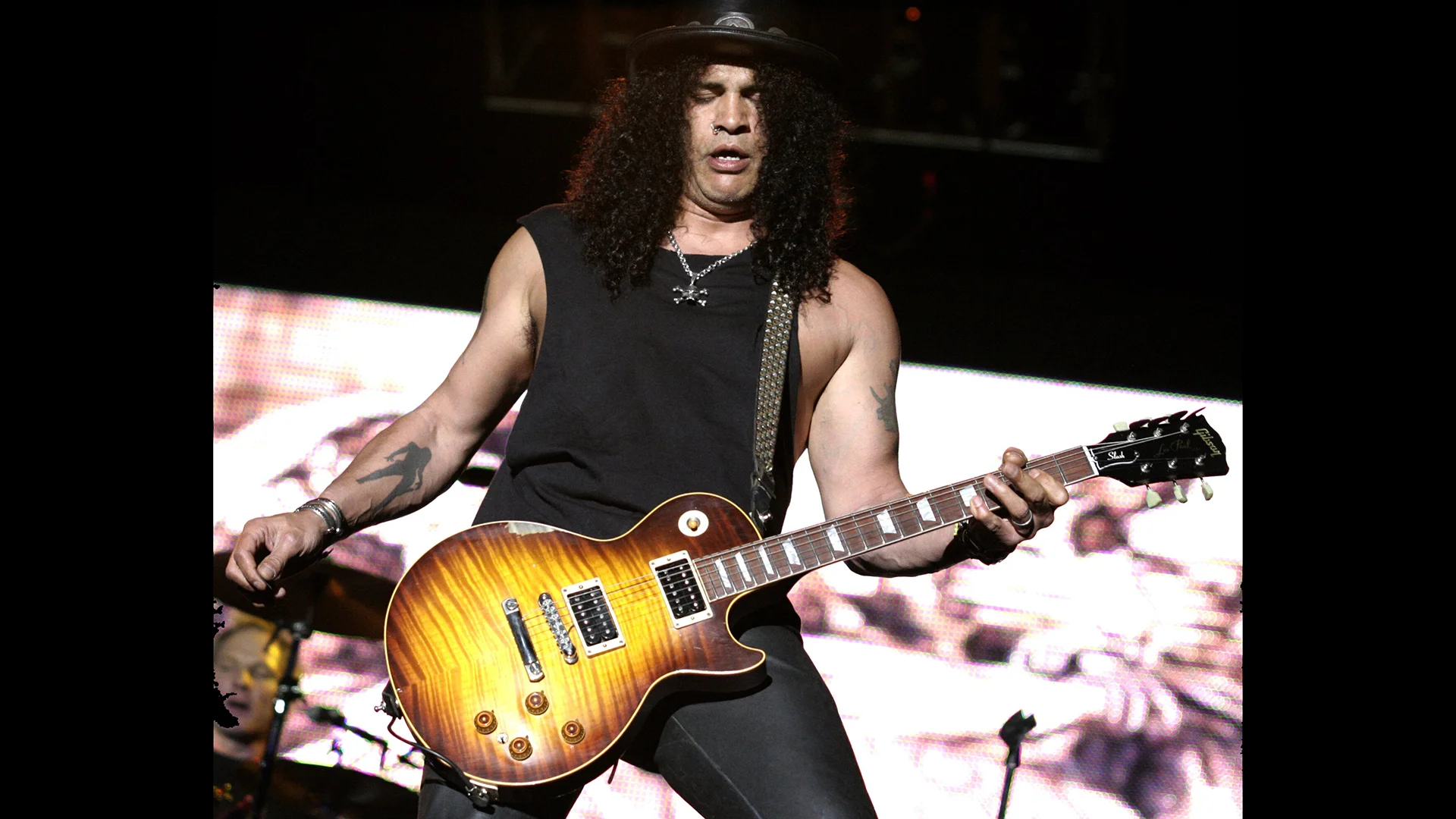
Few guitarists are as visually and sonically linked to one guitar as Slash is to his sunburst Les Paul. The image is iconic: a tall figure in a top hat, with curly hair cascading down, wielding a beautiful honey sunburst Les Paul as he delivers some of rock's most memorable riffs and solos. It's a pairing so perfect that it's hard to imagine one without the other.
But here's the surprising twist that many fans don't know: the guitar that helped create the groundbreaking sound on Guns N' Roses' legendary "Appetite for Destruction" album wasn't actually a Gibson at all. It was a replica, crafted by a luthier named Kris Derrig. This revelation opens up a fascinating story about tone hunting, happy accidents, and how sometimes the "right" guitar finds the right player through unexpected channels.
The Mythical Les Paul Copy
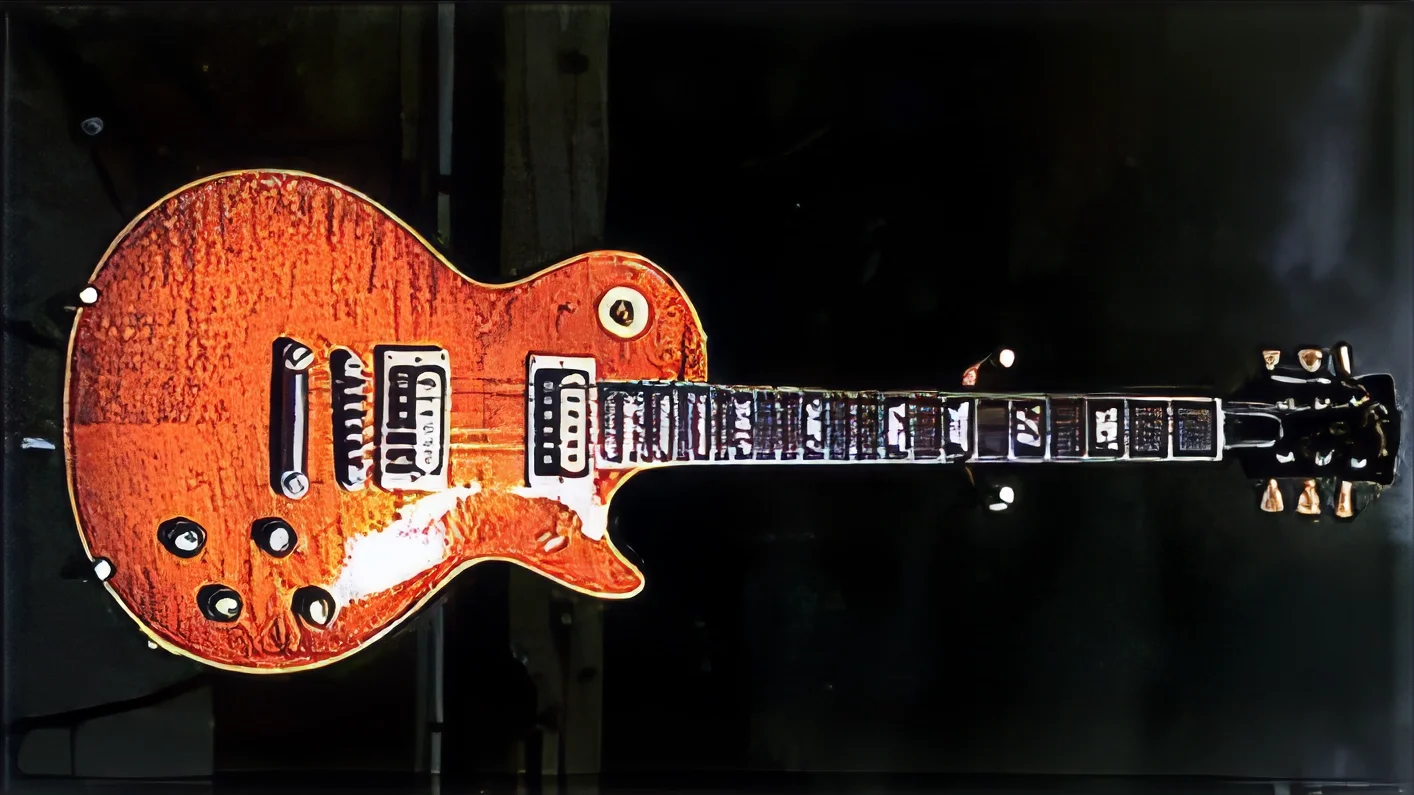
The story of Slash's most famous guitar begins not with Gibson, but with a talented luthier who unfortunately didn't live to see the full impact of his craftsmanship. Before "Appetite for Destruction" would go on to sell over 30 million copies worldwide, Slash was in need of a reliable, great-sounding guitar for the recording sessions.
The Hunt for the Perfect Guitar
In 1986, Guns N' Roses was preparing to record their debut album, and Slash needed something better than the guitars he had been using for live performances. The band's manager at the time, Alan Niven, recognized this need and stepped in to help.
According to interviews with Slash, he had tried various guitars but hadn't found one that delivered exactly what he wanted. "I needed something that could give me that sustain and warmth, but also cut through with enough bite." The Les Paul shape and feel had always appealed to him, but finding the right one proved challenging.
This is where fate intervened in the form of a replica Les Paul built by luthier Kris Derrig. Niven connected Slash with this guitar, which had been built as a meticulous reproduction of a late-1950s Les Paul Standard, complete with period-correct details that Gibson itself wasn't even including in their contemporary models.
The Kris Derrig Les Paul
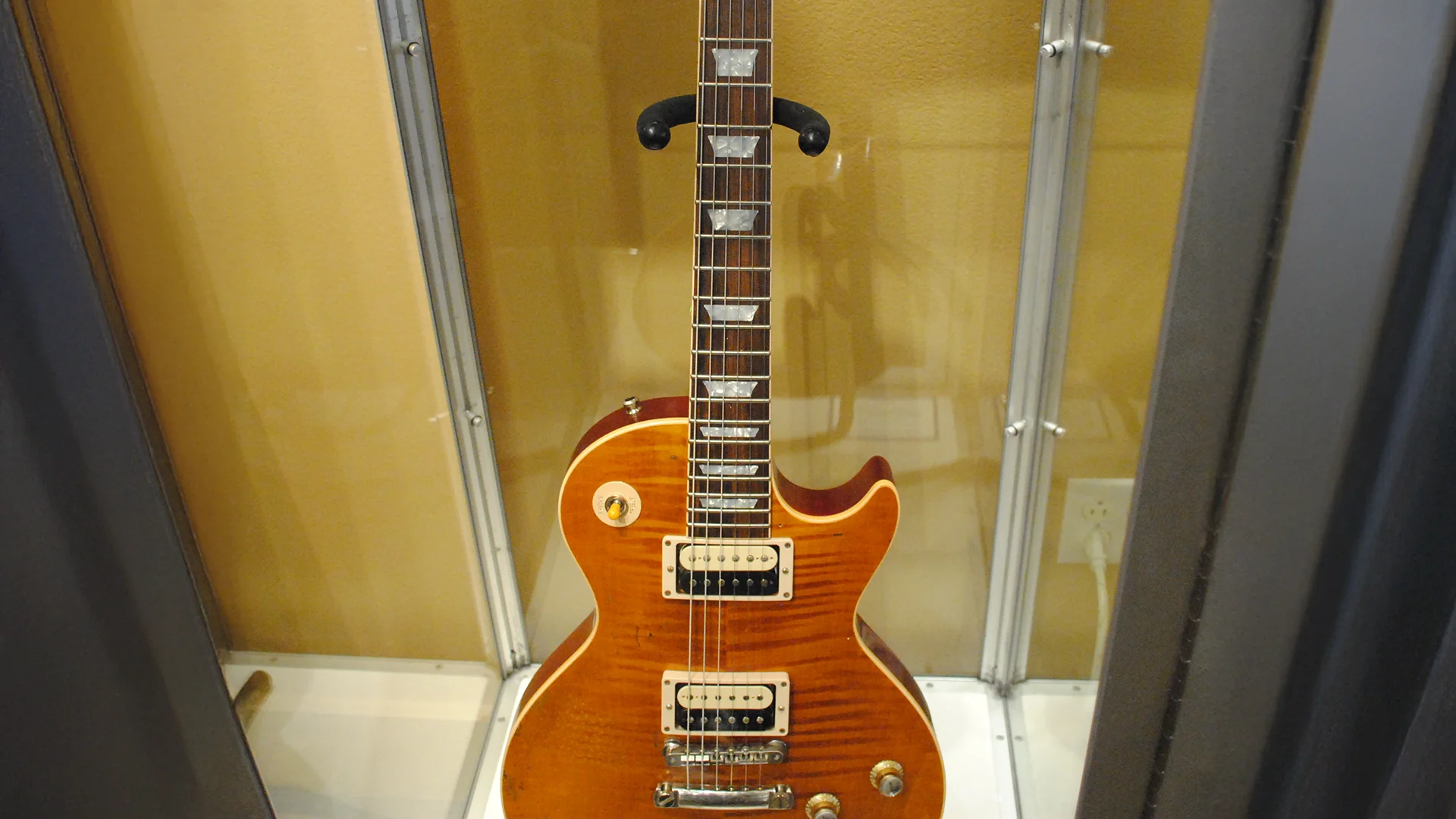
What made this particular guitar special? The Derrig Les Paul was hand-crafted with extraordinary attention to detail. It featured a carefully selected, solid mahogany body with a carved, two-piece maple top that had beautiful flame figuring. The neck was also mahogany, with a rosewood fingerboard and carefully crafted neck profile that mimicked the feel of vintage Les Pauls from the late 1950s.
For electronics, the guitar was equipped with Seymour Duncan Alnico II Pro humbucking pickups, which provided the perfect balance of warmth and clarity. The combination of these components created a tone that was rich in harmonics, with incredible sustain and a distinctive midrange growl when pushed through a Marshall amplifier.
Slash immediately connected with this instrument. "It just felt right from the moment I picked it up," he has said. The guitar had the perfect balance and tone he had been searching for, and it quickly became his main instrument for recording "Appetite for Destruction."
Impact on "Appetite for Destruction"
The impact of this guitar on the album cannot be overstated. From the opening notes of "Welcome to the Jungle" to the soaring solo in "Sweet Child O' Mine" and the gritty riffing of "Paradise City," the Derrig Les Paul helped Slash create a tone that would influence generations of rock guitarists.
What's particularly fascinating is how the guitar contributed to Slash's technique. The comfortable neck profile and excellent setup allowed him to execute his expressive bending and vibrato techniques with precision. The guitar's natural sustain meant he could hold notes and let them sing, creating those emotional, vocal-like phrases that became his signature.
Many audio engineers and producers who worked on the album have commented on how cohesive the guitar tracks sounded, largely because Slash used primarily one instrument throughout the recording. This consistency created a unified sonic character across the album that helped define the band's sound.
Partnership with Gibson
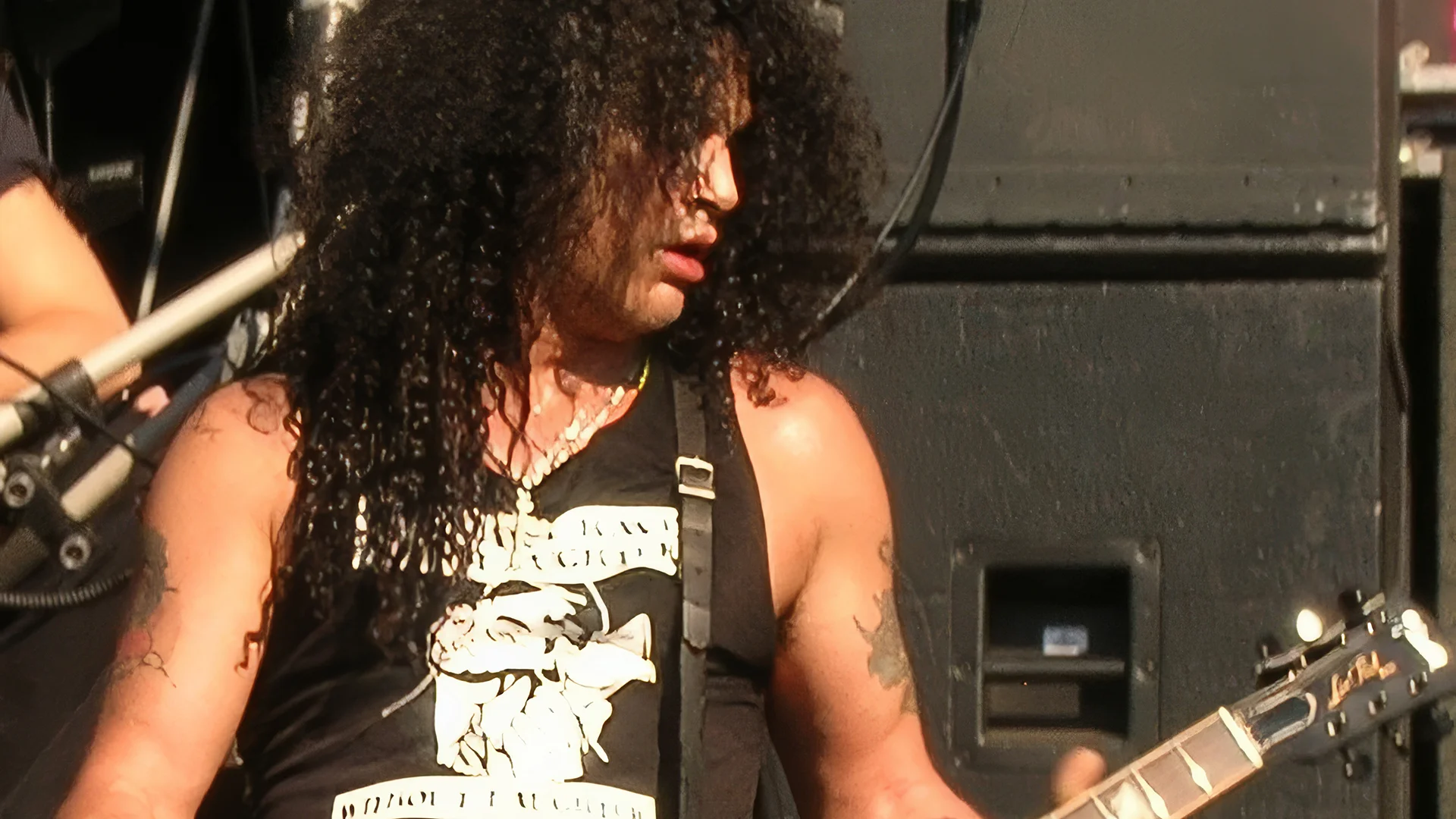
After the enormous success of "Appetite for Destruction," Slash had become one of the most visible guitarists in the world, and his association with the Les Paul helped resuscitate interest in a model that had fallen somewhat out of fashion during the 1980s, when superstrats and pointy guitars dominated the hard rock scene.
From Replica to the Real Thing
As Slash's profile grew, so did his guitar collection. While he continued to use his beloved Derrig copy, he also began acquiring authentic Gibson Les Pauls. His relationship with Gibson officially began in the early 1990s when the company recognized the valuable association with the high-profile guitarist.
By 1997, the relationship had developed to the point where Gibson's Custom Shop created the first official Slash model, though it wasn't yet a full production signature guitar. This limited-edition instrument was based on the specifications of Slash's preferred Les Pauls and featured a AAA flame maple top, custom wound pickups, and specific neck dimensions tailored to his preferences.
What's interesting about Slash's transition to Gibson proper is that he didn't abandon his replicas; rather, he embraced both the originals and the excellent copies in his arsenal. This pragmatic approach to instruments demonstrates his focus on playability and sound over provenance or brand name, a refreshing attitude in an industry often driven by brand loyalty and vintage obsession.
The Gibson Slash Signature Models
The formal Slash Signature Les Paul line didn't appear until the 2000s, when Gibson and Slash collaborated on a production model that would be available to the general public. The first widely available signature model featured several distinctive elements:
- A AAA figured maple top on a mahogany body
- Slash's preferred neck profile (a comfortable rounded shape)
- Custom Seymour Duncan "Slash" Alnico II Pro humbuckers
- A special "Slash" headstock logo and truss rod cover
- Distinctive tobacco sunburst finish similar to his most famous guitar
These guitars were an immediate success, allowing fans and tone-seekers to get closer to Slash's sound through an instrument that had his direct input in the design process. What made these guitars particularly special was that they weren't just aesthetic replicas with a signature on the headstock; they were instruments that incorporated specific elements that contributed to Slash's sound.
Over the years, the Gibson Custom Shop has released various limited editions and variations of the Slash model, including aged finishes, special color options, and even exact replicas of specific instruments from his collection.
Epiphone Options for Budget-Conscious Players
Recognizing that many fans and aspiring guitarists couldn't afford the premium prices of Gibson Custom Shop instruments, Slash and Gibson extended their partnership to include Epiphone models. Epiphone, owned by Gibson, produces more affordable versions of many Gibson designs.
The Epiphone Slash signature models maintain many of the important features of their Gibson counterparts, including:
- Similar body and neck woods (though sometimes with a maple veneer top rather than a solid maple cap)
- Slash-designed Alnico II Pro humbucking pickups
- The distinctive finishes and aesthetic details
- Slash's preferred neck profile
While these instruments don't have the hand-crafted touches of the Gibson Custom Shop models, they provide an accessible entry point for fans and students who want to capture some of Slash's magic without breaking the bank. Their popularity has made them some of Epiphone's best-selling models, proving that the appeal of Slash's tone and style extends well beyond just hardcore fans or collectors.
Slash's Les Paul Specs & Tone
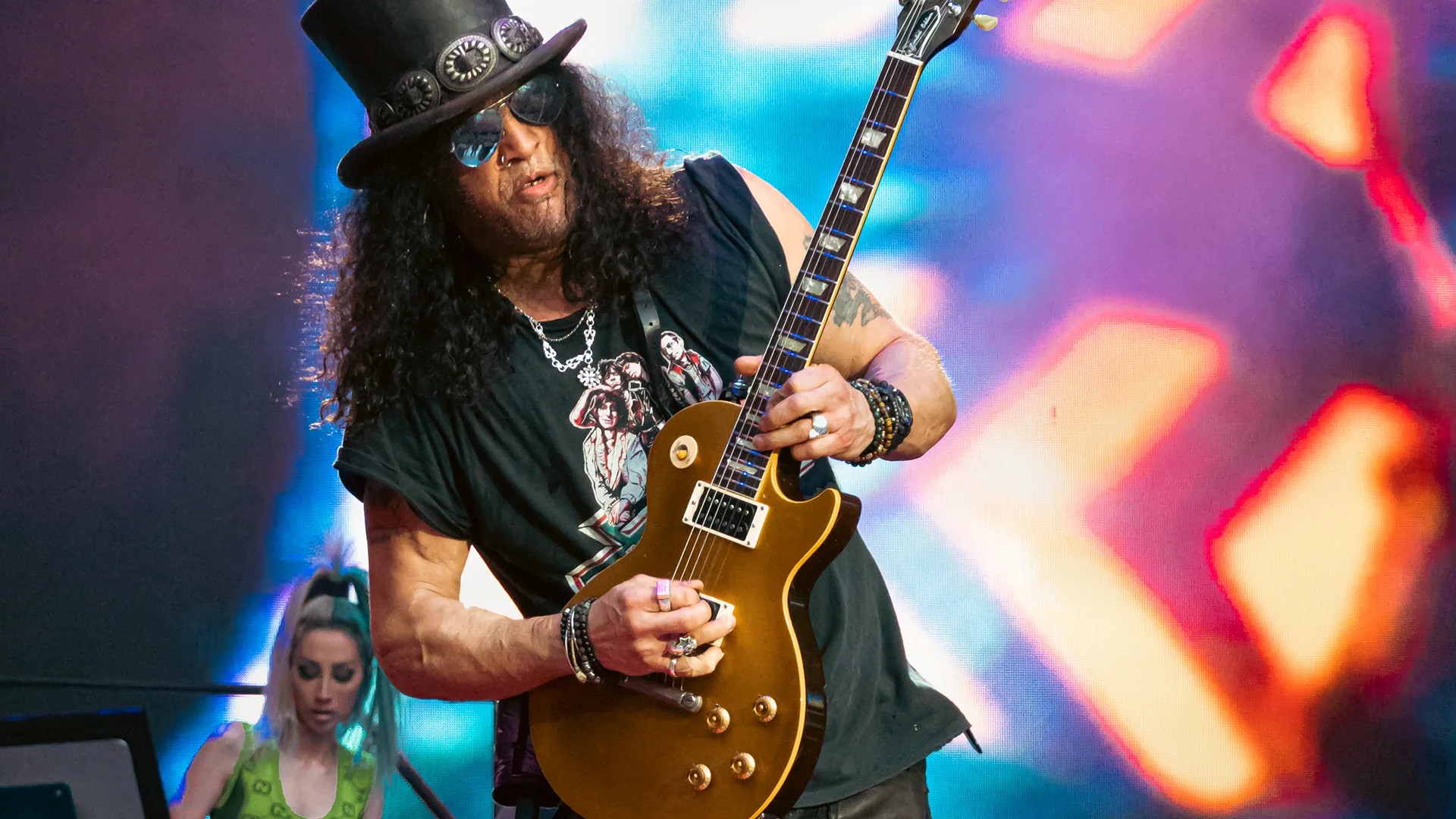
What exactly makes Slash's Les Pauls special from a technical standpoint? Let's dive into the specifications and components that create his unmistakable tone.
The Woods and Construction
At the foundation of any Les Paul, including Slash's signature models, is the wood selection and construction method. Slash's preferred specifications include:
- Mahogany body: Provides warmth, richness, and good sustain
- Maple top: Adds brightness and definition to balance the mahogany
- Mahogany neck: Contributes to the warm tone and provides a specific feel
- Rosewood fingerboard: Offers a smooth playing surface with warm tonal characteristics
The body construction follows the traditional Les Paul design with a carved top and single-cutaway shape. The neck is glued into the body using a tenon joint, which maximizes the transfer of vibrations between the neck and body, enhancing sustain.
The weight of the guitar is also significant. Slash tends to prefer slightly heavier Les Pauls (around 9-10 pounds) compared to weight-relieved modern versions. This additional mass contributes to the sustain and fullness of his tone, though it can make for a workout during long shows.
The neck profile is another important factor. Slash prefers a rounded, comfortable '50s-style neck rather than the slimmer profiles found on some modern guitars. This chunkier neck actually helps many players with their technique, providing a solid foundation for the fretting hand.
Pickups and Electronics
Perhaps the most critical component in Slash's tone comes from his choice of pickups. His signature guitars feature:
- Seymour Duncan Alnico II Pro humbuckers (or Gibson's reproductions of these)
- Alnico II magnets, which provide a sweeter, more vintage-voiced tone than the hotter Alnico V magnets
- A slightly lower output compared to modern high-gain pickups, which allows for more dynamic response
The electronics follow the traditional Les Paul layout: - Two volume controls (one for each pickup) - Two tone controls (one for each pickup) - Three-way toggle switch for pickup selection
Slash typically sets both volume knobs to maximum and controls his volume from his amplifier or with his guitar technique. The tone controls are usually set around 7 or 8, rolling off just a touch of the highest frequencies to avoid brittleness.
Hardware Choices

The hardware on Slash's Les Pauls contributes both to the aesthetic and the sound:
- Nickel-plated hardware with an aged or vintage patina
- Tune-o-matic bridge and stop tailpiece, allowing for precise intonation adjustment
- Vintage-style tulip tuners, which balance tuning stability with classic looks
Slash prefers having the tailpiece fairly close to the body rather than raised, which increases the break angle of the strings over the bridge and enhances sustain.
String Selection and Setup
For strings, Slash has long been associated with Ernie Ball Slinkys, typically using a gauge of .010 to .046. This medium-gauge set provides enough tension for his bending technique while still allowing for comfortable playability.
His action is set medium-high, which might feel uncomfortable to players accustomed to super-low, fast setups. However, this higher action prevents string buzz, especially with his aggressive picking style, and contributes to the sustain and clarity of his sound.
The Marshall Connection
While not strictly part of the guitar itself, no discussion of Slash's tone would be complete without mentioning his amplifiers. The interaction between his Les Paul and his Marshall amplifiers is a crucial part of his sound. He typically uses:
- Marshall JCM800 2203 or modified plexi-style heads
- Marshall 1960 4x12 cabinets with Celestion speakers
- A minimal effects setup, often just a wah pedal, with the occasional delay or boost
The combination of the warm, midrange-focused Les Paul and the bright, aggressive Marshall creates the perfect balance that allows his guitar to cut through the mix while maintaining body and character.
Other Notable Guitars in Slash's Arsenal

While the Les Paul has become synonymous with Slash, he has used various other guitars throughout his career. These instruments have appeared on recordings and live performances, sometimes for specific sounds or just to accomplish what his Les Pauls couldn't.
B.C. Rich Mockingbird
Before settling on the Les Paul as his main guitar, Slash was known to play a B.C. Rich Mockingbird in his early days. This distinctive guitar, with its asymmetrical body shape, was quite popular in the hard rock and metal scenes of the early 1980s.
Slash used a Mockingbird for some early Guns N' Roses shows and rehearsals. While it didn't become his main instrument, it represents an interesting chapter in his development as a guitarist. The Mockingbird's 24-fret neck allowed for higher notes than his later Les Pauls, though the overall tone was quite different from what would become his signature sound.
Gibson EDS-1275 Doubleneck
For live performances of "Knocking on Heaven's Door" and occasionally "Civil War," Slash has used the impressive Gibson EDS-1275 doubleneck guitar. This beast of an instrument features a 12-string neck on top and a standard 6-string on the bottom, allowing Slash to switch between the two sounds without changing guitars.
The 12-string provides the lush, ringing quality heard on the recorded intro to "Knocking on Heaven's Door," while the 6-string neck allows him to perform the solo and more intricate parts. While certainly not an everyday guitar, this instrument showcases Slash's willingness to use specialized tools when the music demands it.
Travis Bean Artist
In the very early days, before Guns N' Roses recorded their debut album, Slash used a Travis Bean Artist. These unique guitars featured an aluminum neck that ran through the entire body, creating tremendous sustain and a distinctive tone.
While this guitar didn't make it onto "Appetite for Destruction," it reportedly appeared on some early demos. The Travis Bean represents an interesting "what if" scenario; had Slash continued with this instrument rather than finding his Les Paul, his signature sound might have evolved quite differently.
Guild Crossroads and Other Acoustics
For acoustic work, Slash has used various instruments over the years. Notable among these is the Guild Crossroads, which he played on acoustic performances during the Use Your Illusion era. He's also been spotted with various Martin and Gibson acoustic models.
His approach to acoustics seems similar to his electric choices: he gravitates toward instruments with full, rich tones rather than overly bright or thin-sounding guitars. This consistency across his instrument choices demonstrates a clear tonal preference that transcends specific models or brands.
The Les Paul Always Wins
Despite these diversions into other instruments, Slash always returns to the Les Paul. "Nothing feels as right in my hands," he's often said in interviews. The Les Paul offers him the perfect balance of playability, tone, and visual aesthetic.
This consistency has served him well throughout his career with Guns N' Roses, Slash's Snakepit, Velvet Revolver, and his solo projects with Myles Kennedy and The Conspirators. While many guitarists constantly chase new sounds through different instruments, Slash found his voice early and has spent decades refining it rather than reinventing it.
Why This Guitar Matters
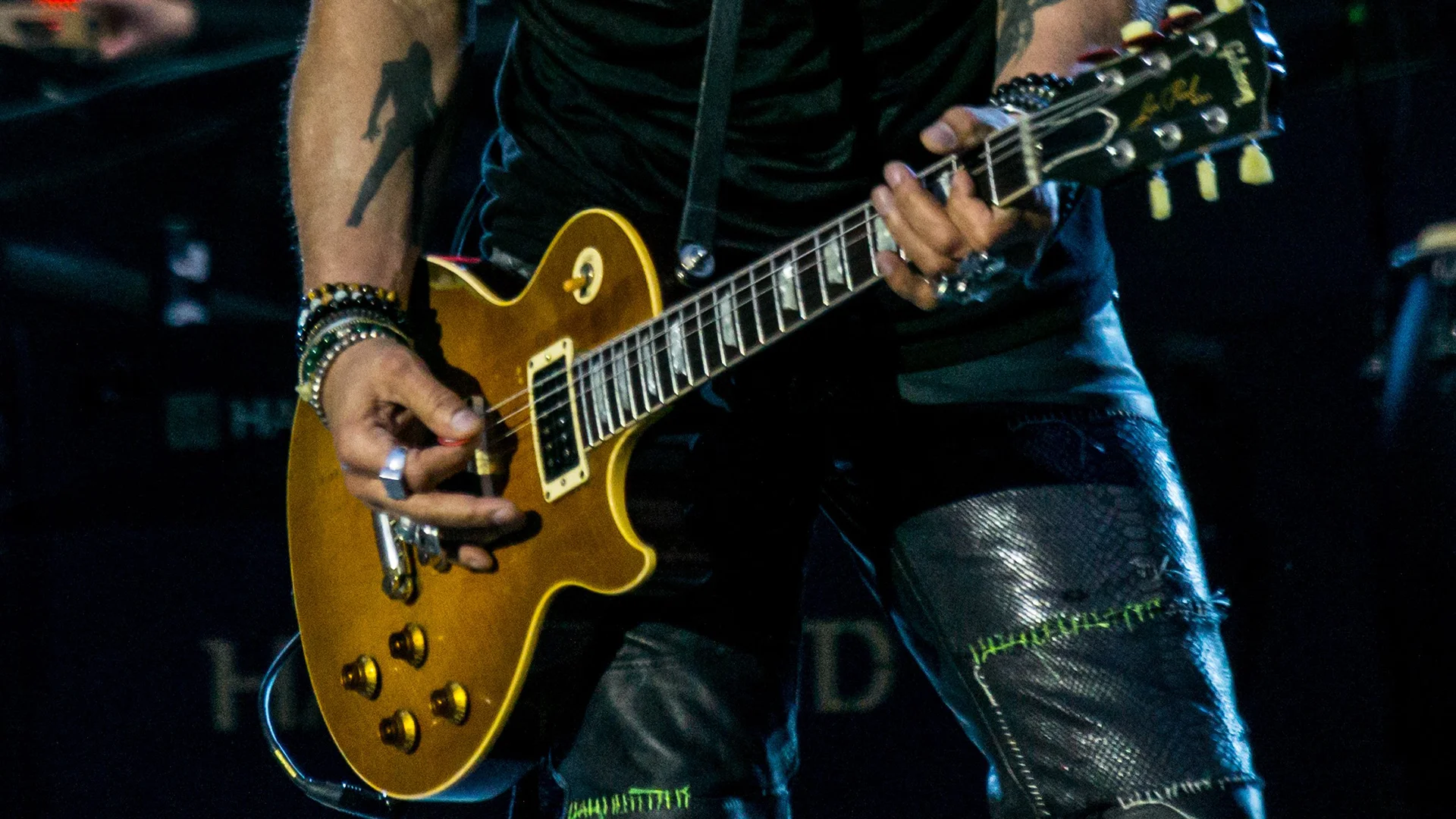
The partnership between Slash and the Les Paul has transcended mere preference to become a cultural touchstone in rock music. But why has this particular pairing had such enduring impact?
Reviving an Icon
When Slash emerged on the scene in the late 1980s, the Les Paul wasn't the dominant force it had been in previous decades. The guitar world was dominated by superstrats with floating tremolo systems, thin necks, and high-output pickups. Pointy guitars from companies like Jackson, Kramer, and Ibanez were the instruments of choice for hard rock and metal players.
Slash's visible and successful use of the Les Paul helped reintroduce this classic design to a new generation of players. Gibson, which had been struggling with identity and quality issues during this period, benefited enormously from the association. Sales of Les Pauls increased significantly, and the model reclaimed its place as one of the premier electric guitars in rock music.
Creating a Visual Identity
The image of Slash with his Les Paul below a top hat became one of rock's most recognizable visuals. This iconic pairing created a strong brand identity that has served him well throughout his career. Even casual music fans who couldn't name a single Guns N' Roses song can often recognize this distinctive silhouette.
The consistency of this visual has helped maintain Slash's relevance through changing music trends and band lineups. While other guitarists might be known for switching instruments or looks frequently, Slash created a timeless image that has weathered decades of change in the music industry.
This visual consistency extends to his signature models as well. Unlike some artist guitars that stray far from the original instrument, Slash's signature Les Pauls maintain the classic appeal of the model while incorporating his personal touches. This approach has made them appealing not just to fans but to serious players looking for quality instruments regardless of the signature on the headstock.
Influencing a Generation
Perhaps the most significant impact of Slash's association with the Les Paul has been on aspiring guitarists. Countless players picked up Les Pauls or Les Paul-style guitars after being inspired by Slash's playing and tone.
This influence extends beyond just guitar choice to include:
- Renewed interest in blues-based rock soloing
- Emphasis on tone and feel over technical flash
- Appreciation for vintage-style instruments and analog equipment
Many modern rock guitarists cite Slash as a primary influence, and his approach to the instrument continues to inspire new players decades after his initial rise to fame. By showing that traditional instruments and techniques could still sound fresh and exciting, he helped preserve important aspects of guitar tradition that might otherwise have been lost in the pursuit of novelty.
The Power of Finding "Your" Instrument
Slash's story also illustrates the importance of finding the right instrument for your playing style and musical voice. Rather than following trends or using what was popular at the time, he found the tool that best expressed his musical ideas.
This lesson resonates with players at all levels: the "right" guitar isn't necessarily the most expensive or the one your heroes play, but the one that feels right in your hands and inspires you to play your best. For Slash, that happened to be the Les Paul, and the genuine connection between player and instrument is evident in every note he plays.
Want Slash's Tone? Here's What You Need
If you've been inspired by Slash's tone and want to capture some of that magic yourself, there are options at every price point. Here's a breakdown of what you'll need to get that classic Slash sound, whether you're on a tight budget or ready to invest in premium gear.
On a Budget (Under $1,000)
Getting a Slash-like tone doesn't have to break the bank. Here's a budget-friendly approach that will get you started on your journey to Slash's sound.
Guitar
The most affordable entry into Slash's world is the Epiphone Slash "AFD" (Appetite for Destruction) Les Paul Special-II. Priced well, this instrument offers the correct body shape and fundamental feel of a Les Paul, ceramic humbucking pickups voiced to approximate Slash's tone, Slash's signature on the headstock, and a flame maple veneer top with a thin, amber-tinted finish reminiscent of his famous guitar. While it doesn't have all the premium features of more expensive models, it's surprisingly capable of delivering rock tones in the Slash vein, especially for beginners or those on a tight budget.
Amplifier
The Boss Katana 50 Gen 3 offers an impressive approximation of a Marshall-style tone. It features built-in effects including various types of overdrive and delay, a "Brown" amp model that captures the essence of high-gain British amplifiers, 50 watts of power (enough for practice and small gigs), and headphone output with USB recording capabilities. This versatile digital amp can get remarkably close to Slash's tone when set properly, making it an ideal practice tool for aspiring hard rock guitarists.
Effects
To push your tone further into Slash territory, add the budget-friendly Behringer HM300 Heavy Metal pedal. While not a boutique effect, it provides additional gain and midrange focus, a two-band EQ to shape your tone, and a boost in volume for solos.
Best All-Rounder ($1,000-$2,500)
For intermediate players ready to invest in better equipment, this mid-range setup offers a substantial upgrade in tone and playability.
Guitar
The Epiphone Slash Les Paul Standard offers significant upgrades over the budget model. It features a proper AAA flame maple veneer top, Slash's signature Alnico II Pro humbucking pickups, better quality hardware and electronics, and more authentic finishes and construction details. These improvements translate to a more responsive instrument with improved sustain and tonal characteristics much closer to Slash's actual guitars.
Amplifier
Without breaking the bank, the Marshall DSL20HR and delivers authentic British amplification. It boasts an all-tube design with preamp and power amp tubes, multiple channels including a classic gain channel perfect for Slash-style tones, 20 watts of power (enough for rehearsals and smaller venues), and the actual Marshall brand that Slash helped make famous. The tube design provides the warmth, compression, and harmonic richness that's essential to Slash's sound, responding dynamically to your playing in a way digital amplifiers can't fully replicate.
Effects
Add the MXR Custom Badass Modified O.D. to push the Marshall into singing sustain, and a Dunlop Cry Baby Wah for expressive soloing, and you've got a very capable rig.
Ultimate "Break the Bank" Option ($3,000+)
For those seeking the most authentic experience and professional-grade equipment, this premium setup delivers the real deal.
Guitar
The Gibson USA Slash Les Paul Standard or Gibson Custom Shop Slash model offers the ultimate in authenticity. These instruments feature hand-selected tonewoods including premium mahogany and figured maple, exact reproduction of Slash's preferred neck profile, authentic Slash signature pickups with Alnico II magnets, nitrocellulose lacquer finish for maximum resonance, and premium hardware and electronics throughout. These instruments are built to the exact specifications that Slash himself plays, with no compromises in materials or craftsmanship.
Amplifier
The Marshall 1959 SLP Plexi reissue head paired with a Marshall 1960A 4x12 cabinet delivers the definitive Slash amplification. With 100 watts of all-tube power, hand-wired circuitry following the original late-1960s design, this is the exact model type that Slash uses for his primary tone, featuring four Celestion G12-75T speakers in the classic configuration. This setup provides not just the sound but the feel and response that characterizes Slash's best recorded and live tones.
Effects
Complete the signal chain with a Dunlop Slash Signature Wah, an MXR Custom Shop Script Phase 90, and a high-quality delay like the MXR Carbon Copy Analog Delay for ambient sections.
Essential Details Beyond the Gear
Remember that equipment is only part of the equation. To truly capture Slash's essence:
- Use heavy picks (Dunlop Tortex .88mm or heavier) for the right attack
- Set your action medium-high for better sustain and cleaner bends
- Use proper string gauge (.010-.046 or similar)
- Develop your vibrato and bending technique, which are crucial to his expressive style
- Learn to control your dynamics with your picking hand
Even with modest equipment, focusing on these playing elements will get you closer to Slash's musicality than expensive gear played with different techniques.
The Legacy Continues
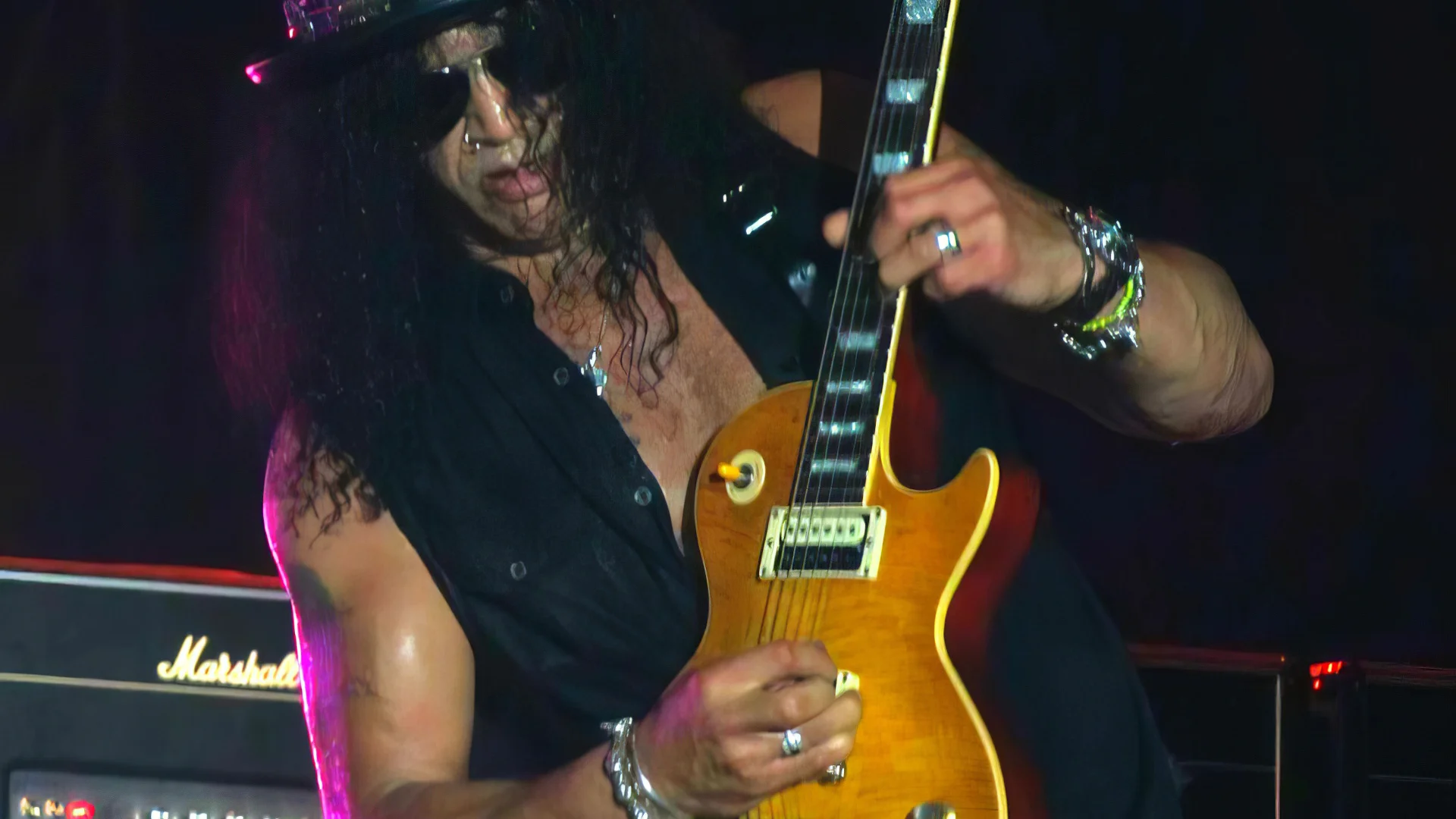
The partnership between Slash and the Les Paul continues to evolve more than three decades after it first captured the public's imagination. While many signature guitar models come and go quickly, Slash's Les Pauls have maintained their popularity and expanded into various price points and specifications.
This enduring legacy speaks to both the quality of the instruments and the continued relevance of Slash's playing and tone in modern rock music. Even as trends in guitar design and sound have shifted, the fundamental appeal of a well-crafted Les Paul played through a cranked Marshall remains undeniable.
For aspiring guitarists, the story of Slash and his Les Paul offers valuable lessons about finding your voice as a musician. It demonstrates that authentic connection to your instrument, coupled with developing a recognizable style, can have more lasting impact than chasing the latest trends or technical flash.
Whether you're a collector seeking an investment piece, a Guns N' Roses fan wanting to connect with your hero's sound, or simply a guitarist in search of inspiring tools, Slash's signature Les Pauls represent more than just guitars. They embody a philosophy about what makes rock music compelling: passion, attitude, and that magical connection between player and instrument that transforms six strings and a piece of wood into something that can move millions of listeners worldwide.
Slash's Guitar Timeline
| Year | Guitar | Notable Usage | Significance |
|---|---|---|---|
| 1985-1986 | B.C. Rich Mockingbird | Early GN'R shows and rehearsals | Slash's first professional-quality guitar |
| 1985-1986 | Travis Bean Artist | Early demos | Unique aluminum-neck guitar used before GN'R's debut album |
| 1986-1987 | Kris Derrig Les Paul Replica | "Appetite for Destruction" album | The legendary guitar that defined Slash's tone on GN'R's breakthrough album |
| 1988-1991 | Gibson Les Paul Standards | Use Your Illusion tours | Began acquiring authentic Gibson Les Pauls as his collection expanded |
| 1991-1993 | Gibson EDS-1275 Doubleneck | Live performances of "Knocking on Heaven's Door" | Allowed Slash to perform 12-string intro and 6-string solo without changing guitars |
| 1997 | First Gibson Custom Shop Slash Model | Limited edition, not full production | First official collaboration with Gibson, before full signature line |
| 2004-2007 | Gibson Les Paul Standards | Velvet Revolver recordings and tours | Continued to reinforce his association with Les Pauls in his post-GN'R project |
| 2008 | Gibson Slash Signature Les Paul | Solo album and worldwide touring | First widely available Slash signature model with his custom specifications |
| 2010-2013 | Expanded signature line including Epiphone models | Solo work with Myles Kennedy and The Conspirators | Made Slash's tone accessible to players at various price points |
| 2016-Present | Expanded Gibson and Epiphone Slash Collection | GN'R reunion tours and continued solo work | Comprehensive line of guitars at multiple price points, reflecting his career-long association with Les Pauls |
About the authors

S. Jino is an accomplished multi-instrumentalist and music producer based in Kolkata, India, distinguished by his self-taught mastery and unique blend of technical acumen and musical performance. His extensive experience was forged through hands-on dedication, starting with the full restoration of a broken guitar. Jino's capabilities span keyboards, pedals, and advanced digital production, reflecting a comprehensive skill set developed independently. As a significant contributor to the music scene, Jino regularly performs with worship bands and college ensembles. He has also established himself as a reliable and authoritative professional in freelance mixing, mastering, and original music creation. Inspired by the innovative sounds of Brian May and David Gilmour, and influenced by Kolkata's vibrant metal community, Jino is committed to the intricate art of vintage gear restoration and the continuous exploration of music and technology fusion. His current professional setup, featuring a meticulously restored nameless guitar, a Fender Player Strat, and a Boss Katana 50. Read more





.webp)
.webp)
.webp)