Aphex Twin
Role
Genre
Credits
Role
Genre
Credits
Aphex Twin's Gear


In the gear list of Syro can be seen some Valley People Gain Brains
Find it on:


The Roland S770 is mentioned in Aphex Twin's official online store for the production of his works under the alias The Tuss.
Find it on:

In a Reddit discussion, user SpudSkub highlights that frames from the video for Aphex Twin's 2018 track "T69 Collapse" reveal equipment details for the "Collapse EP." These frames include images showing the Cirklon sequencer's channel tracks, indicating the use of the Sequential Circuits Pro One Synthesizer among other gear.
Find it on:

Many clues about the equipment for the production of "Collapse EP" are present in the video frames of the 2018 track titled "T69 Collapse". These frames are images that represent the transcription of the Cirklon sequencer files system about the synthesizers used on each Cirklon midi/cv channel tracks.
Find it on:

In a Reddit discussion, user SpudSkub analyzes video frames from Aphex Twin's 2018 track "T69 Collapse," revealing the use of the Dave Smith Instruments Sequential Prophet-6 Desktop. These frames display the Cirklon sequencer's file system, detailing the synthesizers assigned to each MIDI/CV channel.
Find it on:


In a YouTube video by Alex Ball titled "Aphex Twin's Old Synth," Richard D. James is shown using the Theis Modular Synthesizer (TMSS).
Find it on:

can be seen on the 207th photo on this page
Find it on:
-m.webp?v=1777404018)
Aphex Twin uses the Midas Heritage 3000 mixer, as shown in an image from the Festival Ceremonia article by MXCity.
Find it on:

In the description of "love 7" soundcloud upload. It has since been deleted.
"Recorded approx 2005 at the bank & Lake district directly after Synthacon 9 Roland TR-808 Roland SH5 [x2] Roland SH7 Roland Jupiter 6 Exc. analoggins -the Aviator Boss CS1 Ensoniq Mirage DMS-8 SCI Pro1 Korg PS3300 Soundcraft Ghost 32 AKG BX25 TC electronic TC 1210 - Spatial Expander Oram Pro Audio HD-EQ2 Klark Teknik DN362"
Find it on:

In the description of this SoundCloud post: https://soundcloud.com/user18081971/24-alias-mgroove?si=6b63ac39af444dba93ade380851f28e4&utm_source=clipboard&utm_medium=text&utm_campaign=social_sharing the memory moog is listed among other gear used to create the track.
'recorded around 1993-4 ems synthi'a' [1st gen].[procsessing] Yamaha tx16w. memorymoog. dx7 e! studiomaster star system mixer. DEP5.'
Find it on:

'Avril 14th' and several other songs off 'Drukqs' were recorded using the Yamaha Disklavier, a standard Yamaha acoustic piano rigged to accept MIDI data, meaning you can write on computer and have an acoustic piano perform it.
Find it on:

Aphex Twin (Richard D James) on at least 4 occasions has mentioned the use of Tiger Club in his early works. 3 mentions in 2015 on tracks he uploaded to his SoundCloud account user18081971, tracks: 13 high hats tune tamclap orig, 33 synthi rhy [q], tigercubdelay. And then again in 2020 as a comment in his track a12. ab3 .215061.:
@c_r_y_s_t:pretty sure it was Dr T's Tigercub on the Atari ST...software you hardly ever hear about.
Find it on:

In this Youtube video by Ben Jordan, posted May 26, 2004, Ben shares that Richard James (aka Aphex Twin) has used Praat: doing phonetics by computer (yes that really seems to be the application's full name) in the past 18:44. No specific song, album or era is mentioned, but praat has been around since at least 1995.
I assumed this was speculation, until Ben clarifies at 17:57 the info in this video was based on direct conversation with Richard James.
It is very plausible that someone of Ben's stature and career-depth would have access to Richard like this. Additionally, lying about such things would be career su1c1de, while the upside is minimal -- so it just wouldn't make any sense for someone in this position to fabricate. Ben is just as trustworthy in 2024, if not more so, than the traditional media outlets that get the automatic green light here on Equipboard all day long.
Find it on:

In this Youtube video by Ben Jordan, posted May 26, 2004, Ben shares that Richard James (aka Aphex Twin) has used Ian's Xenakis' UPIC in the past 19:07. No specific song, album or era is mentioned, but UPIC has been around since the late '70s.
I assumed this was speculation, until Ben clarifies at 17:57 the info in this video was based on direct conversation with Richard James.
It is very plausible that someone of Ben's stature and career-depth would have access to Richard like this. Additionally, lying about such things would be career su1c1de, while the upside is minimal -- so it just wouldn't make any sense for someone in this position to fabricate. Ben is just as trustworthy in 2024, if not more so, than the traditional media outlets that get the automatic green light here on Equipboard all day long.
Find it on:

Here's a photo that is clearly Richard James and clearly an Xone:96, as evinced by the silver color and the 4 faders at the bottom.
Find it on:

Per this excellent post from Oct. 2020 on the Lanner Chronicle blog, Richard James (AKA Aphex Twin) used a Nakamichi CR-7E to encode some of the master tapes from Analog Bubble bath, and likely others.
The post directly references and dates Soundcloud posts Richard James had made at the time:
“here is a download gift / sneak tease for the fans, to show the kind of quality I’m extracting from my old cassettes using mega high quality cassette decks. Because I’ve customised the decks with vari-speed, I get to choose what speed I encode them at, I’ve done a few different speeds for my fave ones and it’s usually just what I think sounds good at the time or just different to what I’m used to. This one is from a That’s cassette labelled copy III , i used a lot of the VX90 tapes in that period of my life. It is the 12th track on side a. Even though I used to write COPY *.number, they were actually the original masters. Think was one of the first tracks that a small section with intentional microtuning, [harmonic series sec] .Encoded with customised Nakamichi CR7e cassette deck.
+added, it cuts out at the end coz the tape ran out 🙂 I remember sometimes recording tracks to cassettes, I’d be looking at the cassette nearing the end and try and finish the track before the tape ran out 🙂 bit different from todays recording methods .”
Find it on:

In an excellent Lanner Chronicle blog post from Oct, 2020, an Aphex Twin quote, re-posted from Soundcloud, reveals that Richard James used a Sony DTC-1000ES to back up some of his early cassette tape masters:
“how i got the recording qual this good on cassette is a mystery to me now, lots of trial and error spose, not sure how those cassettes would sound these days, safe to say that they wont sound better but i could do the transfers better and ADC’s are much better these days, so dunno, swings & roundabouts. i encoded this and loads of others onto DAT about 25 years ago, when London records lent me a Sony DTC 1000 for 2 days around 1992 and i quickly backed up as much as poss [lucky i did] as well as giving them pacman 🙂 Back then there was no way to backup a recorded song, no way at all !!! think about that you youngsters, sure you could record it onto ANOTHER tape but it would always sound terrible.
So I used to get ver paranoid about my master tapes…i kept them in military water proof boxes, still in them now, most of em, not all. I’m actually getting progressively worse at keeping my stuff safe now . But then DAT came along to save the day, even though they pretty much always glitched on me, some of my mates got lucky with them, i thnk i was just in too much of a hurry and didn’t treat them very carefully. I went through about 10 DAT machines, portable ones, big ones, never liked any of them really. I bought a £7,000[new]DAT machine last year for £50, recorded beautifully until i dropped it 30 cm onto a carpet, but the thing was so heavy it totally broke, bugger,slipped out of my hands!”
Note: it appears all Sony DTC-1000 recorders are "1000es" models, and the 1000es is the item shown in the post.
Find it on:

In the infamous gear list within 2014's Syro album artwork, Aphex Twin lists a "TR9090", which was a common way to refer to the open source Project 9090, a TR-909 clone project that was in its prime at that time. Building your own TR9090 gave you a rack-mounted TR-909 cone that could be triggered via MIDI.
Examples of builders calling these things "TR9090":
https://reverb.com/item/10314998-tr9090-analog-drum-synthizer
https://reverb.com/item/75277264-trevor-page-tr-9090-analog-drum-synthesizer
Building a more-controllable TR-909 clone from a kit is pretty on-brand for Richard James. BTW, these things sound great.
Find it on:

In the gear list printed within Syro's album artwork (2014), a "JH ARP Quadra Phaser" is listed. This refers to the designs that wizard Jurgen Haible developed and made available online back in the decades before his passing in 2011. This is a stand alone clone of the ARP Quadra's phaser unit.
Richard James (aka Aphex Twin) is a notorious solder hound. Assembling a phaser like this from the online schematics would have been no problem for someone of his skill and experience.
Jurgen's original schematics for the standalone Quadra Phaser project are here.
Find it on:

In an excellent Lanner Chronicle blog post from 10/20/2020, a quote from Richard James (aka Aphex Twin) from the artist's Soundcloud account is archived:
“here is a download gift / sneak tease for the fans, to show the kind of quality I’m extracting from my old cassettes using mega high quality cassette decks. Because I’ve customised the decks with vari-speed, I get to choose what speed I encode them at, I’ve done a few different speeds for my fave ones and it’s usually just what I think sounds good at the time or just different to what I’m used to. This one is from a That’s cassette labelled copy III , i used a lot of the VX90 tapes in that period of my life. It is the 12th track on side a. Even though I used to write COPY *.number, they were actually the original masters. Think was one of the first tracks that a small section with intentional microtuning, [harmonic series sec] .Encoded with customised Nakamichi CR7e cassette deck."
While the recording medium may seem like a trivial detail, it obviously does make a sonic difference in the case of analog tape, and was clearly a meaningful artistic decision for the Artist then and now.
Find it on:

'Avril 14th' and several other songs off 'Drukqs' were recorded using the Yamaha Disklavier, a standard Yamaha acoustic piano rigged to accept MIDI data, meaning you can write on computer and have an acoustic piano perform it.
Find it on:

In the video "Aphex Twin - Live @ Osmoze, Paris 1993" by Luan Corrêa on YouTube, Aphex Twin can be seen using the Sequential Circuits Studio 440. It's clearest between about 8:49 to 11:15. At one pont you can even see the model number and branding on the back of the unit.
Find it on:

In this Computer Music article last updated November 10, 2022, author Dan Carr shares a quote from Richard James, clarifying that the Alesis Quadraverb was used on all SAW85-92 tracks:
To achieve the uniquely grainy reverb sounds that characterise the record’s sound, James made use of the Alesis Quadraverb, a rack-mounted digital reverb from 1988. In a 2014 interview with Noyzelab, James mentioned that the Quadraverb was “used on all tracks on SAW85-92” and praised its “dark and muddy” sound, along with “nice arrangement of subtle pitch shifting, delays into reverbs”.
Find it on:

In a 2014 interview with Dave Noyze, it was confirmed that Aphex Twin uses the Synton Fenix. When asked, "so is that a synton fenix in that?" Aphex Twin responded, "Yes, actually it's TWO synton fenix's patched together making that vocal baseline riff, using all the bandpass filters on both machines.... it sounded a bit more vocal on an earlier pass." This information is sourced from the article "Aphex Twin Releases New Music, Talks Gear, Ice Sculpture" by Corban Goble, published on Pitchfork.
Find it on:

In the album artwork for Syro, Aphex twin lists the "AMS RM16" in the extensive/completist list of gear included. The "AMS RM16" isn't a product AMS ever produced, but the RMX16 is a famous early digital reverb from AMS that is 100% in line with the classic digital and boutique analog gear in the list, and with the sound of the album itself. It's a 1-letter typo.
Find it on:
-m.webp?v=1769931123)
The infamous release artwork that accompanied Syro, detailing every piece of equipment used to make the album, lists a "Bode Vocoder". This refers to the Bode Inc, Model 7702 Vocoder, developed by Harold Bode. From 1978 onward, the Bode Vocoder was distributed by Moog under the name "Moog Vocoder", and Moog even offered up a reissue of the Bode in 2020.
Find it on:

In the 2014 Syrobonkers part1 interview, Richard D James / Aphex Twin mentions using the Yamaha QX21 sequencer for a late '80s track:
Window peeper(...) made around 1987/1988 with a fucking qx21 sequencer & fz10m, 101 + quadraverb + home made mixer on breadboards, was a pretty cool mixer ,got some pics somewhere.. looked well techno it was 2 big breadboards slotted together and did some odd phasey stuff., before that i used to just twist all the wires together as a mixer! not many have tried that i don't reckon, its actually a pretty unique way to get the cheapest compressor!
qx21 was my first sequencer, worked a whole summer in wimpy burger for that damn thing, it changed my world but it has to be one of the worst sequencers I've ever used, i kind of feel bad saying it, sorry mr qx21, i get a top feeling when i look at it still but never felt inclined to switch it back on, hmm maybe...no.. I always wanted to stack about 20 tx7,qx21's etc with their sloping panels ha , would look good [from the front no?]
One of the Window Peeper tracks in question is still up on a Soundcloud account that has all the markings of a typical Richard James burner account (user18081871):
https://soundcloud.com/user18081971/5-window-peeper6
Note the artist comment:
1989 made on near impossible to use QX21 sequencer
Yeah... he kinda hated this sequencer.
Find it on:

In the infamous gear list that accompanied the Syro album art, the Buzz Audio Arc1.1 analog recording channel is listed.
Find it on:

In the epic gear list included with the Syro album artwork, a "Court Acoustics Graphic" is listed, which refers to a dual 30 band graphic equalizer that Court Acoustics sold in the UK under various names in the late 20th century (likely 70s and 80s). Court Acoustics only sold this one type of graphic EQ from all the info I can find. Regardless of what name they used (sometimes "GE60"), it was the essentially the same exact dual 30-band model for the whole run.
Find it on:

In the epic gear list accompanying the Syro album artwork, a "DPA 4052" is listed.
Find it on:
This is a community-built gear list for Aphex Twin.
- Find relevant music gear like Studio Equipment, Software Plugins and VSTs, Headphones, and other instruments and add it to Aphex Twin.
- The best places to look for gear usage are typically on the artist's social media, YouTube, live performance images, and interviews.
- To receive email updates when Aphex Twin is seen with new gear, follow the artist.
-
Added to Equipboard on by
.jpg?v=1782968794) gchiaren
gchiarenGear IQ 37552
-
Updated
Discography
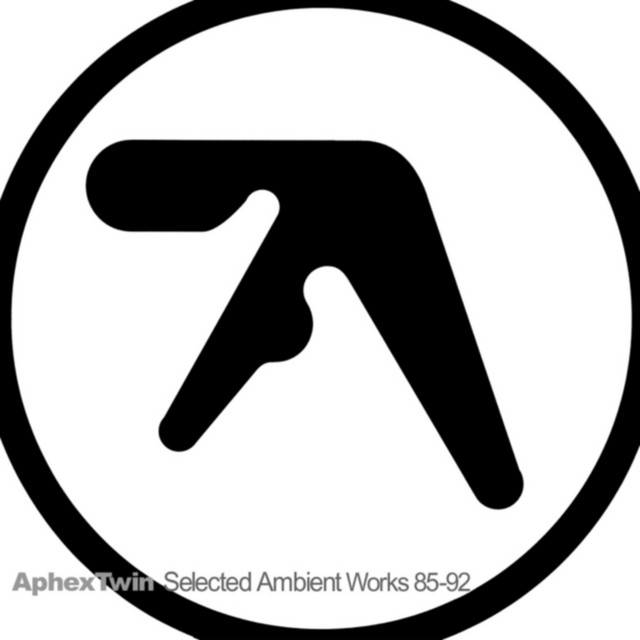
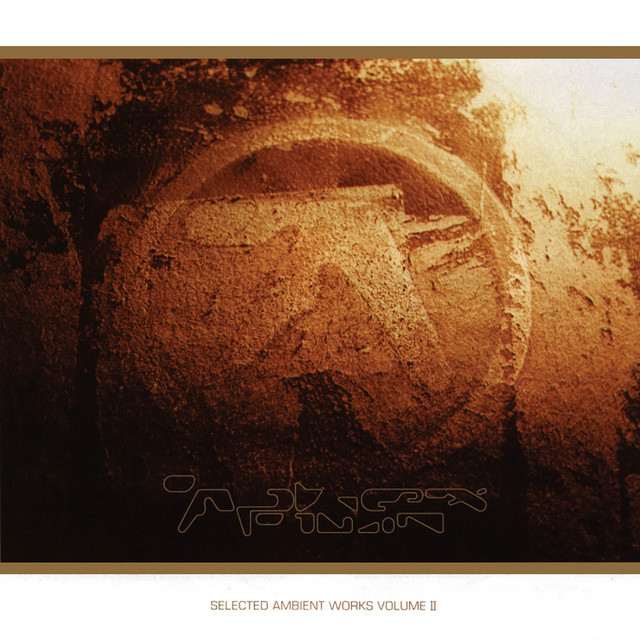
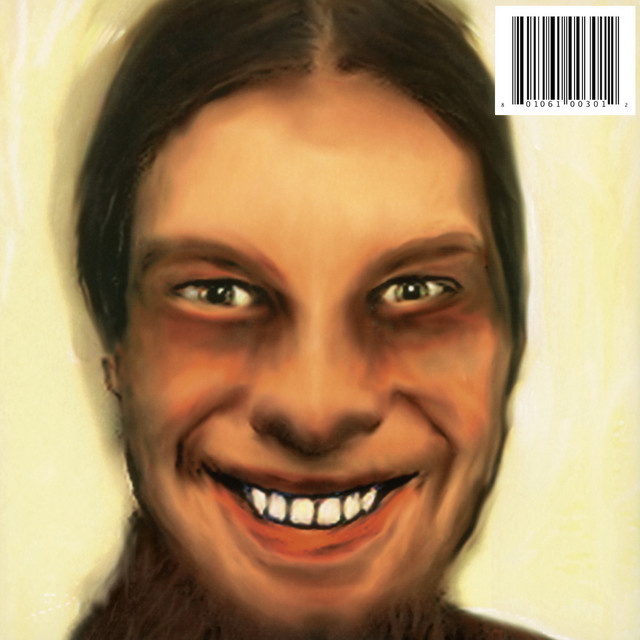
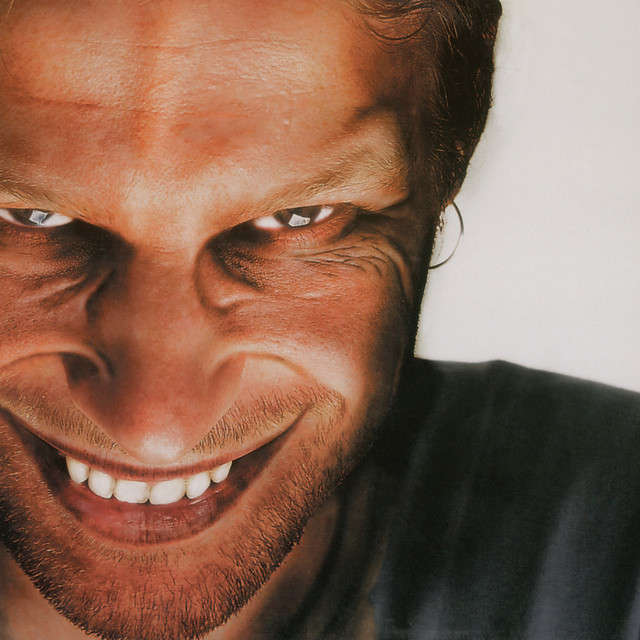
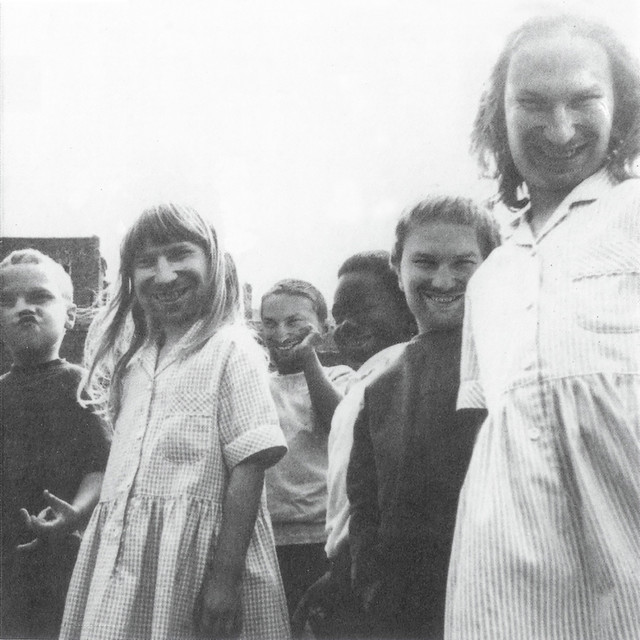
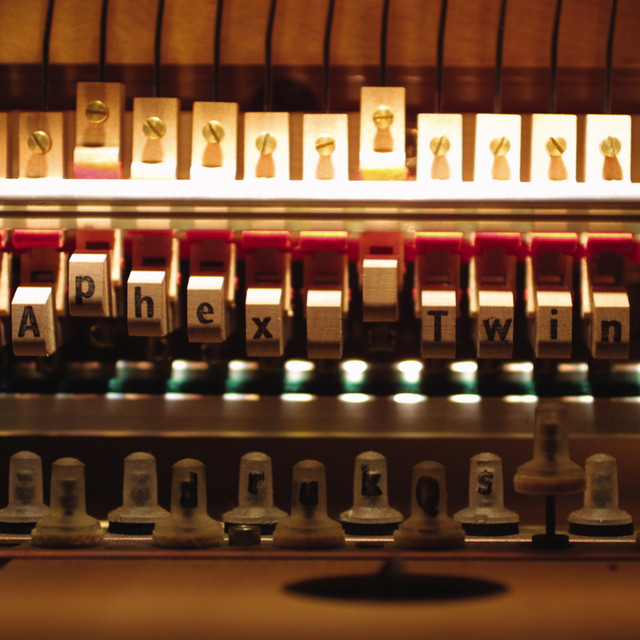
Album Credits
-
Aphex Twin · 2024
Producer -
Seefeel · 1993
Producer