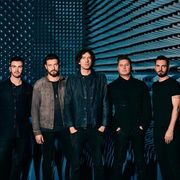
Chris Martin
lead singer of Coldplay
Role
Genre
Group
Credits
Role
Genre
Group
Credits
Chris Martin's Gear


In this Coldplay live performance of the song "One I Love", Chris Martin can be seen playing a Rickenbacker 360 12-String Electric Guitar, in a Jetglo finish. Glimpses of the guitar can be seen throughout the video, although a closeup around 2:56 shows 12 strings on the guitar, which distinguishes this from the 6-string version of the Rickenbacker 360. Around 4:32 you can see the guitar in its entirety, without the camera jumping around too much.
This Coldplay performance is taken from the Coldplay Live 2003 CD/DVD set, shot on July 21 and 22, 2003 at the Horden Pavilion in Sydney, Australia.
Find it on:


In this blog by Matt Miller, a photo of Chris Martin can be seen using Logic Pro X on an Apple MacBook Pro. Coldplay have many times said that they use Macs for nearly everything, from mixing to personal computers.
Find it on:

Chris listed "Gibson 335" amongst his equipment in Coldplay's self published E-Zine in 2003. This guitar has been widely used by Chris, on the road as well as in the studio. In [this] video of the band playing at Glastonbury in 2005, Chris can be seen playing it on the song "Warning Sign". (https://www.youtube.com/watch?v=saxEJ3c4qLM)
Find it on:



This hybrid piano replaces the Yamaha DYUS1E3 used during the "Ghost Stories" era. Looking at it first glance (especially with the decoration to match with the theme of "A Head Full of Dreams"), it looks exactly like the Yamaha upright. But when the camera zooms in on Chris Martin playing it, you can see "K300-ATX2" in the top right corner, instead of "DYUS1E3". It was first used on their appearance of TFI Friday (https://www.youtube.com/watch?v=Bg4u6X7Ujtw around the 2:26 mark), and has been used since.
Find it on:


At about 2:50 Chris Martin can be seen adjusting the TC Electronic Ditto Looper.
Find it on:


Visible in archive footage from the Twisted Logic Tour in Coldplay: A Head Full of Dreams at 1:18:32. The Micro Amp is on a pedalboard to the right of Martin's piano. An identical backup pedalboard can be seen in the background on an amp, next to Martin’s Vox MKIV Teardrop.
The same pedalboard, once again to the right of Martin's piano, is visible in Coldplay: Live at Glastonbury 2005 starting at 7:14. The Micro Amp is technically shown up close at 7:34, but it is barely visible due to being obstructed by the adjacent Boss SD-1.
Find it on:
-m.webp?v=1780671554)
Throughout this performance, Chris can clearly be seen playing the Vox Mark VI Teardrop Electric Guitar. It was used specifically for playing Yellow throughout the Twisted Logic Tour. It can also been seen listed as Lot 33 in Coldplay's End of Decade Clearout Sale catalogue.
Find it on:

Chris Martin uses the Telefunken M81 microphone during more intimate performances, as seen in the live session with SiriusXM.
Find it on:

Mentioned by A Head Full of Dreams co-producer Rik Simpson in this Sound on Sound article.
“The piano we have at The Beehive is an upright Yamaha Disklavier, which has a very nice sound, and the benefit of MIDI. In general it’s the only time we use MIDI with Coldplay. If the band are recording a live take all together, there’s no way I would be able to use the piano mics, because they would have drums all over them. So I record the MIDI at the same time, and once the takes are done and the band are out of the room, I’ll record the piano on its own, playing Chris’s part back via MIDI. It’s the same performance, with a clean recording. I use two sE Electronics 4400a’s on the piano, which are the closest thing to the old [AKG] C414EBs.
Find it on:




Mentioned by mixing engineer Michael Brauer as being used on "Violet Hill" in this Sound on Sound interview about the production of Viva la Vida & Death and All of His Friends.
Vocals: Waves Renaissance & Digidesign de–essers, AMS reverb, Zoom 1202, Lexicon PCM81, Watkins Copicat, Empirical Labs Distressor, Federal, Gates, Fairchild 666, EAR 660, Neve 1176 & Awa G7201 compressors
"I used two Renaissance de–essers on Chris's voice that were doing different things, and then a stock Digidesign de-esser. That was it for the plug–ins I added on this session. The Sonnox Oxford and the Eoisis were not out yet at the time.
"The analogue things I did on the lead vocal are really interesting. As I said, I initially mixed the songs on my own, because the band was in England re–recording some songs, so I knew I might have to recall each song. But on this song I pretty much nailed it, apart from that Chris wanted the vocals to be more exciting and different. In the end the vocal had some AMS non–linear reverb on it, while the main sound came from an old Zoom 1202 reverb and a Watkins Copicat delay, plus a special patch that I created in the PCM81, which is a much bigger reverb. So it's a combination of things, but you don't really notice them, all you notice is that Chris is in a very present, big room. When I had found that combination 'Violet Hill' really became a song, it really came alive, because his voice was able to fight through all the stuff that was going on and make it personable. There's no reverb on the rest of the track, which is another reason why the lead vocal sounds so huge: it's not fighting another bunch of reverbs. If you send everything to reverb, you don't hear it, but if you send only one thing to reverb, it'll be huge.
"For the main part of the song I had a Distressor on the insert of the lead vocal, and I sent this to another five compressors: the Federal, the Gates, the Fairchild 666, the Neve 1176 and another Distressor in Nuke mode. They're all coming back individually on the board, and it was a matter of blending those compressors. As usual in my way of working, the compressors are there to give attitude and tone, and don't necessarily compress. For the end bit of the song, where it's just Chris and the piano, I used the Awa G7201 limiter/compressor. It's an Australian compressor and it has an incredible air and presence. It's a unique sound that you can clearly hear at the end, as it's the only effect on the vocal on that point. Finally, the church group background vocals are sent to the same combination of reverbs as the main vocals. No other effects, no EQ. It means that all the vocals in the main section blend together."
Find it on:

Used on "Hymn for the Weekend", as mentioned by A Head Full of Dreams co-producer Rik Simpson in this Sound on Sound article.
It was very important to get the development and arrangement of the vocals right. Many of the 45 tracks are effect tracks. There’s only one lead vocal track each for the verses [LV Verse], for the bridge [LV Bridge], and the choruses [LV Chorus], and then Chris sang a number of bridge and chorus vocal overdubs. The main verse vocal has the Avid Channel Strip, which is taking out some low end, an SPL TwinTube, which adds some saturation, the UBK1 compressor adding more crunch, and the UAD Fairchild 670 and SSL E Channel. I don’t use a great deal of compression from each unit. I will just tickle it a little bit with each one, and each one adds a different characteristic. I could just add a whole load of compression from one plug–in, but like this it doesn’t sound over–compressed. The Pro–Q 2 is, again, a high–pass filter. In the sends there’s a Waves H–Delay that I recorded elsewhere, and sends to a main D–Verb and two QL Spaces aux tracks. I have different reverbs and delays for each part of the song so that the vocal sound evolves during the song.
“The main chorus lead vocal has the FabFilter Pro–Q 2 EQ, the Waves Rennaissance Vox, again the UBK1, two instances of the FabFilter Pro–DS de–esser, two instances of the UAD Pultec EQP–1A, and the FabFilter Pro–MB multi–band compressor. I like the FabFilter de–esser. I am still trying to find the ultimate de–esser, because it’s quite a hard thing to do right. I have two because one is doing high top sibilance, and the other lower stuff around 2kHz. The sends on chorus lead vocal go to aux tracks with the Waves H–Delay, the FXpansion Bloom with a lush, wide stereo delay, a small chamber from the QL Spaces plug–in, a mono delay from the UAD Echoplex, and several other delays. The sends to the delays are all automated independently, with different words getting different delays.
“One thing of note is that there also is a ‘Hope House M80’ vocal track, recorded when Chris was still using the Telefunken M80, and it’s mixed in very low. There’s also a lead-vocal double that has ‘251’ marked, indicating that Chris was also using that mic. But the main vocals were recorded using the Soyuz. There are two tracks marked ‘251 Melo Lead’ and ‘251 Melo Double’, again mixed in low. ‘Melo’ stands for Melodyne, and these tracks are raised two semitones. They were recorded in a different key for a different version of the song, and detuning them added a certain alien quality to these vocals which we really liked. At the bottom of the session are the Beyoncé vocal tracks, on which I mainly used the SSL E Channel strip, UBK1, L2, SoundToys Echo Boy, Avid ModDelay and the QL Space.”
Find it on:

Used on "Hymn for the Weekend", as mentioned by A Head Full of Dreams co-producer Rik Simpson in this Sound on Sound article.
“One thing of note is that there also is a ‘Hope House M80’ vocal track, recorded when Chris was still using the Telefunken M80, and it’s mixed in very low. There’s also a lead-vocal double that has ‘251’ marked, indicating that Chris was also using that mic. But the main vocals were recorded using the Soyuz.
(...) “A lot of the 58 recordings did end up on the album, and I think it sounds great, though I’d never comp between the Soyuz and the 58. At the beginning of the record I asked him to use Telefunken M80 as a hand-held mic. I was trying to get something that sounded better than an SM58, but later on during the sessions we went back to the SM58 because the weight of it feels more comfortable to him. The mic pre on both the 58 and the Soyuz was a UA–610, which sounds great and is a wonderful and very reliable workhorse."
Find it on:

"Chris moved to London with this keyboard. Like the CP70 (Lot 8), the Fender Rhodes was originally designed to help overcome the difficulties of playing a piano in a live band, but became loved for its unique and individual tone." - From Coldplay's end of decade clearout sale catalog where they auctioned off their gear.
Find it on:


Mentioned by A Head Full of Dreams co-producer Rik Simpson in this Sound on Sound article.
“With regards to vocal microphones, we have over the years tried most things on Chris [Martin],” says Rik Simpson. “For this album we wanted a clear, vibrant tone, full of humanity and life. I did shootouts between vintage Neumann U47s and U67s, and quite few new mics inspired by the 47, Telefunken 251, and so on. I can’t even recall all of them, but the Soyuz SU17 blew them all out of the water. It’s a hand-made Russian mic, very artisan, and sounds fantastic, very pure and full. Sometimes he’ll pick up a Shure SM58 because he loves holding a mic, with his vocals then sounding over the speakers. He can really get into the zone and perform like that. I’m obviously always trying to get him to sing into a more expensive, great–sounding mic, but if he’s feeling comfortable he’ll get a great performance.
“A lot of the 58 recordings did end up on the album, and I think it sounds great, though I’d never comp between the Soyuz and the 58. At the beginning of the record I asked him to use Telefunken M80 as a hand-held mic. I was trying to get something that sounded better than an SM58, but later on during the sessions we went back to the SM58 because the weight of it feels more comfortable to him. The mic pre on both the 58 and the Soyuz was a UA–610, which sounds great and is a wonderful and very reliable workhorse.
Find it on:

In Coldplay's Oracle section of their official website, they are asked "which guitar-pickup they use for the acoustic guitars for the band?"
The Oracle replies: "Here's what Hoppy told me:
"The band's acoustic guitars are currently fitted with Fishman Matrix Infinity pick-ups and have been for some time. As far as I recall we have been using them since the X & Y tour. Hope this helps!"" (November 2013)
Find it on:

"Acoustic guitar amps are very unusual, but this Marshall amp proved extremely useful for rehearsing and small gigs early in the band's career. This was used through the club shows and the early Parachutes gigs to ensure that Chris's acoustic guitar could be heard above the drum kit!" reads Lot 7 in Coldplay's End of Decade Clearout Sale Catalogue, which includes a picture of the amp.
Find it on:

Chris Martin listed a Boss TU-2 amongst his equipment in Coldplay's self published E-Zine in 2003.
Find it on:

Chris Martin listed "2x Fender Hot Rod DeVille Combos" amongst his equipment in Coldplay's self published E-Zine in 2003. Both he and guitarist Jonny Buckland have used them since the band's formation. It can also be seen behind Chris in [this] photo. (http://www.coldplay.com/uploads/_DSC6970.jpg)
Find it on:


Chris Martin can be spotted playing a Gibson ES 335 Dot Plain Cherry on "Warning Sign" at Glastonbury Festival 2005.
Find it on:
-m.webp?v=1783177029)
In a studio tour video by NME, Chris Martin of Coldplay is seen with a Korg MS-20 synthesizer at The Bakery.
Find it on:


Mentioned in this article from the official Sensaphonics website.
One of the hottest arena/shed tours on the road this summer was Coldplay’s Viva La Vida. With a large stage set-up for sheds and arenas, in-ear monitoring was a critical element to the band’s success. As they have for the past several years, the band members were all on Sensaphonics custom earphones via Sennheiser wireless systems.
However, there were a few key changes for this year’s tour. All four band members have upgraded from the classic ProPhonic 2X-S to the Sensaphonics 2MAX. “Most of the backline crew also have Sensaphonics IEMs,” says [monitor engineer Chris] Wood. “We have found the drivers to be very reliable. I can’t recall having a problem in the eight years we have used them.” A few wedges can still be seen on stage, but are used mainly for backup.
Another change this year is that lead vocalist Chris Martin now keeps both of his earpieces inserted throughout the show. “Previously, Chris wore one earpiece and one ER15 (custom earplug), as he liked to hear the band acoustically,” notes Wood. “But with the increasing size of the venues – and the level of the stage and P.A. – he prefers to make the most of the noise rejection the 2MAX gives him. He keeps both earpieces in place all the time now. And of course, it’s also better for his hearing.”
Find it on:

Mentioned by mixing engineer Michael Brauer as being used on "Violet Hill" in this Sound on Sound interview about the production of Viva la Vida & Death and All of His Friends. It is visible in this photo from the same interview.
"In addition to all the above effects, all tracks went through my ABCD multi–bus compression system [see 'Brauerize TheMix' box]. 'A' consists of a Neve 33609 going into a Pultec P1A3S EQ; 'B' is is almost always a Distressor going into my Avalon E55 EQ; 'C' is the Pendulum ES8 tube limiter; 'D' at the time was my Inward Connection stereo tube limiter (but currently it's the [TF Pro] Edward The Compressor P8). So the bass and drums went through B, the guitars went through C — sometimes I'll send guitars through A and C, or I'll send them to C and then send them to a mono compressor return, whichever excites them the best — the keyboards went through A, and the backing vocals through A and D. I did not put the lead vocals through my multi–bus system. I stopped doing that three years ago. Instead they went through these five compressors, the Federal, Gates, Fairchild, 1176 and Distressor.
Find it on:

This item can be spotted in the background of the source.
Find it on:

In this photo inside Coldplay's studio, taken by roadie Matt Miller, Chris Martin can be seen using a MacBook Pro. Source.
Find it on:

Chris Martin used his own piano for to play their songs in Absolute Radio on January 30th, 2009.
Find it on:

Chris Martin played this digital piano on stage with Ed Sheeran in 2015 on Global Citizens.
Find it on:

The very first guitar that Chris Martin bought before the Takamine Acoustic. He even wrote his hit songs with this guitar such as "Yellow" and "Trouble" (and yes, the song "Trouble" was actually first written and recorded on the guitar from their early demos).
The online article also quotes: "Martin took this guitar with him when he went to University College London in 1996 and met Jonny Buckland. The pair planned to form a band over the coming year, resulting in the formation of Coldplay.
Martin used this during the composition of many of Coldplay’s earliest songs, and during the recording of the No.1 album Parachutes."
Find it on:
-m.webp?v=1783176995)
A Moog Minimoog Voyager Synthesizer can be spotted in The Bakery.
Find it on:
This is a community-built gear list for Chris Martin.
- Find relevant music gear like Microphones, Guitars, Amplifiers, Effects Pedals, Pianos, Keyboards and Synthesizers, and other instruments and add it to Chris Martin.
- The best places to look for gear usage are typically on the artist's social media, YouTube, live performance images, and interviews.
- To receive email updates when Chris Martin is seen with new gear, follow the artist.
Album Credits
-
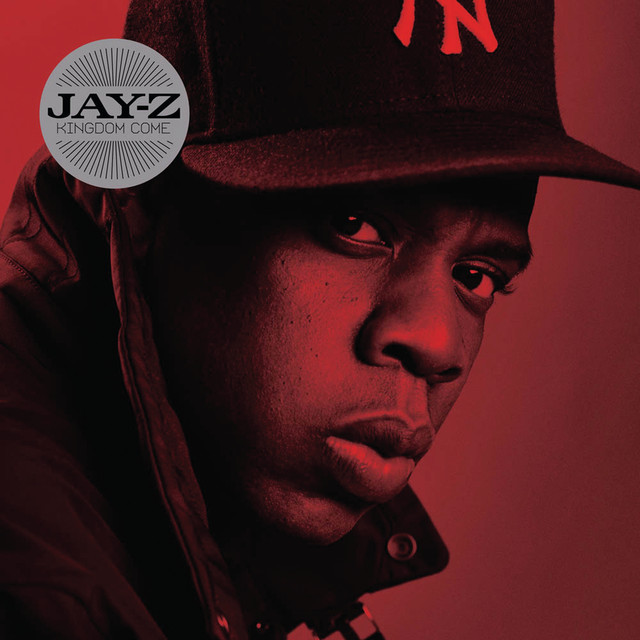
Jay-Z · 2006
Producer