
David Gilmour
Pink Floyd
David Gilmour's Gear


"That one was the old black Strat I mentioned earlier, through a Hiwatt combo. I've got a very old Fender tweed Twin - a lovely sounding amp - but I couldn't make it work for that track so I went to the Hiwatt instead."
Find it on:


A Boss MZ-2 can be seen in the photo, used in the A Momentary Lapse Of Reason tour 1987-1990.
Find it on:


Made by Pete Cornish back in 2006, the all tube effects board feature a tube buffer preamp between each pedal. The effects as in chain: Demeter Compulator (modified by Pete Cornish) Send/ Return #1 (pre distortion) Pete Cornish G-2 (Germaniun Fuzz) Pete Cornish P-1 (Presicion Fuzz) NOTE: The both distortion unit are connected in parallel, allowing only one to be ON at the time. BK Tube Driver (with 12ax7) (used as overdrive unit) BK Tube Driver (with 12au7) (used as boost unit for fuzz units) NOTE: The both tube driver are connected in parallel, allowing only one to be ON at the time. Boss GE-7 Graphic Equalizer (modified by Pete Cornish) Send/ Return #2 (post distortion) Pete Cornish T.E.S (Tape Echo Simulator) Send/ Return #3 (labellel MXR) Note: The both delays units are connected in parallel into a mixer (labellel DLY MASTERS) Isolated output #1 Isolated output #2
Find it on:

David’s elaborate pedal rack as seen in his new recording studio, Medina (Hove, Brighton, UK).
Find it on:

"It has a stop tailpiece. For the last album, I wanted one with a Bigsby vibrato, but I didn’t want to change the old one I’d used to play, for example, the solo on “Another Brick In the Wall Part 2,” so I found another one. I suppose you could say that they are a little raunchier than Fenders."
Find it on:
-m.webp?v=1782327089)
David is seen with a blonde early 1960’s Fender with an ash body, white pickguard and rosewood neck. David told Guitarist in July 1995 how he got the guitar “(…) my parents gave me a Telecaster for my 21st birthday, which was when I was living and working in France.” This is the same guitar David brought with him when joining Pink Floyd in January 1968 and continued to use throughout the spring until an airline company lost the guitar on the band’s tour in the US in July.
Find it on:

David’s elaborate pedal rack as seen in his new recording studio, Medina (Hove, Brighton, UK).
Find it on:




-m.webp?v=1783204435)
In the documentary "Classic Albums: Pink Floyd – The Making of The Dark Side of the Moon," David Gilmour is shown using a Fender '65 Twin Reverb amplifier around the 10-minute mark.
Find it on:


David Gilmour utilized the Boss CE-3 Chorus pedal during the "About Face" era, as detailed by Bjorn on Gilmourish.
Find it on:

This was a custom made guitar by Dick Knight with standard Fender necks. David wanted to be able to play both normal guitar and slide on the same instrument, so the both necks on the guitar were 6 strings, but the lower neck had higher action on the strings for slides. The guitar was used during the spring US tour in 1972 but later abandoned.
Find it on:

"And that in combination with the internal distortion on the Gallien-Krueger was how I got that particular sound." About the song Sorrow.
There is a photo about Face touring rig pictured in David's home studio in 1986. And two more sources. http://www.gilmourish.com/wp-content/uploads/2010/12/aboutface_rig.jpg The About Face touring rig pictured in David's home studio in 1986. The actual 1984 touring rig was slightly smaller as the inlay picture shows. 1. 2 MXR Digital Delay System II, 2. 2 MXR Digital Delay System I, 3. 2 Conn ST-11 Strobo Tuners, 4. 3 Fender Twin Reverb II heads, 5. Mesa/Boogie amp, 6. Gallien-Krueger 250 ML MK II, 7. Schaffer Vega wireless system 8. Boss SCC-700 board,(from top left) SD-1 overdrive, GE-6 equalizer, CE-3 chorus, CS-2 compressor, HM-2 distortion, DD-2 digital delay, DD-2 digital delay (right side) CE-3 chorus, GE-7 equalizer. Inlay picture from Utrecht, Holland April 5 1984 (top left to bottom right): MXR Pitch Transposer, MXR Digital Delay System I, MXR Digital Delay System II, Schaffer Vega wireless system, Boss CE-2, Boss HM-2, Electro Harmonix Big Muff ram's head (circled) and 2 Fender Twin Reverb II heads. Found on: http://www.gilmourish.com/?page_id=22
And: http://www.kitrae.net/music/David_Gilmour_Tone_Building_1_1.html And: http://sparebricks.fika.org/sbzine08/sections/ggg.html
Find it on:

"Additional pedals include a Boss CS-2 Sustainer, MXR Dyna Comp, Iba- nez CP9 Compressor-Limiter, Boss Hyperfuzz, Electro-Harmonix Big Muff, two Chandler Industries Tube Drivers and three Boss Graphic Equalizers. He also operates several master volume pedals: one for his 4x12 cabinets, another one for his rotating speakers, another for his voice box and a speed control for the doppolas." - Phil Taylor, David Gilmour's guitar tech.
Find it on:

David Gilmour has a long history with the Gibson J-45, first seen using it during the "Atom Heart Mother" era in 1970, notably at a performance in San Francisco. He later brought this acoustic guitar back for his "On An Island" and "Rattle That Lock" tours. The YouTube video by Nino Woland captures him playing it live in 2015 during "Wish You Were Here."
Find it on:

When David joined Pink Floyd in early 1968, he played a blonde Fender Telecaster. The guitar had been a gift from his parents a year earlier.
The Telecaster was used on the Saucerful of Secrets recording sessions and on several live and TV-shows during the spring of 1968. However the guitar got lost on the band’s visit to the States later that summer.
Luckily, a couple of days prior to that same US tour, David received a mid 60’s white Fender Stratocaster as a gift from the band.
The guitar can be dated to 1966-67 when the first large headstock models appeared, but before the bullet truss rod. It has an olympic white body with a white pickguard and rosewood neck. The pickups were stock Fender late 1960s. The Stratocaster made its debut at the the free concert in Hyde Park, June 29 1968 and David brought it with him to his first US tour with the band some weeks later.
The guitar was used extensively throughout the latter part of 1968, the whole of 1969 and early months of 1970. Unfortunatley it got stolen in New Orleans, USA, on May 16th 1970, along with all of Pink Floyd’s backline.
Although most of the equipment was later returned to the band, David’s guitars were still missing. Later that same month, David stopped by Manny’s Music in New York and bought what is later known as his Black Strat.
Information from Gilmourish.com
Find it on:

In "Pulse" 1994, WEM and Marshall speaker cabinets are mic’ed with Shure SM57 and Neumann U-87 microphones.
Find it on:

On the gif you can see David Gilmour with Sony MDR-7506 headphones.
Find it on:

This ’55 Esquire was used on the recording of David’s first solo album, and on the “The Wall” recording sessions. It has a custom fitted neck pickup which was installed by Seymour Duncan – who sold this guitar to David in the first place. David nicknamed this guitar “The Workmate” because of its worn color.
Find it on:

David Gilmour often used this to create volume swells and use it on his slide solos in the Meddle and Obscured by Clouds era. It can be seen in the photo from Gilmourish.com.
Find it on:
-m.webp?v=1781738646)
On the picture right we can see Gilmour playing a Gibson Es 355.
Find it on:
-m.webp?v=1783204367)
David Gilmour went back and forth between the Vox Wah Wah Pedal and the Dunlop CryBaby Wah Wah Pedal before finally sticking with the CryBaby by Animals
Find it on:

In this video of David Gilmour playing with Kate Bush, David can be seen playing a Steinberger GL model guitar. I’m unsure if it is a stock model or modified, as i haven’t been able to find much info on the HSS setup of his.
Find it on:

This photo shows Mr. David Gilmour wearing these headphones.
Find it on:




-m.webp?v=1783203944)
David’s elaborate pedal rack as seen in his new recording studio, Medina (Hove, Brighton, UK).
Find it on:

David Gilmour uses the LR Baggs M1A Active Soundhole Magnetic Pickup, as demonstrated in a performance of "Wish You Were Here" on YouTube. Additionally, his image is featured on the LR Baggs M1 product page, highlighting his association with this gear.
Find it on:

Per this page from the meticulously researched database about Gilmour's sound, a triangle Big Muff was added to Gilmour's board for a European leg of his 2006 On An Island tour. The site offers the theory that it was used during the 'funky' part of echoes in conjunction with the T-Rex Replica to get a really aggressive sound with tonnes of space.
Find it on:
-m.webp?v=1783177017)
Used for Gilmour's guitar on Dark Side of the Moon, as mentioned by recording engineer Alan Parsons in this March 9, 2012 Premier Guitar interview by Mitch Gallagher.
What about with Gilmour on Dark Side of the Moon?
Probably a [Neumann] U 87, possibly a U 86. I’ve carried that through right to the present day.
Did you use both of those together or did you use them separately?
Just one or the other.
Despite Parsons' uncertainty, a U87 is visible next to Gilmour in this footage from the Dark Side of the Moon sessions at 3:55.
Find it on:


Mr. David Gilmour plays this guitar in his recent music video "Yes, I Have Ghosts".
Find it on:
-m.webp?v=1783177071)
"Gilmour used a prototype Martin D-28 with a cutaway for the Bonus Tracks from January 2002. The electronics are the same as the other acoustics except for a Seymour Duncan sound-hole pickup, which ran through the Cornish board for electric guitar tones. A 1956 Fender tweed Twin amp was used for the additional shows. This setup was used for 'Dominoes.'"
via Spare Bricks
Find it on:

David’s elaborate pedal rack as seen in his new recording studio, Medina (Hove, Brighton, UK).
Find it on:

A 5th-generation Whammy was used for Live at Pompeii.
Find it on:
This is a community-built gear list for David Gilmour.
- Find relevant music gear like Guitars, Amplifiers, Effects Pedals, and other instruments and add it to David Gilmour.
- The best places to look for gear usage are typically on the artist's social media, YouTube, live performance images, and interviews.
- To receive email updates when David Gilmour is seen with new gear, follow the artist.
Discography
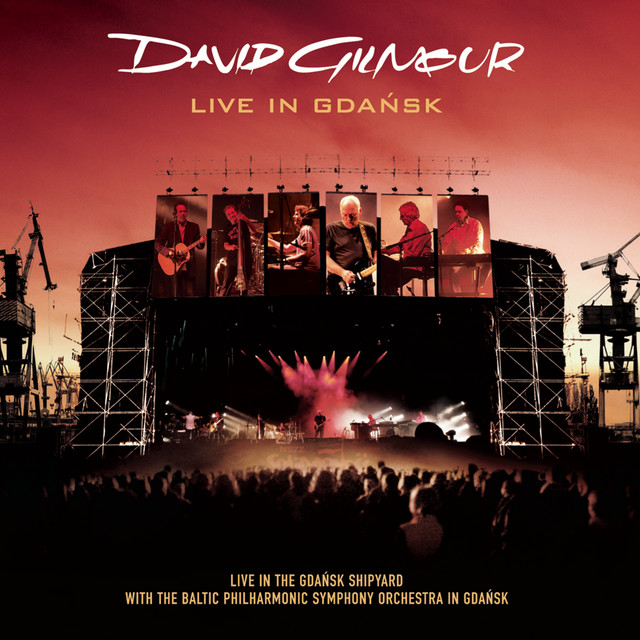
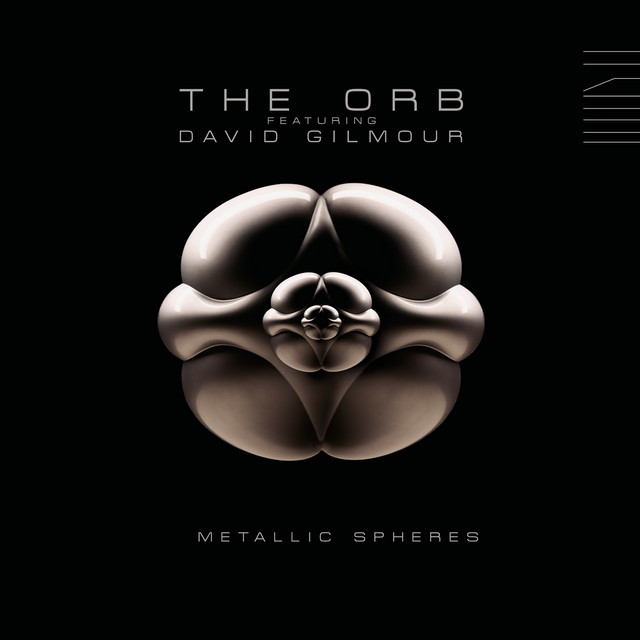
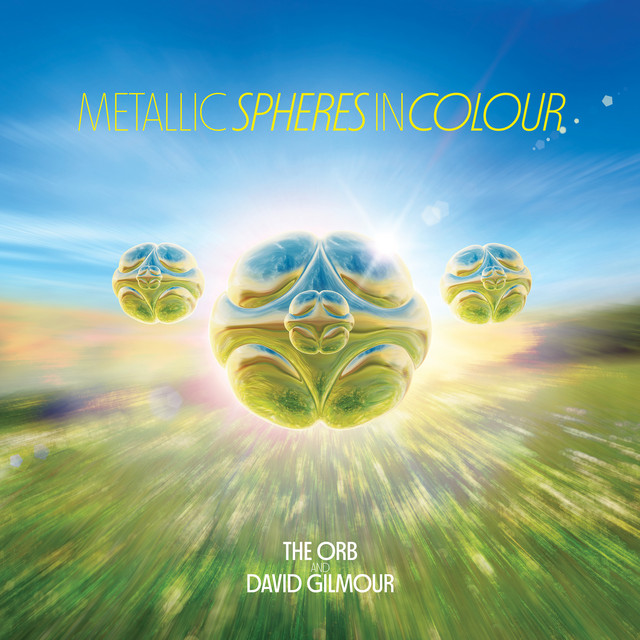
Album Credits
-
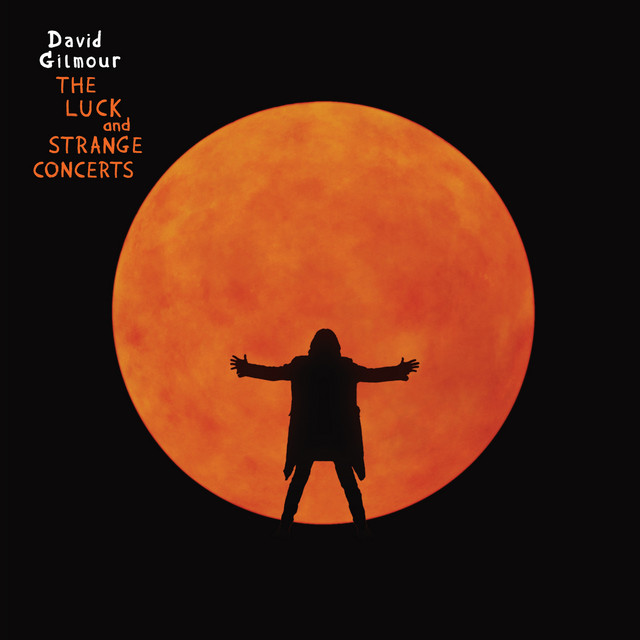
Between Two Points (Live from the Luck and Strange Concerts)
David Gilmour · 2025
Mixing Engineer Producer -
Wish You Were Here (Live from the Luck and Strange Concerts)
David Gilmour · 2025
Mixing Engineer Producer -
Luck and Strange (Live from the Luck and Strange Concerts)
David Gilmour · 2025
Mixing Engineer Producer -
Sorrow (Live from the Luck and Strange Concerts)
David Gilmour · 2025
Mixing Engineer Producer -
David Gilmour · 2025
Mixing Engineer Producer -
David Gilmour · 2024
Mixing Engineer Producer Programmer -
David Gilmour · 2024
Mixing Engineer Producer -
David Gilmour · 2024
Mixing Engineer Producer -
The Dream Academy · 2021
Producer -
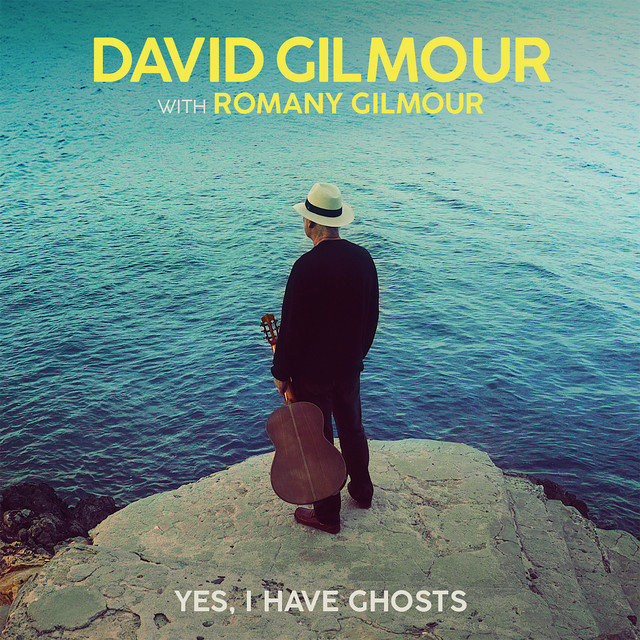
David Gilmour · 2020
Mixing Engineer Programmer -
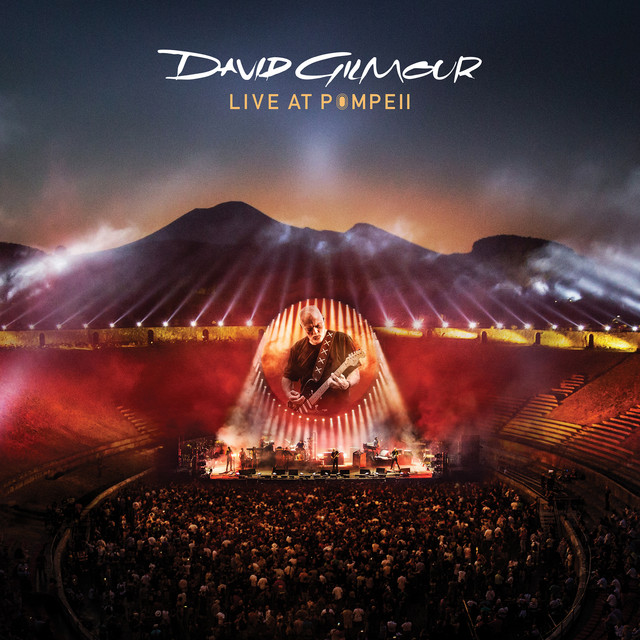
David Gilmour · 2017
Mixing Engineer Producer -
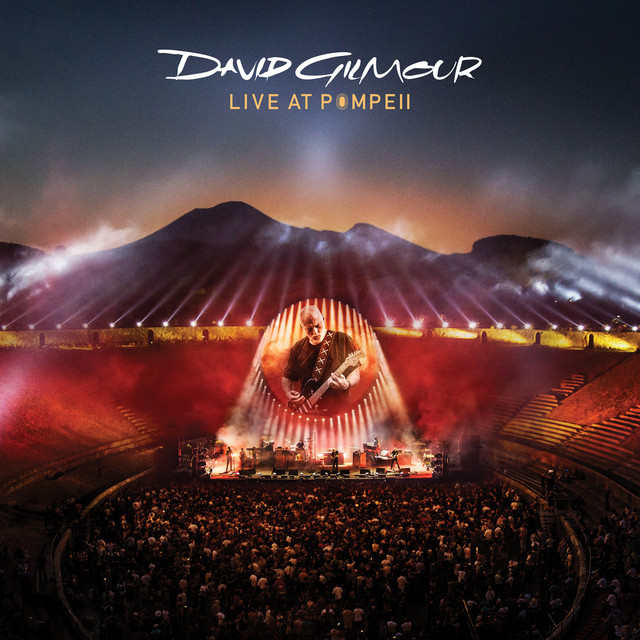
One of These Days (Live At Pompeii 2016)
David Gilmour · 2017
Mixing Engineer Producer
.jpeg?v=1783110732)

.jpeg?v=1783065966)


.webp)




