Jack Johnson
singer‐songwriter from Hawaii
Genre
Credits
Genre
Credits
Jack Johnson's Gear


In this documentary about Jack Johnson's Family roots, he brings along his travel guitar as he journeys along California's coast. Pulling out this Taylor GS Mini to play during multiple times in the road trip, you can see Jack Johnson play a performance of "Better Together at the end of the video."
Find it on:





Used on Sleep Through the Static, as stated by mix engineer Robert Carranza in this May 2008 Sound on Sound interview.
"Electric guitars were also pretty straightforward, with an SM57 on the amp. The acoustic guitar was usually a Gibson J45, sometimes a Cole Clark, recorded with an AKG C451. I'd screened off the acoustic guitar so it didn't bleed as much. Some songs started off acoustically, and Jack would say 'There's too much bleed on the mic, let's try an electric,' and all of a sudden the vibe of the song changed. We simply went with it. 'If I Had Eyes' was one of those songs."
Find it on:


In this video of Jack Johnson singing and playing to "Home" with his Gibson Blues King Acoustic Guitar at hand.
Find it on:


Jack Johnson used a Guild D-40 in the music video of "wasting time" and "Taylor"
Find it on:

In this photo of Jack Johnson's acoustic guitar pedalboard (left) and electric guitar pedalboard (right), the MXR M-133 Micro Amp pedal can be seen on both.
Find it on:

Currently, there is no verified proof linking Jack Johnson to the Gibson ES-335 Custom VOS on Equipboard. If you discover a credible source, please update this entry to include it. Otherwise, rate this submission as "Completely Incorrect."
Find it on:


''Jack Johnson is an artist of many talents - besides being a musician, he's also a record producer, actor, documentary filmmaker - and former professional surfer! Good to know he's found time to play the guitar - and is now a new member of the "Eastwood family", playing an Airline 59 Coronado equipped with P94 pickups.''
Find it on:
-m.webp?v=1783747845)
This photo of Jack Johnson's pedalboard was found on The Rigs blog, as part of an interview with Jack Johnson from June 2011. The photo shows his acoustic guitar pedalboard on the left, and electric guitar pedal setup on the right. The latter includes two Ibanez TS9 Tube Screamer pedals.
Find it on:

Used on the acoustic guitar for Sleep Through the Static, as stated by mix engineer Robert Carranza in this February 1, 2008 Mix Online interview.
On the guitar is an Audio-Technica 4050.
Find it on:

Used on guitar and piano for Sleep Through the Static, as stated by mix engineer Robert Carranza in this May 2008 Sound on Sound interview.
Regarding the signal chains, simplicity again ruled. "For vocals it was the U47 going into an API 512, into an LA2A with a dB compression at the most, straight to tape. I've learned in the past that you want to use no or very little EQ during recording, because if you later want to drop in a fix, you'll never match it. The drums were all cut through an API preamp. For bass we went through a Universal Audio 610, and guitar and piano went through the Neve 1073. That was pretty much the signal chain on everything.
Find it on:

Used on the guitar for "Monsoon", as stated by mix engineer Robert Carranza in this May 2008 Sound on Sound interview.
"Track 13 and 19 [sic] were the guitar lines in the verse that sound like a guitar solo. They were definitely treated differently than track 14. I recorded the guitar lines with a close mic on the amp and I also had a Beta 58 talkback mic, which was close to Jack's face. I accidentally left the talkback mic on, and it sounded great as an ambient mic. It gave the guitar a much warmer sound. So I ended up just using that."
Find it on:

Used for the acoustic guitar on Sleep Through the Static, as stated by mix engineer Robert Carranza in this May 2008 Sound on Sound interview.
"Electric guitars were also pretty straightforward, with an SM57 on the amp. The acoustic guitar was usually a Gibson J45, sometimes a Cole Clark, recorded with an AKG C451. I'd screened off the acoustic guitar so it didn't bleed as much. Some songs started off acoustically, and Jack would say 'There's too much bleed on the mic, let's try an electric,' and all of a sudden the vibe of the song changed. We simply went with it. 'If I Had Eyes' was one of those songs."
The same is said by Carranza in this February 1, 2008 Mix Online article, accompanied by photographic proof.
"We set up in the room and create a live environment. I put an AKG 451 on his acoustic guitar. He is such a mellow player. Jack would sometimes play acoustic, sometimes electric, all done live in the room."
Other images of Johnson using the microphone for the album can be found here on this Morrison Hotel Gallery page, here and here.
Find it on:

Used on vocals for Sleep Through the Static, as stated by mix engineer Robert Carranza in this May 2008 Sound on Sound interview.
Regarding the signal chains, simplicity again ruled. "For vocals it was the U47 going into an API 512, into an LA2A with a dB compression at the most, straight to tape. I've learned in the past that you want to use no or very little EQ during recording, because if you later want to drop in a fix, you'll never match it. The drums were all cut through an API preamp. For bass we went through a Universal Audio 610, and guitar and piano went through the Neve 1073. That was pretty much the signal chain on everything."
Find it on:

Used on the electric guitar for Sleep Through the Static, as stated by mix engineer Robert Carranza in this May 2008 Sound on Sound interview.
"Electric guitars were also pretty straightforward, with an SM57 on the amp. The acoustic guitar was usually a Gibson J45, sometimes a Cole Clark, recorded with an AKG C451. I'd screened off the acoustic guitar so it didn't bleed as much. Some songs started off acoustically, and Jack would say 'There's too much bleed on the mic, let's try an electric,' and all of a sudden the vibe of the song changed. We simply went with it. 'If I Had Eyes' was one of those songs."
Find it on:

Used to record Sleeping Through the Static, as stated by mix engineer Robert Carranza in this May 2008 Sound on Sound interview.
Recordings took place off and on over a period of three months in the late spring and summer of 2007. This included a 10–day spell at Johnson's Hawaiian studio, and Carranza ended up buying another Studer A827 plus a Malcolm Toft console especially for the project. "I took the microphones with me to Hawaii, and we had a duplicate of my outboard and preamp rack, so the signal chain was exactly the same. There was no great pressure in working. We really went with what we felt like." The only moment of concern came when the 18 RMG900 two–inch reels (recorded without Dolby, at +6/185) they had filled had to be sent back to Los Angeles for mixdown. Naturally, Carranza made Pro Tools copies before shipping. (...) Robert Carranza mixed the album at Solar Powered Plastic Plant Studios, happily using the Studer A827 and the SSL AWS900.
(...) "Choosing the studio equipment was up to me," explained Carranza. "Nobody had any foresight as to what to get. I already owned all the outboard gear that we needed and I also have a complete Pro Tools system, so the main challenge was to get a tape machine, a desk, and a monitoring system that would work in the relatively untreated acoustic space. We ended up buying a Studer A827 24–track from Harry Maslin, an old engineer and producer who has done a lot of great records. As for the desk, Jack wanted something economical and low–maintenance. I've grown up with API, and they're great, but I know how problematic they can be. The same goes for Neve. So I settled for the SSL AWS900. I realised that I could get any sound I wanted on this console, as opposed to a Neve, which will only give you the Neve sound. As I have a rack full of preamps, four Neve 1073s, eight API 512s, 12 API L200s, I only intended the SSL AWS900 to be used for monitoring and mixing."
Find it on:

Jack Johnson performing in Toronto with the Shure KSM8 (nickel variant).
Find it on:

Used on the electric guitar for Sleep Through the Static, as stated by mix engineer Robert Carranza in this February 1, 2008 Mix Online interview.
Many amps on the project were borrowed from producer J.P. Plunier's collection. “The one on the left is a Bell stereo amplifier that has two inputs so you can create a stereo effect; we used that one quite a bit,” says Carranza. “The little orange one is an old Gibson. We also used the little combo on the bottom with the tweed design. Standard miking [included] an SM7 or a 57; sometimes, I put the 251 on the amp farther back.”
Find it on:


Used on the vocals for Sleep Through the Static, as stated by mix engineer Robert Carranza in this February 1, 2008 Mix Online interview.
Vocals went through an API mic pre from the Telefunken | USA U-47 re-issue into the API 512, into an LA-2A and straight into tape. “We used the 1176 every once in a while, not too much; this is more of an LA-2A kind of record. No aggressive stuff.”
Find it on:

Used on vocals for Sleep Through the Static, as stated by mix engineer Robert Carranza in this May 2008 Sound on Sound interview. An image of the item can be found here.
Regarding the signal chains, simplicity again ruled. "For vocals it was the U47 going into an API 512, into an LA2A with a dB compression at the most, straight to tape. I've learned in the past that you want to use no or very little EQ during recording, because if you later want to drop in a fix, you'll never match it. The drums were all cut through an API preamp. For bass we went through a Universal Audio 610, and guitar and piano went through the Neve 1073. That was pretty much the signal chain on everything."
Find it on:


-m.webp?v=1783748646)
In this studio footage Jack Johnson used a Neumann M149. There are also other video that proves it.
Find it on:

Used for vocals on Sleep Through the Static, as stated by mix engineer Robert Carranza in this February 1, 2008 Mix Online interview.
Vocals went through an API mic pre from the Telefunken | USA U-47 re-issue into the API 512, into an LA-2A and straight into tape. “We used the 1176 every once in a while, not too much; this is more of an LA-2A kind of record. No aggressive stuff.”
Find it on:

Jack Johnson has been a Cole Clark artist since the early 2000's. He uses a cutaway version of the Fat Lady 2 for most acoustic performances.
Find it on:

In the video titled "Jack Johnson 'One Step Ahead Loopy Style'," published by the official Jack Johnson music channel, Jack Johnson is observed utilizing the Line 6 DL4 Delay Modeler. This gear is employed both as a looper and likely for its delay effects during his performance of "One Step Ahead," the first single from his album "Meet The Moonlight." This evidence directly confirms Jack Johnson's use of the Line 6 DL4 Delay Modeler in his musical setup.
Find it on:
This is a community-built gear list for Jack Johnson.
- Find relevant music gear like Microphones, Guitars, Amplifiers, Effects Pedals, and other instruments and add it to Jack Johnson.
- The best places to look for gear usage are typically on the artist's social media, YouTube, live performance images, and interviews.
- To receive email updates when Jack Johnson is seen with new gear, follow the artist.
Discography
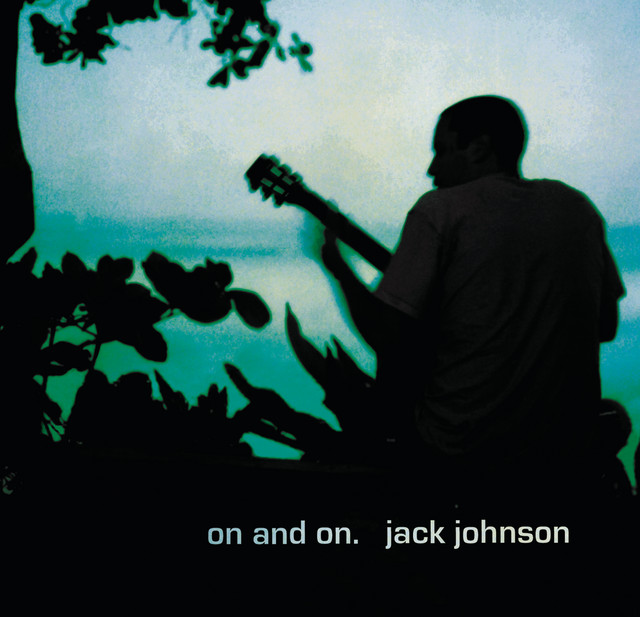
On and On
2003
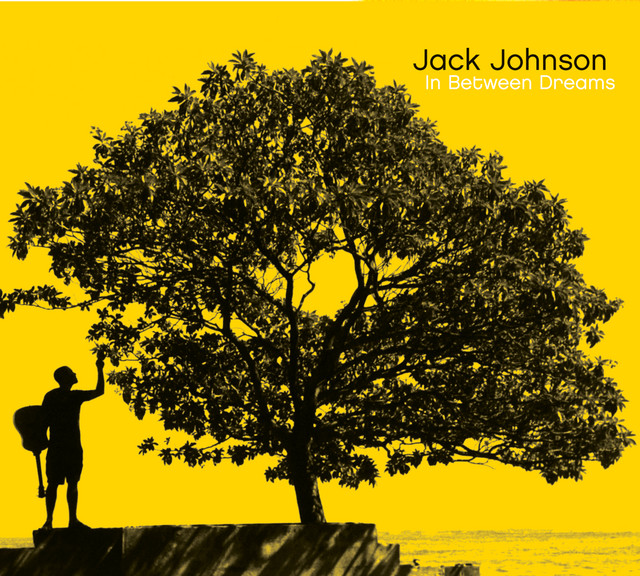
In Between Dreams
2005
Sing-A-Longs & Lullabies For The Film Curious George
2006
Jack Johnson And Friends: Sing-A-Longs And Lullabies For The Film Curious George
2006
Sleep Through The Static
2008
Sleep Through The Static: Remixed
2008
En Concert
2009
To The Sea
2010
![Brushfire Fairytales [Remastered (Bonus Version)] album cover](https://images.equipboard.com/uploads/album/image/245265/brushfire-fairytales-remastered-bonus-version.jpg)
Brushfire Fairytales [Remastered (Bonus Version)]
2011
From Here To Now To You (Commentary Version)
2013
From Here To Now To You
2013
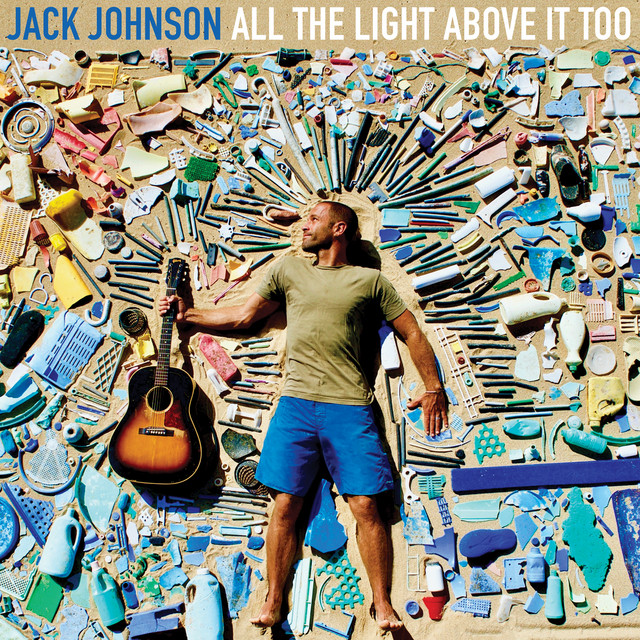
All The Light Above It Too
2017
Album Credits
-
Jack Johnson · 2023
Producer -
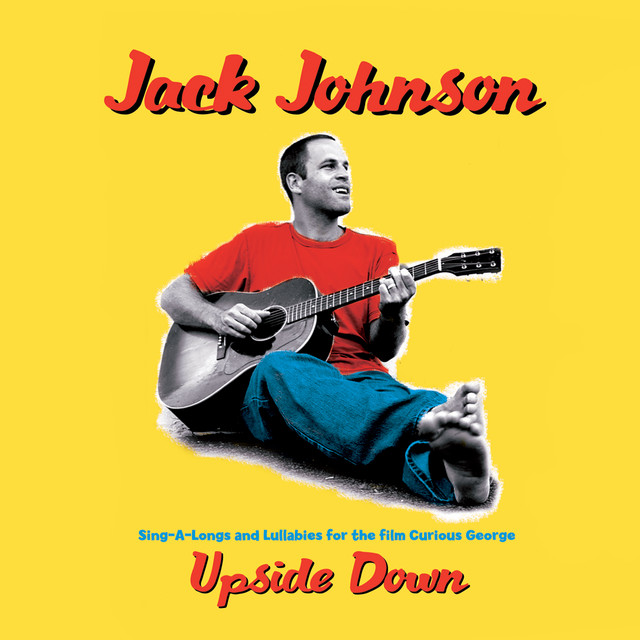
Jack Johnson · 2006
Producer