
Johnny Marr
Genre
Group
Credits
Genre
Group
Credits
Johnny Marr's Gear


Johnny Marr uses Ernie Ball Power Slinky Guitar Strings (11-48), as revealed in a post on his official Facebook page.
Find it on:


This video clip from Johnny's Instagram profile shows Marr playing guitar in his Crazy Face studio. Behind him, atop a Fender Blackface combo, is a Kemper Profiler head.
Find it on:


Johnny Marr talks at length about his signature model Jaguar guitar by Fender in this video interview.
He regularly plays one of his many signature models in various available colors, blue, metallic orange, or green live in concert or in the studio. He can be seen playing in this video from the Jimmy Fallon show. The guitar is shown throughout the video.
He can be seen holding one in a natural finish in an Instagram post he captioned:
Jag time. Album 4. @fender @souldierstraps
Find it on:


Bought for Meat Is Murder tour, also used on 'How Soon Is Now?'.
"My other Les Paul is a mid-'80s one with a Bigsby retro-fitted; that's the one I used on 'How Soon Is Now?'.
The Les Paul I used on the second Smiths album is the one I've still got now, the cherry one. I put a retro-fit Bigsby on it. I also put on Seymour Duncans and a coil tap.
I was looking for a harder sound for the Meat Is Murder album, and I tried a few different guitars before coming around to the Les Paul. There are a lot of traditional rock cliches associated with this make of guitar, so I had to work past that. This was used to write Nowhere Fast, That Joke Isn't Funny Anymore and I Want The One I Can't Have. I used it to record The Headmaster Ritual."
This was Johnny's first "main" Les Paul, which had it's first documented appearance on December 1, 1984 and it's last appearance was at the Smiths final show on December 12, 1986. There were periods where it saw less use, when the '72 Custom took over as Johnny's go-to Les Paul, but it was one of the 3 Les Paul's he regularly used on the final Smiths tour. The Bigsby was installed in mid-March, 1985.
Source: http://www.smithsonguitar.com/2008/12/johnny-marrs-gear.html
Find it on:


"Noel [Gallagher] still has the Les Paul. It was a 1960 sunburst (refinished) that was given to Pete Townshend by Joe Walsh. The machine heads were replaced before I got it. I used it on "Panic" by The Smiths, also "London", "Ask" and "Half A Person"."
This was one of Johnny's main live guitars during 1986. It has a very pronounced flame top, and more of a cherry finish than his '59 Les Paul. The bridge humbucker is uncovered with white/cream bobbins. This guitar was previously owned by Pete Townshend, and I'm assuming that it was in the group of guitars that Johnny bought from Alan Rogan. It was given to Noel Gallagher in 1994(seen here, here, here and here), it was used in the "Live Forever" video. Noel broke the guitar during a stage fight, and was subsequently given Johnny's 1972 Les Paul Custom as a replacement.
Source: http://www.smithsonguitar.com/2008/12/johnny-marrs-gear.html
Find it on:

The 1963 Epiphone Casino that I used to record the main tremolo sound on 'How Soon Is Now'. I recording the rhythm part and then sent the track out to four Fender Twin Reverbs all with tremolo on and had to keep stopping the song when the amps went out of sync. It took quite a long time. I wrote 'Nowhere Fast' on this guitar and played it at the Glastonbury Festival in 1984. The picture on the inside of Hatful Of Hollow was taken in the dressing room before we went on stage so I have the guitar on in that picture.
I've also got an old Epiphone Casino. That's one of my favorites. I shopped around for it because I saw a few of them with P90 pick-ups on. I knew I'd seen one with a Bigsby, but I didn't know where. As it turned out I think it was Ray Davies who used to have a Bigsby on his instrument. John Porter, our producer, advised me against getting one with a Bigsby on, because of tuning problems. It doesn't seem to be so bad on the Epiphone.
Source: http://www.smithsonguitar.com/2008/12/johnny-marrs-gear.html
Find it on:


"I've had this guitar longer than any other. It cost me £900 in the early Eighties, which was a fortune back then. I wrote quite a few Smiths songs on this, including Well I Wonder and Cemetry Gates."
Source: www.smithsonguitar.com/2008/12/johnny-marrs-gear.html
Find it on:

On this page of Johnny Marr's website, one can see his 1960 Les Paul Custom, of which he says, "My 1960 Les Paul Custom that I used on the Boomslang album."
Find it on:

A recent photo from Johnny Marr's Facebook page shows his pedalboard, featuring the Carl Martin Compressor/Limiter Pedal.
Find it on:
-m.webp?v=1783177108)
"I had the yellow OS-2 overdrive/distortion pedal, the OD-2 Overdrive pedal; actually that’s how I got the riff to The Smiths song ‘London’, (sings riff), I had the CE-2 chorus pedal, the white GE-6 EQ, the BF-2 purple Flanger and when the very first grey reverb pedal came out, the RV-2, I got that. I still own it. It sounds really good."
Find it on:

"I use it for the dressing rooms, just playing around, and on the tour bus as well. Also I find it to be just the job coz often these days bands are invited down to do acoustic sessions. It normally involves two of the band pulling out acoustic guitars and doing a half-arsed version of your punk rock hit. In The Cribs there are three of us who play guitar and I just thought that would be overkill. I have to fight for it sometimes, coz I say look, that microphone you were gonna put in front of my guitar, just put it in front of this little amp, and then you see their faces drop as I get out my electric guitar! I just dial in a little bit of delay, and a little bit of reverb and it does an absolutely great job. We used to have a few Roland Micro Cubes in Modest Mouse that we used to put beat boxes through and all these weird samplers and it just did the job great."
Find it on:

Johnny Marr talks about his 1962 Epiphone Coronet on this page of his website. He says, "This is a 1962 Epiphone Coronet. Shortly after I got it I put it in “Nashville Tuning”, which means putting on an electric 12 string set (the bottom four strings are an octave higher than standard). It feels like your playing backwards because the higher strings are at the bottom. I used it to double a lot of the Rickenbacker arpeggios on Smiths records, most notably on “William It Was Really Nothing”, it’s also the main guitar on “Half A Person”."
Find it on:
-m.webp?v=1782327089)
In this picture Johnny Marr can be seen with a blonde Fender Telecaster.
Find it on:

"I kept my eye on multi-processors and I tried [them as they got better through the years]. When the GT-5 came out, I happened to be going out with The Healers, and [it was] really useful for me, particularly as I’m in the position of having to reproduce a lot of different sounds. My audience expects me to sound like my records, [and] as a singer I don’t want to be looking down at my feet every 16 bars or every time I go into a chorus or verse.
The GT-5 did two things for me: it made it so that I could change sounds and reproduce some of the things that were going on in my records, but with just hitting one pedal. I still wasn’t entirely there with the sound of it, but I got there. I did a lot of interesting things, and being able to change ring modulation, for example, or dial in very precise delays and all of that, which for someone like me was really fun."
Find it on:

"I used the amps that I’ve had and used forever: a 1965 Fender Deluxe Reverb, which is my main amp, and a blackface 1960s Fender Twin Reverb that I’ve used on almost every record I’ve done. A lot of guitar sounds on the album came from an old HH Musician transistor amplifier, which all the British new wave bands used in the late 1970s and sounds crazy good. I also used my old tweed Bassman from the ’50s."
Find it on:

As said on Johnny's website:
"This is the 1963 Black Jaguar that I got from Isaac Brock when I joined Modest Mouse. Isaac didn’t like it but I loved it and I fixed it up and got it going. I wrote “Dashboard” on it and used it on the tour. Me and Jeremiah Green went out to Walmart in Oxford Mississippi at three am on a break whilst recording the Modest Mouse album and bought a load of stickers."
Find it on:

In this picture Johnny Marr can be seen playing this guitar.
Find it on:
-m.webp?v=1782480431)
In this picture Johnny Marr can be seen playing this guitar.
"The Gretsch 6120 that I used to write and record "Stretch Out And Wait". You can hear it on "Is It Really So Strange?" too. I got it from The Who and It's one of the best old 1960's Gretsch's that I've played. I got introduced to a guy called Alan Rogan who used to work for Townshend, Clapton and Keith Richards. I ended up getting a load of guitars off him. That's where the Gretsch 6120 came in. It's the one Townshend played on loads of Who stuff. I don't know why he sold it to a geek like me."
Johnny used this 6120 on 5 out of 6 documented dates of the Smith's final 1986 tour, for Meat Is Murder only. It was tuned to Open G, the same tuning used on "Stretch Out And Wait" and "The Headmaster Ritual".
Source: http://www.smithsonguitar.com/2008/12/johnny-marrs-gear.html
Find it on:

Johnny Marr has a 1980 Gibson Flying V listed among his guitars, on his website.
Find it on:

At 0:39 in this performance of William it Was Really Nothing on Top Of The Pops on August 30 in 1984, Johnny Marr can be seen playing this guitar.
Custom guitar made by luthier Danny Ferrington for Elvis Costello, used on August 30th 1984 in a performance of "William, It Was Really Nothing" on Top Of The Pops. This guitar was apparently loaned to Johnny by Elvis for this performance. It was also used by Aztec Camera on another episode of TOTP, after which Roddy Frame had Ferrington make two guitars for him inspired by this Costello acoustic.
Source: www.smithsonguitar.com/2008/12/johnny-marrs-gear.html
Find it on:
-m.webp?v=1783163250)
"1968 Gibson 345 Stereo converted to Mono. Used for a lot of Electronic’s 2nd and 3rd LP and Boomslang by The Healers," says Johnny Marr, on this page of his official website.
Find it on:

Nevern Square, Earls Court. William It Was Really Nothing, Please Please Please, How Soon Is Now writing session.
"I got this J160 from Denmark Street when I moved to Earl's Court in 1984. I wanted one because John Lennon used one on the early Beatle's albums and I liked 'I Should've Known Better' and 'I'll Be Back'. I wrote 'Please Please Please Let Me Get What I Want' on it and 'William It Was Really Nothing'."
Source: www.smithsonguitar.com/2008/12/johnny-marrs-gear.html
Find it on:

My 1972 Telecaster that I bought from Louisville Kentucky in Summer 2007. I used it at Coyote’s the night I bought it on the song “Broke”. I play “King Rat” on it too. www.johnny-marr.com/guitarchestra-2/1972-telecaster
Find it on:

"I had the yellow OS-2 overdrive/distortion pedal, the OD-2 Overdrive pedal; actually that’s how I got the riff to The Smiths song ‘London’, (sings riff), I had the CE-2 chorus pedal, the white GE-6 EQ, the BF-2 purple Flanger and when the very first grey reverb pedal came out, the RV-2, I got that. I still own it. It sounds really good."
Find it on:

Rare shot of Johnny's pedalboard from the '86 Nottingham gig. The pedal case is a Boss BCB-6. From right to left is a PSM-5 followed by a GE-6, OD-2, TW-1, HM-2 and the CE-2 on the end. Below is a mock-up of the pedalboard.
Find it on:

In this picture, you can see that Johnny Marr uses a Line 6 M13 Stompbox Modeler in his studio (to his left).
Find it on:

"I use Ernie Ball strings, gauged .010 to .046, on most of my guitars."
Find it on:

This interview with Marr for Premier Guitar magazine, regarding the recording of his 2018 album Call the Comet, includes a list of gear currently he used during the sessions. The Mel9 pedal is among the effects on the list (erroneously listed as the "M9 Mellotron").
Find it on:

A Digitech Mosaic can be seen at the top of Marrs pedalboard in this picture.
Find it on:

"I used the amps that I’ve had and used forever: a 1965 Fender Deluxe Reverb, which is my main amp, and a blackface 1960s Fender Twin Reverb that I’ve used on almost every record I’ve done. A lot of guitar sounds on the album came from an old HH Musician transistor amplifier, which all the British new wave bands used in the late 1970s and sounds crazy good. I also used my old tweed Bassman from the ’50s."
Find it on:
This is a community-built gear list for Johnny Marr.
- Find relevant music gear like Microphones, Guitars, Amplifiers, Effects Pedals, and other instruments and add it to Johnny Marr.
- The best places to look for gear usage are typically on the artist's social media, YouTube, live performance images, and interviews.
- To receive email updates when Johnny Marr is seen with new gear, follow the artist.
Discography
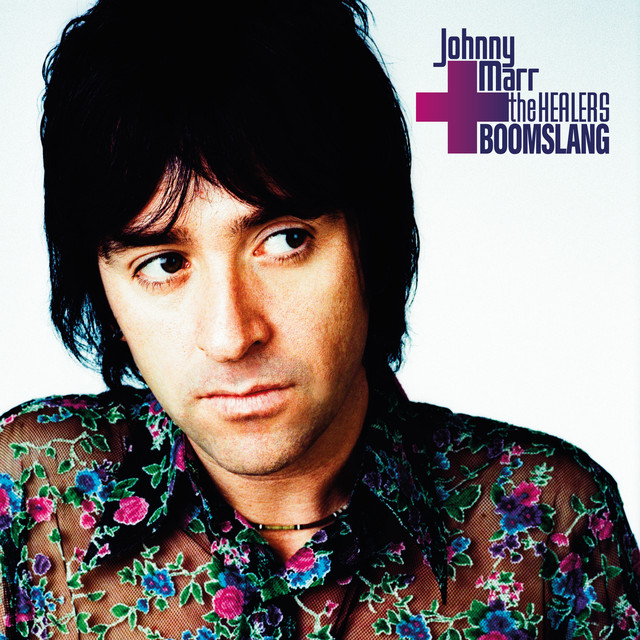
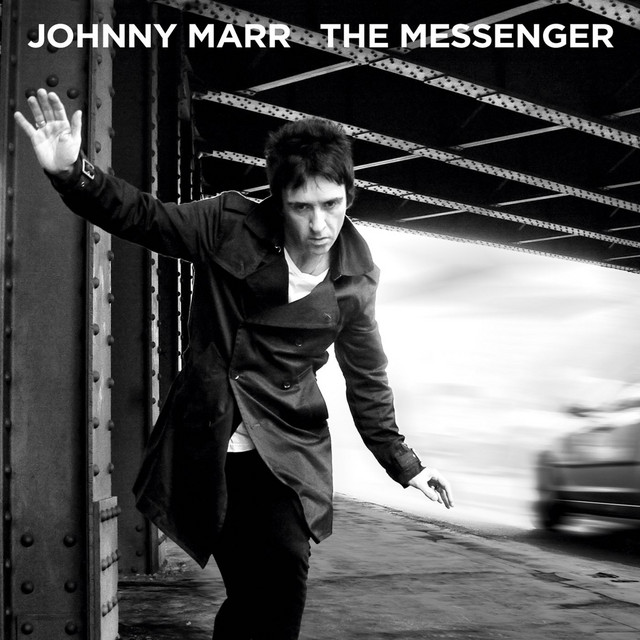

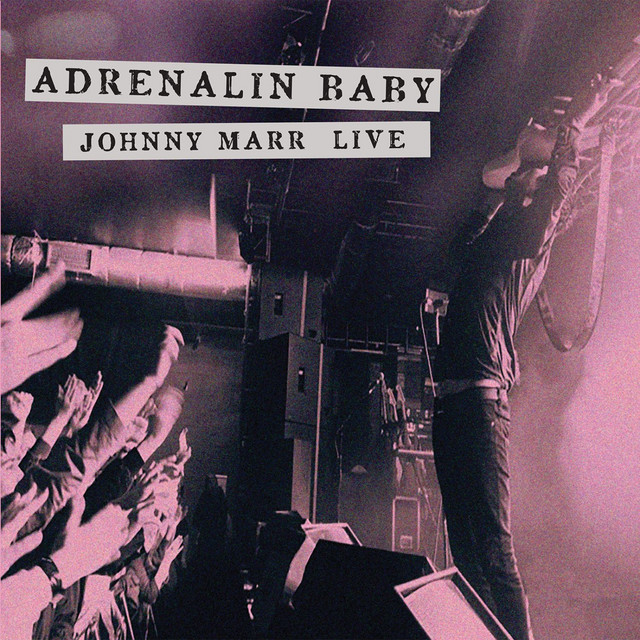
Album Credits
-
Johnny Marr · 2018
Producer -

Johnny Marr · 2018
Producer -
Johnny Marr · 2014
Producer -
Johnny Marr · 2014
Producer -
Billy Bragg · 2006
Producer -
Billy Bragg · 1999
Producer








.jpg)