Klaus Schulze
German electronic musician
Genre
Group
Genre
Group
Klaus Schulze's Gear


Klaus Schulze is listed as using the Atari 1040 ST among his extensive collection of music equipment, as detailed on the "Klaus Schulze's Instruments" page.
Find it on:


Atari 1040 ST, Atari Mega ST 4, Roland: Super JX 10, S 50, D 50, MKS 80, MKS 30, U 110, MPG 80; Akai X 7000, Fairlight, Yamaha TX 81 Z, Akai S 612, Korg DVP 1, Roland SRV 2000, Korg SDD 1200, Ibanez SDR 1000, Eventide Harmonizer, 3x Hohner HS-1/E, 2x Klark EQ, Arsonic-Sigma 5.2, EMS Synthi A, and others...
Find it on:

Atari 1040 ST, Atari Mega ST 4, Roland: Super JX 10, S 50, D 50, MKS 80, MKS 30, U 110, MPG 80; Akai X 7000, Fairlight, Yamaha TX 81 Z, Akai S 612, Korg DVP 1, Roland SRV 2000, Korg SDD 1200, Ibanez SDR 1000, Eventide Harmonizer, 3x Hohner HS-1/E, 2x Klark EQ, Arsonic-Sigma 5.2, EMS Synthi A, and others...
Find it on:

Atari 1040 ST, Atari Mega ST 4, Roland: Super JX 10, S 50, D 50, MKS 80, MKS 30, U 110, MPG 80; Akai X 7000, Fairlight, Yamaha TX 81 Z, Akai S 612, Korg DVP 1, Roland SRV 2000, Korg SDD 1200, Ibanez SDR 1000, Eventide Harmonizer, 3x Hohner HS-1/E, 2x Klark EQ, Arsonic-Sigma 5.2, EMS Synthi A, and others...
Find it on:

Atari 1040 ST, Atari Mega ST 4, Roland: Super JX 10, S 50, D 50, MKS 80, MKS 30, U 110, MPG 80; Akai X 7000, Fairlight, Yamaha TX 81 Z, Akai S 612, Korg DVP 1, Roland SRV 2000, Korg SDD 1200, Ibanez SDR 1000, Eventide Harmonizer, 3x Hohner HS-1/E, 2x Klark EQ, Arsonic-Sigma 5.2, EMS Synthi A, and others...
Find it on:

1972 Teisco organ, Solina string keyboard, guitar, voice, tapes, tape echo, 4-track Telefunken home recorder, cheap 3-channel Telefunken Echo Mixer, Revox, broken Fender guitar amplifier.
Find it on:

Klaus uses EMT plate reverb
Find it on:


"I always have an abundance of Virus As and Cs around, three 19-inch [Studio Electronics] SE-1 Moogs, and some Quasimidi stuff…and, of course, my beloved Roland JD-800 and JD-990s, the Spectrasonics plug-ins, plus two Alesis [Andromeda] A6 analog babies, as well."
Find it on:

The center of the studio is a console with a big 36 channel mixer (Soundcraft), the master keyboard (Quasimidi "Cyber 6"), a computer (Apple Power Mac G4) and additional equipment (see photo). To the left and right of the mixer there are flat screen computer monitors. Below the mixer the master keyboard is placed on a board which is assembled like a drawer so that Klaus can pull it out when he plays music, and push it back when he works mainly with the computer. The computer stands on the floor.
Find it on:

Behind the console there is a big rack with many digital synthesizers (6x Quasimidi "Rave-o-lution 309", 6x Quasimidi "Polymorph", 4x Access "Virus"), sequencer (Doepfer "MAQ 16/3"), mixer, and more (see photo). This huge rack (see photo) was on stage for the first time at the concert in the Duisburg steel works in 1997, and also in Osnabrück in 2001.
Find it on:

"We just spoke about the issue of certain discontinued plug-ins that I love to have available. They are the reason I stick to my trusty PowerMac computer setup (running a pretty old OS). The same holds true for my bread-and-butter DAW Logic 7."
Find it on:

Today, Klaus works mainly with virtual synthesizers and other special software on his Mac computer. He uses a software drum machine (Native Instruments "Battery"), software effect processors and other virtual devices. For example, Klaus asks some singers to produce song phrases for him. Then he changes their recorded voices to such an extent that even the singers cannot recognize their own voices.
Find it on:

"Effect plug-ins I use regularly are the UAD DreamVerb (for backgroundish vocals or softer solo instruments) and even Logic’s built-in Space Designer. In most cases, these are used on instruments considered as the background tracks in a mix. When it comes to my favorite special effects, yes, there it is: Voice Machine. Discontinued, but I like what it can add to the human voice, violins, flutes, and even drum loops or atmospheric pads."
Find it on:

"I still love my Roland SRV-2000 and 3030 and my TC Electronic M-One 19-inch reverbs, the Lexicon 480L with the LARC, and of course, most important, the Roland RSP-550s, of which I have a bunch. These are the main effects I use all the time for the more prominent instruments. They create the rooms and reverb positionings and, of course, the delay cascades for most of the sequencers."
Find it on:

"I still love my Roland SRV-2000 and 3030 and my TC Electronic M-One 19-inch reverbs, the Lexicon 480L with the LARC, and of course, most important, the Roland RSP-550s, of which I have a bunch. These are the main effects I use all the time for the more prominent instruments. They create the rooms and reverb positionings and, of course, the delay cascades for most of the sequencers."
Find it on:

"We just spoke about the issue of certain discontinued plug-ins that I love to have available. They are the reason I stick to my trusty PowerMac computer setup (running a pretty old OS)." A pair of PowerMac G5 towers can be seen in Klaus' studio (ninth photo).
Find it on:

"I started off with tape machines, of course, but I always pursued the next technological advancement, so I owned my first Atari [ST] as a very early adopter. Back then the choice was CLab Creator or Steinberg Twenty-Four, and I went with Creator."
Find it on:

In this photo as in many others, Klaus is seen playing a Farfisa Professional Duo organ
Find it on:

Using a cheap Teisco organ, guitars, tapes with Dynacord echo, a 4-track Telefunken recorder alongside a cheap Telefunken 3-channel Echomixer, Schulze crafted the strange Irrlicht (literally: eerie light) in 1972. Cool and strangely ahead of Brian Eno's similar Discreet Music of three years later, this was quiet music of the minimalist droning variety.
Find it on:

In 1986 Schulze installed fully digital 24-track recording recording equipment, and by this time was getting heavily into MIDI and sampling. Rack mounted synths from Korg were added, plus Akai samplers. A Korg DVP-1 digital voice processor, and a Publison Infernal Machine 90 (a powerful sampler/digital effects system). This all featured, along with the Fairlight, on Dreams, its hi-tech sound and contrasting moods blueprinting the current Schulze sound.
Find it on:

"The main recordings came directly from my desk on to DATs, with no audience noise. I edited these live pieces into two 45 minute sections. 'Silence & Sequence' and 'Variation on BF' were new studio recordings. My main instruments are six Akai S1000s — two keyboards, four rackmounted with 32MB storage each. I've ordered the new Tascam DA88 8-track digital recorder to replace the DAT system I use.
Find it on:

"The main recordings came directly from my desk on to DATs, with no audience noise. I edited these live pieces into two 45 minute sections. 'Silence & Sequence' and 'Variation on BF' were new studio recordings. My main instruments are six Akai S1000s — two keyboards, four rackmounted with 32MB storage each. I've ordered the new Tascam DA88 8-track digital recorder to replace the DAT system I use.
Find it on:

"The desk is a Soundcraft 92-channel, with two power supplies because of its size. I use Arsonic Sigma noise reduction and gain control to avoid digital distortion, very important. EMT reverbs. Effects are varied: Dynacord DRP20, a very cheap but good Boss analogue delay, an Eventide Harmonizer, BGW amplification with RTV correlation and peak limiter. I record on a Tascam DAT at home and in concert. There's no analogue recording. I use an Atari Mega ST4, upgraded to 26MB of RAM, with a 105MB hard disk. I need that for my 60 minute pieces. Now the opera is about 104 minutes, and I need a lot of working capacity because I cannot break off at a point to access the hard disk. Everything has to be immediately accessible."
Find it on:

"The desk is a Soundcraft 92-channel, with two power supplies because of its size. I use Arsonic Sigma noise reduction and gain control to avoid digital distortion, very important. EMT reverbs. Effects are varied: Dynacord DRP20, a very cheap but good Boss analogue delay, an Eventide Harmonizer, BGW amplification with RTV correlation and peak limiter. I record on a Tascam DAT at home and in concert. There's no analogue recording. I use an Atari Mega ST4, upgraded to 26MB of RAM, with a 105MB hard disk. I need that for my 60 minute pieces. Now the opera is about 104 minutes, and I need a lot of working capacity because I cannot break off at a point to access the hard disk. Everything has to be immediately accessible."
Find it on:

"Well, I'd love to go over to PCs, where I'd be working with a 50MHz or 60MHz clocks, much faster than my Atari, but the problem is that my music software won't run on the PC. I use C-Lab Notator on the ST and Steinberg Cubase [a Windows version has just been released — see review in this issue] on the Mac. These are slow, but because I'm very familiar with them I'd have to start all over again to learn the new Logic [Mac-based successor to Notator] and Windows equivalents, which are faster. For me the computer is a big tape machine. I can notate 92 tracks, which is three digital recorders' worth."
Find it on:

"I use the Akai DD1000. For optical disk recording it's the best, unless you want to go for the Waveframe. The problem with it is when you finish a piece you have to erase it to start again, so you have to keep proper backup on DAT. What I do, you see, is to put my samples on the optical disk, and transfer them digitally into the S1000. Then I play them like a keyboard and go straight to DAT when I master. The problem comes from the DD1000 only able to hold 28 minutes of stuff, which is much too short for me. This new Tascam 8-track can hold 100 minutes of stuff, and that's great for my music. That's why I'm so keen on it."
Find it on:

"Well, it's the best for sampling and live. And of course, don't forget the MiniMoog. The S1000 has got very long samples, but it has got limitations. I mean it's only got 16 voices — I put a lot of my samples through Roland's Sound Space system which gives them a 'sensaround' effect live. This means that they are in stereo, which cuts your voices on the Akai to eight. Play a long Russian chorus for two bars, and you're left with only four voices. Play a few more things and you are out of voices — you get digital crackings, the machine stealing from itself and so forth. Its capacity is limited. At London and Cologne I made up for it by using a minimum of stereo samples, instead putting mono string and flute samples through automatic panning effects. Another thing — if there was a machine failure it would take seven minutes to re-load the Akai from DAT-ROM. That's why I have the Prophet 2000 as a backup, so if it happened I can make bridging sequences. Just press one key. In future I'd like to use two S1000s on stage, plus of course the MiniMoog."
Find it on:

"On the Korg T3 I utilised my own sounds, angel chorus, bright spacey tones, guitar sounds, using the Steinberg editor. The Prophet 2000 generated cello sounds and the often heard voice which pans from speaker to speaker. Also its built-in sequencing is useful in an emergency. The MiniMoog is great — such a cheap baby, but so warm, touch sensitive, and for the solo at the end of 'Ancient Ambience' so alive. The Zeck Audio 16-channel desk I had beside me for controlling the mix. It's a make from a German company who do amps and stuff. I bought it four months before the Festival Hall show because it had separate outputs for radio and TV broadcasts. These have to be very specific as I do a lot of European TV and radio now. It also has three effects send/returns — two for the MiniMoog (the ping-pong echoes heard in concert) and one for the Dynacord reverb unit.
Find it on:
This is a community-built gear list for Klaus Schulze.
- Find relevant music gear like Guitars, Amplifiers, Effects Pedals, Bass Guitars, Drum Sets, Cymbals, Snare Drums, Drumsticks, Pianos, Keyboards and Synthesizers, Microphones, Software Plugins and VSTs, Instruments, Studio Equipment, Headphones, and other instruments and add it to Klaus Schulze.
- The best places to look for gear usage are typically on the artist's social media, YouTube, live performance images, and interviews.
- To receive email updates when Klaus Schulze is seen with new gear, follow the artist.
Discography
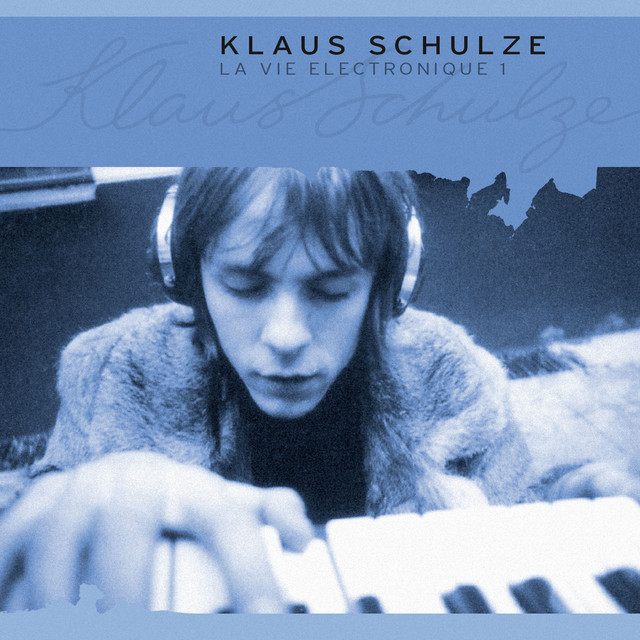
La Vie Electronique, Vol. 1
1969
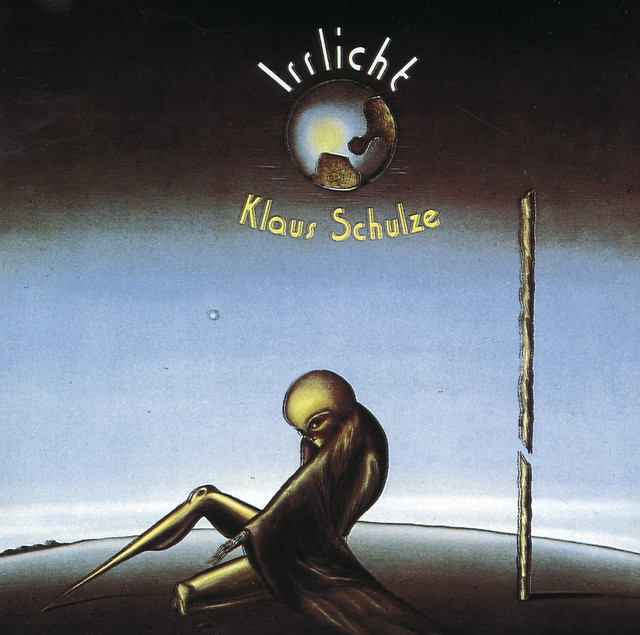
Irrlicht
1972
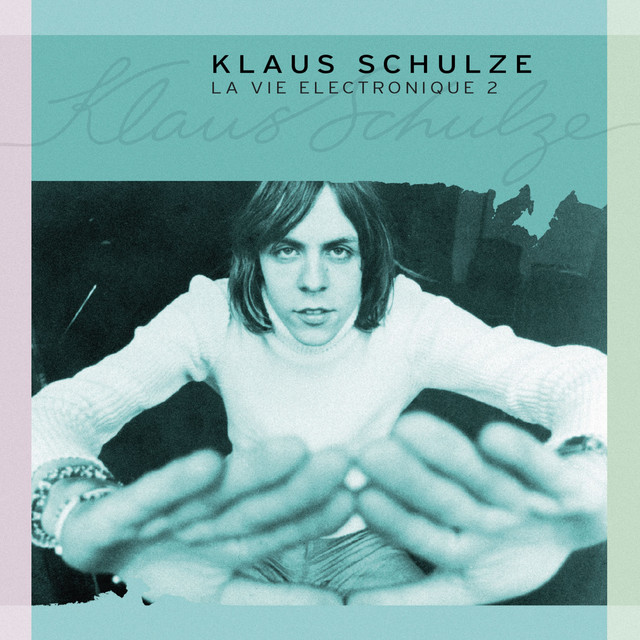
La Vie Electronique, Vol. 2
1972
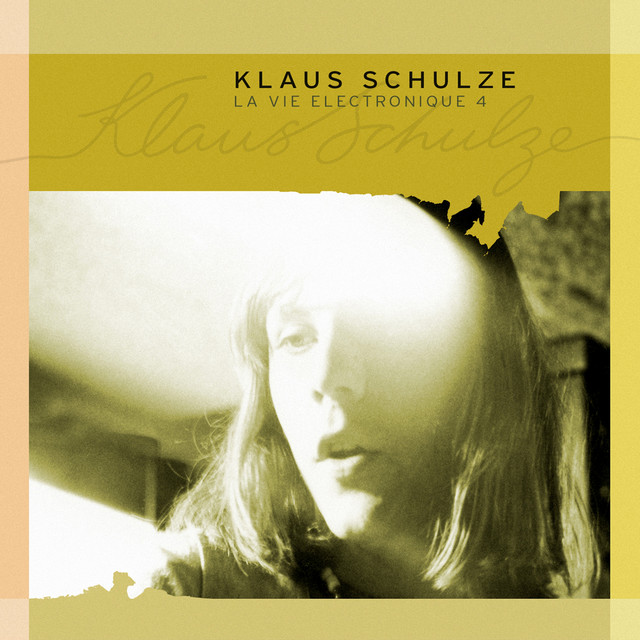
La Vie Electronique, Vol. 4
1975
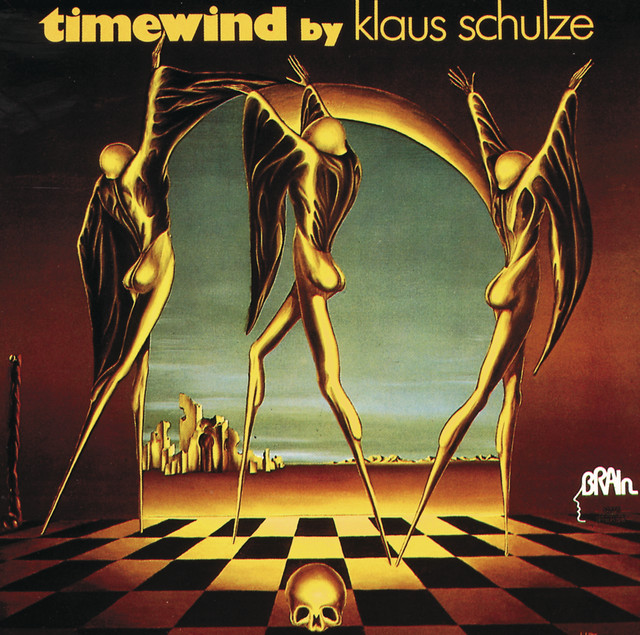
Timewind
1975
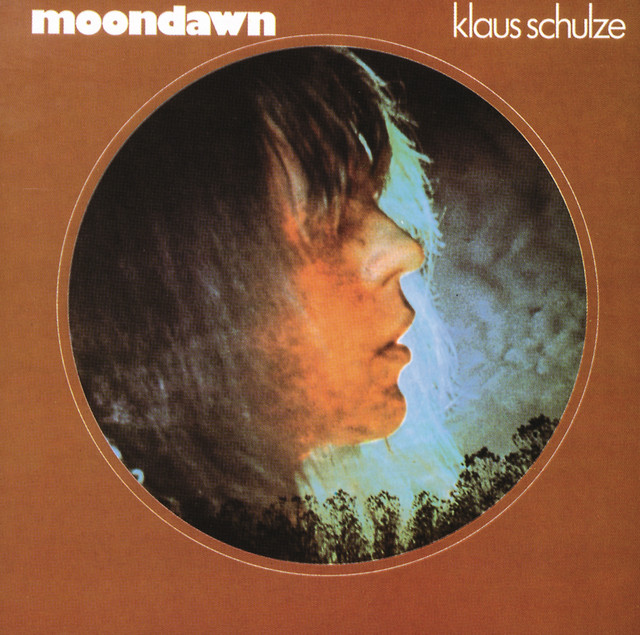
Moondawn
1976
Body Love
1977
Dune
1979
Dig It
1980
![Richard Wahnfried's Tonwelle (Remastered [33 rpm Streaming Version]) album cover](https://images.equipboard.com/uploads/album/image/462781/richard-wahnfried-s-tonwelle-remastered-33-rpm-streaming-version.jpg)
Richard Wahnfried's Tonwelle (Remastered [33 rpm Streaming Version])
1981
Audentity (The Bonus Tracks)
1982
Body Love Original Soundtrack
1983
Album Credits
-
Klaus Schulze · 2017
Producer -
Rheingold (Live at the Loreley)
Lisa Gerrard & Klaus Schulze · 2008
Producer -
Klaus Schulze · 1977
Mixing Engineer Producer Recording Engineer