
Martin L. Gore
Role
Genre
Group
Credits
Role
Genre
Group
Credits
Martin L. Gore's Gear


Martin Gore’s guitar tech Jez Webb: “Here is Martin's setup. 12 guitars we've got out at the moment but I'm sure there's many more lying at home in California. This guitar has been with us for nearly 20 years now. It was made by a gentleman, Dick Knight, in England and it's a copy of the Gretsch Double Anniversary. Martin has one of those but we got Dick to make this for us to take out on tour. ”
This is from the TC Electronic video “Gear Run: Martin Gore of Depeche Mode”, uploaded March 2010, 2:18 into the video. The upload date indicates this was Depeche Mode’s Tour of the Universe.
Find it on:


Martin Gore Uses a Fender Bronco Amp with his Gretsch guitar copy during this recorded session recording of HEAVEN, GOODBYE, BROKEN & SOFT TOUCH from the DELTA MACHINE Album.
Find it on:


In this Depeche Mode performance live at the Austin City Limits Festival in October 2013, Martin L. Gore can be seen playing a Gretsch G3156 Streamliner Electric Guitar (he plays it on "Precious" and it can be seen around the 3:10 mark). Gore's Streamliner has a red finish, and distinctive "cat's eye" holes rather than f-holes. It also appears to not have a Bigsby vibrato tailpiece installed.
Find it on:

Martin answers questions and discusses being the very first person to own this synth.
Find it on:


In an interview with MusicTech, Martin L. Gore discusses his use of the Moog Minimoog Voyager Performer Edition, highlighting it as one of the many vintage synthesizers in his collection.
Find it on:

Engineer Gareth Jones says Depeche Mode used an E-Mu Emulator II on People are Peopl "That song was a lot about sampling and the room," says Gareth Jones. "The monophonic Synclavier was a big part of the sound — we didn't have the polyphonic sampler until the fifth album [1986's Black Celebration] — and we also had an Emulator II and my own AMS. These were used all the time, and since only the Synclavier stored samples, a lot of what we did was recorded onto tape; track by track.
Find it on:

According to Beyerdynamic's website: "Dave Gahan and guitarist Martin Gore both use TG 1000 handheld transmitters with hypercardioid TG V70w interchangeable capsules for their vocal performances"
Find it on:



Martin Gore’s guitar tech Jez Webb: “Martin's passion is for Gretsch and we've got quite a few Gretsch's out with us. The old Bo Diddley being one of them.”
The guitar pictured here is indeed the Bo Diddley, although not the exact model used by Martin. Martin uses a white/silver 1968 Gretsch Bo Diddley (source: http://www.guitarplayer.com/artists/1013/depeche-mode39s-martin-gore/17021)
This is from the TC Electronic video “Gear Run: Martin Gore of Depeche Mode”, uploaded March 2010, 2:47 into the video. The upload date indicates this was Depeche Mode’s Tour of the Universe.
Find it on:

Talking through some of the elements of Martin Gore’s live gear setup for Depeche Mode’s 2013 Delta Machine Tour, Jez Webb mentions Martin Gore’s use of the Kemper Profiling Amplifier (3:17 into the video):
“The new addition to the setup is the Kemper Profiling Amplifier. This is the first tour we’ve used that. Within a couple of days [of receiving it] we dialed in roughly six - eight songs. We found it very easy to use, the interface, the layout of it, particularly the way it’s split into three sections: your effects, the amp, and delays & reverbs, etc. So as I say we were pretty much out the box, plug it in, we were up and running and using that. From this, we take a stereo feed into the Rivera amps, the Venus 5…”
Find it on:

In this video, the scripts are presented the instruments of the tour of the Depeche Mode's Delta Machine Tour, including the MIDI Solutions T8 8-output MIDI Thru Box
Find it on:
-m.webp?v=1784473034)
If you look at 1:15, you can see the synth Martin is playing has the Juno-106 label on it.
Find it on:

At 3:20, the words "PPG Wave 2" can be seen on the back of Martin's keyboard.
Find it on:


Cs2x can be seen 1:27:24 into this video. Played by Martin Gore and Andrew Fletcher in 2001 tour.
Find it on:

Mentioned by producer Daniel Miller in this May 1982 Electronics & Music Maker interview. Gore specified it to be his first synthesizer at Moogfest 2019, as recalled in this April 30, 2019 Parklife DC article.
Electronics & Music Maker, May 1982
How long have the band been playing synthesisers?
"About 18 months now. When they started they always used a drum machine and they were playing more conventional instruments. Andy (Fletcher) was playing bass guitar and Vince was playing electric guitar. Only Martin had a synth but when the others saw the possibilities it offered they both got one as well. Then they started to like bands like Human League and Kraftwerk so they gradually changed their instrumentation."
What equipment did they originally have?
"Martin had a Yamaha CS5, Vince had a Kawai 100F and Andy had a Moog Prodigy."
Parklife DC, April 30, 2019, "Interview: Martin Gore of Depeche Mode (In Conversation with Daniel Miller of Mute Records @ Moogfest 2019 — 4/26/19)"
As Martin recalled during the conversation on April 26, he fell in love with music when he was 10 years old and listened to his mother’s rock and roll records over and over. Soon after hearing Kraftwerk, Martin expanded his interests to electronic music, purchasing copies of Autobahn and Trans-Europe Express.
Martin began playing guitar in a band called Norman and the Worms when he was 13 and then formed another called Composition of Sound with his future bandmates in Depeche Mode, Andrew Fletcher and Vince Clarke. Another friend, Rob Marlow, lent Martin a Korg 700S, and Martin later purchased a Yamaha CS5, his first synthesizer.
Find it on:

As seen in this live performance of "Barrel Of A Gun" on Letterman, this is the guitar he is using.
Find it on:

From Musician magazine, October 1993 issue:
"Depeche Mode keeps things simple onstage: no amplifiers. Every sound, from keyboards to guitar to drums, runs through the P.A. system: a Brittania Pow Flashlight System. Dave Gahan and the backup singers use Samson Synth radio microphones with EU 757 capsules. Martin Gore plays a Roland A-50 and Alan Wilder plays an Akai MX1000, each controlling two Emulator Emax II samplers: Andrew Fletcher has another pair of Emaxes. Each pair is hooked up in parallel, so that if one were to malfunction, the other is ready. But 'I don't remember an instance when we had to go to a spare,' says Wob Roberts, the keyboard technician. Samples come from strange and sundry sources, including old analog equipment. The piano onstage is a Korg 01/W Pro X transplanted into a grand-piano body. For down-stage keyboards, Fletcher and Wilder use Philip Reese MIDI line drivers. A MicroLynx sends SMPTE time code to the video and film setups. Away from the keyboards, Gore plays either a Gretsch Country Gentleman or a copy of a Gretsch Anniversary guitar, strung with Gibson strings, from .010 to .046 gauge. Dick Knight copied Gore's original Gretsch for stage use, using Gretsch parts but adding more wood in the body to cut down feedback. The guitars run through a MESA/Boogie Tri-Axis preamp and a Zoom 9002 effects processor, with a Sennheiser UHF transmitter. Wilder's drums are mostly Yamahas: a 22" bass drum and 12", 13", 14" and 16" tom-toms. He uses Noble and Cooley piccolo and 7" snare drums and Zildjian K cymbals: a 22" ride, an 18" China, 16" and 18" crashes, a 6" splash and 13" hi-hats. And don't forget the tapes: two Sony 3324s, one of them a spare. Of the 24 tracks, Depeche Mode uses only 14, because many of the songs were dubbed from a 16-track Tascam that used 12 tracks for sound and four for sync. 'As soon as anyone sees the size of the machines, they think the whole show is on tape,' says Roberts. 'But it's just bass and drum parts and a couple of sequences. This band does not mime.'"
Find it on:

In this Depeche Mode performance warming up for the Spirit Tour live in Berlin March 17, 2017, at 19:40 they play A pain that I'm used to (Lu Cont remix). Martin L. Gore can be seen playing a Gibson Firebird V in a Vintage Sunburst finish. While the body of the guitar is that of a normal Gibson Firebird V, the headstock is pointing down as it would in a Gibson Non-Reverse Firebird V model.
Find it on:


The Shaker Vibrato pedal is one of the TC Electronic products that Martin Gore uses, according to their website, on this page.
Find it on:


Martin Gore can be seen playing a Roland JD-800 in this photo.
Find it on:

In MusicRadar's interview with Depeche Mode's techs on the Delta Machines tour it was revealed that ""Sample wise we're using Native Instruments Kontakt and Massive a lot too. We're also using a lot of GMedia ImpOSCar and Synthogy Ivory for pianos too. There are some sounds you can't get with the synths, so we use the samples for those, but there's a lot we can do and we try to use the synths as much as possible. Stripped is a good example of that. The big lead sound is Massive and ImpOSCar all layered up to create that main riff sound." Martin is strictly using software when he puts his guitars down for older material, he has a Roland Edirol controller as well as an Access Virus both commanding Muse Receptors with various plugins loaded. Though Martin's Virus was not used for its internal sound engine on the Delta Machines tour Martin still tours with it.
Find it on:

In the YouTube video "Suffer Well (Subtitulado) - Touring The Angel 2006" by ShanderPM, Martin L. Gore is seen playing the Epiphone Jack Casady Signature bass guitar.
Find it on:



Sold on Reverb.com in 2019 for charity.
This Fender Sidekick Reverb 30 Amplifier is from the private collection of Martin Gore, founding member of Depeche Mode
SN: 3615. Funky little solid state 90's Fender amp. Works as it should. Scuffs and marks from being well loved. Couple scratchy pots. Signed by Martin Gore.
All items in The Official Martin Gore of Depeche Mode Reverb Shop ship fully insured with delivery confirmation and include a signed and embossed Certificate of Authenticity from Martin Gore.
Find it on:

From Musician magazine, October 1993 issue:
"Depeche Mode keeps things simple onstage: no amplifiers. Every sound, from keyboards to guitar to drums, runs through the P.A. system: a Brittania Pow Flashlight System. Dave Gahan and the backup singers use Samson Synth radio microphones with EU 757 capsules. Martin Gore plays a Roland A-50 and Alan Wilder plays an Akai MX1000, each controlling two Emulator Emax II samplers: Andrew Fletcher has another pair of Emaxes. Each pair is hooked up in parallel, so that if one were to malfunction, the other is ready. But 'I don't remember an instance when we had to go to a spare,' says Wob Roberts, the keyboard technician. Samples come from strange and sundry sources, including old analog equipment. The piano onstage is a Korg 01/W Pro X transplanted into a grand-piano body. For down-stage keyboards, Fletcher and Wilder use Philip Reese MIDI line drivers. A MicroLynx sends SMPTE time code to the video and film setups. Away from the keyboards, Gore plays either a Gretsch Country Gentleman or a copy of a Gretsch Anniversary guitar, strung with Gibson strings, from .010 to .046 gauge. Dick Knight copied Gore's original Gretsch for stage use, using Gretsch parts but adding more wood in the body to cut down feedback. The guitars run through a MESA/Boogie Tri-Axis preamp and a Zoom 9002 effects processor, with a Sennheiser UHF transmitter. Wilder's drums are mostly Yamahas: a 22" bass drum and 12", 13", 14" and 16" tom-toms. He uses Noble and Cooley piccolo and 7" snare drums and Zildjian K cymbals: a 22" ride, an 18" China, 16" and 18" crashes, a 6" splash and 13" hi-hats. And don't forget the tapes: two Sony 3324s, one of them a spare. Of the 24 tracks, Depeche Mode uses only 14, because many of the songs were dubbed from a 16-track Tascam that used 12 tracks for sound and four for sync. 'As soon as anyone sees the size of the machines, they think the whole show is on tape,' says Roberts. 'But it's just bass and drum parts and a couple of sequences. This band does not mime.'"
Find it on:

A MKI monophonic unit was on Sounds of the Universe, as is visible in this photo from a March 2009 teaser for the May 2009 Keyboard interview it is specified in.
KeyboardMag.com, March 2009, "Depeche Mode Behind the Scenes - Part I"
DM Studio Shot 2: Here’s a view of the same room from a different angle, showing the Matrix 12 at dead center. At right foreground, a Rhodes Mk. I Suitcase electric piano is holding up an extremely rare analog synth, the Steiner-Parker Synthacon.
Keyboard, May 2009, "Exploring Deeper Space on Sounds of the Universe"
One of the rarer synths that I managed to acquire was a Steiner-Parker Synthacon, which made quite a few appearances on this album. It’s got some weird note-stealing thing, if you hit it right, you can play a three-note chord — it’ll actually play all three notes at once.
Find it on:

Martin Gore uses a Gibson Melody Maker guitar for “In Your Room” during the Tour Of The Universe in Barcelona. A closeup shot can be seen at 3:09 into the video.
Find it on:

At 1:06 into this video, you get a glimpse of the pedals in Martin Gore's rack. Bottom row, second from the left is the T-Rex Engineering Bass Juice Distortion Pedal.
Find it on:

At 1:06 into this video, you get a glimpse of the pedals in Martin Gore's rack. Bottom row, third from the left is the Red Witch Fuzz God II pedal.
Find it on:

"I still work in [Apple] Logic Pro. Nearly all the sounds are created with hardware synths, however."
Find it on:

The word "Emulator" can be seen on the back of one of Martin Gore's keyboards in this picture.
Find it on:
This is a community-built gear list for Martin L. Gore.
- Find relevant music gear like Microphones, Guitars, Amplifiers, Effects Pedals, Pianos, Keyboards and Synthesizers, Software Plugins and VSTs, Instruments, and other instruments and add it to Martin L. Gore.
- The best places to look for gear usage are typically on the artist's social media, YouTube, live performance images, and interviews.
- To receive email updates when Martin L. Gore is seen with new gear, follow the artist.
Discography
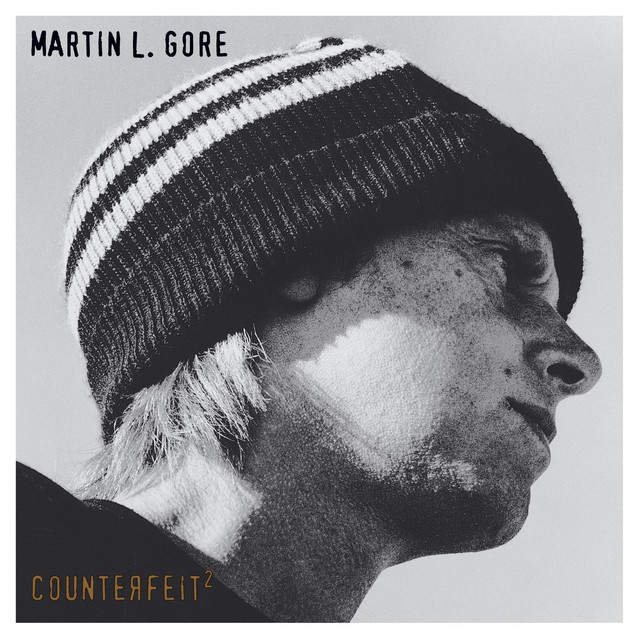
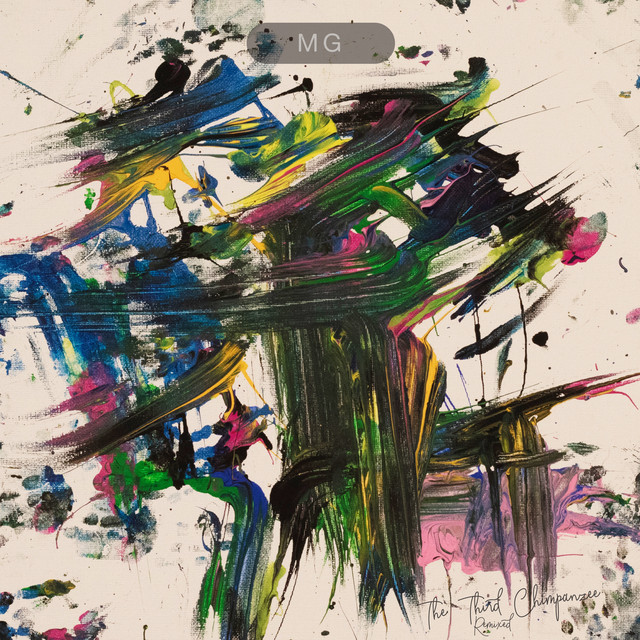
Album Credits
-
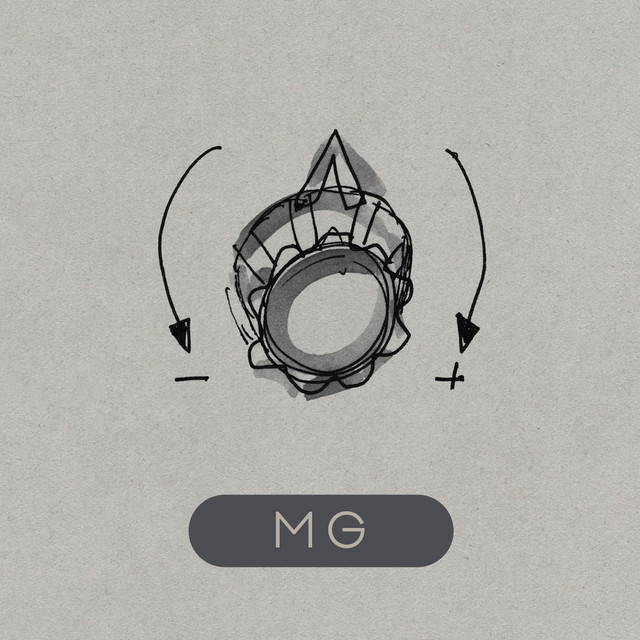
Martin L. Gore · 2015
Producer







.webp)


