

Pricing and availability




* Product prices and availability are updated by Equipboard every 24hrs and are subject to change. Equipboard may receive compensation for purchases made at participating retailers linked on this site. This compensation does not affect what products or prices are displayed, or the order of prices listed. For more information, please refer to our affiliate disclosure.
Description
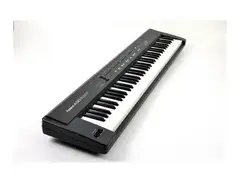
The Roland A-50 is a 61-key MIDI keyboard controller designed for musicians who demand precision and expressive control. Known for its velocity-sensitive keys with aftertouch, this controller stands out in the realm of MIDI keyboards by offering a highly responsive playing experience, perfect for both studio and live performances. The A-50 features a robust build quality and an intuitive interface, making it a reliable choice for professionals and hobbyists alike.
This controller is equipped with four MIDI outputs, allowing for seamless integration with a variety of MIDI-compatible devices. The Roland A-50 also includes a built-in arpeggiator and modulation controls, enabling users to craft complex musical sequences with ease. With an array of assignable sliders and buttons, the A-50 allows for extensive customization, giving musicians the freedom to tailor their workflow to suit their creative needs.
Whether you’re triggering samples, controlling software instruments, or managing complex MIDI setups, the Roland A-50 delivers the flexibility and control you need to bring your musical ideas to life. Its compatibility with various digital audio workstations (DAWs) ensures that you can integrate it into any setup effortlessly.
Key Features:
- 61-key velocity-sensitive keyboard with aftertouch
- Four MIDI outputs for versatile connectivity
- Built-in arpeggiator for creating intricate sequences
- Assignable sliders and buttons for customized control
- Compatible with a wide range of DAWs and MIDI devices
- Sturdy build designed for both studio and stage use
Product specs
| Brand | Roland |
| Model | A-50 76-Key Keyboard Controller |
| Finish | Black |
| Year | 1988 - 1991 |
| Categories | Keyboard MIDI Controllers |
| Analog / Digital | Digital |
| Key Size | Full Size |
| Keyboard Action | Semi-Weighted |
| MIDI I/O | MIDI Input, MIDI Output, MIDI Through |
| Number of Keys | 76 Keys |
FAQs
-
What type of keyboard action does the Roland A-50 have?
-
The Roland A-50 features a semi-weighted keyboard action, providing a balance between the feel of an acoustic piano and the lighter touch of a synthesizer, ideal for expressive playing.
-
How many keys does the Roland A-50 MIDI controller have?
-
The Roland A-50 MIDI controller comes with 76 full-size keys, offering a wide range for performing complex pieces and accommodating various playing styles.
-
What are the MIDI connectivity options on the Roland A-50?
-
The Roland A-50 includes MIDI Input, MIDI Output, and MIDI Through ports, allowing it to be integrated seamlessly into any MIDI setup for controlling other instruments and devices.
-
Is the Roland A-50 suitable for live performances?
-
Yes, with its 76 keys and robust MIDI capabilities, the Roland A-50 is well-suited for live performances, offering control over multiple MIDI devices and an expressive playing experience.
-
Can the Roland A-50 be used to control software instruments?
-
Absolutely, the Roland A-50 can control software instruments through its MIDI output, making it a versatile tool for both studio and live use with compatible software and hardware.
Videos

The Music Addict
The Synthesizer Addict - Polyphonic Aftertouch and a Roland A50 Bug
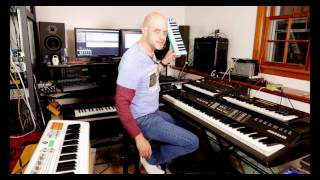
The Synthesizer Addict - Polyphonic Aftertouch and a Roland A50 Bug
The Music Addict
Reviews
Owner Insights
We analyzed real musician discussions from forums and Reddit to find what players love, question, and tweak about Roland A-50.
Setup and maintenance
Build quality
Features and functionality
-
The A-50's aftertouch responsiveness varies across keys, with some requiring high pressure, which can be a drawback for users preferring a lighter touch.
Source -
The A-50 firmware may send polyphonic aftertouch commands for notes three octaves above the pressed key, indicating a potential glitch in certain units.
Source -
The A-50, despite its age, is still mentioned alongside modern options like the CME Xkey for its polyphonic aftertouch capability, though with noted usability challenges.
Source
3.5 out of 5
Based on 1 Review and 2 Ratings
327
Good
The polyphonic aftertouch was badly designed, so it's terribly ineffective. It seems that the PolyAT sensors have been added afterwards, therefore they shorten the key action, making it difficult to express action by an experienced acoustic piano player.
Artist usage
Add artist
Used For Several Songs On a 1989 Tour

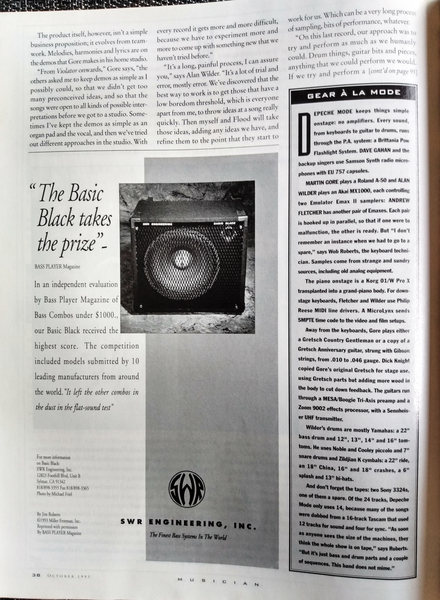
From Musician magazine, October 1993 issue:
"Depeche Mode keeps things simple onstage: no amplifiers. Every sound, from keyboards to guitar to drums, runs through the P.A. system: a Brittania Pow Flashlight System. Dave Gahan and the backup singers use Samson Synth radio microphones with EU 757 capsules. Martin Gore plays a Roland A-50 and Alan Wilder plays an Akai MX1000, each controlling two Emulator Emax II samplers: Andrew Fletcher has another pair of Emaxes. Each pair is hooked up in parallel, so that if one were to malfunction, the other is ready. But 'I don't remember an instance when we had to go to a spare,' says Wob Roberts, the keyboard technician. Samples come from strange and sundry sources, including old analog equipment. The piano onstage is a Korg 01/W Pro X transplanted into a grand-piano body. For down-stage keyboards, Fletcher and Wilder use Philip Reese MIDI line drivers. A MicroLynx sends SMPTE time code to the video and film setups. Away from the keyboards, Gore plays either a Gretsch Country Gentleman or a copy of a Gretsch Anniversary guitar, strung with Gibson strings, from .010 to .046 gauge. Dick Knight copied Gore's original Gretsch for stage use, using Gretsch parts but adding more wood in the body to cut down feedback. The guitars run through a MESA/Boogie Tri-Axis preamp and a Zoom 9002 effects processor, with a Sennheiser UHF transmitter. Wilder's drums are mostly Yamahas: a 22" bass drum and 12", 13", 14" and 16" tom-toms. He uses Noble and Cooley piccolo and 7" snare drums and Zildjian K cymbals: a 22" ride, an 18" China, 16" and 18" crashes, a 6" splash and 13" hi-hats. And don't forget the tapes: two Sony 3324s, one of them a spare. Of the 24 tracks, Depeche Mode uses only 14, because many of the songs were dubbed from a 16-track Tascam that used 12 tracks for sound and four for sync. 'As soon as anyone sees the size of the machines, they think the whole show is on tape,' says Roberts. 'But it's just bass and drum parts and a couple of sequences. This band does not mime.'"


You can see Gillian Gilbert using the Roland A-50 throughout this YouTube video, but a good shot appears at 4:06


Chris is using a Roland A-50 MIDI keyboard in this video; it can be seen at 0:34.
Chris also played A-50 live all the way during the Discovery tour, therefore it should possibly be moved to the Keyboards/Synths section.
.jpg?v=1784030062)
In this video Josh uses an A-50 with Type O Negative.


Neil is using a Roland A-50 MIDI controller in this video.


"Roland A-50 Controller Keyboard" is included in the Equipment List.


"I had an Akai weighted motherboard on the bottom, and then a Roland A-50 I think, which was a non-weighted controller. I had two controllers that didn’t make a noise going into a Roland U-110 module. I also had a Roland S-770 sampler because I liked the sonics of it, as well as a few other modules."


Paul Haslinger lists his favorite studio gear as "Hardware: Roland A-50 MKB, Hornberg Research hb1 (breath controller), Novation LaunchCtrl, Faderfox UC-3, Win7 PCs for Cubase and VE-Pro, UAD. Software: Steinberg, U-He, NI, CamelAudio (RIP), FabFilter, SoundToys, UAD, PSP, AAS."


In a live performance of "Resurrection" by Fear Factory at Bizarre Festival 2001, John Bechdel is seen using the Roland A-50 MIDI Keyboard Controller.


From "Musician" magazine, December 1992 found on Prince.org:
LEVI SEACER plays a Gibson Epiphone ("Because my stuff is clean stuff") straight into the board. He has a rack-mounted Zoom unit 9010, a Cry Baby chorus pedal, a Roland GPS and a Boss digital delay pedal. On "Thunder" and "Live for Love" Levi pulls out an Ibanez guitar with double humbucking pickups. Levi uses D'Addario strings.
When TONY U. reaches for a guitar, it's either a Charvel or a hollowbody Epiphone. Tony's strings are either GHS lights or Dean Markleys. He has a Zoom effects processor.
SONNY THOMPSON plays an Oswald bass (though be admits his favorite is an Alembic, "a great bass") with a GB8 effects processor, an Akai Octaver and a Boss Octaver. Sonny uses a Heavy Metal distortion pedal and plugs into a Trace Elliot amp. He prefers GHS heavy strings because "they seem brightest- they keep the boing longest."
ROSIE GAINES plays a Hammond organ onstage, and has a Korg and Roland D-50 MIDI'd to the Hammond. Rosie sings through Shure microphones. Rosie is also leaving the NPG to go out on her own.
TOMMY BARBRELLA plays a Roland A80 and an A50 controller, a Korg T3, an old Prophet which he uses on "Kiss" and a few others "for that old analog sound." Tommy also carries a new Roland JD800, a couple of E-mu E-max 2s, a Proteus 1 and Proteus 2, and a Roland D550.
MICHAEL BLAND's drums are a combination of Sonor, Yamaha and Gretach, with Zililian cymbals and Vater sticks. Trying to get mere details out of Michael is useless. "I abhor shop talk," he says. "I don't know when we change heads, I don't know when we get new cymbals. I don't have any emotional attachments to gear at all."

Genre Usage
Based on how artists on Equipboard use this gear, it is most commonly found in the following genres.
Used With
Based on how musicians on Equipboard use Roland A-50, it is most commonly used with the following gear.




-s.webp?v=1784331896)


More Roland MIDI Keyboard Controllers

$139.59 - $469.00
in MIDI Keyboard Controllers Rank


$160.00 - $371.99
in MIDI Keyboard Controllers Rank


$279.79 - $2,264.99
in MIDI Keyboard Controllers Rank


$846.00 - $1,393.99


-m.webp?v=1784386969)
$85.00 - $149.50
in MIDI Keyboard Controllers Rank


.jpeg?v=1784354357)

$175.67 - $712.00
in MIDI Keyboard Controllers Rank


$135.00 - $678.00
in MIDI Keyboard Controllers Rank


$32.81 - $59.00
in MIDI Keyboard Controllers Rank


$46.53
in MIDI Keyboard Controllers Rank


-m.webp?v=1784386739)
$408.39 - $469.00
in MIDI Keyboard Controllers Rank


$76.07 - $89.00
in MIDI Keyboard Controllers Rank


$277.00 - $440.00
in MIDI Keyboard Controllers Rank


$39.99 - $99.99
in MIDI Keyboard Controllers Rank


$676.87 - $1,300.49
in MIDI Keyboard Controllers Rank

$159.00 - $199.00
in MIDI Keyboard Controllers Rank


$435.00 - $1,637.00
in MIDI Keyboard Controllers Rank

Accessories & Related Items



Community setups


Similar


Gear Guides





Most Popular MIDI Keyboard Controllers
Most Popular Brands
-
Added to Equipboard on by
 preston_glidden
GearIQ 85
-


