Martin Rushent
Role
Genre
Role
Genre
Martin Rushent's Gear

-m.webp?v=1784905111)
It was while working on the Human League's 'Fascination' that Martin Rushent invented one of the most popular studio tricks of the '80s: using the 'loop triggering' facility on the AMS DMX1580 digital delay as a primitive sampler. "I used it for the bass, snare and bass riff," he says. "I knew AMS reasonably well by the time they brought out this very high-quality digital delay line, so I asked if they could adapt it so that it wouldn't erase its sample. I'd been working with the Linn Drum and realised that it was just a memory of drum sounds, but I wanted to make my own sounds. So they put in four seconds of delay for me. All you had to do was feed in the signal and it would start sampling the moment it saw a rise in voltage. Then you could edit it a bit. After that you'd set it to Fire mode and trigger it via a click fed into the audio input, so I used the Micro Composer to send it a pulse. AMS asked me to show them what I wanted it for so I did a demo by feeding in a bass drum sound and triggering it via the Roland. After that, they made it standard on their products, sold it to the Japanese, and I made fuck-all out of it!"
Find it on:


From 2:22 to 2:56, Martin talks about the Linndrum.
Find it on:


A Roland MC-303 can be seen in Martin's studio (fourth photo).
Find it on:

An M-Audio Oxygen 8 can be seen in Martin's studio (third photo).
Find it on:

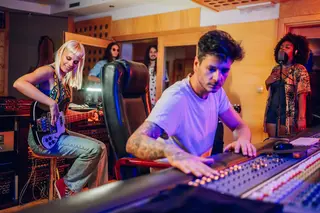
Martin is sitting in front of a Mackie 32:8 mixing desk.
Find it on:

A Mackie 1604-VLZ Pro can be seen in Martin's studio (second photo).
Find it on:

Despite this set back, this experience helped Rushent realise that music production moving towards being more computer-driven, so he bought a Roland MC8 Micro-composer along with a Roland System 700 and Jupiter 4.
Find it on:

Despite this set back, this experience helped Rushent realise that music production moving towards being more computer-driven, so he bought a Roland MC8 Micro-composer along with a Roland System 700 and Jupiter 4.
Find it on:

In this interview, Martin discusses the Roland MC-8.
Find it on:

Martin had a Linn LM-1 in Genetic studios, according to this book.
Find it on:

Martin had a Roland Jupiter 8 at Genetic studios, according to this book.
Find it on:

"The air-conditioning alone at Genetic cost me £35,000, Fairlights were £25,000 and at one point we had a MItsubishi 32-track digital recorder that cost £70,000. So for a fraction of the cost I've got a studio a thousand times more powerful than anything I had then."
Find it on:

From 5:40 to 8:50, Martin discusses and demonstrates the Synclavier.
Find it on:

For the session, recorded in a 15th-century manor house in Brentford, a BBC truck was used as a mobile control room and contained a Calrec desk and Studer tape machine, although the latter required so much power that the recording was eventually made using Martin's own Alesis HD24.
Find it on:
-m.webp?v=1784905114)
A Roland SH-101 can be seen in Martin's studio (second photo).
Find it on:
This is a community-built gear list for Martin Rushent.
- Find relevant music gear like Studio Equipment, Software Plugins and VSTs, Headphones, and other instruments and add it to Martin Rushent.
- The best places to look for gear usage are typically on the artist's social media, YouTube, live performance images, and interviews.
- To receive email updates when Martin Rushent is seen with new gear, follow the artist.
-
-
Updated
Album Credits
-

Unmasked: The Platinum Collection
Andrew Lloyd Webber · 2018
Engineer -
Buzzcocks · 2011
Engineer Mixing Engineer Producer -
999 · 2010
Producer -

Buzzcocks · 1997
Mixing Engineer Producer -

Ever Fallen In Love? Buzzcocks Finest
Buzzcocks · 1996
Engineer Mixing Engineer Producer -
The Early Stuff (The UA Years)
999 · 1992
Producer -

The Go-Go's · 1984
Engineer Producer -
Pete Shelley · 1981
Engineer Producer Programmer -

Buzzcocks · 1979
Engineer Producer -
Buzzcocks · 1979
Engineer Mixing Engineer Producer -

Buzzcocks · 1978
Engineer Mixing Engineer Producer -
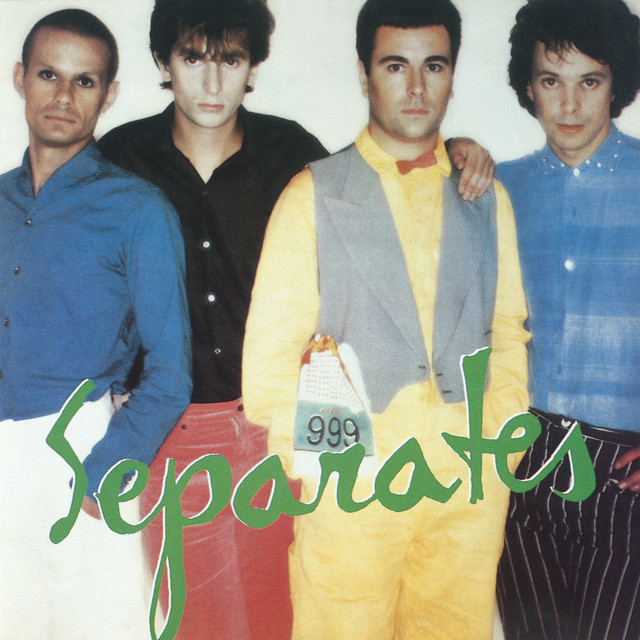
999 · 1978
Producer