Max Cooper
Role
Genre
Group
Role
Genre
Group
Max Cooper's Gear


To design the sound of Yearning for the Infinite, Cooper used both a trusted synthesizer and a new machine. He says most of the album was made using a Dave Smith Instruments Prophet 6, an analogue synth that builds on the iconic Sequential Circuits Prophet, and the new Moog One polyphonic analogue synthesizer. The Prophet 6 has been Cooper’s go-to synth over the last couple of years because of its ease-of-use and his familiarity with it. As he recalls, it got a bit more use on the album than the Moog One.
https://www.ableton.com/en/blog/composing-infinity-max-cooper-his-new-album/
Find it on:


Below picture 7/8 he mentions that he use Synplant to produce some weird noises.
Find it on:


In the first picture of Max Cooper's London studio featured on MusicRadar, the studio monitors appear to be Genelec 8240A models.
Find it on:

“I use Lemur on the iPad as a control surface. With that, you can have all these bouncing balls, which control lots of different parameters and, again, you get some emergent behaviour coming from that because you have all these parameters, which, as the balls are bouncing around, there is a deterministic form, although it’s not easy to tell what that is. You’ve got lots of parameters following these complex paths so you get, to some degree, a generative result.”
Find it on:

“I use the Strymon Blue Sky for a lot of the reverbs, and I just love the plate reverb on it..."
Find it on:


-m.webp?v=1782399685)
Beyond synthesizers, Cooper is an admitted pedal fanatic. Lots of delays and distortion effects populate his board. For extreme coloring of sound on Yearning for the Infinite, Cooper used a Fairfield Circuitry Meet Maude analogue delay...
Find it on:


In second picture Prophet 08 Module can be seen.
Find it on:

In an article on Ableton's website titled "Composing Infinity: Max Cooper on his new album," Max Cooper discusses using Ableton Live as a key tool in creating his music.
Find it on:

"But, I also like the Strymon El Capistan – the emulation tape echo is pretty good as well."
Find it on:
-m.webp?v=1774652051)
“One of my favorite noise pedals is the Industrialectric RM1N [Reverb Fuzz], and it gives some really extreme feeding back chaos,” says Cooper.
Find it on:


To destroy his sounds, Cooper often turns to a WMD Geiger Counter, a pedal with no wet-dry signal with a wavetable modulator that can do everything from a bit of gain to glitchy and lo-fi degradation. Indeed, Cooper has a thing for noise.
Find it on:

We can see an Apogee Duet on the table in first picture.
Find it on:

"Cooper also used another old standby, a Moog Minitaur, obtained years ago while playing shows in in San Francisco."
Find it on:

He mentions that he uses some iPad applications(like Lemur) below the last picture.
Find it on:

Below picture 7/8 he mentions that he use ValhallaRoom Reverb Plugin.
Find it on:

Below picture 7/8 he mentions that he use Massive from Native Instruments.
Find it on:


Below picture 7/8 he mentions that he use Reaktor from Native Instruments.
Find it on:

-m.webp?v=1782396012)
"...Arturia’s Moog Modular V is quite a nice analogue emulation and I’ve done some tracks with that. Generally, I tend to be a bit behind with these sorts of things as I find something that works for me and I stick with it. There are so many new soft synths and plugins out there that it’s really hard to keep up with it, and most of the time I’m probably not the best person to ask about the newest, best thing.”
Find it on:


“I use the Strymon Blue Sky for a lot of the reverbs, and I just love the plate reverb on it, and then of course the Roland Space Echo..."
Find it on:

"I’ve also been using the Metasonix F1, which has a couple of valves on it that get nice and red and make distortion.”
Find it on:
-m.webp?v=1782399413)
For extreme coloring of sound on Yearning for the Infinite, Cooper used a Fairfield Circuitry Meet Maude analogue delay, and a Moogerfooger MIDI MuRF (Multiple Resonance Filter Array).
Find it on:


In 6th picture we can see Sennheiser HD 650 there.
Find it on:


“I use a lot of the Native Instruments stuff like Absynth, Reaktor, Massive and Kontakt. I quite like Synplant - it’s a really fun little thing and I use it to make weird noises."
Find it on:

“I use a lot of the Native Instruments stuff like Absynth, Reaktor, Massive and Kontakt. I quite like Synplant - it’s a really fun little thing and I use it to make weird noises."
Find it on:


In second picture we can see AIAIAI TMA-1 headphones.
Find it on:

At 1:15 in this video interview, Max Cooper states:
The Trigon-6, again another Dave Smith (R.I.P.), has also become one of my favorites. It's much one of the more newer synths they've come up with and it's a similar level of complexity. Again, it's quite a simple synth but one that you can jump in and build and you don't get lost in the complexity.
To be honest, I hate patch diving and I hate, you know, menu diving, and having shortcuts. The synths that are my favorite ones, like those, there is no digital display. It's just, you know, you can do presets and it's just like an old-school LCD watch sort of display, but there's no menu diving, you don't need shortcuts, everything's there. You can just jam and play and you got this real tactile sort of interaction with it. And that's what I look for, to be honest, with hardware synths.
Find it on:
This is a community-built gear list for Max Cooper.
- Find relevant music gear like Studio Equipment, Software Plugins and VSTs, Headphones, and other instruments and add it to Max Cooper.
- The best places to look for gear usage are typically on the artist's social media, YouTube, live performance images, and interviews.
- To receive email updates when Max Cooper is seen with new gear, follow the artist.
-
Added to Equipboard on by
 ravieer
Gear IQ 1269
-
Updated
Discography
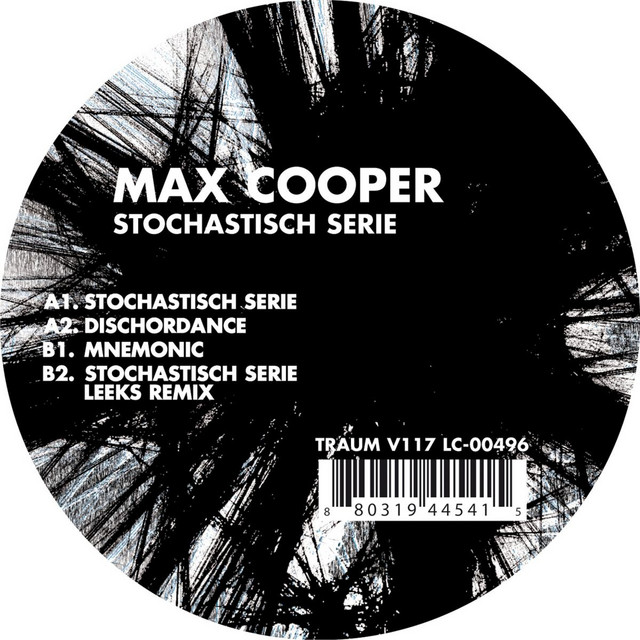
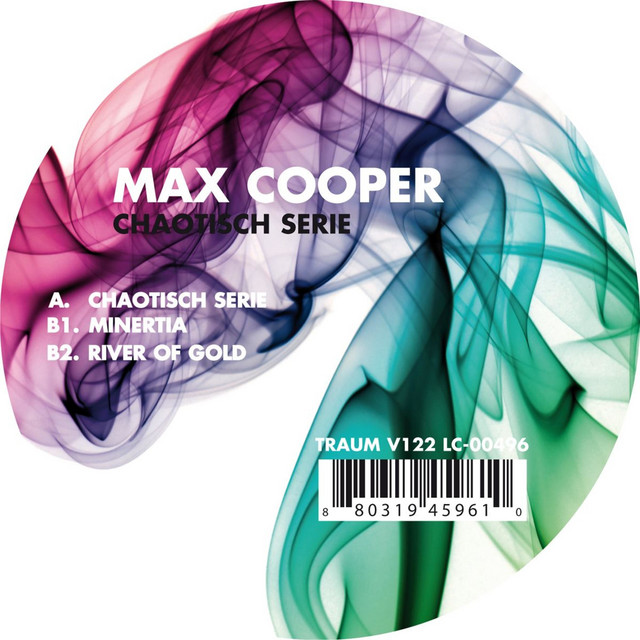
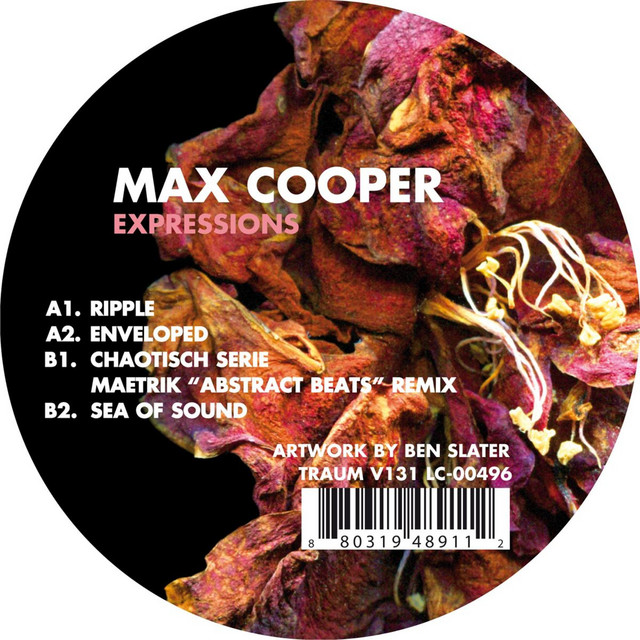
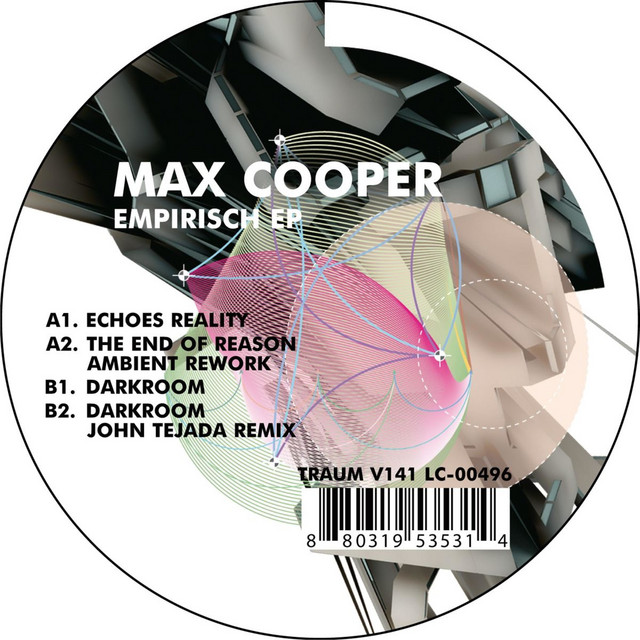

Album Credits
-
Max Cooper · 2025
Mixing Engineer Producer -
Max Cooper & Flohio · 2025
Mixing Engineer Producer -
Max Cooper · 2025
Mixing Engineer Producer -
Max Cooper · 2025
Mixing Engineer Producer -
Max Cooper · 2024
Mixing Engineer Producer -
Max Cooper · 2024
Mixing Engineer Producer -
Max Cooper · 2024
Mixing Engineer Producer