Moby
electronic musician Richard Melville Hall
Role
Genre
Credits
Role
Genre
Credits
Moby's Gear


"This is, of all the things I'm selling, this is the one that I was possibly tempted to hold on to 'cause it has such sentimental value. I bought this guitar, this Ibanez guitar, in nineteen-eighty... three. Up until about 1998 I didn't use a different guitar so, when I was recording Play I used this, when I toured for Everything Is Wrong, for Animal Rights, this was pretty much the only guitar that I used."
Find it on:


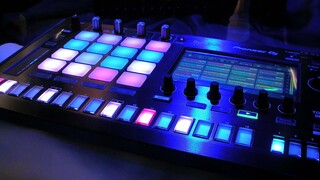
In this photo from Moby's Instagram, we see three (of, likely, four) CDJs flanking his mixer in a live performance. The number of buttons along the left side of each unit, as well as the alignment of the top-most buttons across the interface, would suggest that these are the Nexus model of CDJ 2000s.
Find it on:

Moby provides a list in the liner notes of "Everything is Wrong", it's here where he states that one of his synths was a Yamaha SY-85 as well as a sy35, and a sy22.
Apple Mac running Steinberg Cubase sequencer. Soundcraft Spirit 24:8:2 desk. Alesis ADAT digital multitracks.
SAMPLERS Akai S950. Akai S1000. Akai S3000. Akai S3200.
SYNTHS/KEYBOARDS Casio CZ101. Emu Proformance piano module. Oberheim Matrix 1000. Roland Juno 106. Roland Jupiter 6. Serge Modular Synth. Waldorf Pulse Plus. Yamaha SY22. Yamaha SY35. Yamaha SY85.
PROCESSORS Dbx 160XT Compressor. Eventide DSP4000. Soundlab Vocoder. Yamaha SPX900.
SEQUENCERS & DRUM MACHINES Roland TB303. Roland TR606. Roland TR909. Roland TR808.
OTHER EQUIPMENT Hafler Pro 5000 Power Amp. Technics 1200 turntables. Ibanez Electric Guitar. Fender Precision Bass.
Find it on:


As I browsed through the sleeve notes on Moby's albums I noticed that the gear lists documented in the 1995 release Everything Is Wrong are almost identical to his current setup. Could it really be possible that this successful musician had no spare cash to spend on new studio gear during the last four years? "From Everything Is Wrong until now I've bought a vocoder and a new sampler and that's about it. On the one hand I'd love to get a bunch of new equipment, but on the other hand there's something to be said for working with equipment with which I'm comfortable. I'm thinking that at some point I will actually switch over and get a full Pro Tools setup and start doing things more in the computer, but for this record I didn't feel compelled to do that."
MOBY GEAR Apple Mac running Steinberg Cubase sequencer. Soundcraft Spirit 24:8:2 desk. Alesis ADAT digital multitracks.
SAMPLERS Akai S950. Akai S1000. Akai S3000. Akai S3200.
SYNTHS/KEYBOARDS Casio CZ101. Emu Proformance piano module. Oberheim Matrix 1000. Roland Juno 106. Roland Jupiter 6. Serge Modular Synth. Waldorf Pulse Plus. Yamaha SY22. Yamaha SY35. Yamaha SY85.
PROCESSORS Dbx 160XT Compressor. Eventide DSP4000. Soundlab Vocoder. Yamaha SPX900.
SEQUENCERS & DRUM MACHINES Roland TB303. Roland TR606. Roland TR909. Roland TR808.
OTHER EQUIPMENT Hafler Pro 5000 Power Amp. Technics 1200 turntables. Ibanez Electric Guitar. Fender Precision Bass.
Find it on:

"An old-fashioned enthusiast of standalone synthesizers, samplers, and drum machines, Moby's arsenal includes two Korg Tritons; Yamaha SY-22 and SY-85 models; old Roland Jupiter 6 and Juno 106 synths, as well as the company's newer 5080 and 8080 units..." - Paul Verna
Find it on:

Moby frequently used the Yamaha SY-22 synthesizer for string sounds during the '90s and early 2000s, as discussed in the Sound on Sound article about recording "Why Does My Heart Feel So Bad?"
Find it on:

The construction of 'Why Does My Heart Feel So Bad?' started with the vocals, which Moby had sampled three years earlier from a recording of a 1953 gospel choir. Once safe in the memory of Moby's sampler, in this case an Akai 3200
Find it on:
-m.webp?v=1784559389)
Following the piano chords, Moby introduced the main drum part, programmed on a Roland TR909. To complement the drums a sampled breakbeat taken from a hip-hop record was laid on top, with its tempo adjusted to suit the song's rhythm. Moby: "I never time-stretch really. I don't care about changing the pitch. If I have a drum sample and want it to be a little bit faster, I just speed it up and sacrifice the original pitch. I've never understood why people worry so much about maintaining the original pitch. If you slow it down the pitch gets lower, if you speed it up the pitch gets higher -- big deal!"
Find it on:
-m.webp?v=1784334431)

As I browsed through the sleeve notes on Moby's albums I noticed that the gear lists documented in the 1995 release Everything Is Wrong are almost identical to his current setup. Could it really be possible that this successful musician had no spare cash to spend on new studio gear during the last four years?
OTHER EQUIPMENT
Hafler Pro 5000 Power Amp.
Technics 1200 turntables.
Ibanez Electric Guitar.
Fender Precision Bass.
Find it on:





Play It Again
For Moby, selecting a piano sound is also an intuitive process, and he is reluctant to offer any reasons why he might have chosen one sound source rather than any other. "Sometimes I use acoustic piano
Everything Is Right
As I browsed through the sleeve notes on Moby's albums I noticed that the gear lists documented in the 1995 release Everything Is Wrong are almost identical to his current setup. Could it really be possible that this successful musician had no spare cash to spend on new studio gear during the last four years?
"From Everything Is Wrong until now I've bought a vocoder and a new sampler and that's about it. On the one hand I'd love to get a bunch of new equipment, but on the other hand there's something to be said for working with equipment with which I'm comfortable. I'm thinking that at some point I will actually switch over and get a full Pro Tools setup and start doing things more in the computer, but for this record I didn't feel compelled to do that."
MOBY GEAR Apple Mac running Steinberg Cubase sequencer. Soundcraft Spirit 24:8:2 desk. Alesis ADAT digital multitracks.
SAMPLERS Akai S950. Akai S1000. Akai S3000. Akai S3200.
SYNTHS/KEYBOARDS Casio CZ101. Emu Proformance piano module. Oberheim Matrix 1000. Roland Juno 106. Roland Jupiter 6. Serge Modular Synth. Waldorf Pulse Plus. Yamaha SY22. Yamaha SY35. Yamaha SY85.
PROCESSORS Dbx 160XT Compressor. Eventide DSP4000. Soundlab Vocoder. Yamaha SPX900.
SEQUENCERS & DRUM MACHINES Roland TB303. Roland TR606. Roland TR909. Roland TR808.
OTHER EQUIPMENT Hafler Pro 5000 Power Amp. Technics 1200 turntables. Ibanez Electric Guitar. Fender Precision Bass.
, sometimes I use the Pro Piano -- it doesn't really matter to me where I get the sounds from. The main piano on this song I think was the Emu Proformance piano module, but there are two pianos on there and the other one, I think, is off an old Yamaha synth." Following the piano chords, Moby introduced the main drum part, programmed on a Roland TR909. To complement the drums a sampled breakbeat taken from a hip-hop record was laid on top, with its tempo adjusted to suit the song's rhythm. Moby: "I never time-stretch really. I don't care about changing the pitch. If I have a drum sample and want it to be a little bit faster, I just speed it up and sacrifice the original pitch. I've never understood why people worry so much about maintaining the original pitch. If you slow it down the pitch gets lower, if you speed it up the pitch gets higher -- big deal!"
Surprisingly, all the string pad parts of 'Why Does My Heart Feel So Bad?', which can be heard washing into the first verse behind the vocal, were played on Moby's ageing Yamaha SY22 and SY85 synths. Moby's basic, yet effective approach to his string arrangement is mirrored by his minimal use of effects on the track. "The only effects I use are an SPX900 reverb on the piano and the vocals, and a little bit of delay when the verse comes back in and after the first chorus."
A second vocal line used in a 'question and answer' style (repeating 'Why does my heart...' after the main line) is introduced after the first chorus, with a grungy sound achieved by resampling the main line at a lower bandwidth before passing it through a high-pass filter. This work was done when Moby made the original sample several years before. The part was finally treated to some delay and heavy EQ during the mix. The last main element to be added to the composition was the simple sub-bass line which underpins the track. This part was also played by Moby, this time using a Roland Juno 106 synth.
Arrangement
Having assembled the basic elements of 'Why Does My Heart Feel So Bad?', Moby's next move was to concentrate on the song's arrangement. "Compositionally it's quite a simple song. The verses are four chords -- A minor, E minor, G major, D major -- then the chorus is C major to A minor and then F major to C major, and that's pretty much the whole song. So once I had the basics written it was just a matter of arranging it and adding little elements, like in the second verse a ride cymbal is introduced and there's the second call-and-response vocal."
Through the process of working by himself in just one location, Moby could switch back and forth between writing, arranging and mixing without worrying about studio time or the schedules of producers, musicians and engineers. Moby explains the method. "The subtle arrangement stuff tends to take me a long time until I'm really happy with it. In most cases on this record I would work on something and develop it as an idea and then work on it over the next couple of months -- just fine-tuning it. The difference between the finished version of a song and the original version of the song can be really marginal. 'Natural Blues' took me about a year to work on but the finished version sounds almost identical to the original."
It may seem strange that songs which have so few basic elements and a minimal production require such a long period of arrangement time, but Moby's reasons for taking his time have developed from 15 years of working almost exclusively by himself. "I recognise that my perspective on a piece of music will change drastically over time. Sometimes I'll work on a piece and think it's the greatest thing I've ever done then go back to it a week later and think it's terrible -- and vice versa. In terms of evaluating my work, I have to build in quite a lot of time, because my objectivity can be compromised quite easily. If I give myself a couple of months after everything's done that's enough to figure out whether things are as good or as bad as I imagined them to be."
Find it on:

Sold for charity on Moby's official Reverb shop.
Find it on:


Sold for charity on Moby’s Reverb shop in 2018.
This Digitech Talker is part of the private collection of Moby.
The Digitech Talker is a rare vocal effects pedal manufactured in the '90s that comes stock with programs for vocoder or vocal synthesizer effects.
The programs (NuVo, NuWah, TazMania, TalkBox, Alien, AutoTalk) can be use with vocals, instruments, or both to create unique mixes of vocal and instrument.
Serial: 1833. Works without issue.
All items in Moby's Collection ship fully insured with delivery confirmation and include a signed and embossed Certificate Of Authenticity from Moby
Find it on:

This Instagram photo shows Moby's DJ setup, which includes the Pioneer DJM-900 mixer. It appears to be from his New Year's Eve 2014 set.
Find it on:

In the title of this video, Moby says the Roland CR-78 is the "best drum machine".
Find it on:

This photo of Moby performing onstage shows he is wearing a pair of what looks like pioneer hdj-2000
Find it on:

As I browsed through the sleeve notes on Moby's albums I noticed that the gear lists documented in the 1995 release Everything Is Wrong are almost identical to his current setup. Could it really be possible that this successful musician had no spare cash to spend on new studio gear during the last four years? "From Everything Is Wrong until now I've bought a vocoder and a new sampler and that's about it. On the one hand I'd love to get a bunch of new equipment, but on the other hand there's something to be said for working with equipment with which I'm comfortable. I'm thinking that at some point I will actually switch over and get a full Pro Tools setup and start doing things more in the computer, but for this record I didn't feel compelled to do that."
SYNTHS/KEYBOARDS Casio CZ101.
Find it on:

"...The item can be seen 4:15 into this video..."
Find it on:

"...The item can be seen 5:22 into this video..."
Find it on:

As I browsed through the sleeve notes on Moby's albums I noticed that the gear lists documented in the 1995 release Everything Is Wrong are almost identical to his current setup. Could it really be possible that this successful musician had no spare cash to spend on new studio gear during the last four years? "From Everything Is Wrong until now I've bought a vocoder and a new sampler and that's about it. On the one hand I'd love to get a bunch of new equipment, but on the other hand there's something to be said for working with equipment with which I'm comfortable. I'm thinking that at some point I will actually switch over and get a full Pro Tools setup and start doing things more in the computer, but for this record I didn't feel compelled to do that."
MOBY GEAR Apple Mac running Steinberg Cubase sequencer. Soundcraft Spirit 24:8:2 desk. Alesis ADAT digital multitracks.
SAMPLERS Akai S950. Akai S1000. Akai S3000. Akai S3200.
SYNTHS/KEYBOARDS Casio CZ101. Emu Proformance piano module. Oberheim Matrix 1000. Roland Juno 106. Roland Jupiter 6. Serge Modular Synth. Waldorf Pulse Plus. Yamaha SY22. Yamaha SY35. Yamaha SY85.
PROCESSORS Dbx 160XT Compressor. Eventide DSP4000. Soundlab Vocoder. Yamaha SPX900.
SEQUENCERS & DRUM MACHINES Roland TB303. Roland TR606. Roland TR909. Roland TR808.
OTHER EQUIPMENT Hafler Pro 5000 Power Amp. Technics 1200 turntables. Ibanez Electric Guitar. Fender Precision Bass.
Find it on:

In a user-uploaded photo from Futurecdn, Moby can be seen with a Roland XV-5080 sound module, highlighting its role in his setup.
Find it on:

In a user-uploaded photo on Futurecdn, Moby is seen with an Akai S3000XL, highlighting its role in his DJ gear collection.
Find it on:

Visible in this image. It was later sold on Reverb.com in 2018 for charity.
An excellent polyphonic super synth based on the classic Bass Station. Let's start with 16 voices of polyphony (20 with the new OS), add three VCO's using sound modeling to re-create those classic analog sounds with digital clarity and reliability.
Amazingly this synth has seven effects per voice! That adds up to 56 effects all programmable and simultaneously available on all voices at all times!!! A macho filter section with hi, low, band pass filtering at 12, 18, 24 dB/oct ranges, resonant and self oscillating, with overdrive and key tracking.
There are two extremely flexible LFO sections, two ring modulators, eight audio outputs, complete MIDI parameter control and it is cased in a cool blue 3-space rack unit. Overall its sounds are awesome! It cleanly and nicely emulates and even transcends many classic synths like the Minimoog, Jupiter 8, Juno 106, and 2600! A 61-note professional keyboard version, seen below, doubles the polyphony to 32 voices and the memory to 1,024 patches. There is an upgraded model, the SuperNova II which greatly increases the polyphony, sonic possibilities and offers many more new knobs and functions.
Serial: 7894. Functions as it should.
All items in Moby's Collection ship fully insured with delivery confirmation and include a signed and embossed Certificate Of Authenticity from Moby
Find it on:

In the beginning of the video, you can see that Moby has Pro Tools 11 open on his monitor in the background.
Find it on:


Moby's 1966 model with a slotted headstock was sold on his official Reverb shop for charity.
Find it on:





Sold for charity on Moby's official Reverb shop.
Find it on:

A unit branded under Ampeg, an AR-1, was sold on Reverb.com in 2018 for charity.
This Ampeg AR-1 Rhythm Ace is part of the private legendary drum machine collection of Moby.
Vintage Ampeg Ar-1 Rhythm Ace drum machine. Great vintage sound with multiple buttons (Tomtom 1, Tomtom 2, Wood Block, Claves, Maracas, and Cymbol) and very simple installation you could create a unique original vintage sound.
Unit makes sound, but is not functioning correctly. Sold As-Is.
All items in Moby's Drum Machine Collection ship fully insured with delivery confirmation and include a signed and embossed Certificate Of Authenticity from Moby
Find it on:

In this photo posted by Moby on Instagram, you can see the main portion of his home studio setup. On his desk you can see the primary midi controller keyboard he uses, the M-Audio Axiom Pro 61. In the Instagram he says, "It's 95 degrees outside so I'm inside writing new wave songs."
Find it on:

In this home studio Instagram photo posted by Moby, on the left of his M-Audio controller keyboard you can see a small effects pedal. The four stacked knobs and two button switches indicate it is the Lo-Fi Loop Junky by ZVex.
Find it on:
This is a community-built gear list for Moby.
- Find relevant music gear like Studio Equipment, Software Plugins and VSTs, Headphones, and other instruments and add it to Moby.
- The best places to look for gear usage are typically on the artist's social media, YouTube, live performance images, and interviews.
- To receive email updates when Moby is seen with new gear, follow the artist.
-
Added to Equipboard on by
.jpg?v=1784583485) gchiaren
gchiarenGearIQ 37812
-
Updated
Discography
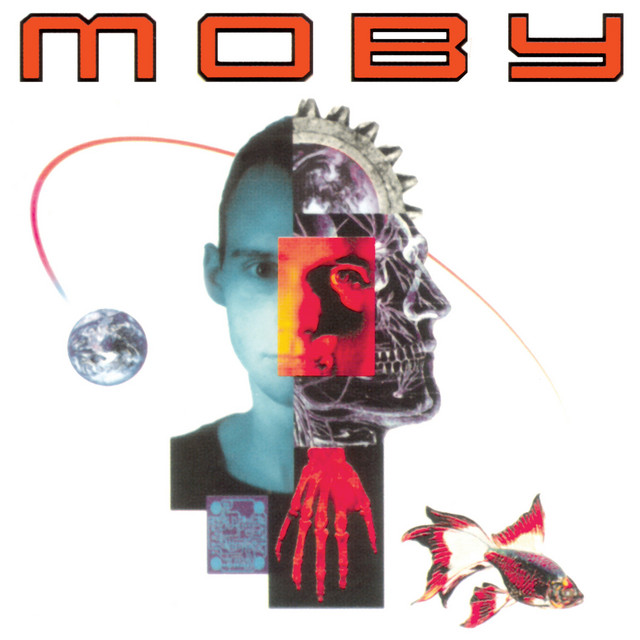
Moby
1992
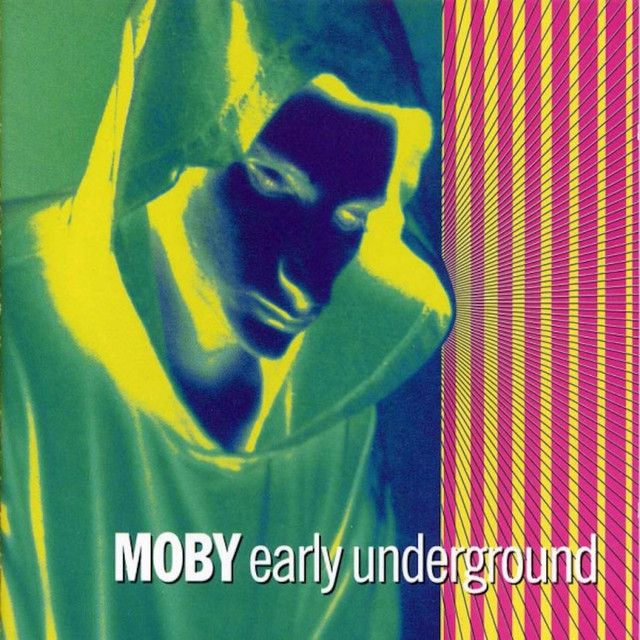
Early Underground
1993
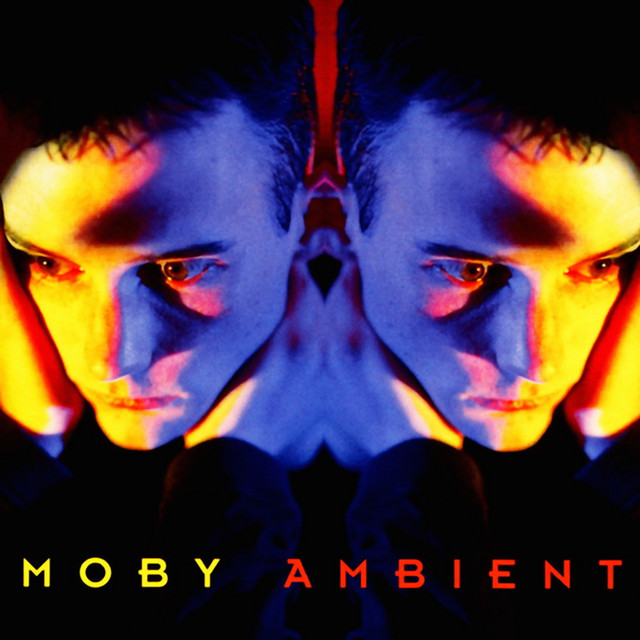
Ambient
1993
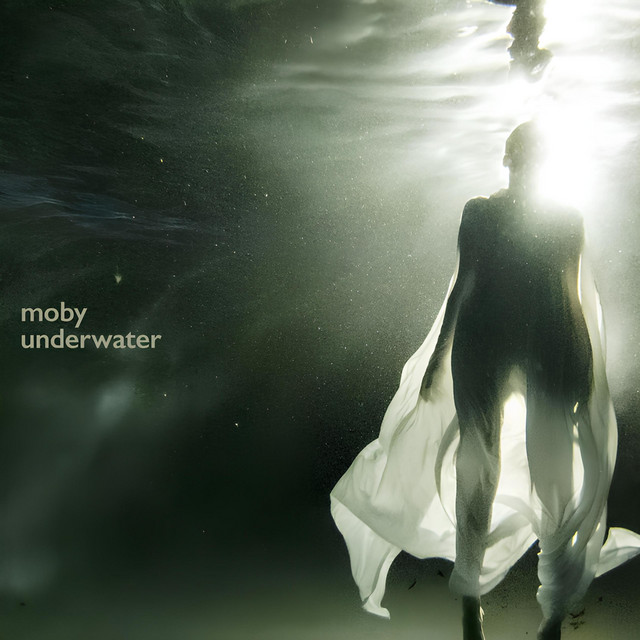
Underwater, Pts. 1-5
1995
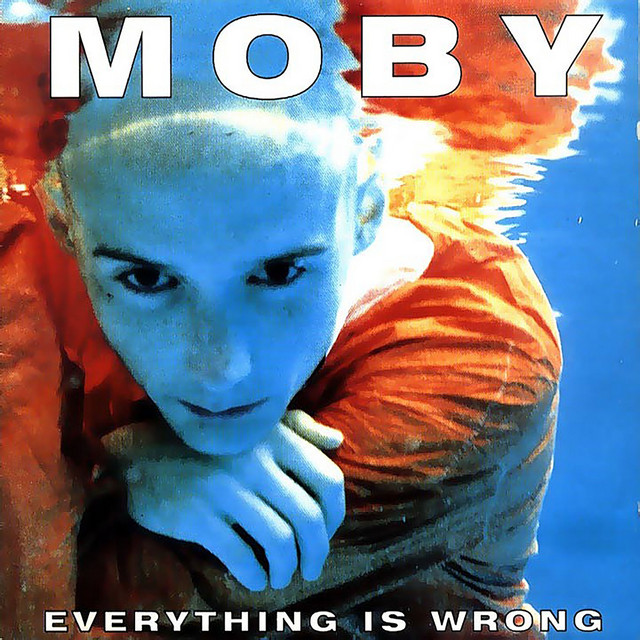
Everything Is Wrong
1995
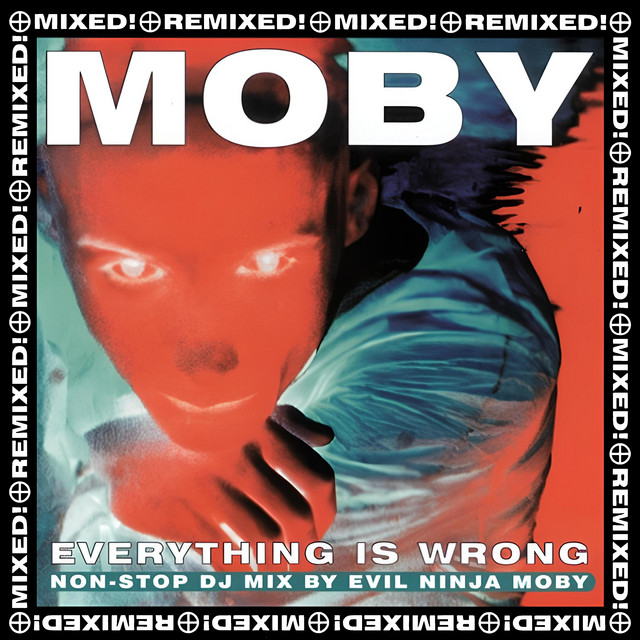
Everything Is Wrong: Non-stop DJ Mix By Evil Ninja Moby
1996
Animal Rights
1996
I Like to Score
1997
Play: The Complete Recordings
1999

Why Does My Heart Feel So Bad?
1999
18 & 18 B-Sides
2002
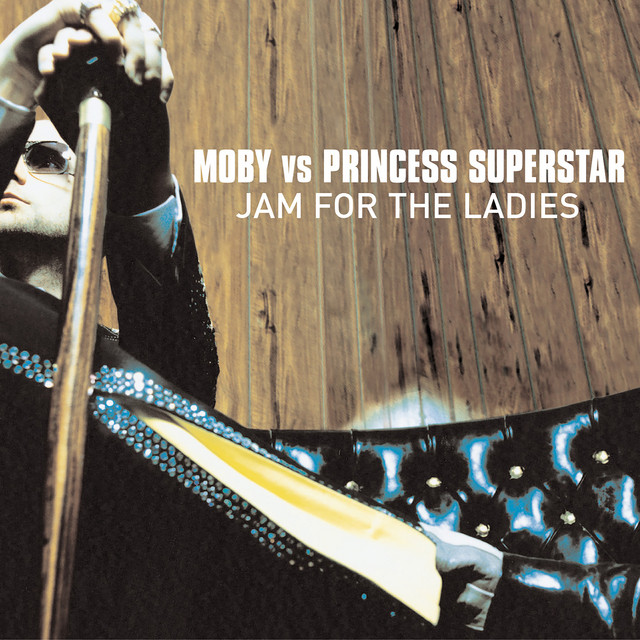
Jam For The Ladies
2003
Album Credits
-

Moby · 2025
Engineer Mixing Engineer -
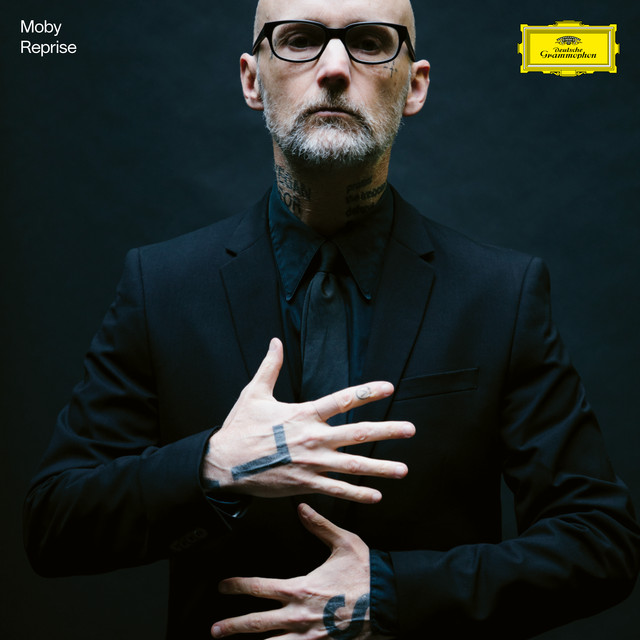
Moby · 2021
Producer Recording Engineer -

Moby · 2020
Mixing Engineer Producer -
Pendulum · 2018
Producer -

Everything Was Beautiful, and Nothing Hurt
Moby · 2018
Mixing Engineer Producer Recording Engineer -
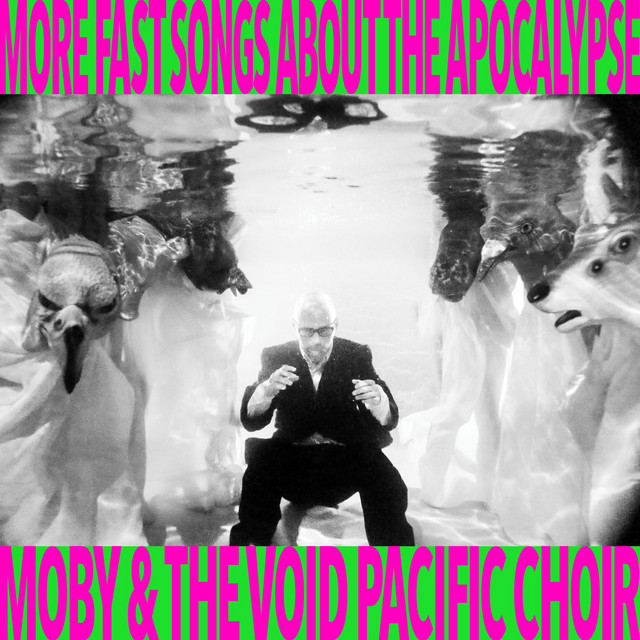
More Fast Songs About The Apocalypse
Moby · 2017
Producer -

Moby · 2017
Engineer Producer -
Jason Bourne (Original Motion Picture Soundtrack)
John Powell & David Buckley · 2016
Producer -
Moby · 2016
Engineer Producer -

Are You Lost In The World Like Me?
Moby · 2016
Engineer Producer -

Moby · 2016
Engineer Producer -

Robin Schulz · 2015
Producer