Ray Manzarek
Role
Role
Ray Manzarek's Gear


This photo shows Manzarek with a Vox Continental organ during a Doors concert at the London Fog in 1966. This was the organ Ray Manzarek played in the early years of the band. It can be head on every song from the band's eponymous debut album, as well as several later hits such as "People Are Strange," "When the Music's Over," "Peace Frog," and "Love Her Madly." Manzarek started touring with a Gibson G-101 (Kalamazoo) around August/September 1967, though the Continental made a few more appearances such as on the PBS Critique in April 1969 and at the Aquarius Theater in July 1969.
Ray described his use of the Vox Continental and his subsequent switch to the Gibson G-101 in a 2008 interview with Modern Keyboard:
The very first piano, or the first electric keyboard, I used was a Wurlitzer. We didn’t really play a lot of gigs with it, so it didn’t really count. Then we got a deal with Columbia Records; and Columbia owned Vox. Billy James [the Columbia A&R man who, in 1966, signed the Doors to a contract that ultimately produced no records] said, “Do you guys need any equipment?” We said, “Oh God, yes.” [laughs] He said, “We own Vox.” I said, “Vox…VOX. Oh my God, I can get a Vox organ like the Dave Clark Five. Yes I need an organ.” So we went out to Vox and I got an organ and an amp. I couldn’t believe it. It was free.
I played a Vox Continental for the first half of the Doors’ career. Until Columbia sold Vox to an Italian company. Vox was an English firm originally. And the Italian Vox Continentals just didn’t hold up. They started falling apart. Even the old ones I used to have to replace every six months. I would break them just by playing too hard. The keys would start to stick and I would fuse everything. So I’d have to throw it out, get a new one. Once every six months wasn’t bad. But once Vox was sold to the Italians, it was like once a month, once every other week.
I said, “Well that’s it. I can’t use these anymore. I’ve got to get something else. What else is there?” There was the Farfisa and there was the Gibson Kalamazoo. Now I would have gotten the Farfisa, except the top was rounded and I couldn’t put the Fender Rhodes bass on it. I needed something with a flat top. And the Gibson Kalamazoo was the only one that had a flat top. So that’s what I used—a Kalamazoo—for the rest of the time.
Find it on:


In this photo, Manzarek can be seen playing Hammond C3 in the studio with the Doors. The picture comes from footage of the Doors recording the song "Wild Child" for the album The Soft Parade.
Ray never toured with a Hammond during the Doors' prime, but he occasionally used one in the studio on the band's later albums. Notable songs featuring Ray on the Hammond include "Hyacinth House," "The Changeling," "The WASP (Texas Radio and the Big Beat)," "Maggie M'Gill," and "The Soft Parade."
Find it on:

Ray Manzarek playing a Gibson G-101 organ during The Doors' legendary concert at the Hollywood Bowl in 1968. This was Ray's primary touring organ during the band's prime, as he can be seen playing it at nearly every Doors concert from late 1967 and on.
Ray described his switch from a Vox Continental to the Gibson in an interview with Modern Keyboard:
I played a Vox Continental for the first half of the Doors’ career. Until Columbia sold Vox to an Italian company. Vox was an English firm originally. And the Italian Vox Continentals just didn’t hold up. They started falling apart. Even the old ones I used to have to replace every six months. I would break them just by playing too hard. The keys would start to stick and I would fuse everything. So I’d have to throw it out, get a new one. Once every six months wasn’t bad. But once Vox was sold to the Italians, it was like once a month, once every other week.
I said, “Well that’s it. I can’t use these anymore. I’ve got to get something else. What else is there?” There was the Farfisa and there was the Gibson Kalamazoo. Now I would have gotten the Farfisa, except the top was rounded and I couldn’t put the Fender Rhodes bass on it. I needed something with a flat top. And the Gibson Kalamazoo was the only one that had a flat top. So that’s what I used—a Kalamazoo—for the rest of the time. They don’t make those anymore. They were rare and very interesting.
It was the first keyboard to have pitchbender on it—a pedal. So you could actually bend down a half step. And I use that to great effect—if I do say so myself—on “Not to Touch the Earth.” Paul Rothchild played the pedal. I couldn’t move my foot sideways on it to get the right rhythm. So Paul was kneeling down on the floor next to me as I was playing, bending this little thing that stuck up off the volume pedal. Also on “The Unknown Soldier,” I had the sustain and the pitch-bend. I had a piano stop with a sustain on it and then bent the pitch.
Find it on:

In this photo, Manzarek can be seen playing a Fender Rhodes Piano Bass on top of his Gibson G-101. Because the Doors did not have a bass player, Manzarek would play the bass lines on the Piano Bass with his left hand. He usually opted for the gold sparkle top model, which he'd place on top of either his Gibson G-101 or Vox Continental organ.
Find it on:


Ray Manzarek played an RMI Electra-piano 300A with The Doors on the West German television show 4-3-2-1 Hot And Sweet during their 1968 European tour. The Doors can be seen lip syncing "Hello, I Love You" in Romer Square in Frankfurt. This performance was filmed on September 13, 1968, and is available on YouTube here.
One week earlier on September 6, 1968, the Doors performed at the Roundhouse in London. At this concert, the same RMI Electra-piano 300A can be seen on stage next to Manzarek's Gibson G-101. Based on available footage from the show, it appears that the Electra-piano was never actually played.
Ray was said to dislike the RMI Electra-piano, and he quickly returned to the Gibson G-101 for all performances. Despite that, Manzarek is believed to have played an RMI Electra-piano on the song "Shaman's Blues."
Find it on:

In 1971, Ray acquires a Hammond B3 Portable Organ (a Bill Beer "chop") for use on the Post-Morrison tours. He can be seen playing it during the band's appearances on Beat-Club and The Old Grey Whistle Test. It becomes his main touring instrument along with the Fender Rhodes Electric Piano through 1972.
Find it on:

Manzarek can be seen playing a Gibson SG in this photo.
Find it on:


Ray Manzarek is pictured with the ARP 2800 Odyssey Rev1, his preferred synthesizer for personal projects and performances with the band X. This first revision model, identifiable by its white color and Moog transistor ladder filter, is captured in a user-uploaded photo.
Find it on:

Seen above the Hohner Clavinet D6, Ray Manzarek is playing an Arp Solina String Ensemble synthesizer in this post-Doors performance. Photo from Getty Images.
Find it on:


Manzarek can be seen with the Minimoog (besides the ARP Odyssey Rev. I) in this photo from his website.
Find it on:

In this photo from December 11, 1970, Ray Manzarek can be seen playing a Fender Rhodes Mark I Stage Piano at the State Fair Music Hall in Dallas, Texas. This concert was Jim Morrison's penultimate performance with the Doors before leaving for Paris. Manzarek usually toured with only his Gibson G-101 and Rhodes Piano Bass, but he also brought along a Fender Rhodes piano for the band's final two performances in Dallas and New Orleans.
A Fender Rhodes Stage 73 can also be seen in the Doors workshop during the recording sessions for L.A. Woman. The instrument would be featured on the song "Riders on the Storm."
Find it on:

Ray has a Rhodes 88 as you can see on the great "Down the Rhodes" documentary. Not entirely sure it's a Suitcase but it very much seems like it.
Find it on:

Ray Manzarek is pictured here with the ARP 2810 Odyssey Rev2 synthesizer, known for its black finish and absence of XLR connectors, indicating it is the second revision. This synthesizer was reportedly his "synthesizer of choice" for personal projects and performances with the band X.
Find it on:

Ray Manzarek is seen playing a Hohner Clavinet D6 in a post-Doors era performance. Picture from Getty Images.
Find it on:

This article details Manzarek's use of the Marxophone on "Alabama Song (Whiskey Bar)."
“I’d never even heard of it,” Manzarek admitted in The Doors’ episode of Classic Albums. “Paul Rothchild said, ‘Let’s get the marxophone’ and I said, ‘What the hell is that, man?’ He said, ‘It’s a hammer zither!’ because, being a folky out of New York City, they knew about all that sort of thing. It worked out perfectly, that jingle-jangly sound. It was perfect for the whisky bar.”
Find it on:

In this photo, Manzarek can be seen playing a Wurlitzer electric piano during the Doors' L.A. Woman sessions in late 1970. The Wurlitzer is either a model 140B or its tube-amplified twin, the 145B. You can hear it on the songs "Crawling King Snake" and "L.A. Woman" from the 1971 album of the same name.
Find it on:



In this photo of Ray Manzarek, a Farfisa Professional (left, identified by its unique legs) can be seen in the Doors’ rehearsal space. This Farfisa can be seen in other photos and videos inside the Doors workshop, such as a 1971 segment from the Australian music show GTK. No photos or videos show Ray playing the instrument (he plays his usual Gibson G-101 in the video), but it can be assumed Ray either bought or was gifted the organ at some point late in the Doors’ career.
Find it on:

Ray Manzarek played a Farfisa Compact Duo at the Fantasy Faire rock festival in Los Angeles on July 15, 1967. At this time, he was still using a Vox Continental as his primary organ (he would later switch to a Gibson G-101 around Sept/Oct 1967). It’s likely that Ray only used this Farfisa for one show. Manzarek has stated that Vox’s quality went downhill around this time, so it’s possible he borrowed this organ from another band after his Continental experienced difficulties.
Find it on:
-m.webp?v=1784733268)
Ray Manzarek and the Doors used Acoustic 261 amplifiers and Acoustic 260 heads for a majority of the band's prime touring years. In this photo, Manzarek can be seen with his Gibson G-101 and Fender-Rhodes Piano Bass plugged into an Acoustic amp stack in Copenhagen, Denmark on September 18, 1968
Find it on:

At the 7:35 in this video of Daryl Hall and The Doors playing Roadhouse Blues for Daryl’s house, you can clearly see Ray Manzarek using the Maestro PS-1A Phase Shifter, positioned on top of his Vox Continental keyboard.
Find it on:
This is a community-built gear list for Ray Manzarek.
- Find relevant music gear like Microphones, Pianos, Keyboards and Synthesizers, and other instruments and add it to Ray Manzarek.
- The best places to look for gear usage are typically on the artist's social media, YouTube, live performance images, and interviews.
- To receive email updates when Ray Manzarek is seen with new gear, follow the artist.
Discography
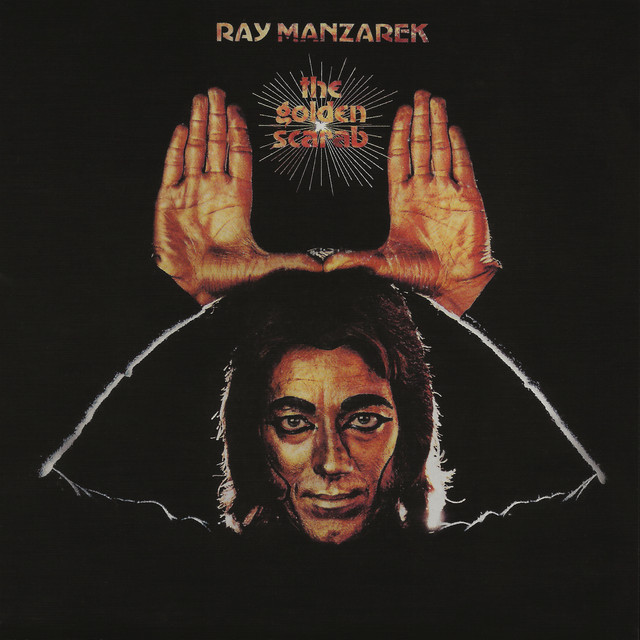
The Golden Scarab
1974
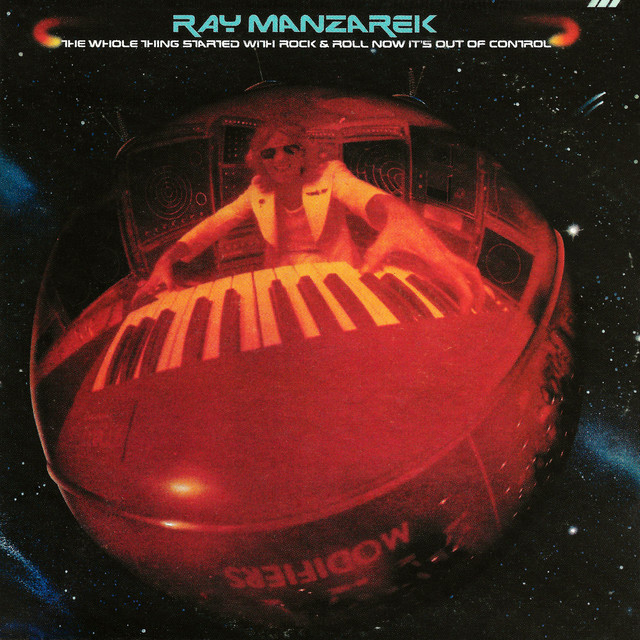
The Whole Thing Started With Rock & Roll Now It's Out Of Control
1974
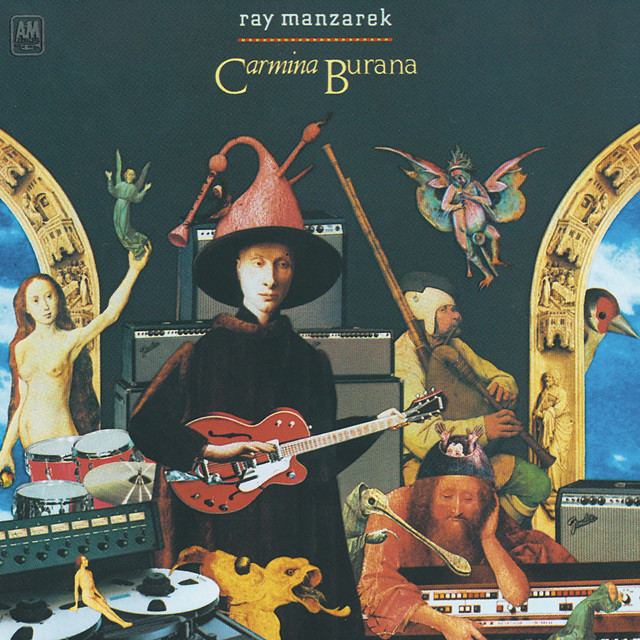
Carmina Burana
1983
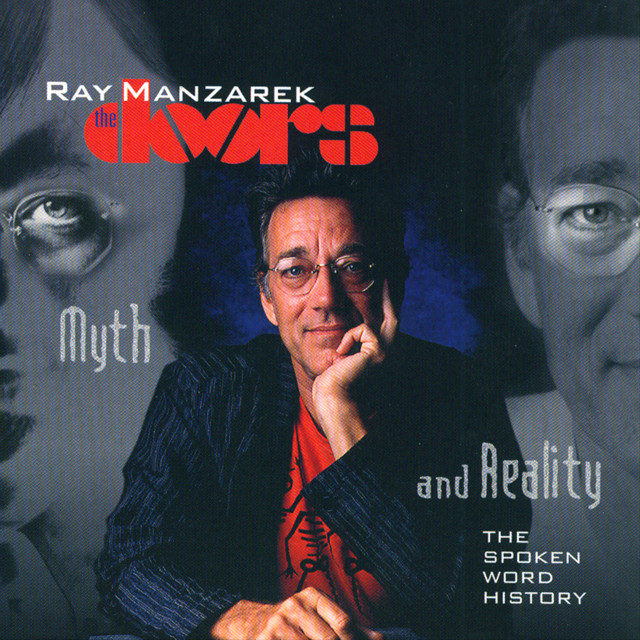
The Doors: Myth and Reality Vol. 2
2006
The Doors: Myth and Reality Vol. 1
2006
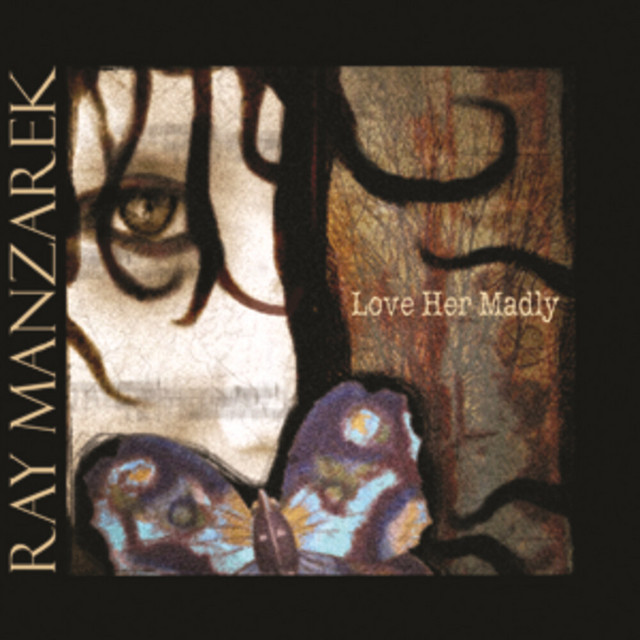
Love Her Madly Soundtrack
2006
Ballads Before The Rain
2008
Translucent Blues
2011
The Piano Poems: Live From San Francisco
2012
Twisted Tales
2013
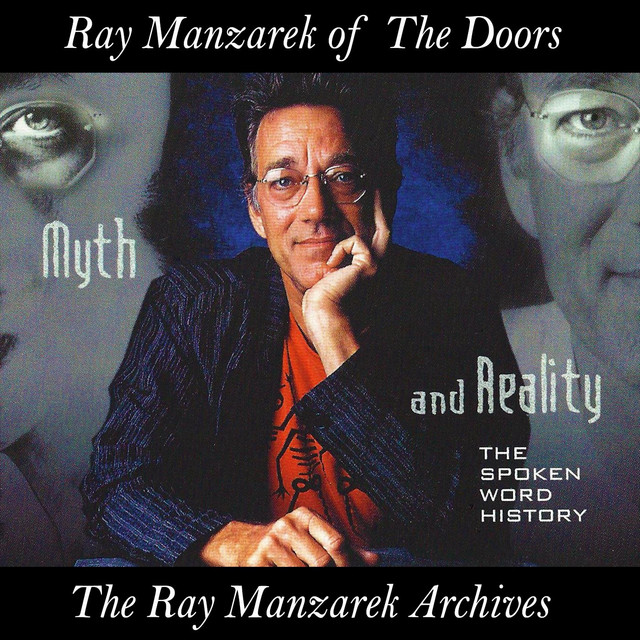
Myth and Reality: The Spoken Word History
2017

America (Remixes)
2019
Album Credits
-
Ray Manzarek · 2011
Producer -
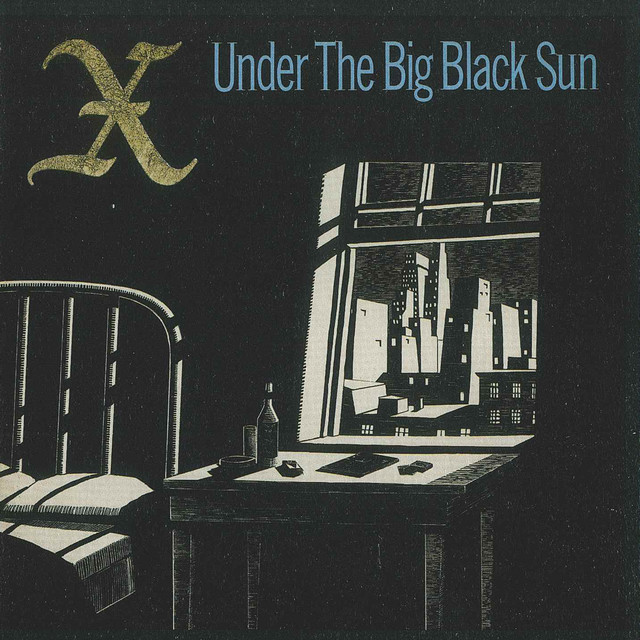
X · 1982
Producer -
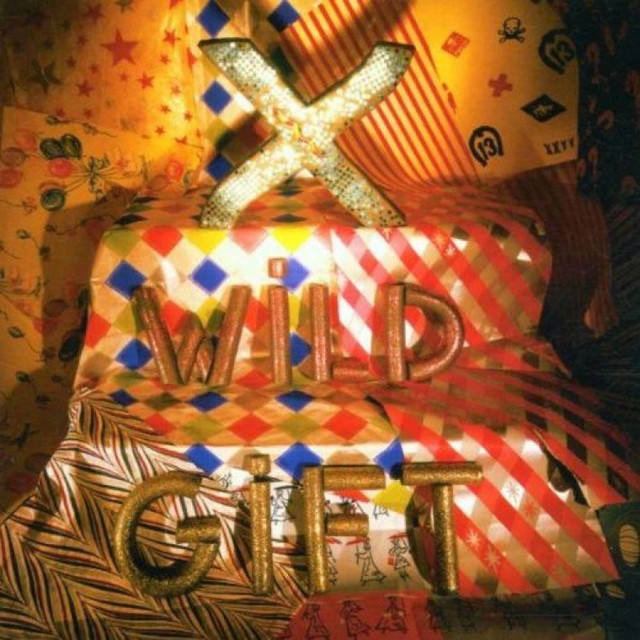
X · 1981
Producer -
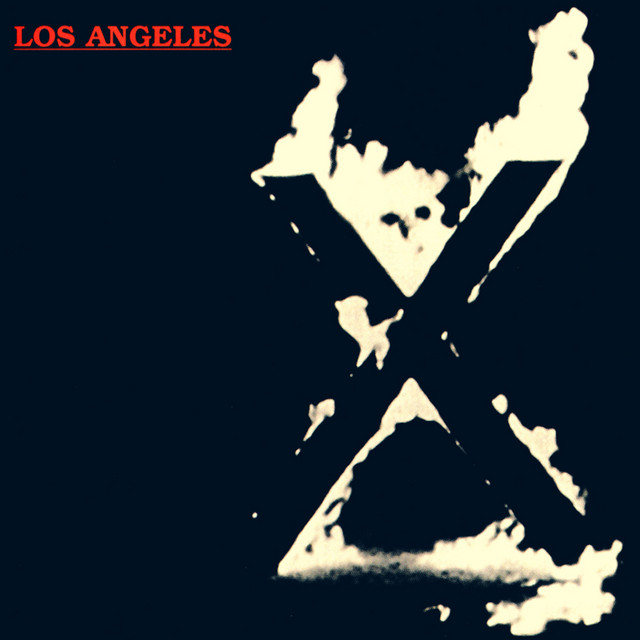
X · 1980
Producer








.webp)