

Pricing and availability
We compare 600+ stores and found this item at 1 store. Prices updated .
Store
Reviews
Price




Average Price: $190
Standard/Professional
$75
$201+
Price Tier
Budget
Standard
High-end
* Product prices and availability are updated by Equipboard every 24hrs and are subject to change. Equipboard may receive compensation for purchases made at participating retailers linked on this site. This compensation does not affect what products or prices are displayed, or the order of prices listed. For more information, please refer to our affiliate disclosure.
Description
Introducing the Maestro PS-1A Phase Shifter, the unsung hero of vintage phaser effects pedals. This iconic pedal, first produced in 1976, provides musicians with a simplistic yet versatile phasing experience. It is equipped with three set speeds, giving users the power to create a wide range of sonic textures. This pedal is a must-have for those who appreciate a good ol' classic.
Key Features:
- Category: Musical Instruments > Guitar Pedals & Effects > Phaser Effects Pedals
- Simple phase shifter with three set speeds
- Notable for its vintage charm and versatility
- First produced in 1976
- Ideal for creating a wide range of phasing effects
Product specs
| Brand | Maestro |
| Model | Phase Shifter PS-1A |
| Finish | Black |
| Year | 1970s |
| Made In | United States |
| Categories | Phaser Pedals |
FAQs
-
What type of power supply does the Maestro PS-1A Phase Shifter require?
-
The Maestro PS-1A Phase Shifter is designed to be powered by a standard 9V battery, as it was originally manufactured in the 1970s before modern power supply standards.
-
How does the Maestro PS-1A Phase Shifter sound compared to modern phaser pedals?
-
The Maestro PS-1A Phase Shifter is renowned for its warm, vintage analog tone, which is often described as lush and organic, differing from some modern digital phasers that may offer more precision but less warmth.
-
Is the Maestro PS-1A Phase Shifter suitable for live performances?
-
Yes, the Maestro PS-1A Phase Shifter is suitable for live performances, offering a rich, vintage phasing effect that can enhance guitar tones on stage, though its size and battery power requirement should be considered.
-
Can the Maestro PS-1A Phase Shifter be used with instruments other than guitar?
-
While primarily designed for guitar, the Maestro PS-1A Phase Shifter can also be used with other instruments like keyboards or bass, providing a unique phasing effect across various sound sources.
-
What are the control options available on the Maestro PS-1A Phase Shifter?
-
The Maestro PS-1A Phase Shifter features three control knobs for adjusting the depth, rate, and intensity of the phasing effect, allowing for a range of modulation from subtle to pronounced.
Videos

Marco Tiraboschi
Maestro Oberheim Phase Shifter PS-1A DEMO
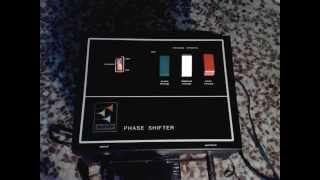
Maestro Oberheim Phase Shifter PS-1A DEMO
Marco Tiraboschi
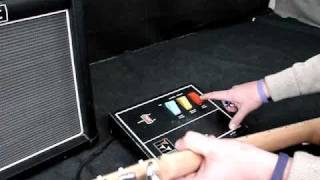
VIntage Maestro Phase Shifter PS-1A Demo Gravity Music Gear Led Zeppelin

Brad
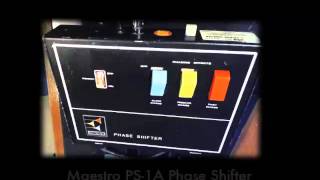
Maestro PS 1A Phase Shifter Demo (clean and distortion)

Guitar Pedal Demos
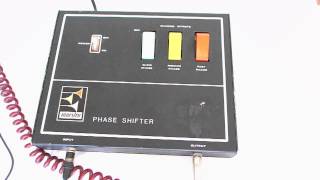
Maestro PS1A Phase Shifter

fxdoctormedia
Reviews
Owner Insights
We analyzed real musician discussions from forums and Reddit to find what players love, question, and tweak about Maestro PS-1A Phase Shifter.
Features and functionality
-
The smooth transition between speeds when switching off the fast mode while slow mode is on creates a unique braking effect, likened to a jet engine slowing down.
Source
Use cases and applications
-
Favored by enthusiasts for its 'early Rush in a box' effect, appealing to fans of classic rock tones.
Source -
It is noted that the phaser sound can sometimes feel separate from the instrument, as experienced with a Wurlitzer, yet still delivers a cool effect.
Source -
Some users have creatively used the pedal to achieve organ-like sounds with instruments like pedal steel, highlighting its versatility beyond traditional guitar use.
Source
Value and pricing
-
Purchased for $380 plus shipping, seen as a good deal as it included the original box and manual, with prices on Reverb typically higher.
Source
User experience
Comparisons
-
The Maestro PS-1A is often mistaken for similar-sounding units like the Univibe, but its unique ramping speed feature distinguishes it, enhancing its appeal for Big Star fans.
Source
Mods and upgrades
-
The rare PS-1B version includes a variable speed knob, offering additional control, unlike the more common PS-1A, which lacks this feature.
Source
4.0 out of 5
Based on 0 Reviews and 4 Ratings
Artist usage
Add artist.png?v=1784867009)
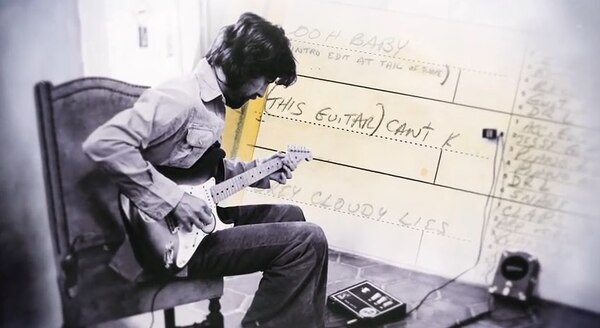
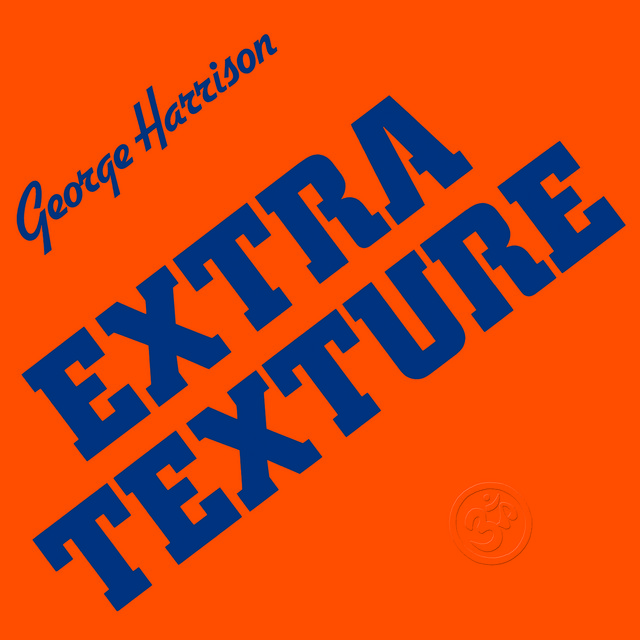
In a post by harrisonarchive on Instagram, George Harrison is shown with a Maestro PS-1A Phase Shifter, highlighting its use during the Extra Texture promotional period.

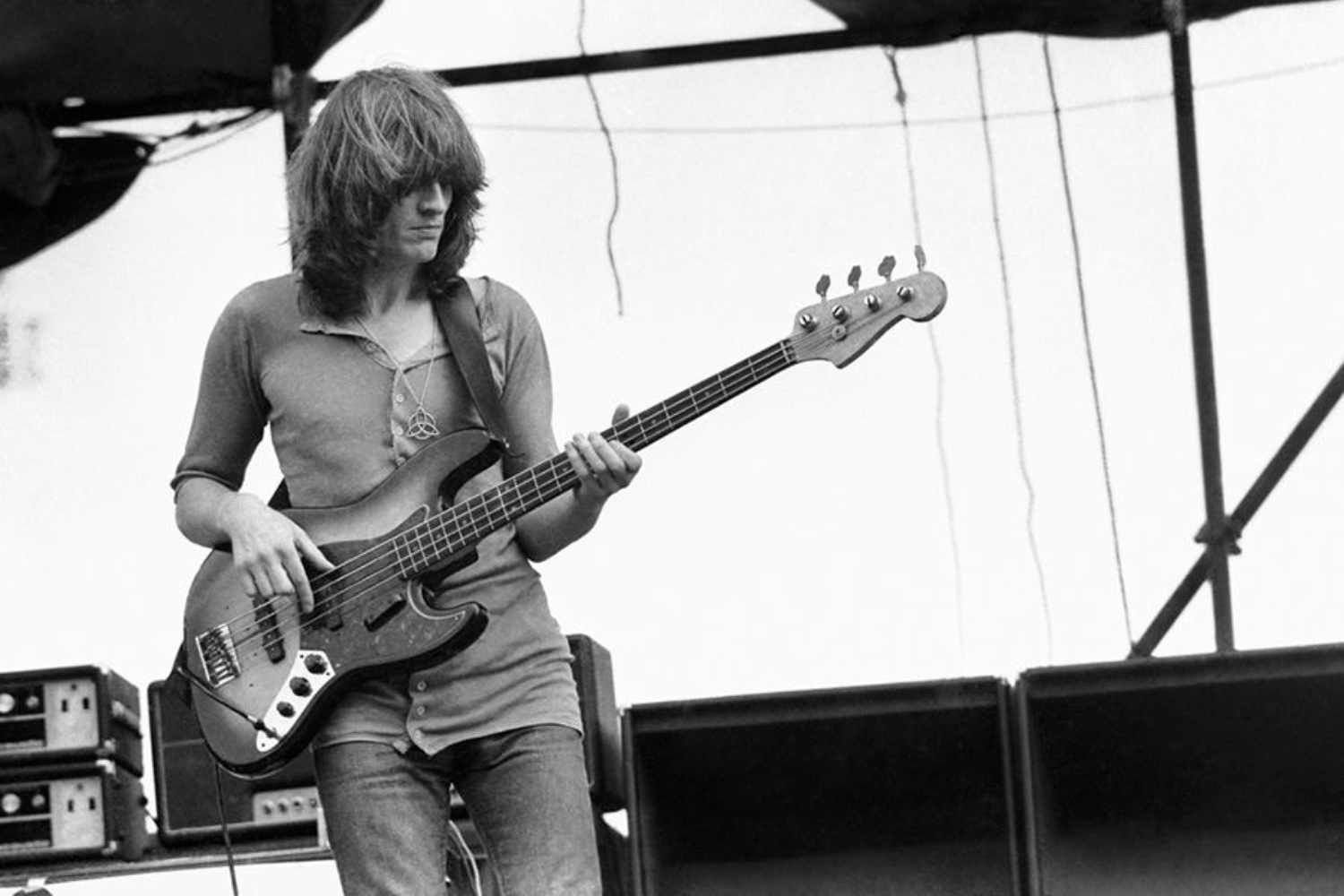
Jones also notably utilised effects units for his keyboard playing in Led Zeppelin, particularly favouring a Maestro Phase Shifter to emulate various rotary speaker sounds, which can be sitting atop of his keyboard rig in various images from 1973-1979.


Which guitars did you use on Rush's first LP, Rush?
I used the 335 and a rented Rickenbacker 12-string. That's it for guitars. I played them through my Marshall 50 with a 4-12 cabinet, and I used a Maestro phase shifter, a Cry Baby wah-wah, and an Echoplex.
Many of your songs have either a phased or a chorus effect.
I like both sounds. Ever since A Farewell To Kings I've used a Roland Boss Chorus. I liked the Maestro phaser as opposed to, say, MXR Phase 90s or 100s; it was a little more subtle than the MXR phase lines. But after I heard the Chorus, I loved it and decided to incorporate it into my music. Hemispheres and Permanent Waves have a lot of Chorus -almost every song has Chorus, since with a three-piece band it tends to widen the guitar sound.

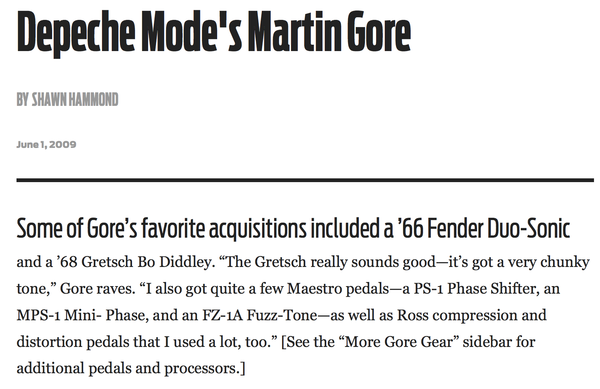
From the GuitarPlayer article "Depeche Mode's Martin Gore," Gore says, "I also got quite a few Maestro pedals—a PS-1 Phase Shifter, an MPS-1 Mini- Phase, and an FZ-1A Fuzz-Tone—as well as Ross compression and distortion pedals that I used a lot, too."

At 12:16 , he starts naming all the equipment he's got at home... about four or 5 seconds later he says he has a Flanger, as well as a Phase Shifter at his place.


At the 7:35 in this video of Daryl Hall and The Doors playing Roadhouse Blues for Daryl’s house, you can clearly see Ray Manzarek using the Maestro PS-1A Phase Shifter, positioned on top of his Vox Continental keyboard.


On his twitter account, he posted this photo with the pedal given to him by Joe Banamasa.

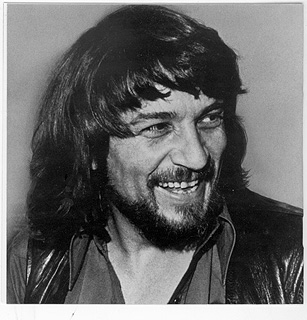
Jennings was famous for his use of this phaser, particularly on Dreaming My Dreams, as stated by studio engineer Kyle Lehning in this April 27, 2010 Mix Online interview.
On the whole, the Dreaming My Dreams sessions were cut live. (...) "We had a lot of extra instruments around the studio, as well," Lehning continues. "[Waylon] would actually play my electric 12-string from time to time and run it through his Maestro Phaser—though mostly he would play his old leather Telecaster."
Jennings' PS-1A was sold on eBay on October 23, 2018 for $18k.
Waylon Jennings 1970's Maestro PS 1A Phase Shifter with foot switch, this was used live and on recordings. Think the "Dukes of Hazard", "Mammas Don't let your babies grow up to cowboys" thats what this effect is. It works and sounds good. This was obtained from Waylon Jennings personal collection. Comes with documentation. Please see auctions for more Waylon Jennings items.


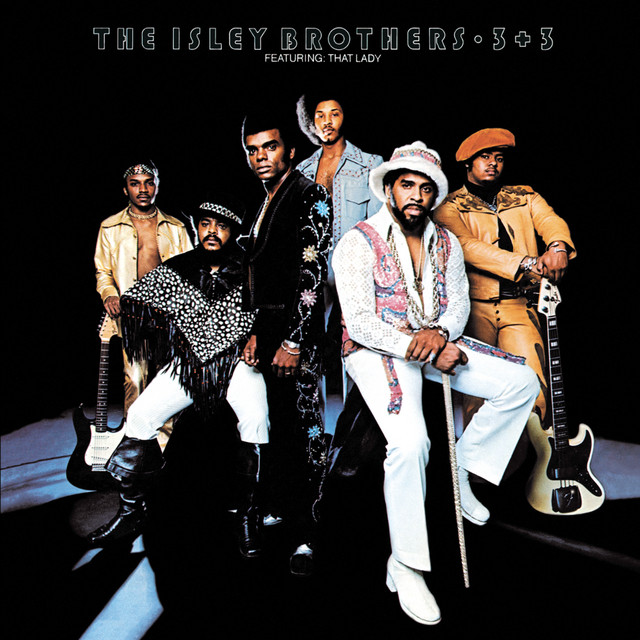
Used on 3+3, particularly on "That Lady". There are multiple sources:
The Big Muff Users section of Kit Rae's Big Muff Page
A year after that, the funk/soul scene was hammered with the famous solo from the Isley Brothers hit, (Who's) That Lady, played to perfection by Ernie Isley. There are various accounts of what was actually used in the studio, some sources state it was recorded directly into the mixing board with a Strat and Roger Mayer Octavia, but other sources state it was a Big Muff and Maestro Phase Shifter, and Ernie also used a Big Muff and a Maestro Phase Shifter when playing it live throughout the 1970's (the modulation on the record actually sounds identical to the Maestro too).
(the signal) goes through a Cry Baby wah-wah, a Big Muff fuzz, a Maestro Phase Shifter, and an Octavia made by Roger Mayer. - Ernie isley from Guitar Player, September 1981
“On ‘That Lady’ there was a Big Muff, a Maestro Phase Shifter, and a Fender Twin. That was pretty much it.” - Ernie isley from Vintage Guitar magazine, February 2018
“We were working with the same engineers Stevie Wonder was using on what would become Innervisions,” Ernie begins. “We were working on the record that became 3+3. There was a fuzz box and a phase shifter by Maestro, and that was pretty much it. We took it from there. It was fun.”
Stompbox: 100 Pedals of the World's Greatest Guitarists by Elion Paz
- Reported by All Arts on November 30, 2020.
“Stompbox” features actual pedals from celebrated guitarists past and present, including Hendrix’s legendary Fuzz Face, the Maestro PS-1A Phase Shifter used by Ernie Isley, and Marc Bolan’s Vox Clyde McCoy wah-wah. A photo of each pedal is set next to an interview with its owner, and the book broken into sections about history, innovation, design and use cases.
- Pedal 40, as can be seen in the quick browse video at 0:19.
I plugged in, and I discovered the "That Lady" sound right there in Guitar Center. Nobody even turned around. But I knew that I'd discovered a new sound.


Terry Kath used a Maestro PS-1A Phase Shifter, as documented on The Terry Kath Experience website under the "TK's Gear" section.

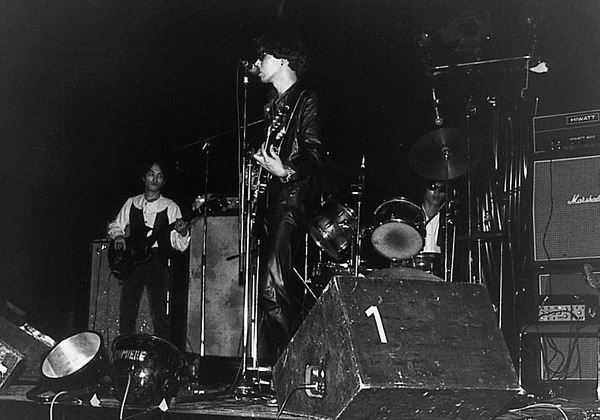
Visible on top of his Echoplex


On June 5th, John Foxx will be taking his group The Maths to the Roundhouse in Chalk Farm London for a one-off performance of his classic album Metamatic. Now, after our feature on Benge's synths was such a hit with you lot, we thought that some of you might like to get warm under the collar and quivery of the finger tip to learn what John Foxx will be packing in the back of the van for the Roundhouse show - please check out the mouthwatering list below, and have a look at some John Foxx & The Maths on YouTube while you're at it. Find out more about this incredible event (which also features a DJ set by Gary Numan and Ade Fenton) at the Roundhouse website. John Foxx'Metatronic best-of is out now.
Synthesizers:
ARP Odyssey x 2, ARP Sequencers x 2, Crumar Multiman, EDP Wasp, Korg MonoPoly, Korg 700, Logan String Machine, Moog Mini x 2, Moog Modular plus Sequencers, Moog Opus 3, Roland Modular System 100m x 10 Modules, Roland SH2, Roland SH-101, Roland Juno 60, Sequential Circuits Multitrack
Drum machines:
Amdek Percussion Synthesiser, Boss Dr Rhythm, Linn Drum, Klone Drum, Roland CR78, Roland TR808
Effects & Processors:
Boss Chorus, Boss Flanger, Boss Phaser, Electro Harmonix electric mistress Flanger, Furman Spring Reverb, Ibanez AD80 Analog Delay, Maestro PS-1 Phase Shifter, Mu-tron Phasor, MXR Phase 100, Roland Space echo RE-201
Other Equipment
Tascam & Revox Analogue Reel to Reel Tape Machines
Album Usage
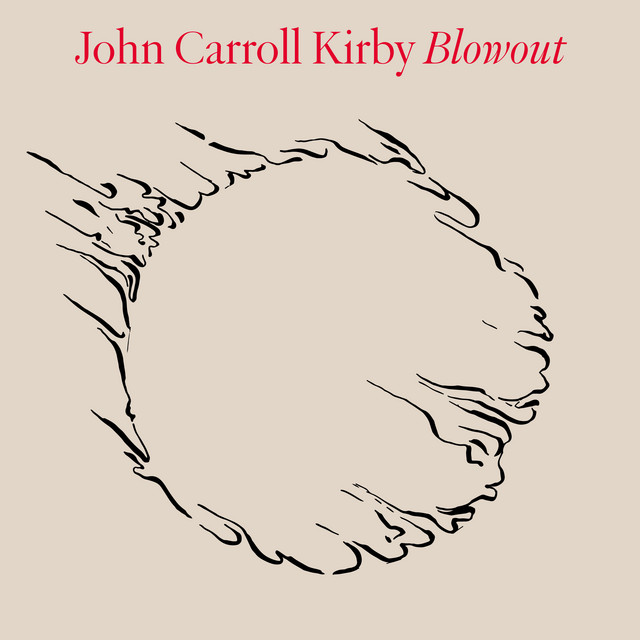
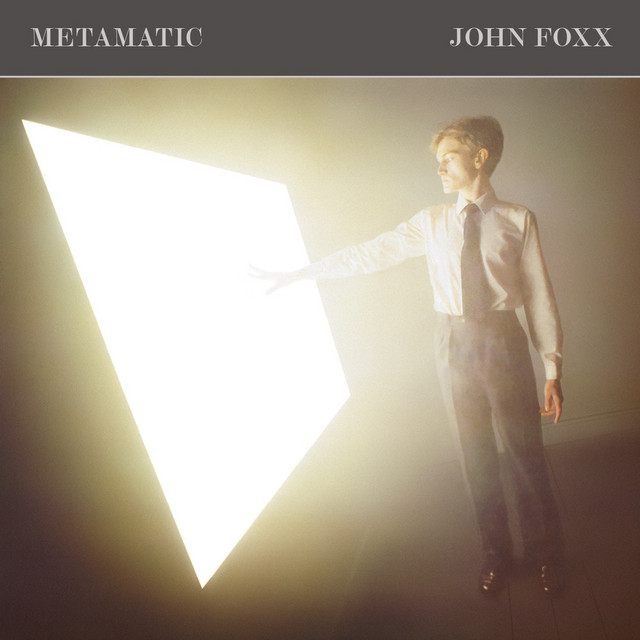
The Maestro PS-1A Phase Shifter has been featured on the following albums:
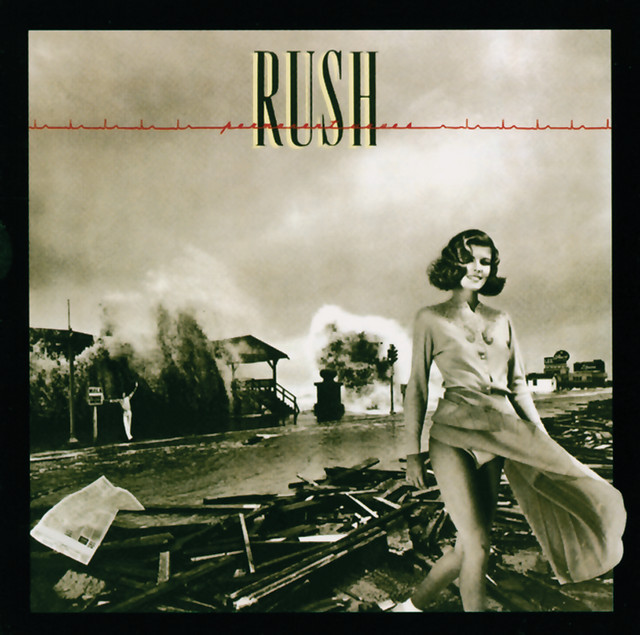
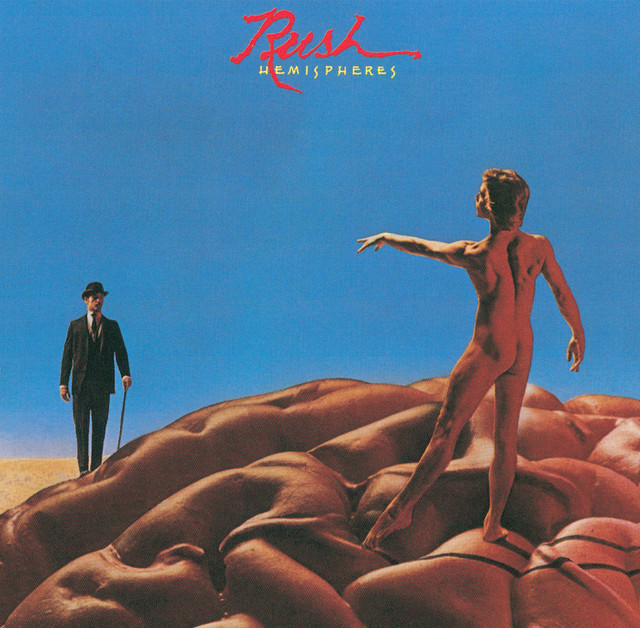
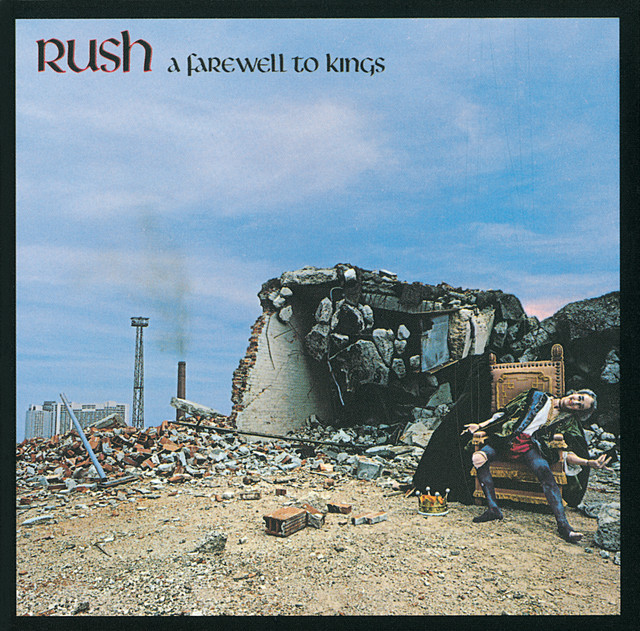
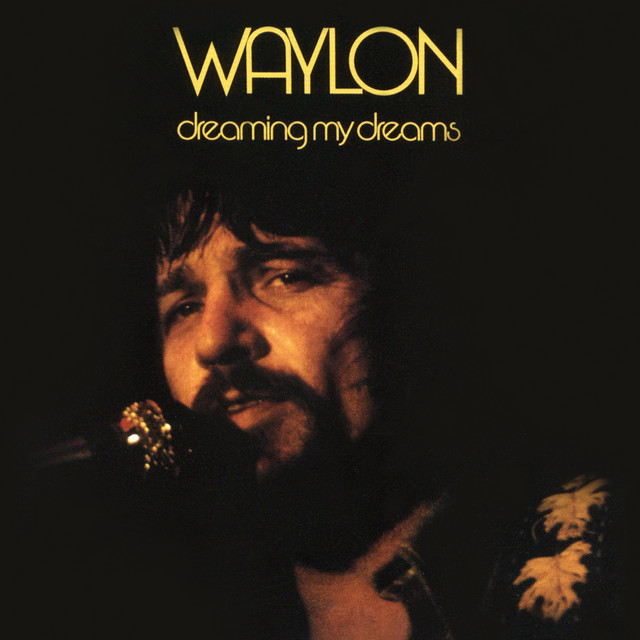
Genre Usage
Based on how artists on Equipboard use this gear, it is most commonly found in the following genres.
Used With
Based on how musicians on Equipboard use Maestro PS-1A Phase Shifter, it is most commonly used with the following gear.

-s.webp?v=1784559385)

-s.webp?v=1784844517)


Similar
Add recommendation6 alternative and related items for Maestro PS-1A Phase Shifter, curated by the Equipboard community.

$59.00 - $136.00
An updated version of the legendary Maestro PS-1, this piece of gear has been meticulously re-engineered to meet the demands of today's musicians while retaining all the charm of the original. Expect nothing less than an all-analog phaser that delivers a warm and smooth sound.

$228.46
According to Heptode;
The Virtuoso Phase Shifter is a boutique recreation of the original Maestro®* PS-1A Phase Shifter, as used in the 1970's by keyboardist John Paul Jones (Led Zeppelin) and guitarists Steve Howe (Yes), Alex Lifeson (Rush), Ernie Isley (Isley Brothers), among many others.

$295.00


$559.00
More Maestro Phaser Effects Pedals
$59.00 - $136.00
in Phaser Effects Pedals Rank


-m.webp?v=1784871594)
$89.00 - $99.99
in Phaser Effects Pedals Rank


$149.99 - $172.00
in Phaser Effects Pedals Rank


-m.webp?v=1784871982)
$129.00 - $142.00
in Phaser Effects Pedals Rank


-m.webp?v=1784871544)
$142.79 - $159.99
in Phaser Effects Pedals Rank


$129.00 - $210.00
in Phaser Effects Pedals Rank


$109.08 - $119.00
in Phaser Effects Pedals Rank


$129.99 - $149.00
in Phaser Effects Pedals Rank


$67.90 - $169.99
in Phaser Effects Pedals Rank


$131.00
in Phaser Effects Pedals Rank


$113.09 - $142.99
in Phaser Effects Pedals Rank


-m.webp?v=1784871359)
$53.00 - $83.50
in Phaser Effects Pedals Rank


$60.00 - $315.00
in Phaser Effects Pedals Rank


$700.00
in Phaser Effects Pedals Rank


$56.00 - $88.90
in Phaser Effects Pedals Rank


$43.89 - $56.00
in Phaser Effects Pedals Rank


$199.00
in Phaser Effects Pedals Rank


$159.99 - $305.64
in Phaser Effects Pedals Rank


$22.90 - $28.90
in Phaser Effects Pedals Rank


$88.90 - $109.99
in Phaser Effects Pedals Rank


$29.60 - $34.99
in Phaser Effects Pedals Rank


$190.00 - $219.99
in Phaser Effects Pedals Rank


$199.00 - $224.99
in Phaser Effects Pedals Rank


$120.38
in Phaser Effects Pedals Rank


$170.00
in Phaser Effects Pedals Rank


$129.00 - $142.00
in Phaser Effects Pedals Rank


$2,000.00
in Phaser Effects Pedals Rank


$193.99
in Phaser Effects Pedals Rank


$199.00
in Phaser Effects Pedals Rank


$67.90 - $145.00
in Phaser Effects Pedals Rank


$199.99 - $209.00
in Phaser Effects Pedals Rank


$400.00
in Phaser Effects Pedals Rank


$140.00
in Phaser Effects Pedals Rank


$115.00
in Phaser Effects Pedals Rank


Accessories & Related Items
-s.webp?v=1784845311)


Community setups


Gear Guides



.jpg)


Most Popular Phaser Effects Pedals
Most Popular Brands
-
Added to Equipboard on by
 equipboard
GearIQ 4934
-


