Squarepusher
Role
Genre
Role
Genre
Squarepusher's Studio Equipment


"Tom Jenkinson much prefers to work with hardware sequencers, and specifically his Yamaha QY700," reads the caption to this photo, in this article.
Find it on:


"I made my first records using the Boss DR660," says Tom, in this article.
Find it on:


"To this day, nobody believes that the tracks on Big Loada were a single pass of me sequencing my Akai S950 from my DR660," Tom says, in this article.
Find it on:

"...I bought the DSP4000, and I'm still finding new things to do with that and with the Orville," says Tom, in this article.
Find it on:

Key to this type of song creation is gear that has been in Jenkinson’s studio for decades. Mainstays include a Roland TB-303, TR-909 and SH-101, Eventide Orville and DSP4000 harmonizers, a Yamaha QY700 sequencer, and Yamaha CS80, TX81Z and FS1R synths.
Find it on:
-m.webp?v=1783167659)
The artist can be seen using this gear in the video. It’s difficult to tell, but the color scheme of the buttons on the RD-8 is a dead giveaway. That and it being paired with the Behringer TD-3 and the Behringer MS-1.
Find it on:

In this 1996 interview, Tom Jenkinson briefly explains his (at the time) layer-by-layer method of making music (1:53 mark). The mixer that he utilizes appears to be a Soundcraft Spirit Folio 12/2 Mixer with switched (and even missing) faders. After comparing with the original product, the different colored faders can be noticed.
Find it on:
-m.webp?v=1783090753)
"I unearthed the 909 and was surprised by how good the straight-out-of-the-box sounds sounded on my monitors," Tom says, in this article.
Find it on:

"If it's possible to single out one piece of gear as being crucial to Jenkinson's way of working, it's the Eventide Orville multi?effects unit," Tom says, in this article.
Find it on:

By using the Internet Archive Wayback Machine (available at https://archive.org/web/) and searching for the page "http://www.squarepusher.net/justasouvenir/data/interviews.xml", it is possible to find various interviews that were gathered together over the years and kept at squarepusher.net until around the year of 2012, when the site was updated. In one of those (precisely the 2006 Rockin On' Magazine [Japan] interview), Tom is asked: "In ULTRAVISITOR, you revived the authentic Squarepusher sound by integrating the free jazz approach in Music is Rotted One Note and laptop originated sound in Go Plastic, Do You Know Squarepusher. Would you say that having recorded ULTRAVISITOR had a positive effect on HELLO EVERYTHING?" In his answer, he reveals the setup used in the Go Plastic album: "First of all, I didn't use a computer on Go Plastic. It was made with a Yamaha QY700, TX81[Z] and FS1R, an Eventide DSP4000 and Orville, an Akai S6000 and a Mackie 16 channel desk. Second, precisely what is the "authentic Squarepusher sound"? Although you seem to have made up your mind, I would be entertained to see if anybody agreed with you or each other! Certainly if there was a consensus, I would feel like I had failed to fufil my primary objective which is to rubbish the notion of the static artistic persona. The tendency to develop and change ideas, musical or otherwise is a hallmark of an active and intelligent mind -yet it is not prevalent in the sphere of music. Once musicians establish their "style", it appears that many feel compelled to take the safe option of sticking to it. The ironic thing is that repeating the same ideas over and over again gets pretty uninteresting and inevitably leads to stagnancy; thus their career is sabotaged by these very attempts to safeguard it. For me, to stick to some sort of style is to prematurely throw your artistic potential down the drain. Thus I assert that nobody could coherently state what the "Squarepusher sound" is. After recording the Ultravisitor material, I felt it was time to shift the compositional focus to simpler ideas."
Find it on:

In the "Old School" section of this interview, Jenkinson explains his experiences with recording mediums throughout the years. According to Tom Jenkinson himself, "[...] As for recording, I used tape recorders exclusively until 2001. I first had a Fostex M80 quarter?inch eight?track, and in the late '90s I obtained a half?inch Tascam MSR16. I still use that, though it's being repaired at the moment. I have to say that I'm not obsessive about it. Recording to tape, or to a computer?based multitrack, is a means to an end. I mix and match now. I've used Sonic Foundry's Vegas, and more recently Nuendo, but I don't endorse or recommend them. There's no love in it for me, they really are just tools."
Find it on:

"Jenkinson seems to prefer having a desk at the centre of his studio, a role which is currently occupied by a Euphonix CS3000," reads the caption to this photo, found in this article.
Find it on:

In this Sound On Sound interview (Jumble Sale Studio section), upon detailing and explaining how he made his own spring reverb, he mentions that the AKG BX-15 and AKG BX-20 spring reverb units were also extensively used on the album "Hello Everything". Quote from Tom himself: "The reverb uses four pairs of Accutronics type 1, 4, 8 and 9 springs. The stereo input stages incorporate a soft-clip circuit, high shelving EQ and spring selectors that send the input to a given pair of springs. There are four output stages to which the springs can be assigned. Each output stage has signal invert, volume and pan controls. The springs can be used in parallel or series, where one spring signal is fed into another. The circuit grounding uses star topology. It was used extensively on the album Hello Everything, in conjunction with my AKG BX15 and BX20 reverbs. It is clearly audible at the starts of 'Bubble Life', 'Circlewave' and 'Plotinus'.”
Find it on:

This 1996 interview offers a pretty close look at Tom Jenkinson's "full time residential studio", as he refers to it. At 1:32 into this video, his Roland TR-606 is shown with what appears to be a custom Squarepusher sticker on it.
Find it on:

The album cover for "Buzz Canner" by Tom Jenkinson's alias "Chaos A.D." features what appears to be a TEAC A-3300SX reel-to-reel recorder, likely used by Squarepusher during his 1994 and 1995 recordings.
Find it on:

Right at the intro of the video, behind Tom we can see a lot of gear in a rack. One of those pieces is the Tascam CD-RW2000. It can be clearly spotted in the 0:19 mark, in which, from the top to the bottom, it is the 4th unit.
Find it on:

This picture has a nice picture of some of Jenkinson's rack gear. In this particular shot, the Roland VB-99 can be seen at the top, followed by the V-Synth XT and the MOTU 24 I/O. The blue piece at the bottom, however, is none other than the MOTU 828 MK1.
Find it on:

In this The Creators Project documentary called "Meet Squarepusher", 1:09 into the video, a really old and abandoned Boss DR-55 can be spotted in Tom Jenkinson's house.
Find it on:

In this Digital Trends interview, Tom Jenkinson explains the process of producing, as well as what was used in his album Damogen Furies besides his own software, now titled System 4. He mentions the RME MADIface XT as a piece of gear used in this process.
Find it on:


In the "Old School" section of this interview, Jenkinson explains his experiences with recording mediums throughout the years. According to Tom Jenkinson himself, "[...] As for recording, I used tape recorders exclusively until 2001. I first had a Fostex M80 quarter-inch eight-track, and in the late '90s I obtained a half-inch Tascam MSR16. I still use that, though it's being repaired at the moment. I have to say that I'm not obsessive about it. Recording to tape, or to a computer-based multitrack, is a means to an end. I mix and match now. I've used Sonic Foundry's Vegas, and more recently Nuendo, but I don't endorse or recommend them. There's no love in it for me, they really are just tools."
Find it on:

This piece of equipment makes some appearences during this 2001 interview video. The most notable shots, which even shows Tom operating it, occur in the 1:42 and 1:54 marks.
Find it on:

This interview contains in-studio pictures taken from Tom Jenkinson himself. One of those pictures, precisely the third one, reveals this RME 32-channel Digital/Analog Interface.
Find it on:




According to the interviewer, the pictures that appear on this interview were taken by Tom Jenkinson himself. The 6th picture in particular reveals a lot of Jenkinson's rack gear. Among them, below some sort of 'white box', the BSS Audio AR-416 4 Channel Active DI Box can be spotted along with 4 different colored cables plugged into it.
Find it on:

In this Sound On Sound interview (Jumble Sale Studio section), upon detailing and explaining how he made his own spring reverb, he mentions that the AKG BX-15 and AKG BX-20 spring reverb units were also extensively used on the album "Hello Everything". He even specifies certain tracks. Quote from Tom himself: "The reverb uses four pairs of Accutronics type 1, 4, 8 and 9 springs. The stereo input stages incorporate a soft-clip circuit, high shelving EQ and spring selectors that send the input to a given pair of springs. There are four output stages to which the springs can be assigned. Each output stage has signal invert, volume and pan controls. The springs can be used in parallel or series, where one spring signal is fed into another. The circuit grounding uses star topology. It was used extensively on the album Hello Everything, in conjunction with my AKG BX15 and BX20 reverbs. It is clearly audible at the starts of 'Bubble Life', 'Circlewave' and 'Plotinus'.”
Find it on:

On the 4th picture of this Sound On Sound interview's photo gallery (quick link to it: http://dt7v1i9vyp3mf.cloudfront.net/styles/news_large/s3/imagelibrary/S/Sq_04.jpg?FJWDrszhVCYZoz7AyanIBRkc_WklqCie=&itok=RqQrtYnL) , there is a mixer next to the drum kit. Through careful comparison, one can conclude that the mixer is the Mackie CR1604-VLZ.
Find it on:

This 1996 interview offers a pretty close look at Tom Jenkinson's "full time residential studio", as he refers to it. At 2:00 into this video, his Roland TR-707 can be spotted at the background with what appears to be a Roland Memory Cartridge present on the 707's respective slot.
This particular piece of gear already visually appeared in his work previously. Tom also released a record under the alias "Chaos A.D". The album is named "Buzz Caner", and features a pretty curious cover (link: http://quimby.gnus.org/circus/jukebox.php?image=display.jpg&group=Chaos%20A.D.&album=Buzz%20Caner). At the top left portion of it, there is a photograph of a guy (presumably Tom) tweaking a Roland TB-303. In this photograph, the 707 can also be spotted, along with what possibly is a 101 behind it.
Find it on:

Right at the intro of the video, behind Tom we can see a lot of gear in a rack. One of those pieces is the Tascam DA-20 mkII. From the top to the bottom, it is the 3rd unit.
Find it on:

The 6th picture of this interview shows lots of Jenkinson's rack modules. On the right portion of the picture, there are 3 particular pieces together: The bottom piece is the Yamaha TX81Z, the middle one is the Yamaha FS1r (which can also be seen together in other pictures such as this one, below the TB-303). Finally, the top one is the MOTU MIDI Express 128 MIDI Interface, as hinted by several facts: - The blue MOTU brand at the left. - One MIDI connection at the left part of the unit's panel. - A single green light, indicating that the "Computer I/O" LED seen in the unit is lit. - The white and illegible names near the green LED greatly resembles the MIDI IN and MIDI OUT display names present on the actual machine.
Find it on:


This picture has a nice picture of some of Jenkinson's rack gear. In this particular shot, the Roland VB-99 can be seen at the top, followed by the V-Synth XT and the MOTU 24 I/O. On top of the blue piece, however, lies the MOTU 828 MKII USB 2.0 Audio Interface. Although the picture itself doesn't say much due to its quality (zoom helps), it's still possible to spot a green display near the middle (present only in the USB version, as the FireWire version features a light blue display instead), and right next to it it, roughly 5 white lines (as the bad quality makes it look like), 2 wider ones at the top and 3 shorter ones below them.
If compared to the original machine, it is clear that the green display is actually present, showing parameters, mix busses, etc. Also, the white lines are actually some of the interface's features printed on the unit. Some of them are: CueMixDSP, 96kHz, adat sync. After a final comparison, the other display (the one that shows levels) also becomes visible.
Find it on:

In the podcast (43:12-45:10) he mentions that he used to make programs for the VIC20, mainly drum machine tracks and the fact that it is also used in a some songs of his album "Be Up a Hello".
Find it on:
This is a community-built gear list for Squarepusher.
- Find relevant music gear like Bass Guitars, Amplifiers, Effects Pedals, Studio Equipment, Software Plugins and VSTs, Headphones, and other instruments and add it to Squarepusher.
- The best places to look for gear usage are typically on the artist's social media, YouTube, live performance images, and interviews.
- To receive email updates when Squarepusher is seen with new gear, follow the artist.
-
Added to Equipboard on by
 odysseyeurobeat
Gear IQ 1709
-
Updated
Discography
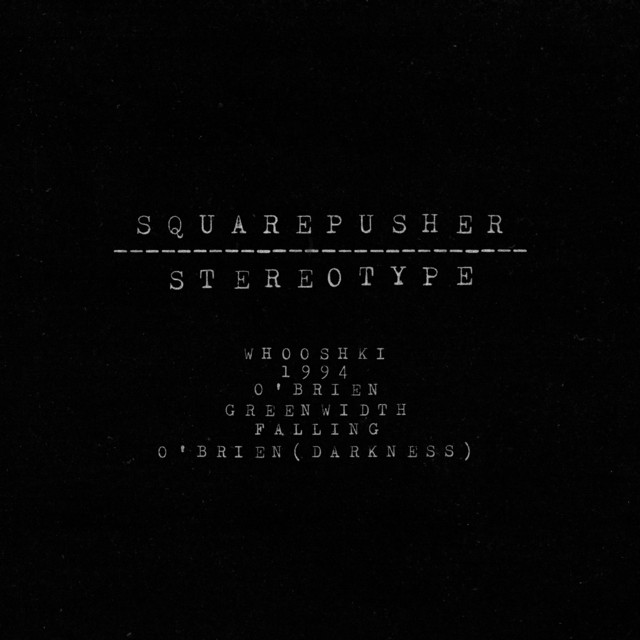
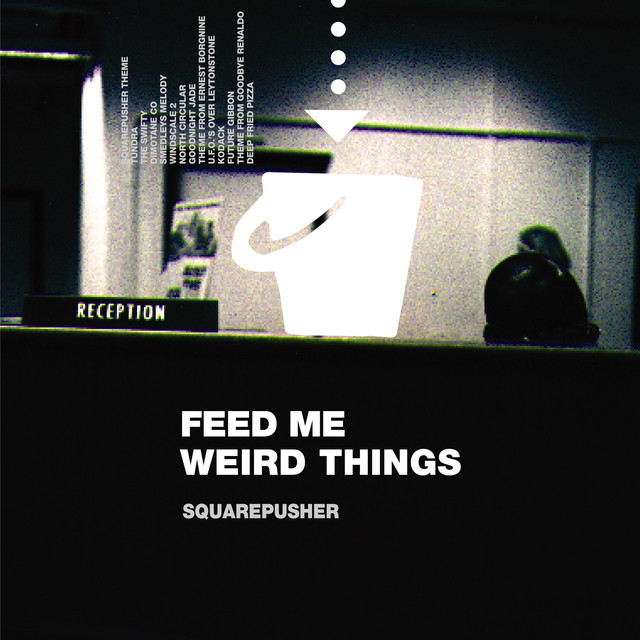
Album Credits
-
GoGo Penguin · 2021
Producer -
Squarepusher · 2009
Producer -
Squarepusher · 2009
Producer -
Squarepusher · 2008
Producer -
Squarepusher · 2004
Producer -
Squarepusher · 2001
Producer -
Squarepusher · 1999
Producer -
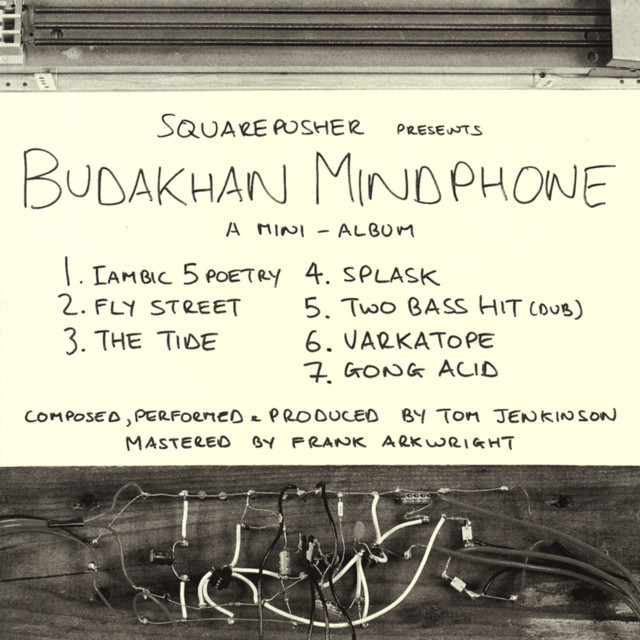
Squarepusher · 1999
Producer -
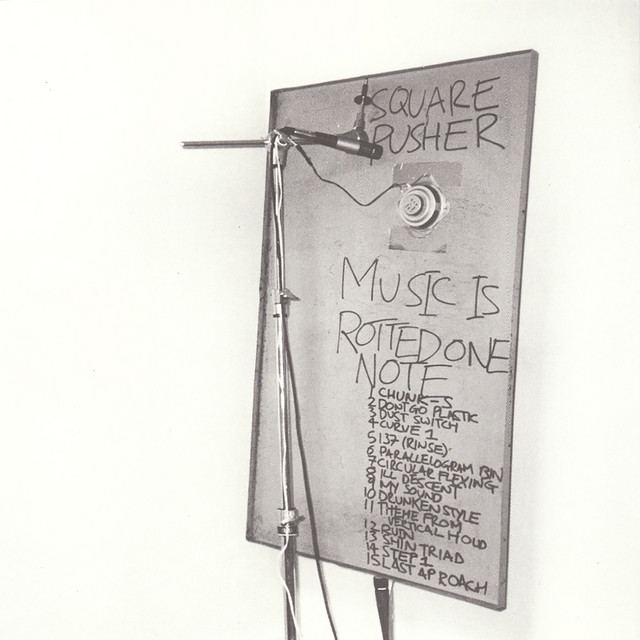
Squarepusher · 1998
Producer -
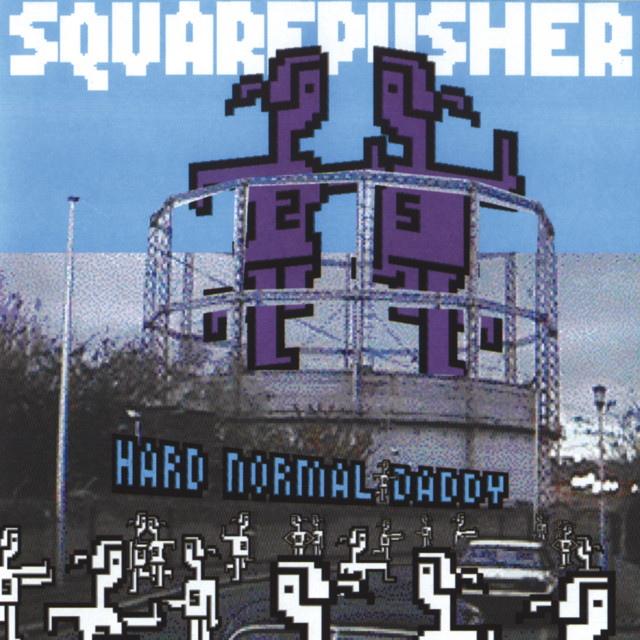
Squarepusher · 1997
Producer -
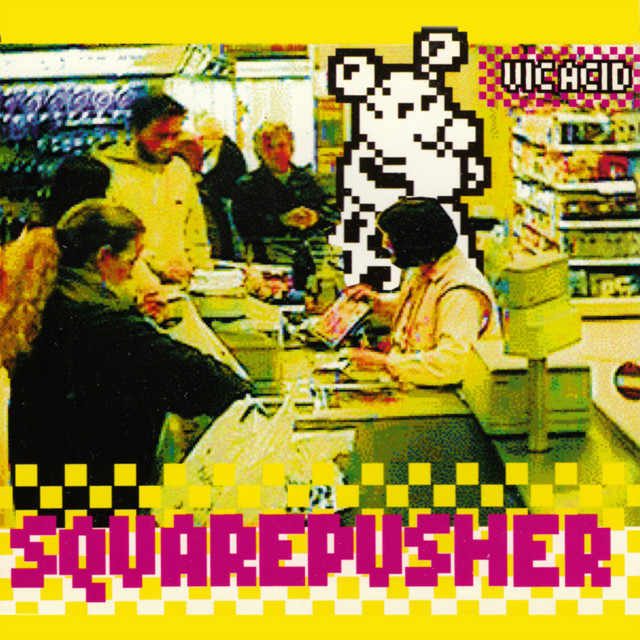
Squarepusher · 1997
Producer -
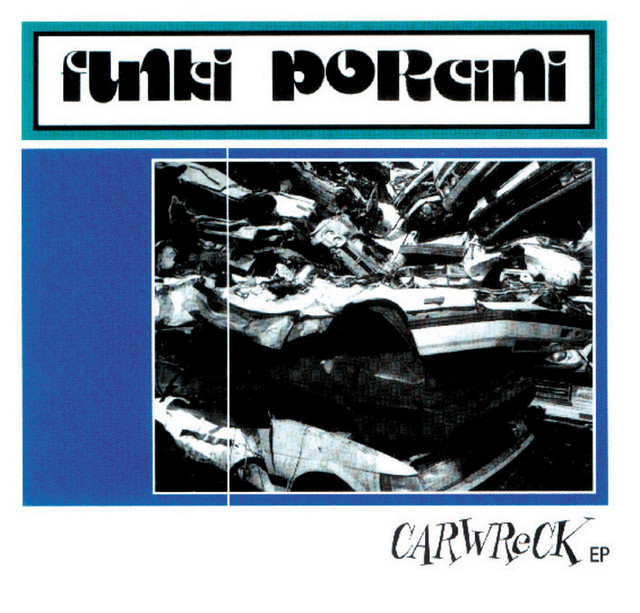
Funki Porcini · 1996
Producer





.webp)