

Pricing and availability
We compare 600+ stores and found this item at 1 store. Prices updated .
Store
Reviews
Price




Average Price: $1,100
High-end/Boutique
$249
$700+
Price Tier
Budget
Standard
High-end
* Product prices and availability are updated by Equipboard every 24hrs and are subject to change. Equipboard may receive compensation for purchases made at participating retailers linked on this site. This compensation does not affect what products or prices are displayed, or the order of prices listed. For more information, please refer to our affiliate disclosure.
Description
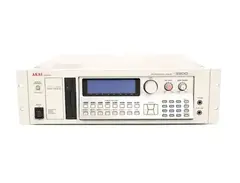
Step into the world of high-performance sampling with the Akai S6000, a powerhouse in the realm of audio samplers. Perfectly suited for DJs and music producers, this device combines flexibility with precision, offering a seamless workflow for both studio and live settings. The S6000 stands out with its advanced sampling capabilities, allowing users to effortlessly capture and manipulate sounds with pristine clarity.
Equipped with a removable front panel, the S6000 provides a unique level of convenience, enabling remote operation and easy integration into any setup. Its user-friendly interface and large LCD screen ensure an intuitive sampling experience, making it accessible even to those new to the art of audio manipulation. With an impressive array of inputs and outputs, this sampler supports a wide range of audio sources, ensuring compatibility with various equipment.
The Akai S6000 is not just about capturing sound; it's designed to enhance and transform it. With its expansive memory capacity and robust editing features, you can push the boundaries of creativity, crafting distinctive audio landscapes. Whether you're remixing tracks or developing new sounds, the S6000 offers the tools you need to bring your musical visions to life.
Key Features:
- Removable front panel for remote operation
- Large LCD screen for easy navigation
- Comprehensive editing features for creative sound manipulation
- Multiple audio inputs and outputs for versatile connectivity
- Expandable RAM for extensive sample storage
- Supports a variety of audio formats
Product specs
| Brand | Akai |
| Model | S6000 MIDI Stereo Digital Sampler |
| Finish | White |
| Year | 1999 |
| Made In | Japan |
| Categories | Digital Synthesizers, Samplers |
| Analog / Digital | Digital |
| MIDI I/O | MIDI Input, MIDI Output, MIDI Through |
| Polyphony | 64 Voices |
FAQs
-
What are the main features of the Akai S6000 sampler?
-
The Akai S6000 is a digital sampler with 64-voice polyphony, MIDI I/O capabilities, and supports sample rates of 44.1kHz and 48kHz. It is known for its versatile sampling functions and robust editing features, making it suitable for professional audio production.
-
How does the Akai S6000 differ from the Akai S5000?
-
The Akai S6000 includes a full set of features as standard, while the S5000 is more simplified, allowing users to add optional extras as needed. This makes the S6000 more equipped out-of-the-box for professional use.
-
Is the Akai S6000 suitable for live performances?
-
Yes, the Akai S6000 is suitable for live performances due to its robust build, reliable MIDI implementation, and extensive sampling capabilities, which allow for seamless integration into live setups.
-
What connectivity options does the Akai S6000 offer?
-
The Akai S6000 features MIDI Input, MIDI Output, and MIDI Through connections, allowing for integration with various MIDI-compatible devices and controllers in studio and live environments.
-
Can the Akai S6000 be used with modern DAWs?
-
While the Akai S6000 is a standalone sampler, it can be integrated into modern DAW setups via MIDI, allowing users to trigger samples and sequences from within their digital audio workstations.
Videos

Stephen McLeod
Why I bought an Akai S6000 hardware sampler in 2023...
Why I bought an Akai S6000 hardware sampler in 2023...
Stephen McLeod
Chopping an amen break on an AKAI S6000

tcdnb
![Video thumbnail for Setting up ZuluSCSI with a vintage sampler [Akai S6000/S5000] by Stephen McLeod](https://img.youtube.com/vi/XbDvZviMXck/mqdefault.jpg)
Setting up ZuluSCSI with a vintage sampler [Akai S6000/S5000]
Stephen McLeod
Accessing an Akai S6000's SCSI2SD v6 drive via a Mac or PC

Failed Muso
Making Jungle on an AKAI s6000 S1 E1
tcdnb
Akai S6000 Unboxing
tcdnb
Reviews
Owner Insights
We analyzed real musician discussions from forums and Reddit to find what players love, question, and tweak about Akai S6000.
Software and compatibility
-
The Akai S6000 cannot read Roland S550 floppy disks; a conversion tool like Chicken Systems Translator is required for compatibility, contingent on a PC with a floppy drive.
Source -
Translator can convert S550 disks to WAV files while retaining sample structure and program parameters, although some user skepticism exists about full infrastructure conversion.
Source -
OmniFlop is a free option for reading and writing the same format but lacks conversion capabilities, unlike the paid Translator software.
Source
Mods and upgrades
-
USB drive replacements are noted for improving reliability and convenience over traditional floppy disks, despite maintaining the same storage capacity limitations.
Source -
Users are considering custom keyboard layouts with only relevant keys, suggesting potential for personalized control setups beyond the standard QWERTY.
Source
User experience
-
Floppy disks are considered unreliable and prone to errors, with some users recalling frequent data loss, prompting a preference for USB drive replacements.
Source -
Detachable screen is a notable feature appreciated despite technical issues, particularly for users planning to integrate with DAWs for audio tracking.
Source
Features and functionality
Critic Reviews
5.0 out of 5
Based on 2 Reviews and 9 Ratings

417
Heavy feature sampler
This sampler when I got i had the additional hard disk and the effects board already installed. I purchased it for £20 (college moth ball sale), as well as a S5000 (which I sold for £400!). This has many outputs for individual sound and effects paths and the editing possibilities are very deep. Over this sampler I still really like my Yamaha A3000 as it has some better features which suit my sound design style better. But both units have their different quirks and they both have their own uses! The S6000 also has a detachable screen and I had a really long cable for mine so I could have the editing screen at the keyboard and the sampler racked up on the other side of the room, which ad some really good uses!
Artist usage
Add artist
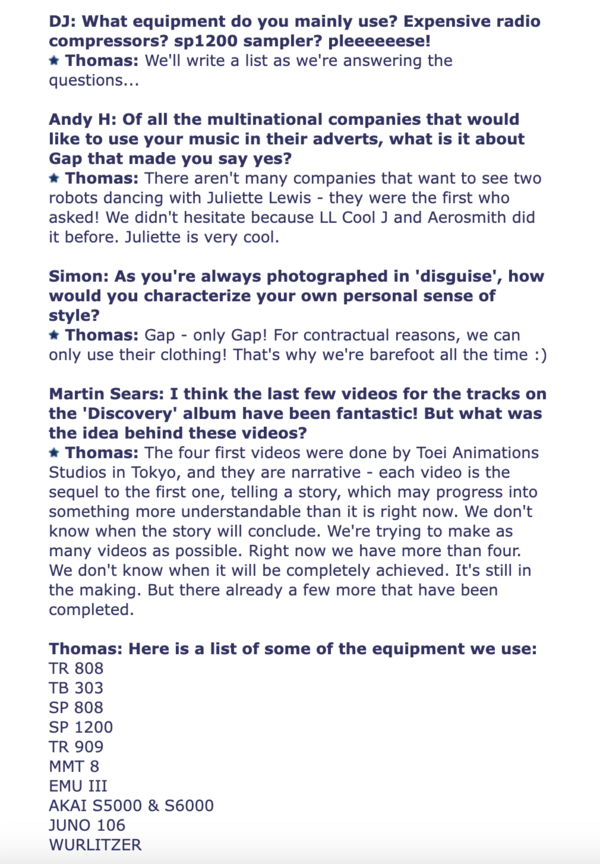
In an article published on the BBC Radio 1 website, Thomas Bangalter from Daft Punk listed the Akai S6000 among the gear they were using at the time, providing confirmation of its use by the artist. Archive.org link to the article here.


In a feature titled "Chemical Brothers – Tom Rowlands – In Studio" on Kreativsound, Tom Rowlands of The Chemical Brothers discusses using the Akai S6000 sampler to explore different sounds.
.png?v=1783959267)
.png?v=1783959267)
By using the Internet Archive Wayback Machine (available at https://archive.org/web/) and searching for the page "http://www.squarepusher.net/justasouvenir/data/interviews.xml", it is possible to find various interviews that were gathered together over the years and kept at squarepusher.net until around the year of 2012, when the site was updated. In one of those (precisely the 2006 Rockin On' Magazine [Japan] interview), Tom is asked: "In ULTRAVISITOR, you revived the authentic Squarepusher sound by integrating the free jazz approach in Music is Rotted One Note and laptop originated sound in Go Plastic, Do You Know Squarepusher. Would you say that having recorded ULTRAVISITOR had a positive effect on HELLO EVERYTHING?" In his answer, he reveals the setup used in the Go Plastic album: "First of all, I didn't use a computer on Go Plastic. It was made with a Yamaha QY700, TX81[Z] and FS1R, an Eventide DSP4000 and Orville, an Akai S6000 and a Mackie 16 channel desk. Second, precisely what is the "authentic Squarepusher sound"? Although you seem to have made up your mind, I would be entertained to see if anybody agreed with you or each other! Certainly if there was a consensus, I would feel like I had failed to fufil my primary objective which is to rubbish the notion of the static artistic persona. The tendency to develop and change ideas, musical or otherwise is a hallmark of an active and intelligent mind -yet it is not prevalent in the sphere of music. Once musicians establish their "style", it appears that many feel compelled to take the safe option of sticking to it. The ironic thing is that repeating the same ideas over and over again gets pretty uninteresting and inevitably leads to stagnancy; thus their career is sabotaged by these very attempts to safeguard it. For me, to stick to some sort of style is to prematurely throw your artistic potential down the drain. Thus I assert that nobody could coherently state what the "Squarepusher sound" is. After recording the Ultravisitor material, I felt it was time to shift the compositional focus to simpler ideas."


In this archived version of a December 2000 article from Sound On Sound, Underworld's Rick Smith "explained how the music was improvised, with loops stored in the Akai S6000, clocked by an MPC2000, sequenced from two Apple Powerbook computers running Logic Audio, and then run through two Mackie desks, one 32-channel and the other 24."

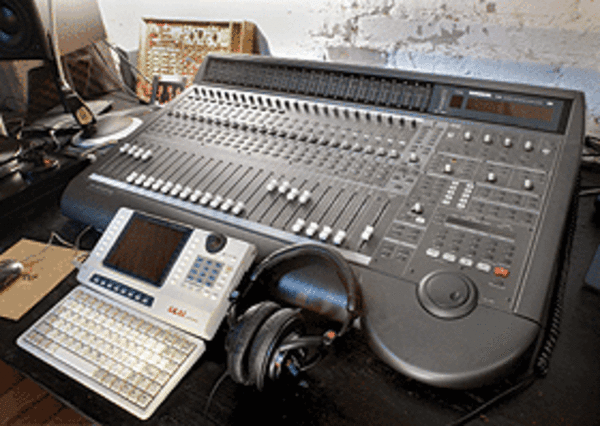
"Amon's studio setup is based around a Mackie D8b digital desk and an Akai S6000 sampler triggered by Cubase VST on a Mac"

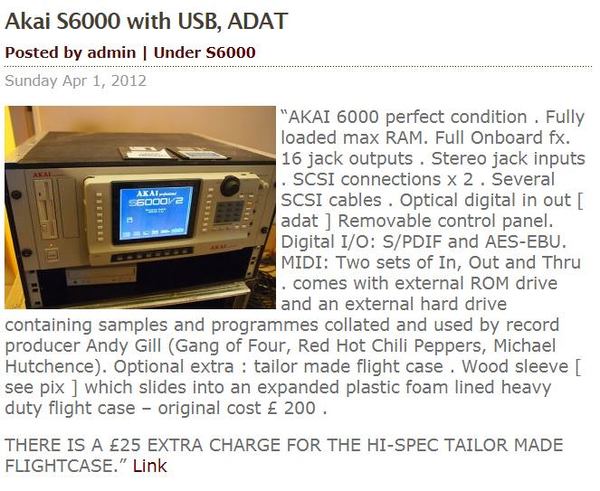
The MPC Hunter website still holds an older listing of an S6000 posted for sale by Andy from an eBay auction in 2012.


"We use an API 1608 desk, various compressors like the Universal Audio 1176s and the blue DBX 160 series. I still prefer my old Lexicon 480L to the digital plug-ins. The latest version of Pro Tools is great to have, because it is very easy to combine all the old gear with that. In ATR, we use the Roland TR-909 as the main drum machine; it’s part of the band’s sound, really. Then we still use the old Akais for ATR, like the S1100 or the S6000 or the MPC 2000XL. They are also part of the band’s identity in a way. Especially when you apply distortion. We also have a lot of modular synths, from the Metasonix Wretchmachine, the ARP 2600, Analogue Solutions Vostok, the Sherman Quad Filterbank and the Moog Voyager with all the external CV gate stuff. We find the Voyager better suited for ATR. My Minimoog just sounds too retro. I love the machine, as so many others (my Korg Trident, Roland Jupiter 8 etc...) but ATR has a certain sound that we stick to. I use all that other stuff more for the Alec Empire solo works. The Atari 1040ST is still the main sequencer for everything. Pro Tools is slaved to that."

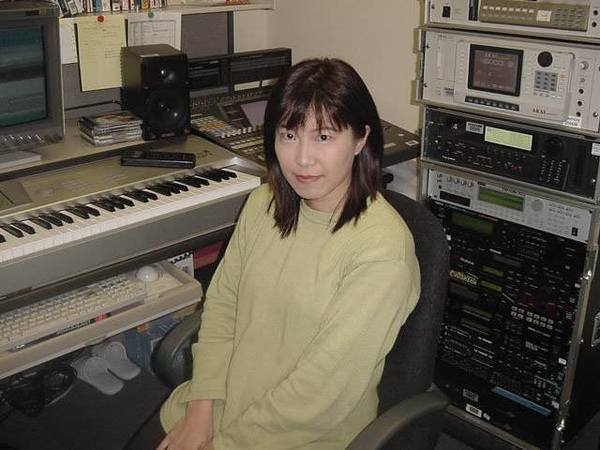
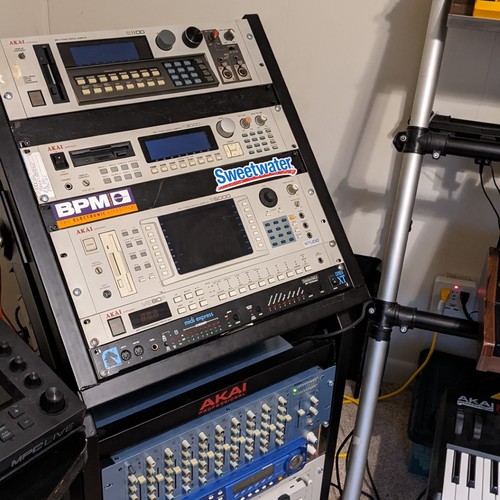
In this picture of Shimomura's studio, the S6000 is sitting in a rack behind her.


"This S6000 is a sample product that I got my hands on before the actual product release date. The only difference was that the OS on this was a beta version, and that was about it (and that didn't really matter too much to me because you can always update the OS later). I like this sampler because you can register a lot of different samples in it, and it's very easy to use."

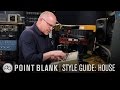
In a video by Point Blank Music School, the Freemasons are seen using the Akai S6000 audio sampler.

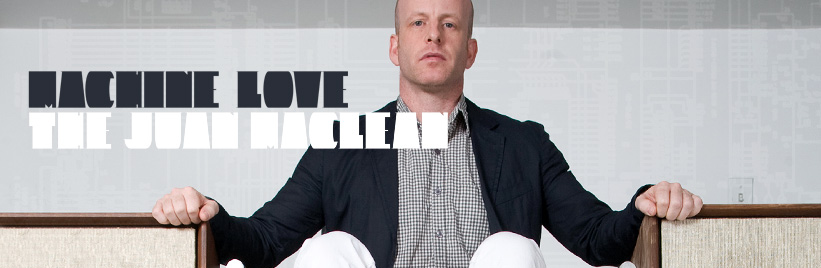
The Juan Maclean is asked, "If you had to strip your studio down to five items (not including recording / monitoring tools)—what would they be?" He replies, "Akai S6000, FutureRetro Revolution, Korg SQ10 sequencer, Roland SH101, Moog Voyager."

Album Usage
The Akai S6000 has been featured on the following albums:
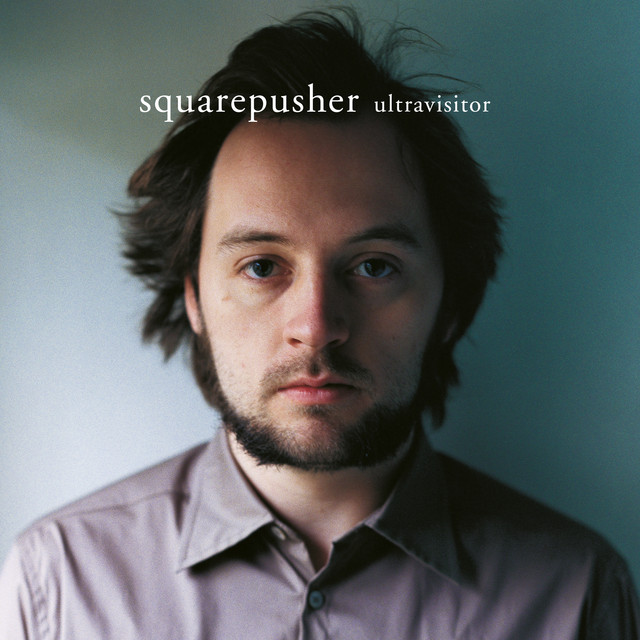
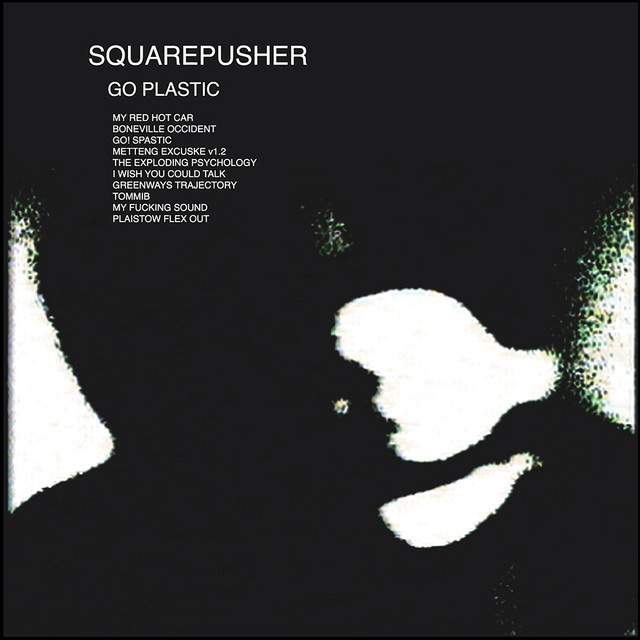
Genre Usage
Based on how artists on Equipboard use this gear, it is most commonly found in the following genres.
Used With
Based on how musicians on Equipboard use Akai S6000, it is most commonly used with the following gear.


-s.webp?v=1783695435)
Community setups
Show yours


More Akai Audio Samplers

$179.09
in Audio Samplers Rank


$1,104.40
in Audio Samplers Rank

.png?v=1783959267)

$499.30
in Audio Samplers Rank


$2,399.00 - $3,299.00
in Audio Samplers Rank
$692.49
in Audio Samplers Rank


$800.00
in Audio Samplers Rank


$369.00 - $518.99
in Audio Samplers Rank

$655.48
in Audio Samplers Rank


$1,431.54
in Audio Samplers Rank


-m.webp?v=1783782237)
$338.48
in Audio Samplers Rank


$1,074.55
in Audio Samplers Rank


$798.00 - $799.00
in Audio Samplers Rank
-m.webp?v=1783523126)
$110.00
in Audio Samplers Rank


.jpg?v=1783461063)


$3,462.44
in Audio Samplers Rank


$835.76
in Audio Samplers Rank


$537.28
in Audio Samplers Rank


$847.70
in Audio Samplers Rank


$3,462.44
in Audio Samplers Rank


$260.00
in Audio Samplers Rank


$109.99 - $256.75
in Audio Samplers Rank


-m.webp?v=1783955048)
$1,467.36 - $1,799.00
in Audio Samplers Rank
.jpg?v=1783828865)


$445.00 - $499.99
in Audio Samplers Rank


$165.00
in Audio Samplers Rank


-m.webp?v=1783954632)
$298.49
in Audio Samplers Rank

$420.00
in Audio Samplers Rank

.jpg?v=1783862501)


$200.00
in Audio Samplers Rank


$225.00 - $478.00
in Audio Samplers Rank


$599.99 - $689.99
in Audio Samplers Rank


$277.00 - $349.00
in Audio Samplers Rank


$300.00
in Audio Samplers Rank


$240.00
in Audio Samplers Rank


Accessories & Related Items
-s.webp?v=1783782237)



Similar


Gear Guides






Most Popular Audio Samplers
Most Popular Brands
-
Added to Equipboard on by
IitisleeannGearIQ 1371
-


