Richard H. Kirk
English electronic / industrial musician
Genre
Genre
Richard H. Kirk's Gear



Nowadays the Western Works is furnished with machines of an altogether different calibre. The workhorse is E-mu's SP12 sampling drum machine, which Kirk used to sample and sequence up most of the rhythm tracks for Code. Further sampling power is provided by the Emax, sequenced by the Korg SQD1 which is synced to the SP12 and a trusty TR808 with a Roland SBX90. And if this little lot isn't enough, an adjoining room contains an Alpha Juno 2 and a DX7 to be called upon when required: usually to provide synth bass samples for the SP12. With a six-foot high rack of effects to one side of the mixing desk and a 2" 24-track machine to the side of that, the Cabs have everything they need to produce master quality recordings just as and when it suits them.
Find it on:


-m.webp?v=1785025532)
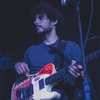
Richard's keyboard in this picture has the words "Juno-106" on it (hard to read, but definitely there).
Find it on:

Skrufff: Are you actively resisting new technology?
Richard H Kirk: “No, on the contrary I use plug-ins and have ProTools though I’m still using an Atari 1040ST and a program called Creator which is from 1989, I think. I’m still writing on that and using midi, running a lot of old analogue synthesizers, a couple of samplers. It’s very basic but it seems to work for me, so I’m sticking with. Having the Mac and ProTools and other processing adds another dimension, if you like, so you can start to f++k around with it. I’m trying to keep the best of both worlds.”
Find it on:

"I'd got a Roland CSQ-100 Sequencer and a Roland SH09 Synth and a TR-808. I’d had the 808 for a while and not really used it but I was noticing that people were using them on these electro records. I was writing stuff on the sequencer and drum machine and we’d build stuff around that."
Find it on:
-m.webp?v=1785029340)
"I’d got a Roland CSQ-100 Sequencer and a Roland SH09 Synth and a TR-808. I’d had the 808 for a while and not really used it but I was noticing that people were using them on these electro records. I was writing stuff on the sequencer and drum machine and we’d build stuff around that."
Find it on:

Nowadays the Western Works is furnished with machines of an altogether different calibre. The workhorse is E-mu's SP12 sampling drum machine, which Kirk used to sample and sequence up most of the rhythm tracks for Code. Further sampling power is provided by the Emax, sequenced by the Korg SQD1 which is synced to the SP12 and a trusty TR808 with a Roland SBX90. And if this little lot isn't enough, an adjoining room contains an Alpha Juno 2 and a DX7 to be called upon when required: usually to provide synth bass samples for the SP12. With a six-foot high rack of effects to one side of the mixing desk and a 2" 24-track machine to the side of that, the Cabs have everything they need to produce master quality recordings just as and when it suits them.
Find it on:

At 2:19, the keyboard Kirk is playing has the words "Juno-60" on the back.
Find it on:

Throughout the video, Kirk can be seen with a Macbook Pro.
Find it on:
-m.webp?v=1784991545)




“No, I don’t own a laptop, I’ve got a Mac G4 with some music sotfware that I use mainly for post production and editing, and maybe sometimes I’ll create tracks in that, but for live I’m using a scaled down version of the studio. It’s pretty old school, I use a mixing desk on stage with banks of effects, then stuff on DAT and mini disc and some live keyboards."
Find it on:

"Well… as far as sonic pallets, I think that kind of just evolves instinctively. I’m still using an (AKAI) s1000 sampler, which some people look at me strangely for, you know."
Find it on:

"I'd got a Roland CSQ-100 Sequencer and a Roland SH09 Synth and a TR-808. I’d had the 808 for a while and not really used it but I was noticing that people were using them on these electro records. I was writing stuff on the sequencer and drum machine and we’d build stuff around that."
Find it on:

The technology which Kirk is abusing in 1987 represents a considerable advance on the sort of gear that Cabaret Voltaire started out with ten years ago. In those days it was an Akai 4000DS reel-to-reel, cheap ("three quid") guitars, a couple of saxophones and a clarinet, the sound of all of them heavily modified by a series of effects and early synthesisers like the Dewtron, EMS Synthi Hi-Fli and AKS.
Find it on:

Nowadays the Western Works is furnished with machines of an altogether different calibre. The workhorse is E-mu's SP12 sampling drum machine, which Kirk used to sample and sequence up most of the rhythm tracks for Code. Further sampling power is provided by the Emax, sequenced by the Korg SQD1 which is synced to the SP12 and a trusty TR808 with a Roland SBX90. And if this little lot isn't enough, an adjoining room contains an Alpha Juno 2 and a DX7 to be called upon when required: usually to provide synth bass samples for the SP12. With a six-foot high rack of effects to one side of the mixing desk and a 2" 24-track machine to the side of that, the Cabs have everything they need to produce master quality recordings just as and when it suits them.
Find it on:

"I’m using a mixture of old and new, really. I have a 24 channel Soundcraft mixer from the mid 80’s, a C lab program sequencer from ‘89, with an Atari all hooked up to MIDI. That’s one part of it, but then I also make use of the G4 Pro Tools software, which I started using mainly as an editing tool. Sometimes I compose with older equipment, using Pro Tools for post-production."
Find it on:


“No, on the contrary I use plug-ins and have ProTools though I’m still using an Atari 1040ST and a program called Creator which is from 1989, I think. I’m still writing on that and using midi, running a lot of old analogue synthesizers, a couple of samplers. It’s very basic but it seems to work for me, so I’m sticking with. Having the Mac and ProTools and other processing adds another dimension, if you like, so you can start to f++k around with it. I’m trying to keep the best of both worlds.”
Find it on:

Nowadays the Western Works is furnished with machines of an altogether different calibre. The workhorse is E-mu's SP12 sampling drum machine, which Kirk used to sample and sequence up most of the rhythm tracks for* Code*. Further sampling power is provided by the Emax, sequenced by the Korg SQD1 which is synced to the SP12 and a trusty TR808 with a Roland SBX90. And if this little lot isn't enough, an adjoining room contains an Alpha Juno 2 and a DX7 to be called upon when required: usually to provide synth bass samples for the SP12. With a six-foot high rack of effects to one side of the mixing desk and a 2" 24-track machine to the side of that, the Cabs have everything they need to produce master quality recordings just as and when it suits them.
Find it on:

In this article from Electronics & Music Maker Magazine, November 1984, Cabaret Voltaire discuss how the MXR Drum Computer is currently their main drum machine and prefer it over the Linn Drum “because the sounds are a lot sharper and clearer.”
Find it on:

"What I use in the studio now is not that different to when we started. There's an old 1624 Soundcraft desk that's pretty knackered but has a nice warm sound that you wouldn't get on a modern one. Our outboard gear is pretty bog standard, just ordinary delay lines and digital reverbs. Nothing very expensive. When we bought the Lexicon PCM70 it was £2,000 — but now you could get it for £500. More recently we bought a Quadraverb GT and a Yamaha EMP700 guitar multi‑effects processor, though I haven't played guitar for ages and ages. I'm more keyboards‑based now."
Find it on:

"What I use in the studio now is not that different to when we started. There's an old 1624 Soundcraft desk that's pretty knackered but has a nice warm sound that you wouldn't get on a modern one. Our outboard gear is pretty bog standard, just ordinary delay lines and digital reverbs. Nothing very expensive. When we bought the Lexicon PCM70 it was £2,000 — but now you could get it for £500. More recently we bought a Quadraverb GT and a Yamaha EMP700 guitar multi‑effects processor, though I haven't played guitar for ages and ages. I'm more keyboards‑based now."
Find it on:

"I like the NS10 studio monitors and the big JBL 4425s, which are kind of shot now. We've got loads of analogue synths MIDI'd and piles of records to sample from. We've got a VCS3 and a Synthi A, which are the same thing really but a different shape. We're going to have them converted. The Roland 303 is MIDI'd up but the box is bigger than the synth itself, which is hilarious."
Find it on:

"I like the NS10 studio monitors and the big JBL 4425s, which are kind of shot now. We've got loads of analogue synths MIDI'd and piles of records to sample from. We've got a VCS3 and a Synthi A, which are the same thing really but a different shape. We're going to have them converted. The Roland 303 is MIDI'd up but the box is bigger than the synth itself, which is hilarious."
Find it on:

"I like the NS10 studio monitors and the big JBL 4425s, which are kind of shot now. We've got loads of analogue synths MIDI'd and piles of records to sample from. We've got a VCS3 and a Synthi A, which are the same thing really but a different shape. We're going to have them converted. The Roland 303 is MIDI'd up but the box is bigger than the synth itself, which is hilarious."
Find it on:

"We use C‑Lab Notator on an Atari. Most people we know use this but our approach is different. It's down to our choice of sampling. I tend to use things that other people would throw away — sample bits from records that sound different. The end result is always going to be slightly unusual. Most people take breakbeats now and just loop them. We tend to chop them up and turn them around to create that unique Cabaret Voltaire sound."
Find it on:

Equipment list from the March 1994 issue of Sound on Sound:
RECORDERS
Soundcraft Series 760 24‑track tape machine. Revox PR66 2‑track tape machine. Sony DTC‑1000ES DAT recorder. Casio DA7 portable DAT recorder. Tascam 122 cassette recorder.
MIXER
Soundcraft Series 1624 mixer.
MONITORS
JBL 4425 studio monitors. Yamaha NS10m nearfield monitors.
AMPLIFIER
Quad 520f power amp.
INSTRUMENTS
Akai S1000 sampler. Emu Emax keyboard sampler. Oberheim Matrix 1000 synth module. Roland Juno 60 synth. Yamaha DX7 synthesizer. Roland SH09 synth (with MIDI). EMS Synthi A synth. Putney VCS3 synth. Roland TR808 drum machine (with MIDI). Roland TR909 drum machine. Roland TB303 Bassline synth (with MIDI).
SEQUENCER
C‑Lab Notator + Unitor + Export. Atari 1040ST + monitor.
PROCESSORS
Lexicon PCM70 digital effects. Lexicon PCM60 digital reverb. MXR 01a digital reverb Bel BD80 delay. Yamaha EMP700 multi‑effects. Alesis Quadraverb. Drawmer dual gates (2). Drawmer compressor/limiter.
MICROPHONES
Neumann U89i mic.
Find it on:

Equipment list from the March 1994 issue of Sound on Sound:
RECORDERS
Soundcraft Series 760 24‑track tape machine. Revox PR66 2‑track tape machine. Sony DTC‑1000ES DAT recorder. Casio DA7 portable DAT recorder. Tascam 122 cassette recorder.
MIXER
Soundcraft Series 1624 mixer.
MONITORS
JBL 4425 studio monitors. Yamaha NS10m nearfield monitors.
AMPLIFIER
Quad 520f power amp.
INSTRUMENTS
Akai S1000 sampler. Emu Emax keyboard sampler. Oberheim Matrix 1000 synth module. Roland Juno 60 synth. Yamaha DX7 synthesizer. Roland SH09 synth (with MIDI). EMS Synthi A synth. Putney VCS3 synth. Roland TR808 drum machine (with MIDI). Roland TR909 drum machine. Roland TB303 Bassline synth (with MIDI).
SEQUENCER
C‑Lab Notator + Unitor + Export. Atari 1040ST + monitor.
PROCESSORS
Lexicon PCM70 digital effects. Lexicon PCM60 digital reverb. MXR 01a digital reverb Bel BD80 delay. Yamaha EMP700 multi‑effects. Alesis Quadraverb. Drawmer dual gates (2). Drawmer compressor/limiter.
MICROPHONES
Neumann U89i mic.
Find it on:

Equipment list from the March 1994 issue of Sound on Sound:
RECORDERS
Soundcraft Series 760 24‑track tape machine. Revox PR66 2‑track tape machine. Sony DTC‑1000ES DAT recorder. Casio DA7 portable DAT recorder. Tascam 122 cassette recorder.
MIXER
Soundcraft Series 1624 mixer.
MONITORS
JBL 4425 studio monitors. Yamaha NS10m nearfield monitors.
AMPLIFIER
Quad 520f power amp.
INSTRUMENTS
Akai S1000 sampler. Emu Emax keyboard sampler. Oberheim Matrix 1000 synth module. Roland Juno 60 synth. Yamaha DX7 synthesizer. Roland SH09 synth (with MIDI). EMS Synthi A synth. Putney VCS3 synth. Roland TR808 drum machine (with MIDI). Roland TR909 drum machine. Roland TB303 Bassline synth (with MIDI).
SEQUENCER
C‑Lab Notator + Unitor + Export. Atari 1040ST + monitor.
PROCESSORS
Lexicon PCM70 digital effects. Lexicon PCM60 digital reverb. MXR 01a digital reverb Bel BD80 delay. Yamaha EMP700 multi‑effects. Alesis Quadraverb. Drawmer dual gates (2). Drawmer compressor/limiter.
MICROPHONES
Neumann U89i mic.
Find it on:

Equipment list from the March 1994 issue of Sound on Sound:
RECORDERS
Soundcraft Series 760 24‑track tape machine. Revox PR66 2‑track tape machine. Sony DTC‑1000ES DAT recorder. Casio DA7 portable DAT recorder. Tascam 122 cassette recorder.
MIXER
Soundcraft Series 1624 mixer.
MONITORS
JBL 4425 studio monitors. Yamaha NS10m nearfield monitors.
AMPLIFIER
Quad 520f power amp.
INSTRUMENTS
Akai S1000 sampler. Emu Emax keyboard sampler. Oberheim Matrix 1000 synth module. Roland Juno 60 synth. Yamaha DX7 synthesizer. Roland SH09 synth (with MIDI). EMS Synthi A synth. Putney VCS3 synth. Roland TR808 drum machine (with MIDI). Roland TR909 drum machine. Roland TB303 Bassline synth (with MIDI).
SEQUENCER
C‑Lab Notator + Unitor + Export. Atari 1040ST + monitor.
PROCESSORS
Lexicon PCM70 digital effects. Lexicon PCM60 digital reverb. MXR 01a digital reverb Bel BD80 delay. Yamaha EMP700 multi‑effects. Alesis Quadraverb. Drawmer dual gates (2). Drawmer compressor/limiter.
MICROPHONES
Neumann U89i mic.
Find it on:
This is a community-built gear list for Richard H. Kirk.
- Find relevant music gear like Guitars, Amplifiers, Effects Pedals, Pianos, Keyboards and Synthesizers, Microphones, Studio Equipment, Software Plugins and VSTs, Headphones, and other instruments and add it to Richard H. Kirk.
- The best places to look for gear usage are typically on the artist's social media, YouTube, live performance images, and interviews.
- To receive email updates when Richard H. Kirk is seen with new gear, follow the artist.
Discography
Disposable Half-Truths
1980
Time High Fiction
1983
Black Jesus Voice
1986
Virtual State
1994
The Number Of Magic
1995
Step Write Run (Alphaphone Volume One)
1996
Earlier/Later: Unreleased Projects Anthology 74/89
2000
LoopStatic (amine ß ring modulations)
2000

Presents Twat v4.0 (The War Against Terror)
2003
![Meets The Truck Bombers Of Suburbia Uptown( featuring Pat Riot) [Volume One] album cover](https://images.equipboard.com/uploads/album/image/108158/meets-the-truck-bombers-of-suburbia-uptown-featuring-pat-riot-volume-one.jpg)
Meets The Truck Bombers Of Suburbia Uptown( featuring Pat Riot) [Volume One]
2004
Sandoz In Dub: Chapter Two (Live In The Earth)
2005
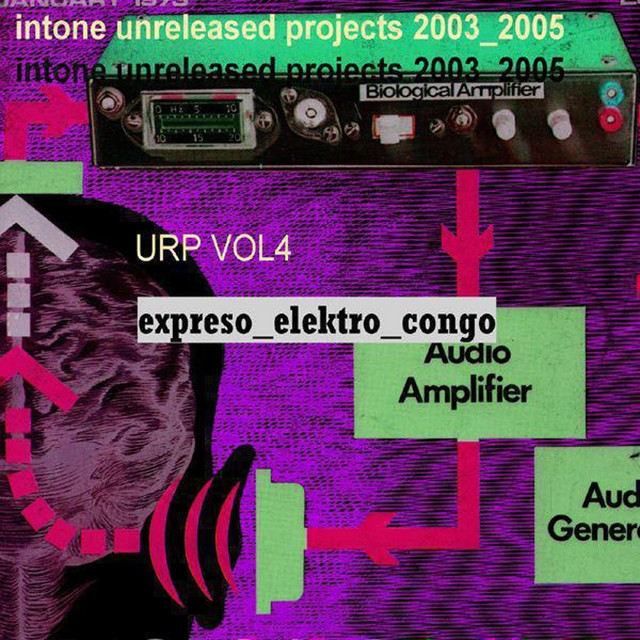
Expreso_Elektro_Congo (Intone Unreleased Projects Volume Four: 2003-2005)
2005