-s.webp?v=1784386625)

-xl.webp?v=1784386625)
Pricing and availability
We compare 600+ stores and found this item at 1 store. Prices updated .
Store
Reviews
Price




Average Price: $1,193
Standard/Professional
$500
$1501+
Price Tier
Budget
Standard
High-end
* Product prices and availability are updated by Equipboard every 24hrs and are subject to change. Equipboard may receive compensation for purchases made at participating retailers linked on this site. This compensation does not affect what products or prices are displayed, or the order of prices listed. For more information, please refer to our affiliate disclosure.
Description
The E-mu Emax is a classic synthesizer that brings the rich, distinctive sound of the 1980s into modern music production. This legendary piece of equipment is renowned for its 12-bit sampling technology, which provides a warm, gritty texture that digital synthesizers often struggle to replicate. Whether you're looking to create lush pads, punchy basslines, or dynamic leads, the Emax offers a versatile palette of sounds.
With its comprehensive range of features, the Emax is ideal for both studio sessions and live performances. Musicians appreciate its user-friendly interface, making sound manipulation intuitive and creative. The onboard library is filled with iconic preset sounds, and the ability to sample your own audio gives you endless possibilities to customize your music. Its robust build ensures that it stands up to the rigors of frequent use, while its vintage design adds a touch of nostalgia to any setup.
Key Features:
- 12-bit sampling technology for warm, vintage sound
- Comprehensive onboard library with iconic presets
- User-friendly interface for intuitive sound manipulation
- Ability to sample and edit your own audio
- Robust construction for durability
- Ideal for both studio use and live performances
Product specs
| Brand | E-MU Systems |
| Model | Emax 61-Key 8-Voice Sampler Workstation |
| Finish | Black |
| Year | 1996 |
| Categories | Samplers, Workstation Keyboards |
| Analog / Digital | Digital |
| Key Size | Full Size |
| Keyboard Action | Synth Action |
| MIDI I/O | MIDI Input, MIDI Output, MIDI Through |
| Number of Keys | 61 Keys |
| Polyphony | 8 Voices |
FAQs
-
What is the polyphony of the E-mu Emax?
-
The E-mu Emax features 8-voice polyphony, allowing you to play up to eight notes simultaneously, which is useful for creating complex layers and textures in your music.
-
Does the E-mu Emax have MIDI capabilities?
-
Yes, the E-mu Emax is equipped with MIDI input, output, and through ports, making it compatible with other MIDI-enabled devices for seamless integration into your setup.
-
What type of keyboard action does the E-mu Emax have?
-
The E-mu Emax features a synth action keyboard, which provides a responsive and smooth playing experience suitable for a variety of musical styles.
-
Can the E-mu Emax be used as a sampler?
-
Yes, the E-mu Emax is a 12-bit sampler workstation with various sample rates, allowing you to capture and manipulate audio samples for creative sound design.
-
What are the sound design features of the E-mu Emax?
-
The E-mu Emax includes a programmable analog low pass filter, LFO, and AHDSR envelopes for both filter and amp, providing extensive sound shaping capabilities.
Videos

RetroSound
E-mu Emax Sampler - sound library (1986) Depeche Mode and more
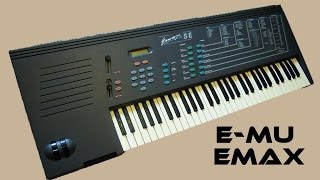
E-mu Emax Sampler - sound library (1986) Depeche Mode and more
RetroSound
E-mu Emax I ( ( ( (More-Analog ) ) ) )

MoreAnalog
Synth Stuff Ep. 57 - E-mu Emax SE

tritonrecordings
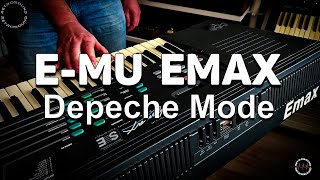
The Sound of Depeche Mode - E-MU Emax
RetroSound
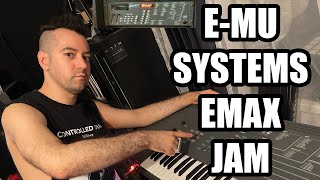
E-MU EMAX SE: THE CASE FOR VINTAGE SAMPLERS

Blush Response
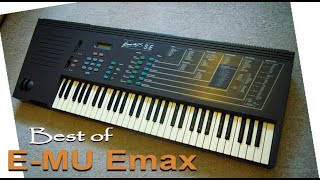
Best of E-MU Emax Sampling Synthesizer ~ RetroSound Demo
RetroSound
Reviews
Owner Insights
We analyzed real musician discussions from forums and Reddit to find what players love, question, and tweak about E-mu Emax.
Features and functionality
-
The E-mu Emax uses a companding algorithm to enhance sample time within its 512kb non-expandable RAM.
Source -
Offers a layering feature with arpeggiator, allowing intricate pattern creation, such as holding C2 to trigger a drum pattern.
Source -
Emax II can load Emax I sample disks, preserving presets, edits, loops, and setups, but they sound different due to distinct filters.
Source -
Emax II advantages include more memory and likely better ADC compared to the original Emax I.
Source
Mods and upgrades
-
Recommended to upgrade with SE firmware for unique sample mangling capabilities and enhanced synth functionality.
Source -
Original electrolytic capacitors can be replaced with modern Japanese components for potentially improved reliability and longevity.
Source -
Floppy drives are often swapped for USB drives to enhance storage convenience and reliability.
Source
Comparisons
-
Analog filters on the Emax are robust but considered slightly inferior to those on the Korg DSS-1.
Source -
Emax I offers a 12-bit sampling for a crunchy lo-fi sound, while Emax II utilizes 16-bit architecture for increased fidelity.
Source -
The original Emax is favored by some for its filter sound, while Emax II's 16-bit architecture appeals to those seeking higher sound quality.
Source
Use cases and applications
-
Ideal for industrial music, closely replicating late 80s Depeche Mode and Pretty Hate Machine sounds.
Source
Setup and maintenance
-
Owners suggest models with HD or Rev 2/3 motherboards for improved storage solutions, like a Gotek or SCSI setup, to avoid slow floppy loading speeds.
Source
Value and pricing
-
Some owners believe the unmodified original Emax can appreciate in value over time, akin to classic samplers like the MPC60.
Source
Critic Reviews
4.5 out of 5
Based on 2 Reviews and 17 Ratings

The 11khz sampling frequency sounds great!
These days I mainly just sample in and then out to get the lowfi gritty sound that is hard to emulate. Someday I will get the HxC mod and a new display.
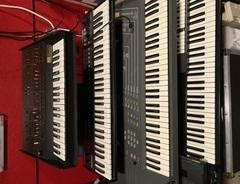

1271
my first sampler
i wanted to replace Mr Andrew Fletcher in Depeche Mode, as he's not essential in musical technic ;-)
Artist usage
Add artist

[For Pretty Hate Machine] "We had an Emulator 2, Emax, PPG Wave, Oberheim Expander..." Chris Vrenna, prism films interview


In an interview featured on prince.org, a photo from Prince's storage room reveals an E-mu Emax SE synthesizer on display. While it's known that Dr. Fink transferred Fairlight samples to the Emax II, there's speculation about the possibility of similar samples being placed in this Emax SE, although this is not confirmed.


Martin Gore played an Emu Emax HD/SE and a Yamaha DX7 IID during the "Music for the Masses" tour.


In the Sound on Sound article titled "UNSOUND RECORDINGS," Alan Wilder's use of the E-mu Emax is confirmed, as it is listed third under samplers in his Recoil equipment list.

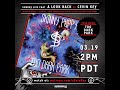
At 35:10 cEvin shows a clip of himself demonstrating how Skinny Puppy would use the E-MU Emax I for the recording of "Too Dark Park".


Studio buffs tend to forget that modern recording studios are imposing and disorientating places for the average lay person. The technology seems to be surpassed in complexity only by military and space hardware, and Mark King's 'home' studio is certainly state of the art, as the above listing indicates. There's also a Macintosh SE30 with Performer software, an SRC SMPTE-to-MIDI convertor, Adams Smith Zeta 3, NS 10 and Tannoy DTM8 monitors, and two Otari MTR90 24-track recorders with 48 tracks of Dolby SR. Sound sources include a DX7, Roland D110 and 550, Yamaha TX816, Juno 60, Emu III and Emax, Casio CZ101, plus an Akai-Linn MPC60 workstation and a DDrum 2 drum sampler.

Andy Fletched played an E-mu Emax HD/SE and a Yamaha DX7 IID during the "Music for the Masses" tour.


Along with his Ensoniq VFX and Prophet 5, Barbieri used an Emax, D50 and the System 700. All were set up as if for a live performance - routed through various effects processors and then to the studio desk. Anyone able to recall the image of Barbieri hunched studiously over his stage keyboard rig from the Japan days will remember the distinctive shape of an Oberheim OBX too. (http://www.muzines.co.uk/articles/sons-of-pioneers/2166)


"Our sound sources include quite a lot of original analog gear (OSCAR, Korg Poly-6, EMS synthi, Roland Juno60 - all midi-retro fitted BTW) plus the usual samplers (Emax, s1000, Samplecell II). These are controlled by sequencers including Studio Vision, Cubase and the "retro-style" Doepfer (originally made for Kraftwerk). The sounds are intially effected by various standard echoes and FX including a Roland SDX-330 Dimensional Expander (3D-ish) and a Boss SE70 (good vocoder presets!)."


This 1988 article lists an E-max sampler among David Sylvian’s gear.
.png?v=1784510865)
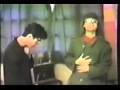
In a video titled "Jorge Gonzales documental la cultura de la basura" on YouTube, at minute 0:58 Jorge González is seen using the E-mu Emax synthesizer. This synthesizer was also used for the album "La Cultura de la Basura."

.jpg)
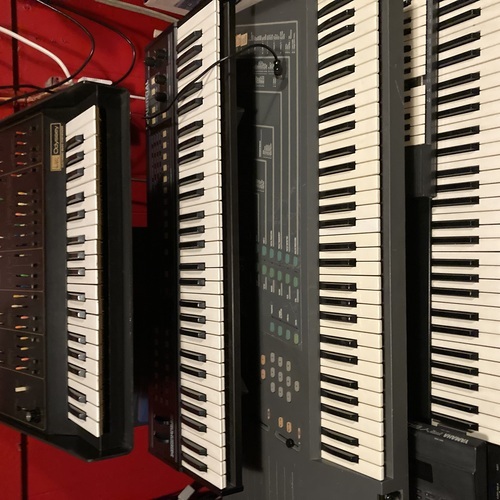
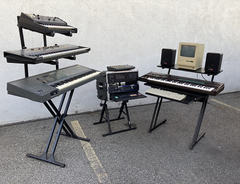
In this photo Dwayne is standing behind 2 keyboards, the lower one is clearly an Emu Emax. I can't see if its an SE or HD version because the higher efinition model is dientical to the SE apart from the letters 'HD' instead of 'SE' next to the Emax logo.
Album Usage
The E-mu Emax has been featured on the following albums:

La Voz de los '80 (Los Demos)
Los Prisioneros (2025)
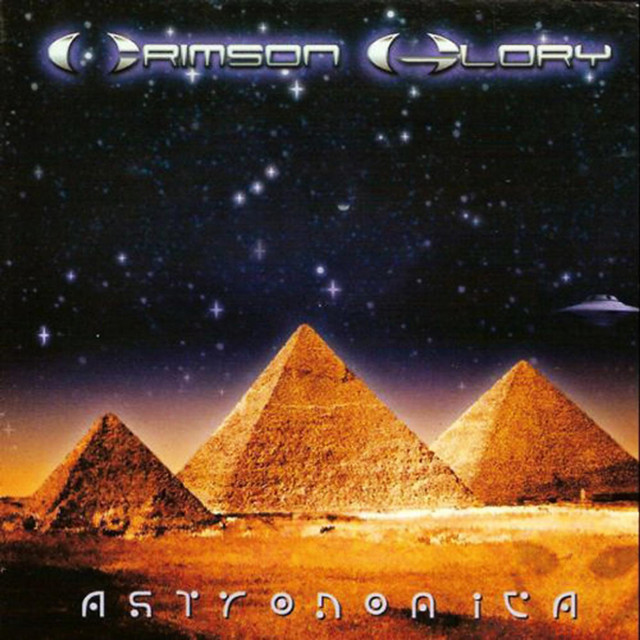
Astronomica
Crimson Glory (1999)
March Of The Pigs
Nine Inch Nails (1994)
Thinking About Myself
Cosmic Baby (1994)
Loops of Infinity
Cosmic Baby (1994)

Strange and Beautiful
Crimson Glory (1991)

Too Dark Park
Skinny Puppy (1990)
Pretty Hate Machine
Nine Inch Nails (1989)
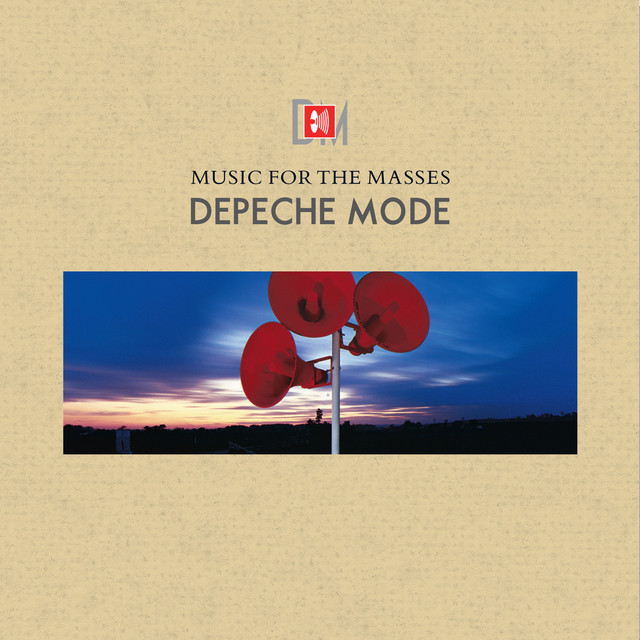
Music for the Masses
Depeche Mode (1987)
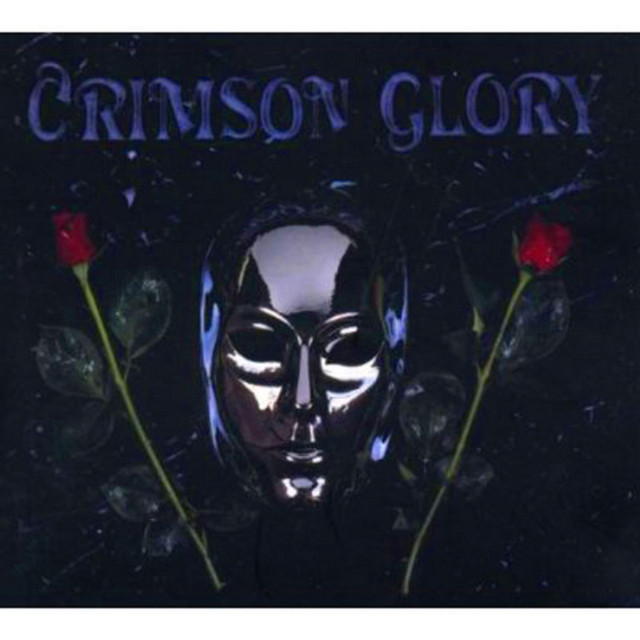
Crimson Glory
Crimson Glory (1986)
Genre Usage
Based on how artists on Equipboard use this gear, it is most commonly found in the following genres.
Used With
Based on how musicians on Equipboard use E-mu Emax, it is most commonly used with the following gear.






Community setups
Show yoursMore E-Mu Synthesizers


.jpg?v=1784030062)


$3,281.06 - $3,499.99
in Synthesizers Rank


$469.00 - $699.99
in Synthesizers Rank


$20,000.00
in Synthesizers Rank


$3,333.00 - $3,499.99
in Synthesizers Rank


Accessories & Related Items


Similar


Gear Guides









Most Popular Synthesizers
Most Popular Brands
-
Added to Equipboard on by
 adamdavidson
GearIQ 266
-


