
Dweezil Zappa
Role
Role
Dweezil Zappa's Gear


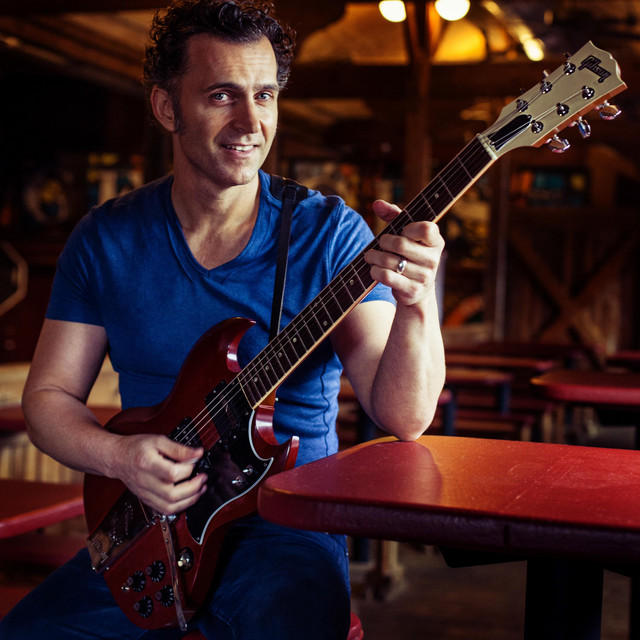
According to Premier Guitar, Zappa uses his father's signature model - the Gibson "Roxy" SG.
Find it on:


There's no question that Peavey's Wiggy is a unique, eye-catching hunk of amp. Based on Dweezil Zappa's silver and blue Aston Martin, the sports car-themed Wiggy kicked up enough of a buzz at Winter NAMM to become one of the cover models for GP's May 2001 New Gear Issue.
"The look was almost as important as the sound," explains Zappa, who conceptualized and co-designed the amp with Peavey's engineering staff. "I wanted something that would be inviting--something that would entice guitarists to come on over and play it. And I wanted tree thematic coherence. The amp's slightly backlit gauges echo those on classic British roadsters."
But although looks were a primary concern, the Wiggy's stylishly rod-o-rific visage is matched by its tonal versatility. And the timbral side of the amp's design was also inspired by a less-than-conventional model. "I wanted the amp to sound like this unknown, '70s-era kind of' bass preamp I found in a dark corner of my dad's studio," says Zappa. "We were cleaning some stuff out, and there it was. I've never seen anything like it anywhere. I plugged a guitar into it, and it sounded pretty cool. It had an interesting distortion sound, and even at its most distorted, when you backed off your guitar volume, the tone got clean without getting thin. The concept was so clear that the Wiggy was basically complete on the first pass. It did everything I wanted it to do, and it looked right. Peavey's engineers were skeptical--they said,We usually have to run through the design process four or five times.' I said, `Nope. It's done!'"
The production model of the Wiggy couples a modified 100-watt Transtube head with a 2x12 closed-back cabinet loaded with Sheffield 1230 speakers. Features include a footswitchable gain boost, an effects loop (with a level switch), a resonance control for tuning the cabinet's low-end response (loose to tight), 5-band and 3-band EQ, and selectable impedance (4[Omega], 8[Omega], or 16[Omega]).
"The Wiggy is designed to be extremely responsive to performance dynamics and input levels," says Zappa. "Using your guitar's volume knob, you can get several different tones without touching the amp controls. The changes are mostly textural. A built-in compressor keeps the output levels relatively consistent--even when you bring down the guitar volume, from full distortion at 10 to a clean sound at 2. …
PUBLICATION: Guitar Player
VOLUME/ISSUE: Vol. 35, No. 11
PUBLICATION DATE: November 2001
CONTRIBUTORS: Molenda, Michael
"Infused with Zappa zaniness and guitar genius!"
"Wiggy comes with incredible EQ and tone controls not found on any other amp, thanks to the driving force behind this rockin' combination of TransTube technology and engineering wizardry: Dweezil Zappa. Its looks will turn your head and its sound will drop your jaw. Just punch the gas on this roadster-inspired rig to get the coolest tones you've ever heard."
" Step behind the wheel of this smooth-riding baby for a lazy Sunday afternoon drive, a Saturday night cruise on the strip, or a nail-biting 12-second rip down the quarter mile. Switching on the amp activates the hazard flashers (power indicator) while you plug in to HIGH OCTANE (high gain) or LOW OCTANE (low gain) jacks located just below the MORE (drive/boost) knob. Twist the RPM (gain) and MPH (master volume) controls to get things going, then sculpt your basic tone with the BATT, OIL, and TEMP (low, mid, and high) EQ knobs. There's also a BOOST control for post EQ fuzz. When you're ready to push things into the red zone, go for the WIGGY tone sliders (5-band More/Less tone control), the PRESENCE, T. DYNAMICS, and RESONANCE controls. Amplifier section outputs 100W into 4, 8, or 16 ohms (switchable impedance), footswitchable effects loop with level switch, preamp out and power amp in jacks, dual paralleled speaker output jacks, lighted control panel, footswitch included."
FEATURES 100W into 4, 8, or 16 ohms, selectable impedance HIGH and LOW OCTANE input jacks Footswitchable TransTube MORE front end (gain boost level) Hazard lights flash when MORE function is engaged RPM (gain) and MPH (master volume) controls 3-band BATT, OIL, and TEMP (low, mid, and high) EQ BOOST control for post EQ fuzz 5-band WIGGY graphic EQ PRESENCE and T. DYNAMICS controls RESONANCE switch Footswitchable effects loop with level switch PRE AMP OUT and POWER AMP IN jacks Dual paralleled SPEAKER OUTPUT jacks Lighted control panel Footswitch included SPECIFICATIONS 27"W x 9"H x 11-1/2"D 30-1/2 lbs.
Find it on:

Dweezil Zappa now owns the Jimi Hendrix Sunburst Fender Strat. Given to his dad, Frank Zappa, by legendary guitarist Jimi Hendrix. The guitar was also modified by Frank. It has been modified by Dweezil to look like what it is on the cover of Guitar Player Magazine, released in Jan., 1977.
Find it on:


"It has 11 pedals that live on the top shelf which features a piano hinge to allow it to open up for easy access to the power supplies below. There is a Wampler buffer pedal living down there as well. (Pedals from left to right: Lone Wolf Outsider, TC Electronic Vortex Flanger, Strymon Mobius, Chandler limited Little Devil Boost, Chandler Limited Germanium Boost, Solidgoldfx Electroman Delay, Jam Retro Vibe, Soundblox2 Orbital, Soundblox2 Stingray, Gooch Effects "Too Much Fuzz" custom DZ pedal)"
Find it on:


According to Premier Guitar, Zappa uses the Greer Lightspeed Overdrive Pedal.
Find it on:

"The earliest sounds I made were on a Fender Music Master that was given to me by my dad at age 6. I plugged it into one of his spare Pignose amps."
Find it on:

"I've played my 58 re-issue Gibson Les Paul and a few Hagstrom Vikings, including an original 1969 Viking that was recently given to me as a gift during the 2011 Dweezilla music bootcamp by Ago Totaro."
Find it on:


-m.webp?v=1784559394)
In an interview with Premier Guitar Dweezil Zappa's setup, which includes two Fractal Axe-Fx II Guitar Effects Processors, is discussed here:
"The heart of Dweezil's tone comes from a Fractal Audio Systems Axe-FX II. In previous versions of his rig he actually ran two units simultaneously due to the CPU demand that his custom presets required. However, on this “Zappa Does Zappa” tour he runs everything through the top unit and the bottom is used as a backup or for any guests that might sit in. In order to recreate his father's famous tones, Dweezil goes back to the master tapes to study and cop every little detail in order to program the Axe-FX II presets."
Find it on:

In an interview w/ Premier Guitar, Dweezil Zappa's pedalboard is discussed here: "All of Dweezil's effects are run through the front of the Axe-FX II, rather than the effects loop. Along the top is a Bogner Ecstasy Blue, JAM Pedals Fuzz Phrase, SolidGoldFX Formula 76, TC Electronic PolyTune Mini, SolidGoldFX Electroman, JAM Pedals Big Chill Tremolo, and JAM Pedals Red Muck. Along the front of his board is the MFC-101 MIDI Foot Controller for the Axe-FX II and four expression pedals–the first one is for volume and the other three change function depending on the preset.
On the far right side of his pedalboard, Dweezil uses a custom JAM Pedals wah along with an expression pedal to control different variables on his JAM Pedals Big Chill Tremolo. In addition to this wah, he also uses a wah within the Axe-FX II depending on if he wants it before or after his distortion pedals."
Find it on:
-m.webp?v=1784631828)
During this "Rig Rundown" for PremierGuitar, Dweezel speaks with Jason Shadrick about his on stage gear. At 4:19, Dweezel mentions this guitar. A quote from the associated article says "For the single-coil tones, Dweezil brings out a mostly stock Eric Johnson signature Strat. In order to quickly move to an acoustic sound, Dweezil installed a bridge with a piezo pickup."
Find it on:

At 8:21 of this "Rig Rundown" with Premier Guitar we're shown Dweezil's pedalboard. In the top left corner you can see the Jam Pedals Fuzz Phrase Germanium Fuzz Pedal.
Find it on:

Dweezil points out his Red MucK at 11:30 of this "Rig Rundown" with Premier Guitar saying that this is "just a really nice sounding distortion that’s kind of - I guess it’s supposed to be like a big muff but it’s his own thing."
Find it on:

According to Premier Guitar, Zappa uses Fender Johnny Marr signature model.
Find it on:

According to Premier Guitar, Zappa uses the Port City Pearl head.
Find it on:

"I used a lot of the same rack effects and a few pedals too including an old 60s Octavia and Fuzz Face. The main guitar I played at that time was a Purple Ernie Ball Van Halen model guitar."
Find it on:

"I've used extensively on stage and in the studio since 2010. Another guitar I used a lot at that time was my gold sparkle Ibanez Iceman. It was given to me by a friend who found it in the closet of a house he had recently moved into. Originally black, I had it painted gold sparkle by Dan Lawrence. That guitar is most notably featured on the song "Badass." Dan did a lot of the art on my guitars going back to the Charvel/Jackson days. The watermelon guitar and the Madonna guitar were a few of the earliest graphic guitars he did for me. While at Moser he painted The Dr. Seuss and Where The Wild Things Are guitars."
Find it on:

Dweezil plays: Red Muck, Delay Llama+, TubeDreamer88, WaterFall, Wahcko+, Fuzz Phrase, Dyna-ssoR, Ripple, RetroVibe, BiG CHiLL prototype
Find it on:

Below contains his quote mentioning the pedals on his board. Note LONE WOLF OUTSIDER.
"It has 11 pedals that live on the top shelf which features a piano hinge to allow it to open up for easy access to the power supplies below. There is a Wampler buffer pedal living down there as well. (Pedals from left to right: Lone Wolf Outsider, TC Electronic Vortex Flanger, Strymon Mobius, Chandler limited Little Devil Boost, Chandler Limited Germanium Boost, Solidgoldfx Electroman Delay, Jam Retro Vibe, Soundblox2 Orbital, Soundblox2 Stingray, Gooch Effects "Too Much Fuzz" custom DZ pedal)"
Find it on:
-m.webp?v=1784631961)
"The earliest sounds I made were on a Fender Music Master that was given to me by my dad at age 6. I plugged it into one of his spare Pignose amps."
Find it on:

"Next I got my green Charvel and played through Carvin X100B amps, also from what Frank was using on stage in the early 80's. I used that amp and an Ibanez UE 405 for the "Havin' A Bad Day" album. I remember that the delay in the Ibanez was main thing I used and it was mainly for the song "Electric Hoedown". I used this set up in mono."
Find it on:

"Around that time my rig changed a lot. I started using Peavey 5150s and Classic 100s. At one stage the rig consisted of three 4X12s powered by 3 different amps, creating a stereo outside, dry center array. I even had Fender Bassman as a center channel at one point."
Find it on:

"At that time my main guitar became an Ernie Ball Albert Lee model. I didn't realize the subliminal effect of his signature on my tele until the time I started playing his signature model EB! He also played a very memorable solo on "What The Hell Was I Thinking?"
Find it on:



"There were 3 main effects that I used that my father used to use to get some amazing signature tones. First, the MicMix Dynaflangers (Shut Up An Play Yer Guitar tone), 2nd, Oberheim VCF (for Ship Ahoy and envelope), and 3rd, the Systech Harmonic Energizer (Pojama People.) Those effects and many more pedals were available so I could blend amps and morph effects. This rig was by far the most expensive rig I ever had built and most complex of any I had ever put together. It sounded great but it was not very reliable. Over time it did not travel well and was very expensive to ship around the world. "
Find it on:

"It has 11 pedals that live on the top shelf which features a piano hinge to allow it to open up for easy access to the power supplies below. There is a Wampler buffer pedal living down there as well. (Pedals from left to right: Lone Wolf Outsider, TC Electronic Vortex Flanger, Strymon Mobius, Chandler limited Little Devil Boost, Chandler Limited Germanium Boost, Solidgoldfx Electroman Delay, Jam Retro Vibe, Soundblox2 Orbital, Soundblox2 Stingray, Gooch Effects "Too Much Fuzz" custom DZ pedal)"
Find it on:

"Drawer 1 (Back To Front) Greer Fish Press, Greer Tarpit, Cog Custom DZ TARKIN, Maxon Ether, Greer Lightspeed, Custom Dynamo Flanger, JHS Pollinator, Gooch FX Captain Kirk"
Find it on:

There's no question that Peavey's Wiggy is a unique, eye-catching hunk of amp. Based on Dweezil Zappa's silver and blue Aston Martin, the sports car-themed Wiggy kicked up enough of a buzz at Winter NAMM to become one of the cover models for GP's May 2001 New Gear Issue.
"The look was almost as important as the sound," explains Zappa, who conceptualized and co-designed the amp with Peavey's engineering staff. "I wanted something that would be inviting--something that would entice guitarists to come on over and play it. And I wanted tree thematic coherence. The amp's slightly backlit gauges echo those on classic British roadsters."
But although looks were a primary concern, the Wiggy's stylishly rod-o-rific visage is matched by its tonal versatility. And the timbral side of the amp's design was also inspired by a less-than-conventional model. "I wanted the amp to sound like this unknown, '70s-era kind of' bass preamp I found in a dark corner of my dad's studio," says Zappa. "We were cleaning some stuff out, and there it was. I've never seen anything like it anywhere. I plugged a guitar into it, and it sounded pretty cool. It had an interesting distortion sound, and even at its most distorted, when you backed off your guitar volume, the tone got clean without getting thin. The concept was so clear that the Wiggy was basically complete on the first pass. It did everything I wanted it to do, and it looked right. Peavey's engineers were skeptical--they said,We usually have to run through the design process four or five times.' I said, `Nope. It's done!'"
The production model of the Wiggy couples a modified 100-watt Transtube head with a 2x12 closed-back cabinet loaded with Sheffield 1230 speakers. Features include a footswitchable gain boost, an effects loop (with a level switch), a resonance control for tuning the cabinet's low-end response (loose to tight), 5-band and 3-band EQ, and selectable impedance (4[Omega], 8[Omega], or 16[Omega]).
"The Wiggy is designed to be extremely responsive to performance dynamics and input levels," says Zappa. "Using your guitar's volume knob, you can get several different tones without touching the amp controls. The changes are mostly textural. A built-in compressor keeps the output levels relatively consistent--even when you bring down the guitar volume, from full distortion at 10 to a clean sound at 2
PUBLICATION: Guitar Player
VOLUME/ISSUE: Vol. 35, No. 11
PUBLICATION DATE: November 2001
CONTRIBUTORS: Molenda, Michael
Find it on:

An MXR CSP-001 Variphase pedal was sold through Dweezil’s official shop on Reverb.com in January of 2021. The pedal previously could be seen in Dweezil’s live rig during parts of the 2016 “50 Years of Frank” tour
Find it on:

In an interview w/ Premier Guitar, Dweezil Zappa's pedalboard is discussed here: "All of Dweezil's effects are run through the front of the Axe-FX II, rather than the effects loop. Along the top is a Bogner Ecstasy Blue, JAM Pedals Fuzz Phrase, SolidGoldFX Formula 76, TC Electronic PolyTune Mini, SolidGoldFX Electroman, JAM Pedals Big Chill Tremolo, and JAM Pedals Red Muck. Along the front of his board is the MFC-101 MIDI Foot Controller for the Axe-FX II and four expression pedals–the first one is for volume and the other three change function depending on the preset.
On the far right side of his pedalboard, Dweezil uses a custom JAM Pedals wah along with an expression pedal to control different variables on his JAM Pedals Big Chill Tremolo. In addition to this wah, he also uses a wah within the Axe-FX II depending on if he wants it before or after his distortion pedals."
Find it on:

At 9:25 of this "Rig Rundown" with Premier Guitar, Dweezil mentions his wah pedal is made by Jam Pedals.
Find it on:

Dweezil Zappa acquired the EVH Rasta Frankenstein guitar directly from Eddie Van Halen after Eddie finished using it, as reported by Van Halen Links.com.
Find it on:
This is a community-built gear list for Dweezil Zappa.
- Find relevant music gear like Guitars, Amplifiers, Effects Pedals, and other instruments and add it to Dweezil Zappa.
- The best places to look for gear usage are typically on the artist's social media, YouTube, live performance images, and interviews.
- To receive email updates when Dweezil Zappa is seen with new gear, follow the artist.
-
Added to Equipboard on by
 michael
GearIQ 43219
-
Updated
Discography

Album Credits
-
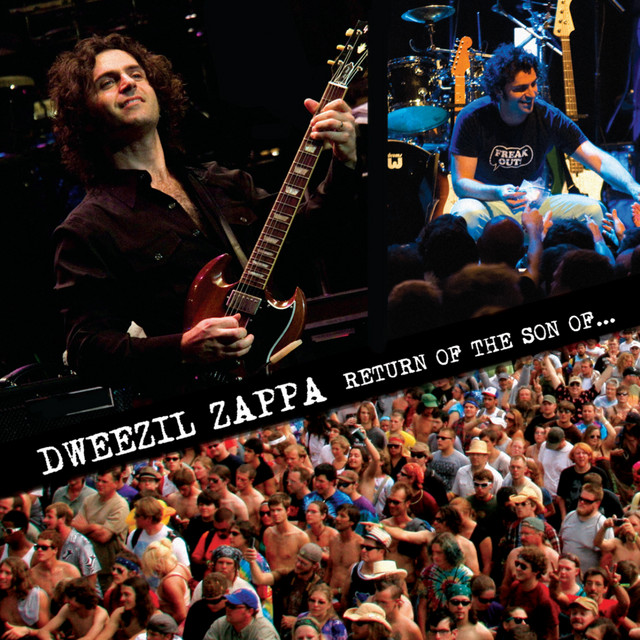
Dweezil Zappa · 2010
Producer -
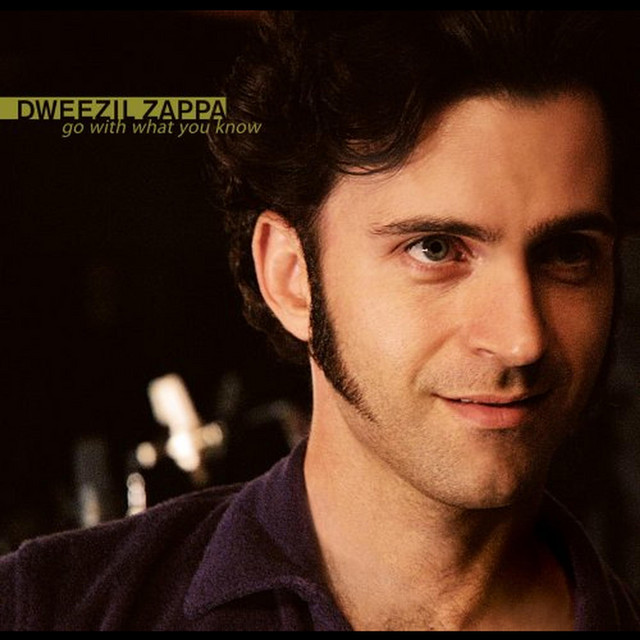
Dweezil Zappa · 2006
Engineer Mixing Engineer Producer Programmer




.webp)


