-s.webp?v=1785020791)


-xl.webp?v=1785020791)
Pricing and availability
We compare 600+ stores and found this item at 6 stores. Prices updated .
Store
Reviews
Price




Average Price: $169
Standard/Professional
$60
$181+
Price Tier
Budget
Standard
High-end
Price History
Based on price data from 3 merchants for "Dunlop JDF2 Fuzz Face". Prices shown reflect NEW condition. Tracking began Apr 2, 2026.
* Product prices and availability are updated by Equipboard every 24hrs and are subject to change. Equipboard may receive compensation for purchases made at participating retailers linked on this site. This compensation does not affect what products or prices are displayed, or the order of prices listed. For more information, please refer to our affiliate disclosure.
Description
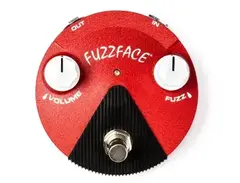
Introducing the Dunlop JDF2 Fuzz Face, an ode to the vintage vibes of '60s and '70s rock legends. This classic fuzz box is a faithful reissue of the original Dallas Arbiter Fuzz Face, meticulously crafted to match the original specs. Known for its thick, warm tones, it's a beloved tool among modern guitarists with a penchant for nostalgia.
The Dunlop JDF2 Fuzz Face is more than just a pedal; it's a time machine that transports your music back to the era of Jimi Hendrix and his contemporaries. Its rugged construction ensures durability while maintaining a vintage aesthetic. The original germanium PNP transistor design is the heart of the Fuzz Face, responsible for its rich, sought-after fuzz tones.
With its simple Volume and Fuzz knobs, the Dunlop JDF2 Fuzz Face offers a wide range of sonic possibilities. Whether you're dialing in a subtle fuzz or cranking it up for a fully saturated roar, this pedal delivers. Its 9V battery power source makes it easy to integrate into any pedalboard setup.
Key Features:
- Reissue of the original Dallas Arbiter Fuzz Face
- Rugged construction for durability
- Original germanium PNP transistor design
- Simple Volume and Fuzz controls
- Powered by a 9V battery
Product specs
| Brand | Dunlop |
| Model | JDF2 Fuzz Face |
| Finish | Red |
| Year | 1990 - 2025 |
| Made In | United States |
| Categories | Fuzz Pedals and Effects |
| Pedal Format | Standard |
FAQs
-
What type of transistors are used in the Dunlop JDF2 Fuzz Face?
-
The Dunlop JDF2 Fuzz Face uses germanium transistors, which contribute to its warm, vintage fuzz tone that is highly sought after by guitarists.
-
Is the Dunlop JDF2 Fuzz Face suitable for live performances?
-
Yes, the Dunlop JDF2 Fuzz Face is well-suited for live performances, offering a classic fuzz sound that cuts through the mix, making it a favorite among many professional guitarists.
-
How does the Dunlop JDF2 Fuzz Face interact with a guitar's volume knob?
-
The Dunlop JDF2 Fuzz Face is known for its dynamic response to a guitar's volume knob, allowing players to clean up the fuzz sound by rolling back the volume for a more versatile tone.
-
Does the Dunlop JDF2 Fuzz Face require a specific power supply?
-
The Dunlop JDF2 Fuzz Face typically uses a 9V battery, but it can also be powered by a compatible 9V DC power supply if desired.
-
Can the Dunlop JDF2 Fuzz Face be used with both single-coil and humbucker pickups?
-
Yes, the Dunlop JDF2 Fuzz Face works well with both single-coil and humbucker pickups, providing a rich and dynamic fuzz tone with either type.
Videos

JJ of the T
Dunlop Fuzz Face | Germanium vs Silicon, fuzz before/after wah, history and more!
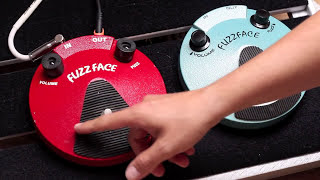
Dunlop Fuzz Face | Germanium vs Silicon, fuzz before/after wah, history and more!
JJ of the T
dunlop fuzzface shootout dallas arbiter hendrix pedal vx reg

gearmanndude
Dunlop Fuzz Face Shoot Out w/ Jeorge Tripps & James Santiago

jimdunlopusa
Dunlop Fuzzface Reissue vs Electro Harmonix Big Muff

shnobel
Fuzzface SHOOTOUT Dunlop era Dallas Arbiter vs current version Les Paul & Blues Jr amp
gearmanndude
Germanium vs Silicon Fuzz Face Which Is Best? JDF2 or JHF1?

Michael Banfield
Vintage Vs Modern Fuzz face Pedals... is there a difference?

Wampler Pedals
Dunlop JDF2 Classic Fuzz Face - Fun Sized Demo!

40 Watt Podcast
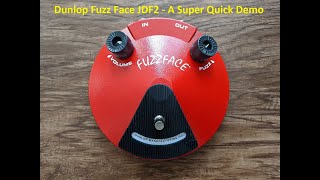
Dunlop Fuzz Face - Super Fast Demo

Peter Mallen
Reviews
PROS
-
Personality-rich tones, from clean to nasty with guitar volume adjustments
-
Highly tweakable for various tones
-
Simple design with two knobs encourages exploration
-
Compatible with both humbuckers and single coils
-
Robust construction with high-quality components
-
Offers classic 60s and 70s fuzz sounds, versatile for different genres
-
Germanium transistors provide warm, less temperature-sensitive fuzz
-
Encourages use of guitar's volume knob for tone shaping
-
Benefits from being the first in the signal chain for optimal sound
-
Some models include internal trim pots for bias adjustment
CONS
-
Requires significant time to dial in with amp and guitar settings
-
May not perform well with solid state amps or when fuzz is maxed
-
Placement of the board on the footswitch can be problematic
-
Lacks modern conveniences like LED indicator and external power jack
-
Reverse jack order can be confusing
-
Sound can get lost in a mix without careful amp setting adjustments
-
Battery type can significantly affect sound quality
-
Not always easy to use; requires fine-tuning for best performance
Owner Insights
We analyzed real musician discussions from forums and Reddit to find what players love, question, and tweak about Dunlop JDF2 Fuzz Face.
Setup and maintenance
-
Users suggest using carbon zinc 9v batteries instead of alkaline for better performance with the JDF2 Fuzz Face.
Source -
Testing the pedal's connections with a multimeter is recommended if the pedal fails to power on, indicating possible internal component issues.
Source -
Owners recommend verifying cable connections are in the correct order, as incorrect placement can lead to the pedal not altering the sound signal despite being powered on.
Source
User experience
-
A user reported a weak sound and fuzz from the pedal, which may suggest it requires servicing or warranty repair.
Source
Features and functionality
Critic Reviews
4.5 out of 5
Based on 12 Reviews and 97 Ratings

41031
Not the biggest fan.
I have used a number of different Arbiter Fuzz Faces with silicon and germanium transistors from different eras. I am more of a Vox or Solasound mk 1.5 tonebender guy when it comes to dual transistor fuzzes that react to your guitar's volume and tone control settings. The fuzz face gets lost in a mix very easily and you have to be really careful how you set your amp for ideal tones, especially a marshall. If I am going to use fuzz face parts values I think it sounds best with a mullard or newmarket germaium transistor mixed with a modern, low HFE, silicon bipolar transistor. I also built a fuzz face variant that sports 2 very low gain silicons that just sounds amazing. Great ix of warmth and clarity compared to an old Arbiter. The old ones (even silicon bc108 or 109 equipped models) are very inconsistent as the transistors are not usually well matched or correctly biased fr optimum tone. In vintage fuzzes, Solasound/Coloursound put a lot more care into putting their shit together.

my homemade dallas arbiter bc108c fuzz face
I know im reviewing a homemade clonebut I made it to the same specs as the original only I used bc108c silicon transistors and I think its sounds amazing. I know people talk about transistors all the time when they discuss their fav fuzzes but ive found that choosing the right battary is as important when your trying to get a good sound out of it I would always recommend Duracell batts all the way. I dont know if its due to the minimum parts desgin of the circuit or what, but ive found that the battary can be the differance between a fuzz face youll love and one you just think is a dud..I dont know if thats true of modern jim dunlop ones as I only ever used old and homemade ones based on the old arbiter desgins.pnp & npn but I wanted to share here what ive fouund.Iits a great pedal that gives you jimi type sounds but the batts can make the differance between Hendrix tone and that horrable note decay hell you can sometimes experience.
41031
you are so right about the battery in vintage fuzz circuits, they want less than 8 volts... I built my silicn fuzzface with lower HFE transistors and some tweaked cap and resistor values to smooth it out when it runs on a wall wart as I was touring when I built it and wanted to keep my hassle factor low... in the studio I prefer vintage fuzz on a carbon-zinc battery with a bit of play on it to soften things up, even in germanium fuzzes
Its just a theory really but i was thinking a bit about this and I was wondering if it has something to do in part with the carbon resistors liking a carbon-zinc source more then alkali ..I know most vintage fuzz faces use carbon resistors while a lot of modern ones like metal film resistors, its probably just due to it being minimum parts circuitry, but its something I was thinking about..I try to just use the duracells in my fuzz faces.ive got a ac176 npn germanium and a ac128 pnp germanium as well as the bc108c I reviewed here and they all like the duracells best.

1422
Love it
This pedal really brings out the classic warm fuzz tones you've been after. From a light saturated overdrive to a face melting wall of sound this pedal is as versatile as it is round.

498
It's a Fuzz Face
Great fuzz face, germanium and all that wonderful fuzzy goodness. Units have proceeded to get better since Tripps joined the Dunlop team.

Great pedal, very versatile but hard to use.
The Fuzz Face is legendary but not always extremely easy to use. It is reactive to your volume knob but has a moment when it goes from crunchy to clean. I have it beside my pedal board enabling me to change knobs with my feet which makes it even more versatile. I have it at the front of my chain which is important, it will dominate all your pedals, which is not necessarily bad...

111
.jpg?v=1784668718)
522

Fantastic!
I own a late 90s, without the mouth. I think it's one of the best modern ones. Despite its Germanium transistors, it's very stable and works really well with humbuckers.

Artist usage
Add artist
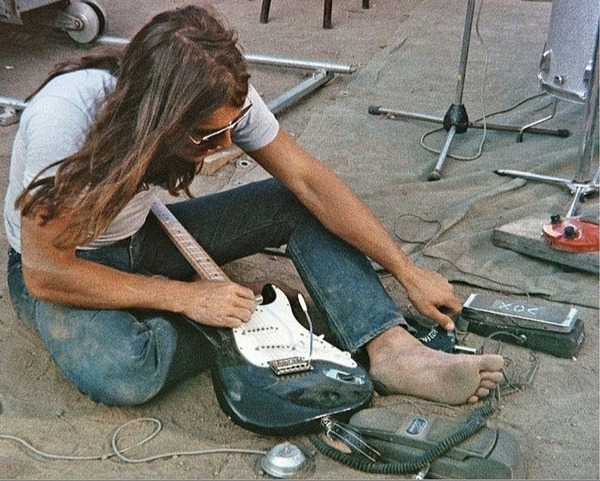
David's history with the Fuzz Face can be found here. In this picture, it is seen just behind and a bit underneath his left foot.


In a documentary celebrating the 2012 release of "Lonerism", this YouTube video shows two-seconds of the massive array of pedals on the floor of Kevin Parker's studio. Among one of the pedals is a Dunlop Fuzz Face. His Fuzz Face in particular has no white smile.
In 2013, severe weather prompted a cancellation of Austin City Limits, leaving the scheduled Tame Impala to dabble indoors. Parker can be seen again with the Fuzz Face pedal here.
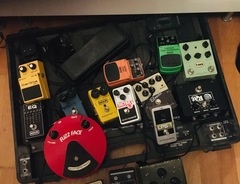
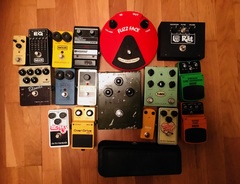
More photos from a fan Tumbler site shows Parker amid an arsenal of pedals including the ubiquitous Fuzz Face.


In this photo, Stevie Ray Vaughan is using an Arbirator Fuzz Face.


At 4:36, you can see Steve Vai using an Dunlop Fuzz Face during the work for the 25th Anniversary Edition of "Passion and Warfare"
"Commemorating the 25th anniversary of Passion and Warfare comes a special 2CD edition of the album which includes the first-ever release of Vai's Modern Primitive songs and recordings. Based on song sketches and works-in-progress penned, and recorded, by Vai following the release of Flex-Able, the artist's debut album, in January 1984, the music on Modern Primitive has been completed by Steve for release as a full album bonus disc in the Passion and Warfare 25th Anniversary Edition."


In this video of longtime U2 guitar tech Dallas Schoo inspecting Edge's rig for the then-upcoming Popmart tour, an Arbiter Fuzz Face pedal is visible on the foot control board at the 3:53 mark.

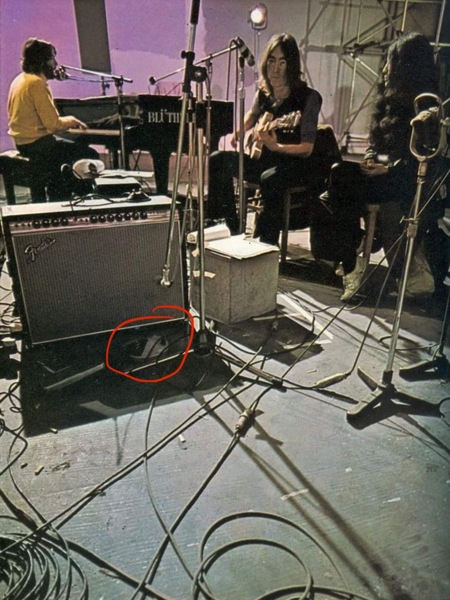
He used it during the "Let It Be" Sessions. I circled it in red.


Pete Townshend used a Dallas Arbiter Fuzz Face fuzz pedal on stage for a brief period in 1968. The only photos showing its use are from August 1968.


Dunlop Fuzz Face was used for fuzzy tones


Duane preferred playing straight through the amp, but he did use two different fuzz effects. First one was a custom built fuzz box which was attached to his Telecaster (see above), and the second one was Dallas Arbiter Fuzz Face, which he playing during early session work, and used old 9V batteries in it because he argued that they make a special sound.


John Squire uses the Dunlop JDF2 Fuzz Face pedal during performances, as evidenced by a user-uploaded photo on Pdmcauley.

.jpg)
In an Instagram post by Mick Gordon, the Dunlop JDF2 Fuzz Face is featured as part of his morning effect chain.


Album Usage
The Dunlop JDF2 Fuzz Face has been featured on the following albums:




Genre Usage
Based on how artists on Equipboard use this gear, it is most commonly found in the following genres.
Used With
Based on how musicians on Equipboard use Dunlop JDF2 Fuzz Face, it is most commonly used with the following gear.
-s.webp?v=1785020981)
-s.webp?v=1785020406)

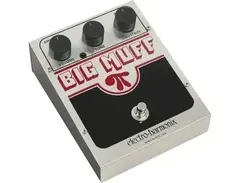
-s.webp?v=1785020886)


Community setups
Show yours


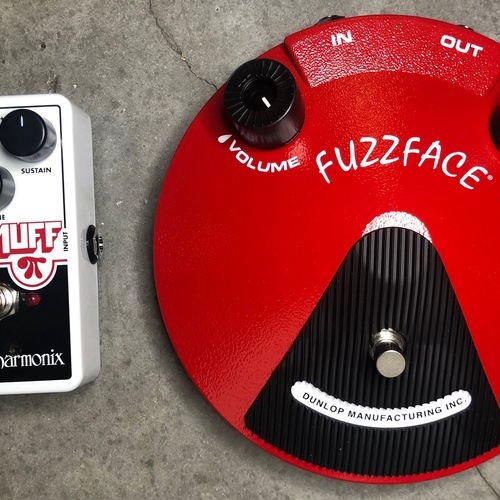


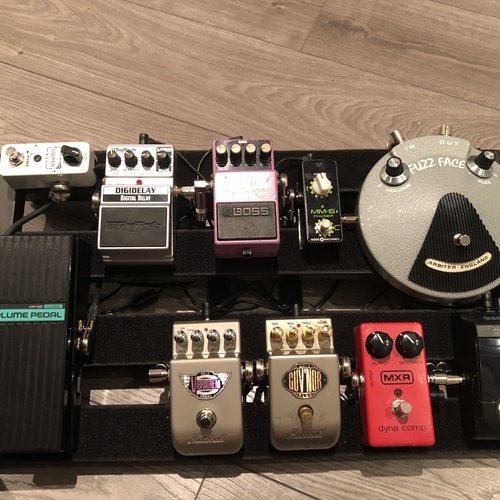

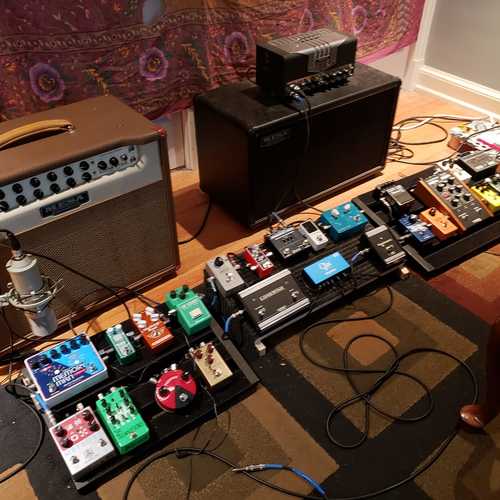

Similar
Add recommendation8 alternative and related items for Dunlop JDF2 Fuzz Face, curated by the Equipboard community.

$141.00 - $1,599.99

$149.00 - $172.00

$158.36 - $209.00

$799.00

$280.00

$212.49 - $324.99
More Dunlop Fuzz Effects Pedals
$158.36 - $209.00
in Fuzz Effects Pedals Rank


.jpeg?v=1784997318)

$149.00 - $179.99
in Fuzz Effects Pedals Rank


$125.00 - $159.99
in Fuzz Effects Pedals Rank


$155.00 - $179.99
in Fuzz Effects Pedals Rank

.jpeg?v=1784985161)

$149.00 - $172.00
in Fuzz Effects Pedals Rank


$142.52 - $209.00


$146.04 - $291.56


$126.00 - $199.00


$403.82 - $1,444.00


$199.99 - $209.99
$212.49 - $324.99


-m.webp?v=1785020966)
$137.02 - $209.00


$159.69 - $179.99


.png?v=1784985825)
-m.webp?v=1784473791)


$169.00 - $188.20
in Fuzz Effects Pedals Rank
-m.webp?v=1785021107)
$179.00 - $209.00
in Fuzz Effects Pedals Rank


$189.00
in Fuzz Effects Pedals Rank


$75.00 - $96.20
in Fuzz Effects Pedals Rank


$220.00 - $249.00
in Fuzz Effects Pedals Rank

.jpeg?v=1784985816)


$179.00
in Fuzz Effects Pedals Rank


$315.00
in Fuzz Effects Pedals Rank


$83.00 - $169.00
in Fuzz Effects Pedals Rank


$199.00 - $224.42
in Fuzz Effects Pedals Rank


$159.00 - $181.00
in Fuzz Effects Pedals Rank


Accessories & Related Items

-s.webp?v=1785020941)


-s.webp?v=1785018971)


Gear Guides
.jpg)






Most Popular Fuzz Effects Pedals
Most Popular Brands
-
Added to Equipboard on by
 julianwolf2
GearIQ 13060
-


